Vanuatu is a South Pacific archipelago of more than 80 islands strung between Fiji and the Solomons, where volcanic ash plains meet reef-fringed lagoons and the day's rhythm is set by the tide. Where you sleep shapes the entire trip here: a harbour hotel in Port Vila puts waterfalls and blue holes on your doorstep, while a thatched bungalow on Tanna trades that convenience for the rumble of an active volcano at dawn. This guide maps the main bases, the stays worth building an itinerary around, and the landmarks that make the flight worthwhile.
Port Vila and Efate: The Natural First Base
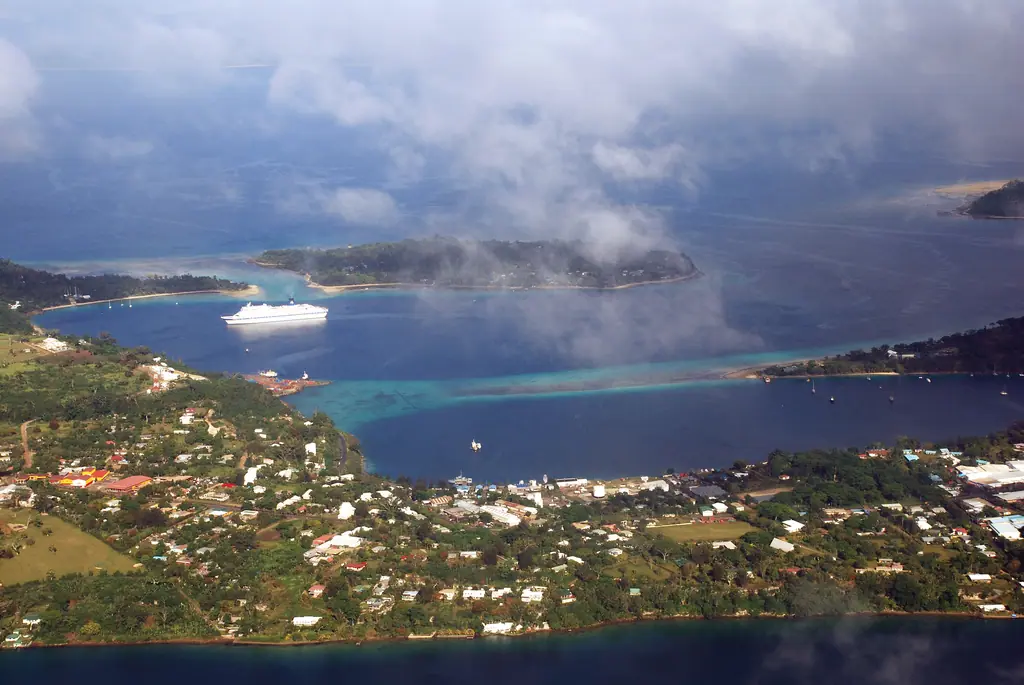
Most trips begin on Efate, and specifically in Port Vila, the capital, which curls around a deep natural harbour on the island's south-west coast. The international airport sits barely ten minutes from the waterfront, so you can land in the afternoon and be eating coconut crab and laplap by evening. The trade-off is bustle — mild by regional standards, but real — and a hotel in town means restaurants, the handicraft market and dusk kava stalls all within walking distance.
Efate's accommodation splits into a few distinct moods. Central Port Vila suits travellers who want to walk everywhere and take day tours from a fixed base. Out along Mele Bay and the Erakor and Ifira lagoons, resorts trade town convenience for private beaches, kayaks and sunsets across the water. Further north, around Havannah Harbour, the pace drops again to near silence.
Efate rewards staying put. Mele Cascades, a tiered waterfall roughly 20 minutes north of town, is best climbed early before the tour vans arrive. Hideaway Island, a short ferry hop offshore, protects a marine reserve with an underwater post office. The Eton Blue Lagoon and the coral flats at Eton Beach lie a 40-minute drive east, while Chief Roi Mata's Domain — a UNESCO-listed landscape of caves, burial sites and taboo islands — sits on the north-west coast.
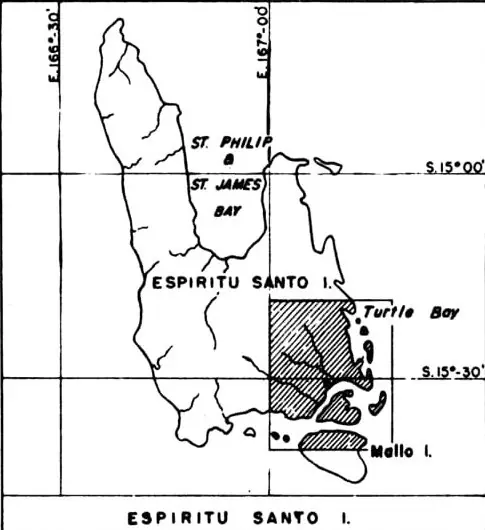
Luganville, Espiritu Santo and Champagne Beach
Espiritu Santo, known simply as Santo, is the country's largest island and the second base most visitors choose. Flights from Port Vila take under an hour and land at Pekoa outside Luganville, an unhurried low-rise town that feels like a very large village. Hotels here are mostly small-scale: waterfront motels and guesthouses in Luganville itself, beach bungalows on Aore Island across the strait, and a handful of private-island retreats where meals and transfers are folded into the rate.
The reason to stay on Santo rather than rush through is the coastline. Champagne Beach, on the east coast near Hog Harbour, is the postcard image — white sand, a horseshoe bay, and a seabed where gas escaping from the reef bubbles up through the shallows. Nearby Port Olry offers sheltered swimming and warm village hospitality. Both are over an hour from Luganville on a road that alternates between fresh seal and potholes, so a night or two on this side of the island pays off.
Divers come for the SS President Coolidge, a former luxury liner turned troop ship that sank in 1942 and now rests in 20 to 60 metres of water just off Luganville — one of the largest shore-accessible wrecks anywhere, complete with the famous porcelain still standing in the first-class dining saloon. Non-divers head for the blue holes: Matevulu, Nanda and Riri, freshwater springs so clear that the rope swing hanging above them looks suspended in glass.
Tanna: Bungalows Beneath Mount Yasur
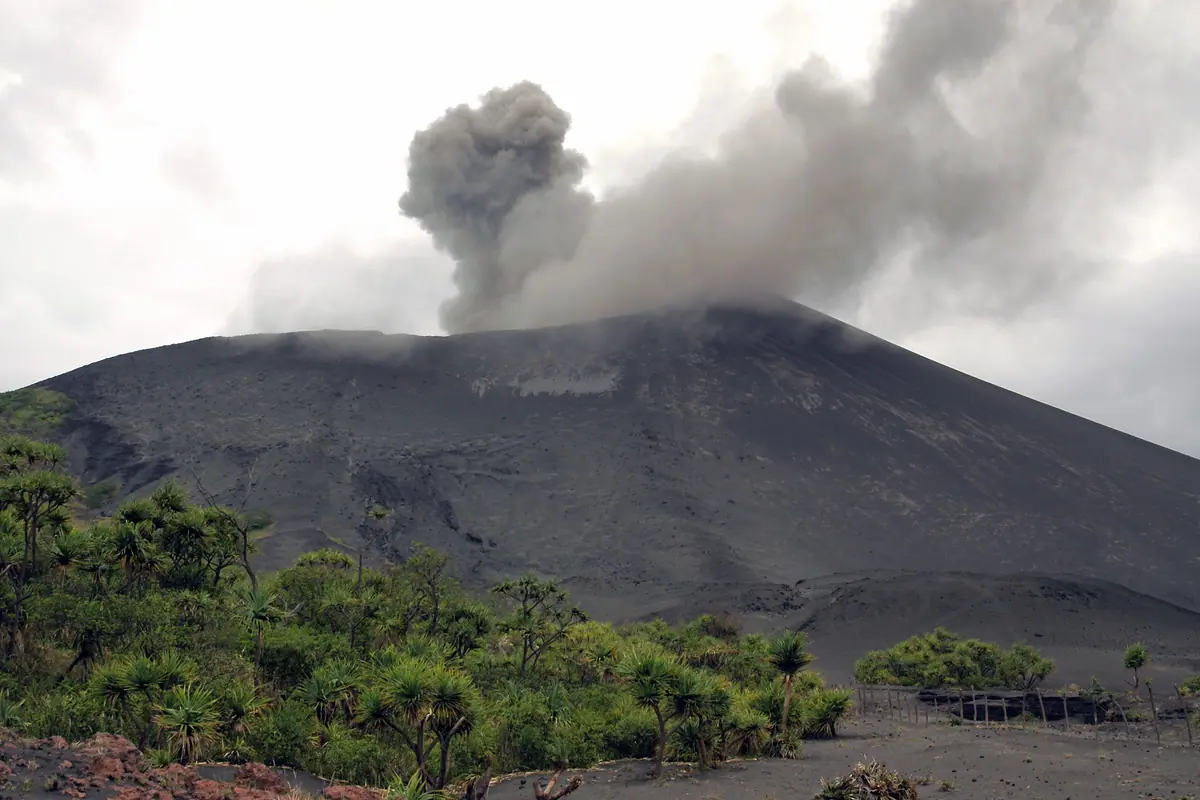
Tanna is the island people fly to for one reason, and it delivers. Mount Yasur is arguably the most accessible active volcano on earth: flights from Port Vila take about 40 minutes and land at Whitegrass on the west coast, then a 4WD track winds through villages and ash plains until the crater rim is a short, steep walk from where the vehicles stop. Go at dusk for the lava glow, or pre-dawn for a quieter rim and a sunrise over the caldera.
Accommodation on Tanna is deliberately simple — family-run bungalows and treehouse-style lodges with shared bathrooms, bucket showers and meals cooked over an open fire. The best cluster near Port Resolution in the east and along the ash plains close to the volcano, where the mountain grumbles audibly after dark. Expect sand between the floorboards, a torch in your bag and one of the best night skies in the Pacific.
Days fill easily beyond the crater: the steaming shoreline at Port Resolution, where the beach itself vents sulphur; the blue cave and hot springs; and coffee plantations around Middlebush that supply a small but serious export crop. Village visits in areas like Yakel operate under kastom, or customary law, where permission to enter is a genuine courtesy rather than a transaction. Guides are required for volcano visits, so arrange them through your lodge on arrival.
Resorts, Bungalows and Island Escapes: Choosing Your Style
Vanuatu's hotels don't follow a single template. At the top end are private-island resorts with overwater-style decks, plunge pools and dive shops on site — the island of Iririki sits a three-minute ferry ride from Port Vila's main wharf and feels a world removed. Mid-range options are the workhorses: lagoon-front resorts with restaurants, kids' clubs and nightly string bands, ideal for families who want a pool and a reef within strolling distance.
Then there are the traditional bungalows — thatch over timber, cold showers, and a shared dining table with the family who own the land. These are the stays most people remember, and on islands such as Ambrym, Pentecost and the Banks group they're the only realistic option. Bring cash, a head torch, and a willingness to go to bed when the generator does.
Wherever you book, expect the rhythm of the place to leak in. Kava stalls open at dusk, church choirs rehearse on weeknights, and Sunday is genuinely quiet — many shops and tours close, and villages appreciate visitors who dress modestly, ask before photographing anyone, and leave the reef exactly as they found it.
The Must-See Attractions That Define Vanuatu
If you see only a handful of things, make them these. On Efate: Mele Cascades, the marine reserve at Hideaway Island, the Eton Blue Lagoon, and the UNESCO-listed Chief Roi Mata's Domain, a site that ties together cave paintings, a chiefly burial island and an oral history still told by local communities. In Port Vila itself, the Vanuatu Cultural Centre holds one of the Pacific's finer collections of slit gongs, masks and outrigger canoes, and the market is the best place to buy island dresses, woven mats and fresh produce.
On Santo, the headline sights are Champagne Beach, the wreck of the SS President Coolidge, Million Dollar Point — where the military bulldozed surplus equipment into the sea at the end of the Second World War — and the glowing blue holes inland. On Tanna, Mount Yasur at sunset and the hot springs and steaming sands around Port Resolution top the list.
Two more experiences belong on any longer itinerary. Between April and June, men on Pentecost Island build towers of timber and vine and leap from them with only vines bound to their ankles — the original land dive, and a ritual with strict rules about who may watch. And on Ambrym, the 'black island', the twin craters of Marum and Benbow steam above villages celebrated for Rom dances and intricate sand drawings.
When to Go, What to Pack and Practical Tips
May to October is the dry season and the most comfortable window: lower humidity, daytime temperatures in the low-to-mid twenties, and the clearest underwater visibility of the year, often 30 metres or more. November to April turns warmer, wetter and greener, and it overlaps the cyclone season that peaks between December and April. Dive and volcano trips run year-round, but build a little slack into inter-island flights during the wet months.
Distances here are measured in flights, not kilometres. Small twin-prop aircraft link Port Vila with Santo, Tanna and a handful of outer islands, with strict luggage limits — usually 10 to 15 kilograms — so pack light and leave the hard suitcase at home. Inter-island cargo boats and workboats are cheaper but slow and irregular. On Efate and Santo a rental car or 4WD is useful, though on Tanna you'll want a local driver for the volcano road.
Money comes in vatu, and cash is king once you leave Port Vila or Luganville; ATMs are scarce and cards aren't accepted at most village bungalows. Budget for full-board rates on the outer islands, since there's nowhere else to eat. Pack reef-safe sunscreen, strong insect repellent, a rain shell, and shoes you don't mind getting muddy. Tipping isn't expected, a simple 'thank you tumas' goes a long way, and Sunday is best spent swimming rather than shopping.
Frequently asked questions
Which area of Vanuatu is best for a first visit?
Base yourself on Efate, in or just outside Port Vila, for the first few nights. You'll have the easiest access to the international airport, the widest choice of hotels and restaurants, and day trips to Mele Cascades, Hideaway Island and the Eton Blue Lagoon. Add a domestic flight to Santo or Tanna if you have more than a week.
How many days do you need in Vanuatu?
Ten days to two weeks lets you do it properly: three or four nights on Efate, three or four on Espiritu Santo for the wreck diving and Champagne Beach, and two nights on Tanna for Mount Yasur. A one-week trip works if you limit yourself to Efate plus one outer island, since domestic flights and transfers eat into your time.
When is the best time to visit Vanuatu?
May through October offers the driest, coolest conditions, with temperatures typically in the low twenties and the year's best diving visibility. The wet season runs November to April, bringing humidity and the risk of cyclones between December and April. July, August and the Christmas period are peak travel times, so book outer-island lodges well ahead.
Do you need domestic flights to see the outer islands?
Yes, for Santo, Tanna and most other islands — small aircraft run regular services from Port Vila, with tight luggage limits of around 10 to 15 kilograms per person. Ferries and cargo boats serve some routes but are slow and infrequent. On Efate and Santo you can reach most sights by rental car; on Tanna, hire a local 4WD and driver.
Is Vanuatu an expensive place to stay?
It covers the full range. Private-island resorts and lagoon resorts charge international rates, mid-range lagoon hotels sit comfortably below that, and village bungalows on islands like Tanna and Ambrym are genuinely affordable — usually quoted per person including meals. Remember that outer-island stays are effectively full board, and bring cash in vatu, as card facilities are limited outside the two main towns.
Sort the rest of your trip
Everything for Vanuatu, in one place
Transfer in Vanuatu
Private driver waiting on arrival — no queues, no surprises.
Book a transfer
Things to do in Vanuatu
Skip-the-line tickets, guided tours and standout experiences.
See experiences
Stay online in Vanuatu
Travel eSIM — data the moment you land, no roaming bills.
Get an eSIMMore guides in Vanuatu

Best Time to Visit Vanuatu: Weather, Festivals and When to Book Your Hotel

Vanuatu Food, Culture and Local Experiences: A First-Timer's Guide

Vanuatu in One Week: A Flight-Hopping Itinerary from Port Vila to Tanna and Espiritu Santo