Vanuatu is 83 islands of volcanic soil, coconut cream and unhurried ritual, where an evening begins with a shell of kava and a village feast cooks under hot stones. Between the nakamals and the smoking rim of Mount Yasur, this is a country you taste and sit with rather than simply see. Here is how to do it properly, from the market stalls of Port Vila to the vine-jumpers of Pentecost.
Kava at Dusk: The Ritual That Opens Every Evening
As the light drops behind the hills of Efate, nakamals across Vanuatu begin to fill. These are not bars in any familiar sense: a nakamal is an open-sided shelter of bamboo and corrugated iron, lit faintly, with long benches and the low murmur of men talking in Bislama. Inside, a woman or a young man ladles milky kava — ground root of Piper methysticum mixed with water — into a half coconut shell and passes it over. You cup it in both hands, clap once, drink it down in a single swallow, hand the shell back and clap again. The taste is earthy, peppery and faintly muddy; the effect is a soft numbness of the lips and a slow, pleasant calm that lasts twenty minutes or so.
Kava is the social fabric of the country. Root grown on Pentecost and Tanna is prized for strength, and the distinction between smooth, clean 'noble' kava and the heavier tudei variety is debated as seriously here as wine is elsewhere. Traditionally nakamals were male spaces, and many still are; a growing number in and around Port Vila welcome women and visitors, but the rule everywhere is the same — ask first, keep your voice down, and don't treat it as a photo opportunity. Two or three shells is a normal evening; more than that and the walk home becomes interesting.
If you want to understand Vanuatu beyond the resorts, this is the cheapest and truest hour of your trip. Go with a local guide the first time, learn the clapping etiquette, and notice how conversation loosens as the night goes on. It is a ritual of welcome as much as a drink.
Port Vila Market and the Art of Laplap
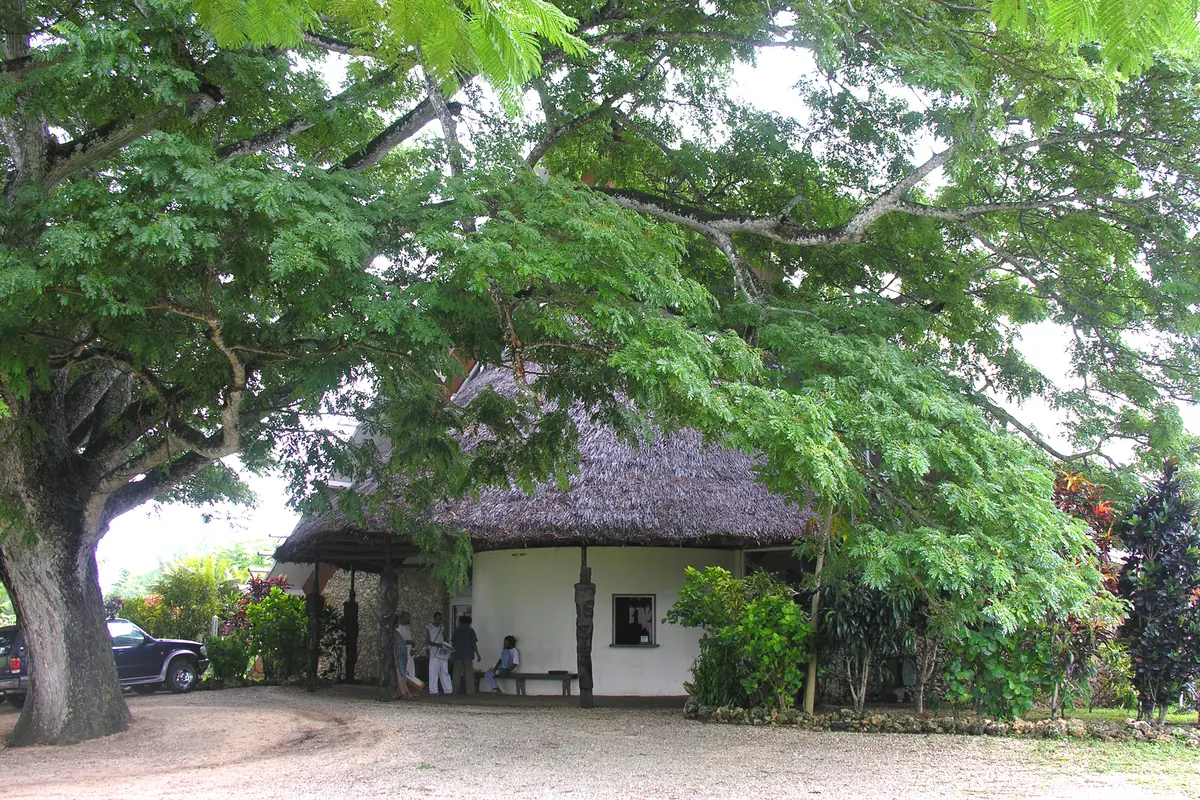
Port Vila's market sits at the edge of the harbour, and it is the best introduction to ni-Vanuatu food you will find anywhere. Mamas arrive before dawn with woven baskets of taro, yam, kumala, manioc, island cabbage, peanuts, aelan nuts and hands of small, intensely sweet bananas. Saturday morning is the great gathering — the stalls overflow, someone is always playing a guitar, and the smell of woodsmoke drifts from the row of cooked-food tables at the back.
That back row is where you eat. Laplap, the national dish, is grated taro, yam or manioc mixed with thick coconut cream, wrapped in banana leaves or island cabbage and baked slowly in an earth oven over heated stones. Variations include tuluk, a manioc dough stuffed with coconut and steamed in leaves, and simboro, grated banana and coconut rolled into parcels. Look for laplap with chicken, pork, or taro leaves and coconut; ask for nakamal-style portions and eat with your fingers. Elsewhere in the country the same earth-oven cooking produces coconut crab on Santo and the Maskelyne Islands, superb reef fish, and Santo beef raised on the big island's pastures.
Two local specialities deserve a deliberate detour: Tanna coffee, grown on volcanic slopes and roasted dark and small-batch, and Vanuatu cocoa, which has quietly become some of the finest in the Pacific. Add a cold coconut after a hot morning and you have the whole food story of the islands in one sitting. The small museum and cultural centre at the market end of the waterfront is worth an hour afterwards, with slit drums, outrigger canoes and displays on sand drawing, an art form inscribed on the world's intangible heritage list.
Kastom: Village Life, Protocol and Chief Roi Mata's Domain
Kastom is the Bislama word for custom — the body of tradition, land law, dance and ceremony that governs village life across the archipelago. Visiting a kastom village is one of the most rewarding things you can do in Vanuatu, and also the one that requires the most care. Access is always arranged through a local guide or village representative; a small entry fee is normal and goes to the community. Dress modestly — shoulders and knees covered, no bikinis away from the beach — ask before photographing anyone, never touch a person's head, and follow your guide's lead on where you may and may not walk.
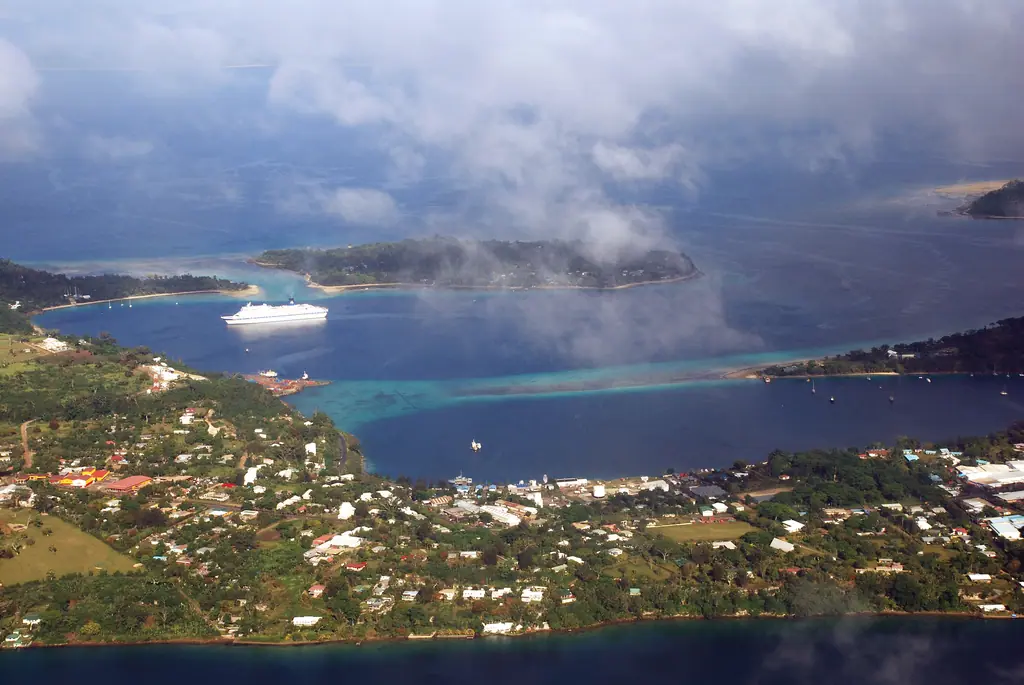
On Efate, cultural villages near Port Vila demonstrate weaving, fire-making, kava preparation and dance for visitors, and they make a gentle first introduction. For something far older, take a boat across to Lelepa and Hat Island for Chief Roi Mata's Domain, a UNESCO World Heritage landscape linked to a 17th-century paramount chief whose burial site and cave paintings at Fels Cave remain taboo ground. The silence there, and the way the community still guards it, tells you more about Vanuatu than any museum label.
Further afield the traditions sharpen. On Ambrym, masked dancers perform the Rom, a graded-society ceremony tied to magic and carved tamtam drums. On Malekula you can visit the Big Nambas of the north and the Small Nambas of the centre, named for their woven penis sheaths, in villages where the nasara — the ceremonial dance ground — is still the heart of the community. Treat every visit as a privilege extended to you, not a performance you have bought.
Tanna: Mount Yasur and the Cargo Cults
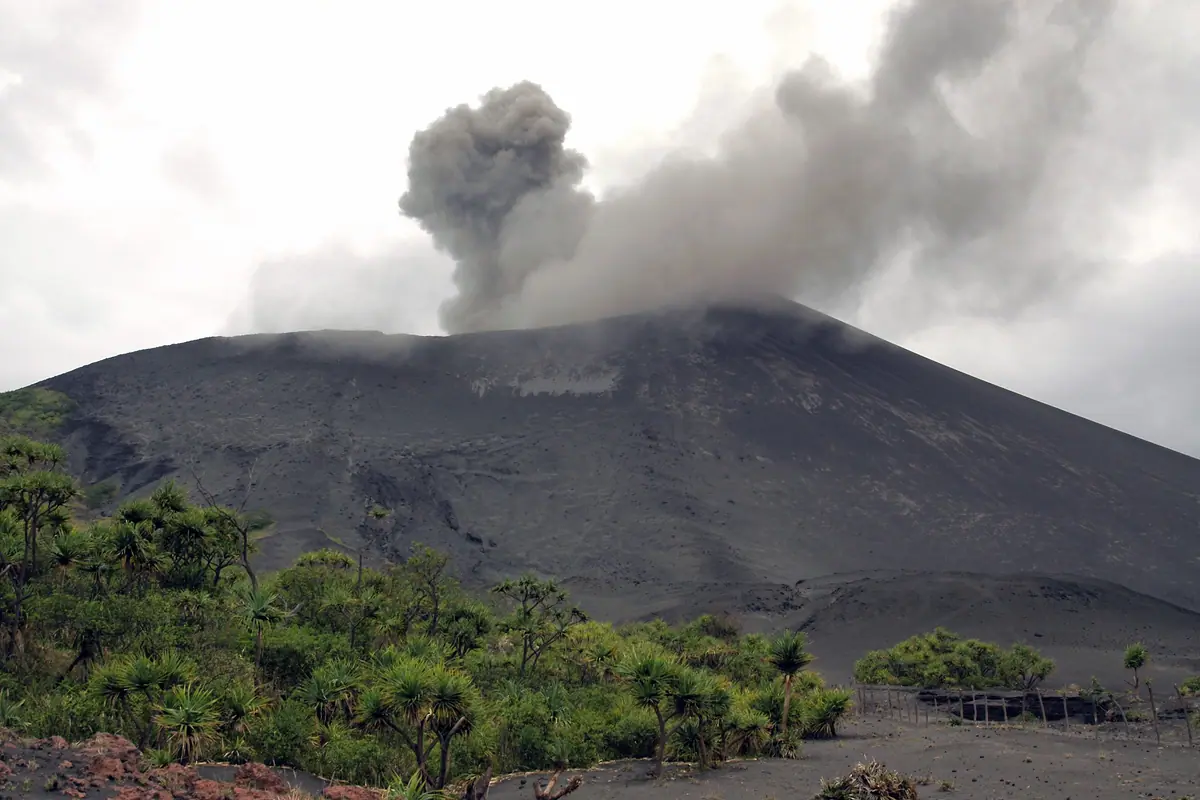
Tanna is the island people remember longest. Its centrepiece is Mount Yasur, one of the most accessible active volcanoes on earth — you can drive most of the way to the rim and stand at the edge as ash clouds and lava bombs thump out of the crater below. Tours typically run in the late afternoon so you catch the glow after dark, and the drive up through ash plains and pandanus is its own experience. Wear closed shoes, expect grit in your teeth, and listen to your guide absolutely: the volcano has a defined safe viewing area for good reason, and access can be closed when activity spikes.
Yasur is sacred ground, and it sits at the heart of Tanna's extraordinary religious landscape. Sulphur Bay, on the coast below, is the home of the John Frum movement, whose followers raise a flag and dance every 15 February in anticipation of a returning ancestor-hero. In the hills at Yaohnanen, the Prince Philip movement has for decades venerated a distant British royal figure as a returned spirit. Both are living faiths, not curiosities, and visitors are welcomed only on the community's terms — usually on organised tours with clear rules about filming.
Base yourself around Port Resolution, where Captain Cook anchored in 1774, or in the small guesthouses near Lenakel. Add a morning in a kastom village such as Yakel, where men still drink chewed kava from a communal shell and women wear grass skirts, and you have a day that feels genuinely unlike anywhere else in the Pacific. Book flights from Port Vila well ahead in the dry season; seats to Tanna fill quickly.
Pentecost's Land Divers and the Island of Magic
Every Saturday from April to June, on the yam-growing plateau of south Pentecost, men and boys climb towers of timber and vine — some 20 to 30 metres high — and jump. Vines are lashed to their ankles, the crowd sings, and the diver falls until the vines snap taut and his shoulders brush the earth. This is naghol, the original bungee jump, a harvest ritual tied to the yam season and to a young man's standing in the community. It is not staged for tourists, though visitors are permitted to watch when arrangements are made properly through village leaders and a local operator; the towers are built from forest materials in a matter of days and dismantled afterwards.
Watching naghol is a full-day expedition, usually flown in from Port Vila, and it demands patience, respect and a tolerance for heat. Keep well back from the tower, don't walk beneath it, and follow instructions about where to stand — the event has its own rules and its own hierarchy, and the diving ground is sacred. The timing is fixed: outside the yam season there is nothing to see, no matter what anyone promises you.
Nearby Ambrym, known across Vanuatu for its magic and its carvings, offers a different kind of spectacle: active craters at Mount Benbow and Mount Marum for serious trekkers, and Rom dances performed by masked men in a tradition that outsiders are rarely lucky enough to witness. Further south, Malekula's kastom villages complete the picture. If you have time for only one cultural expedition beyond Efate, make it this one.
Espiritu Santo: Blue Holes, Champagne Beach and Wreck Diving
Espiritu Santo is the largest island in Vanuatu and, in many travellers' estimation, the most beautiful. The east coast road runs past Matevulu and Nanda blue holes — freshwater springs of startling cobalt clarity, ringed by jungle, with ropeswing platforms and swimming holes that feel engineered by someone with excellent taste. Continue north to Champagne Beach, a curve of white sand so soft it squeaks underfoot, and to Port Olry, a French-speaking village where the seafood — grilled fish, coconut crab, lobster — arrives straight off the boats. Some beaches are on customary land and charge a small access fee payable to local landowners; pay it cheerfully, it keeps the place uncrowded.
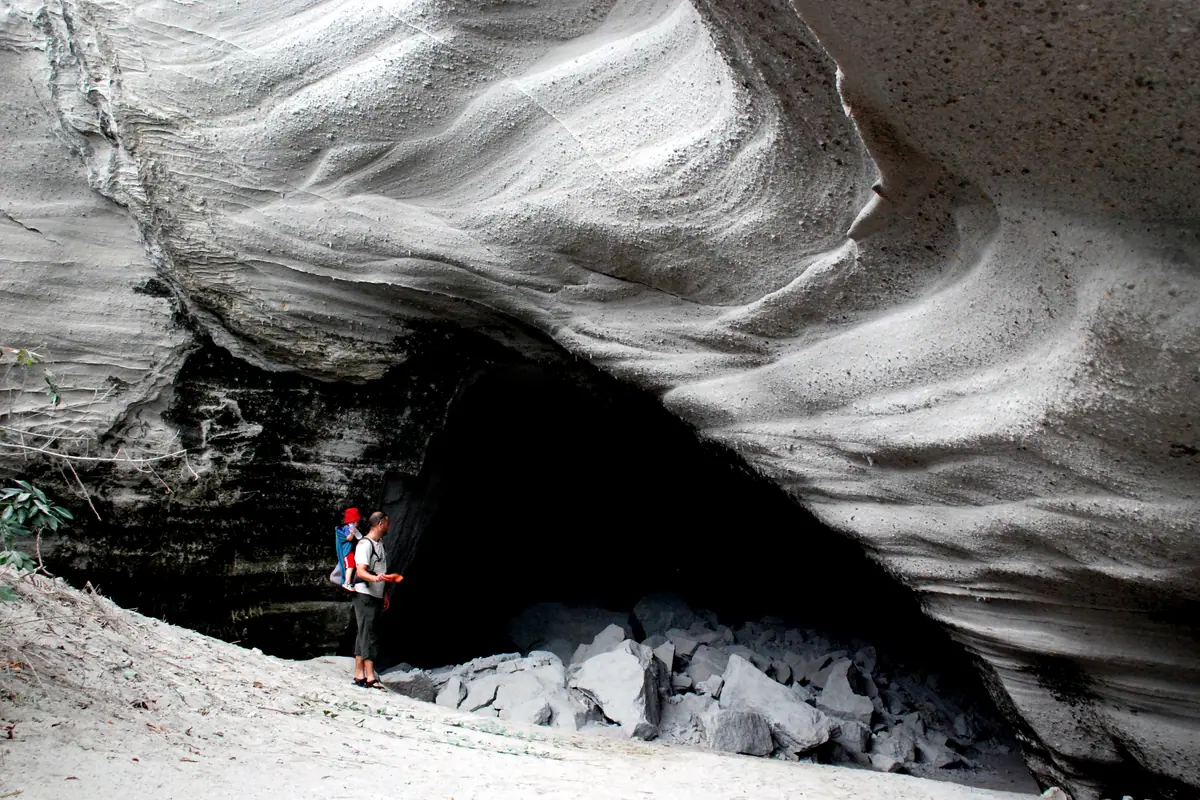
Inland from Luganville, the Millennium Cave trip is Santo's big adventure: a full day of jungle walking, river wading and scrambling through a cavern system, led by guides from the surrounding villages. Offshore, in the Second Channel, lies the wreck of a Second World War troop ship that sank after striking a mine — today one of the world's great shore dives, with helmets, trucks and rifles still sitting in the corridors at depths recreational divers can reach. Even snorkellers can see the upper decks on a good day, and there are plenty of reefs and a few dedicated dive sites in the same area for beginners.
Allow at least three or four days here. Fly into Luganville from Port Vila, rent a vehicle or arrange a driver, and split your time between the blue holes, the beaches, a market morning in town and one full-day adventure. Santo's beef, cocoa and tropical fruit all appear on local menus, so eat properly while you are here.
Frequently asked questions
What exactly is kava, and can visitors try it?
Kava is a drink made from the ground root of a pepper plant, mixed with water and served in a half coconut shell at a nakamal. It tastes earthy and numbs the mouth slightly, then brings a calm, relaxed feeling for around twenty minutes. Many nakamals around Port Vila welcome visitors and women; others remain men-only, so always ask before entering. Clap once before and once after drinking, and keep the atmosphere quiet.
Where can I try laplap and other traditional Vanuatu food?
The cooked-food stalls at Port Vila's waterfront market are the easiest introduction, especially on a Saturday morning. Laplap — grated root vegetables with coconut cream, wrapped in leaves and baked in an earth oven — plus tuluk and simboro are all sold there cheaply. Village feasts arranged through guesthouses and cultural tours offer the same dishes done properly, and Santo and the Maskelyne Islands are known for coconut crab.
When is the best time to see the land diving on Pentecost?
Naghol takes place on Saturdays from roughly April to June, tied to the yam harvest, and only on south Pentecost. There is nothing to see outside that window. Trips are usually flown in from Port Vila as a long day out, and they must be booked through a local operator working with the village, since the diving ground is sacred and access is controlled.
Is Mount Yasur safe to visit, and how do I get there?
Access depends on volcanic activity, and guides monitor it constantly; the viewing area can be closed when it is unsafe. Tours on Tanna drive close to the rim, usually in the late afternoon so you see the glow after dark. Fly from Port Vila to Tanna, allow at least two nights, and bring closed shoes, a light jacket and something to cover your face against ash.
What is the best time of year to visit Vanuatu, and how long do I need?
The dry season from April to October brings lower humidity, steadier weather and reliable inter-island flights. November to April is cyclone season — hot, wet and cheaper, with the risk of disrupted travel. Ten days to two weeks lets you cover Efate, Tanna and Espiritu Santo without rushing, but even a week split between Port Vila and one outer island gives a real taste of the country.
Sort the rest of your trip
Everything for Vanuatu, in one place
Stay in Vanuatu
Hotels, guesthouses and apartments — compared in one search.
Search hotels
Transfer in Vanuatu
Private driver waiting on arrival — no queues, no surprises.
Book a transfer
Stay online in Vanuatu
Travel eSIM — data the moment you land, no roaming bills.
Get an eSIMMore guides in Vanuatu

Where to Stay in Vanuatu: Hotels, Island Resorts and Must-See Attractions

Best Time to Visit Vanuatu: Weather, Festivals and When to Book Your Hotel

Vanuatu in One Week: A Flight-Hopping Itinerary from Port Vila to Tanna and Espiritu Santo