Vanuatu is not one island but a scattered necklace of volcanic peaks and coral shelves strung across more than a thousand kilometres of the South Pacific, and the only way to taste three of its greatest hits in seven days is from the air. This route lands you in Port Vila, hops south to Tanna for a night on the rim of a restlessly active volcano, then flies north to Espiritu Santo for blue holes, white sand and a wartime wreck you can swim across.
Day 1: Touchdown in Port Vila and Finding Your Feet on Efate
Most visitors arrive at Bauerfield International Airport on the main island of Efate, a short ten-minute drive from the capital, Port Vila. Direct flights run from eastern Australia in roughly two and a half to four hours, and from New Zealand in a little over three, which makes Vanuatu one of the most reachable Pacific destinations for a week-long trip. Expect heavy, honey-thick humidity the moment the doors open, and a currency — the vatu — that is still largely cash-driven outside the capital, so withdraw in town before heading to the outer islands. English, French and Bislama are all official, and a cheerful "halo" will get you further than anything else.
Spend the first afternoon easing in rather than sprinting. Wander the produce stalls of the Port Vila market, where bundles of island cabbage, fiery peppers and strings of red shell money mark out the season, then walk the waterfront and take the tiny passenger ferry across to Iririki Island for a swim and a view back over the harbour's moored yachts. As the light softens, drive a few kilometres north toward Mele and watch the sun drop behind the ridgelines. Finish at a nakamal, a bare-bones kava bar where you drink a coconut shell of muddy, peppery kava in near silence — your lips and tongue will go pleasantly numb within minutes. It is the perfect introduction to the country's after-dark ritual, and it costs the equivalent of a couple of dollars.
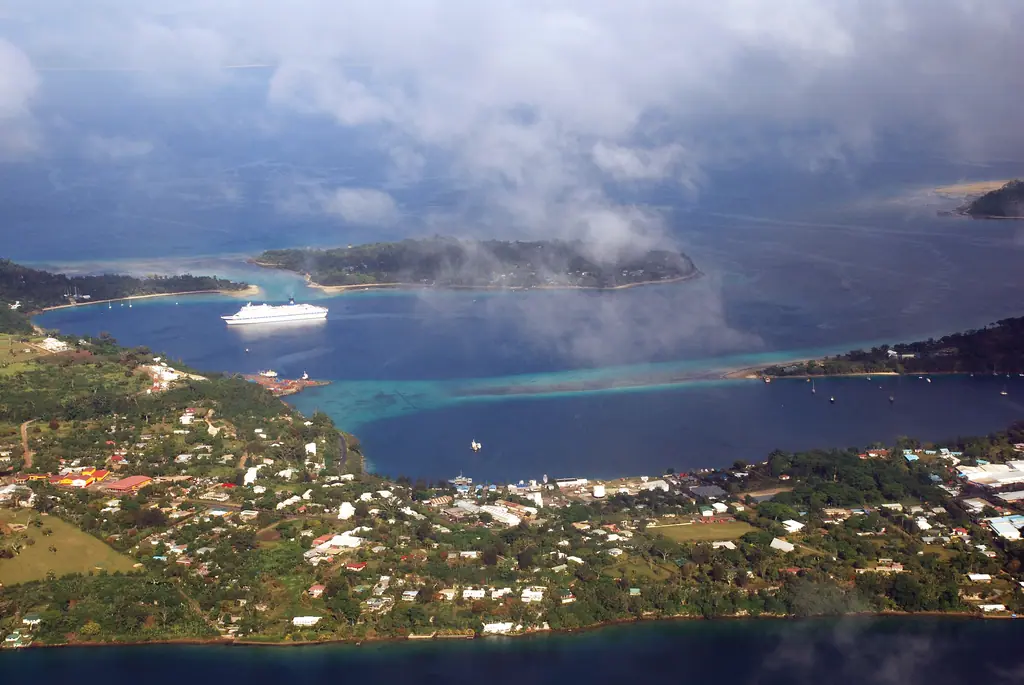
Days 2–3: Efate by Road — Mele Cascades, Hideaway Island and the Blue Lagoon
Efate rewards a self-drive or a hired driver along the Ring Road, which loops the island in about two hours of actual driving — though you will want a full day once you start stopping. The headline sight is the Mele Cascades, a tiered waterfall and swimming hole set in jungle about twenty minutes from town. Go early, before the day-trippers, wear shoes with grip for the slippery limestone, and climb to the upper pools where the crowds thin out and the water is glass-clear. From there, Mele Bay leads to the Hideaway Island Marine Reserve, reached by a small boat and fringed by coral that starts in waist-deep water — bring a mask even if you are not a confident swimmer, because the reef is right there beside the sand.
Push further around the coast and the scenery shifts to a string of swimming spots strung along the east. The Blue Lagoon near Eton lives up to the cliché with almost surreal turquoise water and rope swings, Eton Beach offers a long curve of pale sand and shallow reef, and the Ekasup Cultural Village nearby runs short guided walks explaining traditional plant medicine, fire-making and fishing. If you have a spare half-day, boats run from Havannah Harbour to the offshore islands of Pele and Nguna, where the snorkelling is quieter and the villages welcome day visitors.
Two nights on Efate is the right amount if you keep moving, but note the rhythm of island life: almost everything shuts on Sunday, shops close early even on weekdays, and the afternoon heat between noon and three is best spent in water rather than on a hiking trail. Fill the car with fuel in Port Vila, carry drinking water, and treat the drive as part of the pleasure — the road winds past cattle pastures, coconut plantations and villages where children wave at every passing vehicle.
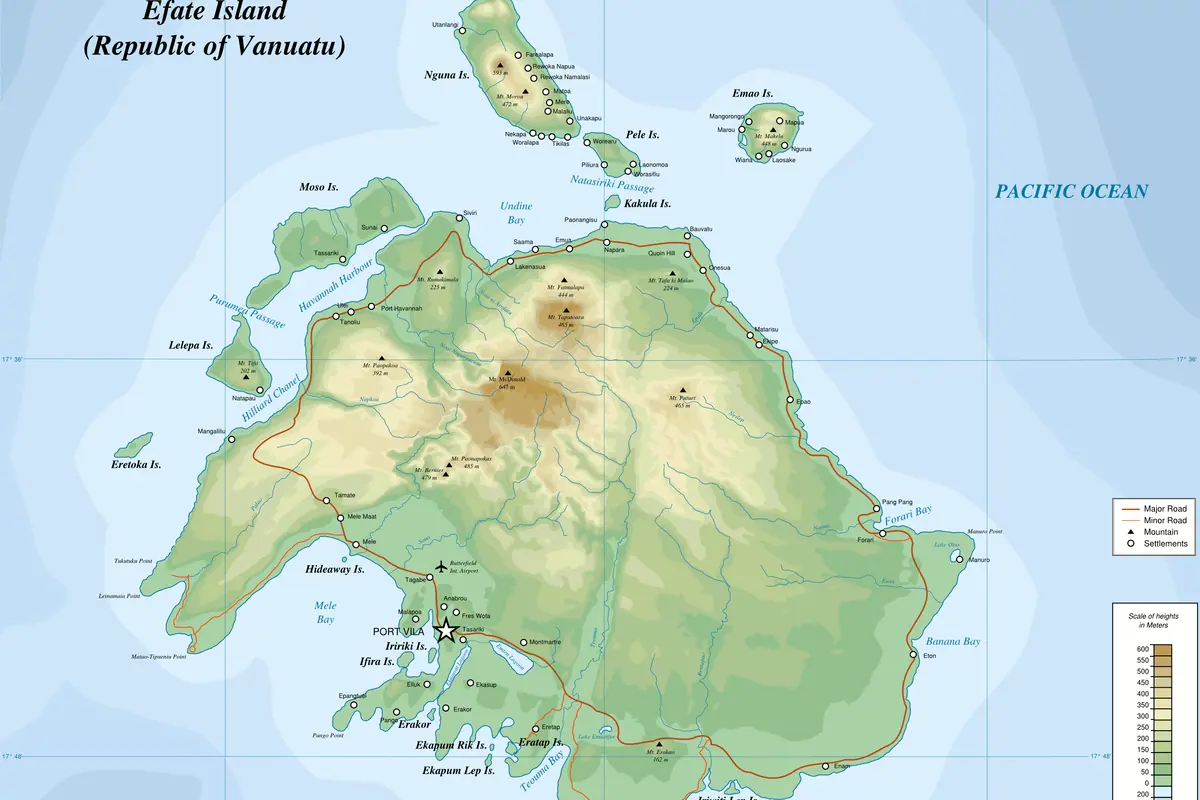
Day 4: The Short Hop to Tanna and the Rim of Mount Yasur
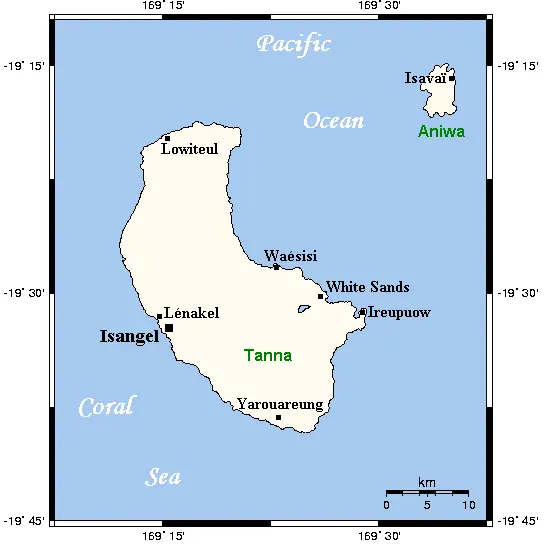
The domestic flight south to Tanna takes about forty minutes in a small twin-prop aircraft, and it is one of the great short flights anywhere: beneath you, a chain of volcanic islands rises from deep blue water, some trailing thin plumes of steam. Domestic fares on this route sell out in the June-to-August high season, so lock in seats as soon as your international dates are fixed. Baggage is strictly limited on the lighter aircraft — typically around ten to fifteen kilograms in soft bags, weighed at check-in — so pack a small duffel and leave the hard suitcase behind. You land at Whitegrass Airport on the north-west coast.
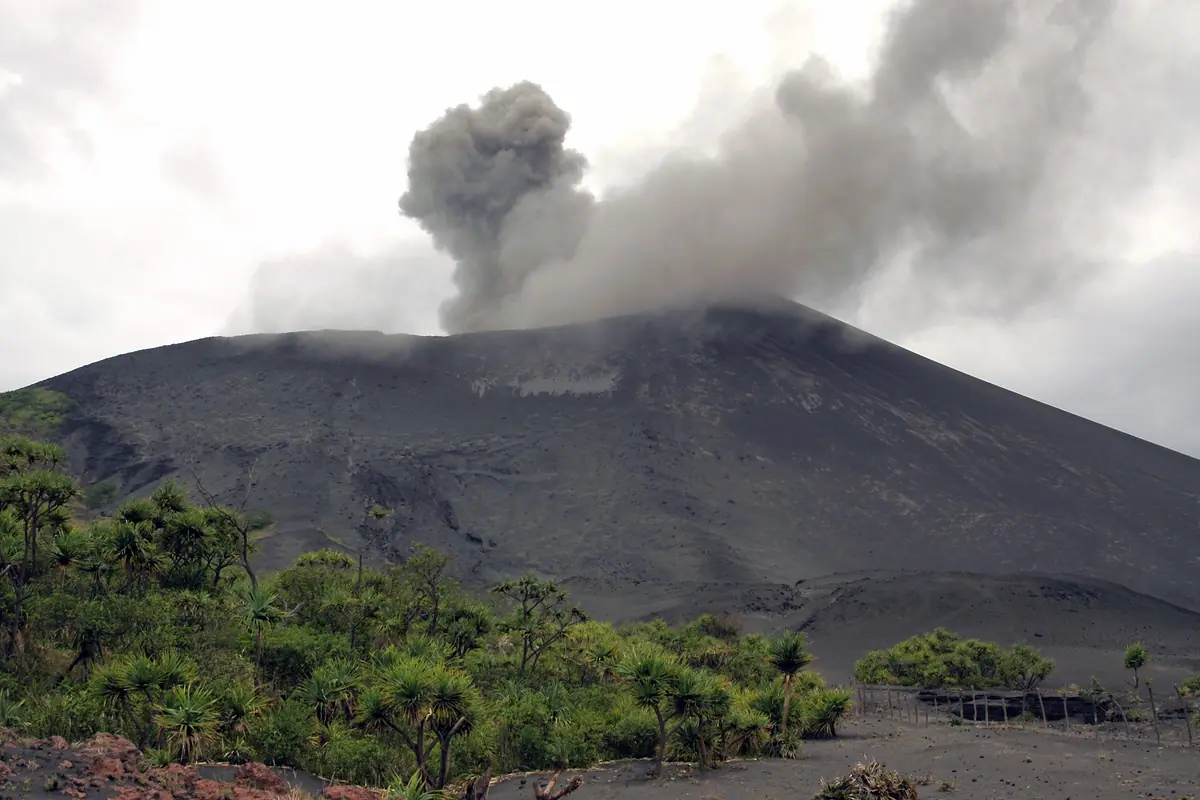
From there it is a bumpy, spectacular drive of roughly an hour to the volcano's edge, or closer to two if you are coming up from the main town of Lenakel in the south-west. Mount Yasur is one of the most accessible active volcanoes on Earth, and tours run in the late afternoon so you reach the crater rim as the light fades. Access is guided only, and for good reason: you stand on ash and cinder within a few hundred metres of vents that throw glowing rock into the air with a sound like distant artillery. Bring a windproof jacket, a dust mask or bandana, and closed shoes you do not mind ruining.
The show builds after dark, when the eruptions light up the plume from inside and the whole rim flickers orange. Tours usually allow forty-five minutes to an hour at the top, and the descent is by torchlight down loose volcanic scree. Keep the following morning free rather than booking a dawn flight out — ash fall or cloud can occasionally ground aircraft, and a relaxed buffer on Tanna is far better than a sprint to the airstrip.
Day 5: Port Resolution, Tanna Kava and the Flight Back to Efate
Use the morning to explore Tanna's south-east coast around Port Resolution, the bay named by Captain Cook in 1774 when he anchored here. It is a place of black sand, coconut palms leaning over the water and hot springs that bubble up straight through the beach at low tide. Small village guesthouses here are simple — shared bathrooms, solar power, meals of fish, taro and rice — but staying a night gives you a far more honest sense of island life than a rushed day trip, and the volcano smoulders on the horizon the whole time.
Tanna is also the heartland of kastom, the traditional culture that shapes everything from land ownership to ceremony. You can visit villages that follow the John Frum movement, see the famous dirt-floored kava bars where men gather at dusk, and drink Tanna kava — which is notably stronger and rougher than what you will find in Port Vila. Tanna coffee, grown on the island's volcanic slopes, makes the best souvenir you can legally carry home. If your timing is lucky, the nearby island of Pentecost runs its land-diving ceremonies in April and May, when men leap from towering wooden towers with vines tied to their ankles.
Flights back to Port Vila take about forty minutes. Resist the temptation to book an international connection the same day; afternoon domestic services can be delayed by weather or aircraft rotation, and the sensible plan is a final night in the capital before flying out. That also gives you one more evening for the Port Vila waterfront and a last shell of kava.
Day 6: North to Espiritu Santo — Champagne Beach and the Blue Holes
The hop north to Espiritu Santo, Vanuatu's largest island, takes around fifty minutes and lands at Pekoa Airport just outside Luganville. Santo is where the country's postcard images come from. Champagne Beach, near Hog Harbour on the east coast, is a sweep of powder-white sand and impossibly clear water that deserves its reputation — arrive in the morning, when the day boats have not yet landed. Neighbouring Lonnoc Beach is quieter still, and further north the village of Port Olry pairs a pretty bay with fresh lobster lunches cooked at roadside tables.
The island's freshwater blue holes are its other signature. Nanda Blue Hole, ringed by jungle and deep enough to dive into, is the most famous; Matevulu and Riri blue holes are smaller and often empty. All three are spring-fed, startlingly cold, and the kind of swimming that makes a hot afternoon disappear. Inland, the full-day Millennium Cave trek takes you through a canyon, down a river and into a vast cavern alive with swiftlets and bats — guides are compulsory, and the day involves wading, scrambling and a lot of mud, so leave the flip-flops at the guesthouse.
Divers should not miss the wreck of the SS President Coolidge, a wartime troopship lying just off Luganville and widely regarded as one of the world's largest and most accessible wreck dives, reachable from shore and sitting between roughly twenty and sixty metres. Even snorkellers can see the shallower sections. Nearby Million Dollar Point, where military equipment was dumped into the sea at the end of the war, is a strange and haunting snorkel over trucks, bulldozers and crates turned into artificial reef.
Day 7: Chief Roi Mata's Domain and the Flight Home
If you have built your final day back on Efate, spend it at Chief Roi Mata's Domain, the country's UNESCO World Heritage listing and its most important cultural site. Guided boat tours run from the village of Mangaliliu on the north-west coast to Hat Island, taking in the chief's burial site, the abandoned village of Mangaas, and the oral traditions that have kept the area taboo for centuries. It is a deeply respectful experience rather than a spectacle, and it will reframe everything you have seen of Vanuatu's history.
Departure logistics matter more here than in most destinations. Domestic flights between Santo, Tanna and Port Vila are operated by small carriers with limited daily rotations, so always keep a night in the capital between your last island and your international departure. Weigh your bags before you leave the guesthouse, expect to pay for excess on the lighter aircraft, and pack soft-sided luggage. The dry season, roughly May to October, brings the most reliable flying weather, lower humidity and the clearest volcano views; November to April is the cyclone season, with heavy rain, occasional flight disruption and stifling heat, though it also brings lower rates and emptier beaches.
One week is enough to touch three islands well, but only just — and only if you treat the flights as the spine of the trip rather than an afterthought. Book domestic sectors early, build slack into every transfer day, and let the small planes and short hops do the hard work. The reward is a week that moves from jungle waterfalls to a live volcano to a wreck on the seabed, all without ever feeling like you have been on a bus.
Frequently asked questions
How do you travel between the islands in Vanuatu?
Almost entirely by small domestic aircraft. The key routes are Port Vila to Tanna (about 40 minutes) and Port Vila to Espiritu Santo (about 50 minutes), with a handful of departures each day on twin-prop planes. Luggage is strictly capped, often around 10–15 kg in soft bags, and seats sell out in the June-to-August peak. Inter-island ferries and cargo boats exist but are slow, infrequent and weather-dependent, so they suit travellers with weeks rather than days.
When is the best time of year to visit Vanuatu?
The dry season from May to October offers the most settled weather, lower humidity and the best odds of clear views from Mount Yasur. July and August are the busiest and priciest months. November to April is the cyclone season, bringing heavy downpours, high heat and a small risk of flight disruption, but also cheaper accommodation and quiet beaches. April and May coincide with the land-diving ceremonies on Pentecost.
Is it safe to visit Mount Yasur?
Yes, but only with a licensed local guide, and access level depends on the volcano's current alert status. Tours run mostly in the late afternoon so you reach the rim at dusk, with about 45–60 minutes at the top. Expect ash, sulphur gas and flying cinders — wear closed shoes, bring a jacket and a dust mask, and follow your guide's instructions about where to stand without question.
Can I visit Tanna or Santo as a day trip from Port Vila?
You can fly there and back in a day, but it is rushed and risky. Flight delays are common on the smaller aircraft, and a missed return leg means an unplanned night away. Two nights on Tanna and two on Espiritu Santo is the minimum that lets you see the volcano and the blue holes without sprinting, and both islands deserve more than that.
What should I know about money and customs in Vanuatu?
The currency is the vatu, and while cards are accepted at larger hotels and restaurants in Port Vila and Luganville, the outer islands run on cash — bring enough for meals, tours, market purchases and kava. Tipping is not expected. Village visits should be arranged through local guides, modest clothing is appreciated away from the beach, and Sunday is widely observed as a day of rest, with most shops and many tours closed.
Sort the rest of your trip
Everything for Vanuatu, in one place
Stay in Vanuatu
Hotels, guesthouses and apartments — compared in one search.
Search hotels
Transfer in Vanuatu
Private driver waiting on arrival — no queues, no surprises.
Book a transfer
Travel insurance
Medical cover, delays and lost baggage — sorted before you go.
Get covered