Ukraine is a country of gilded domes, cobbled old towns, Black Sea boulevards and a mountain ridge that turns white each January. Where you sleep shapes how you see it — a courtyard townhouse in Lviv, a spa sanatorium in Truskavets, or a high-floor room looking straight down Khreshchatyk. This guide walks through the hotel scene city by city, alongside the landmarks no first-time visitor should skip.
Planning Your Stay: How Hotels in Ukraine Work Right Now
Ukraine's accommodation ranges from restored grand hotels on Kyiv's central avenue to family-run guesthouses in Carpathian villages and mineral-water sanatoriums in spa towns such as Truskavets and Morshyn. Service is warm and often multilingual in the big cities; in smaller towns expect a host who cooks breakfast herself and asks where you are from. A nationwide curfew is in force, usually running from around midnight until 5 a.m. depending on the region — hours are set locally and can change, so confirm with your hotel and plan late arrivals before it begins.
Most properties have a basement, underground car park or reinforced corridor designated as a shelter, and staff will guide guests there if an air-raid alert sounds. Power supply can be interrupted, which is why good hotels advertise backup generators, bottled water and wood-fired or gas kitchens. Booking directly by phone or email is common and often secures a better room allocation; international booking sites still list most city hotels, and cancellation policies are generally flexible. Carry your passport — registration of foreign guests at check-in is standard practice.
Kyiv: Sleeping Among the Golden Domes
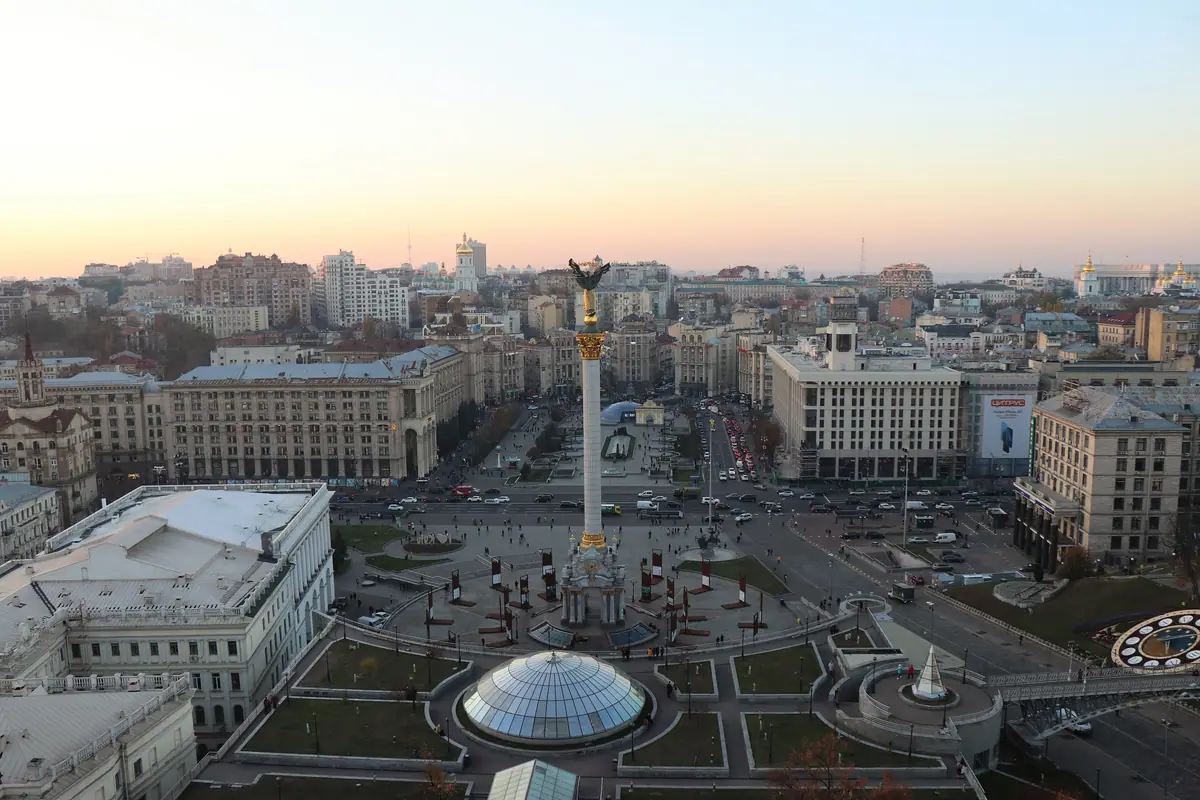
The capital rewards at least three full days. Base yourself around Maidan Nezalezhnosti and Khreshchatyk for five-star and business hotels within walking distance of the main sights, or in Podil — the old merchants' quarter of low brick houses, galleries and coffee roasters — for boutique rooms in converted 19th-century buildings. Pechersk, the leafy government district, suits travellers who want quiet streets, embassies and parkland on the doorstep.
Start at Maidan Nezalezhnosti, then climb to the Golden Gate, the reconstructed 11th-century entrance to the old walled city. Saint Sophia's Cathedral, a UNESCO-listed complex with 1,000-year-old mosaics, sits a short stroll away, and from there Andriivskyi Descent tumbles downhill past artists' stalls toward the baroque silhouette of St Andrew's Church. Give the Kyiv Pechersk Lavra half a day — the cave monasteries, bell tower and museum collections are vast — and finish with river views from Mariinskyi Park.
Kyiv is at its best in May and June, when chestnut trees flower, and again in September and early October, when the light turns golden and terraces stay open late. Winter is cold and atmospheric but days are short; museums and cathedral interiors are then the main event. Book well ahead for national holidays and the first week of May.
Lviv: Boutique Rooms in a UNESCO Old Town
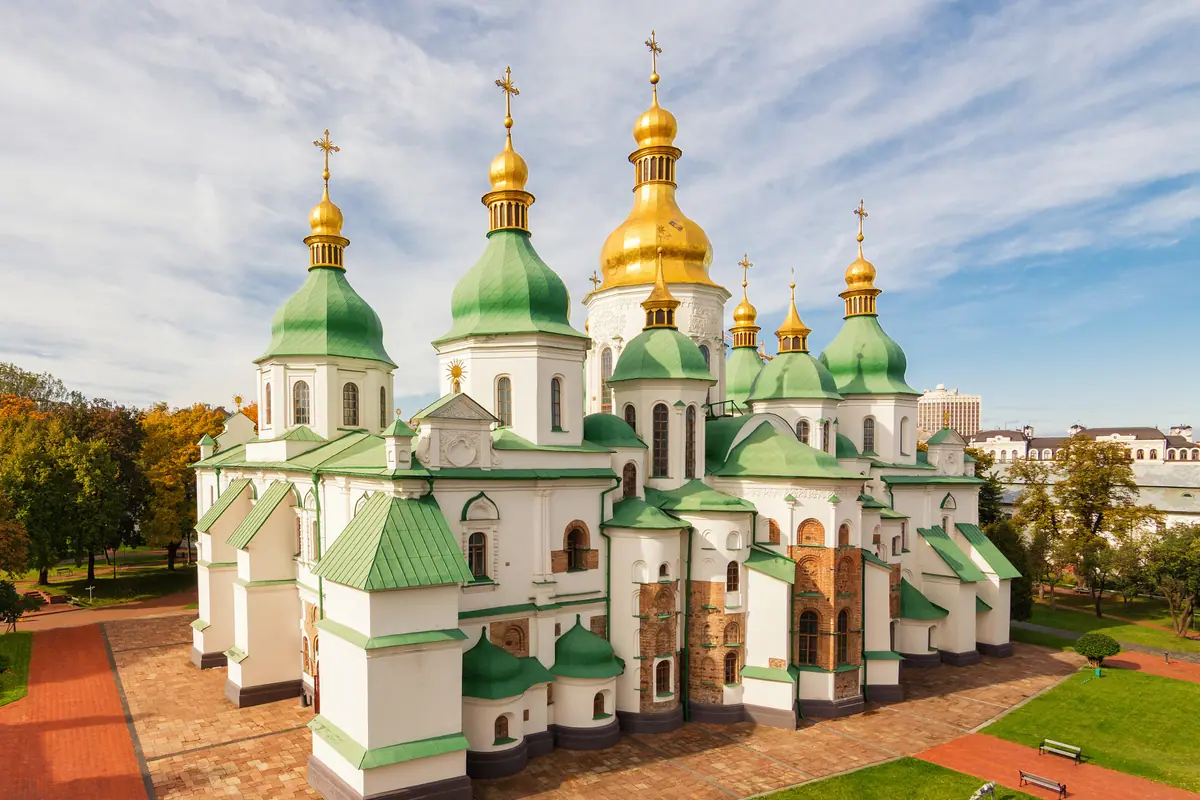
Lviv is Ukraine's most rewarding city for hotel-hunting. Dozens of townhouses around Rynok Square have been converted into small hotels and apartments, many with vaulted cellars, internal courtyards and windows opening onto the square's Renaissance arcades. Stay in the pedestrian core and you can walk everywhere; budget hostels cluster near the railway station, a 25-minute stroll or short tram ride away.
The market square itself is the anchor: climb the Town Hall tower for the rooftop panorama, then wander to the Latin Cathedral, the Armenian Cathedral with its shaded courtyard, and the exuberant Lviv Opera and Ballet Theatre, one of Europe's finest 19th-century houses. Further out, Lychakiv Cemetery is a sculpture garden of carved angels and family chapels, while High Castle Hill delivers the classic skyline view after a steep 20-minute climb.
Best months are May, June and September for café life, and December for the Christmas market, when the old town glows and mulled wine steam fills the lanes. Lviv is also the gateway to the Carpathians, so many travellers use it as a two-night bookend before heading south by train or bus.
Odesa and the Black Sea: Sea-View Hotels with Caveats
Odesa's hotel geography follows its moods: grand historic properties near Prymorskyi Boulevard and the Odesa Opera and Ballet Theatre, design hotels along Deribasivska Street, and beach resorts in the Arcadia district north of the centre. The city's scale is generous — wide avenues, pale stone facades, courtyards of mulberry trees — and a sea-facing room here is one of the great pleasures of the Black Sea coast.
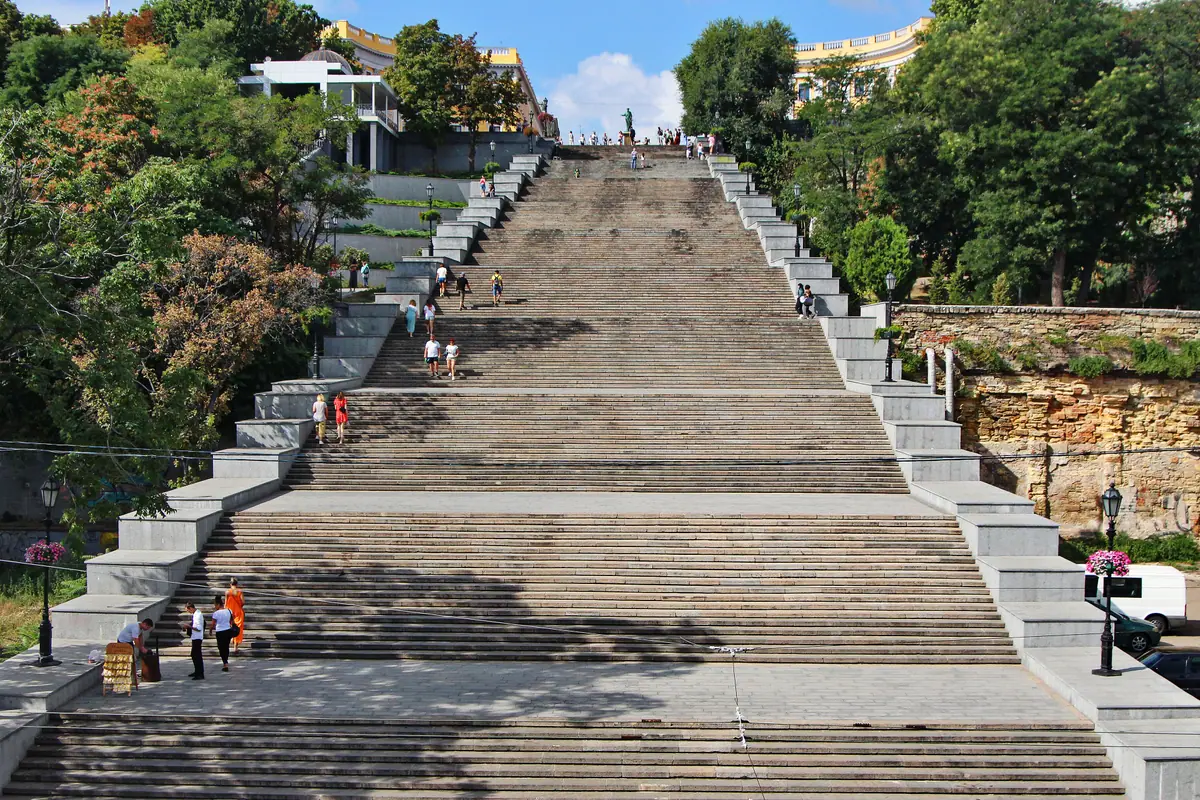
The essential walk begins at the Potemkin Stairs, the 192-step cascade down to the port, passes the Vorontsov Lighthouse and the colonnaded Prymorskyi Boulevard, and ends at the opera house, whose gilded auditorium rivals anything in Vienna or Paris for sheer decoration. Inland, the Odesa Catacombs — a labyrinth of mined tunnels — and the Moldovanka quarter offer a grittier, funnier side of the city.
Be aware that coastal regions have been affected by the war, and beach access, port areas and some districts may be restricted or subject to alerts. Check current local advice before booking a sea-view stay and confirm with the hotel which areas are open. June and September are the sweet spots for weather; July and August are hottest and busiest.
The Carpathians: Mountain Lodges, Spas and Ski Villages
Western Ukraine's mountain range offers the country's most distinctive places to sleep: timber cottages with tiled stoves, spa resorts wrapped around mineral springs, and ski hotels in Bukovel, the largest resort in the region, with lifts, snowmaking and a dense cluster of lodges within walking distance of the slopes. Traditional guesthouses — locally called sadybas — serve home-cured meats, brynza cheese and mushroom soup, and cost a fraction of an alpine equivalent.
In summer, the draws are Hoverla, Ukraine's highest peak at 2,061 metres, the glacial Synevyr Lake, the Probiy waterfall at Yaremche and the wooden churches scattered through the villages. Mukachevo's hilltop Palanok Castle and the thermal pools around Berehove add a Hungarian-flavoured detour. Truskavets and Morshyn, meanwhile, are old-fashioned cure towns where sanatoriums pump out mineral water for stomach and kidney treatments — an experience in itself.
Ski season runs from late December to March, with January and February the most reliable for snow. For hiking, June through September is ideal; spring can be muddy and autumn fogs roll in early. Trains reach Ivano-Frankivsk, Uzhhorod and Mukachevo, but you'll need a car or local bus for the last stretch into the valleys.
Beyond the Classics: Kharkiv, Chernivtsi, Kamianets-Podilskyi and More
Kharkiv, Ukraine's second city, centres on Freedom Square — one of the largest urban squares in Europe — flanked by the constructivist Derzhprom building and the Annunciation Cathedral. Dnipro offers Monastyrskyi Island beaches, the embankment promenade and a striking Jewish heritage complex. Both are large, modern cities with solid business hotels, though their proximity to the eastern front makes them places to visit only when current advice permits.
Chernivtsi is a gem: the UNESCO-listed Chernivtsi National University, a former metropolitan's residence, looks like a slice of Vienna dropped into the Bukovyna countryside, and the Turkish Square and Austrian-era streets are wonderfully intact. Kamianets-Podilskyi pairs a dramatic castle on its rock outcrop with a canyon loop of the Smotrych River, and Chernihiv's Ancient Chernihiv UNESCO sites — the Transfiguration Cathedral and the caves of the Yeletskyi monastery — make an easy day trip from Kyiv. Vinnytsia's Roshen Fountain and the forest bunker at Werwolf add a strange, fascinating footnote.
In towns like these, expect small guesthouses and Soviet-era hotels with generous breakfasts and modest bathrooms. Two nights is usually enough, except in Kamianets-Podilskyi where a full day of castle, canyon and old town is worth it. Wherever you go, keep your plans flexible and check conditions locally before travelling east or south.
Frequently asked questions
Is it safe to stay in a hotel in Ukraine right now?
Cities in the west and centre — Lviv, Kyiv, Chernivtsi, Uzhhorod — generally function normally, with hotels operating, restaurants open and transport running. Risks remain: air-raid alerts, curfews and power interruptions. Choose a hotel with a designated shelter and backup power, follow local announcements, avoid regions near the front line, and check your own government's current travel advice before booking.
How do I get to Ukraine if there are no flights?
Civilian airspace is closed, so arrivals are overland. Overnight sleeper trains and coaches connect Kyiv and Lviv with Polish cities such as Warsaw and Kraków, and there are road and rail links from Romania, Moldova, Slovakia and Hungary. Border crossings can be slow at peak times, so allow extra hours and carry snacks, water and your passport.
What should I know about the curfew and hotel life?
A curfew is in force nationwide, usually from around midnight to 5 a.m., with hours set by regional authorities and subject to change. Plan train arrivals and dinners to finish before it starts, and ask your hotel for the exact times and for a written confirmation you can show if stopped. Many hotels keep reception staffed through the night and will wake guests if an alert sounds.
When is the best time to visit Ukraine?
May and June are ideal for the cities — warm, green and full of terraces — while September and early October bring golden light and fewer crowds. December is magical in Lviv for the Christmas market. For Carpathian skiing, aim for January and February; for mountain hiking, June to September.
What about money, cards and tipping in Ukrainian hotels?
The currency is the hryvnia. Cards are widely accepted in city hotels, cafés and supermarkets, but keep cash for village guesthouses, markets and taxis. Tipping around 10 percent is appreciated in restaurants and for staff who carry bags. Passports are required at check-in for foreign guests, and registration is handled by the hotel.
Sort the rest of your trip
Everything for Ukraine, in one place
Transfer in Ukraine
Private driver waiting on arrival — no queues, no surprises.
Book a transfer
Things to do in Ukraine
Skip-the-line tickets, guided tours and standout experiences.
See experiences
Stay online in Ukraine
Travel eSIM — data the moment you land, no roaming bills.
Get an eSIM