Ukraine rewards the traveller who lets the night trains do the work: coffee-scented cobbles and wrought-iron courtyards in Lviv, gold domes floating above the chestnut trees of Kyiv, and a stairway of stone that spills into the Black Sea at Odesa. Because civilian airspace over the country has been closed since 2022, the first leg of any Ukrainian journey now ends at a border, not a departure gate — and that turns out to be the most interesting part of the trip.
The Overland Arrival: What "Flying to Ukraine" Actually Means Now
No commercial flights currently land at Boryspil, Lviv or Odesa, so the practical version of a flight ticket into Ukraine is a ticket to a gateway hub just outside it: Rzeszów and Kraków in Poland, Košice in Slovakia, Bucharest or Suceava in Romania, Budapest, or Chișinău in Moldova. From these cities the country is reached by bus, minivan or train, and the most-travelled corridor runs Rzeszów to the Polish border town of Przemyśl in about ninety minutes, then onward across the border to Lviv in roughly two hours on a comfortable intercity service.
The eastern and southern approaches work differently. Chișinău to Odesa is a four-to-five-hour road journey, and buses also link Warsaw, Kraków and Budapest with Lviv, Kyiv and further east. Border queues vary enormously — an hour on a quiet Tuesday, three or more on a holiday weekend — so build slack into the first day, carry your passport and any visa paperwork in a pocket rather than a suitcase, and buy onward rail tickets in advance because the popular evening departures sell out.
Practically speaking, aim to cross in the morning so you arrive in Lviv with daylight left. Currency is the hryvnia, cards work well in cities but cash is still essential in villages and markets, and a small power bank belongs in your day bag. Whatever your route, treat the first 24 hours as transit, not sightseeing: the reward is waking up on day two already inside a city that most of Europe has somehow overlooked.
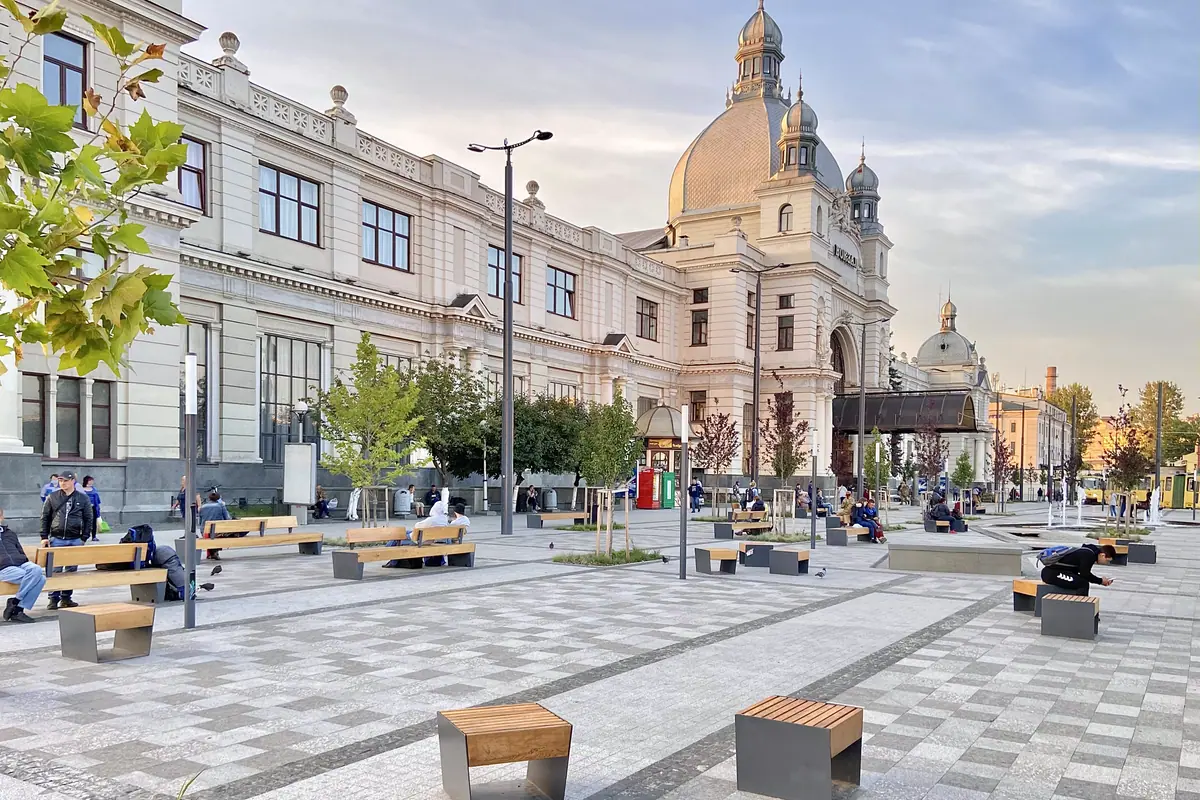
Days 1–2: Lviv, Rynok Square and the Lychakiv Cemetery
Lviv's Old Town is a compact UNESCO-listed puzzle of Renaissance courtyards, Austrian-era facades and cobbles polished by six centuries of feet. Everything orbits Rynok Square, where the Town Hall tower can be climbed for a rooftop view and four fountains — Neptune, Amphitrite, Adonis and Diana — crouch against the townhouses. From there, the Latin Cathedral, the Armenian Cathedral with its arcaded inner court, the startling black stone of the Boim Chapel and the Korniakt Palace sit within a few minutes' walk of one another, and the grand Lviv Opera and Ballet Theatre anchors the wide sweep of Svobody Avenue.
Spend the second afternoon away from the centre. The Lychakiv Cemetery is one of Europe's great sculptural landscapes, an avenue of angels, chapels and leaning crosses among old trees, atmospheric and entirely un-morbid. Climb High Castle Hill instead if the weather is clear: it is a steady thirty-to-forty-minute walk to a bare summit that opens over a sea of red roofs and green domes, best an hour before sunset.
Lviv runs on coffee and conversation, and the cellar cafés and old-fashioned chocolate shops off the square are part of the city's identity rather than a tourist gimmick. Order borshch, varenyky and syrnyky, finish with a slice of dense Lviv cheesecake, and let the afternoon dissolve. Two nights is the right amount: enough to feel the rhythm, not so long that you rush Kyiv.
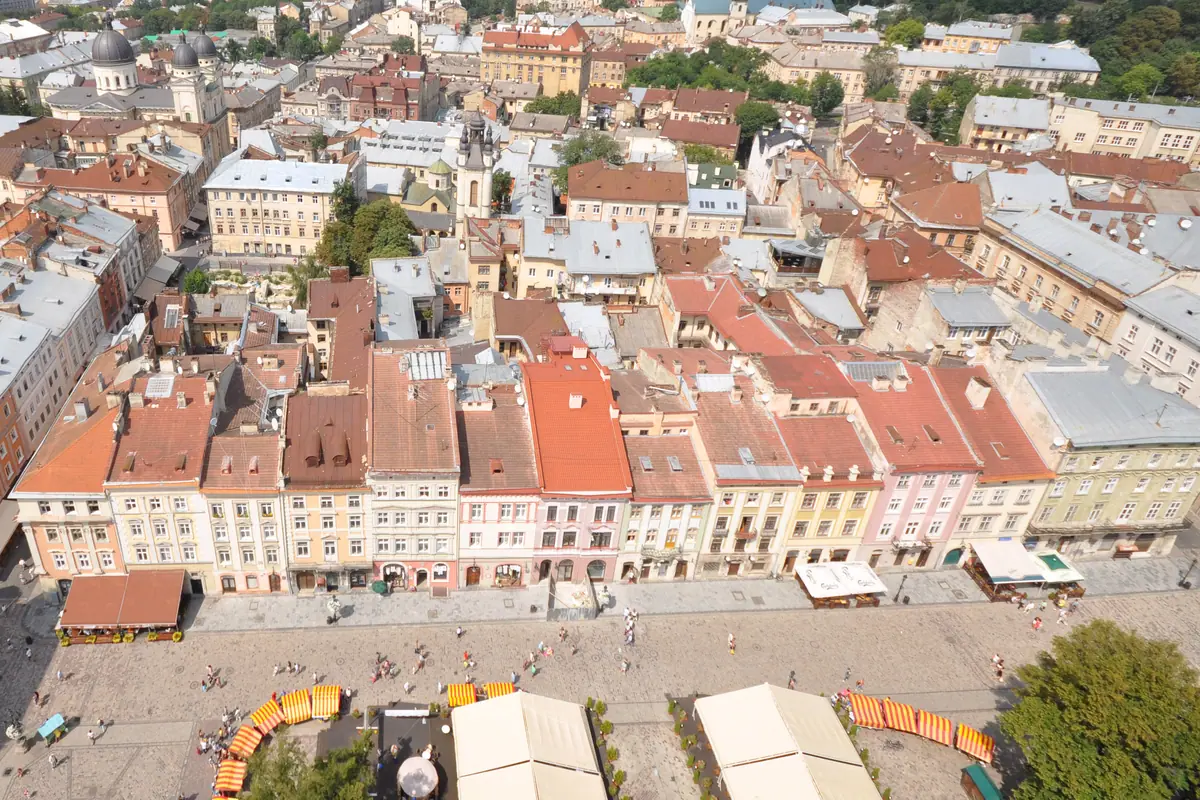
Day 3: Kyiv, Maidan Nezalezhnosti and Saint Sophia's Bell Tower
The overnight train from Lviv rolls into Kyiv in the morning and drops you a short metro ride from Maidan Nezalezhnosti, the vast square on Khreshchatyk where the city gathers when it matters. Walk the chestnut-lined length of Khreshchatyk, then climb the slope to Saint Michael's Golden-Domed Monastery, whose sky-blue walls and silver domes are among the most photographed in Eastern Europe. The funicular rattles down from the viewpoint to Podil, the old trading quarter, and St Andrew's Church sits on its green hill above Andriyivskyy Descent, a steep lane of galleries, antique stalls and small museums including the Museum of One Street.
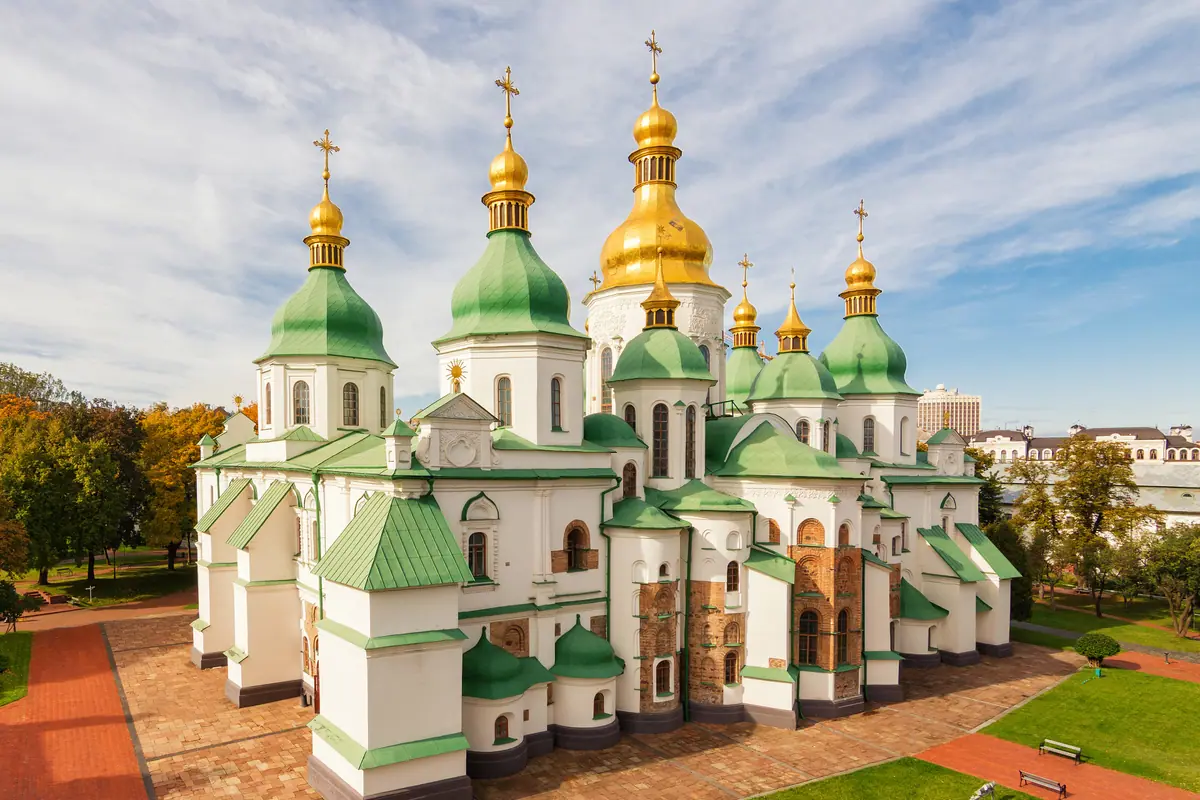
The centrepiece of the day, though, is Saint Sophia's Cathedral, an eleventh-century survival with shimmering mosaics and frescoes, and a bell tower you can climb for the definitive view of the golden skyline. Nearby, the reconstructed Golden Gate marks the medieval city wall, and the deep red facade of the university on Volodymyrska Street glows in late light.
Kyiv is also a city of deep metro stations and steep staircases, so keep the day's ambitions realistic and use the subway as a sightseeing tool in its own right. Finish with dinner in Podil, where courtyards hide wine bars and the streets fall quiet well before the city's official curfew.
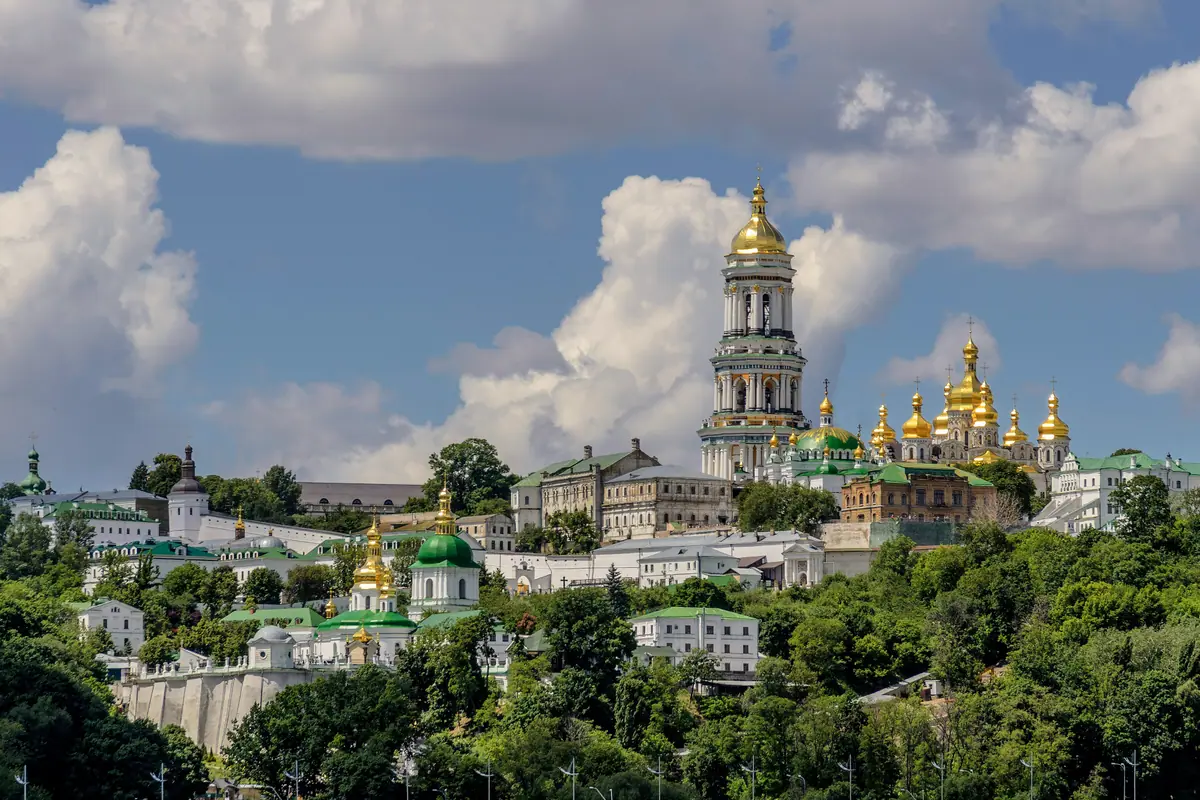
Day 4: Pechersk Lavra, the Motherland Monument and Babyn Yar
Head south along the river to the Kyiv Pechersk Lavra, a hilltop monastery complex of bell towers and churches where the real draw is underground: candle-lit labyrinth caves lined with the glass-cased relics of generations of monks. The Great Bell Tower and the Refectory Church are above ground; dress modestly, and women will want a scarf for the entrances. Give the site a good three hours — it is a working monastery as well as a monument, and the pace rewards patience.
Continue to the towering Motherland Monument, whose shield now carries the Ukrainian trident, set within the vast memorial complex on the Dnipro slopes. From the plaza the river, the bridges and the whole left bank open out in one panorama.
The last stop of the day should be Babyn Yar, the ravine where tens of thousands were murdered during the Second World War. The menorah memorial and the modern synagogue are quiet, severe and essential; go with time to sit and without a schedule. On the way back, Arsenalna station on the metro is worth a detour simply for being one of the deepest in the world — the escalator descent alone is a ride.
Days 5–6: Odesa, the Potemkin Stairs and Pryvoz Market
The overnight train south to Odesa takes roughly seven to eight hours, which means you wake to sea air. Start at the top of the Potemkin Stairs, the ceremonial cascade of levels that connects the city to the harbour below. It is a famous optical trick: from above you see only the landings, from below only the steps, so the flight looks twice as long as it is. The bronze Duke de Richelieu stands at the head of the staircase, and the whole ensemble is best walked early before the heat.
Odesa is a city of grand theatres and markets rather than monuments. The Opera and Ballet Theatre, a sumptuous curve of baroque plasterwork, is worth a guided daytime visit even if you cannot get tickets for a performance, and Deribasivska Street fills with people in the evening. For the textures of daily life, go to Pryvoz Market: smoked fish, sour cream, pickles, mounds of berries and a maze of food counters where locals eat standing up.
If the weather is warm, take a trolleybus out to the Arcadia district or the closer Lanzheron beach for a swim; July and August bring the warmest sea. The Odesa catacombs — a sprawling network of mined tunnels used by partisans — run guided tours that are cool, dark and genuinely strange, an ideal refuge on a scorching afternoon.
Day 7: The Return Leg and the Rhythms of a Ukrainian Week
Use the final morning for a slow breakfast and one last walk along the seafront, then take the daytime train back to Kyiv — about seven hours, and a comfortable way to watch the steppe slide past — or an overnight service if you would rather not lose the day. From Kyiv, travellers with evening flights home often continue overland to Chișinău or onward to Poland, so check border crossing times before you commit to a tight connection.
The state railway is the backbone of Ukrainian travel, with couchettes, sleeping compartments and fast intercity trains linking all the major cities; book seats as early as you can, especially for Friday and Sunday departures. May, early June and September into early October are the sweet spots — mild, green and uncrowded — while July and August are hot in the south but ideal for the Black Sea coast. Winter is cold and snowy, with festive markets from late December into January.
Two final notes. Ukrainian is the language of daily life; a handful of words earns real warmth, and English is less universal than in Western Europe, so keep a translation tool offline. And because conditions in the country can change, travel with a flexible plan, follow official travel advice before you book, expect air-raid alerts and curfews, know where your nearest shelter is, and never build an itinerary so tight that a delayed train ruins it. Ukraine rewards flexibility with a week you will not forget.
Frequently asked questions
Can you fly directly into Ukraine at the moment?
No. Civilian airspace over Ukraine has been closed since 2022, so there are no commercial passenger flights to Kyiv, Lviv, Odesa or any other Ukrainian airport. Travellers reach the country overland, usually via Poland, Romania, Slovakia, Hungary or Moldova, and then continue by train or bus.
How long are the main train journeys in Ukraine?
The border hop from Przemyśl in Poland to Lviv takes about two hours. Lviv to Kyiv is a comfortable overnight run of roughly eight to ten hours, and Kyiv to Odesa is about seven hours by day or overnight. Booking seats and sleeper berths in advance is strongly advised, especially around weekends and holidays.
What is the best time of year for a week in Ukraine?
Late May to early June and September into early October offer the best balance of mild weather, long days and thinner crowds. July and August are hot inland but best for swimming in Odesa, while winter is cold, snowy and atmospheric, with festive markets running from late December into January.
Is it safe to travel in Ukraine right now?
Conditions vary by region and change over time, so decisions should be based on current official travel advice for the specific areas you plan to visit. Expect air-raid alerts and evening curfews, know the location of the nearest shelter, keep identification with you, and build flexibility into any itinerary.
What should I pack and what money do I need?
Pack a power bank, sturdy walking shoes, layers for cool evenings and a scarf if you plan to enter monasteries. The currency is the hryvnia; cards are widely accepted in cities, but carry cash for markets, small towns and tips, and keep some small notes for buses and metro tokens.
Sort the rest of your trip
Everything for Ukraine, in one place
Stay in Ukraine
Hotels, guesthouses and apartments — compared in one search.
Search hotels
Transfer in Ukraine
Private driver waiting on arrival — no queues, no surprises.
Book a transfer
Travel insurance
Medical cover, delays and lost baggage — sorted before you go.
Get covered