Ukraine is a country of enormous scale and startling variety — golden-domed cathedrals above the Dnipro, Habsburg-era squares thick with coffee steam, salt-and-timber mountain villages, and a Black Sea coast with a Mediterranean swagger. It rewards travellers who go slowly, ride the overnight trains and let the distances between Kyiv, Lviv and the Carpathians become part of the experience.
Kyiv: The Golden-Domed Heart of the Country
Start where the country starts: Maidan Nezalezhnosti, the wide central square at the foot of Khreshchatyk, Kyiv's chestnut-lined main avenue. On weekends the street closes to traffic and becomes one long promenade of buskers, families and street food, running down towards European Square and the glass domes of the shopping arcades. From there, walk up to St Michael's Golden-Domed Monastery, whose sky-blue facade and silver domes are among the most photographed sights in Eastern Europe, then take the funicular down the hill into Podil, the old merchants' quarter of low houses, flea markets and riverside parks.
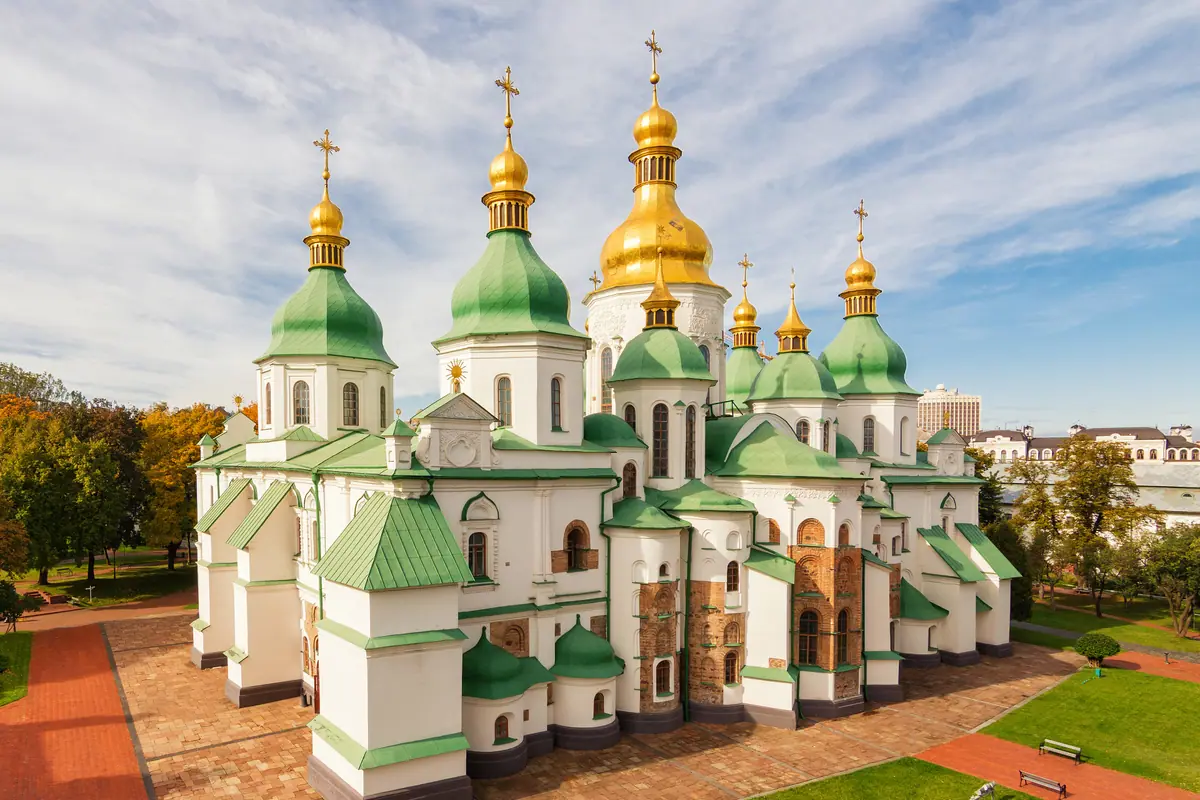
The unquestioned masterpiece is Saint Sophia's Cathedral, an eleventh-century complex whose interior holds some of the finest surviving mosaics and frescoes of the medieval Slavic world. Climb the bell tower for a view over the square, then walk five minutes to the Golden Gate, a reconstruction built around the surviving masonry of the eleventh-century city wall. Nearby, Andriyivskyy Descent tumbles downhill towards Podil, packed with painters selling their work, antique stalls and small galleries, and crowned by St Andrew's Church, an extravagantly baroque confection in green and gold.
Set aside a full day for the Kyiv Pechersk Lavra, a cave monastery complex of bell towers, museums and labyrinthine underground passages where the mummified remains of monks rest in glass cases, lit by candles. The Great Bell Tower gives a panorama across the Dnipro, and further along the ridge the towering Motherland monument — steel, sword and trident shield, rising over the river — anchors the museum of wartime history beneath it. Late May is when the horse chestnuts bloom and the whole city turns white; autumn, with the hillsides in gold, is arguably even better.
Lviv: Cobblestones, Coffee and Habsburg Elegance
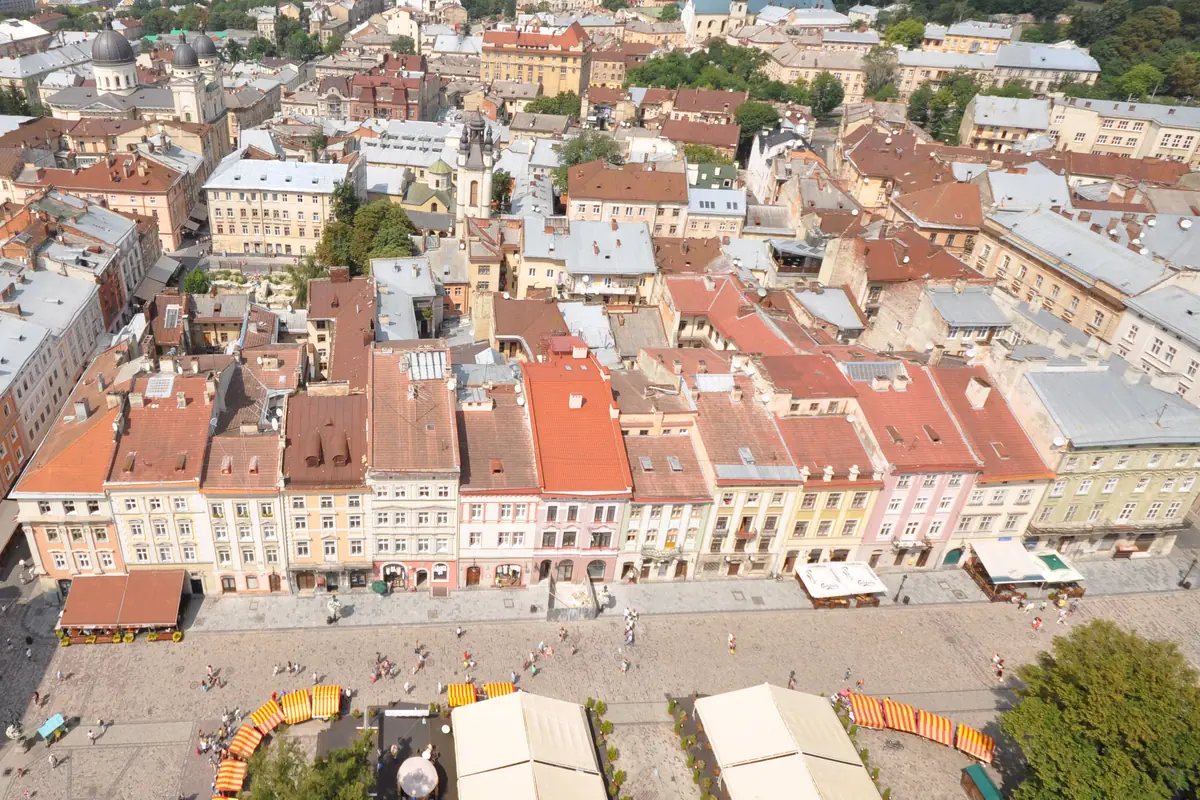
Lviv feels like a Central European city that has been quietly fermenting for six centuries. The centre is Rynok Square, ringed by Renaissance and baroque townhouses with arcaded courtyards you can wander into uninvited — many hide galleries, wine cellars and tiny museums. Climb the 65-metre tower of the town hall for a rooftop view, then find the Latin Cathedral on the corner and the four fountains that mark the square's corners. The city is obsessive about coffee: expect elaborate brewing rituals, chocolate houses and patisseries that stay open late.
The Lviv Opera and Ballet Theatre, opened at the turn of the twentieth century, is a riot of gilding and sculpture and worth an evening ticket even if you only understand the music. A short walk away, the Armenian Cathedral's courtyard is a hushed stone refuge, while the Boim Chapel next door is carved so densely it looks embroidered. Then head north-east to Lychakiv Cemetery, founded in the late eighteenth century and now effectively an open-air sculpture park, where family tombs and carved angels are packed among linden trees — an hour or two here explains more about the city than any museum.
For the best free view in western Ukraine, climb Vysokyi Zamok, the 'High Castle' hill, an artificial mound that takes around twenty minutes on foot and delivers a full sweep of spires, tin roofs and green hills beyond. Just outside the centre, the Shevchenkivskyi Hai open-air museum gathers authentic wooden churches, windmills and village houses from across the region. Winter brings a Christmas market on Rynok Square and mulled wine in the courtyards; summer brings open-air concerts and café tables spilling across the cobbles.
Castles, Fortresses and the Western Borderlands
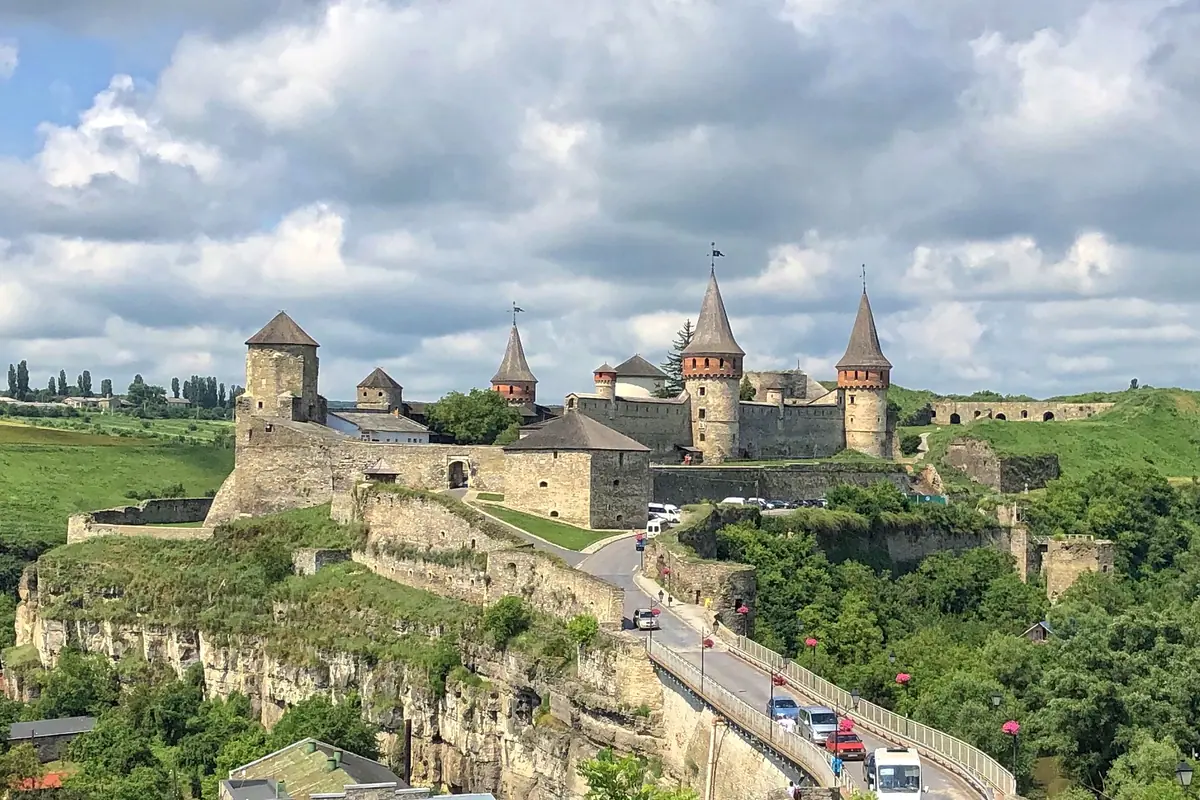
The single most dramatic sight in western Ukraine is the Kamianets-Podilskyi fortress, a medieval stronghold of towers and bastions perched on a rock island inside a deep loop of the Smotrych river. Cross the fortified bridge, walk the ramparts, and then explore the old town behind it — a maze of Polish, Armenian and Ukrainian quarters, cobbled lanes and a minaret that stands oddly alongside a Catholic cathedral. It deserves a full day, and the surrounding region is dotted with smaller castles that make a rewarding driving route in the warmer months.
Further south on the Dniester, the Khotyn Fortress is a vast, largely intact complex with walls several metres thick and a courtyard big enough for festivals and medieval re-enactments; a couple of hours is enough, but it pairs well with the vineyards of the region. Beyond that, Chernivtsi National University is a UNESCO-listed complex of Byzantine-Moorish halls and courtyards that began life as a metropolitan's residence — guided tours run through the mosaic-lined assembly hall and the former chapel.
Back towards Lviv, Olesko Castle sits on a hill with a small but genuinely interesting collection of paintings and armour, while the nearby Pidhirtsi and Zolochiv palaces round out a loop of aristocratic architecture. In the opposite direction, the pilgrimage site of Pochaiv Lavra draws crowds year-round with its golden domes and holy spring. If you have time on the road, detour to Uman for Sofiyivka Park, a late eighteenth-century landscape garden of grottoes, canals and subterranean passages that takes three to four hours to do properly — best in late spring, when the magnolias and lilacs are out.
The Carpathians: Hiking, Hutsuls and Mountain Villages
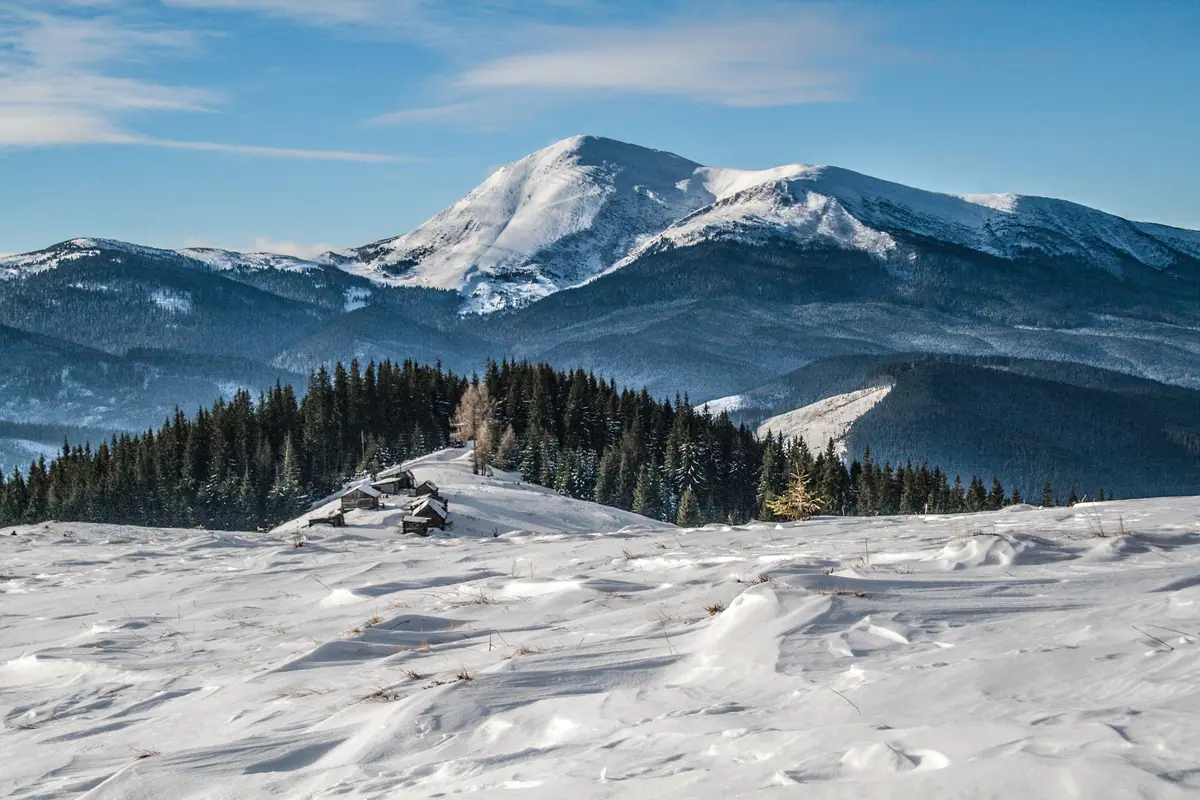
Ukraine's mountains are green, wooded and much less crowded than the Alps. Hoverla, at 2,061 metres the country's highest point, is a half-day hike from the Zarosliak trailhead — three to four hours up and back for reasonably fit walkers, but the weather turns fast, so pack a windproof layer even in August. The neighbouring ridges of Petros and Homyak offer quieter alternatives with equally wide views. Mid-July to early October is prime hiking season; from December to February the slopes around Bukovel and Dragobrat switch to skiing and snowboarding, and the villages fill with Ukrainian families on winter break.
Lake Synevyr, the largest lake in the Ukrainian Carpathians, sits in a national park and is nicknamed the Sea Eye for its deep, dark centre — a gentle loop trail circles it, and a nearby rehabilitation centre cares for brown bears rescued from captivity. Elsewhere, the old narrow-gauge forestry railway at Vyhoda still runs tourist trips through the forest, the Vorokhta viaduct arches dramatically over a river valley, and the Probiy waterfall at Yaremche thunders under a footbridge in the middle of town.
This is Hutsul country, and its culture is the best reason to linger. In Kolomyia, the Museum of the Pysanka is built in the shape of a giant painted egg and explains the symbolism behind Ukraine's most famous folk art. Mountain kolyba huts serve banosh — cornmeal cooked in cream and topped with bryndza sheep cheese and cracklings — while shepherds still blow the long trembita horn across the valleys. The region's wooden churches, many of them centuries old, are scattered through villages like Yasinya, Verkhovyna and Rakhiv and are often left unlocked during daylight hours.
Odesa and the Black Sea Coast
Odesa has always fancied itself a little apart from the rest of the country, and it has the architecture to prove it. The Potemkin Stairs — 192 steps descending from Primorsky Boulevard to the port — are the city's signature, topped by the statue of the Duc de Richelieu and the twin columns flanking the top landing. Stroll the boulevard itself at sunset, then walk to the Opera and Ballet Theatre, an opulent late nineteenth-century house that many consider the finest in the country, and on to Deribasivska Street, where the evening crowd gathers.
For a sense of the real city, spend a morning in Pryvoz Market, where vendors sell smoked fish, pickles, cheese, mountain honey and freshly fried pastries from stalls that have been in the same families for decades. Underground, the Odesa catacombs form a vast network of tunnels cut from soft limestone; several guided routes are open, and they tell the story of smugglers and wartime resistance. The Moldavanka district, the Fine Arts Museum, and the courtyards of the old town reward aimless wandering.
Down the coast, the Akkerman Fortress at Bilhorod-Dnistrovskyi is one of the largest surviving medieval fortifications in the region, with walls running down to the estuary. Further south-west, Vilkovo is a water town on the Danube delta where streets are canals and boats are the local bus — an hour or two by skiff is the best way to see it. Note that swimming and beach access along parts of the coast have been restricted in recent years for safety reasons, so check locally before planning seaside time.
When to Go, How to Get Around, and What to Eat
The sweet spots are late May to June and September to early October: mild weather, long daylight and cities at their most sociable. July and August are hot, sometimes exceeding 30°C in the south and east, and that is also when the Carpathians are at their hiking best. Winter is for skiers and for the Christmas markets, which run through December in Lviv and Kyiv. Autumn in the mountains, from late September into October, brings some of the most spectacular foliage in Europe.
Since Ukraine's airspace has been closed, most visitors arrive overland from neighbouring countries — entering by train or bus from Poland, Romania, Slovakia, Hungary or Moldova, then continuing on the national rail network. Overnight sleeper trains link the main cities and are a genuinely enjoyable way to travel: book a berth in advance, bring snacks, and expect a conductor to bring tea. Within cities, metro systems, trams and ride-hailing apps are cheap and reliable. Carry some cash in hryvnia, since card readers are not universal outside big cities, and be aware that many cities enforce an overnight curfew — usually from around midnight to 5am — so plan arrivals accordingly.
Travel right now requires more planning than usual. Air-raid alerts are common nationwide, metro stations double as shelters, and it is sensible to keep a shelter app on your phone and to follow official advisories before and during your trip; conditions vary by region and can change quickly. On the plate, Ukraine is easy to love: borscht, now recognised on a global cultural heritage list, served with sour cream and pampushky garlic bread; varenyky with potato, cherry or cabbage fillings; salo with rye bread and horseradish; chicken Kyiv oozing butter; and deruny potato pancakes with smetana. Finish with uzvar, a sweet dried-fruit compote, or a glass of cherry wine in Lviv.
Frequently asked questions
Is it safe to travel to Ukraine at the moment?
There is no blanket answer. Conditions differ sharply by region and can change within hours, so the only responsible approach is to check your own government's current travel advisory before booking, keep it checked while you are there, and follow local instructions during air-raid alerts. Western and central regions are generally considered lower risk than areas near the front line, but strikes can occur anywhere. Air travel is suspended, and some coastal areas restrict swimming and beach access.
What are the absolute must-see landmarks in Ukraine?
If you only have one trip: Saint Sophia's Cathedral and the Kyiv Pechersk Lavra in Kyiv, Rynok Square and the Opera Theatre in Lviv, the Kamianets-Podilskyi fortress, the Potemkin Stairs in Odesa, and a hike up Hoverla in the Carpathians. Chernivtsi National University and Sofiyivka Park in Uman are the two most rewarding detours if you have extra time.
How long do I need to see Ukraine properly?
Seven to ten days covers Kyiv and Lviv comfortably, including a day trip each. Two weeks lets you add the Carpathians or Odesa, and three weeks allows a loop taking in the fortress towns of the west, the mountains and the Black Sea coast. Distances are long, so overnight sleeper trains save both time and a hotel night.
What is the best time of year to visit?
Late May to June and September to early October offer the best combination of weather and comfort across the whole country. July and August are ideal for Carpathian hiking but hot in the cities and south. December to February suits skiers heading for Bukovel and Dragobrat, and travellers who want Christmas markets and snow-dusted old towns.
How do I reach Ukraine if flights are not operating?
Almost all arrivals are overland. Travellers typically cross from Poland, Romania, Slovakia, Hungary or Moldova by bus or train, then connect to the national rail network at a major hub. Sleeper trains link the main cities and are the most comfortable option for long distances — book berths in advance, especially around holidays, and allow a full day for border crossings.
What should I eat and drink in Ukraine?
Start with borscht and pampushky, then work through varenyky, deruny, salo with rye bread, nalysnyky and chicken Kyiv. In the Carpathians, order banosh with bryndza and mushrooms in a mountain kolyba hut, and finish with uzvar or cherry wine. Portions are generous and prices are low by Western European standards, even in city-centre restaurants.
Plan it — experiences in Ukraine
Live search, booked directly with trusted providers.
Sort the rest of your trip
Everything for Ukraine, in one place
Stay in Ukraine
Hotels, guesthouses and apartments — compared in one search.
Search hotels
Transfer in Ukraine
Private driver waiting on arrival — no queues, no surprises.
Book a transfer
Stay online in Ukraine
Travel eSIM — data the moment you land, no roaming bills.
Get an eSIM