Ukraine rewards travellers who travel by appetite as much as by map: a bowl of beetroot soup in a cellar kitchen, a shepherd's cornmeal banosh in the high Carpathians, a market vendor pressing smoked cheese into your hand. This guide threads together the country's essential landmarks with the food, festivals and local rituals that make a tour here memorable.
Borscht, Varenyky and the Long Ukrainian Table
Ask ten Ukrainians where the country's best borscht is made and you will get ten answers, each delivered with absolute conviction. The beetroot soup is the national signature: deep crimson, sharpened with vinegar or fermented beet kvass, softened with sour cream and served alongside pampushky — pillowy garlic buns meant for dunking. Recipes shift region by region. In and around Kyiv it is often cooked with beans and mushrooms; further east you may find it with dumplings, while western versions lean on pork ribs and dried fruit. A proper bowl arrives with a spoonful of smetana and a dish of salo on the side, because in Ukraine soup is rarely a light affair.
Beyond borscht, the everyday table is built on dumplings and griddled things. Varenyky come stuffed with potato and cheese, cabbage, sour cherries or poppy seeds, then drowned in fried onion and more sour cream. Deruny — lacy potato pancakes — appear at breakfast with smetana, holubtsi (cabbage rolls) simmer in tomato, and kholodets, a jellied pork broth, is eaten with a bracing swipe of horseradish. Chicken Kyiv, the butter-stuffed cutlet that has travelled the world, is ordered here as kotleta po-kyivsky, and it is best in a plain dining room where the crumb is crisp and the inside erupts on the first cut.
Drinks deserve their own paragraph. Uzvar, a compote of dried apples, pears and prunes, is served chilled in summer and warm in winter; kvas is drawn from street barrels in July; medovukha, a honey drink, warms you in a mountain hut. Horilka — vodka — is poured with chilli, honey or herbs and treated as a toast-making instrument rather than a cocktail. Expect meals to run long, with several courses and a host who will not accept 'no' the first, second or third time.
Markets, Cellars and Coffee: How to Eat Like a Local
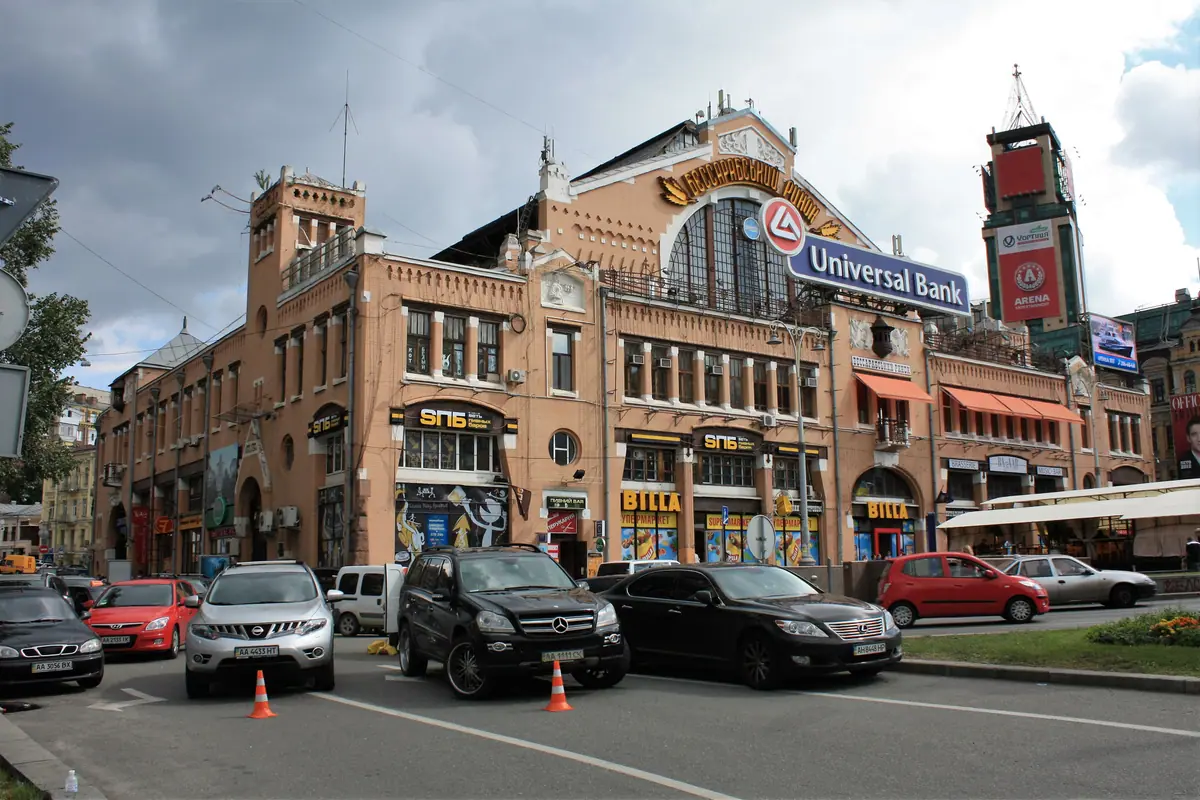
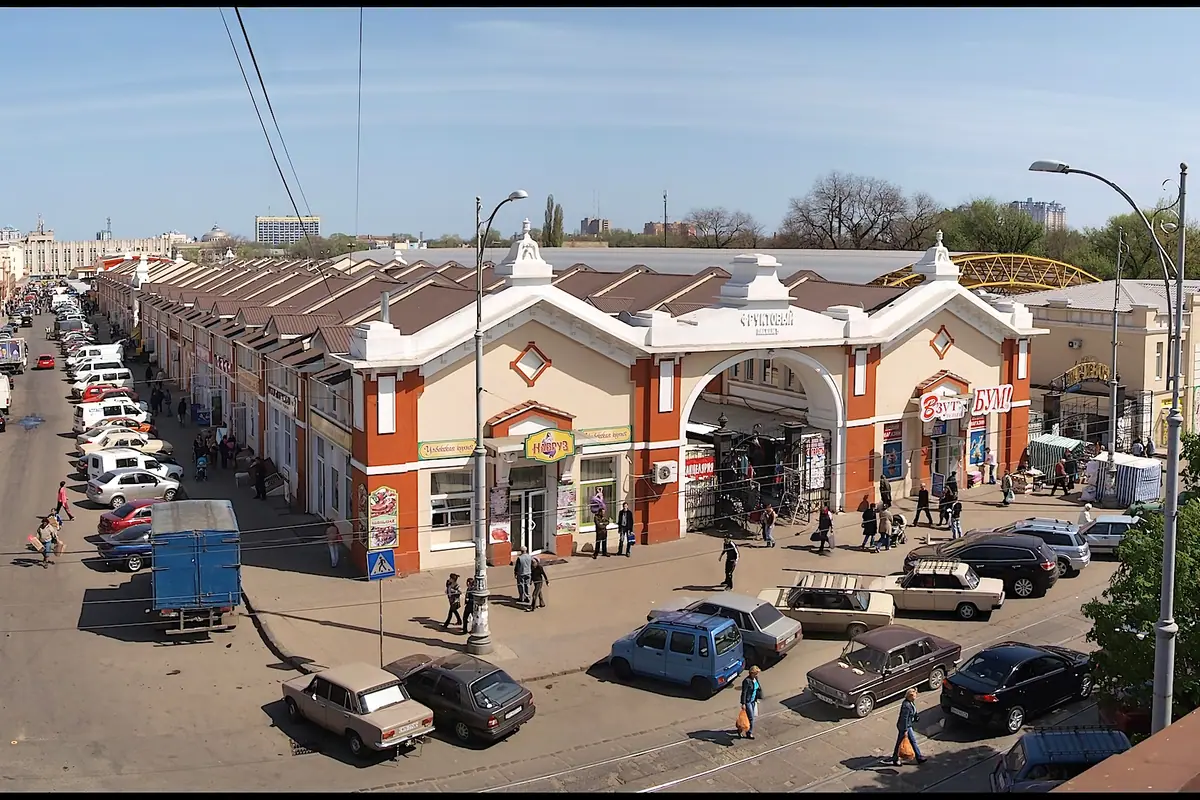
Kyiv's Besarabsky Market is the classic introduction: a glazed cast-iron hall at the top of Khreshchatyk where the stalls are stacked with salo, smoked fish, farm cheese, cured meats, jars of pickles and pyramids of berries in June. Wander the aisles early, when the produce is freshest and the vendors are chatty, then eat lunch at one of the counters tucked around the edges or on the mezzanine above the floor. In Odesa, Pryvoz Market is a louder, saltier affair with a distinct southern accent — Black Sea fish, sprats, forshmak, herbs by the armful and produce from Bulgarian and Moldovan villages nearby.
Street food is where the country snacked between feasts. Chebureki, crisp fried turnovers filled with minced meat, are sold from kiosks and eaten scalding hot with a napkin. Pampushky, syrnyky (sweet cheese fritters) with sour cream and jam, hot corn, roasted sunflower seeds and barrel-drawn kvas all mark the seasons. Summer brings outdoor grills and craft beer gardens in city courtyards; winter shifts everything indoors to basement cafés where the windows fog up by six o'clock.
Lviv has turned coffee into theatre, with themed cellar rooms, roasteries and chocolate houses clustered a few minutes from Rynok Square. Elsewhere, the humble canteen-style eatery — take a tray, point at what you want, pay by weight — is the cheapest and most honest way to eat well. Markets still run largely on cash, so keep small hryvnia notes handy, and remember that the best food tours in Ukraine are simply mornings spent following locals through a bazaar.
Kyiv: Golden Domes, Chestnut Blossom and Andriivskyi Descent
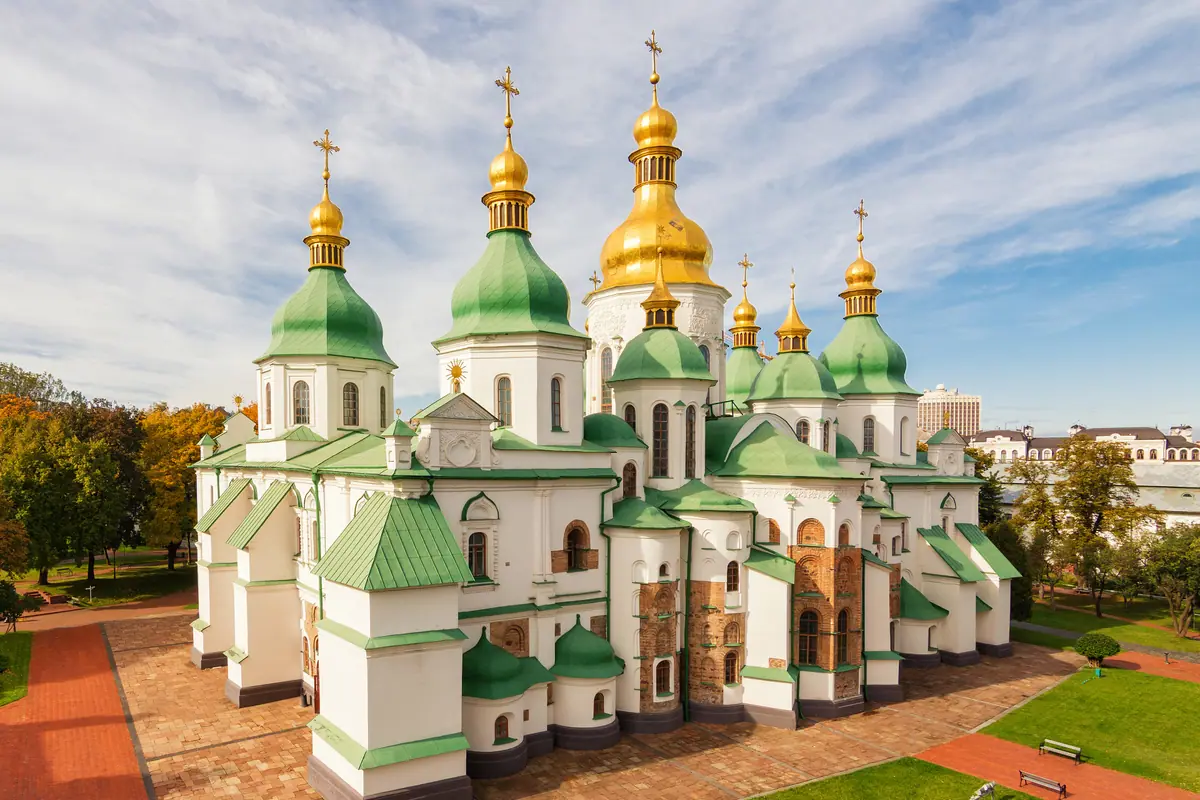
Start at Maidan Nezalezhnosti, the capital's central square, and walk the length of Khreshchatyk, the main boulevard that closes to traffic at weekends and fills with buskers, families and chestnut blossom in late May. From there the old Upper Town rises toward Saint Sophia's Cathedral, whose 11th-century mosaics and frescoes survive intact, and its climbable bell tower, which gives the best view over the golden roofs. A short walk away, St Michael's Golden-Domed Monastery glows in blue and gold above the river terraces, and Andriivskyi Descent tumbles down toward Podil past artists' stalls, galleries and antique sellers.
The city's other anchor is the Kyiv Pechersk Lavra, a working monastery complex on the bluffs above the Dnipro, where pilgrims descend into candlelit cave labyrinths holding the relics of monks and visitors climb the great bell tower for a panorama of bridges and domes. Nearby stand the Motherland Monument and the cluster of museums around it, while the reconstructed Golden Gate marks the old city wall. Give yourself an afternoon for Podil's Kontraktova Square and the riverfront, then cross to Trukhaniv Island or Hydropark in July and August, when Kyivans swim, rent boats and grill by the water.
Three or four days suits the city comfortably. The metro is cheap, fast and worth riding simply for the chandeliered station halls, but the centre is best covered on foot. Late spring and early autumn deliver the kindest weather; midsummer can push past 30°C, and January snows turn the parks into a quiet, beautiful place to wander between cafés.
Lviv and the West: Coffee, Cobbles and Fortress Towns
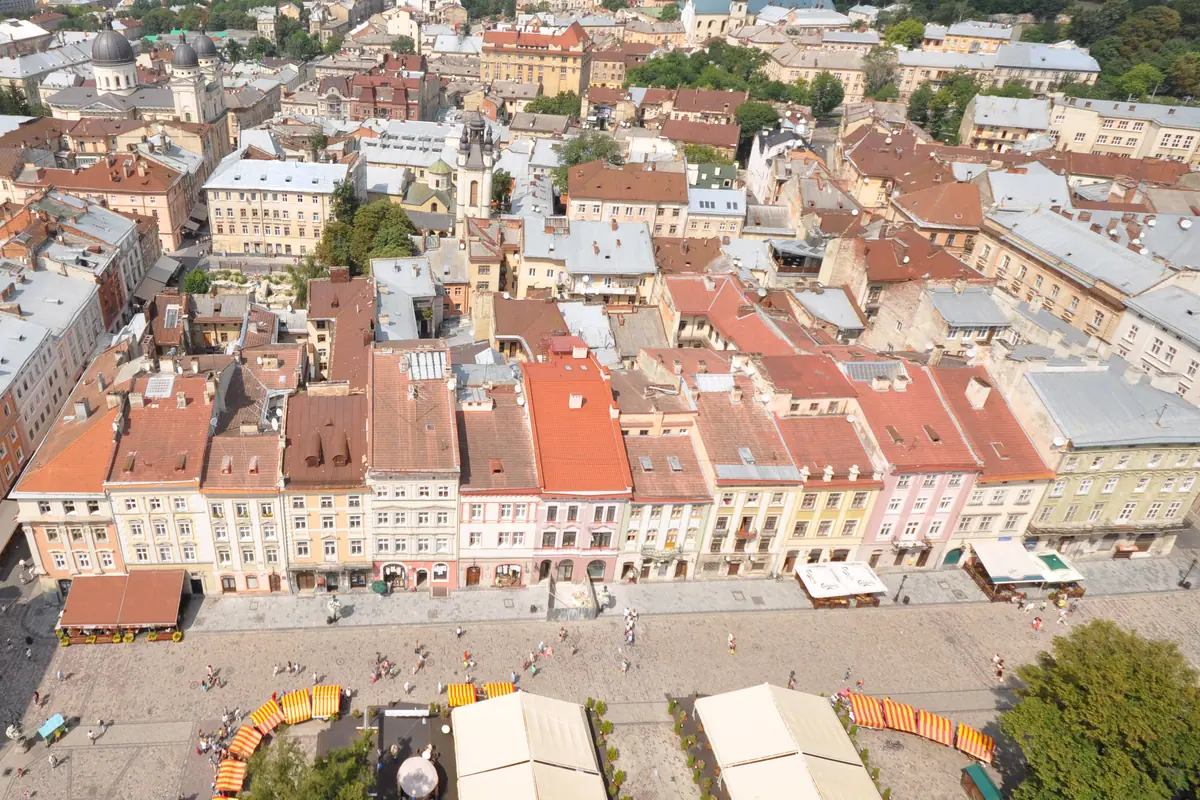
Lviv feels like a different country entirely, and that is part of its charm. Rynok Square is ringed by Renaissance and baroque townhouses, each with a story carved into its facade, and the town hall tower can be climbed for a rooftop view of the old town. Close by, the Armenian Cathedral and the Dominican Church anchor narrow lanes of cafés and bookshops, while the ornate Opera and Ballet Theatre stages performances in a gilded hall that is worth seeing even without a ticket.
The city's rituals are coffee, chocolate and slow wandering. Cellar cafés serve thick hot chocolate and pastries, and the courtyards off the main streets hide galleries and workshops where you can watch embroidery or pottery being made. Above the centre, the grassy mound of Vysoky Zamok — High Castle Hill — offers a free panorama, and a tram ride out to the vast Lychakiv Cemetery is a walk through sculpted tombs and overgrown paths rather than a morbid detour. The Shevchenkivskyi Hai open-air museum, with its wooden churches and village houses, is a gentle half-day out.
Western Ukraine is fortress country. Kamianets-Podilskyi, with its medieval castle perched above a loop of the Smotrych river, and Khotyn Fortress on the Dniester are the two great set pieces, both reachable as long day trips. Add the painted university halls of Chernivtsi, the green railway arcade known as the Tunnel of Love near Klevan, and the pilgrimage site of Pochaiv Lavra. Two or three days in Lviv is the minimum; a week lets you see the region properly.
The Carpathians: Hutsul Shepherds, Bryndza and Hoverla
The Carpathian arc is Ukraine at its most elemental. Hoverla, the highest peak at 2,061 metres, is a steady three- to four-hour climb from the Zarosliak trailhead, best in summer when the ridge is carpeted with wildflowers and the wind is merely brisk. Synevyr Lake, ringed by spruce forest, is the country's most photographed mountain water, and the market town of Yaremche pairs the tumbling Probiy waterfall with stalls of honey, dried mushrooms and carved wood. In winter, Bukovel becomes the country's ski hub, with groomed slopes, rental huts and chairlifts.
This is Hutsul territory, and its culture is inseparable from its food. In shepherd huts called kolybas, you will be offered banosh — cornmeal cooked slowly in cream and topped with brynza, a salty sheep's cheese, and cracklings — along with bograch, a paprika-heavy mountain stew, and vurda, the whey cheese left after brynza is made. Musicians play the trembita, a long alpine horn once used to signal across valleys, and the drymba, a jaw harp. In Kolomyia, the Pysanka Museum houses thousands of decorated eggs in a building shaped like an egg itself, and the surrounding villages are the place to buy vyshyvanka embroidery straight from the maker.
Plan hikes from June to September and skiing from January to February. Guesthouses — sadyby — are the way to stay, offering home cooking and mountain air, though they fill fast around holidays, so book early. Weather flips quickly at altitude: carry a rain shell and warm layer even on a clear morning, and start descents well before dusk.
Odesa, Parklands and the Ukrainian Year in Festivals
Odesa is the country's breezy southern face. The Potemkin Stairs sweep down from Primorsky Boulevard to the port, deliberately built wide at the bottom to appear longer from above, and the Opera and Ballet Theatre is one of the finest in eastern Europe. Deribasivska Street handles people-watching duties, Arcadia delivers the beach clubs, and beneath the city a maze of catacombs tells the story of its smuggling past. Come in June or September to swim, eat fried gobies at Pryvoz, and listen to a city that treats humour as a civic virtue.
Beyond the coast, Ukraine's softer attractions reward time. Sofiyivka Park in Uman is a landscaped fantasy of grottoes, lakes and follies spread across 150 hectares. The Danube Biosphere Reserve in the far south-west is a delta of reed islands and pelicans, and the Shatsk Lakes in the north-west offer clear water and pine forest in a quiet corner of the country.
Festivals set the rhythm of the year. Malanka, the old New Year on 13–14 January, is celebrated with costumed carolling and mischief in western villages. Easter brings pysanky decorating and baskets of bread and painted eggs blessed at churches, Ivan Kupala on 7 July fills the night with bonfires and flower wreaths floated on water, and Independence Day on 24 August brings parades and street concerts. For city sightseeing, aim for May, June, September or October; for snow and ski season, head to the Carpathians between January and February.
Frequently asked questions
What dishes should I try first in Ukraine?
Start with borscht served with pampushky and sour cream, then varenyky with potato and cheese or cherries, deruny with smetana and chicken Kyiv. In the Carpathians, order banosh with brynza and bograch stew. Finish meals with uzvar or a honey drink, and look for syrnyky at breakfast.
When is the best time to visit Ukraine?
Late May, June, September and October are ideal for cities, with mild weather and long evenings. July and August are hot in the south and perfect for the Black Sea coast and river beaches. For skiing and mountain snow, go to the Carpathians in January or February.
How many days do I need for a first trip?
Ten days to two weeks allows Kyiv, Lviv, a stretch in the Carpathians and Odesa without rushing. If you only have a week, choose two bases — usually Kyiv and Lviv, or Kyiv and the mountains — and take day trips rather than changing hotels every night.
How do I get around between cities and villages?
Intercity trains are the most comfortable way to link major cities, with overnight services that save a hotel night. Marshrutka minibuses reach smaller towns and trailheads, though they can be crowded and stop running early in the evening. In cities, metros, trams and walking cover most sights.
Do I need to speak Ukrainian to travel here?
It helps enormously and is warmly received. Learn basic greetings, please, thank you and numbers. English is common among younger people in Kyiv, Lviv and Odesa, and restaurant menus are often translated, but markets, mountain guesthouses and rural buses are Ukrainian-speaking territory — a translation app and a few phrases go a long way.
Sort the rest of your trip
Everything for Ukraine, in one place
Stay in Ukraine
Hotels, guesthouses and apartments — compared in one search.
Search hotels
Transfer in Ukraine
Private driver waiting on arrival — no queues, no surprises.
Book a transfer
Stay online in Ukraine
Travel eSIM — data the moment you land, no roaming bills.
Get an eSIM