Spain rewards the traveller who refuses to rush: morning light through Gaudí's stained glass, a cool courtyard of orange trees in Córdoba, midnight tapas in a Madrid side street. It is a country of enormous distances and very specific pleasures, where the art, the food and the landscape all demand their own time.
Barcelona: Gaudí, Gothic Lanes and the Mediterranean Edge
Begin with the building that defines modern Spain. The Sagrada Família, Gaudí's unfinished basilica, has been under construction since 1882 and still manages to look like a forest grown out of stone. Timed entry slots released online sell out days ahead in summer, so book early and choose a morning window: the east-facing stained glass turns the nave into a slow wash of blue and green. Allow ninety minutes inside, then climb one of the towers for a close view of the scaffolding and the spires that will eventually crown it.
A short ride away, Park Güell spreads across a hillside of mosaic terraces and gingerbread pavilions, with the city and sea laid out below. On Passeig de Gràcia, Casa Batlló and La Pedrera (Casa Milà) show the same architect at his most playful, their facades rippling like water. Then step backwards in time into the Gothic Quarter, where the Barcelona Cathedral, the tiny Plaça del Pi and the arcades of Plaça Reial sit among Roman walls, and the Picasso Museum fills five medieval palaces with early works.
Finish along La Rambla and the Boqueria market, where stalls stack fruit, jamón and salt cod in towers, then walk to Barceloneta for a late swim. May, June and September are the sweet spots: warm sea, long evenings, fewer crowds than August. Carry a light layer for evenings and expect dinner to start around nine.
Andalusia: The Moorish Heartlands of Granada, Córdoba and Seville
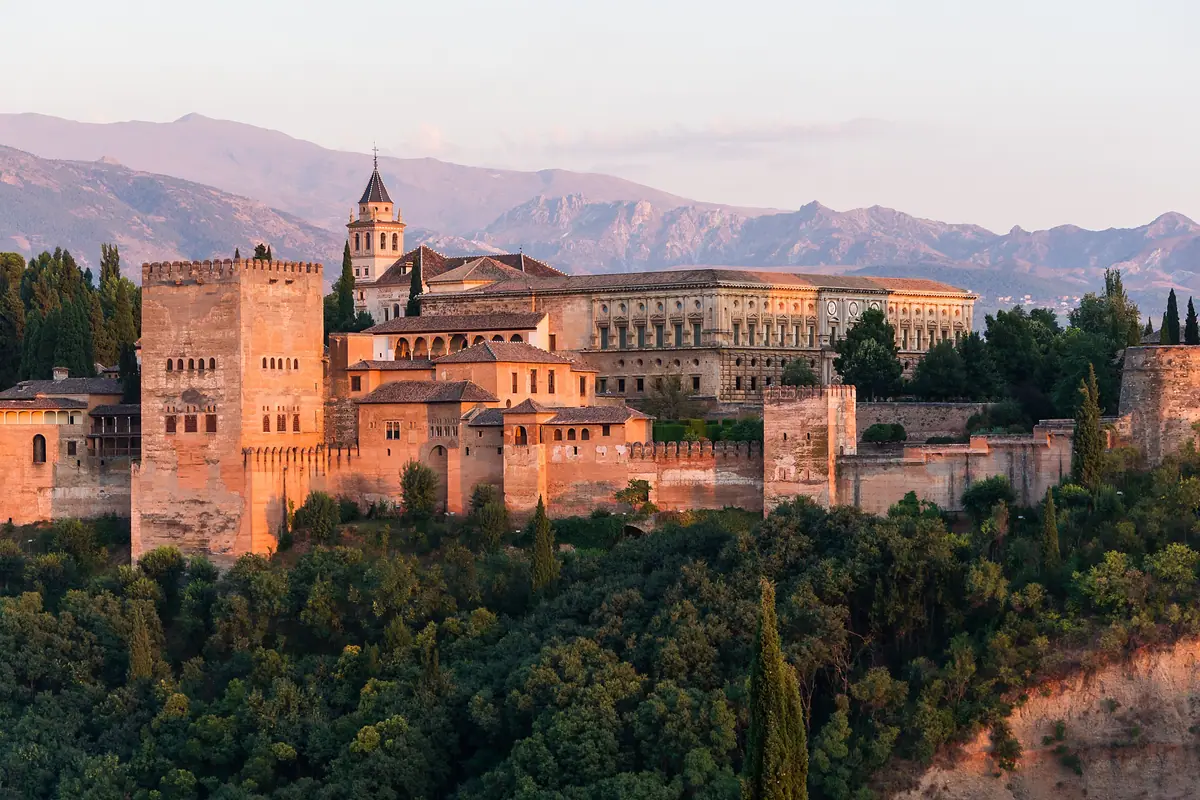
The Alhambra in Granada is the single most important reservation in Spain. Nasrid palace tickets are released in limited numbers and disappear weeks — sometimes months — in advance, so plan this before you book flights. Inside, carved stucco, muqarnas ceilings and reflecting pools create rooms that seem to breathe; the Generalife gardens above are cooler and quieter, threaded with water channels. Afterwards, climb to the Mirador de San Nicolás in the Albaicín at sunset, when the red fortress turns amber against the Sierra Nevada, and catch raw flamenco in a Sacromonte cave.
In Córdoba, the Mezquita-Catedral is a building you walk into twice: a forest of more than eight hundred columns and striped arches, and at its centre a cathedral nave dropped into the middle of a mosque. Arrive at opening to have the Patio de los Naranjos almost to yourself. Seville holds the other great monuments: the Real Alcázar with its Mudéjar courtyards and gardens, the Giralda tower, and the largest Gothic cathedral in the world, plus the tiled arc of Plaza de España in the María Luisa Park.
Give Andalusia a week if you can, moving by train between Seville, Córdoba, Granada and Málaga, and add a day for Ronda, where the Puente Nuevo bridge hangs above a sheer gorge, and the white villages of the Sierra de Grazalema. Spring (March to May) and October are ideal. July and August push past 40°C in the Guadalquivir valley, and sightseeing becomes a dawn-and-dusk affair.
Madrid: Golden-Age Art and Late-Night Plazas
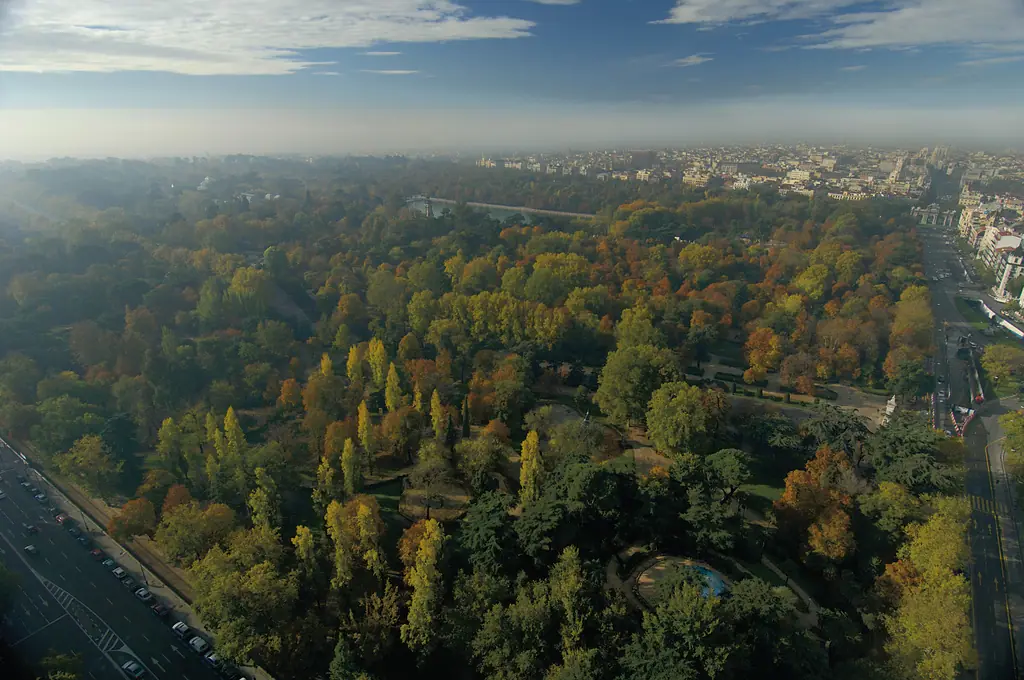
Madrid is a city for walking between masterpieces. The Prado holds Velázquez, Goya and El Greco in overwhelming quantity — pick three rooms rather than trying to see it all — while the Reina Sofía houses Picasso's Guernica and the CaixaForum's vertical garden sits nearby. Between them lie the Retiro Park's rowing lake and crystal palace, the Royal Palace with its 3,000-plus rooms, and the arcaded Plaza Mayor, best seen over a vermouth and a plate of olives in the late morning.
As evening falls, the city loosens up. Gran Vía glows, the Mercado de San Miguel fills with people eating standing up, and Malasaña and La Latina take over with small bars where a caña and a tapa cost very little. On Sunday mornings the El Rastro flea market sprawls through La Latina; end it with churros dipped in thick chocolate. For flamenco, choose a small tablao rather than a large stage show — the force of a single singer in a room of forty people is the real thing.
Madrid is also the best base in Spain for short trips. Toledo's medieval lanes and El Greco's burial church are thirty minutes away by high-speed train; Segovia offers a Roman aqueduct and a fairy-tale alcázar; El Escorial's austere palace-monastery and the gardens of Aranjuez fill another day. Trains leave frequently, so two or three day trips can be slotted into a single city stay.
The Camino, the Green North and Santiago de Compostela
The Camino de Santiago is less a walk than a national ritual. The classic French Way runs roughly 780 kilometres from the Pyrenees to Galicia, but most people complete the final stretch from Sarria — about 115 kilometres on foot over five or six days — which qualifies for the pilgrim certificate. Sleeping in shared hostels, carrying little and walking early before the heat is the whole point. May, June and September are the best months; July and August bring crowds and hard midday sun, and winter closes some high passes.
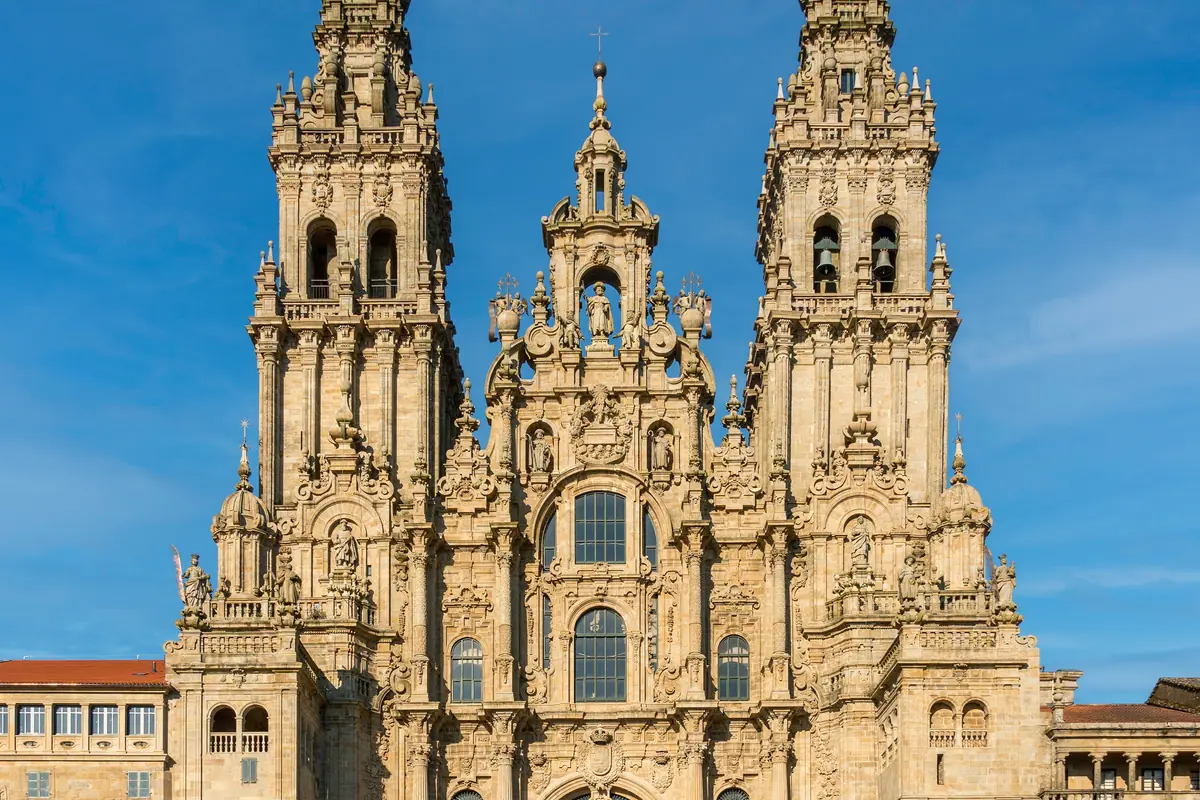
At the end stands Santiago de Compostela Cathedral, its twin towers rising over the Obradoiro square, with a pilgrim mass that fills the nave and the great incense burner swinging through the transept on special dates. Beyond Galicia, the north is green, wet and wonderful: Bilbao's titanium Guggenheim, San Sebastián's shell-shaped La Concha beach and its dense concentration of pintxo bars, the cider houses of Asturias, and the limestone peaks of the Picos de Europa.
This Atlantic coast is a different Spain — seafood, sidra and rain showers instead of olive groves. Summer is the only reliable season for hiking the high routes, while coastal towns such as Santander and Ribadesella work well from June to September. Book accommodation early along the Camino, where beds in the busiest stages fill by mid-afternoon.
Coasts, Islands and Big Landscapes
Spain's coastline is a series of distinct worlds. The Costa Brava hides pine-backed coves and the white fishing town of Cadaqués, close to Salvador Dalí's house at Portlligat and his theatre-museum in Figueres. Further south, Valencia pairs the futuristic sweep of the City of Arts and Sciences with a cathedral, a busy central market and the rice dishes that made paella famous. The Costa del Sol is built-up but convenient, and just inland the Caminito del Rey boardwalk clings to a sheer gorge that once terrified climbers.
The islands deserve their own trip. Mallorca's Serra de Tramuntana mountains, the switchback road to Cap de Formentor and Palma's golden sandstone cathedral make it far more than a beach destination; Menorca is quieter and greener, Ibiza mixes coves with a famous night scene. Off Africa, the Canaries offer warm winters year-round: the Teide volcano on Tenerife rises over 3,700 metres, Lanzarote's Timanfaya is a black lava desert of geysers and craters, and Gran Canaria's dunes at Maspalomas look borrowed from the Sahara.
Time your visit by region rather than by country. The Mediterranean coast and islands are at their best from May to early October; inland cities are pleasant in April, May and October; the Canaries work in any month. Wherever you go, reserve the blockbuster monuments first and build the rest of the trip around them.
Festivals, Food and the Spanish Day
Spain's calendar is astonishingly dense. Semana Santa fills Seville with processions and candlelight in the weeks before Easter; Las Fallas turns Valencia into a city of giant satirical effigies burned in March; San Fermín brings white clothes, red scarves and bulls to Pamplona from 6 to 14 July; and La Tomatina, near Valencia, throws tomatoes on the last Wednesday of August. Book accommodation months ahead for any of them, and expect higher prices and closed shops around the biggest dates.
Eating is the main event of most days. Breakfast is light, lunch is the big meal and dinner rarely starts before nine, which is why the afternoon menu del día — three courses with bread and a drink for a modest sum — is the best value in the country. Order jamón ibérico sliced thin, pintxos in the Basque Country, fresh seafood in Galicia, paella in Valencia at lunchtime rather than at night, and vermouth before a late dinner.
Finally, adjust to Spanish time rather than fighting it. Shops close in the afternoon in many towns, museums are often free or discounted in the evening, and the sobremesa — the long talk after a meal — is not a delay but the point. Learn a handful of phrases, greet people when you enter a small bar, and the trip will open up in ways no itinerary can plan.
Frequently asked questions
What is the best time of year to visit Spain?
April to June and September to October are ideal across most of the country: warm but not scorching, with long daylight and manageable crowds. July and August are extremely hot inland — Seville and Córdoba regularly exceed 40°C — though the northern coast and the Canary Islands stay comfortable. For skiing in the Pyrenees or Sierra Nevada, aim for January to March.
How many days do I need in Spain?
Ten days is the minimum for a satisfying first trip, and two weeks is better. A common route is three or four nights in Madrid with day trips to Toledo or Segovia, four or five nights in Andalusia covering Seville, Córdoba and Granada, and three nights in Barcelona. Trying to see the whole country in one week means spending most of it in transit.
Do I need to book tickets in advance?
Yes for the big monuments. Alhambra tickets in Granada and Sagrada Família timed entries in Barcelona sell out well ahead, especially from April to October, as do Park Güell, the Real Alcázar in Seville and the Mezquita-Catedral in Córdoba at peak times. Reserve those first, then plan flights, trains and hotels around the dates you secure.
Should I rent a car or use trains?
High-speed trains link Madrid, Barcelona, Seville, Valencia, Málaga and Córdoba quickly and comfortably, so no car is needed for a city-based trip. A car becomes useful for the white villages of Andalusia, the Costa Brava coves, rural Galicia or the Picos de Europa. Note that many historic centres restrict traffic, so park outside the old town.
Where can I see authentic flamenco?
Seville and Granada are the heartlands. In Seville, look for small venues in the Triana and Santa Cruz districts; in Granada, the caves of Sacromonte stage powerful, intimate performances. Madrid also has excellent tablaos. Choose a small room over a large dinner-and-show production, and book ahead for weekend evenings.
Plan it — experiences in Spain
Live search, booked directly with trusted providers.