Spain is almost too big for a single week, which is exactly why flying between its regions makes sense: a short hop replaces an entire day on the road, letting you trade Castilian boulevards for Andalusian orange groves and Catalan modernism before the week is out. This seven-day route strings together four cities, one UNESCO-listed palace complex and a handful of the country's most unmissable landmarks.
Days 1–2: Land in Madrid and Learn the Rhythm of Castile
Most long-haul flights into Spain touch down at Madrid-Barajas, a sprawling airport whose newer terminal is a landmark in its own right, all wavy bamboo ceilings and soaring roof. From there, the metro and the airport express bus reach the city centre in under 45 minutes. Give yourself the first afternoon to shake off the flight with a slow wander: start at Puerta del Sol, the kilometre-zero point from which all Spanish roads are measured, then drift into Plaza Mayor, a colonnaded square built in the 1600s that fills with the sound of conversation and clinking glasses by early evening.
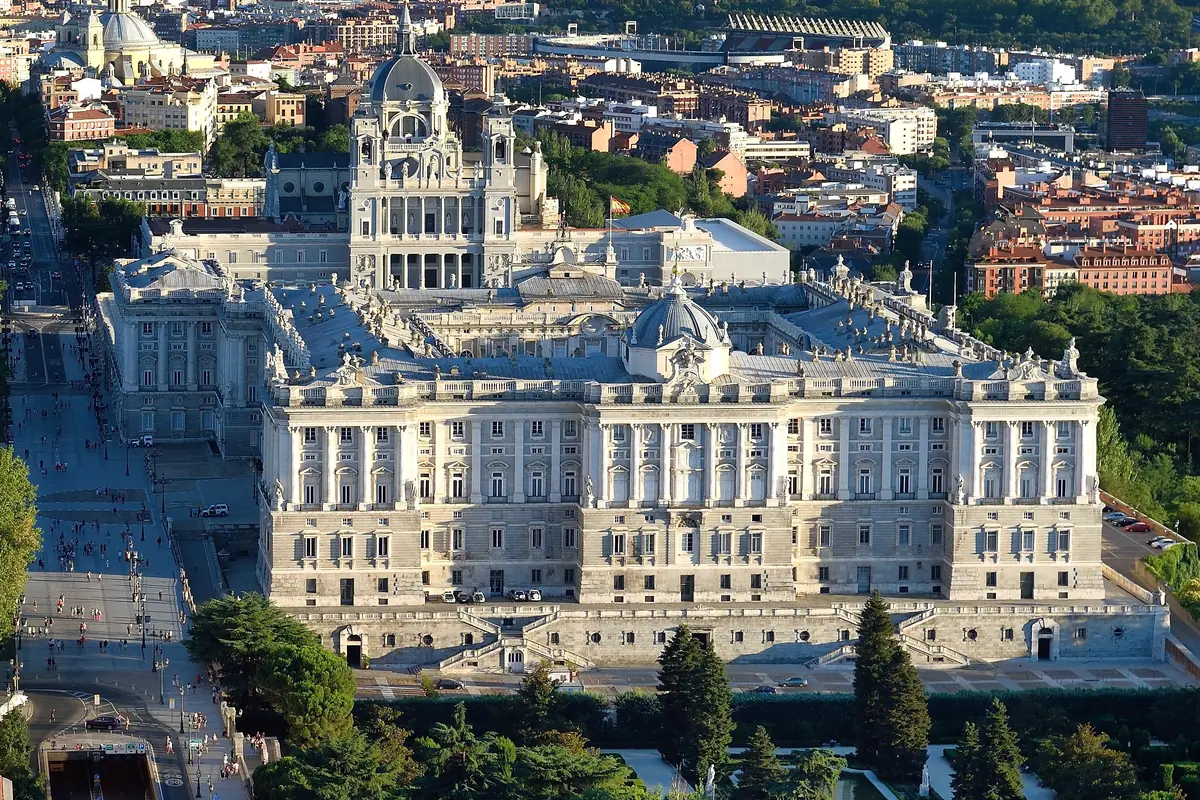
Day two is for Madrid's heavyweight sights. The Prado Museum holds centuries of Spanish and European painting in a single neoclassical building, and the nearby Reina Sofía gives you Picasso's vast anti-war canvas in the same district. Book a timed entry for the Royal Palace, the largest functioning royal residence in Europe, then walk the formal gardens of the Sabatini section afterwards. If you have energy left, the Retiro Park and its glass Crystal Palace make an easy, shady finale, while Sunday mornings bring the sprawling El Rastro flea market to the streets around Plaza de Cascorro.
Eat late, as locals do, and eat standing up where it is busy — a plate of jamón, a slice of tortilla and a small beer or vermouth will set you up far better than a three-course menu aimed at visitors. Sleep near Gran Vía or Huertas so you can walk to most of the big sights and reach Atocha station easily the next morning.
Day 3: Fly South to Seville and Meet Andalusia
A flight from Madrid to Seville takes barely an hour, and the cultural shift is immediate: whitewashed lanes, palm trees, wrought-iron balconies and the scent of orange blossom in spring. Base yourself in the historic centre, ideally between the cathedral and the neighbourhood of Santa Cruz, and spend your first afternoon on the city's two essential monuments. The Seville Cathedral is the largest Gothic church in the world, and its bell tower, the Giralda, began life as a Moorish minaret — climb the ramps rather than stairs to the top for the best view over the rooftops.
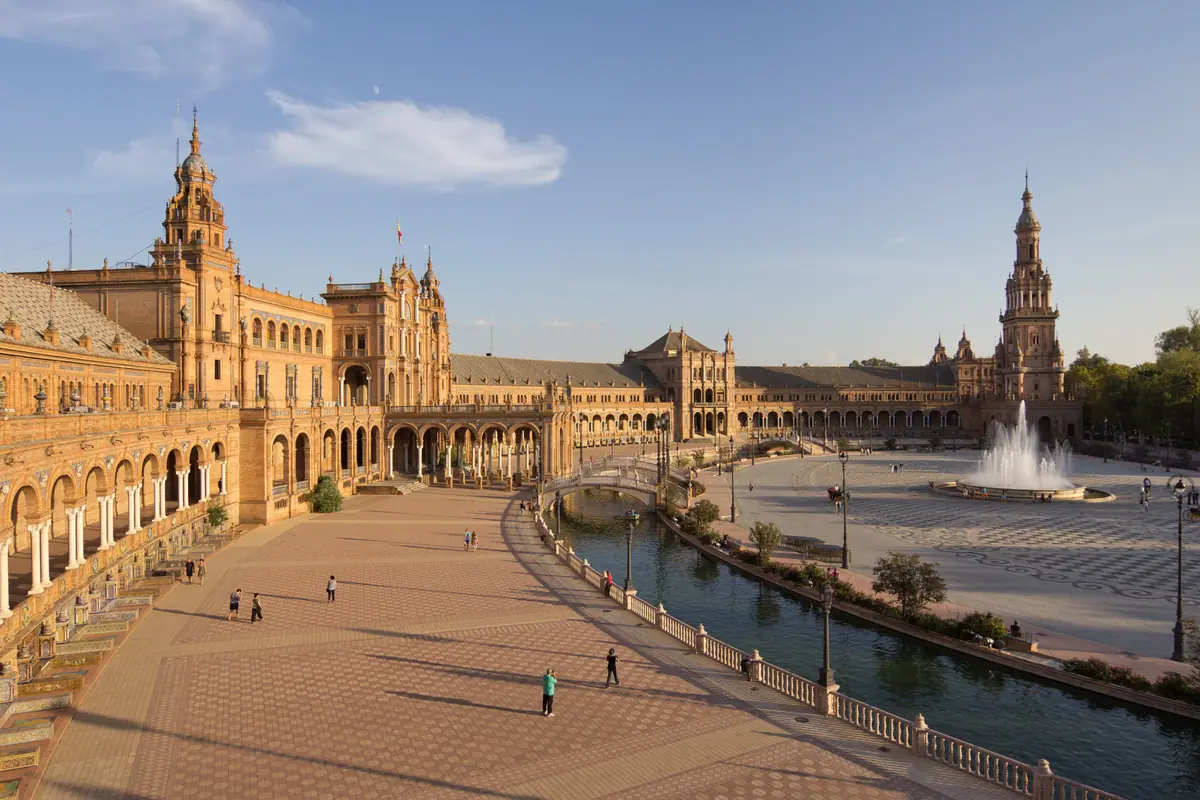
Next comes the Alcázar of Seville, a royal palace that layers Islamic, Mudéjar and Renaissance design across courtyards, tiled halls and unexpectedly lush gardens. Its famous courtyard arches and water channels have drawn film crews for decades. Finish the day at Plaza de España, a vast, semi-circular confection of brick, azulejo tiles and a canal where rowing boats drift past tiled benches representing each Spanish province.
Cross the river into Triana for dinner — the old pottery and sailors' quarter is where flamenco feels least like a performance. If your travel dates land in spring, note that Seville's April Fair and the sombre processions of Holy Week fill the city and push hotel rates to their peak; book months ahead or choose a different week.
Day 4: Córdoba's Mezquita, Then Granada by Evening
Córdoba sits about 45 minutes from Seville by fast train and is best seen as a morning-to-afternoon stop. Its Mezquita-Catedral is one of the most disorienting buildings in Europe: a forest of red-and-white striped double arches built as a mosque, with a full Renaissance cathedral dropped into its centre. Walk the Patio de los Naranjos, cross the Roman bridge over the Guadalquivir at golden hour if you can, and detour into the narrow lanes of the old Jewish quarter, the Judería, to find the small synagogue and the flower-hung patios that Córdoba celebrates each May.
Then continue east to Granada, arriving in time for dinner and your first glimpse of the Alhambra lit up on its hill. Almost everyone treats Granada as a single purpose: the Alhambra, the Nasrid fortress and palace complex crowning the city, with the Generalife gardens stepping down beside it. Timed tickets for the Nasrid Palaces sell out days or even weeks in advance, and entry is strictly tied to your slot — book before you leave home, and keep your passport with you, as it is checked at the gate.
Spend the late afternoon wandering the Albaicín, the whitewashed Moorish quarter opposite the palace, and stake out the Mirador de San Nicolás for a sunset view with the Sierra Nevada behind the towers. Afterwards, climb to the Sacromonte caves for flamenco performed in the neighbourhood where the tradition took root.
Day 5: Fly to Barcelona and Follow Gaudí Through the City
Granada's airport is small, so many travellers make the transfer to Barcelona from Málaga instead — either way, the flight is around an hour and a half. Once you land at Barcelona-El Prat, the airport train and the metro will drop you in the Eixample or the Gothic Quarter within 40 minutes. With only a day and a half, be ruthless about priorities.
The Sagrada Família tops the list, and it deserves to: Gaudí's unfinished basilica turns coloured light into architecture, with stone columns that branch overhead like a forest canopy. Timed tickets are essential and morning light in the nave is the most dramatic. Pair it with Park Güell, his mosaic-tiled hillside park, which requires a separate timed ticket for the monumental zone, and with the Modernista apartment buildings of Passeig de Gràcia — Casa Batlló and Casa Milà — whose scalloped façades you can admire from the pavement for free.
The rest of your day belongs to the old city: the tangle of lanes in the Gothic Quarter around Barcelona Cathedral, the Picasso Museum's deep collection of the artist's early work, the boulevard and market of La Rambla and La Boqueria, and the waterfront at Barceloneta. If sunset is still ahead of you, head up Montjuïc for city views and the Magic Fountain's evening light-and-water show.
Day 6: A Slow Day, a Day Trip, or a Second Flight
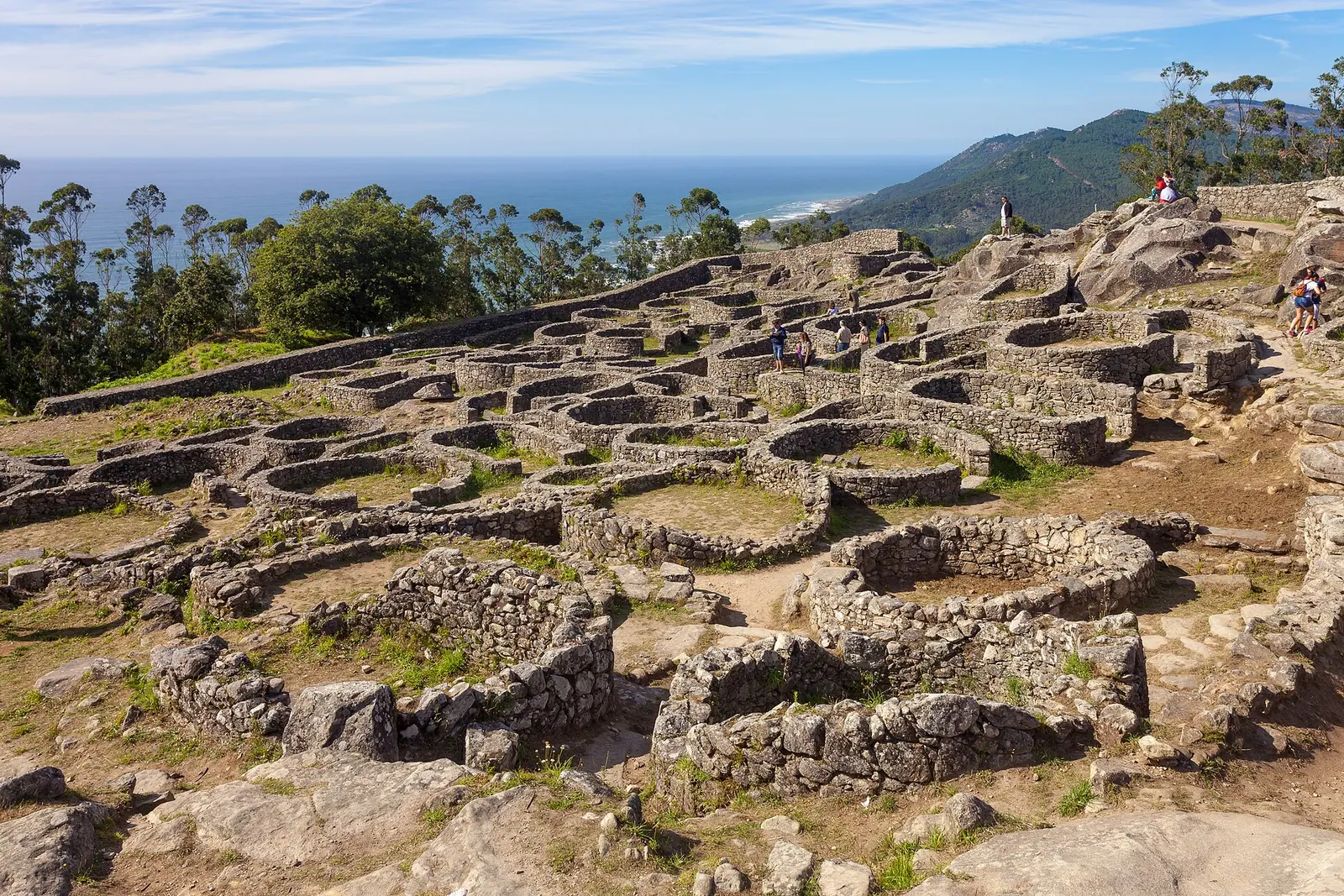
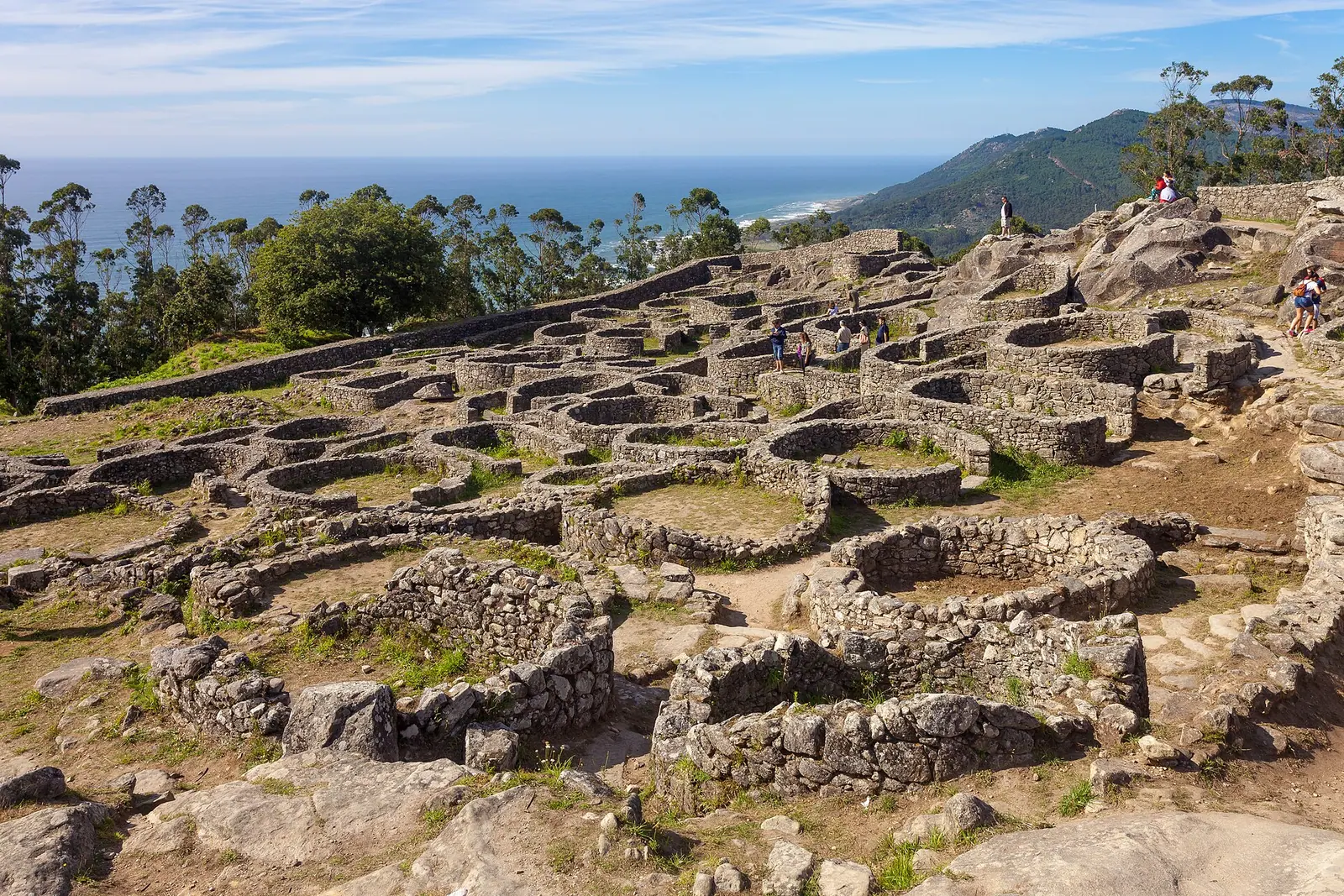
A week is tight, so treat day six as flex. You could stay in Barcelona and add Montserrat's serrated mountain monastery, an hour away by train and cable car, or the Dalí museum in Figueres further north. Alternatively, fly onward to Bilbao to see the Guggenheim Museum's titanium curves and the pintxos bars of the old town, or to Santiago de Compostela in Galicia, where the cathedral draws pilgrims arriving on foot from across Europe.
If you would rather end by the sea, a short flight to Palma opens up Mallorca's Serra de Tramuntana, and flights to the Canary Islands bring year-round warmth and the volcanic heights of Mount Teide on Tenerife. Each of these adds a single domestic hop, which is the whole logic of this route: Spain's regions are far apart on the map but close in the air, with domestic flights typically running between one and two and a half hours.
Wherever you finish, keep the last afternoon light. Spanish cities reward wandering more than ticking off lists — a shaded plaza, a cold drink, a plate of something fried and salty — and that hour is usually what people remember.
Flying Around Spain: Practical Timing and Logistics
Domestic flying in Spain is cheap, frequent and heavily used, which cuts both ways. Budget carriers keep fares low but their baggage rules are strict: a small cabin bag is often the only thing included, and a full-size carry-on or checked bag adds a fee that can exceed the ticket itself. Weigh and measure your bag at home, check in online, and if you need to drop luggage allow an extra 45 minutes for the queue.
For domestic departures, arrive at the airport around 90 minutes ahead; for the return long-haul, three hours. Madrid-Barajas and Barcelona-El Prat are large and involve trains, moving walkways or shuttle buses between terminals, so read your boarding pass carefully. Also check which airport you are actually flying from — some cities have secondary airports well outside town, and a cheap fare can mean an hour-long bus transfer.
Flights are not always the answer. High-speed trains link Madrid with Seville in about two and a half hours, and with Barcelona in roughly the same, city centre to city centre, with no baggage fees. Use rail for those legs and save flights for the long runs: Madrid or Seville to Barcelona, and anywhere to the north coast or the islands. Book domestic flights four to eight weeks out for the best fares, and avoid Friday evenings and Sunday nights when business travellers push prices up.
When to Go and How to Pace the Week
Spring and early autumn are the sweet spots for this itinerary. April, May, June, September and October bring warm but manageable temperatures, long daylight and the best conditions for walking Granada's hills and Seville's streets. July and August in Andalusia are punishing, with afternoon highs often climbing past 40°C, which forces sightseeing into early mornings and late evenings and makes the Alhambra's shaded gardens a genuine relief. Coastal Barcelona stays more comfortable but is at its most crowded in August.
Winter is mild in the south and cold and clear on the Castilian plateau, and it is a good time for Madrid's museums and for lower hotel rates, though some coastal and island businesses slow down. Whatever the season, buy tickets for the Alhambra, the Sagrada Família, Park Güell and Seville's Alcázar in advance — these are the fixed points around which the rest of the week must bend, and they are the sights you would most regret missing.
Finally, resist adding a fifth city. This route already moves four times; a hurried week in Spain still tastes wonderful, but a slightly slower one, with a long lunch and an afternoon that goes nowhere in particular, tastes more like the country itself.
Frequently asked questions
Is it better to fly or take the train between Spanish cities?
For Madrid–Seville, Madrid–Barcelona and Madrid–Valencia, the high-speed train is usually the better choice: city centre to city centre, no baggage fees and no security queues, with journeys of roughly two and a half to three hours. Flying wins for longer runs such as Madrid or Seville to Barcelona, and for anywhere to the north coast, Galicia or the Balearic and Canary Islands.
How far in advance should I book the Alhambra and Sagrada Família?
Weeks, not days. The Alhambra's Nasrid Palaces use timed entry with a daily cap and regularly sell out in high season, sometimes a month ahead, and the Sagrada Família's most popular morning slots go early too. Book both before you finalise flights, since your city dates should fit around them.
What is the best month for a one-week Spain itinerary?
Late April, May, June, September and October offer the best balance of warmth, daylight and manageable crowds. Avoid July and August in Andalusia, when Seville and Córdoba regularly exceed 40°C, and be aware that Easter week and Seville's April Fair bring peak prices and packed streets.
Do I need a car for this route?
No. All four cities are walkable, and the connections work by plane and fast train, with Córdoba sitting neatly on the rail line between Seville and Granada's region. A car becomes useful only if you want to explore rural Andalusia, the northern coast or Mallorca's mountain villages at your own pace.
How much luggage should I plan for on domestic flights?
Travel with a small cabin bag if you can. Budget carriers on Spanish domestic routes often include only a personal item, and adding a full-size carry-on or checked bag can cost more than the fare. If you shop or carry camera gear, pay for the bag online in advance rather than at the airport, where fees are highest.