Spain is less a single destination than a dozen of them, stitched together by late dinners, loud plazas and an unshakeable conviction that a meal is never only about food. Travel it slowly and you trade a checklist of sights for long lunches in tiled market halls, glasses of vermouth before noon and evenings that begin just as other countries are heading to bed.
Spain on a Plate: A Country of Regional Kitchens
Ask ten Spaniards to name the national dish and you will get ten arguments. Spanish cooking is fiercely regional, shaped by coast, mountain and climate: the green Atlantic north leans on cider, cheese and shellfish; the Mediterranean east on rice, tomatoes and olive oil; the dry interior on roast lamb, chickpeas and cured pork. A single road trip can carry you from Asturian bean stew to a Valencian rice pan within a few hundred kilometres, and each province will insist its version is the correct one.
Market halls are the easiest way in. In Madrid, the iron-and-glass Mercado de San Miguel packs tapas counters under a 1916 canopy; in Barcelona, La Boqueria spills off La Rambla with jamón legs, salt cod and fruit cups; Valencia's Mercado Central is a Modernista cathedral of tiles and seafood; San Sebastián's Mercado de la Bretxa sits at the edge of the old town. Arrive before noon for the real shopping crowd, or after seven in the evening when the bars fill.
Eating with the seasons changes everything. Winter means calçots — grilled spring onions dipped in romesco — around Catalonia, plus hearty cocidos and stews. Spring brings wild asparagus and the first broad beans, summer the tomato-and-pepper glories of gazpacho and salmorejo, autumn the game, chestnuts and wild mushrooms that appear on menus across Castile and Navarre.
A Regional Eating Route: From Pintxos to Paella
Start in the Basque Country, where food is close to a civic religion. San Sebastián's Parte Vieja is packed with bars whose counters groan under pintxos — small constructions of anchovy, pepper, prawn or tortilla speared with a toothpick — washed down with txakoli poured from a height or dry cider. Bilbao's riverside market and the surrounding old town keep the same tradition alive, and the local philosophy is simple: one bite, one glass, then move on.
Head east to Valencia for paella done properly: a wide, shallow pan, a wood fire, rice spread thin so the base caramelises into socarrat. The classic version uses chicken, rabbit and sometimes snails — not chorizo, whatever you have seen elsewhere. Seafood paella belongs to the coast, while noodle versions called fideuà come from Gandia. Along the Galician coast, pulpo á feira arrives sliced over potato with olive oil, coarse salt and pimentón, and the rías yield some of the finest shellfish in Europe.
Andalusia counters with fried fish by the plateful, salmorejo in Córdoba, and jamón carved from the leg in mountain villages. For the best cured ham, head for the dehesa oak woodlands of Extremadura and Salamanca, where acorn-fed ibérico pigs roam free and the resulting slices taste of hazelnut and olive oil. In Catalonia, pa amb tomàquet — bread rubbed with tomato, garlic and oil — accompanies nearly everything. Segovia roasts suckling pig to a crackling finish, Asturias serves fabada with blue cheese, and cider there is poured from arm's length to wake it up.
The Spanish Clock: Tapas, Menú del Día and Sobremesa
Adjust your body clock on arrival. Breakfast is light — coffee and toasted bread, perhaps churros on a Sunday — followed by a mid-morning snack around eleven. Lunch, the main meal, lands between two and half past three; most restaurants offer a menú del día on weekdays, a two- or three-course set with bread and a drink that is both cheap and deeply local. Dinner starts at nine and can run past eleven, later still in Madrid and Seville, and many kitchens shut between four and eight in the afternoon, so a late lunch is worth planning.
Tapas etiquette is informal but real. In Granada and parts of Almería a free tapa arrives with every drink; elsewhere you pay, and the pleasure is in ordering three or four small plates between two people and sharing everything. Sundays call for vermouth and olives before lunch, and no one will hurry you: sobremesa, the hour spent talking over an empty plate, is a protected institution. The siesta is genuine in small towns, though shops in big cities mostly stay open through the day.
Two quirks catch visitors out. Many restaurants close one day a week, often Sunday evening or Monday, and in August city kitchens shut entirely as staff take holidays while coastal towns overflow. Outside the main tourist season, seaside places on the northern and Mediterranean coasts may close from November to March. Book popular rooms a week or two ahead; the best tapas bars take no reservations, so arrive early or accept the wait.
Must-See Landmarks: The Sights That Define Spain
In Barcelona, the Sagrada Família has been rising since 1882 and still draws gasps: book timed entry a month or two ahead and choose a morning slot, when sunlight through the east windows turns the nave blue and green. Nearby, Park Güell's mosaic terraces and Gaudí's Casa Batlló on the Passeig de Gràcia belong to the same restless imagination, while the Gothic Quarter rewards aimless wandering.
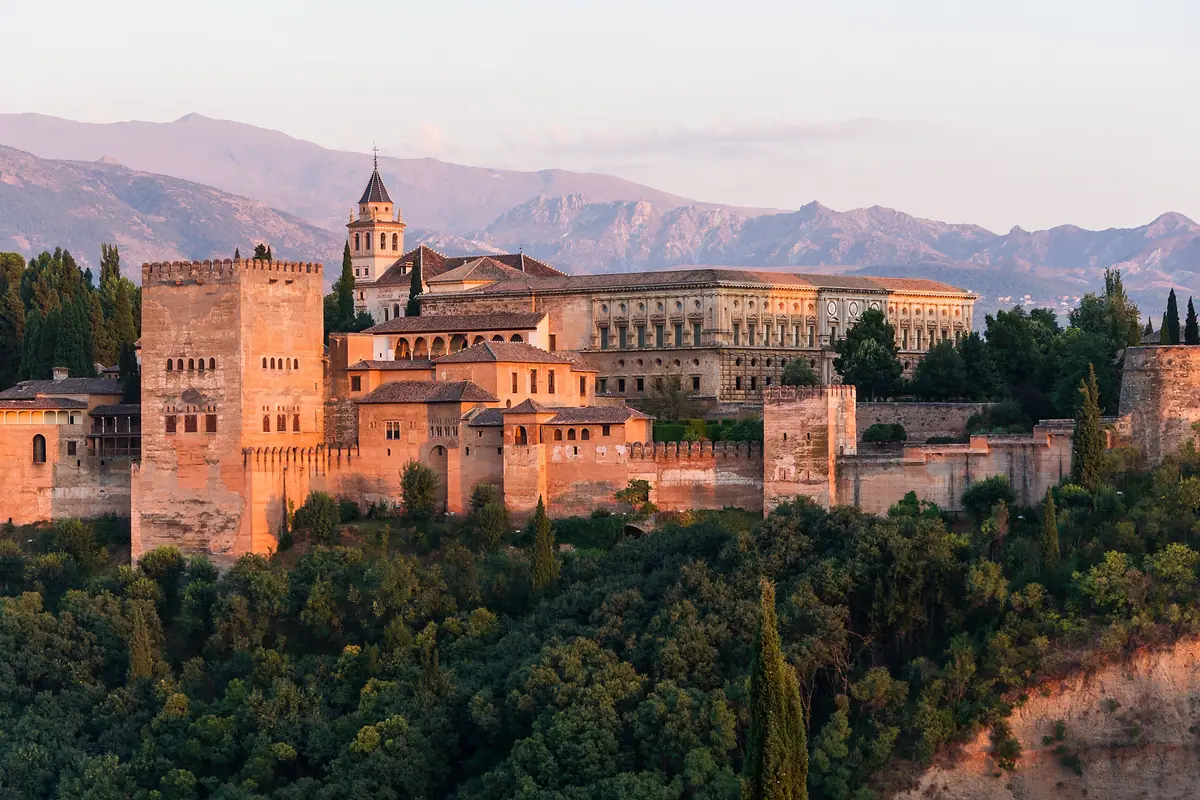
Andalusia holds Spain's greatest Moorish monuments. Granada's Alhambra needs timed tickets for the Nasrid Palaces and should be reserved two to three months ahead in spring and autumn; pair it with the Generalife gardens and the Albaicín viewpoint opposite. Córdoba's Mezquita-Catedral is a forest of more than 850 columns with a cathedral dropped into its centre, and in May the city opens its flower-filled patios. Seville offers the Royal Alcázar's gardens, the tiled sweep of Plaza de España and a cathedral that shelters the tomb of Christopher Columbus.
Madrid's art triangle — the Prado, the Reina Sofía and the Thyssen galleries — can absorb days, and free evening slots make the Prado surprisingly affordable. Add the Royal Palace and Plaza Mayor, then day-trip to Toledo's labyrinth or Segovia's Roman aqueduct. Further afield: the Guggenheim in Bilbao, Santiago de Compostela's cathedral with its swinging incense burner, Valencia's futuristic City of Arts and Sciences, and Mount Teide in Tenerife, Spain's highest peak, best climbed by cable car in the cool morning.
Beyond the Cities: Villages, Vineyards and the Camino
Rural Spain is where the country slows down. Ronda clings to a cliff above a hundred-metre gorge crossed by the Puente Nuevo, with one of the oldest bullrings in the country beside it. The white villages of Andalusia — Frigiliana, Casares, the hamlets of Las Alpujarras below the Sierra Nevada — are best visited in spring, when the hillsides are green and almond blossom gives way to wildflowers. Drive carefully; mountain roads are narrow and unfenced.
Wine lovers should build an itinerary around the bodegas. La Rioja is the classic: base yourself in Logroño and eat your way along the Calle del Laurel, then visit wineries in Haro and take in the late-September harvest, when grapes arrive at the crush by the truckload. Ribera del Duero produces powerful reds, Rías Baixas crisp albariño, and Jerez the fortified wines served ice-cold with tapas. Visits almost always need booking, and many close at weekends.
The Camino de Santiago remains the most rewarding slow journey in the country. Walking the final hundred kilometres from Sarria qualifies for the pilgrim certificate, and the route is busiest from May to September — go in late April or October for quieter paths and cooler weather. In the Basque Country, winter and early spring bring cider houses, where for a few weeks a year families pour cider straight from the barrel and serve salt cod omelette and thick grilled steak to long communal tables.
Festivals, Flamenco and the Living Calendar
Spain's year is punctuated by celebrations that reshape entire cities. Semana Santa, the week before Easter, fills Seville, Málaga and Zamora with candlelit processions that run late into the night; two weeks later Seville throws the Feria de Abril, a fair of striped tents, sherry and sevillanas dancing. In March, Valencia burns its giant papier-mâché figures at Las Fallas, and in July Pamplona's San Fermín sends runners through the streets ahead of bulls. August ends with the tomato-throwing chaos of La Tomatina in Buñol, while February belongs to the satirical carnival of Cádiz and the costumed parades of Santa Cruz de Tenerife.
Flamenco is not a show invented for visitors but a living Andalusian art, and the setting matters. Small tablaos in Seville's Triana district, the cave venues of Granada's Sacromonte and the peñas of Jerez deliver the raw, close-up experience — stamping feet, cracked voices, guitars — far better than a large dinner theatre. Look for performances billed as cante jondo, or deep song, and sit near the front if you can.
If your dates collide with a major festival, book accommodation months in advance and expect higher rates and crowded trains. The alternative is to seek out the smaller local calendar: village romerías that carry statues through the fields, summer verbenas with brass bands in the plaza, and saints' days that end with everyone eating churros at three in the morning. Those, more than any monument, are the memories travellers bring home.
Frequently asked questions
What are typical meal times in Spain, and should I book restaurants?
Lunch is the main meal, served roughly 2pm to 3.30pm, and dinner rarely starts before 9pm — later in Madrid and Seville. Many kitchens close between 4pm and 8pm, so plan an afternoon snack. Book popular restaurants a week or two ahead; famous tapas bars usually do not take reservations, so arrive early or expect to stand.
How far ahead should I book the Alhambra and the Sagrada Família?
For Granada's Alhambra, especially the timed Nasrid Palaces, reserve two to three months ahead for spring and autumn dates. The Sagrada Família in Barcelona is easier but still worth booking one to two months in advance, with a morning slot for the best stained-glass light. Both sell out on peak weekends and public holidays.
When is the best time of year to tour Spain?
April to June and September to October offer warm, walkable weather and long daylight. July and August are punishing inland, with Seville and Córdoba regularly exceeding 40°C, though the northern coast stays cooler and greener. Winter suits city breaks, ski trips to the Pyrenees and carnival season, but some coastal restaurants close from November to March.
Is tapas free in Spain?
It depends on where you are. In Granada and parts of Almería a small tapa arrives free with each drink, and you simply keep ordering. Elsewhere, including Madrid, Barcelona and San Sebastián, tapas are paid plates you order and share. Either way, portions are small, so order three or four between two people and add more as you go.
How many days do I need for a first trip to Spain?
Ten days to two weeks lets you combine two or three regions without constant transit — for example Barcelona and Catalonia, then Seville, Córdoba and Granada by high-speed rail, finishing in Madrid. Trying to cover the Basque Country, Andalusia and Galicia in a week means most of your time is spent travelling rather than eating, walking and lingering.