Slovenia packs an improbable amount into a country you could cross in an afternoon: alpine lakes the colour of bottle glass, a karst underworld carved by rivers, a short but beautiful slice of Adriatic coast, and a capital small enough to walk end to end before lunch. These are the landmarks and experiences worth building a trip around — and the details that make them worth doing properly.
Ljubljana: A Capital Built for Slow Wandering
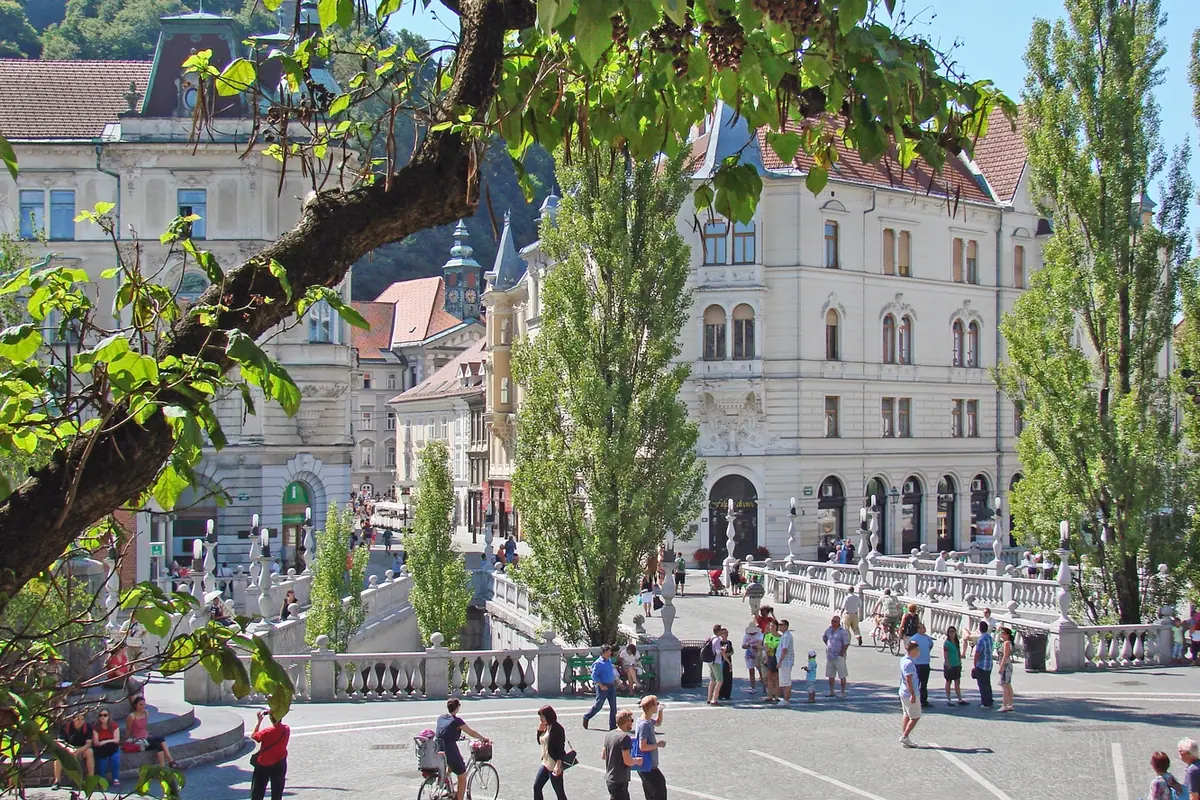
Ljubljana rewards the traveller who arrives without a checklist. The old town curls around the Ljubljanica river, and everything worth seeing sits within a twenty-minute stroll: Prešeren Square, with its pink Franciscan church and the bronze poet gazing at his muse; the Triple Bridge, three spans side by side, built so the city could cross in style; and the Dragon Bridge a few blocks east, where four green-winged dragons guard the way to the market. Mornings here belong to coffee — long, slow, taken at a riverside table while the flower stalls open beneath the colonnade of the Central Market.
Above it all sits Ljubljana Castle on its wooded hill. A funicular from Krekov trg whisks you up in about a minute; the walk through the old town takes fifteen and is far prettier. The courtyard is free to enter, the tower gives you the whole city in one sweep — the Julian Alps on the horizon when the air is clear — and the castle's history exhibitions fill a rainy afternoon. Down below, the riverside market, the rooftop terrace of the old Nebotičnik tower and the graffiti-covered former barracks at Metelkova make for three very different evenings.
Give Ljubljana a full day, two if you like museums; the national gallery and the city museum are both worthwhile. Tivoli Park stretches north from the centre, with a formal promenade that dissolves into a proper forest walk up to Rožnik. In summer the riverbanks fill with open-air tables and street musicians; in December the same streets host a Christmas market that is genuinely charming rather than overwhelming.
Lake Bled: The Postcard Everyone Comes For
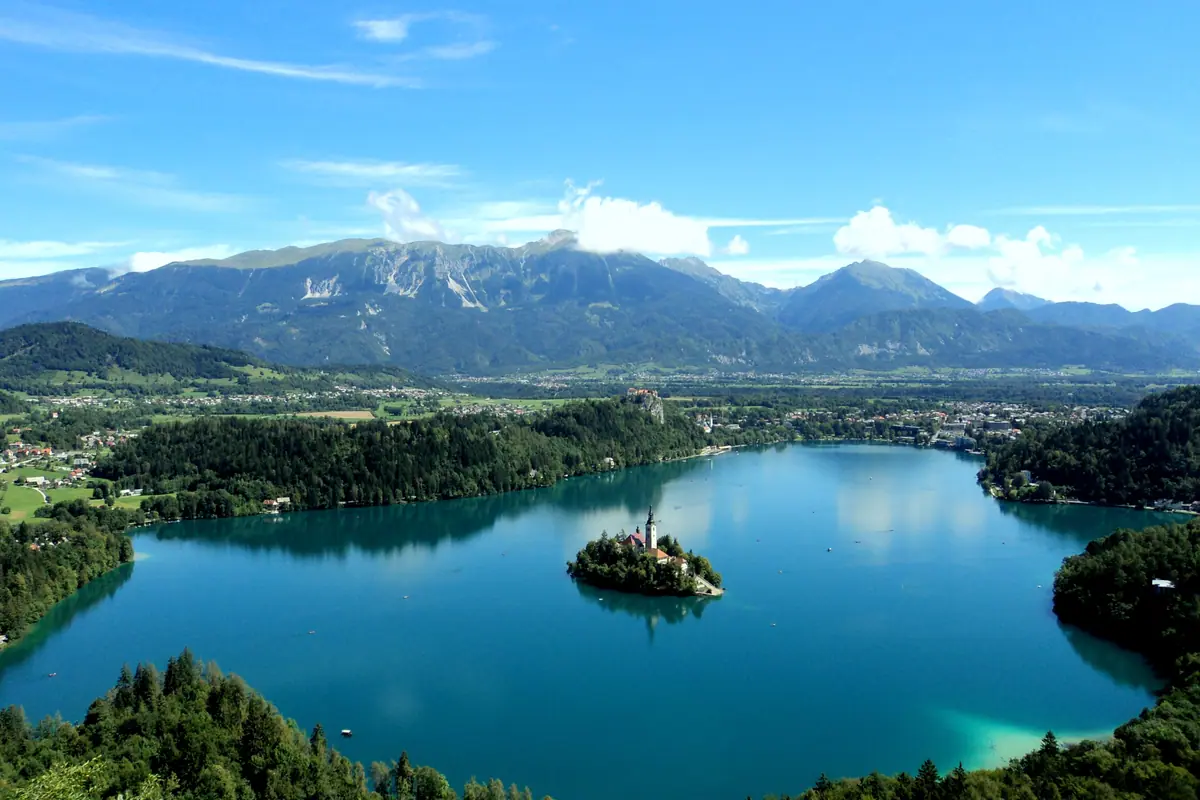
Bled is the image people carry home from Slovenia: a turquoise lake, a tiny island with a church spire, a cliff-top castle and a ring of forested hills behind it. The island is the centrepiece. Wooden pletna boats, rowed by standing oarsmen whose families have done this for generations, cross to it in about twenty minutes; you then climb the 99 stone steps to the Church of the Assumption and, if you like, ring the wishing bell. It is soft-focus and unabashedly romantic, and it earns its reputation.
Bled Castle, perched on a rock above the water, is the quieter pleasure: a museum of armour and rural life, a working old printing press, a chapel with frescoes, and a terrace where you can eat while looking straight down at the island. Walk the lake's six-kilometre shore path in an hour and a half, swim off the grassy lidos in July and August, and try the local cream cake — vanilla custard, whipped cream, a pastry lid — that has been made here for generations.
For the classic photograph of the whole scene, climb to the Ojstrica or Mala Osojnica viewpoints: twenty to thirty minutes of steep uphill, best at sunrise before the crowds arrive. Then head to Vintgar Gorge, a kilometre and a half of boardwalk pinned to the rock walls of the Radovna river and finishing at the Šum waterfall. It is open roughly April to October, takes about an hour each way, and closes when water levels are high.
Lake Bohinj and the Quiet Side of the Julian Alps
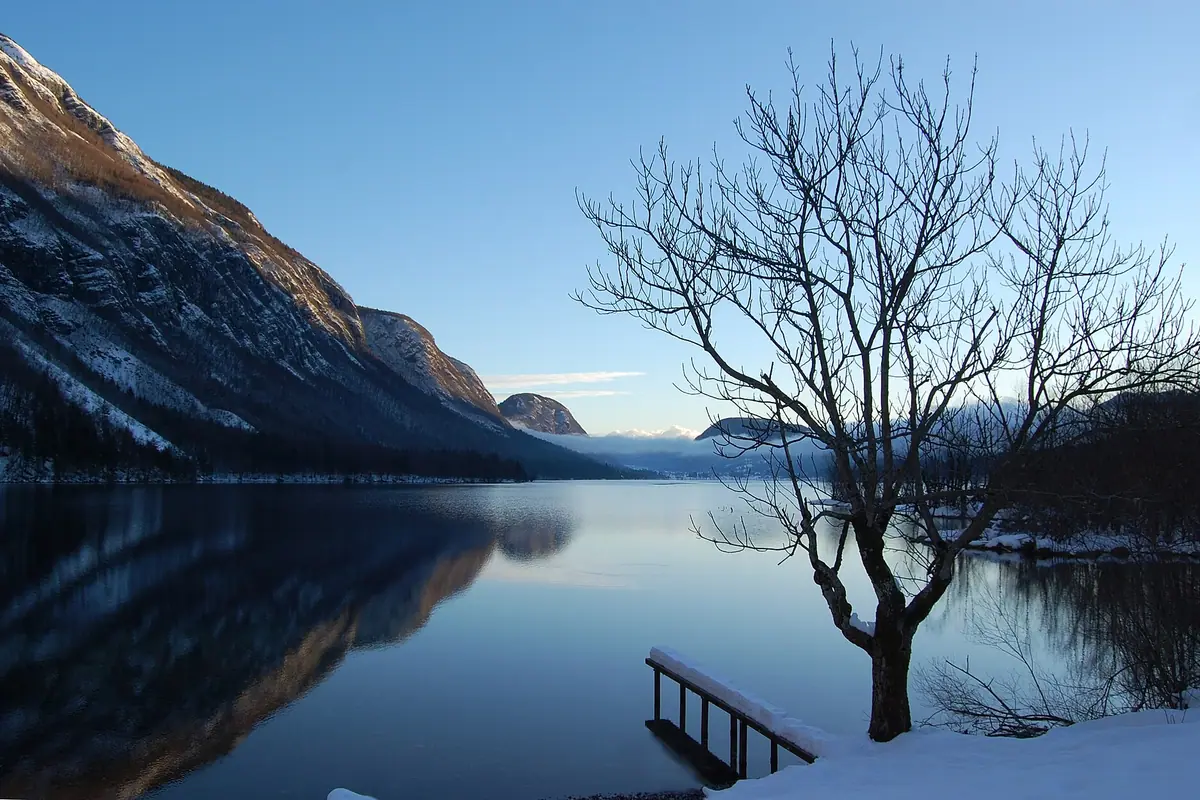
Twenty-five kilometres deeper into the mountains, Lake Bohinj is what Bled would look like without the crowds. It is larger, colder and considerably calmer, sitting inside the national park at the head of a valley of hay barns and wooden houses. Swim from the meadows near Ribčev Laz, where a stone arch bridge crosses the outflow, and visit the Church of St John the Baptist, whose medieval frescoes are among the finest in the country.
From the far end of the lake at Ukanc, a cable car climbs to Vogel at 1,537 metres for one of the most celebrated views in Slovenia: the entire Bohinj basin below, Triglav and its neighbours across the ridge. On foot, the Savica Waterfall plunges into a rocky cleft above the lake — a staircase of more than 500 steps gets you there, and it marks the source of one of the two rivers that join to form the Sava. The Mostnica Gorge, above the village of Stara Fužina, is an easier and equally beautiful hour's walk.
Bohinj is a hiking and swimming base rather than a sightseeing stop, so give it two nights if you can. Village guesthouses and farm stays in Stara Fužina, Studor and Bohinjska Bistrica put you close to the trails, and kayaks and canoes can be hired on the lake. It is also a smart alternative to sleeping in Bled, which is only about half an hour away by road.
Triglav National Park and the Emerald Soča Valley
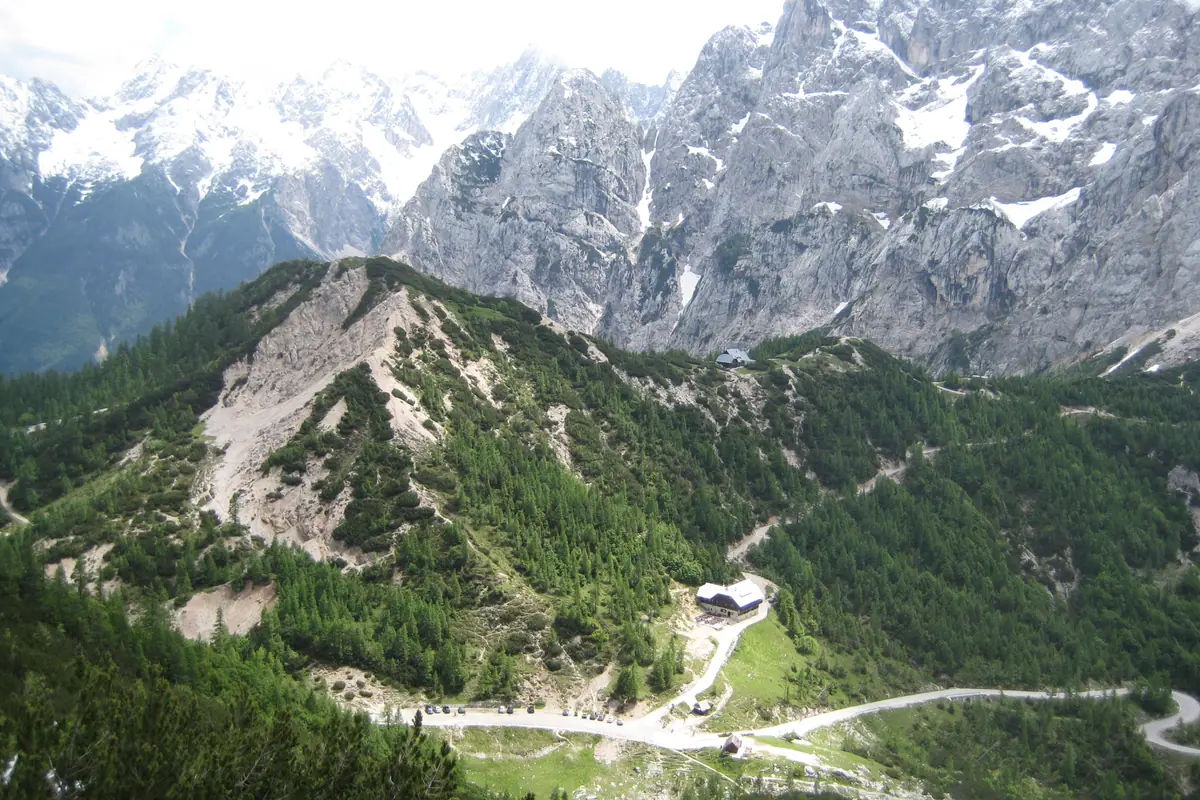
Triglav, at 2,864 metres, is the national emblem and the highest point in the country. Climbing it is no casual day out: most people break the ascent over two days, sleeping in a mountain hut and crossing sections fixed with cables and steel pegs. A guide is a sensible idea for a first attempt, and the window is short — roughly July to September, once snow has cleared from the upper gullies. If the summit is not for you, the Vršič Pass delivers the Alps without the exposure: dozens of hairpin bends between Kranjska Gora and the Soča valley, with the wooden Russian Chapel at the top and walking routes in every direction.
West of the pass, the Soča runs an impossible shade of green through the valley that shares its name. Rafting, kayaking and canyoning are organised out of Bovec from roughly April to October — spring for high water, late summer for warm, clear days. Kobarid is the base for the Walk of Peace, a trail through the First World War positions that scar these hills, and for the short path to Kozjak Waterfall, which drops into a mossy stone amphitheatre you can stand behind.
Further south, the Tolmin Gorges squeeze two rivers between sheer walls, with a Devil's Bridge and thermal springs at the confluence, while the Boka waterfall tumbles more than a hundred metres off a cliff face above the road. Weather in the Julian Alps turns fast, even in August, so carry a shell jacket, check conditions before setting out and treat the marked trails with respect — this is real mountain terrain.
Underground: Postojna Cave, Škocjan Caves and Predjama Castle
The Karst plateau south-west of Ljubljana is honeycombed with caves, and Postojna is the famous one. A small train carries visitors roughly two kilometres into the hillside before the walking tour begins through chambers of stalactites, curtains and pillars — around an hour and a half in total, at a constant eight to ten degrees, so bring a jacket even in August. The cave is also home to the olm, a blind, pale salamander that lives in the underground water and can survive for years between meals.
Škocjan Caves, half an hour away, are the more dramatic and less visited of the two. Here the Reka river disappears into a canyon of enormous proportions; a path crosses the Cerkvenik Bridge high above the gorge, and the silence and scale are genuinely humbling. Tours last about an hour and a half to two hours and involve a serious number of steps, and photography is restricted in some sections.
Pair either cave with Predjama Castle, a Renaissance fortress wedged into the mouth of a cave in a towering cliff, complete with a hidden passage that let its most famous occupant keep supplies arriving during a long siege. It is a short drive from Postojna and takes an hour or two to explore. Nearby, the Lipica stud farm has been breeding white Lipizzaner horses since the sixteenth century, and a morning watching them train is an unexpectedly lovely detour.
Piran, Maribor and the Two Ends of the Country
Slovenia's coast is short but perfectly formed. Piran is the star: a Venetian-flavoured jumble of narrow streets and pale stone houses spilling down to Tartini Square, named for the violinist born here. Climb the campanile of St George's Church for a view over the rooftops to the sea, walk the medieval town walls at sunset, and eat fish on the waterfront an hour after it was landed. Koper, with its larger old town, and Izola, smaller and sleepier, complete the coastline, while the old salt pans at Sečovlje — where salt is still raked by hand — make a wonderful early-morning walk.
Inland from the coast, the Goriška Brda hills and the Vipava Valley produce some of the country's best wine, including the amber whites the region is known for, with farm stays where dinner comes straight from the garden. Far to the east, Maribor's Lent district hugs the Drava river, and the Old Vine House shelters a vine reckoned to be more than 400 years old and still producing grapes. The wine roads of Štajerska roll into the hills, and Ptuj, the country's oldest town, has a castle, a Roman past and, each February, Kurentovanje — a carnival of shaggy-furred figures and masks unlike anything else in Europe.
Distances here are tiny: Ljubljana to Bled is under an hour, to Postojna about forty-five minutes, to the coast around an hour and a half. Trains and buses link the main towns, but a car makes the Alps, the wine hills and the smaller valleys far easier. Late spring and early autumn are the sweet spots — warm enough to swim and hike, quiet enough to have a viewpoint to yourself. Winter belongs to Kranjska Gora and the slopes above Maribor, and to Bled under a dusting of snow.
Frequently asked questions
How many days do you need in Slovenia?
Five days covers Ljubljana, Lake Bled and the caves comfortably. A week adds Lake Bohinj and the Soča valley; ten days lets you include Piran and the eastern wine country without rushing. Because the country is so compact, driving days are short and you spend your time at the sights rather than in transit.
What is the best time of year to visit Slovenia?
Mid-May to June and September to early October are ideal for hiking, lakes and the coast, with pleasant temperatures and thinner crowds. July and August are hottest and busiest, especially at Bled and on the Adriatic, so book accommodation well ahead. December to March suits skiers and anyone wanting a snowy, quieter Bled and Ljubljana's Christmas markets.
Do you need a car in Slovenia?
Not for the classic triangle of Ljubljana, Bled, Postojna and the coast, which are all connected by train and bus. A car is genuinely useful for the Julian Alps, Bohinj, the Vršič Pass and the wine roads, where services are sparse. Motorway driving requires a vignette, so sort that out before joining the highway.
Lake Bled or Lake Bohinj — which should I choose?
Bled has the island, the castle, the cream cake and the easiest logistics, along with the crowds. Bohinj is quieter, better for swimming and serious hiking, and generally kinder on the budget. Many travellers stay in Bohinj and day-trip to Bled, which is only about half an hour away by road.
How do I avoid the worst crowds?
Arrive early — at Bled, Vintgar Gorge and the popular viewpoints before nine in the morning. Choose Škocjan Caves over Postojna if you prefer smaller groups, and travel outside July and August. Mid-week visits in June or September feel dramatically different from a Saturday in high summer.
Plan it — experiences in Slovenia
Live search, booked directly with trusted providers.
Sort the rest of your trip
Everything for Slovenia, in one place
Stay in Slovenia
Hotels, guesthouses and apartments — compared in one search.
Search hotels
Transfer in Slovenia
Private driver waiting on arrival — no queues, no surprises.
Book a transfer
Stay online in Slovenia
Travel eSIM — data the moment you land, no roaming bills.
Get an eSIM