Slovenia packs an improbable amount into a country you can cross in a long afternoon: turquoise alpine lakes, a cave system with its own underground railway, an emerald river you can raft in the morning and a Venetian-flavoured coast where you can swim before dinner. This guide covers the places a first-time visitor should not miss, and the activities that make each one worth the detour.
Lake Bled, Lake Bohinj and the Gorge Country of the Julian Alps
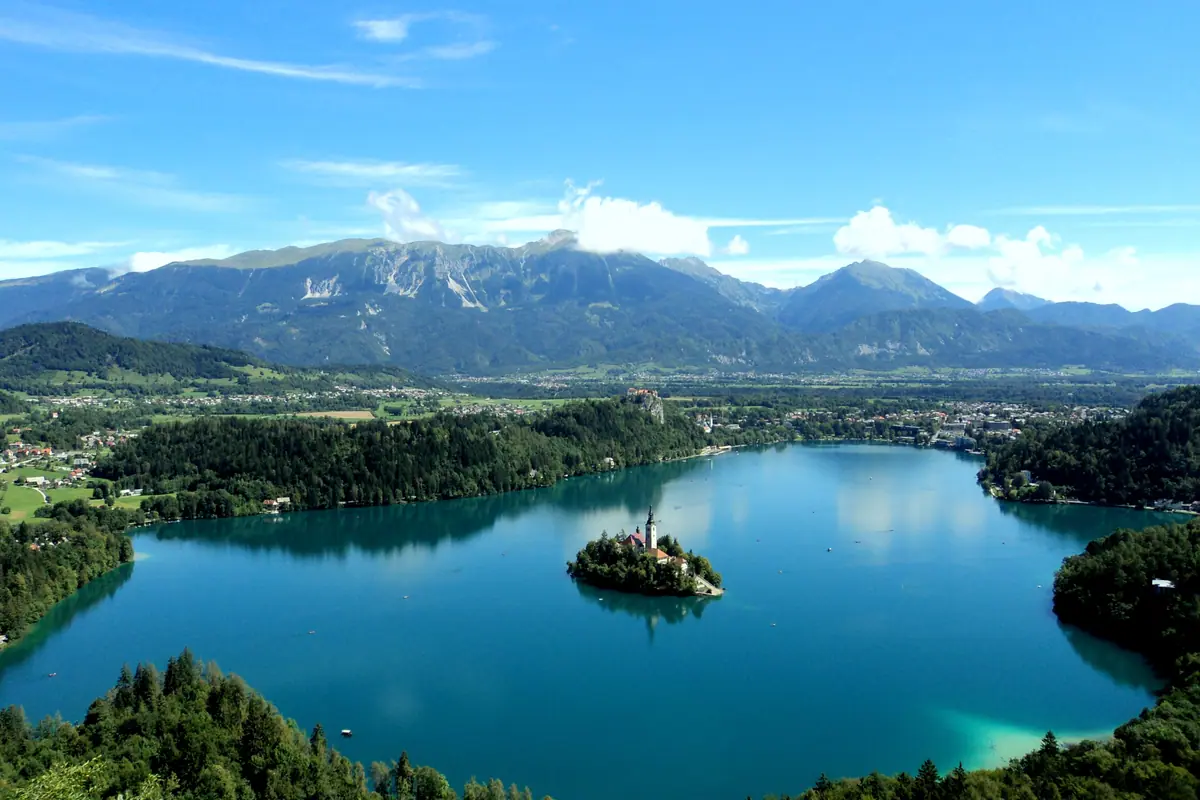
Lake Bled is the image most people carry of Slovenia before they arrive, and it still delivers: a tiny island church with a 99-step stone staircase rising out of green water, a cliff-top castle looking down, and wooden pletna boats rowing visitors across in the warm months. Bled Castle, first mentioned in the 11th century, houses a museum and a print works and gives the classic postcard view from its walls. Allow a full day: the island in the morning, the castle and a slice of kremšnita cream cake in the afternoon, and a walk around the lakeside promenade at dusk.
Twenty minutes deeper into the Julian Alps lies Lake Bohinj, quieter, colder and far wilder than its famous neighbour. There is no island and no castle — just a glacial valley, the village of Ribčevlas, a stone bridge, and the Church of St John the Baptist with its medieval frescoes. A cable car climbs from the shore to the Vogel plateau for views over the whole valley, while the Savica Waterfall, reached by a steep set of stairs, drops roughly 78 metres into a rocky gorge.
Between the two lakes, the Vintgar Gorge is a 1.6-kilometre boardwalk pinned to the rock face above the Radovna river, with rapids, pools and a thundering finish at the Šum waterfall. It opens seasonally, roughly April to November, and timed entry in summer is common — go early or late in the day. For something even more secluded, the Logar Valley in the Kamnik–Savinja Alps ends in a wall of peaks and the 90-metre Rinka waterfall, one of the loveliest dead-end roads in the country.
Ljubljana: A Compact Capital You Can Walk in a Day
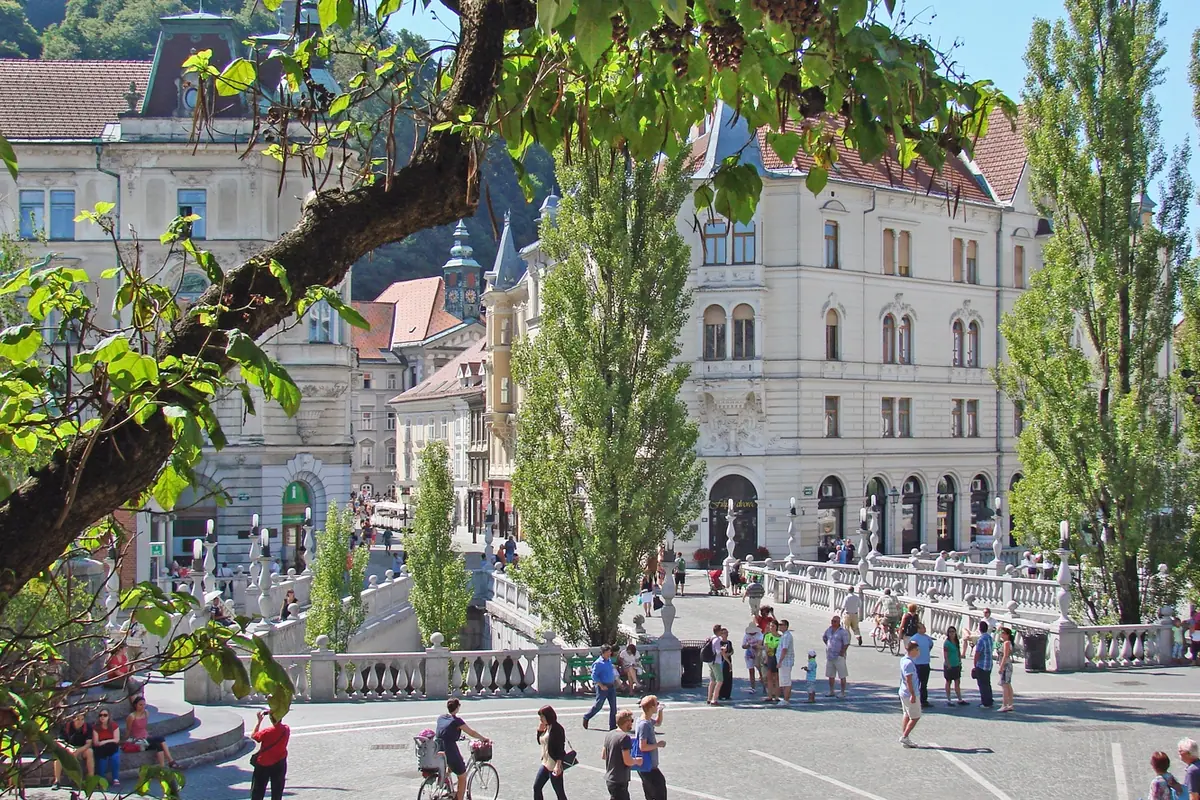
Ljubljana is small enough that you can cover the centre on foot in an afternoon, and compact enough that the architecture becomes the attraction. Prešeren Square is the meeting point, framed by the pink Franciscan church and the Triple Bridge — three spans side by side, the work of architect Jože Plečnik, who left his stamp on almost every corner of the city. A few steps away, the Dragon Bridge guards the entrance to the old town with four copper-winged beasts that have become the city's unofficial mascot.
Ride the funicular or walk the wooded path up to Ljubljana Castle, sitting on its hill above the old town with views across the red rooftops to the Alps on a clear day. Below it, the central market runs along the river under Plečnik's colonnades, and the Ljubljanica itself is lined with cafés whose terraces fill from spring to late autumn. Riverside boat trips, a wander through Tivoli Park, and an evening in the alternative Metelkova quarter round out a day that never requires a bus.
Most visitors use Ljubljana as a base rather than a destination, and that works well: Lake Bled is under an hour away, Postojna Cave and the coast are straightforward day trips, and the city is a good place to sort out car hire or a rental bike before heading into the mountains. Two nights here is usually enough to see it properly without rushing.
Underground Slovenia: Postojna Cave, Predjama Castle and Škocjan Caves
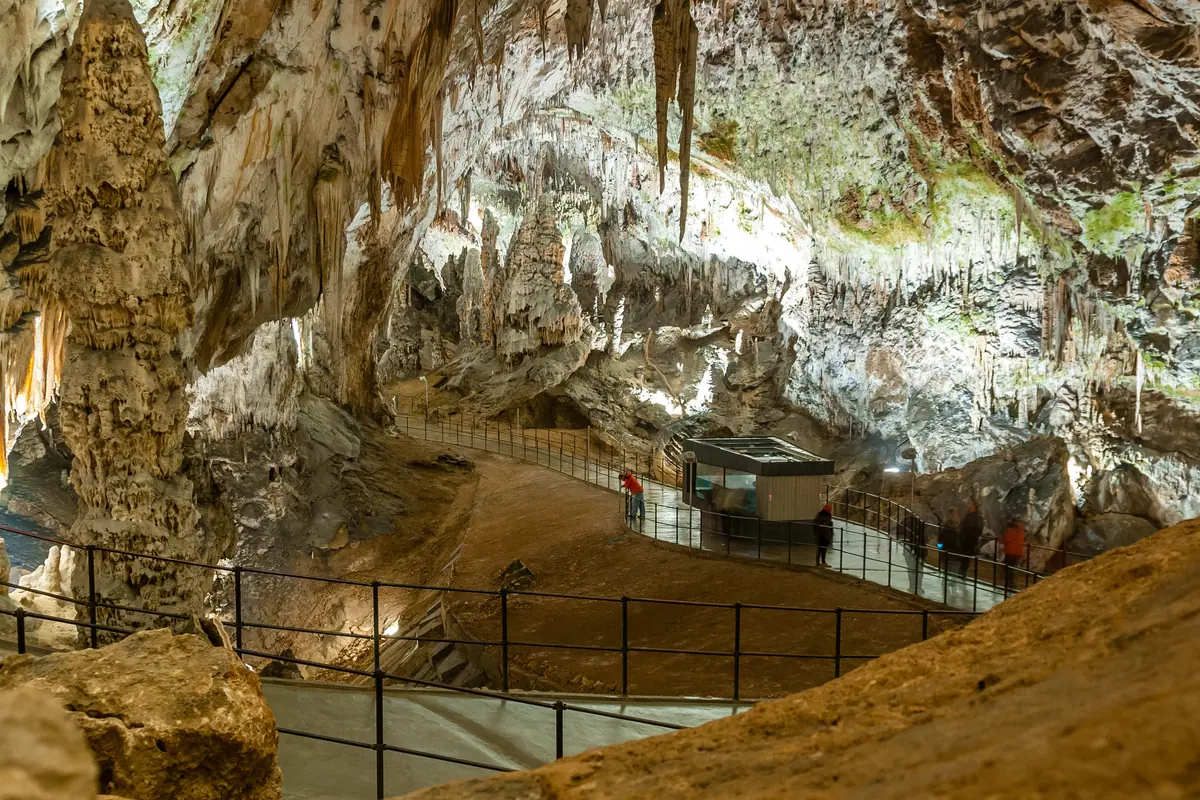
The Karst region south-west of Ljubljana is where Slovenia goes underground, and the scale of it surprises almost everyone. Postojna Cave is a 24-kilometre system with a tour that begins on a small train carrying visitors several kilometres into the mountain before the walking section starts. Inside, the temperature sits around 10°C year-round, so bring a jacket. The star resident is the olm, a blind, pale salamander nicknamed the baby dragon, which lives in the cave's waters and can go years without eating.
Ten minutes away, Predjama Castle is built directly into the mouth of a cave in a 123-metre cliff face, a fortress that looks genuinely impossible from the road below. The audio-guided tour explains the siege that made it famous and the secret passage that let its most notorious occupant slip out for supplies. Because of the steep steps and cave sections, allow about 90 minutes.
Further south, the Škocjan Caves are a UNESCO-listed system on a different scale altogether: an enormous underground canyon carved by the Reka river, crossed by a bridge 45 metres above the water, with a walking route of roughly three kilometres that ends at a funicular back to the surface. It is less visited than Postojna and, for many travellers, the more breathtaking of the two. Wear shoes with grip — the paths are wet and occasionally slippery.
The Soča Valley and Triglav National Park: Slovenia's Adventure Heartland
The Soča river runs an almost unnatural shade of emerald through the north-west of the country, and the valley around Bovec and Kobarid has become the country's outdoor capital. Rafting is the classic introduction — a half-day trip over rapids that suit beginners and still deliver a proper thrill — while canyoning, kayaking, hydrospeed and zip-lining fill the rest of the season, generally from April to October. The Kozjak waterfall near Kobarid and the arched Napoleon's Bridge are easy walks between activities, and the Walk of Peace trail retraces the Isonzo front of the First World War through trenches and chapels.
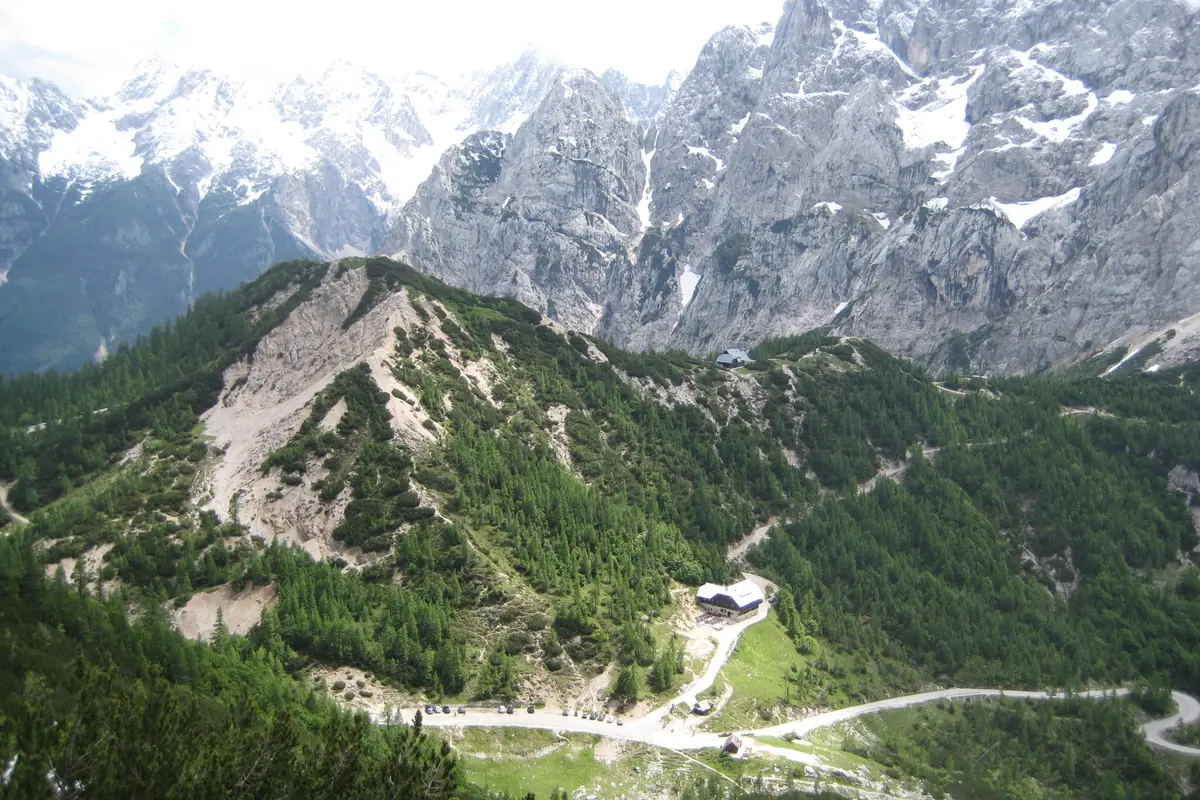
Above the valley, the Vršič Pass climbs to 1,611 metres on a road of 50 hairpin bends, 24 on one side and 26 on the other. Near the top, the wooden Russian Chapel stands as a memorial to prisoners of war who built the road. Beyond the pass, Kranjska Gora is a year-round base: hiking and cycling in summer, and skiing on gentle slopes in winter, with the ski-flying hill at Planica and the still, green Zelenci nature reserve nearby.
Triglav itself, at 2,864 metres, is the country's highest peak and its national symbol — a serious but non-technical climb for fit walkers with proper gear and an early start, usually done over two days with a night in a mountain hut. If a summit isn't on your list, the Seven Lakes Valley offers the same alpine drama with more manageable distances, and almost every trailhead is reachable from Bled, Bohinj or Kranjska Gora.
The Adriatic Coast: Piran, Salt Pans and the Karst Villages
Slovenia's coastline is only 47 kilometres long, which makes it easy to explore in a day or two. Piran is the highlight: a Venetian-looking town of narrow lanes and squares stacked on a peninsula, with Tartini Square at its heart and the Church of St George and its bell tower on the hill above. Climb the old town walls for a view over the red rooftops to the sea, then eat fresh seafood on a terrace as the light goes gold. Neighbouring Izola and the port city of Koper are quieter alternatives, and the Strunjan cliffs offer a coastal walk with swimming coves below.
Just south of Piran, the Sečovlje salt pans are still worked by hand in places, a grid of shallow brine pools that turns pink and white in summer and attracts flamingos and waders on migration. The small museum explains a salt-harvesting tradition that shaped the whole region. Inland, the Karst plateau is farming country: stone villages such as Štanjel, air-dried pršut ham served in farm taverns, and the dark Teran wine that pairs with it.
A short drive away, the Lipica Stud Farm has bred the white Lipizzaner horses since 1580, with guided tours of the stables and morning training sessions that are often more impressive than the formal shows. It is a good half-day stop between the caves and the coast, and children tend to remember it longer than the museums.
Maribor, Ptuj and the Vineyards of Eastern Slovenia
Eastern Slovenia is wine country, and Maribor is its capital. The Old Vine House on the Drava river shelters a vine reckoned to be over 400 years old — among the oldest in the world that still produces grapes — and the riverside Lent district fills with food stalls and music during the summer festival. Pohorje, the forested hill above the city, has ski slopes in winter and walking and cycling trails the rest of the year.
Half an hour south, Ptuj is the country's oldest town, with a castle, Roman remains and a February carnival, Kurentovanje, in which locals dress in shaggy sheepskin costumes and masks to drive out winter. Further east, the Jeruzalem wine hills roll toward the Hungarian border, dotted with small cellar doors and farm stays; north of Ptuj, the Olimje monastery and its old pharmacy make an unexpected detour.
If you want to slow down, the east is also spa country: Podčetrttek and Rogaška Slatina both have thermal springs, and the vineyards around them offer tastings for a fraction of what you would pay further west. Autumn, when the hills turn gold and the harvest is in, is the best time to be here — though the warm-weather months make the cycling between cellars far more pleasant.
Frequently asked questions
When is the best time to visit Slovenia?
Late May, June and September are the sweet spots: warm enough for swimming and rafting, green everywhere, and quieter than the July–August peak. Winter suits skiers and anyone wanting Lake Bled under snow, while November through March is when the caves and cities are at their cheapest and emptiest.
How many days do you need in Slovenia?
Five to seven days covers the essentials comfortably — two nights in Ljubljana, a night or two at Lake Bled or Bohinj, a day in the caves and a stop on the coast. Ten days lets you add the Soča Valley, the wine regions and a proper hike without spending the whole trip in the car.
Do I need a car to get around Slovenia?
It helps for the mountains, the wine roads and the coast, but not for the cities. Ljubljana, Bled, Postojna and Piran are all reachable by train or bus, so you can mix public transport with a few days of car hire for the more remote valleys. Mountain roads such as the Vršič Pass are winding but well maintained.
What should I pack for the caves and the mountains?
Layers. Caves stay around 10°C all year, so a light jacket is essential even in August, and the paths are wet — grippy shoes matter more than waterproof clothing. For alpine hikes, bring sturdy boots, water and a map, and start early; afternoon storms are common in summer.
Is Piran worth visiting on a short trip?
Yes, if you can spare a day. Piran is small, walkable and completely different in character from the Alps — Venetian architecture, seafood, and swimming off the rocks. Combining it with the Škocjan Caves and the Lipica Stud Farm makes a logical route between Ljubljana and the coast.
Plan it — experiences in Slovenia
Live search, booked directly with trusted providers.
Sort the rest of your trip
Everything for Slovenia, in one place
Stay in Slovenia
Hotels, guesthouses and apartments — compared in one search.
Search hotels
Transfer in Slovenia
Private driver waiting on arrival — no queues, no surprises.
Book a transfer
Stay online in Slovenia
Travel eSIM — data the moment you land, no roaming bills.
Get an eSIM