Slovenia is small enough to cross in a morning and varied enough to fill a month — alpine lakes, a limestone underworld and a sliver of Adriatic coast all within a couple of hours of each other. Fly into the country's main gateway near Ljubljana, pick up a car, and a single week delivers castles above a lake, a mountain pass with fifty hairpins and a Venetian-style harbour town where the fishing boats still come in at dusk.
Arriving by Air: Flights into Slovenia and How the Week Fits Together
Most visitors land at Ljubljana Jože Pučnik Airport, a small, calm terminal about 25 kilometres north of the capital and roughly a 25-minute drive from the city centre. Direct flights connect it with a long list of European hubs, with journeys typically running between one and two and a half hours, so you can be in the old town by lunchtime. Because the airport is compact, queues are short and car pick-up is quick — a genuine advantage when you are trying to squeeze a full week out of a single arrival day.
There are useful alternatives if the fares or timings suit you better: Trieste in Italy is about an hour from Ljubljana, Zagreb around two hours, Venice roughly two and a half, and the Austrian cities of Graz and Klagenfurt a similar distance from the eastern and northern edges of the country. Whichever door you come through, the arithmetic is the same — nowhere in Slovenia is more than about three hours' drive from anywhere else, which is what makes a one-week loop so satisfying.
Timing matters. Late April through June and September into early October give you warm days, thinner crowds at Lake Bled and the coast, and mountain roads that are reliably open. July and August are beautiful but busy, and the Vršič Pass and higher walking trails can hold snow well into spring and close entirely in winter. A hire car is close to essential for the Alps and the Soča Valley; trains and buses link Ljubljana, Bled and Postojna comfortably, but they will not get you to the trailheads. If you drive on motorways, remember that a vignette is required and is sold at the airport, petrol stations and border areas.
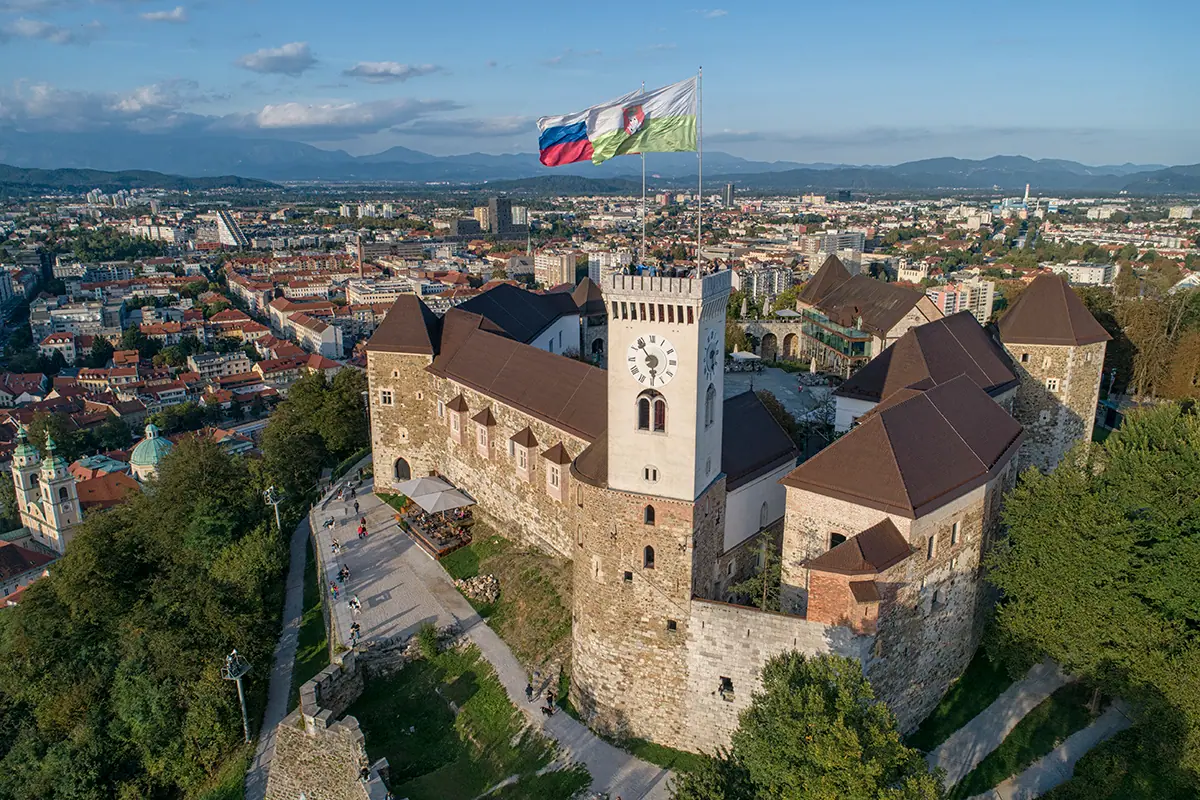
Days 1–2: Ljubljana, the Compact Capital
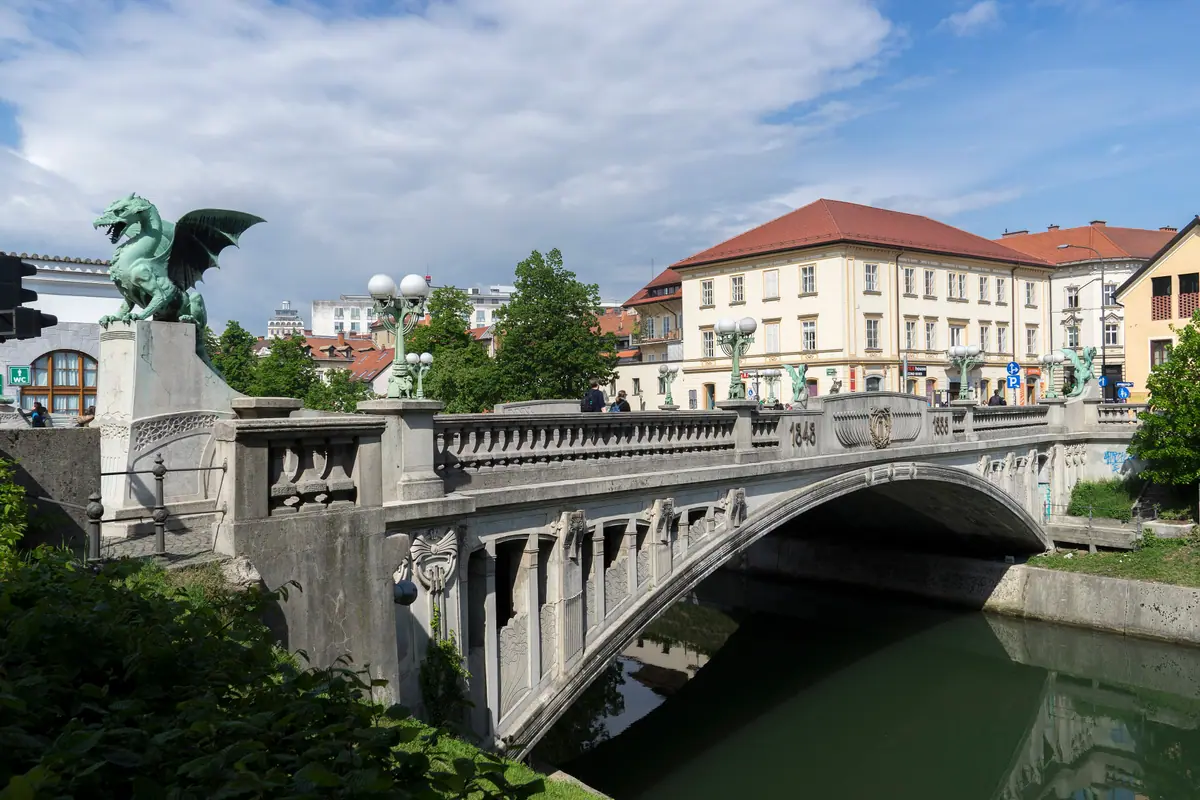
Ljubljana rewards a slow first day. Start in Prešeren Square, the city's living room, where the pink Franciscan church faces the Triple Bridge — three spans side by side, designed so pedestrians and traffic could cross without getting in each other's way. Walk the riverside colonnades of the old town, cross the Dragon Bridge with its four copper-winged guardians, and browse the open-air Central Market under the colonnade by the river, where produce stalls fill the mornings and chestnut roasters appear in autumn.
Above it all sits Ljubljana Castle, reachable on foot in about fifteen minutes or by a funicular from the market side. The tower gives you a panorama of terracotta roofs, the castle hill's wooded slopes and, on clear days, the Kamnik–Savinja Alps to the north. Come down via the leafy paths of Tivoli Park, then spend the late afternoon wandering the streets around Metelkova Mesto, a former military barracks turned into a jumbled, graffiti-covered cultural quarter that feels nothing like the genteel centre a few minutes away.
Give the second day to the city's edges or a soft introduction to the countryside. The Ljubljanica is best seen from a slow boat or a café terrace at golden hour, when the willows and the baroque facades turn amber. If you want a warm-up hike, the Šmarna Gora hill north of town offers a two-hour return walk with a summit chapel and a view over the whole Ljubljana basin. Two nights here is the right amount: enough to eat well, sleep off the flight and still leave with the sense that you have actually seen the place.
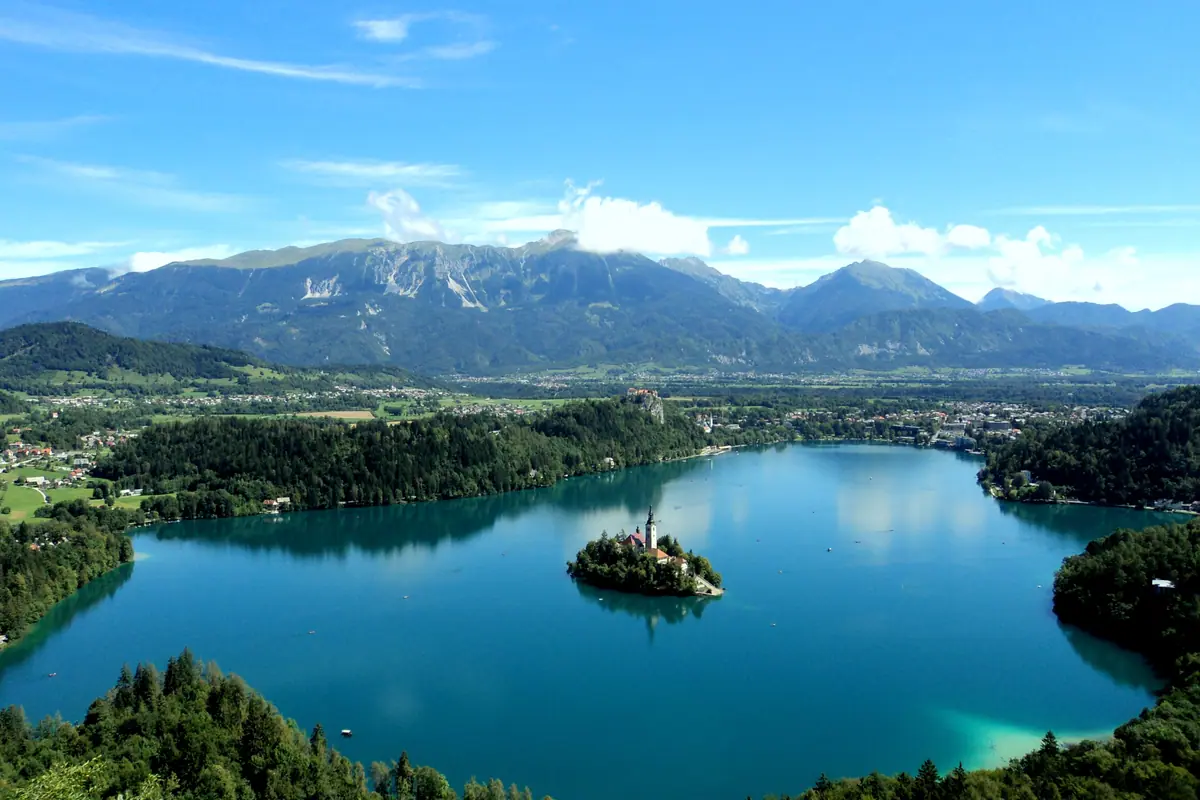
Day 3: Lake Bled, Bled Castle and the Vintgar Gorge
Drive north for about 45 minutes and the landscape changes abruptly: pine slopes, a cliff-top castle and a lake with a tiny island in the middle of it. Bled is Slovenia's postcard, and the classic view from the western shore — castle above, island below, church tower reflected in the water — is exactly as good as advertised. Take a pletna, the wooden flat-bottomed boat rowed standing up by a local oarsman, out to the island, climb the 99 stone steps to the pilgrimage church and ring the wishing bell.
Then walk up to Bled Castle, which perches on a sheer rock face about 130 metres above the water and houses a small museum, a printing workshop and a wine cellar. Below, the lakeside promenade makes an easy, flat circuit of roughly six kilometres, best done in the early morning before the coaches arrive. Stop for a slice of kremšnita, the custard-and-cream cake that Bled claims as its own, and eat it on a terrace facing the water.
In the afternoon, head four kilometres northwest to the Vintgar Gorge, where a wooden boardwalk clings to the rock walls above the Radovna river for about 1.6 kilometres, passing rapids, pools and a thundering waterfall. It is narrow, popular and occasionally slick — go early or late in the day, wear shoes with grip, and check opening dates, as the gorge shuts in winter. If you have energy left, push on to Lake Bohinj, quieter and wilder than Bled, and sleep there or in the villages nearby.
Days 4–5: The Julian Alps, the Vršič Pass and the Soča Valley
Bohinj is the stiller sibling of Bled: a long, dark-green lake pressed against the foothills of the Julian Alps, with the church of St John the Baptist at its western end and the Savica waterfall a short climb away, tumbling out of a limestone cave in a single powerful arc. From the lake you can ride the cable car up to Mount Vogel for an easy high-level view, or walk the Mostnica Gorge, where the river has carved basins and potholes into the rock.
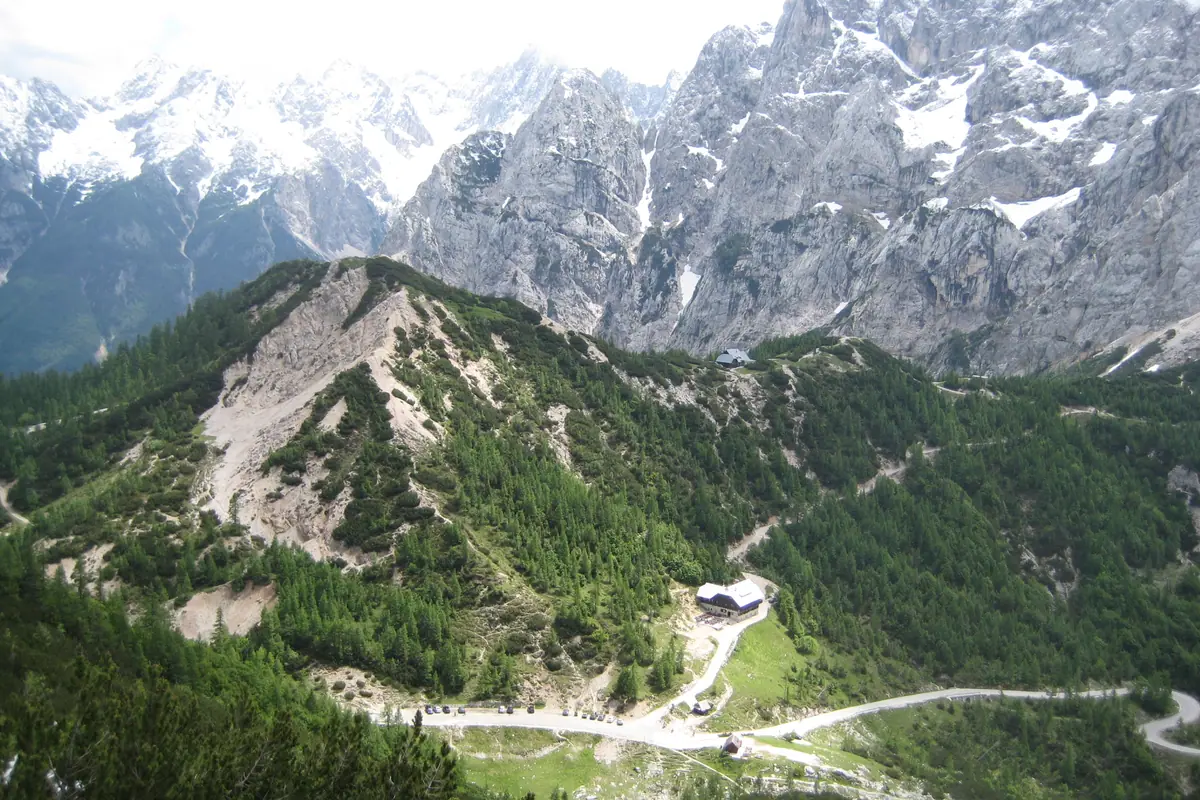
The drive over the Vršič Pass is the highlight of the week for many visitors. Built during the First World War and climbing to 1,611 metres, the road coils up through fifty numbered hairpins, past the wooden Russian Chapel commemorating prisoners who died building it, and drops into the Trenta valley on the far side. In winter the pass closes; in summer it is a slow, spectacular, endlessly photographable hour of driving. Stop at the top for the view back over the Julian range — this is Triglav National Park, and Triglav itself, Slovenia's highest peak, rises somewhere in the mass of ridges ahead.
Down in the Soča Valley the river runs an absurd, almost luminous emerald. Walk the paths above the Great Soča Gorge, or drive on to Kobarid, where a compact museum tells the story of the Isonzo front, and a short trail leads to the hidden Kozjak waterfall, dropping into a smooth stone amphitheatre. Adventure operators in Bovec run rafting, kayaking and canyoning on the same water. Two nights here, one in Bohinj and one in Kobarid or Bovec, keeps the driving gentle and leaves room for a proper meal of Soča trout in the evening.
Day 6: The Karst Underworld — Postojna, Predjama and Škocjan
Slovenia sits on a limestone plateau riddled with caves, and the Karst region delivers the most theatrical of them. Postojna Cave is the big, famous one: you board a small underground train and are carried more than three kilometres into the mountain before walking through chambers of stalactites, curtains and pillars. The temperature stays around ten degrees Celsius year-round, so bring a jacket and shoes with grip; tours run frequently and take about ninety minutes. Keep an eye on the pools for the cave's pale, blind salamanders, known locally as human fish.
Ten minutes away, Predjama Castle is the kind of place photographs make look impossible. It is built into the mouth of a cave halfway up a cliff, a Renaissance fortress bolted onto a natural rock arch, with the cave system continuing behind it and a secret passage that once allowed besieged occupants to slip out for supplies. The combination of the two — cave and castle — makes an easy, memorable half day.
If you have time for a second cave, make it Škocjan, a UNESCO-listed system where the Reka river disappears underground into a canyon so vast it feels like a cathedral. The guided route crosses a bridge high above the gorge and passes through chambers hundreds of metres wide. Between caves, stop at the Lipica stud farm, home of the white Lipizzaner horses, where the pastures and the baroque stable courtyard are worth an hour of anyone's afternoon. Sleep nearby or push on towards the coast for the final night.
Day 7: Piran, the Adriatic Coast and the Road Back to Ljubljana
Slovenia's coastline is only about 46 kilometres long, which makes it easy. Base yourself in Piran, a wedge of Venetian-style houses and a bell tower squeezed onto a peninsula, and spend the morning on Tartini Square, then climb the town walls for the view over the rooftops and out across the Gulf of Trieste. The water is calm and shallow, the cafés spill onto the pavement, and the light in the late afternoon turns the whole town the colour of honey.
Below Piran, the Sečovlje salt pans still produce salt by hand using methods centuries old, and the flat paths between the evaporation basins are brilliant for birds. Neighbouring Izola and Koper are both worth a couple of hours: Koper for its grand Tito Square and cathedral, Izola for a quieter fishing harbour. Swimming, seafood and a slow lunch are the correct way to end the trip.
From the coast it is roughly an hour and a half back to Ljubljana and about two hours to the airport, so plan your departure flight for the afternoon if you can. If you would rather skip the sea, an equally good final day heads east to Maribor, which claims the oldest grapevine in the world on the side of a house near the river, and to Ptuj, one of Slovenia's oldest towns, with a castle on the hill above a medieval core. Either way, leave the last night within striking distance of the terminal — Slovenian roads are quiet, but the airport is small and early check-ins are unforgiving.
Frequently asked questions
Do I need to hire a car for a one-week Slovenia itinerary?
For Ljubljana, Bled and Postojna, trains and buses are perfectly workable. For the Julian Alps, the Vršič Pass, the Soča Valley and the smaller coastal towns, a car saves hours and unlocks the best scenery. Hire at the airport, and buy a motorway vignette if you plan to use the highways.
When is the best time of year to visit Slovenia?
Late May to June and September to early October offer warm, settled weather, open mountain roads and manageable crowds. July and August are the busiest months at Lake Bled and on the coast. Winter is lovely in Ljubljana and at the ski resorts, but the Vršič Pass and many high trails close.
How much time should I give Lake Bled?
One full day covers the island, the castle, the six-kilometre lakeside walk and the Vintgar Gorge. Staying overnight lets you see the lake at sunrise before the day-trippers arrive, which is a genuinely different experience.
Which cave should I choose if I only have time for one?
Postojna Cave is the easiest and most theatrical, with its underground train and a convenient pairing with Predjama Castle. Škocjan Caves are wilder and more dramatic, with a colossal underground canyon, but involve more walking. Both sit within an easy drive of each other if you can manage two.
Is one week enough for Slovenia?
A week covers the essentials comfortably: Ljubljana, Lake Bled, Bohinj, the Julian Alps, the Soča Valley, the Karst caves and a night on the coast. You will move every day or two, so pack light and keep the driving under three hours per leg.
Sort the rest of your trip
Everything for Slovenia, in one place
Stay in Slovenia
Hotels, guesthouses and apartments — compared in one search.
Search hotels
Transfer in Slovenia
Private driver waiting on arrival — no queues, no surprises.
Book a transfer
Travel insurance
Medical cover, delays and lost baggage — sorted before you go.
Get covered