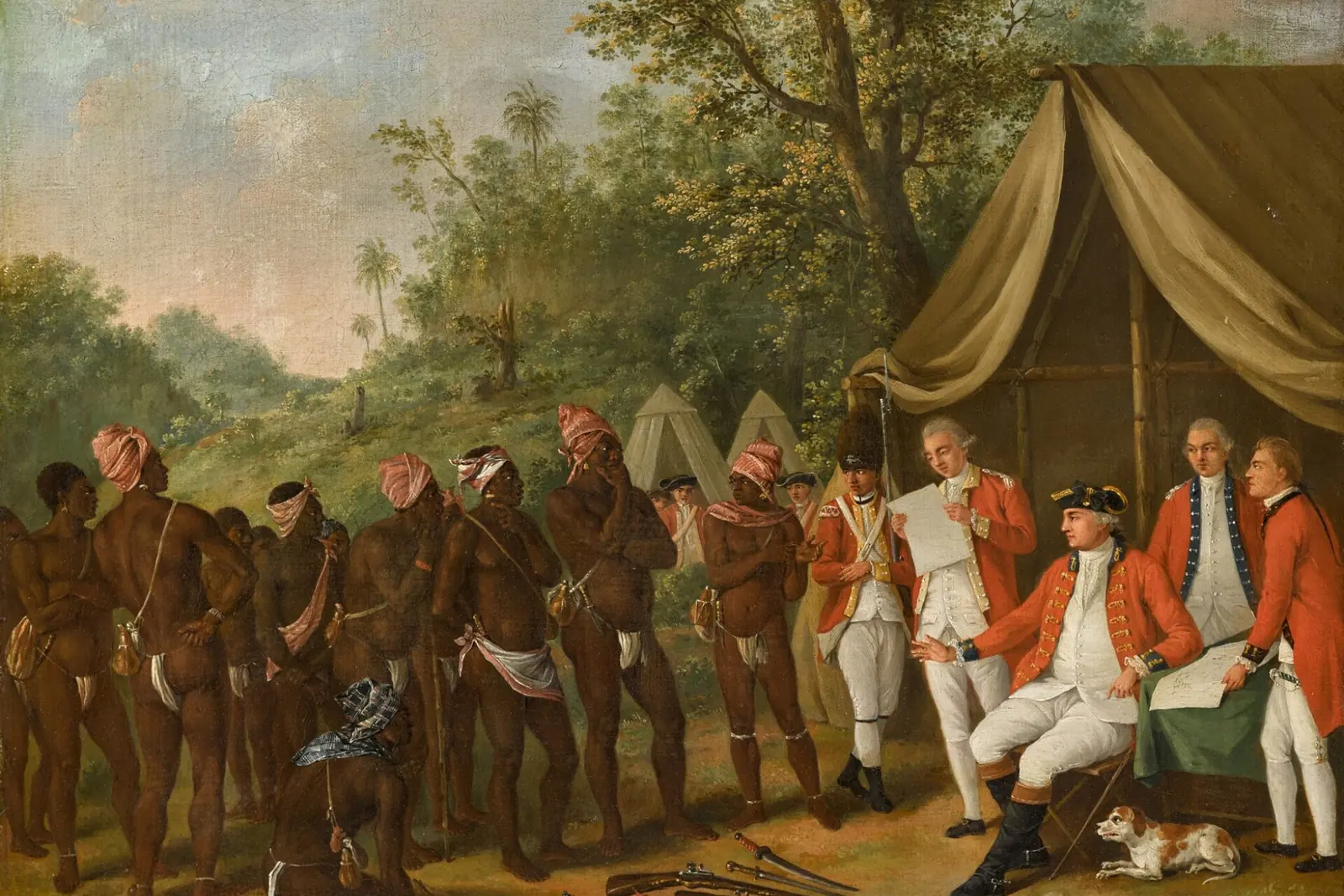
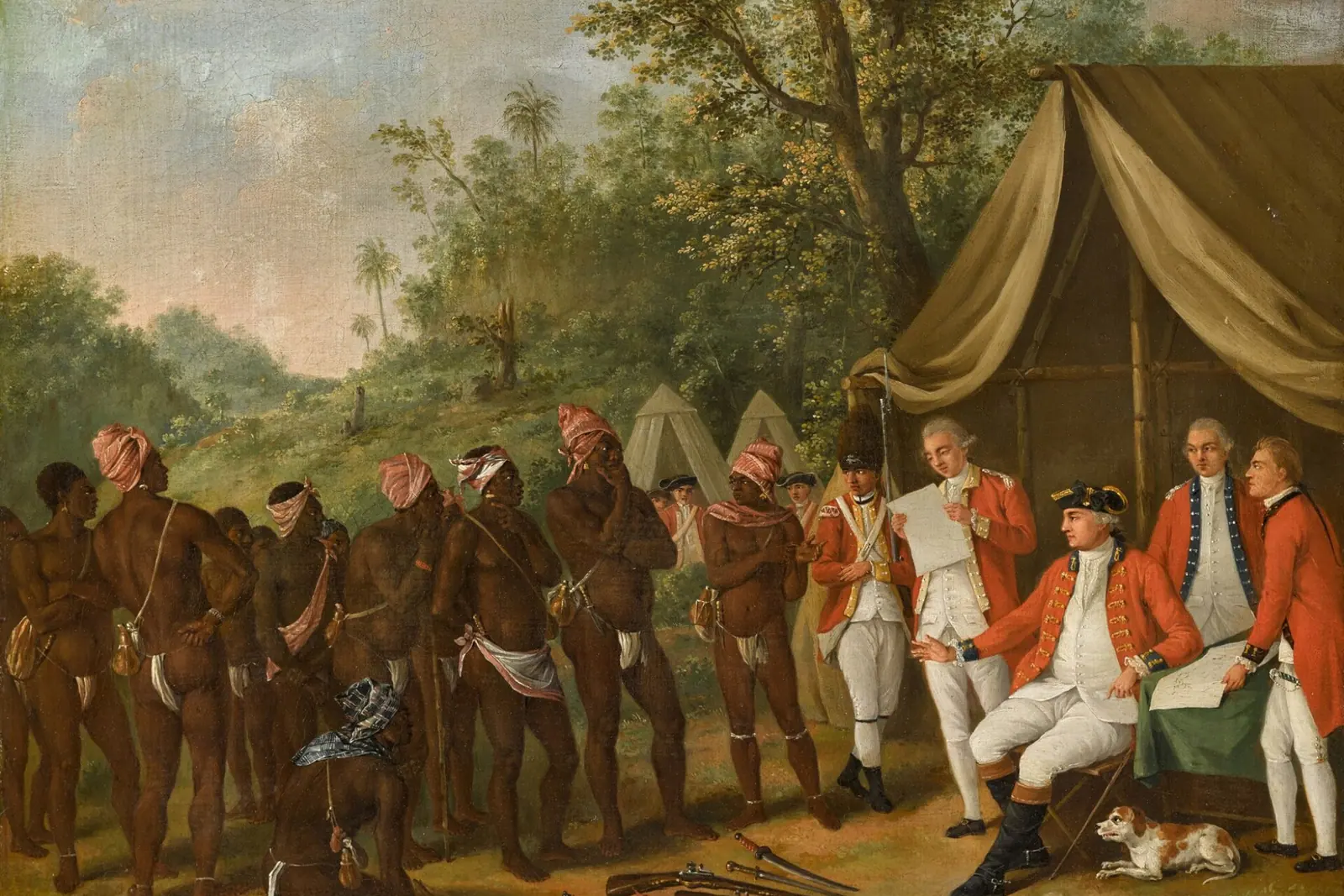
Saint Vincent and the Grenadines packs a volcanic main island, a string of bead-like cays and some of the Caribbean's finest sailing water into a single 32-island nation. One day you are climbing through cloud forest toward a still-smouldering crater, the next you are drifting over turtles in a marine park so shallow the sand glows turquoise. This is the archipelago for travellers who want rainforest, reef and rum-shop villages rather than resort corridors.
Kingstown and the Botanic Gardens: Where the Island's Story Begins
Almost every visit to Saint Vincent starts in Kingstown, the compact capital wedged between steep hills and a working harbour on the south-west coast. The waterfront is a jumble of ferries, fishing boats and market stalls, and the grid of streets behind it holds stone churches, iron-balconied warehouses and a genuinely local shopping scene rather than duty-free gloss. Give yourself a half-day here before heading anywhere else — the town is best on foot, and mornings are cooler and livelier than afternoons.
The single unmissable stop is the Saint Vincent Botanic Gardens, established in 1765 and the oldest of its kind in the Western Hemisphere. Paths wind past towering palms, spice trees, nutmeg and cinnamon, and a descendant of the breadfruit trees brought to the Caribbean in the 1790s still stands near the entrance. A small aviary keeps rescued parrots, and the shade makes this a pleasant refuge even at midday. Ten minutes uphill, St George's Cathedral — rebuilt in the early 19th century after earthquake and hurricane damage — is worth a look for its colourful stained glass and the breeze that funnels through its arches.
Below the gardens, the Kingstown Market is the place to taste the island: breadfruit, plantains, eddoes, nutmeg, cocoa sticks and trays of fresh fish landed that morning. Saturday is the fullest and most chaotic day. Come curious, bring small change, and don't be surprised if a vendor presses a piece of fruit into your hand to try.
Fort Charlotte, Wallilabou Bay and the Leeward Waterfalls
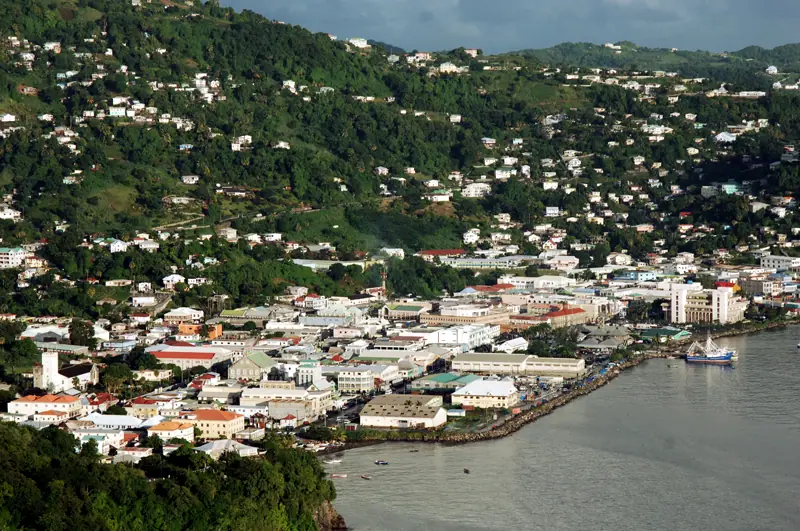
Fort Charlotte sits roughly 180 metres above Kingstown and is the best introduction to the island's geography. Built in the early 1800s on a ridge once used by French and British defenders, its ramparts and cannons look straight down the coast, and on a clear morning you can count island after island of the Grenadines strung out toward Bequia. Go early — the light is best before ten, and the drive up is a steep, winding introduction to Vincentian roads.
Heading north along the Leeward Highway, the coastline turns dramatic. Wallilabou Bay is a sheltered cove where the wooden waterfront set constructed for a Hollywood pirate film still stands, half-swallowed by vines, with local boats moored alongside and a waterfall tumbling into the sea at the bay's northern end. Further on, Dark View Falls is one of the island's easiest big rewards: a short walk across a bamboo bridge leads to twin cascades dropping over a basalt cliff into a shallow pool you can stand under. Wear shoes with grip — the path is muddy after rain.
The villages along this coast — Barrouallie with its blackfish and pilot-whale traditions, Layou with its ancient petroglyphs carved into a riverside boulder — are unhurried and genuinely welcoming. Carry cash for small roadside stalls, and plan on the drive taking longer than the map suggests; the road twists constantly and the views demand stops.
La Soufrière, Vermont Nature Trail and the Wild Windward Coast
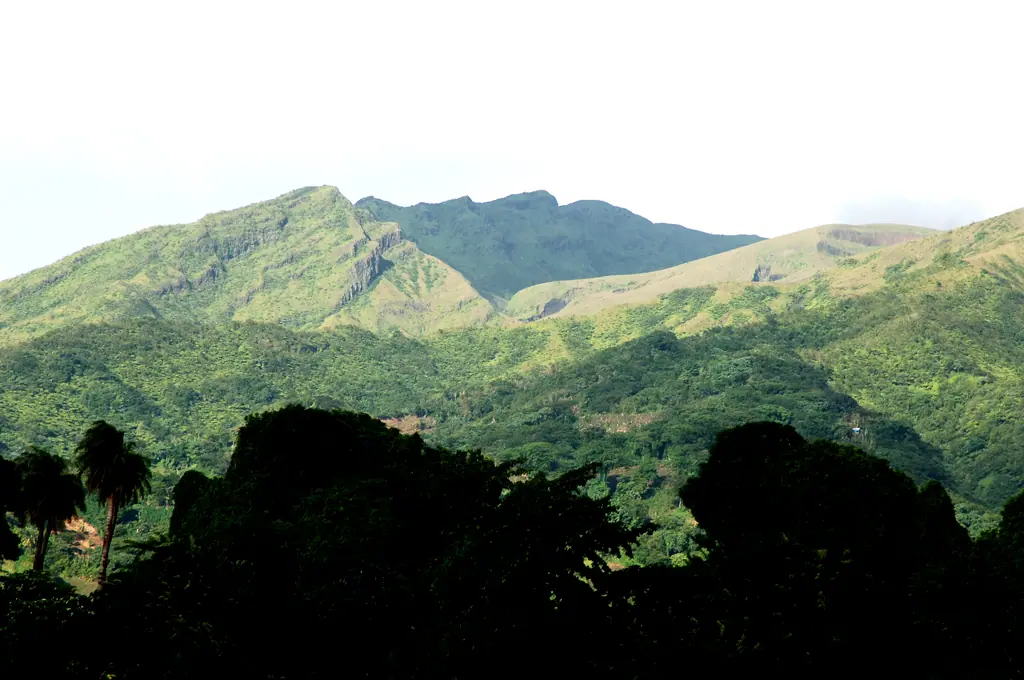
La Soufrière is the reason many travellers come to Saint Vincent at all. At around 1,234 metres it is the island's highest point, a volcano that erupted dramatically in 2021 and whose trails have since reopened. The standard route begins at the Rabacca trailhead on the windward side; it is a steep, exposed climb of roughly three to four hours round trip over ash, loose scree and volcanic rock, finishing at a crater rim where sulphurous vents still steam. Start by seven in the morning to beat the heat and cloud, take more water than feels necessary, and hire a local guide — not only for safety, but because they will point out the plants and birds you would otherwise walk past.
For something gentler, the Vermont Nature Trail, reached from the Buccament Valley road, is a well-marked loop through protected rainforest that takes about ninety minutes at an easy pace. This is the stronghold of the Saint Vincent parrot, a striking green, gold and blue endemic bird, along with hummingbirds and the whistling warbler. Dawn and late afternoon are the best windows for sightings; the forest is loud with sound even when the birds stay hidden.
Further north-east, the Owia Salt Pond is a set of natural rock pools on the Atlantic shore, refilled by waves crashing over volcanic boulders — spectacular, but only safe to swim in calm conditions. Nearby, the Black Point Tunnel, cut through solid rock in the early 19th century using enslaved labour, is a short, atmospheric drive-through that opens onto the coast road toward Georgetown.
Tobago Cays Marine Park: The Grenadines' Signature Escape
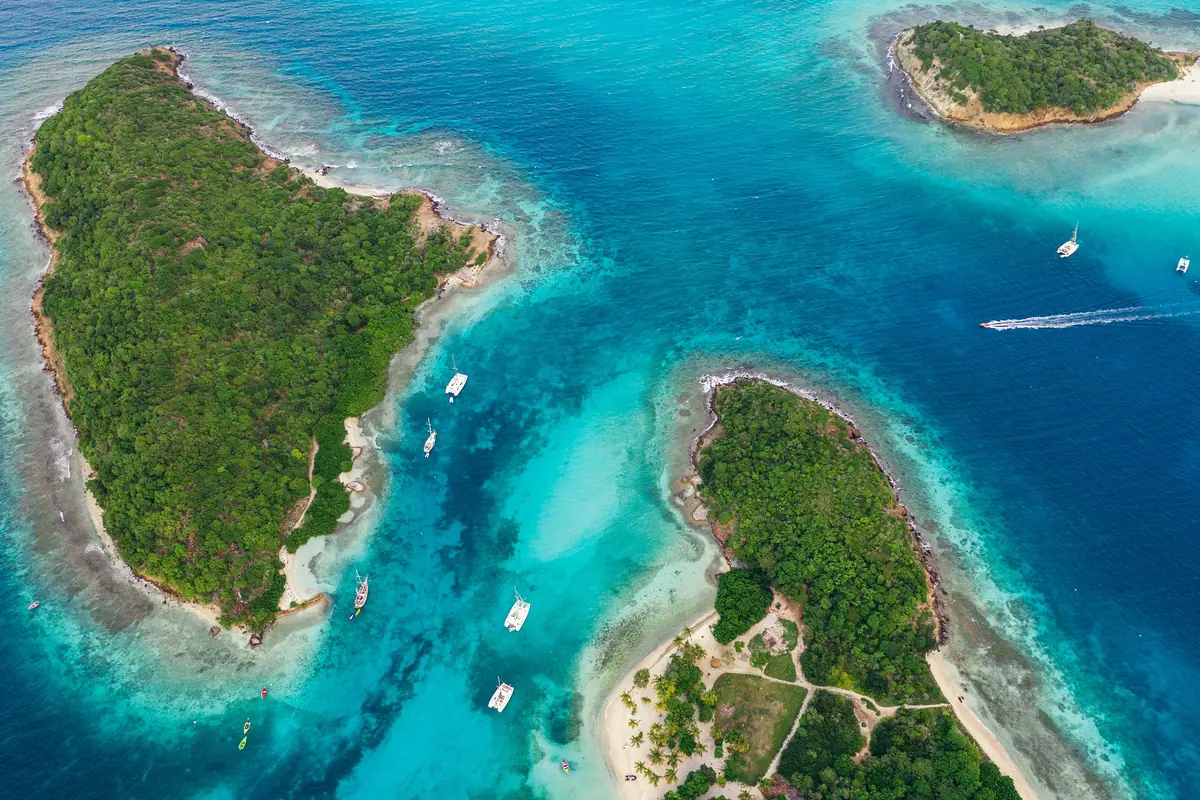
If you see one image of this country before you arrive, it will probably be the Tobago Cays: five uninhabited cays inside a horseshoe reef, floating in water so clear that anchored yachts seem to hover above the seabed. The whole area is a protected marine park. Baradal is the classic turtle-watching cay, where green and hawksbill turtles graze on seagrass in knee-deep water just off the beach; Petit Bateau and Jamesby offer calm snorkelling; and Horseshoe Reef, on the outer edge, is the spot for diving and stronger drift snorkels.
There are no hotels, no roads and no shops — just sand, sea grape, a few seasonal beach vendors and boats. That means you visit by day. Day sails and water-taxi trips run most reliably from Union Island and Mayreau, with longer charters coming up from Bequia or down from Saint Vincent. Trips typically leave mid-morning and return late afternoon, and the crossing from Union Island takes only twenty to thirty minutes.
Go prepared: there is very little shade, so bring reef-safe sunscreen, a hat and water. Anchoring is restricted to protect the coral, which is enforced, and visiting boats are expected to use moorings. The light is at its most absurd between about eleven and two, when the sandbanks glow white against bands of turquoise and deep blue.
Bequia and Mustique: The Northern Grenadines
Bequia is the largest and most accessible of the Grenadines, a one-hour ferry ride from Kingstown, and it has the easy rhythm of an island that has been sailing for two centuries. Port Elizabeth curves around Admiralty Bay, where model-boat carvers still work at the water's edge and yachts from half the world moor bow-to-stern. Walk or take a water taxi around the headland to Princess Margaret Beach and Lower Bay — a string of pale sand and calm water that ranks among the best swimming on the entire archipelago.
Inland, Bequia is quiet and hilly, with viewpoints over Friendship Bay and a handful of small rum shops in the villages. On the Atlantic side, the Old Hegg turtle sanctuary rescues and raises hatchlings, and a visit makes a worthwhile half-day for families. Bequia also hosts a famous Easter sailing regatta, when the bay fills with boats and the island throws its biggest party of the year.
Mustique, a short hop south, is a privately owned island of low-key luxury, reachable by small plane or boat. Day visitors come for Macaroni Beach, a curve of white sand with picnic huts and no development behind it, and for the hilltop views from the island's northern end. Do not expect to wander freely — much of Mustique is private, and access is limited — but for an afternoon of exceptional beach and a drink overlooking Britannia Bay, it is worth the splurge.
Mayreau, Union Island and the Southern Grenadines
Mayreau is the smallest inhabited island in the chain, home to a few hundred people and almost no traffic. Everything worth seeing is on foot: the village on the hill, the little church whose viewpoint takes in the Tobago Cays in one direction and the open Atlantic in the other, and Saltwhistle Bay, a crescent of sand with a narrow neck of land separating the calm Caribbean side from the windier Atlantic shore. It may be the single most photogenic beach in the country.
Union Island is the southern hub, with a lively, unpretentious village at Clifton, a small airstrip and the easiest access to the Tobago Cays. Hikers head for Mount Parnassus, the island's highest point at around 275 metres, for a panorama over reef and cays. Just offshore, Happy Island — built by hand from conch shells — is exactly the kind of improbable place you tell people about afterwards.
Further south, Canouan pairs a sheltered harbour with green hills and long empty beaches, while tiny Palm Island and Petit St Vincent offer the most removed kind of quiet, plus the speck of sand known as Mopion, a single palm on a strip barely wide enough for two towels. Inter-island travel is by ferry, water taxi or small aircraft, and schedules thin out in the wet season, so build flexibility into any plan that strings three or more islands together.
Frequently asked questions
When is the best time to visit Saint Vincent and the Grenadines?
The dry season from December to May brings the steadiest sunshine, calmest seas and best sailing and snorkelling conditions, though it is also the busiest and priciest window. June to November is wetter, greener and cheaper, with September and October the rainiest months and the peak of hurricane season. If you want atmosphere over weather, aim for Vincy Mas, the Saint Vincent carnival held in late June and early July, or Bequia's Easter regatta.
How do you travel between the islands?
Ferries run from Kingstown to Bequia in about an hour, with less frequent services continuing to Canouan and Union Island. Small inter-island flights connect the main island with Bequia, Mustique, Canouan and Union Island, and water taxis handle short hops such as Bequia to Mustique or Union Island to the Tobago Cays. Schedules are limited and can change with the weather, so avoid booking tight onward connections.
Do I need a guide to hike La Soufrière?
It is not legally required, but it is strongly recommended. The Rabacca trail is steep, exposed and covered in loose volcanic material, the summit cloud can roll in quickly, and there are no facilities or reliable signage. Most hikers take three to four hours round trip and set off before 8am. Local guides know the safest line up the ash and can identify the endemic plants and birds along the way.
Can you visit the Tobago Cays independently?
Only by boat, and there is no accommodation, so almost everyone arrives on a day trip or a charter. The simplest access is from Union Island, roughly twenty to thirty minutes away, or from Mayreau. Anchoring is restricted inside the marine park and mooring buoys are used instead. Bring shade, water and reef-safe sunscreen, since the cays are exposed and have very little natural cover.
What should I know about money, driving and safety?
The local currency is the Eastern Caribbean dollar, though US dollars are widely accepted on the more touristed islands; small villages and market stalls are cash-first, so carry notes. English is the official language. Cars drive on the left on narrow, winding roads with frequent potholes and blind bends, so hire a local driver if you are not confident. Crime is uncommon but petty theft happens in Kingstown, so keep valuables out of sight, especially around the cruise port.
Plan it — experiences in Saint Vincent and the Grenadines
Live search, booked directly with trusted providers.
Sort the rest of your trip
Everything for Saint Vincent and the Grenadines, in one place
Stay in Saint Vincent and the Grenadines
Hotels, guesthouses and apartments — compared in one search.
Search hotels
Transfer in Saint Vincent and the Grenadines
Private driver waiting on arrival — no queues, no surprises.
Book a transfer
Stay online in Saint Vincent and the Grenadines
Travel eSIM — data the moment you land, no roaming bills.
Get an eSIM