Romania is a country of Gothic spires and salt mines, of shepherd tracks curling over the Carpathians and a delta so wild that pelicans outnumber people. Few places in Europe pack so much contrast into one border — medieval citadels, painted monasteries, neon-lit boulevards and horse-drawn carts on the same afternoon. This is what to see first, and how to see it well.
Bran Castle, Brasov and the Medieval Trail Through Transylvania
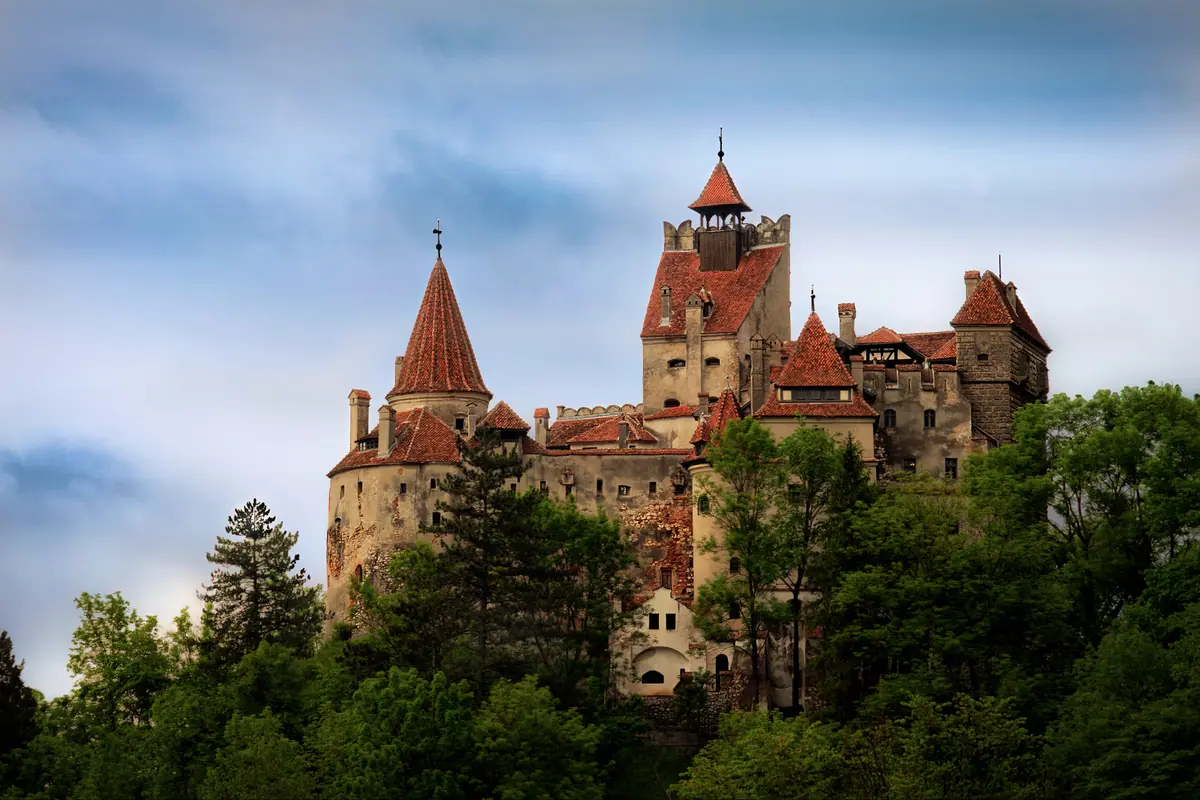
Start where the legend bites. Bran Castle sits on a rocky outcrop at the mouth of the Bran Pass, a 13th-century fortress with whitewashed towers, a hidden staircase and a courtyard that once collected tolls from merchants crossing between Wallachia and Transylvania. Its link to Vlad the Impaler is thinner than the souvenir stalls suggest, but the atmosphere is genuine: narrow wooden stairs, low doorways and windows framing the Piatra Craiului ridge. Arrive before 10am or after 4pm in July and August, when tour buses thin out and the corridors fall quiet.
From Bran, drive 25 minutes to Rasnov Fortress, a peasant citadel on a hilltop with a funicular to save your legs, then on to Brasov. The city's Council Square is the heart of it — pastel baroque facades, a 15th-century town hall and an open-air cafe culture that stretches long into the evening. Don't miss the Black Church, the largest Gothic church between Vienna and Istanbul, soot-darkened from a fire in 1689, with a 19th-century organ that still gets played in summer concerts. Ride the cable car up Mount Tampa at sunset and the whole medieval town glows beneath you.
Sighisoara, about two hours north by road or rail, is the finale. This walled citadel is a UNESCO site and one of the last inhabited medieval fortresses in Europe, where people still live inside the ramparts. Climb the 14th-century Clock Tower for the view, walk the covered Scholars' Stairs to the Church on the Hill, and stop at the ochre house near the square where Vlad Dracul, father of the Impaler, is said to have lived.
Royal Palaces, Corvin Castle and Bucharest's Grandeur
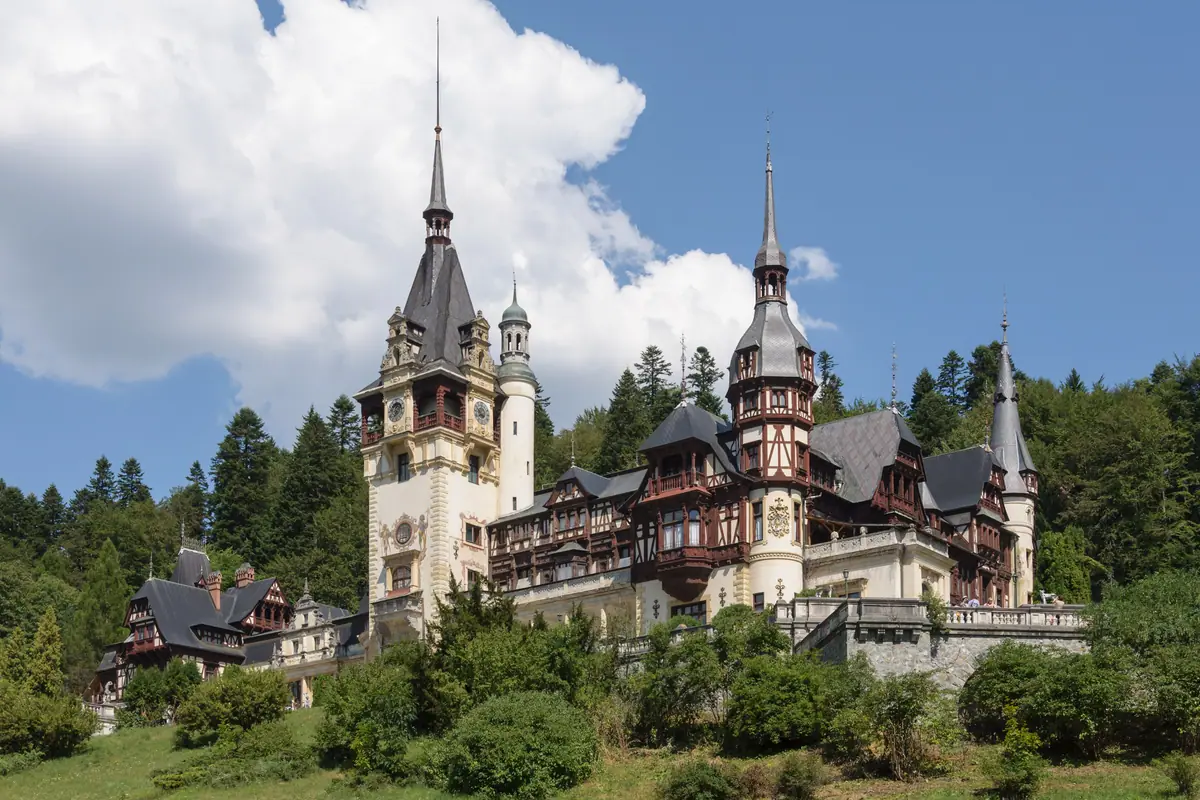
Peles Castle in Sinaia is the showpiece of the Romanian royal story — a Neo-Renaissance confection of carved walnut, stained glass and Italian marble, built from 1873 for King Carol I as a summer retreat. More than 160 rooms, armoury halls lined with swords, and a small theatre with a mechanical stage. It's usually closed at the start of the week, so check before you plan a day around it, and budget two hours for the ground floor tour plus the gardens.
Corvin Castle at Hunedoara is the opposite mood: a brooding Gothic fortress over a moat, with a white bridge, a red-roofed turret and a legend about a raven. It belongs to the 15th century and to John Hunyadi, the military commander who held the Balkans against the Ottomans. Further north, Alba Iulia's Alba Carolina Citadel is a star-shaped Habsburg fortification you can walk in an afternoon, with a ceremonial changing of the guard and the Unification Cathedral at its centre.
Bucharest deserves a day of its own. The Palace of the Parliament is one of the largest administrative buildings on earth, a marble and crystal behemoth you can only see on a guided tour — book ahead and bring your passport. Then dive into the Old Town around Lipscani, where Stavropoleos Monastery's carved stone portico hides between cocktail bars, and spend a slower hour at the Village Museum on the shores of Herastrau Lake, where wooden churches and farmhouses from every region of the country have been reassembled in a lakeside park.
Carpathian Roads, Salt Mines and Alpine Oddities
The Transfagarasan is Romania's most famous drive, a serpentine ribbon of asphalt pushed over the Fagaras Mountains with viaducts, hairpin bends and a tunnel just under a kilometre long at the top. It usually opens in July once the snow is cleared and closes again in late October, so it's a summer-and-early-autumn trip only. At the summit, Balea Lake sits at around 2,034 metres — cold even in August, with a small ice hotel in winter and a chairlift over the water in summer.
The Transalpina, further west, claims the highest paved pass in the country at Urdele, and it's quieter and wilder than its rival, typically open from June to October. Between the two, plan a stop at Salina Turda, a vast salt mine near Cluj-Napoca where you descend into a cathedral-sized chamber with an underground lake, a small Ferris wheel and a constant 10-12°C chill — bring a jacket, whatever the weather is doing above ground.
Higher up in the Bucegi Mountains, the rock formations known as Babele and the Sphinx draw hikers and cable-car riders from Busteni and Sinaia. This is genuine brown bear country; Romania holds one of Europe's largest populations, and encounters on forest roads and trails are not rare. Keep food sealed in the car, never approach or feed a bear, and make noise on quiet trails. For serious hiking, head to Retezat National Park's glacial lakes or the Ceahlau massif.
Painted Monasteries of Bucovina and Maramures Wooden Churches
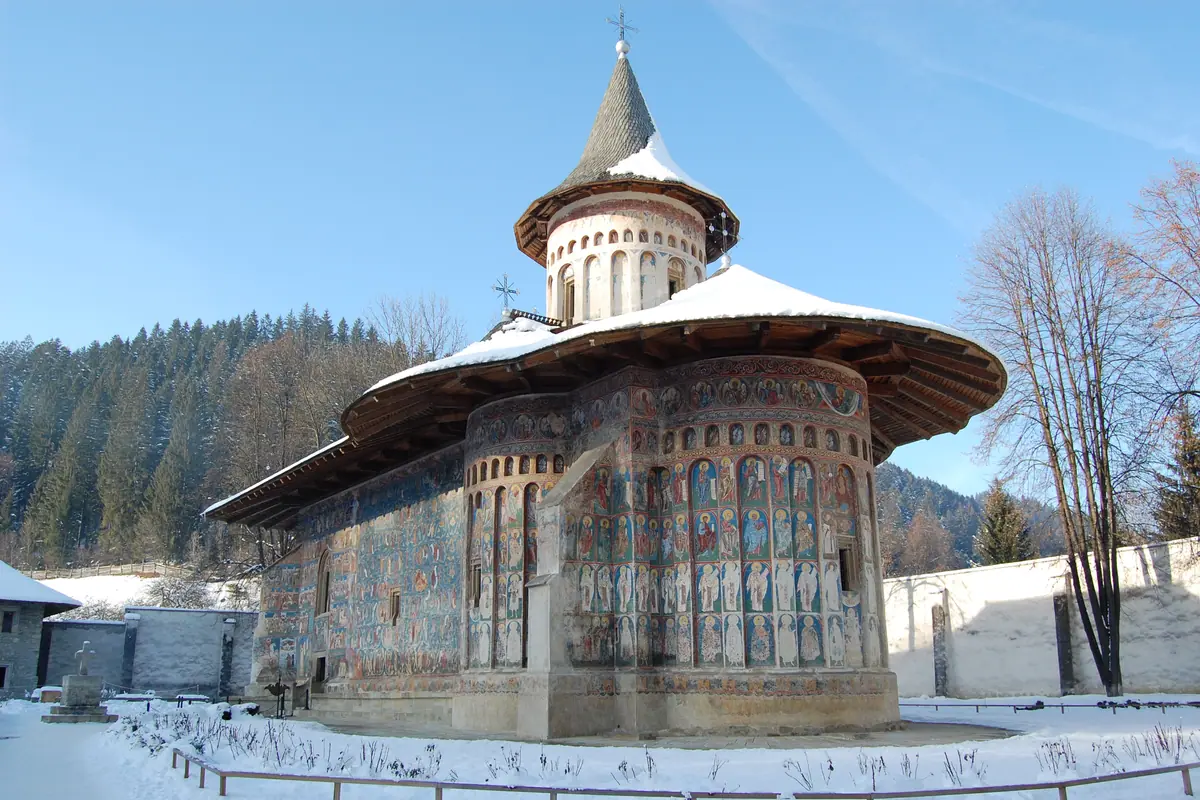
In the far north-east, the Bucovina monasteries wear their frescoes on the outside. Voronet is the most celebrated, its Last Judgement panel painted in a blue pigment nobody has quite managed to reproduce, while Sucevita, Moldovita and Humor cover entire facades with 16th-century scenes of saints, sieges and sinners. Go in the afternoon when the light rakes across the walls, and give yourself at least a full day to see three or four of them by car from Suceava or Gura Humorului.
Maramures, on the north-western border with Ukraine, is a different world of wooden gates, haystacks and horse carts. Its villages hold some of the tallest wooden churches in Europe — Barsana, Surdesti and Ieud among them — with shingled spires that seem to pierce the sky. At Sapanta, the Merry Cemetery turns mourning into folk art: each carved oak cross is painted bright blue and carries a wry epitaph about the life and habits of the person beneath it.
If you have time for one more, ride the Vaser Valley forestry railway from Viseu de Sus, a narrow-gauge steam train that climbs deep into the mountains on a logging route still in use. It runs on selected days from spring to autumn, and it's the closest thing in Romania to stepping into the last century.
The Danube Delta and the Black Sea Coast
Where the Danube finally meets the sea, it splinters into a labyrinth of channels, reed beds and sandbars — the Danube Delta, a UNESCO biosphere reserve and the largest remaining natural delta in Europe. Access is by boat from Tulcea, and the rewards are pelicans, cormorants, egrets, and more than 300 recorded bird species. Late May and June are the best months for nesting birds and green reeds; September brings quieter water and warm light.
Base yourself in a small village such as Crisan, Mila 23 or Sfantu Gheorghe, where guesthouses run dawn boat trips and serve freshly caught fish. Near Letea, ancient oak forest grows on sand dunes and wild horses graze between the trees — a genuinely strange landscape that few visitors expect to find in Europe.
Then head south along the coast to Constanta, Romania's oldest continuously inhabited city, with a crumbling Art Nouveau casino on the seafront, a Roman mosaic floor and a working port. Mamaia is the big resort strip, while Vama Veche at the Bulgarian border keeps a bohemian, barefoot feel. The swimming season runs roughly from mid-June to mid-September.
When to Go, What to Eat and How to Get Around
May, June and September are the sweet spots: mild weather, open roads, fewer crowds. July and August are hot and busy at Bran, Peles and the Black Sea, but ideal for the Transfagarasan and delta boat trips. Winter transforms Sibiu, Brasov and Bucharest into Christmas market towns, and the Prahova Valley resorts — Sinaia, Busteni, Poiana Brasov — offer skiing from December to March. April and November tend to be grey and muddy; many rural guesthouses close.
Eat widely. Sarmale (cabbage rolls), mamaliga with sheep's cheese and sour cream, ciorba de burta, grilled mici and papanasi doughnuts with jam are the classics, and in Szeklerland you'll find kurtoskalacs baked over coals. Local plum brandy — tuica or palinca — is offered at every turn, and Romanian wine, particularly Feteasca Neagra, is far better than most visitors expect.
Trains link Bucharest, Brasov, Sibiu, Cluj-Napoca and Timisoara comfortably, but a rented car is essential for the Transfagarasan, Bucovina, Maramures and the delta. Distances are longer than they look: Bucharest to Brasov is around 2.5 to 3 hours, Brasov to Sighisoara about 2 hours, Bucharest to Constanta roughly 2.5 hours. Budget airlines fly into Bucharest, Cluj-Napoca, Iasi, Timisoara and Suceava, and the currency is the leu. For a first trip, ten days covers Bucharest, Transylvania and one of the northern regions; add four or five more for the delta and Maramures.
Frequently asked questions
How many days do I need in Romania?
Seven to ten days is enough for Bucharest, Brasov, Bran, Sighisoara and Sibiu at a relaxed pace. Add four or five days if you want Bucovina's painted monasteries, Maramures or the Danube Delta, which are far from the main cities and worth the extra driving.
When is the best time to visit Romania?
Late May, June and September offer the best balance of weather and crowds. July and August are needed for the Transfagarasan and Transalpina, which are snow-closed the rest of the year. December suits Christmas markets and skiing in the Prahova Valley.
Is the Transfagarasan Highway always open?
No. It typically opens in early July and closes when the first heavy snow arrives, usually late October, and can shut temporarily after summer storms. Check conditions locally before setting out, and bring warm layers — it's cold at Balea Lake even in high summer.
Do I need to rent a car in Romania?
For Bucharest, Brasov, Sibiu, Cluj-Napoca and Sighisoara, trains are comfortable and cheap. A car becomes essential for the Transfagarasan, the Bucovina monasteries, Maramures' wooden churches and the Vaser Valley railway, where public transport is slow or nonexistent.
Is Romania safe for travellers, and what about bears?
Romania is generally very safe, though take normal care with valuables in Bucharest's Old Town. Brown bears are real in the Carpathians: never feed or approach one, keep food and rubbish inside your car, hike in groups and make noise on quiet forest trails.
Plan it — experiences in Romania
Live search, booked directly with trusted providers.
Sort the rest of your trip
Everything for Romania, in one place
Stay in Romania
Hotels, guesthouses and apartments — compared in one search.
Search hotels
Transfer in Romania
Private driver waiting on arrival — no queues, no surprises.
Book a transfer
Stay online in Romania
Travel eSIM — data the moment you land, no roaming bills.
Get an eSIM