Romania is a country that unfolds slowly, in layers of painted monastery walls, fortified Saxon churches and long village tables heavy with sarmale and plum brandy. Travel here is less about ticking off monuments than sitting inside a landscape where sheep bells, hay carts and wood-fired bread are still part of daily life. This guide maps the food, the culture and the local experiences worth building a whole trip around.
A Country of Layers: What a Tour Through Romania Really Feels Like
Romania is not one destination but several stitched together by the Carpathian arc. Bucharest and the plains of Wallachia sit in the south, Transylvania spreads across the plateau and mountains in the centre, Moldavia and Bucovina rise in the east, Maramureș hides in the far north, and Dobrogea meets the Black Sea and the Danube Delta in the east. Ten days barely scratches two regions; two weeks lets you connect three without living in a car.
Late April to June and September to early October are the sweet spots: mild weather, blooming orchards or golden vineyards, and villages that are awake without being overrun. July and August are hot in the cities but ideal for the Danube Delta and the coast at Mamaia or Vama Veche. Winter brings Christmas markets and snow-dusted castles, plus skiing around Poiana Brașov.
Culturally the country is a weave: a Latin-rooted language surrounded by Slavic and Hungarian neighbours, Orthodox monasteries and painted Easter eggs, Saxon fortified churches abandoned after the great emigrations, Hungarian-speaking Székely towns in the east, and Roma music that has shaped everything from village weddings to concert halls. Listening as much as looking is the key to enjoying it.
The Landmarks No First-Time Visitor Should Miss
Start in Bucharest with the Palace of the Parliament, the colossal Ceaușescu-era building whose guided tours run roughly an hour and need booking ahead with photo ID. Nearby, the Stavropoleos Monastery's carved courtyard and the frescoed Romanian Athenaeum concert hall are compact, beautiful contrasts, and the cobbled Lipscani old town is where the city eats and drinks late into the night.
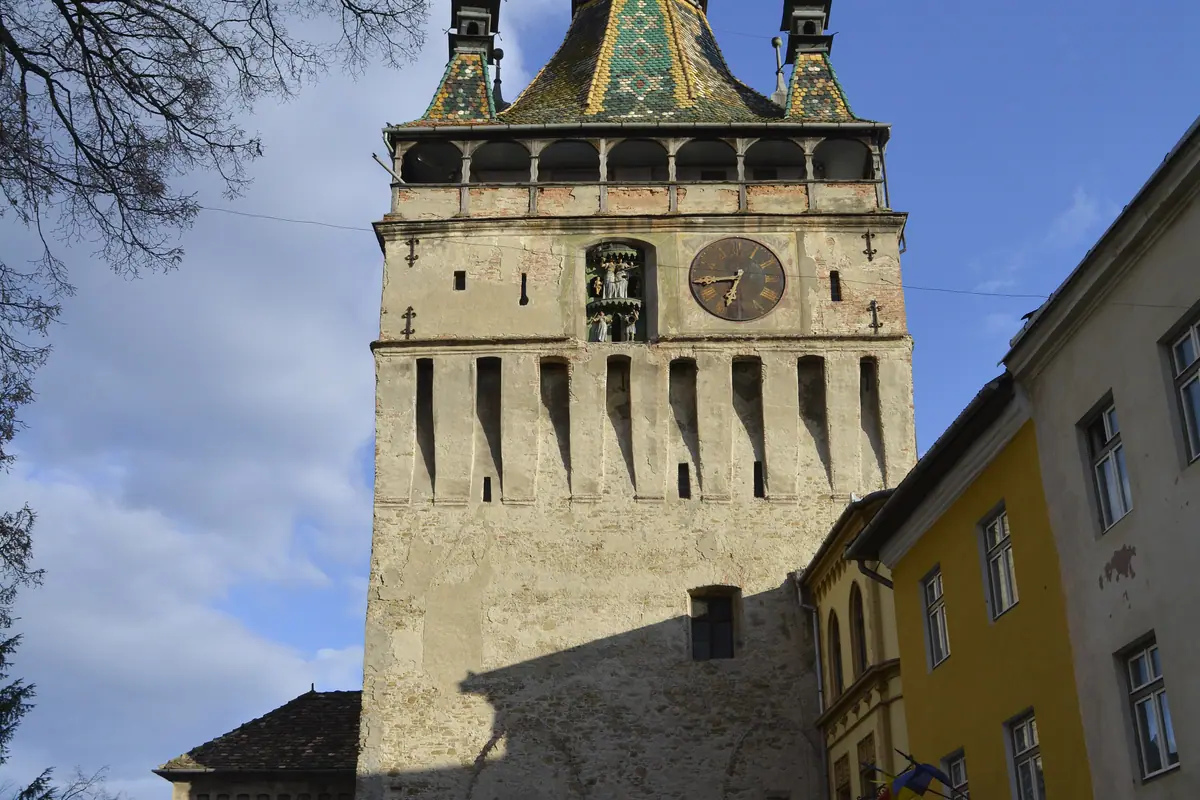
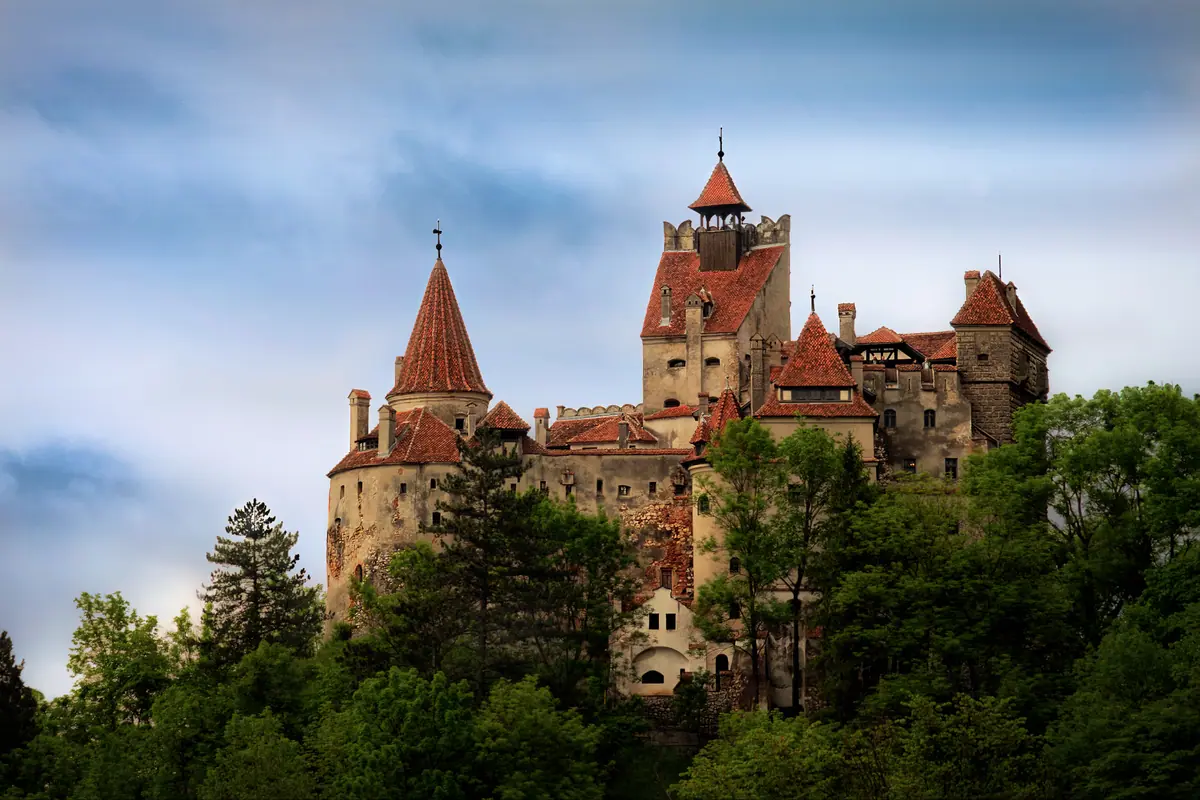
Transylvania delivers the icons: Bran Castle, perched on a rock above a market village about two and a half hours from Bucharest, takes 90 minutes to two hours and is worth visiting for its ramparts and forest setting rather than its thin Dracula mythology. Pair it with Râșnov Fortress, the Black Church and Piața Sfatului in Brașov, and the clock tower and scholars' staircase of Sighișoara's citadel.
Elsewhere, Peleș Castle in Sinaia is a Neo-Renaissance confection of carved wood and stained glass, Corvin Castle in Hunedoara is the fairy-tale Gothic fortress of the west, and the underground cathedral-like chambers of Salina Turda salt mine make an easy half-day detour. Time your drives for daylight — mountain roads are slow and beautiful in equal measure.
Painted Monasteries, Saxon Villages and Maramureș
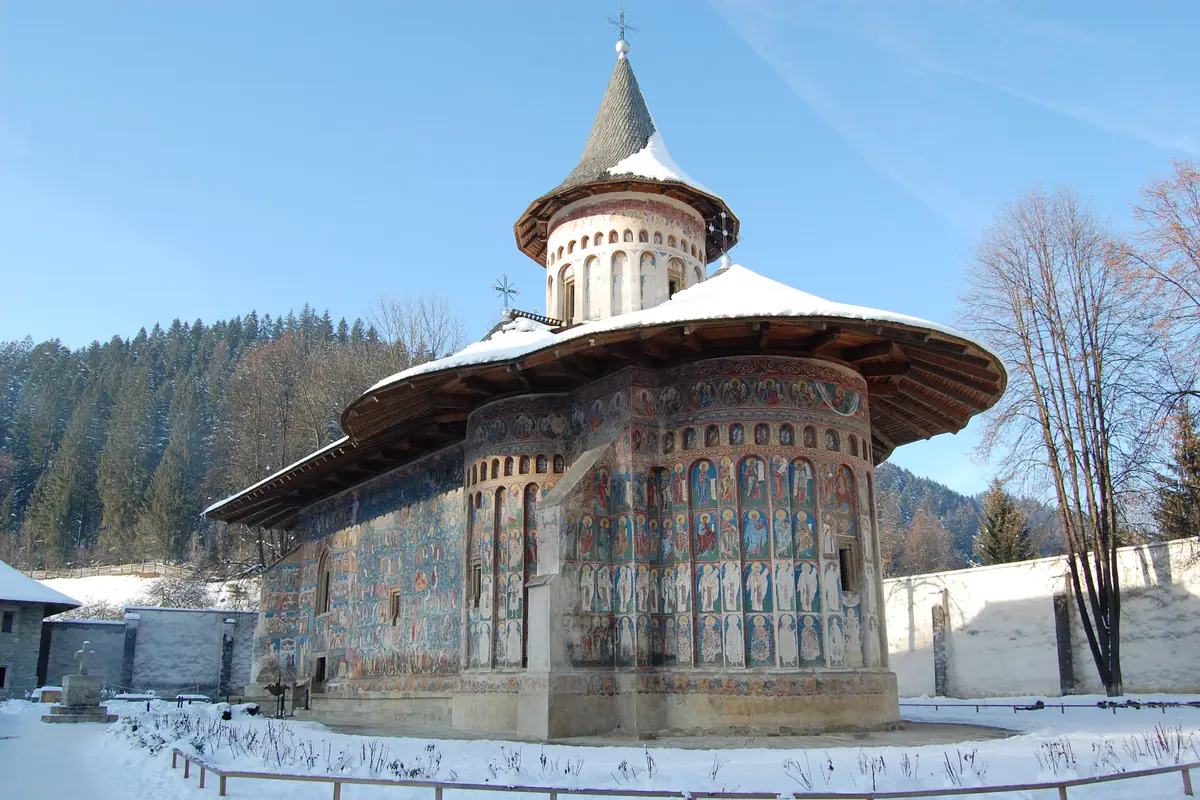
Bucovina's painted monasteries are Romania's greatest artistic treasure. Voroneț is famous for its luminous blue and a Last Judgement fresco covering an entire exterior wall; Sucevița, Moldovița and Humor carry similar 15th- and 16th-century cycles. Go early, dress modestly for the nuns who still live there, and allow a full day to link two or three by car.
Across the Carpathians, the Saxon heritage of southern Transylvania survives in villages like Biertan and Viscri, where fortified churches with towers, granaries and walled graveyards still stand among orchards and hay meadows. Sighișoara and Sibiu make the best bases: both are walkable medieval towns with guesthouses inside the old walls.
In the north, Maramureș is Europe's last great peasant culture. Wooden churches with impossibly tall spires stand at Bârsana and Ieud, the Merry Cemetery at Săpânța turns gravestones into brightly painted life stories, and Ciocănești decorates its houses with geometric patterns. Give this region three or four nights; the rhythm here is slow and the gates are genuinely open.
What to Eat and Drink: Sarmale, Mici and a Glass of Țuică
Romanian cooking is generous and seasonal. Sarmale — cabbage rolls stuffed with pork and rice, simmered for hours — is the national dish, served with polenta, sour cream and pickled chillies. Mici, skinless grilled minced-meat rolls, belong to summer evenings and beer gardens; ciorbă, the sour soup family, ranges from borsch-style vegetable broths to the famously bracing tripe version. Look for mămăligă layered with brânză de burduf cheese and smântână, or tochitură, a rich pork and polenta fry-up.
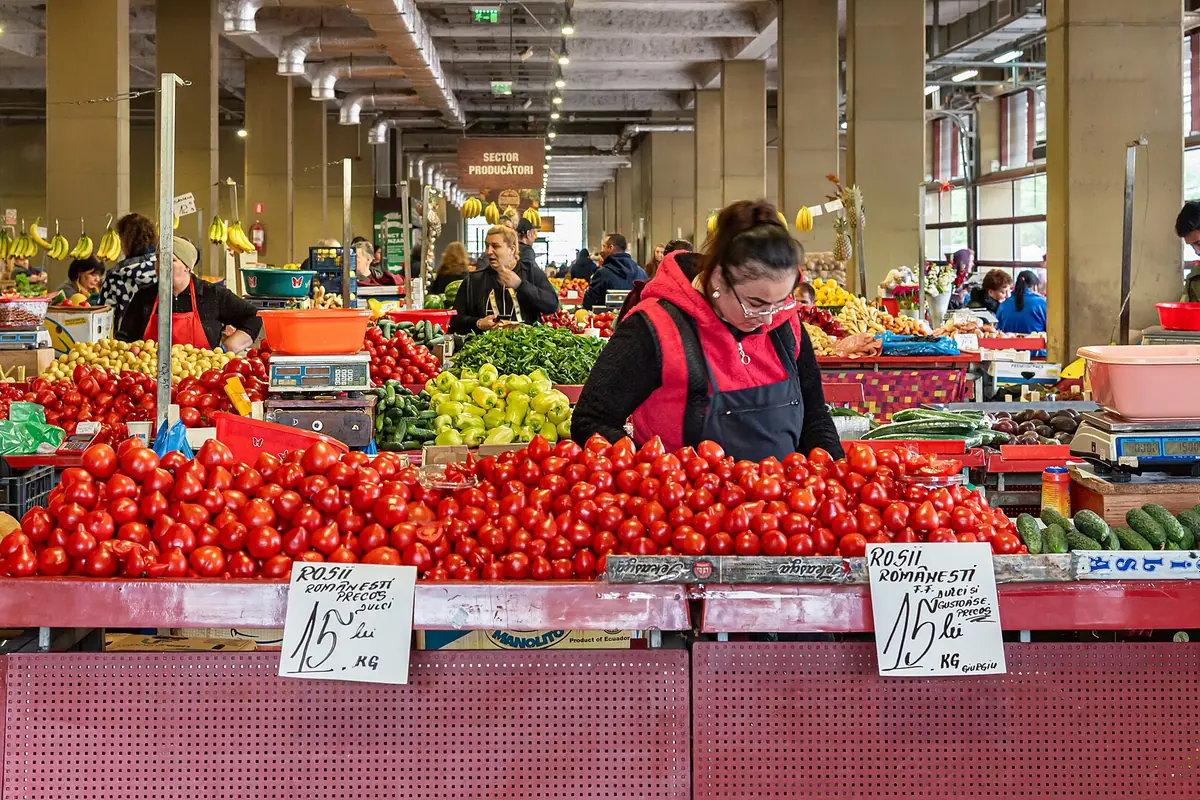
Markets are the best introduction: Bucharest's Obor market is a sprawling, noisy primer on cheeses, cured meats, pickles and produce. Save room for papanași, fried doughnuts with sour cream and fruit jam, freshly baked cozonac at Easter and Christmas, and kürtőskalács, the caramelised chimney cake sold at fairs across Székely Land and Transylvania.
To drink, expect țuică or palincă — potent plum brandy poured as a welcome shot — plus vișinată cherry liqueur and increasingly serious wine. The historic regions of Cotnari and Murfatlar and the hills of Dealu Mare produce aromatic whites such as Grasă de Cotnari and robust reds like Fetească Neagră. Portions are large, meals are long, and refusing a second helping is a negotiation, not a rule.
Hands-On Experiences: Sheepfolds, Crafts and Wildlife
The most memorable Romanian experiences are participatory. In summer, shepherds move flocks to high pastures and visitors are welcomed at the stâna, the sheepfold, to watch caș and telemea cheese being made over a fire. Village guesthouses in Maramureș and the Apuseni Mountains often arrange this, alongside bread baked in a clay oven and plum brandy distilled at home.
Craft traditions are alive if you seek them out. Horezu in Oltenia is famed for its glazed ceramics, Corund in Székely Land for bold painted pottery, Ciocănești for decorated Easter eggs, and Maramureș for carved wooden gates. The open-air ASTRA Museum beside Sibiu gathers houses, mills and workshops from across the country into one walkable village, and is the single best introduction to rural life.
Nature lovers should head for the Danube Delta, reached from Tulcea, where boat trips thread through reed channels past pelicans, cormorants and the wild Letea forest — two to three days is ideal. In the Transylvanian forests around Zărnești, licensed guides lead dusk bear and wolf watching from hides; the Bicaz Gorge and the mud volcanoes of Buzău County round out a country that is wilder than most visitors expect.
Practical Threads: Seasons, Transport and Village Etiquette
Trains connect Bucharest, Brașov, Sibiu, Cluj-Napoca and Timișoara reasonably well and are comfortable on the main lines, but villages, monasteries and Maramureș are far easier with a rented car. The Transfăgărășan highway over the Făgăraș mountains usually opens around July and closes with the first snow, sometimes in October; check locally before planning a crossing. Distances look short on maps and rarely are.
Plan around the calendar as much as the map: 1 March brings the red-and-white mărțișor trinkets, Orthodox Easter fills churches and markets with painted eggs, June's Sânziene festival lights up villages with flowers and fires, and Advent turns Sibiu, Brașov and Bucharest into Christmas market towns. Summer weekends fill the Black Sea resorts, so book coastal stays well ahead.
In villages, small courtesies matter: carry cash, ask before photographing people or courtyards, dress covered for church and monastery visits, and accept the offered shot of țuică even if you only sip it. English is common among younger people and rarer in the countryside, so a few words of Romanian go a long way — and a friendly 'mulțumesc' rarely fails.
Frequently asked questions
How many days do you need for a tour of Romania?
Ten days covers Bucharest, Brașov and Bran, Sighișoara and Sibiu comfortably by train and car. For Maramureș, the painted monasteries of Bucovina and the Danube Delta, allow two to three weeks so you are not spending whole days in transit.
What is the best time of year to visit Romania?
Late April to June and September to early October offer the best balance of mild weather, working villages and manageable crowds. Choose July or August for the Danube Delta and Black Sea coast, and December for Christmas markets and snow around Brașov and Sinaia.
Is Romania a good destination for food lovers?
Yes. Regional cooking varies sharply — Saxon and Székely dishes in Transylvania, fish and mussels in the Delta, grilled meats and polenta in the south. Markets such as Obor in Bucharest, village sheepfolds in summer and family-run wineries in Dealu Mare and Cotnari are the highlights.
Do you need a car to travel around Romania?
A car makes rural Romania far more rewarding, especially Maramureș, Bucovina's monasteries and the villages of southern Transylvania, where buses are infrequent. Trains and coaches link the main cities well, so a mixed approach — rail between cities, rental car for the countryside — works best.
Is Romania safe and easy for independent travellers?
It is generally very safe, with low violent crime and welcoming hosts. Watch for stray dogs in some outskirts, drive cautiously on mountain roads, keep valuables out of sight in busy stations, and carry cash for village guesthouses, small wineries and craft workshops.
Sort the rest of your trip
Everything for Romania, in one place
Stay in Romania
Hotels, guesthouses and apartments — compared in one search.
Search hotels
Transfer in Romania
Private driver waiting on arrival — no queues, no surprises.
Book a transfer
Stay online in Romania
Travel eSIM — data the moment you land, no roaming bills.
Get an eSIM