Romania rewards travellers who look past the stereotypes: medieval citadels wrapped around Saxon squares, a mountain road that coils through clouds, and a delta so quiet you can hear the reeds move. It is a country where you can breakfast in a palace, lunch beside a painted monastery and watch pelicans fish at dusk — all within a couple of days' drive.
Bucharest: The Palace of Parliament and the Old Town
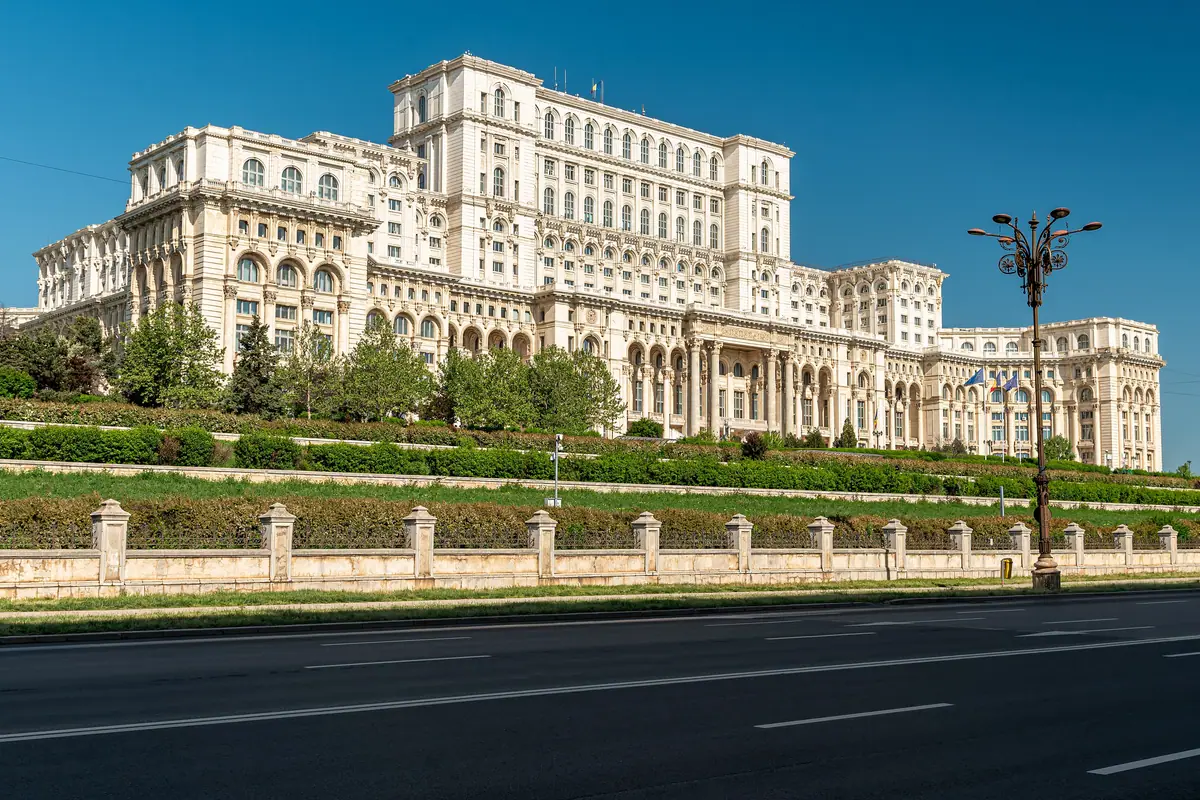
Most trips begin in Bucharest, and the city makes an immediate impression. The Palace of Parliament dominates the skyline — one of the largest and heaviest administrative buildings on earth, with more than a thousand rooms and a chandelier collection worth the guided tour alone. Book ahead, bring your passport (it is required for entry), and set aside roughly an hour for the standard visit. From there, walk or take the metro to Revolution Square, where the Romanian Athenaeum's domed concert hall sits behind a small garden, then continue into the Old Town, or Centrul Vechi.
The Old Town's cobbled lanes around Lipscani fill up after dark with wine bars and terraces, but the area is best explored in the morning, when you can actually see the 18th-century Stavropoleos Monastery, a jewel box of carved stone and fresco tucked between cafés. Cross the Dâmbovița River to reach the Village Museum in King Michael I Park, an open-air collection of transplanted peasant houses, windmills and wooden churches that gives you a countryside primer without leaving the capital.
Two full days is a fair allocation for Bucharest: one for the monumental sights, one for museums, parks and the market halls. Spring and early autumn are the pleasantest seasons for walking, while August can be genuinely hot and sticky.
The Castle Trail of Transylvania
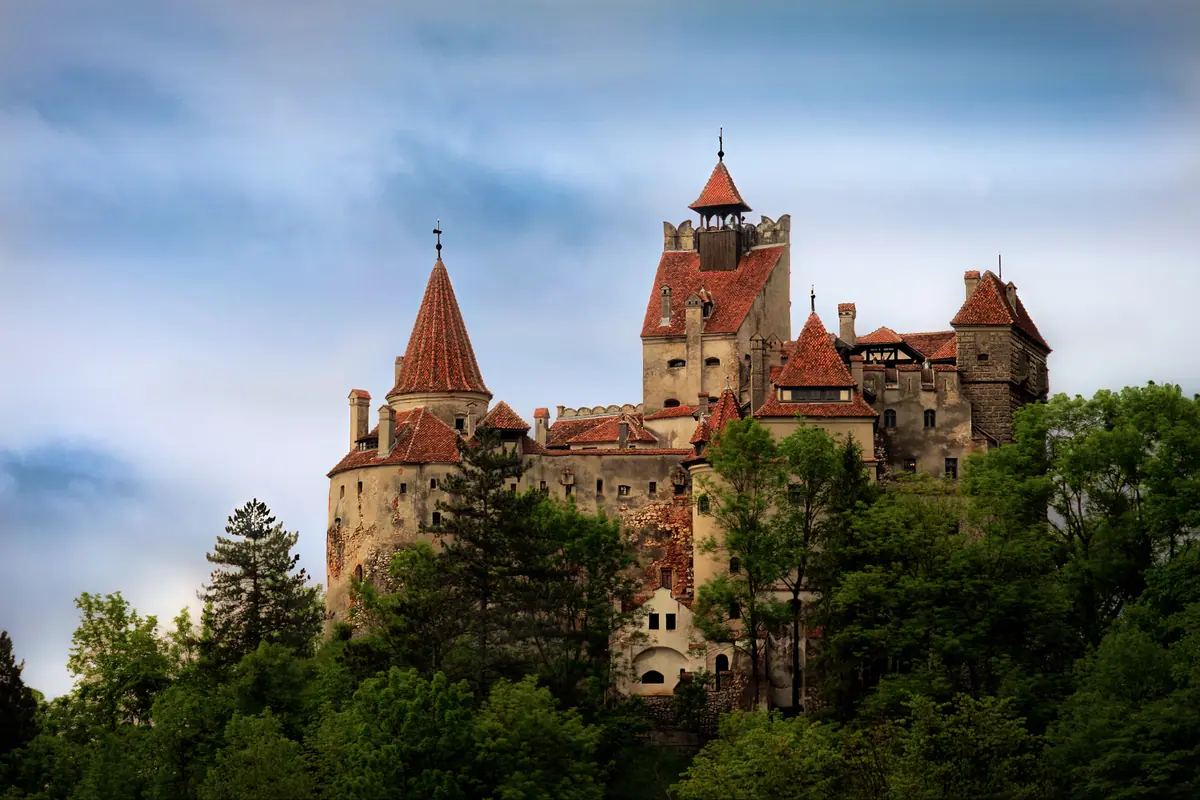
Romania's castles are the reason many people come, and the classic loop delivers. Bran Castle, a 14th-century fortress perched on a rocky outcrop near Brașov, is the one marketed as Dracula's lair; the connection to Vlad Țepeș is more legend than history, but the narrow staircases, timber galleries and views over the valley are genuinely atmospheric. Arrive at opening time — by mid-morning the walkways are shoulder to shoulder. Half an hour away, Râșnov Fortress sits higher and quieter, with a hilltop well and sweeping views of the Bucegi foothills.
West of Brașov, in the Prahova Valley, Peleș Castle at Sinaia is the showstopper: a Neo-Renaissance fantasy of turrets, stained glass and carved walnut built for King Carol I in the late 19th century, with the smaller Pelișor Palace a short stroll up the path. Timed entry is common in high season, and the complex closes on Mondays — plan around it. Farther west, Corvin Castle at Hunedoara is the Gothic silhouette people picture when they imagine a medieval stronghold, complete with a moat, a drawbridge and a legend about a raven.
Winter transforms this route: snow on the turrets, wood smoke in the valleys and far fewer visitors. Just check opening hours, as some smaller sites run reduced schedules from November to March.
Brașov, Sighișoara and Sibiu: The Saxon Towns
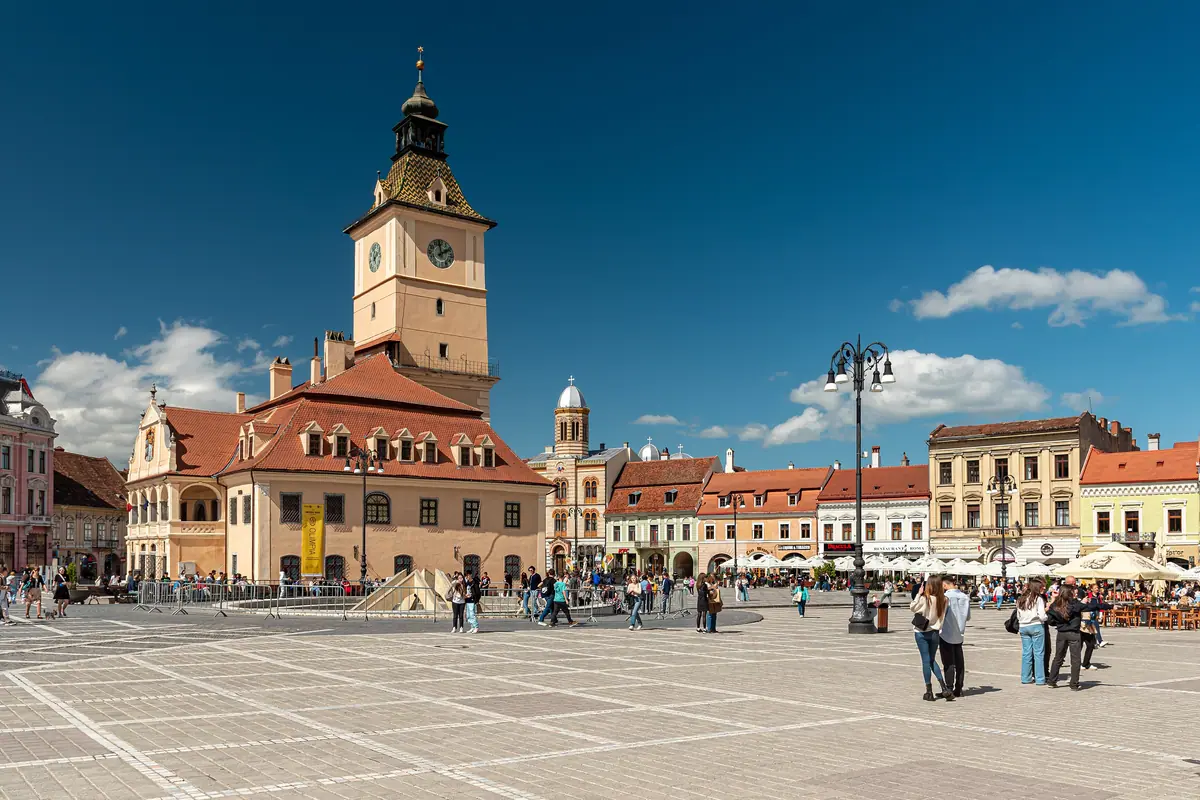
Transylvania's Saxon heritage produced a string of towns that feel lifted from a storybook. Brașov is the most popular base, built around Council Square with its pastel merchant houses and the Black Church, the largest Gothic church in the country and home to a formidable pipe organ. Ride the cable car up Tâmpa for the postcard view, then find Strada Sforii, a passage so narrow you can touch both walls with outstretched arms.
Sighișoara, a UNESCO-listed citadel on a hill, is the country's best-preserved medieval town. Climb the covered wooden staircase to the Church on the Hill, walk the Clock Tower's museum, and look for the house where Vlad Țepeș was born. Each July the citadel hosts a medieval festival that fills the lanes with musicians and craftspeople. Sibiu, an hour and a half west, is more elegant than dramatic: three interlinked squares, the ornate Brukenthal Palace, the ironwork Bridge of Lies, and the ASTRA open-air museum in the forest outside town, where traditional homesteads are arranged along woodland paths.
If time allows, add Cluj-Napoca — Union Square, St. Michael's Church and a lively student café scene — and use it as a springboard for the surreal underground salt mine at Turda, where you descend into caverns big enough to hold a lake and a Ferris wheel. Timișoara, in the west, makes a graceful final stop with its broad squares and Habsburg-era architecture.
The Transfăgărășan and the Carpathian High Roads
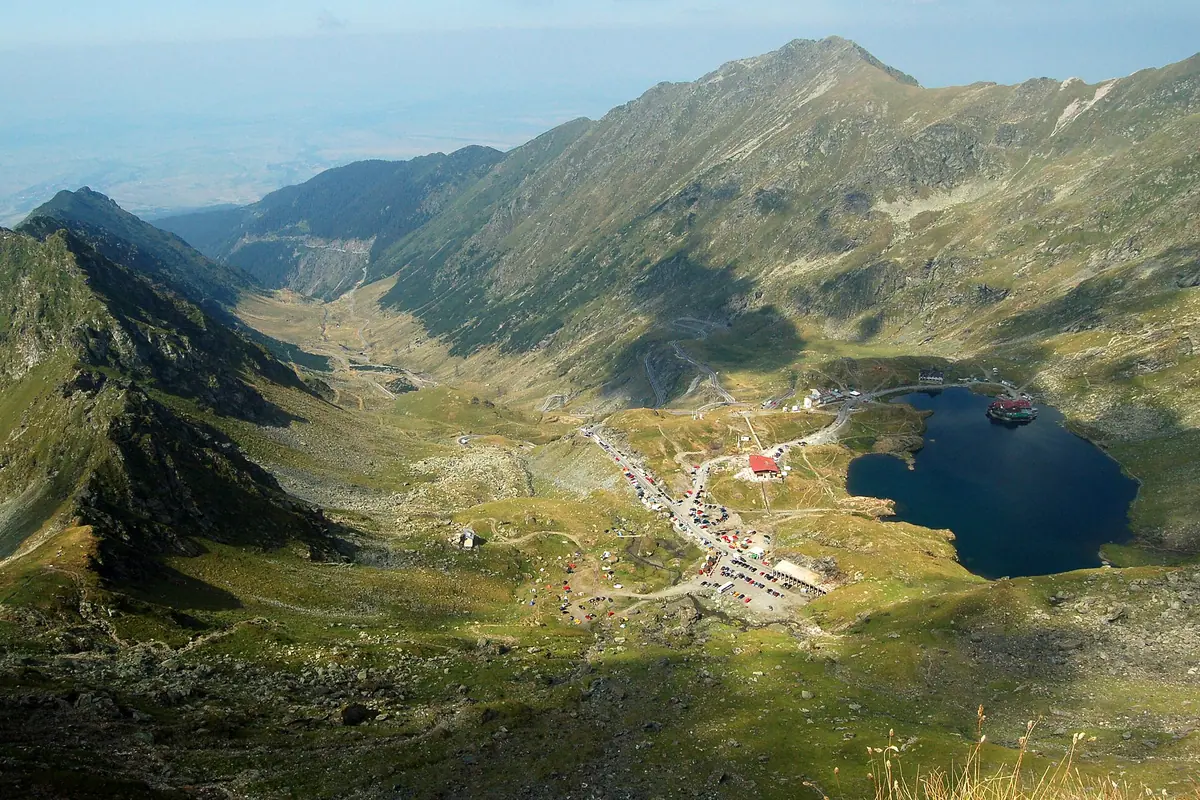
The Transfăgărășan is Romania's most celebrated drive: roughly 90 kilometres of switchbacks built across the Făgăraș Mountains in the early 1970s, climbing past the Vidraru Dam and the ruins of Poenari Castle — reached by around 1,480 concrete steps — before threading a tunnel at the Bâlea Lake summit, above 2,000 metres. Snow usually keeps the highest section closed until late June or early July, and it typically reopens for a few months before the first autumn storms; check conditions locally before committing, and fuel up in Curtea de Argeș or Cârțișoara because services are sparse.
Go on a weekday, start early, and accept that the famous viewpoints will still be busy in August. For a quieter alternative, the Transalpina crosses the Parâng Mountains farther west and reaches an even higher pass at Urdele, with long, empty ridges and shepherds' huts.
Elsewhere, the Carpathians offer hiking rather than driving. Retezat National Park is the classic for glacial lakes and multi-day treks, while the Bicaz Gorge and Red Lake in the east deliver drama with far less effort. Cheile Nerei and the Danube Boilers reward anyone heading towards the Serbian border, where the river squeezes through cliffs and the road tunnels through the rock.
Maramureș and Bucovina: Wooden Churches and Painted Monasteries
Northern Romania holds two traditions you will not find anywhere else in Europe. In Maramureș, villages such as Bârsana, Ieud and Bogdan Vodă keep tall wooden churches with shingled spires that seem to spear the sky; several are UNESCO-listed, and Bârsana Monastery is the most photographed of them all. At Săpânța, the Merry Cemetery turns gravestones into art — bright blue crosses carved with portraits and gently humorous epitaphs about the lives of the people beneath them.
Bucovina, to the east, is monastery country. The painted churches at Voroneț, Sucevița, Moldovița, Humor and Arbore are wrapped in 16th-century frescoes that survived centuries of weather, with Voroneț's deep, luminous blue — a shade that has never been successfully reproduced — the most famous. Visit in the morning light for the best photographs, dress modestly, and give each site at least half an hour rather than rushing the circuit.
This is rural travel at its best: guesthouses with plum brandy and home-cooked dinners, horse carts on the road, and long summer evenings. May to October is the window; late September brings harvest colours and far fewer cars.
The Danube Delta and the Black Sea Coast
Where the Danube finally meets the sea, it splinters into a maze of channels, reed beds and sandbars that form the Danube Delta — a biosphere reserve and one of Europe's great wildlife spectacles. Base yourself in Tulcea, the gateway town, then take a boat or stay in a village such as Sfântu Gheorghe, Crișan or Mila 23. Hundreds of bird species pass through, white pelicans and cormorants among them, and the best sightings come at dawn, when the water is glassy and the reeds are loud with frogs.
Ask about the Letea Forest, a strange, near-tropical woodland of sand dunes and creeping lianas where wild horses graze between the trees. There are no cars in the delta — everything moves by boat, which is exactly the point. Late May and June are superb for nesting birds and warm, still days; September is quieter and just as rewarding.
Finish on the Black Sea coast, an easy add-on from Tulcea. Constanța has a compact old town with Roman mosaics and a grand casino on the seafront, while Mamaia is the resort strip and Vama Veche the bohemian, barefoot end of the shore. Just south of Constanța, the ruins of Histria trace a Greek trading city that predates almost everything else you will see in the country.
Frequently asked questions
How many days do you need to see Romania's highlights?
Ten days to two weeks is the sweet spot. A typical route takes in Bucharest (2 nights), Brașov and the castle trail (3 nights), Sighișoara and Sibiu (2–3 nights), then either the Transfăgărășan drive or a flight north to Maramureș and Bucovina. The Danube Delta deserves at least two nights on its own, since travel there is slow and boat-based.
When is the best time of year to visit Romania?
May, June and September offer the best balance of warm weather, open mountain roads and manageable crowds. July and August are hot in the cities and busy on the Black Sea coast, but ideal for the delta and high-altitude hiking. The Transfăgărășan and Transalpina usually open only from late June or July until the first heavy snow in October.
What should a first-time visitor not miss?
Prioritise the Palace of Parliament in Bucharest, Peleș Castle at Sinaia, Bran Castle and the Saxon squares of Brașov and Sighișoara, the fortified citadel of Sibiu, and at least one painted monastery in Bucovina or wooden church in Maramureș. If you have the time, the Transfăgărășan drive and a Danube Delta boat trip are the experiences people remember longest.
How do you get around Romania?
The rail network links the main cities reasonably well, and intercity trains are comfortable and cheap, though slower than driving. For castles, monasteries and mountain roads, a rental car is far more practical — roads are generally good, but allow extra time for winding routes and horse carts in rural areas. Domestic flights connect Bucharest with Cluj-Napoca, Timișoara and Iași if you want to skip long drives.
Is Romania expensive or difficult to travel?
It remains one of the more affordable countries in the European Union, with guesthouses, village restaurants and train tickets costing noticeably less than in Western Europe. English is widely spoken by younger people in cities, less so in remote villages, where a few words of Romanian go a long way. Carry some cash for rural areas and small monasteries, and book castle and palace tickets ahead in July and August.
Plan it — experiences in Romania
Live search, booked directly with trusted providers.
Sort the rest of your trip
Everything for Romania, in one place
Stay in Romania
Hotels, guesthouses and apartments — compared in one search.
Search hotels
Transfer in Romania
Private driver waiting on arrival — no queues, no surprises.
Book a transfer
Stay online in Romania
Travel eSIM — data the moment you land, no roaming bills.
Get an eSIM