Romania rewards a week better than almost anywhere in Europe: a capital of grandiose boulevards, Carpathian castles wrapped in fir forest, Saxon citadels where the clock tower still marks the hours, and a mountain road that coils between glacial lakes and cloud. This seven-day route threads them together by train and car, starting and ending at Bucharest's airport.
Days 1–2: Bucharest — the Palace of the Parliament and the Old Town
Most journeys begin at Henri Coandă International Airport, set in flat farmland roughly 16 kilometres north of the centre. A train or express bus reaches Gara de Nord in well under an hour, and by late afternoon you can be strolling Calea Victoriei, Bucharest's grandest boulevard, past the Romanian Athenaeum — a gilded concert hall with a circular frescoed rotunda — and the tiny Stavropoleos Monastery, whose carved wooden porch conceals a courtyard of worn tombstones and silence. Base yourself in a guesthouse in the Old Town, where the Lipscani lanes fill after dark with terrace tables and the clatter of plates.
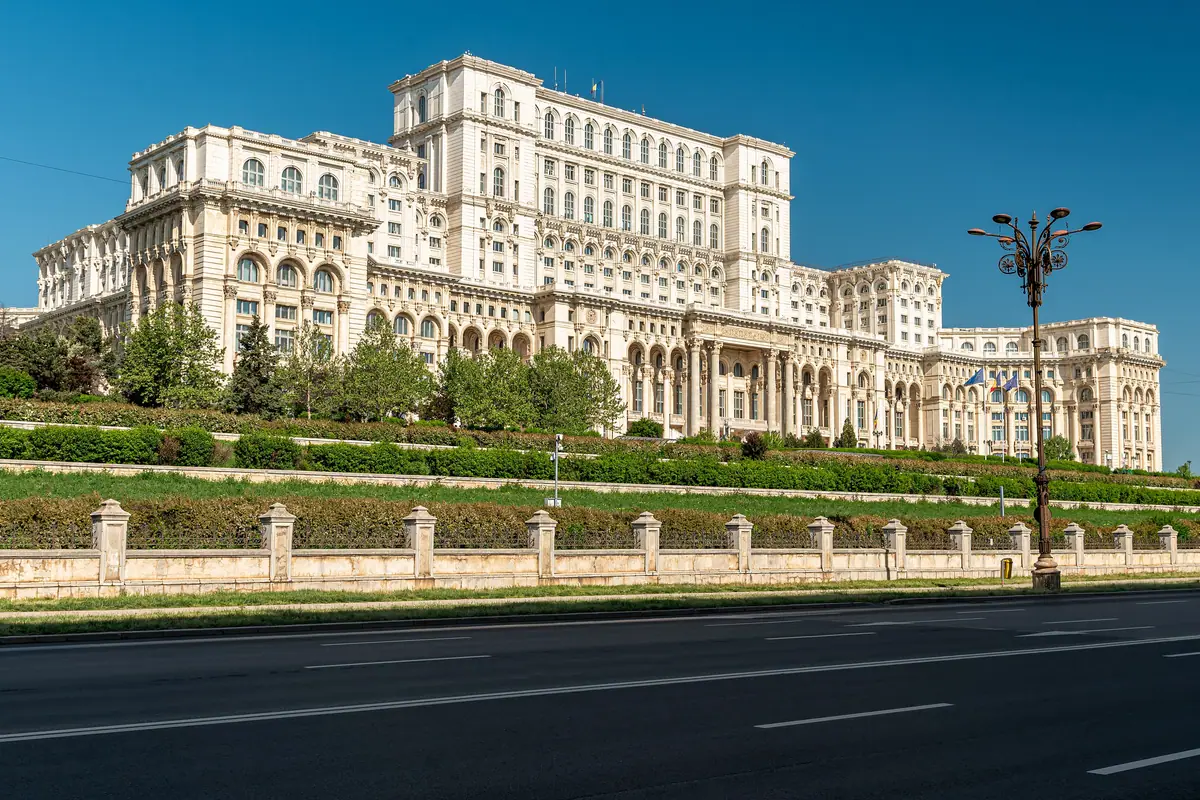
Day two belongs to monumental Bucharest. The Palace of the Parliament is the headline act: a marble-and-crystal colossus of more than a thousand rooms, begun under Ceaușescu and still only partly occupied. Visits run on guided tours and you must bring your passport; go early, as slots fill in summer. Afterwards, decompress at the Village Museum in Herăstrău Park, an open-air collection of wooden churches, windmills and thatched farmhouses transplanted from every corner of the country — an ideal primer for the villages you'll pass through later in the week.
Round off the day with the city's comfort food: sarmale (cabbage rolls), mici sausages off the grill, and a slice of cozonac. Bucharest is a late city, so dinner at nine is entirely normal.
Day 3: The Prahova Valley — Peleș Castle and the Bucegi Mountains
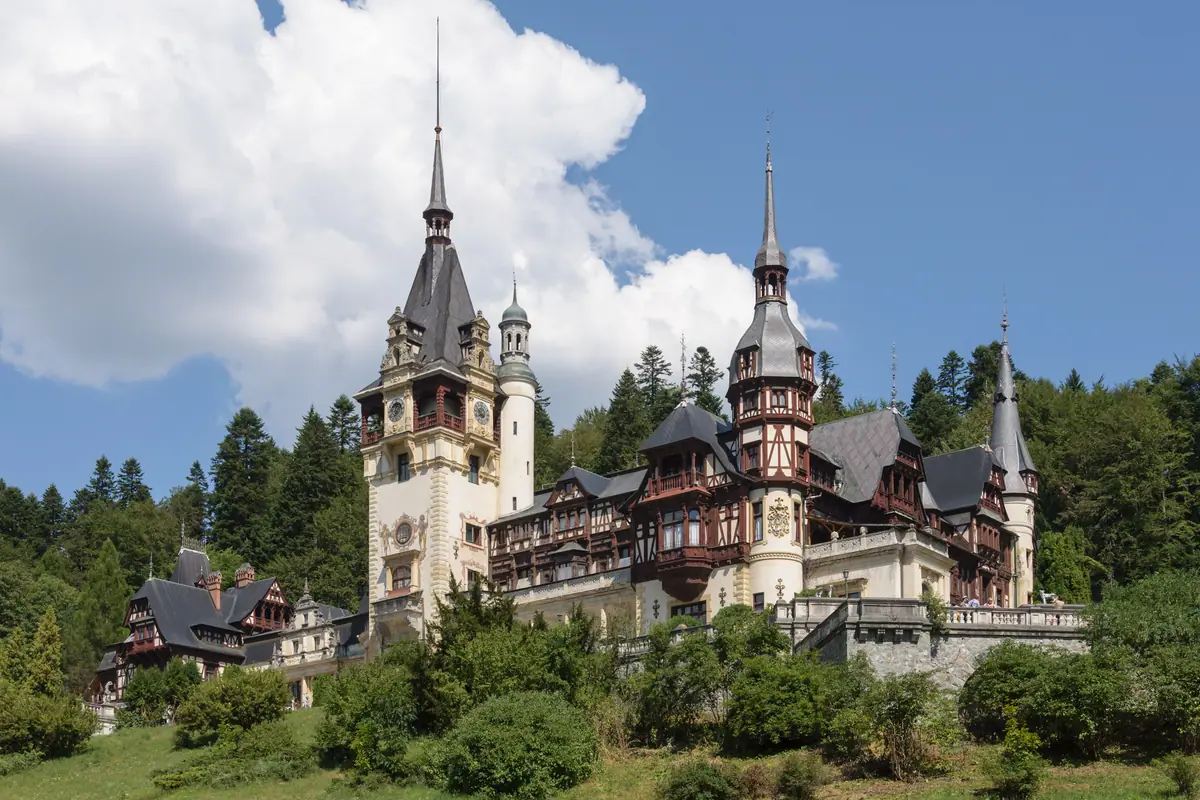
Take an early train from Gara de Nord to Sinaia; the ride lasts about an hour and a half and climbs through the Prahova Valley, with the Carpathians closing in on both sides. From the station it is a pleasant uphill walk through beech woods to Peleș Castle, the neo-Renaissance fantasy built for King Carol I, all timber-framed turrets, stained glass and a hall of carved walnut. The smaller Pelișor Palace next door, with its Art Nouveau interiors, is often the more intimate surprise. Below the castle stands Sinaia Monastery, a walled complex founded in the seventeenth century whose name gave the town its own.
Continue by train or car to Bușteni for the afternoon. A cable car lifts you high into the Bucegi range towards the strange rock formations known as Babele and the Sphinx, and on clear days the view opens across the whole valley. Near the town, Cantacuzino Castle sits above terraced gardens, and the vast Heroes' Cross on the Caraiman ridge glints on the skyline. Sleep in Sinaia or push on to Brașov so that tomorrow starts in the thick of Transylvania.
Day 4: Brașov and Bran Castle — Saxon Walls and a Fairy-Tale Fortress
Brașov is the most likeable city in Transylvania. Its Council Square is a wide, café-ringed plaza dominated by the Black Church, a soot-darkened Gothic giant whose name commemorates a seventeenth-century fire, and inside you'll find one of the largest organs in the region. Climb the Tâmpa hill by cable car for the postcard view of red roofs against forest, wander Catherine's Gate and the absurdly narrow Rope Street, and take coffee in the arcaded Merchant's House. The Schei district, once the Romanian quarter outside the Saxon walls, hides a small museum in the first Romanian-language school.
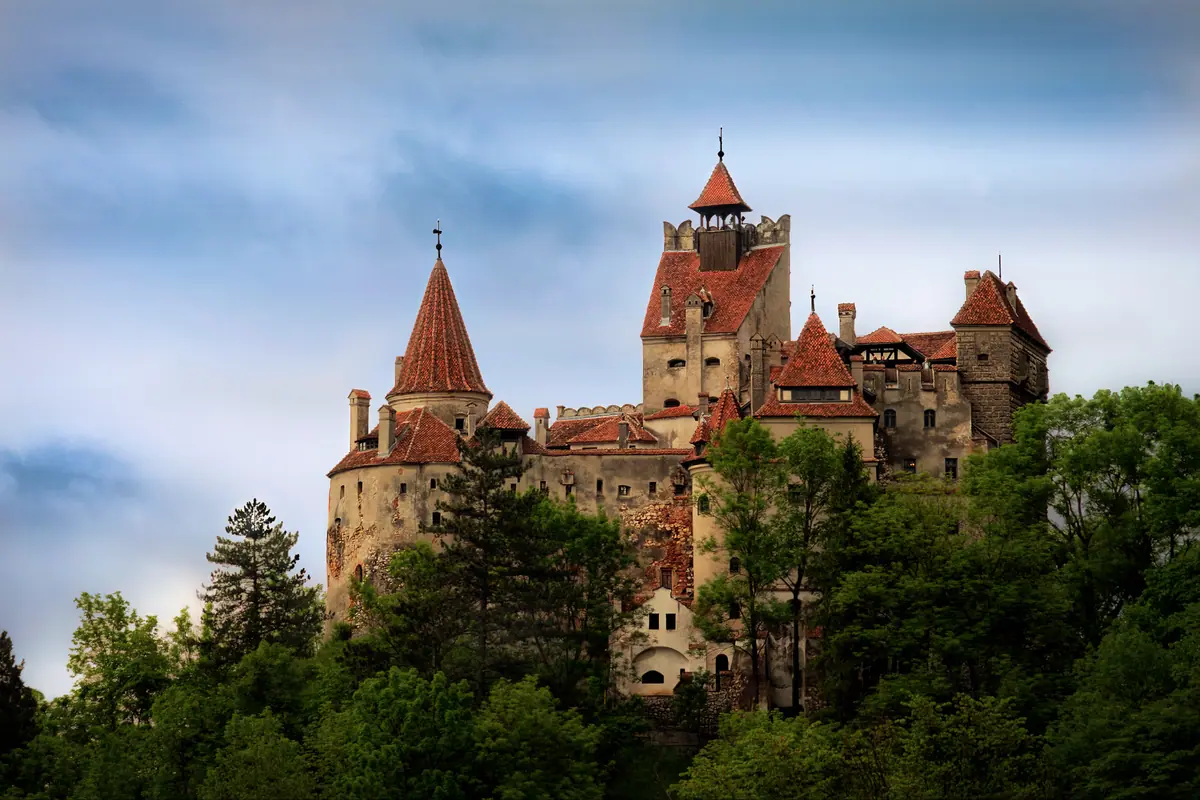
Bran Castle lies about 30 kilometres southwest, and a morning there is enough. Despite the Dracula industry around it, the fortress has only a slender link to Vlad Țepeș; its real story belongs to Queen Marie, who made it a romantic royal retreat in the 1920s. The creaking staircases and turreted courtyard still deliver, especially if you arrive before the coaches. On the way back, stop at Râșnov Fortress, a hilltop peasant stronghold with a well dug — so the legend goes — by two captured Turkish prisoners.
Day 5: Sighișoara and Sibiu — Two Citadels of the Saxons
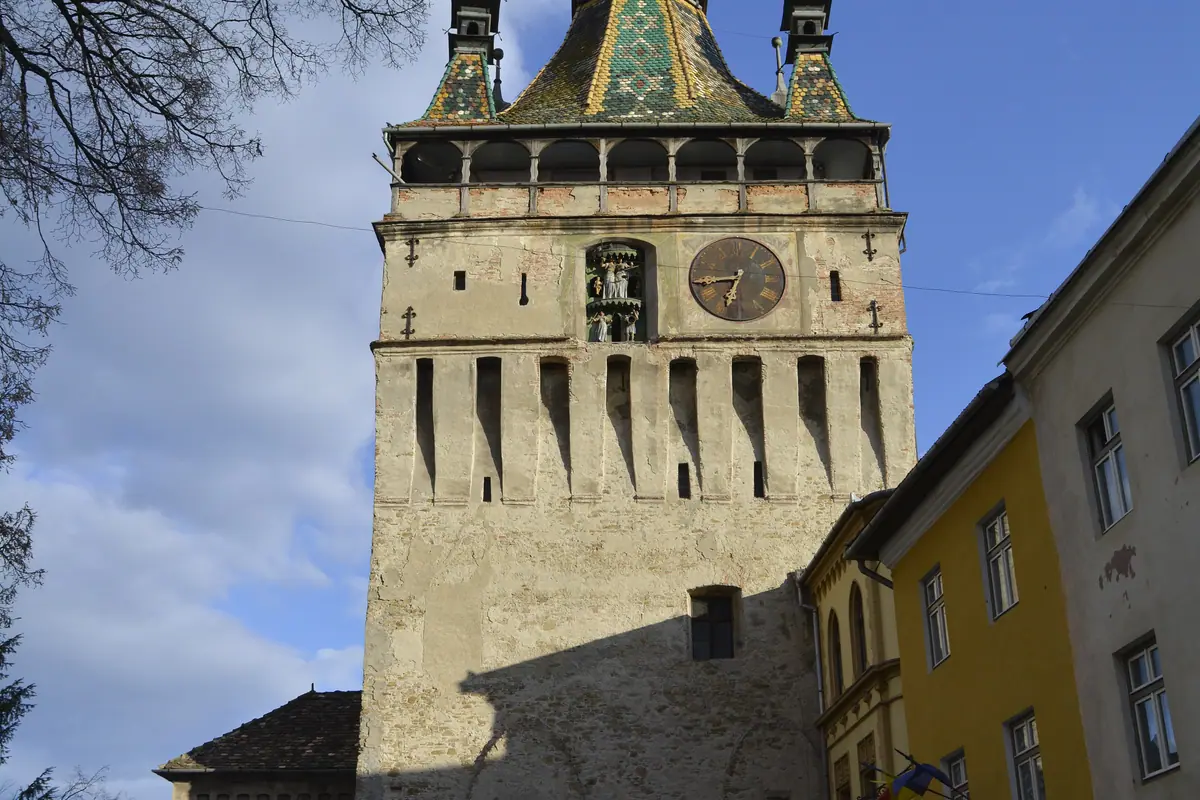
Head north to Sighișoara, the country's best-preserved medieval citadel and a UNESCO site. The Clock Tower guards a warren of cobbled lanes, and a covered wooden staircase climbs to the Church on the Hill, where generations of Saxon schoolchildren trudged through winter. The ochre house said to be Vlad Țepeș's birthplace sits quietly on a corner, while the citadel walls, towers and artists' workshops make the whole place feel inhabited rather than embalmed. Two to three hours of wandering is about right before lunch.
From there it's roughly two hours west to Sibiu, which many travellers name their favourite Romanian city. The Large Square, with its Brukenthal Palace and Lutheran Cathedral, opens into the Small Square, where the Bridge of Lies carries a tongue-in-cheek legend about lovers' promises. Look up: the roofs are studded with eyelid-shaped dormer windows that seem to watch you pass. The ASTRA Museum of Traditional Civilisation sprawls across a lakeside meadow on the edge of town, with windmills, churches and cottages gathered from across the country — worth at least half a day if you can spare it.
Day 6: The Transfăgărășan and Poenari Castle
The Transfăgărășan, Romania's fabled mountain road, is the reason many people hire a car at all. Built across the Făgăraș range in the 1970s, it throws hairpin after hairpin at you between Vidraru Dam and the long tunnel beneath Bâlea Lake, past waterfalls that fall straight off the cliff edge. The summit sits above 2,000 metres and can be foggy, cold and even snow-flecked in August, so pack a jacket and set off early — convoys and summer traffic build up by late morning. Snow generally keeps the high section closed from November until late June or early July, and it is worth checking the opening status before committing.
For the history, detour to Poenari Castle, the clifftop ruin that genuinely belonged to Vlad Țepeș and is reached by a punishing climb of around 1,480 steps. Coupled with the royal cathedral at Curtea de Argeș, with its twisted columns and white limestone, it makes a fine counterpoint to the scenery. If the weather closes in, the Olt Valley road is the gentler alternative, with Cozia Monastery's frescoed church resting right beside the river. Sleep in Sibiu or drop down towards Curtea de Argeș to shorten tomorrow's drive.
Day 7: Back to Bucharest — or Extend into the Delta and Maramureș
Return to Bucharest through the Olt Valley, a drive of four to five hours with Cozia Monastery as a natural coffee stop, or fly from Sibiu if you'd rather not spend your last day behind the wheel. Give yourself a final evening on Calea Victoriei and an unhurried morning before the flight home — Henri Coandă is manageable, but allow three hours for a long-haul departure in peak summer.
If you can add days, Romania opens up in two directions. East, the Danube Delta around Tulcea is a birdwatcher's paradise of reed islands, pelicans and sleepy fishing villages such as Sfântu Gheorghe, reached by boat rather than road. North, Maramureș keeps wooden churches with soaring spires, the famously cheerful painted graves of the Merry Cemetery at Săpânța, and a working steam logging train that rattles up the Vaser Valley. Both are easiest with a short internal flight from Bucharest to Cluj-Napoca or Baia Mare, or by overnight train if you have the patience.
Timing matters more than anything else here. Late May to June and September to October bring mild weather, soft light and quiet roads; July and August are hot, busy and prone to afternoon thunderstorms in the mountains. Winter transforms Sibiu and Brașov into Christmas-market towns, though the high passes become impassable. Trains link the big cities comfortably, but for Bran, Sighișoara's back roads and the Transfăgărășan you'll want a car — and cash, since village guesthouses and stalls rarely take cards.
Frequently asked questions
Is one week enough to see Romania?
Yes, if you concentrate on Bucharest, the Prahova Valley and Transylvania. A week comfortably covers Bucharest, Peleș Castle, Brașov, Bran, Sighișoara, Sibiu and the Transfăgărășan. Adding the Danube Delta or Maramureș means either two more days or dropping something from the middle of the route.
When is the Transfăgărășan open?
The high section normally opens around late June or early July and closes when the first heavy snow arrives in late October or November. Even in midsummer, fog, rain and near-freezing temperatures are possible near Bâlea Lake, so check the current status locally before setting out and carry warm layers.
Do I need to rent a car in Romania?
For the big cities, trains are cheap, frequent and comfortable. For this itinerary, a car makes the second half far easier — Bran and Râșnov, the villages around Sighișoara and the Transfăgărășan are awkward or impossible by rail. Collect the car in Brașov or Sibiu and drop it in Bucharest to avoid city driving.
Is Bran Castle the real Dracula castle?
Not really. Bran Castle is spectacular and worth visiting, but its connection to Vlad Țepeș is thin and largely modern marketing. The fortress most firmly tied to Vlad is Poenari, the clifftop ruin in the Argeș valley. Bran's own story is richer for Queen Marie, who turned it into a royal residence in the 1920s.
What should I eat and drink in Romania?
Look for sarmale (cabbage rolls with polenta and sour cream), ciorbă de burtă or ciorbă de perișoare soups, grilled mici, and papanași doughnuts with jam and cream for dessert. In Transylvania, order a plate of Saxon-style pork with sauerkraut. Local wines from Dealu Mare and Recaș are excellent value, and țuică, the plum brandy, is offered at every village table.
Sort the rest of your trip
Everything for Romania, in one place
Stay in Romania
Hotels, guesthouses and apartments — compared in one search.
Search hotels
Transfer in Romania
Private driver waiting on arrival — no queues, no surprises.
Book a transfer
Travel insurance
Medical cover, delays and lost baggage — sorted before you go.
Get covered