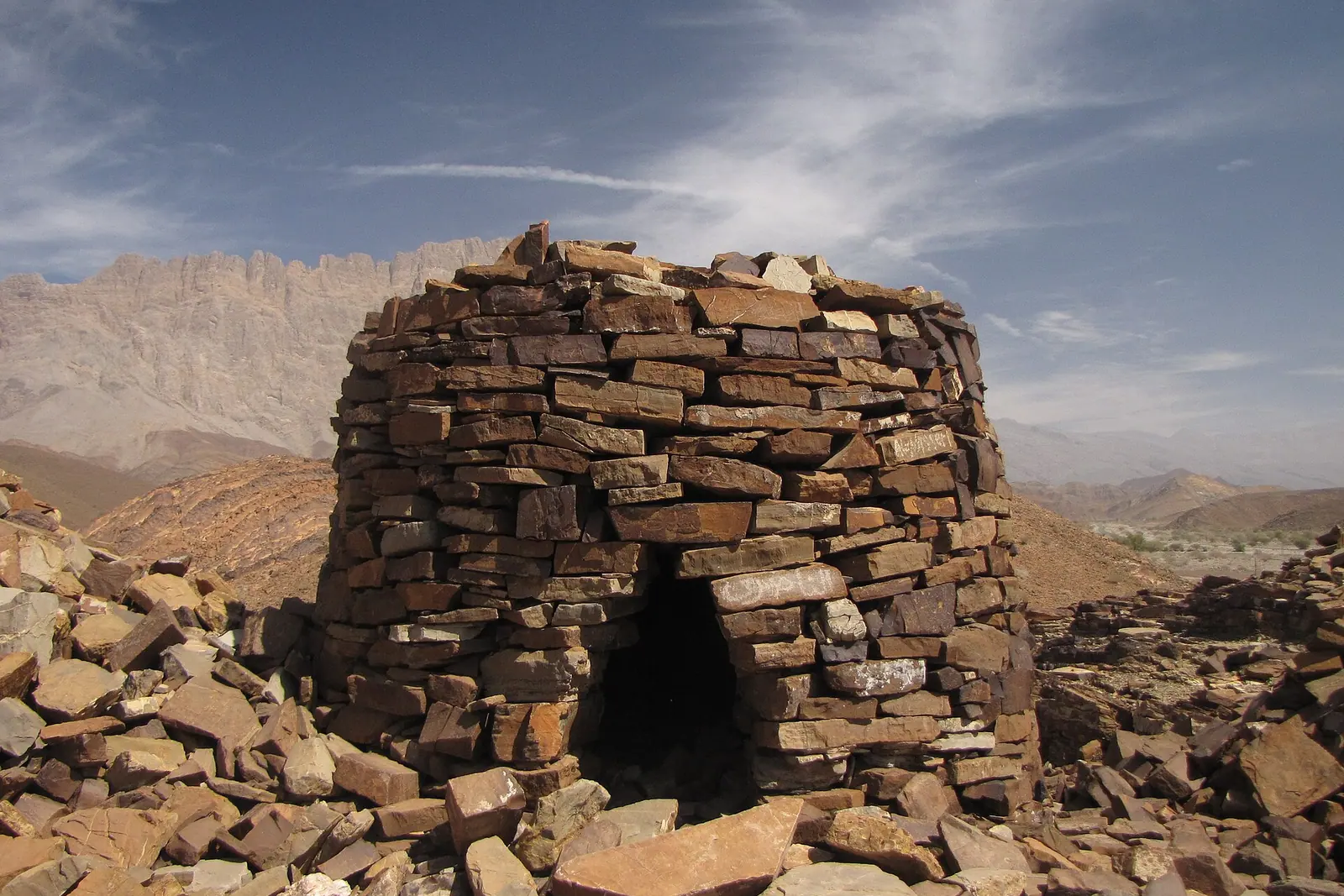
Oman rewards travellers who like their landscapes dramatic and their history unpolished: frankincense-scented souqs, mud-brick forts older than most European cathedrals, and a canyon that makes you reach for a wider lens. It is a country you drive through rather than tick off, where a morning at a mosque and an afternoon swimming into a cave in a wadi sit comfortably in the same day.
Muscat: The Grand Mosque, Palaces and the Muttrah Corniche
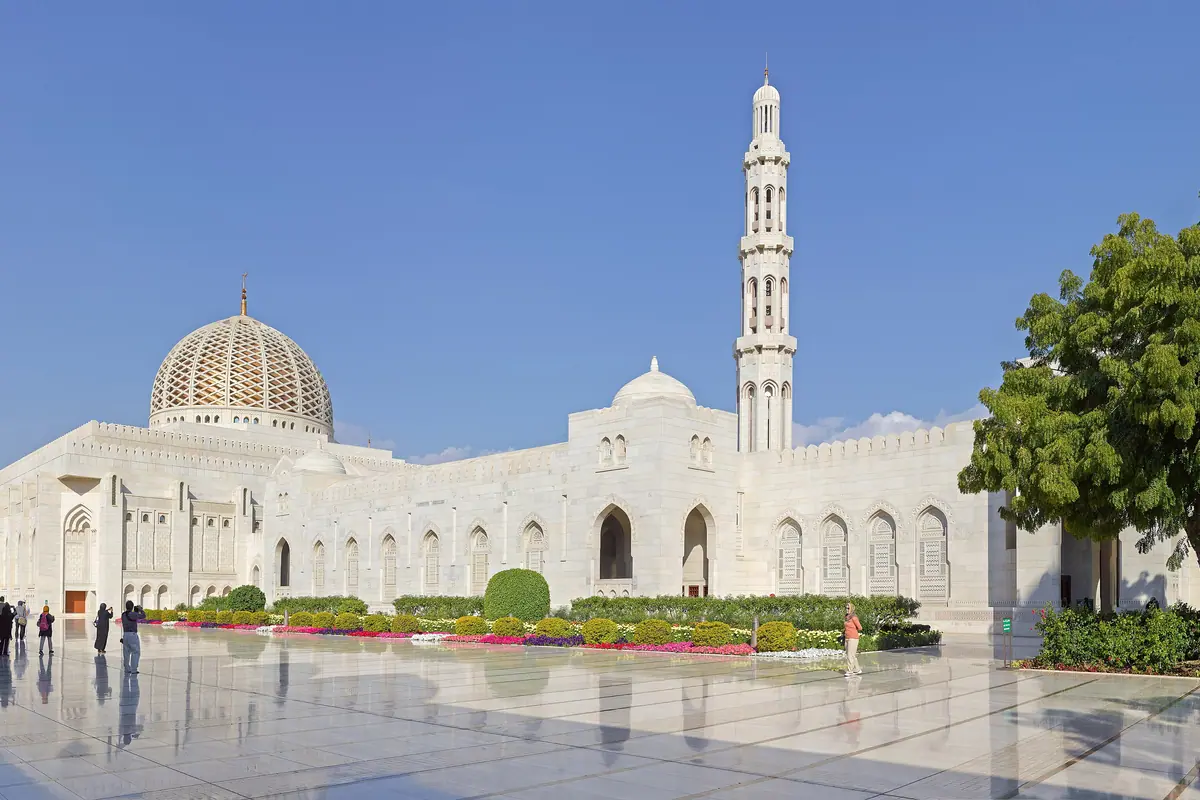
Start in the capital, where the Sultan Qaboos Grand Mosque sets the tone for everything that follows. Completed in 2001, it holds the world's second-largest single-piece hand-knotted carpet and a chandelier of over a million crystals, but it is the quiet courtyards and the cool marble that stay with you. Non-Muslim visitors are welcomed in the mornings, generally Saturday to Thursday, and you will need to dress modestly — long trousers or a skirt and a headscarf for women, both often lent at the entrance. Arrive close to opening to photograph the main prayer hall before the tour groups fill it.
A short drive east brings you to the waterfront district of Muttrah, where the corniche curves between the twin Portuguese-era forts of Al Jalali and Al Mirani, both built in the 1580s and still guarding the bay above the sultan's ceremonial Al Alam Palace. The Muttrah Souq behind the fish market is the classic Omani maze — silver, frankincense, and the earthy scent of incense drifting out of shop doorways. Haggling is expected and friendly; a polite counter-offer usually lands somewhere in the middle.
If you have a second day in the city, the National Museum of Oman near Al Alam Palace gives an excellent grounding in the country's maritime and tribal history, while the neighbouring Bait Al Zubair covers costume, weaponry and household life in a set of restored merchant houses. In the evening, the Royal Opera House Muscat — its exterior a pale, carved stone landmark on the Sultan Qaboos road — hosts everything from Western opera to Omani folk music; check the season's programme, dress smartly, and you'll have one of the most unexpected nights out in the Gulf.
Nizwa and the Forts of the Interior
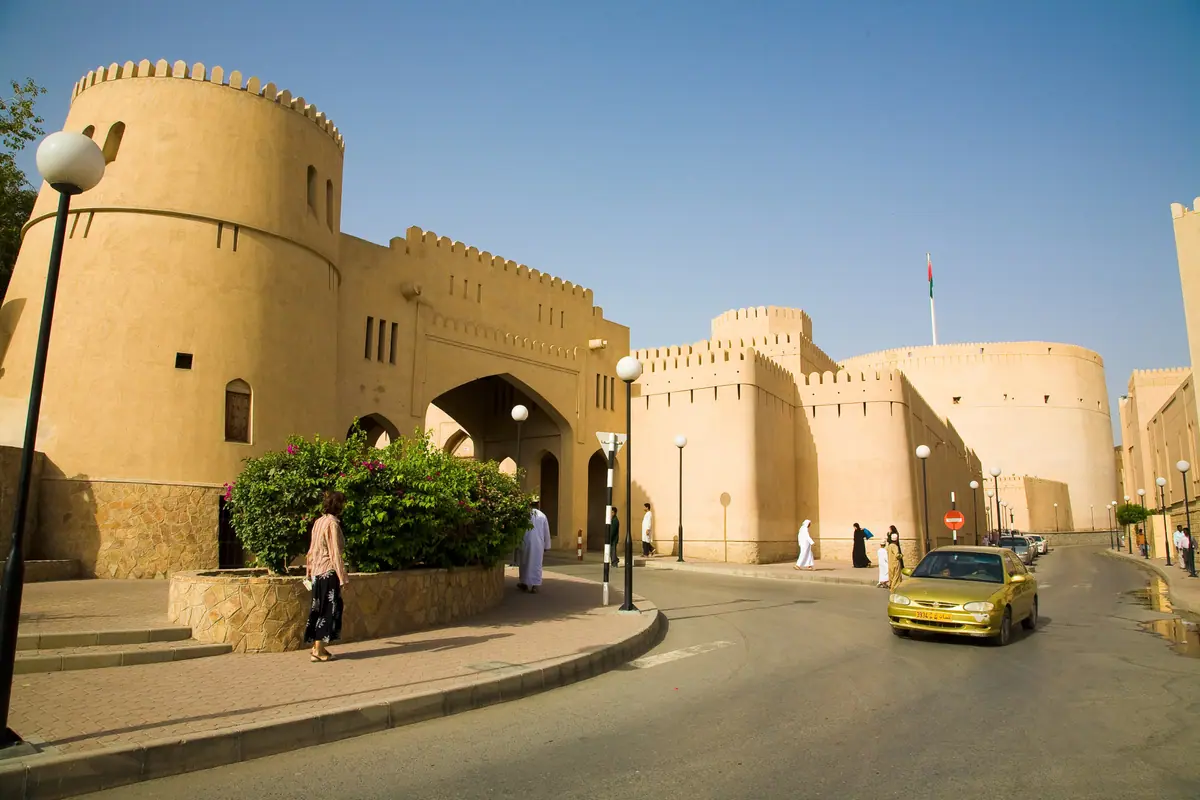
Roughly ninety minutes inland from Muscat, Nizwa is the old capital of the interior and home to the most-visited fort in the country. Nizwa Fort's enormous round tower, nearly forty metres across, was built in the seventeenth century and is riddled with murder holes, false stairways and a well shaft designed to survive sieges. Climb to the battlements for a view over the palm oasis and the blue-domed mosque; the attached souq is liveliest at dawn on Fridays, when goat and livestock traders gather before sunrise and the whole square becomes a market.
The surrounding region — Bahla, Jabreen and Al Hamra — forms the densest concentration of historic architecture in Oman. Bahla Fort is a UNESCO-listed mud-brick monster, a walled oasis settlement as much as a fortress, and after years of restoration it now opens its internal passages to visitors. Nearby Jabreen Castle is a different creature altogether: built in the late seventeenth century as much palace as defence, with painted ceilings, carved plaster and a sunken date store that doubled as a prison.
Break up the fort-hopping with Al Hoota Cave at the foot of the Hajar Mountains, one of the largest show caves on the Arabian Peninsula, entered by a small train and walked on a boardwalk over an underground lake inhabited by blind fish. Further along the same road, the terraced village of Misfat Al Abriyeen and the abandoned mud houses of Birkat Al Mawz offer the kind of slow afternoon — falaj irrigation channels, date palms, a shaded café — that makes the interior worth an overnight rather than a day trip.
Jebel Shams, the Grand Canyon and the Wadis
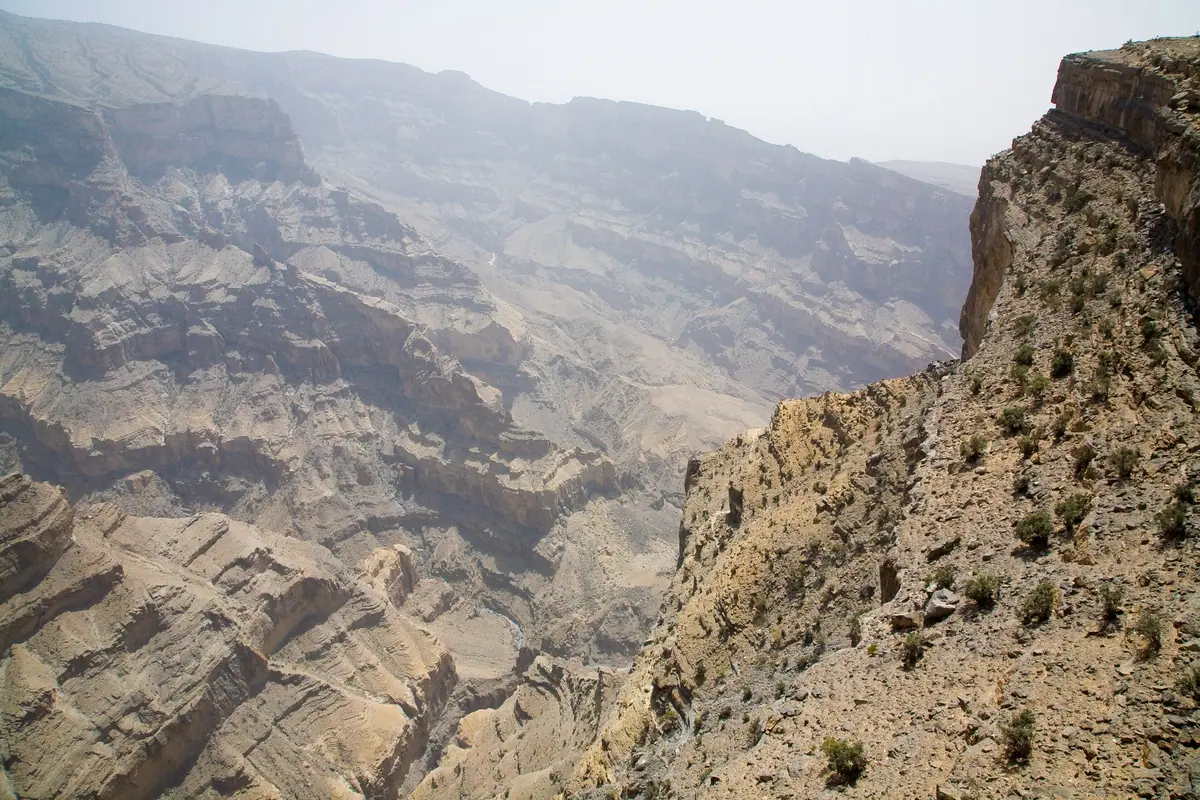
Oman's highest mountain, Jebel Shams, tops out at just over 3,000 metres, and its northern face drops into Wadi Ghul — the so-called Grand Canyon of Oman, roughly a kilometre deep and utterly silent at sunrise. The drive up from Al Hamra takes about an hour and requires a four-wheel-drive vehicle once you leave the sealed road; the reward is a rim-side plateau where you can camp or stay in a simple guesthouse and watch the light move across the canyon at both ends of the day. Bring a fleece: winter nights up there drop close to zero.
The nearby Jebel Akhdar, the Green Mountain, is a gentler and equally memorable highland: two-thousand-metre terraces of pomegranate, walnut and rose bushes, watered by centuries-old irrigation channels, with the small town of Saiq at its centre. Rose harvest runs from late March into April, when the whole plateau smells of damask, and the villages of Al Ayn and Wadi Bani Habib are worth the rough track.
Lower down, Oman's wadis are the country's best natural attraction. Wadi Shab, about two hours from Muscat, involves a walk, a swim through emerald pools and a squeeze into a cave with a waterfall inside — allow half a day and carry water. Wadi Bani Awf is the scenic route over the mountains towards Nizwa, and the Bimmah Sinkhole, a limestone crater filled with turquoise water right beside the coastal highway, makes an easy twenty-minute stop between Muscat and Sur. Go early; by midday the popular pools belong to everyone.
Wahiba Sands and the Turtle Beaches of Ras Al Jinz
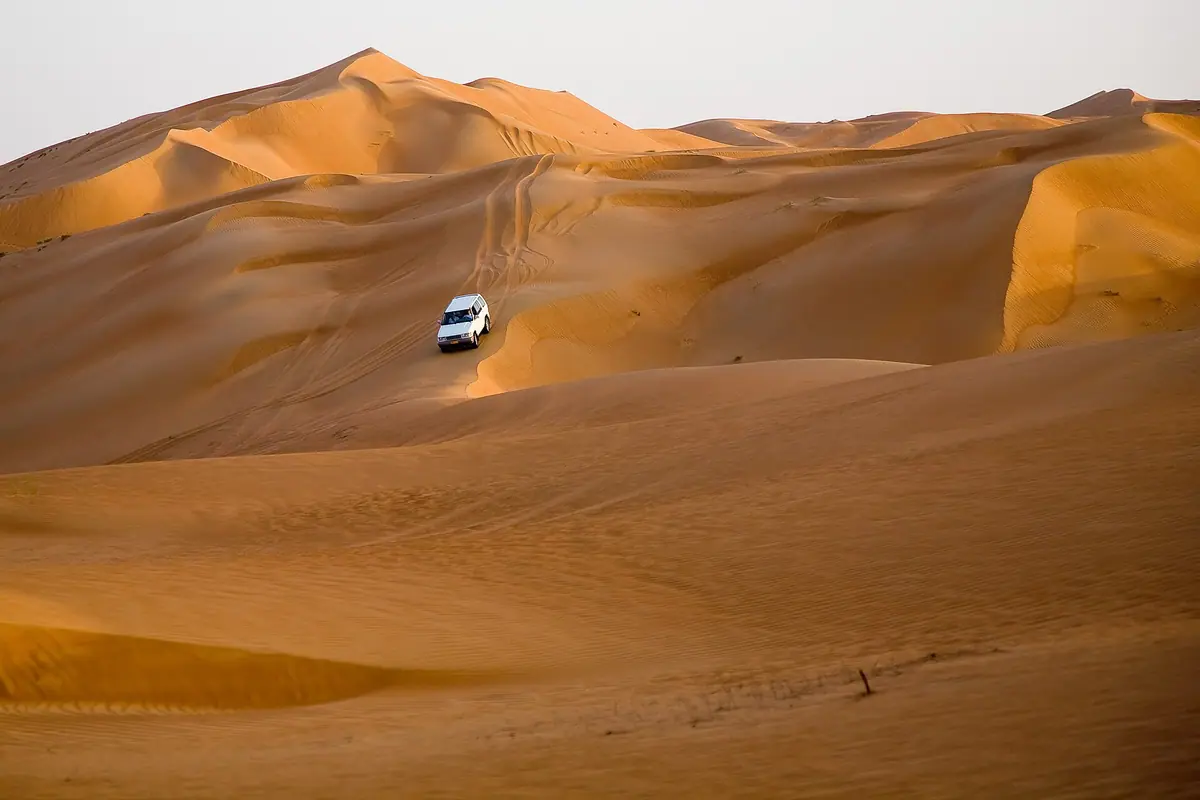
East of the mountains, the Wahiba Sands — also called the Sharqiya Sands — is a rolling sea of red dunes running roughly 180 kilometres north to south. This is where you ride camels, sandboard, or simply sit on a dune crest while the sand shifts from orange to rose to violet. Most visitors overnight in a desert camp; the classic structure is a small Bedouin-run camp with a fire, Omani coffee and a generator that goes off at midnight, which is exactly when the stars arrive.
Continue south-east and the landscape changes to the Indian Ocean coast, where Ras Al Jinz is one of the most important green turtle nesting beaches in the region. Guided night walks led by the reserve's rangers take small groups onto the sand to watch females lay and cover their eggs; the season runs year-round with the heaviest nesting and hatching activity between roughly May and October. Wear dark clothing, keep torches off, and follow instructions — the whole point is that the turtles carry on undisturbed.
The coast here also rewards anyone who likes their beaches empty. Sur, a former dhow-building town, has a quiet corniche and a restored dhow yard, and the Daymaniyat Islands north of Muscat are a protected marine reserve with coral, turtles and reef fish that snorkellers can reach on a half-day boat trip. Between October and April, the water is clear and calm; in summer it is bath-warm but often hazy.
Dhofar: Salalah, Wadi Darbat and the Frankincense Trail
Southern Oman is a different country in feel, and for three months a year it is a different climate too. From late June to early September the khareef, or southwest monsoon, wraps Salalah and the Dhofar mountains in mist and drizzle, turning the slopes vivid green and sending waterfalls over the cliffs of Wadi Darbat and the Ittin escarpment. Gulf families flock here for the season, so book accommodation well ahead if you plan to visit in July or August. Outside the monsoon, from October to April, the coast is dry and pleasantly warm, and the mountains brown and empty.
The region's history is inseparable from frankincense, and the Land of Frankincense sites are UNESCO-listed for good reason. Al Baleed Archaeological Park on the edge of Salalah combines a ruined medieval port with a superb museum on the incense trade, while Sumhuram at Khor Rori and the groves of Wadi Dawkah show where the resin was harvested and shipped. The modern city also has one of Arabia's great markets — the Al Husn souq — where you can buy hojari frankincense graded by colour and clarity.
Dhofar is also where you'll find some of Oman's best coastal scenery: the blowholes and sea cliffs at Mughsail, the fishing town of Mirbat with its old merchant houses, and the road up Jabal Samhan, where you might spot a Nubian ibex on the escarpment. Allow three or four days if you fly into Salalah rather than driving down from Muscat — the road journey is around ten hours and best broken at Duqm.
Musandam Fjords and Practical Planning Tips
Cut off from the rest of the country by the United Arab Emirates, the Musandam peninsula is Oman's most dramatic coastline: limestone cliffs plunging straight into the sea, a maze of inlets known locally as fjords. From the town of Khasab, full-day dhow cruises thread through the khors to Telegraph Island, where you can snorkel, watch dolphins ride the bow and eat lunch on deck. The drive up Jabal Harim to the village of Wadi Bih is one of the region's finest roads, and requires a four-wheel-drive if you continue past the viewpoint.
For timings, the sweet spot across most of Oman is October to March, when Muscat sits in the twenties and low thirties, the desert is walkable and the mountains are cool rather than freezing. April and September are shoulder months — hotter but quieter and cheaper. From May to August, coastal Oman is genuinely hot and humid; that is the moment to head for Salalah, the Dhofar mountains or the high terraces of Jebel Akhdar instead.
Getting around is easiest with your own vehicle, and a four-wheel-drive is essential for Jebel Shams, the upper Jebel Akhdar roads and most wadi tracks; distances look short but mountain roads are slow. Dress modestly away from hotels and beaches — shoulders and knees covered is the safest rule — and expect many nationalities to qualify for a free short-stay visa on arrival or via an online application, so check your own requirements before flying. Alcohol is restricted to licensed hotels and a few restaurants, Fridays are quiet until after midday prayers, and the greeting of choice, a small cup of cardamom coffee with dates, will be offered to you constantly. Accept it.
Frequently asked questions
What is the best time of year to visit Oman?
October to March is ideal almost everywhere: comfortable temperatures in Muscat, cool nights in the mountains and pleasant desert mornings. April and September are hotter but less crowded. If you specifically want the green Dhofar monsoon, plan for late June to early September in Salalah.
How many days do you need in Oman?
A week lets you cover Muscat, Nizwa and the interior forts, Jebel Shams and a night in the Wahiba Sands without rushing. Ten days to two weeks adds the turtle beaches at Ras Al Jinz, Sur, and either Musandam or a flight down to Salalah.
Do you need a 4x4 to explore Oman?
For the main highways and cities, an ordinary car is fine. You will need a four-wheel-drive for Jebel Shams, the upper roads of Jebel Akhdar, most wadis such as Wadi Bani Awf, and the rougher desert approaches — and your rental insurance usually excludes off-road driving unless it is specifically covered.
Is Oman safe and what should I wear?
Oman is consistently one of the safest countries in the region, with very low crime and easy solo travel. Dress modestly in towns and villages — shoulders and knees covered, and women should carry a scarf for mosques — and swimwear only at pools and beaches.
Can you visit Oman during Ramadan?
Yes, and it can be a rewarding time to visit. Many restaurants close during daylight hours and working hours shorten, but hotels serve food to non-Muslim guests and the evening iftar atmosphere is memorable. Avoid eating or drinking in public during the day, and note that some attractions run reduced opening hours.