Oman is the Arabia that surprises people: fortified mud-brick towns curled around palm oases, a canyon that dwarfs anything in Europe, dunes that glow apricot at dusk and a southern coast that turns emerald under a monsoon. Where you sleep genuinely shapes the trip here — a beach resort in the capital, a guesthouse at 2,000 metres, a tented camp in the sands. This guide maps Oman's hotel landscape onto the sights you shouldn't miss.
Oman's Hotel Map: Coast, Fort Towns, Mountains and Desert
Oman's accommodation doesn't spread evenly across the map, and that's the first thing to understand. Nearly everything clusters in a handful of places: the capital and its beach strip, the old interior towns of the Hajar foothills, the mountain villages high above them, the dune belt of the Sharqiya Sands, and the green southern coast around Salalah. From Muscat's airport, Nizwa is about 90 minutes by car, the rim of Jebel Shams roughly three hours, the Wahiba Sands two and a half to three hours, and Sur on the east coast three hours. Salalah is a 10 to 12 hour drive, so most travellers fly that leg instead.
The style of hotel changes with the terrain. Along the capital's coast you'll find large resort properties with private coves, dive centres and long breakfast terraces; in the city core, efficient business hotels in districts like Ruwi, Al Khuwair and Qurum; in oasis villages, small heritage guesthouses built into old mud-brick houses; on the mountain rim, a limited handful of eco-lodges with wood-burning stoves; and in the dunes, camps that range from a simple Bedouin-style tent and shared bathroom to fully plumbed canvas suites with a plunge pool. Alcohol is served only at licensed hotels and their restaurants, so if a cold beer at sunset matters to you, check before booking.
One more base worth building into a longer trip is the Musandam peninsula in the far north, separated from the rest of the country by the UAE. Khasab, its small capital, is reached by ferry from Muscat or by road from Dubai, and it has a modest stock of hotels that exist mainly for one reason: the dhow cruises into the fjord-like khors, where dolphins ride the bow wave and the water is improbably turquoise. Booking rhythm matters too — November to March is peak, December and February are the busiest months, and Ramadan brings noticeably lower room rates alongside shorter restaurant hours.
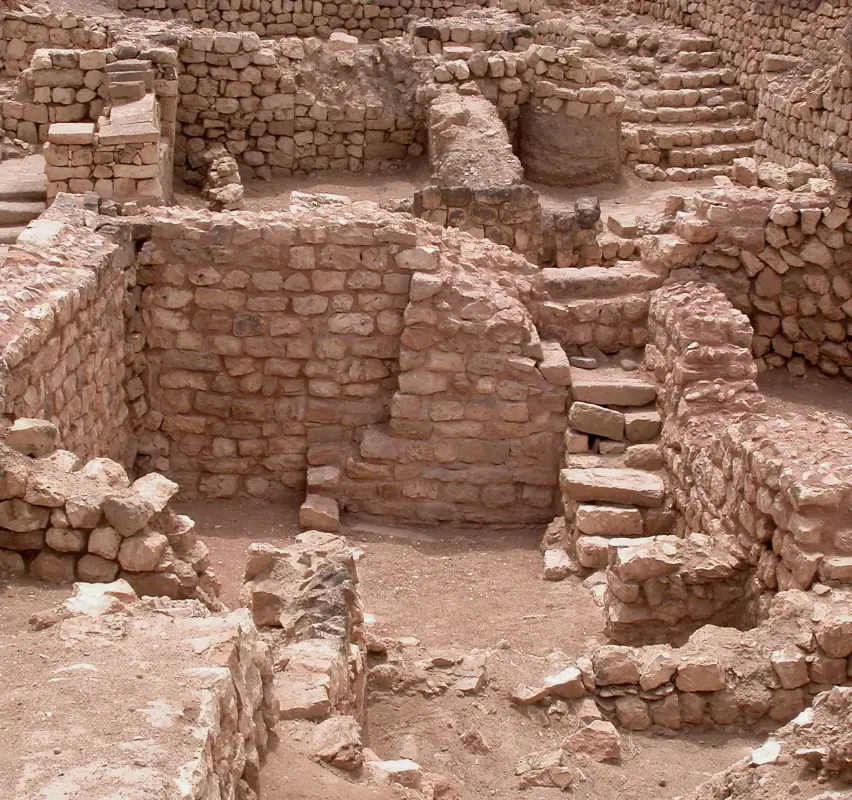
Muscat: Grand Mosque, Royal Opera and the Old Harbour at Mutrah
Most trips begin in Muscat, and the city's headline sight sets the tone. The Sultan Qaboos Grand Mosque in Bausher is one of the largest in the region, with a prayer hall dominated by an enormous single-piece hand-knotted carpet and a chandelier that seems to hang from the ceiling like a chandelier-shaped galaxy. Non-Muslim visitors are generally welcomed in the mornings from Saturday to Thursday; dress modestly, and women should cover their hair. Nearby, in Shati Al Qurum, the Royal Opera House Muscat stages everything from Arabic classical music to international orchestras, and its arcaded exterior is worth a look even without a ticket.
Old Muscat is a compact, low-rise quarter where the ceremonial Al Alam Palace sits between two 16th-century Portuguese watchtowers, Al Jalali and Al Mirani, that frame the harbour like gateposts. The National Museum and Bait Al Zubair, a beautifully restored merchant house full of Omani silver, khanjars and manuscripts, are both a short walk away. Then there's Mutrah, the city's beating commercial heart: a labyrinthine souq scented with frankincense and sandalwood, a curving corniche, and a fish market that comes alive at dawn.
Where you stay in Muscat depends on what you want from the day. Muttrah and Ruwi put you within walking distance of the souq and cost considerably less; Qurum and Al Khuwair are convenient for restaurants and the opera; and the resort belt stretching west towards Barr Al Jissah and Seeb is where you go for private beach days, with the Daymaniyat Islands — a marine reserve of coral, turtles and reef fish — a boat ride offshore. Wadi Shab and the Bimmah Sinkhole make an easy day trip east, which is another argument for spending three or four nights before heading inland.
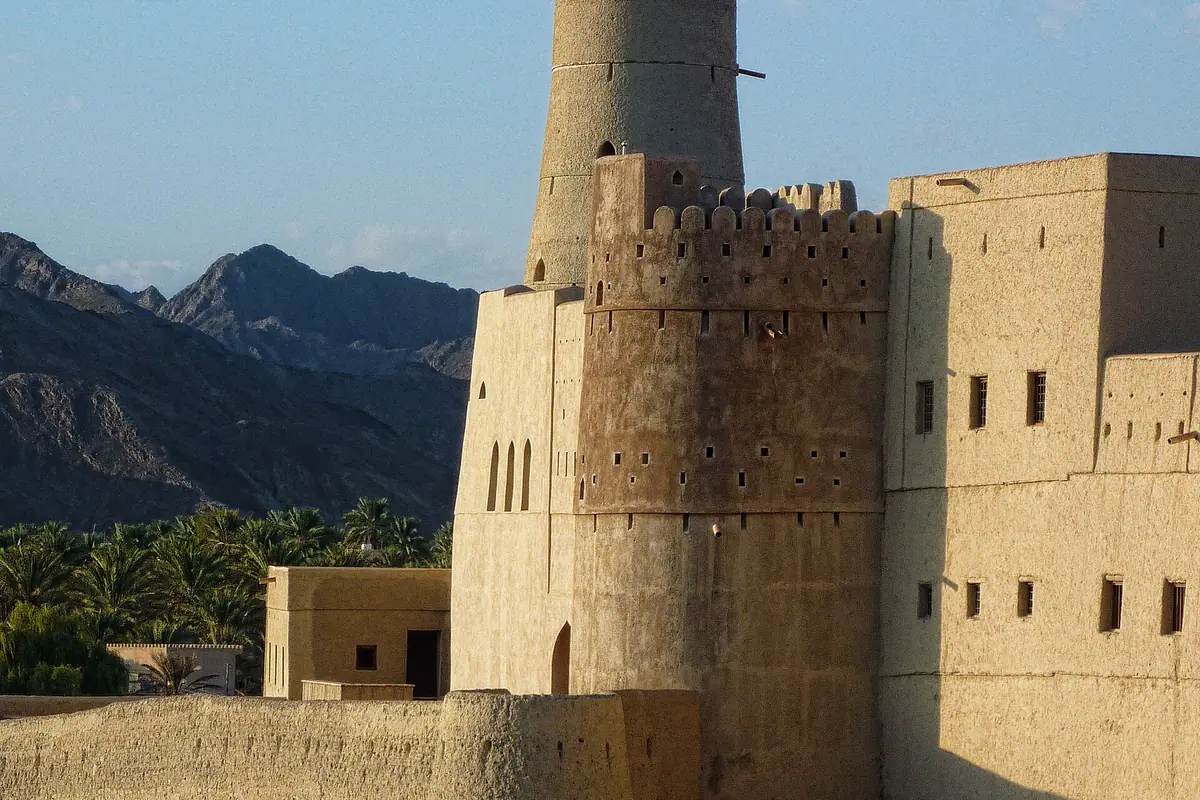
Fort Country: Nizwa, Bahla and Jabrin in the Interior
Nizwa is the natural second base, roughly 140 kilometres from the capital and the gateway to Oman's fort-and-falaj heartland. Its fort is the showpiece: a 17th-century stronghold with a vast circular tower you climb through a series of internal stairways, trapdoors and murder holes before emerging onto a rooftop view of date palms, dry wadis and the blue-grey Hajar mountains. Below it, the souq sells silver jewellery, khanjars and tins of the town's famous halwa, and on Friday mornings the livestock market draws Bedouin from across the interior to auction goats and cattle.
Within half an hour you can reach two more essential sights. Bahla Fort, a UNESCO-listed mud-brick giant, has been painstakingly restored and gives a sense of how a medieval oasis town defended itself; the surrounding town is still known for its pottery. Jabrin Castle, built as a scholar's residence in the 17th century, is smaller and more domestic, its ceilings painted with floral and geometric motifs and its walls concealing hidden passages. Combine either with Birkat Al Mouz, where falaj irrigation channels still feed banana and papaya plantations beside a ruined mud-brick settlement, or with the old houses of Al Hamra.
Accommodation in Nizwa itself is functional rather than luxurious — clean mid-range hotels and a small scattering of guesthouses, many within walking distance of the fort. For atmosphere, go up: the terraced villages of Jebel Akhdar and Misfat Al Abriyeen are 45 minutes to an hour away and offer restored old houses with thick walls and courtyard breakfasts. Two nights is the sweet spot for this region, and because the Friday market is the main event, Thursday nights fill first.
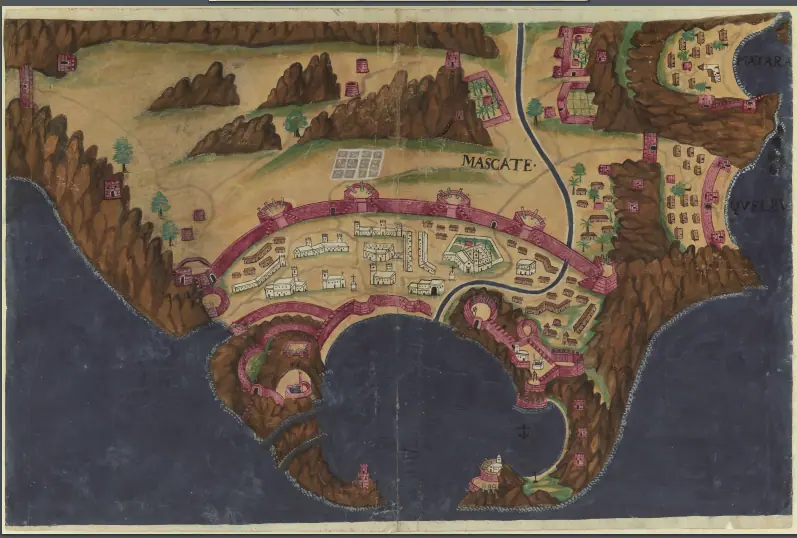
Jebel Akhdar and Jebel Shams: Sleeping at 2,000 Metres
The Jebel Akhdar, or Green Mountain, is where Omanis go to escape the heat. At around 2,000 metres the air is cool enough for terraced agriculture to thrive: Damask roses harvested in April and May and distilled into rose water, pomegranates, walnuts and grapes. Past the police checkpoint on the climb from Birkat Al Mouz or Al Hamra, a four-wheel-drive vehicle is required — a rule that is enforced, not advisory — and the road hairpins up through cliffs to villages such as Al Ayn and Wadi Bani Habib. Hotels here are mostly small and intimate, from simple guesthouses to a few upscale properties perched on the escarpment.
Jebel Shams, Oman's highest mountain at roughly 3,000 metres, serves up the country's most dramatic view: the Grand Canyon of Oman, a sheer gash of rock dropping into Wadi Ghul. The abandoned village of Al Khitaym clings to the rim nearby, and a well-marked balcony walk follows the edge for those with sturdy shoes and a head for heights. Because the canyon faces east and west, the light at sunrise and sunset is the reason to sleep up here rather than day-trip from Nizwa.
The catch is supply. There are only a handful of rooms at this altitude, and between November and March they sell out weeks or even months ahead, especially at weekends. Nights in winter can drop close to freezing, so pack layers even if you left Muscat in shorts. Give yourself two nights if you can: one to acclimatise and catch sunset, one for a morning hike before the clouds build.
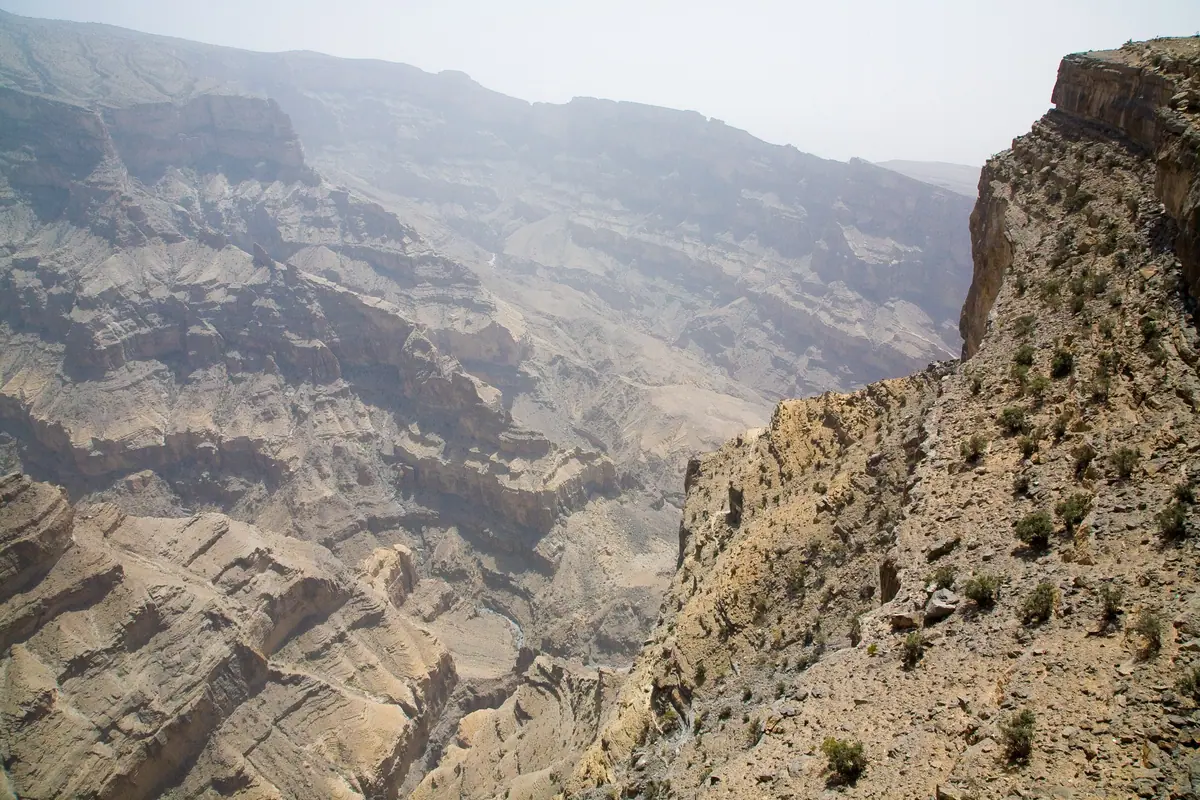
Wahiba Sands: Tented Camps and the Road to the Turtle Beaches
The Sharqiya Sands, often still called the Wahiba Sands, begin about two and a half hours southeast of Muscat, where the tarmac ends and a 200-kilometre belt of dunes begins. Ridges here run up to a hundred metres, and the camps that sit among them are the most atmospheric beds in the country: some are basic Bedouin-style affairs with shared facilities and dinner cooked over a fire, others are luxury tented suites with proper bathrooms and a pool hidden behind a dune. Nearly all include dune driving, a camel ride and a sunset stop on a crest, followed by a sky so thick with stars that it takes a few minutes to recognise it.
The dunes work best as part of a longer eastern loop. Wadi Bani Khalid, with its deep pools and palm-lined gorge, is an easy detour; Ibra has an old quarter and a market traditionally run by women; and the weekly livestock souq at Sinaw gives a vivid, unsentimental view of rural Omani life. Push further east and you reach Ras Al Jinz, one of the most important green turtle nesting beaches in the Indian Ocean, where guided night walks run year-round, and then Sur, with its dhow shipyard and the twin watchtowers of Ayjah across the lagoon.
Timing is everything here. From November to March the days are pleasant and the nights genuinely cold, so bring a fleece. From May to September the heat is punishing and daytime activities shift to early morning and late afternoon. One night in a camp is the standard, but two lets you slow down, catch both sunset and sunrise, and continue to the coast without racing. Not every camp is licensed to serve alcohol, so ask before you book if that matters.
Salalah and Dhofar: Monsoon Season, Frankincense and Southern Beaches
Oman's south is a different country. Between June and September the khareef, or southwest monsoon, wraps Dhofar in mist and drizzle, turning the hills green and filling Wadi Darbat with waterfalls and grazing camels. Al Mughsail's cliffs and blowholes, where the sea explodes through rock chimneys, are at their most spectacular then, and springs such as Ain Athum and Ain Razat run cool while the rest of the Gulf swelters in the forties. This is the one season when you should pack a rain jacket in Arabia.
Dhofar is also frankincense country, and its heritage sites are part of a UNESCO-listed landscape. Al Baleed Archaeological Park in Salalah combines excavated ruins of a medieval port with the Museum of the Frankincense Land, and further east the ruins of Sumhuram overlook the lagoon at Khor Rori. Taqah Castle, a restored 19th-century fortified residence, and the hilltop tomb of Job are both easy half-day outings, while the legendary frankincense site at Shisr sits at the edge of the Empty Quarter for those with a four-wheel-drive and a taste for remoteness.
Hotels line the coast east and west of the city, with beach resorts at Taqah and Mirbat and a solid cluster of city properties in central Salalah. Because the khareef is peak season for Gulf families escaping the heat, rooms book out months in advance and rates climb steeply; outside June to September the region is quiet, warm and much cheaper. Salalah is about 90 minutes by air from Muscat or a long day's drive, so most travellers treat it as a separate southern chapter rather than a stop on the northern loop.
Frequently asked questions
When is the best time to visit Oman?
October to March suits most of the country, with comfortable daytime temperatures and cool nights in the mountains and desert. Salalah and Dhofar are the exception: their green season is the khareef monsoon from June to September. April to September is extremely hot along the coast and in the interior, with temperatures regularly above 40°C, so sightseeing shifts to early mornings and evenings.
Do I need a car to see Oman's main attractions?
For most of the country, yes. Outside Muscat, public transport is limited and many of the best sights — Nizwa Fort, Bahla Fort, Jebel Shams, Wadi Bani Khalid, Ras Al Jinz — are reached by road. A normal car handles the highways fine, but a four-wheel-drive is required for the climb to Jebel Akhdar past the police checkpoint and strongly advised for dune driving. In Muscat itself, taxis and ride-hailing apps cover the city well.
Where should I stay on a first trip to Oman?
A common and well-balanced plan is three or four nights in Muscat for the Grand Mosque, Mutrah Souq and the Daymaniyat Islands, two nights around Nizwa for the forts, two nights on Jebel Akhdar or Jebel Shams for the mountain villages and canyon views, and one or two nights in a desert camp in the Wahiba Sands. If you have a second week, add Salalah in the khareef or the Musandam fjords in the north.
Are there budget options as well as luxury hotels in Oman?
There is a real spread, though the middle of the market is thinner than in Europe. Muscat has affordable city hotels in Ruwi and Al Khuwair plus beach resorts on the coast, Nizwa has clean mid-range properties, and desert camps range from shared-bathroom tents to luxurious canvas suites. Mountain guesthouses in places like Misfat Al Abriyeen are modestly priced and full of character. Booking early matters most between November and March, when good rooms disappear weeks ahead.
How far ahead should I book and what should I know about local customs?
Book mountain lodges and desert camps several weeks to months in advance for the cooler months, and book Salalah even earlier for the June to September khareef. Dress modestly in towns and villages, cover shoulders and knees, and women should carry a scarf for mosque visits. Alcohol is served only in licensed hotels and their restaurants, and during Ramadan daytime dining options are limited outside those properties.
Sort the rest of your trip
Everything for Oman, in one place
Transfer in Oman
Private driver waiting on arrival — no queues, no surprises.
Book a transfer
Things to do in Oman
Skip-the-line tickets, guided tours and standout experiences.
See experiences
Stay online in Oman
Travel eSIM — data the moment you land, no roaming bills.
Get an eSIM