
Oman packs an entire continent's worth of scenery into one quietly confident sultanate: turquoise wadis cutting through limestone, fort towns that glow honey-gold at dusk, a desert that turns rose-pink at sunset and fjords that could pass for Norway. This is the Oman that rewards slow travel, a sturdy vehicle and a willingness to trade a beach afternoon for a canyon hike.
Muscat: Marble, Minarets and a Working Harbour
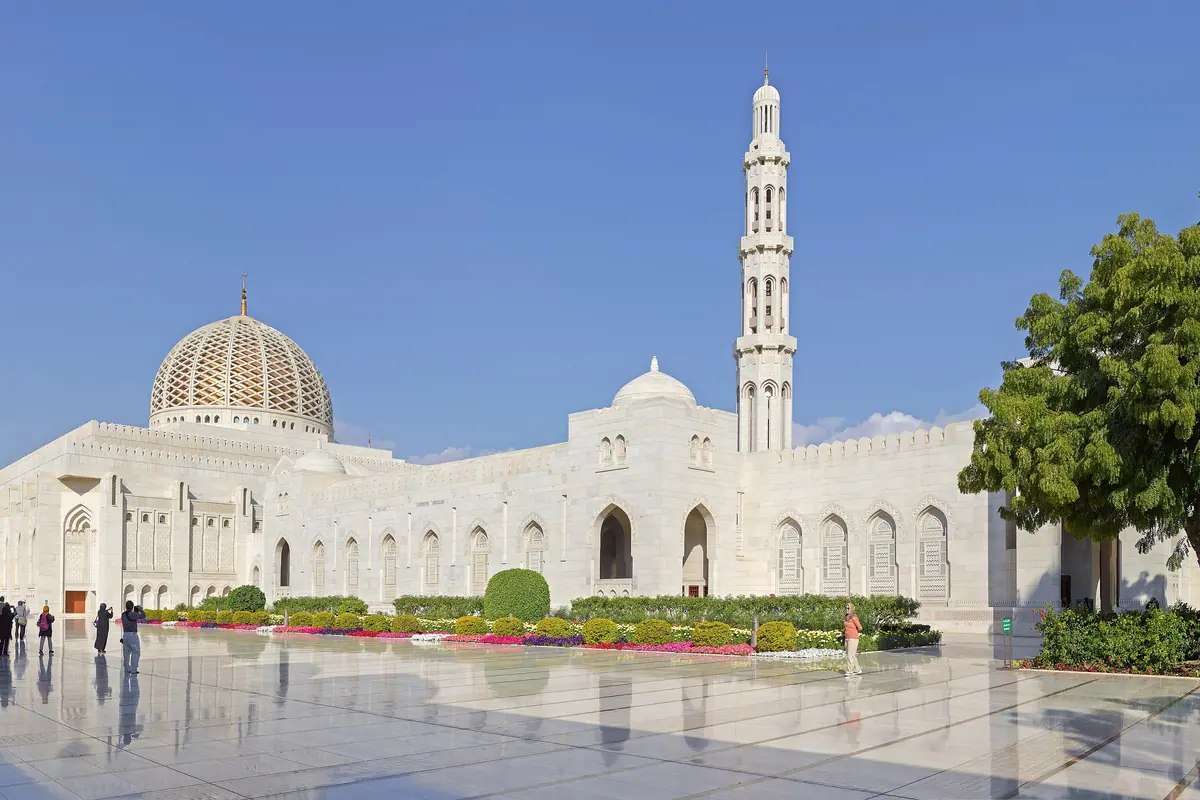
Most journeys begin in Muscat, and the capital sets the tone beautifully. The Sultan Qaboos Grand Mosque is the essential first stop — an immense complex of Indian sandstone, cool marble and a chandelier-lit prayer hall whose carpet is a work of art in itself. Non-Muslim visitors are welcomed in the mornings on most days except Fridays, when the halls fill with worshippers; dress modestly, and women should bring a scarf for their hair. From there, the Royal Opera House Muscat offers a striking modern counterpoint, with guided tours on non-performance days.
East along the corniche, old Muscat reveals the postcard view of Al Alam Palace framed by the twin Portuguese-era forts of Jalali and Mirani, both perched on rocky outcrops above the harbour. The National Museum nearby gives context to Oman's maritime and frankincense-trading past. Then head west to Mutrah Souq, where alleys smell of frankincense, sandalwood and dried lime, and shopkeepers pour tiny cups of cardamom coffee while you browse silver khanjar daggers and hand-woven shawls.
Give Muscat a full day, ideally two. Mornings are for the mosque and museums, late afternoon for the corniche and the fish market, and evening for the souq, which stirs to life after dusk. A taxi or a rented car makes the spread-out districts manageable, and the seafood along the Mutrah waterfront is a worthy end to the day.
Fort Country: Nizwa, Bahla and Jabreen Castle
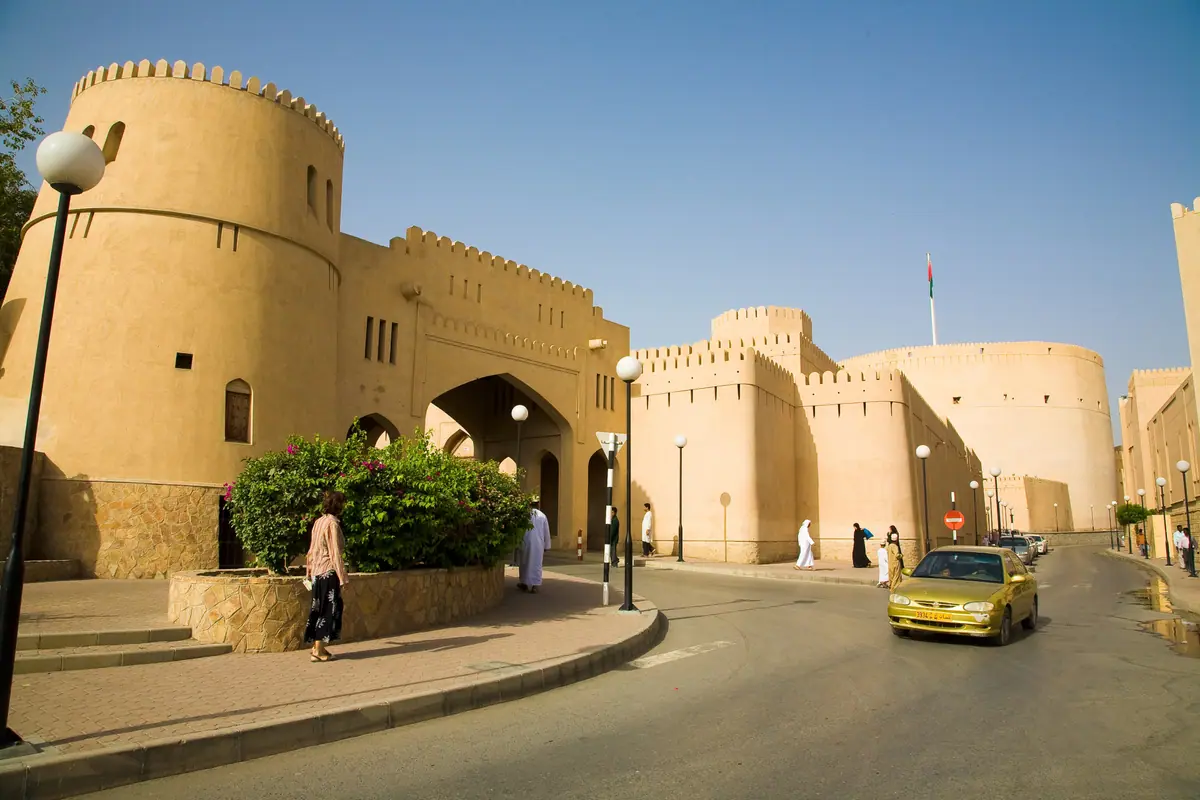
An hour and a half inland from Muscat, Nizwa is the gateway to Oman's interior and its most rewarding fort town. The great circular tower of Nizwa Fort rises above the palm oasis, and climbing to the battlements rewards you with a panorama of date plantations, the blue-domed mosque and the jagged Hajar Mountains beyond. Beneath it, Nizwa Souq is at its best on Friday mornings, when farmers and traders gather in the shadow of the fort to sell goats, cattle and produce — loud, colourful and utterly authentic. The same souq is excellent for Omani silver and halwa, the sticky saffron-and-rose dessert.
Nearby, Bahla Fort is a UNESCO-listed mud-brick giant, its walls and towers rising from the plain with an almost geological presence, while the smaller Jabreen Castle impresses with painted ceilings, carved wooden balconies and the quiet elegance of a 17th-century scholar's home. Between them sits Al Hoota Cave, a show cave with an underground lake, reached by a small train from the visitor centre.
Base yourself in Nizwa for two nights to do this region justice. The heat is fierce from May to September, so plan fort visits for early morning and save the afternoons for a shaded walk through Birkat Al Mouz, where an ancient falaj irrigation channel still threads water through the banana and date terraces — a living piece of Omani engineering recognised as a World Heritage tradition.
The Grand Canyon of Oman: Jebel Shams and Jebel Akhdar
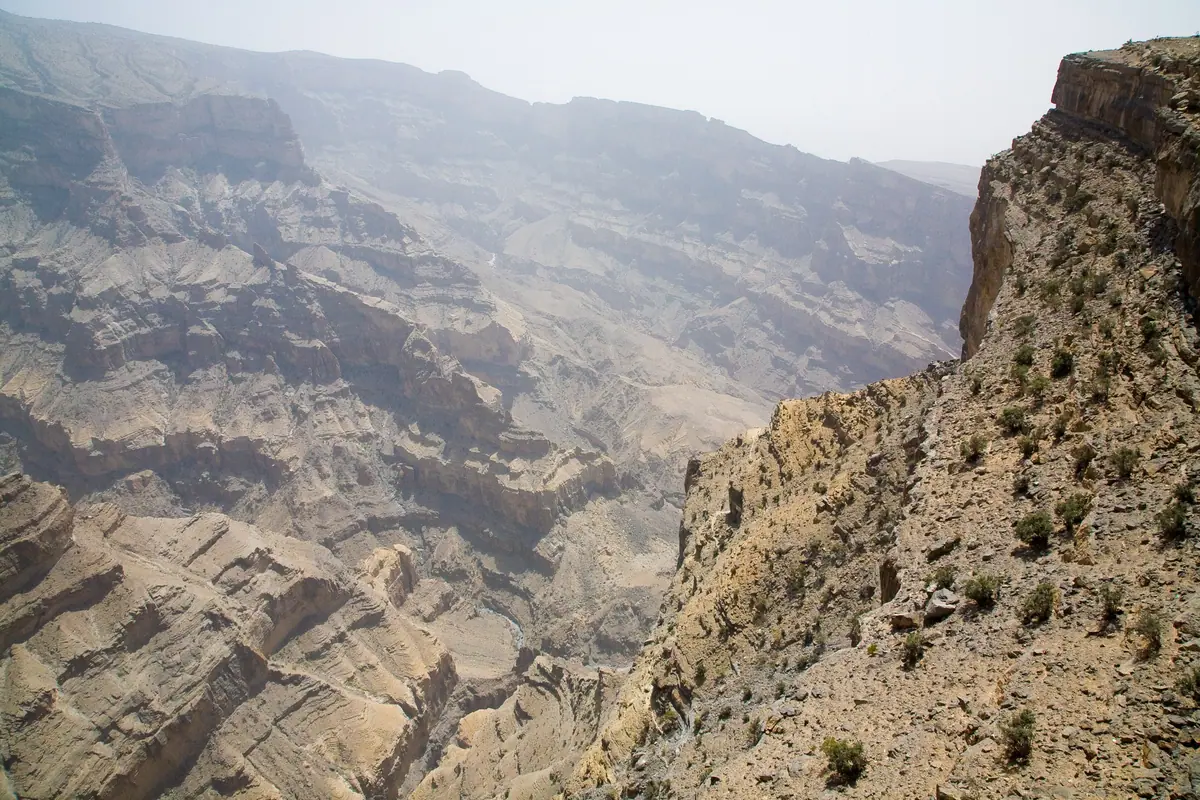
Oman's highest mountain, Jebel Shams, drops away on its northern side into Wadi Ghul — a vast, silent chasm nicknamed the Grand Canyon of Oman. The viewpoint near the village of Al Khitaym sits at the edge of the abyss, and the Balcony Walk, a gentle but exposed trail cut into the cliff face, leads to abandoned stone villages and falaj channels clinging to the rock. Sunset here, when the canyon walls turn copper and violet, is one of the country's defining experiences. Nights are cold at altitude, so pack a fleece even in winter.
To the east, Jebel Akhdar — the Green Mountain — is a high plateau of terraced orchards, rose gardens and pomegranate trees. In April the damask roses bloom and villages such as Al Ayn distil them into rosewater. The winding road up is paved but steep, and access has traditionally been restricted to four-wheel-drive vehicles beyond the checkpoint. The pretty village of Misfat Al Abriyeen, further south, offers a gentler version of the same scene: an oasis of mud-brick houses stacked above lush terraces, with falaj streams running through the lanes.
Below the mountains, the wadis deliver the swimming that makes Omani summers bearable. Wadi Shab, near the coastal town of Tiwi, involves a walk, a boat hop and a swim to reach a hidden cave with an emerald pool inside. The nearby Bimmah Sinkhole is a collapsed limestone crater filled with impossibly clear water. Always check the forecast, never enter a wadi when rain is possible upstream, and go with a local guide for anything involving scrambling.
Wahiba Sands, Turtle Beaches and the Dhow Yards of Sur
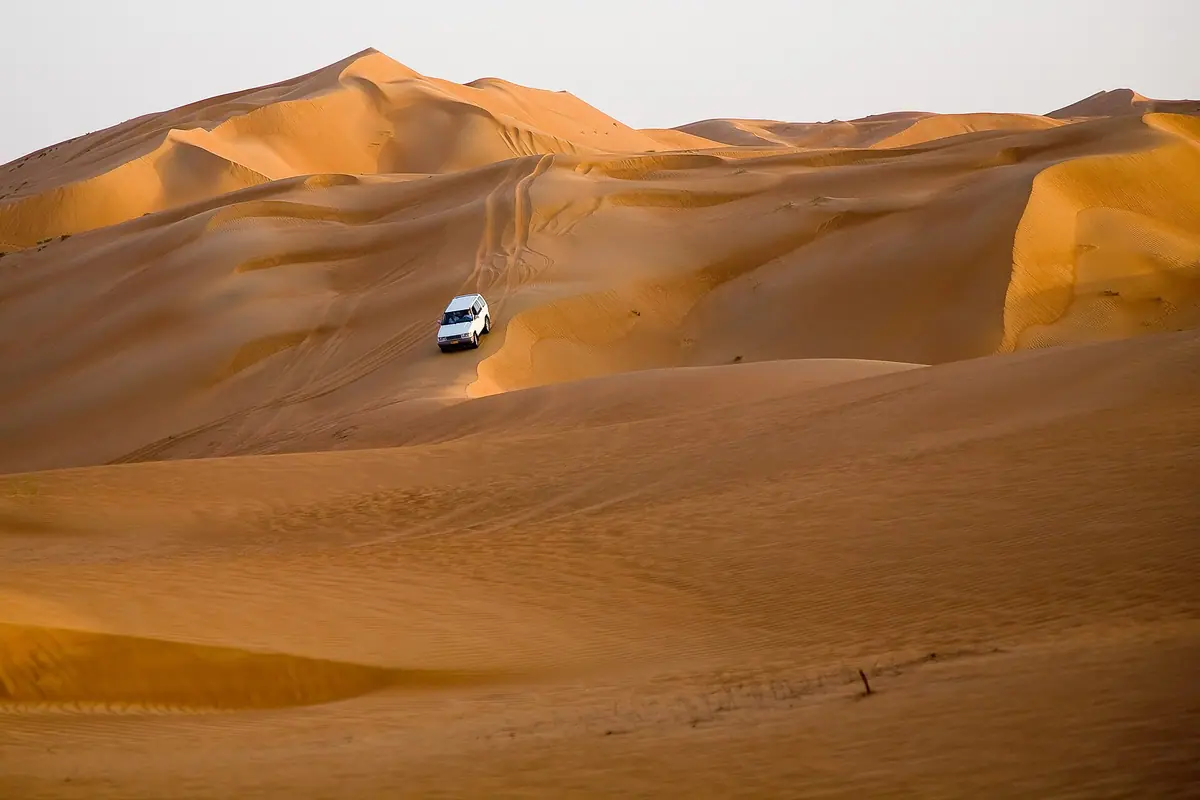
South-east of the mountains, the Sharqiya Sands — better known as Wahiba Sands — roll in amber dunes for around 150 kilometres. Desert camps range from simple Bedouin-style tents to comfortable en-suite lodges, and the classic experience is an evening dune drive up to a ridge to watch the sun sink, followed by dinner under a sky thick with stars. Mornings are for camel rides, sandboarding or simply walking the dunes while the sand is cool. The Bedouin families who live out here are famously hospitable, and a stop for coffee and dates is part of the ritual.
From the desert's eastern edge, the road runs down to the coast and the turtle beaches around Ras al Jinz, one of the most important green turtle nesting sites in the Indian Ocean. Guided night walks are tightly controlled to protect the animals, and seeing a female haul herself up the sand to lay eggs is unforgettable; nesting continues year-round with peaks in the warmer months. Neighbouring Sur was once a great dhow-building town, and its yards still echo with the hammering of wooden hulls — a living maritime tradition rather than a museum piece.
Allow two or three days for this loop from Muscat. The drive is long but straightforward in a normal car as far as the desert's edge; from there, a four-wheel drive or a camp transfer is needed for the dunes. Bring cash, since remote stops rarely take cards, and carry more water than you think you need.
Musandam and the Islands: Oman by Sea
Cut off from the rest of the country by the United Arab Emirates, the Musandam peninsula is Oman's best-kept secret: a maze of fjord-like inlets where bare mountains plunge straight into glassy water. From the town of Khasab, traditional wooden dhow cruises thread through the khors, stopping for snorkelling and dolphin-spotting — humpback and bottlenose dolphins frequently escort the boats. Telegraph Island, a rocky outcrop with a ruined British-era station, makes a memorable swim stop.
For divers, the Daymaniyat Islands nature reserve off the Batinah coast is the country's premier underwater destination, with coral gardens, turtles, reef sharks and, in the cooler months, whale sharks passing through. Closer to Muscat, Bandar Khayran's sheltered coves are ideal for a half-day kayak or a gentle snorkel, and local operators run dolphin-watching trips from the capital's marinas.
Sea temperatures are pleasant from October to May, and visibility is best in the cooler months. The Musandam is reached via a long drive through the UAE or a short flight to Khasab, so factor in border formalities. Book dhow trips a day or two ahead in peak winter season, when European visitors arrive in force.
Salalah and Dhofar: Monsoon, Frankincense and the Empty Quarter
The southern region of Dhofar feels like a different country. Between June and September, the khareef monsoon wraps Salalah and the surrounding hills in mist and turns them startlingly green, with waterfalls cascading down the escarpment at Wadi Darbat and clouds rolling over the cliffs at Al Mughsail, where blowholes fire seawater high into the air. This is peak season for Gulf visitors escaping the summer heat, and the roadside stalls selling coconut and sugarcane juice are part of the fun.
Dhofar is also the heartland of frankincense, the resin that once made this coast one of the wealthiest places on earth. The archaeological sites of Khor Rori, with its ancient port of Sumhuram, and Al Baleed near Salalah tell that story, as do the groves of gnarled boswellia trees around Wadi Dawkah. Inland, the road climbs towards the Empty Quarter, the vast sand sea of Rub' al Khali, where a night at a desert camp delivers a silence you can almost touch.
Outside the monsoon, Salalah is quiet and the coast is lovely, with long empty beaches and the laid-back island of Masirah reachable by ferry for kitesurfing and turtle watching. Fly in rather than drive — the journey from Muscat takes around ten hours. A week is ideal: three or four days around Salalah and the wadis, then time in the desert or on Masirah.
Frequently asked questions
What is the best time of year to visit Oman?
October to March is ideal across most of the country, with warm days and cool evenings perfect for forts, wadis, mountains and desert camps. April and September are shoulder months — hot inland but manageable. Avoid June to August in Muscat and the interior, when temperatures climb past 40°C, though that is exactly when the Dhofar region around Salalah enjoys its green monsoon season.
How many days do you need in Oman?
Seven to ten days is the sweet spot. A classic loop covers Muscat, Nizwa and the forts, Jebel Shams or Jebel Akhdar, a night in Wahiba Sands and the turtle beaches near Ras al Jinz. Add three or four more days if you want Musandam in the north or a separate trip south to Salalah and Dhofar.
Do you need a four-wheel-drive vehicle in Oman?
For main roads and cities, an ordinary car is fine. You will want a 4WD for the upper reaches of Jebel Akhdar, the rougher tracks around Jebel Shams, driving into the dunes at Wahiba Sands and reaching remote wadi trailheads. Fuel stations are plentiful on highways but sparse in the mountains, so fill up before heading up.
Is Oman suitable for first-time visitors to the Middle East?
Very much so. It is calm, welcoming and easy to navigate, with good roads and a relaxed pace. English is widely understood, and the dress code is modest but unfussy — cover shoulders and knees, and women should carry a scarf for mosque visits. Alcohol is available in hotels and licensed restaurants, and the food scene ranges from cheap shawarma stands to excellent seafood.
What should you pack for an Oman trip?
Light, breathable clothing for the coast and desert, plus a warm layer for mountain nights, which get genuinely cold in winter. Bring swimwear for the wadis and sinkholes, sturdy shoes for canyon walks, reef-safe sunscreen, a hat, sunglasses and a refillable water bottle. Modest attire is appreciated everywhere, and a scarf is essential for mosque visits.
Sort the rest of your trip
Everything for Oman, in one place

More guides in Oman

Best Things to Do in Oman: Forts, Wadis, Deserts and Landmarks Worth the Journey

One Week in Oman: A Flight-Friendly Itinerary from Muscat to the Desert
Hotels in Oman: Where to Stay for Muscat, Fort Country, the Mountains and the Desert