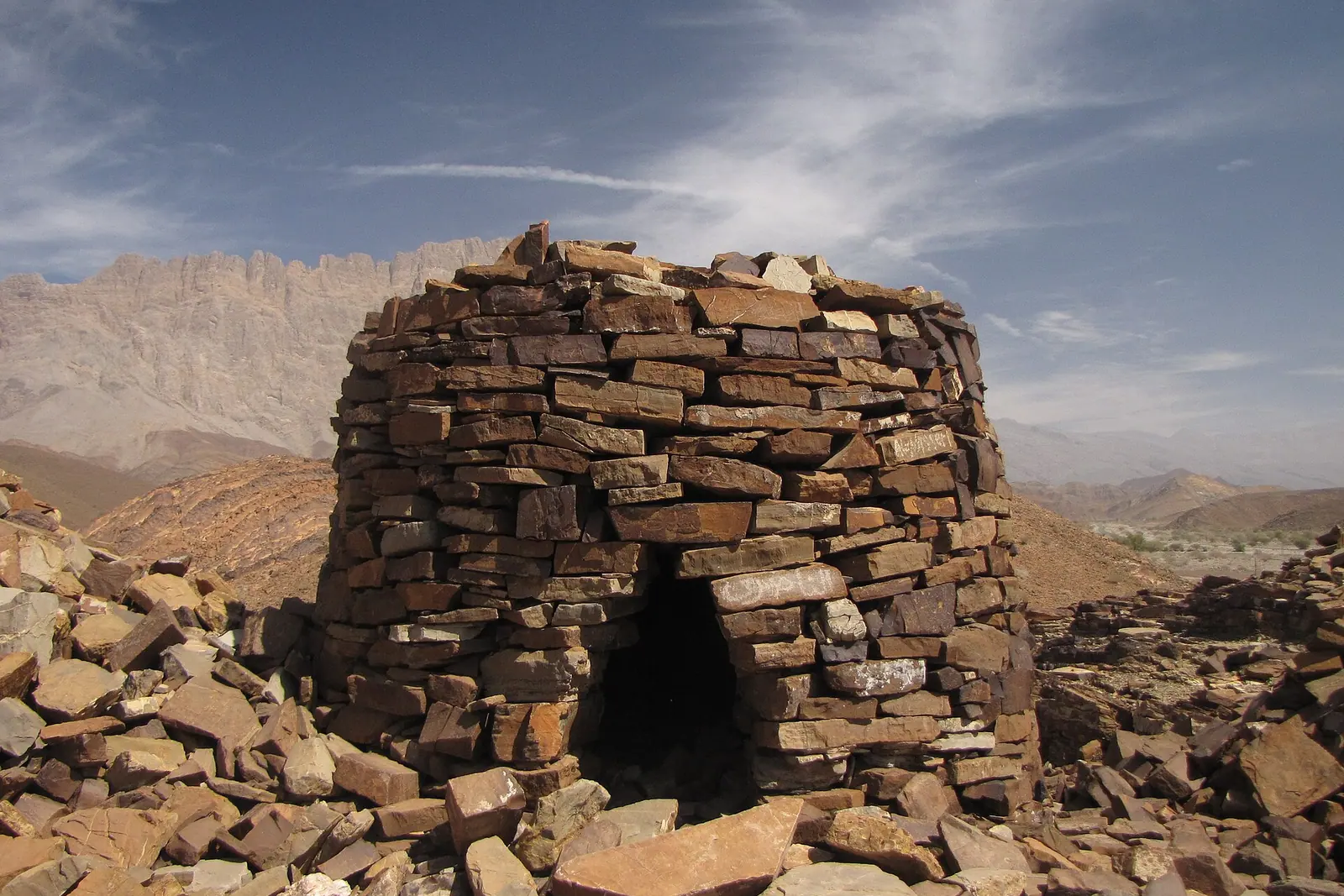
Oman is the Arabian Peninsula with its foot off the accelerator: incense smoke curling through a covered souq, coffee poured from a height into a tiny cup, a fort wall glowing at dusk above a palm oasis. A good tour here is less about ticking off sights than learning the rhythms behind them — the seasons, the sharing and the long, slow cooking.
Why Oman Rewards the Slow Traveller
Oman covers more ground than it lets on. Roughly three thousand kilometres of coastline run from the Strait of Hormuz down to the Yemeni border, backed by the jagged Hajar Mountains, gravel plains and the dune sea on the edge of the Rub' al Khali. Dhofar in the far south feels like a separate country — monsoon-fed, green for part of the year, and the historic heart of the frankincense trade that made this coast rich long before oil did.
Timing shapes everything. October to March is the sweet spot: Muscat sits near 25°C, Jebel Shams turns cold enough at night for a fleece, and desert evenings are genuinely pleasant. April and May get hot, and June to August is punishing inland, with temperatures pushing past 40°C. The exception is Salalah, where the khareef — the southwest monsoon — arrives from late June to early September and paints the hills green while the rest of Arabia bakes. Seven to ten days is enough for a first visit covering Muscat, the interior forts, a desert night and one wadi without rushing.
Omani cooking is gentler than the region's reputation suggests. It leans on cardamom, saffron, rose water, dried lime and slow braising rather than chilli heat. Kahwa, cardamom-spiced coffee, is the social currency, poured with the left hand holding the pot while the right offers dates. Ask for halwa — the dense, rose-and-saffron sweet sold in slabs — and you will understand why Omanis give it as a gift.
Muscat: Cafés, Incense and the Grand Mosque
Start at the Sultan Qaboos Grand Mosque in Bausher, the country's defining piece of modern architecture and one of the few major mosques in the region open to non-Muslim visitors. The chandelier and the single-piece hand-knotted carpet in the main prayer hall are the usual talking points, but the quieter pleasure is the garden courtyard, where the scale finally settles in. Visiting hours are generally mornings, Saturday to Thursday; women cover their hair and everyone covers shoulders and knees.
Head along the corniche to Mutrah Souq, a warren of covered alleys where frankincense, myrrh, silver khanjars and woven cloth compete for space. Go early and cross the road to the harbour fish market, where the catch lands at dawn and nothing is polished for tourists. Nearby stand the low blue-and-gold gates of Al Alam Palace, the Portuguese-built forts of Jalali and Mirani on the headlands, and the Royal Opera House Muscat, worth a look even without a ticket.
For food, follow local families rather than hotel lobbies. Qurum and Al Khuwair have plain seafood grills where the day's catch is sold by weight and served with rice; mashuai, a whole grilled kingfish, is a Sur speciality that appears here too. Bait Al Zubair, a small museum in Old Muscat, explains Omani dress, jewellery and household objects before you meet them in the souq.

Nizwa, Bahla and the Forts of the Interior
The drive from Muscat to Nizwa takes about ninety minutes and crosses the Hajar range through a dramatic pass. Nizwa Fort is the anchor: a 17th-century round tower full of trapdoors and murder holes, with views over the palm oasis and the dome of the adjoining mosque. Below it, Nizwa Souq sells silver, antiques and halwa, and on Friday mornings the livestock market behind it fills with goats, cattle and brisk bargaining from around 7am. Arrive by 7.30 for the auction at full volume; by 9 it is largely finished.
Within half an hour are two more essential stops. Bahla Fort, a vast mud-brick site at the edge of a date-palm oasis, is at its best in golden-hour light. Jabreen Castle, built as a scholar's residence rather than a fortress, has painted ceilings and carved plaster that make it the loveliest interior of any Omani fort. Between them, Birkat Al Mouz and the hillside village of Misfat Al Abriyyin show the falaj system — gravity-fed irrigation channels that made oasis life possible and are still in daily use.
Eat shuwa if you can time it: spiced lamb or goat wrapped in banana leaves and buried in a sand oven for up to two days, traditionally made for Eid, occasionally available by arrangement. Easier to find are majboos — spiced rice with chicken or fish — and thin Omani bread baked on a curved griddle. On the coastal road home, Barka is the place to buy halwa straight from the workshops.
A Night in the Wahiba Sands
The Sharqiya Sands, usually called the Wahiba Sands, lie about three hours from Muscat and two from Nizwa — a band of orange dunes running some 200 kilometres inland and rising to around 100 metres. Most tours arrive late afternoon for dune driving in a 4WD, then settle into a desert camp for sunset, dinner and a sky that makes the Milky Way obvious. Camel treks at dawn are slower and better; sandboarding is for the energetic.
The hospitality is the point. Evening in a Bedouin majlis means low cushions, a host pouring kahwa from a tall brass dallah into small handleless cups, dates passed around and a burner of frankincense doing quiet work in the corner. Conversation drifts between family, camels and weather. Learn two words — shukran for thanks, zain for good — and you will get a long way. Note that the desert is genuinely cold after dark from December to February; pack a layer.
If your dates overlap racing season, the Al Bashayer camel track near Adam hosts some of the biggest meetings, generally in the cooler months; races are short, chaotic and worth rearranging a day for. Otherwise pair the dunes with Wadi Bani Khalid, whose turquoise pools and palm-lined gorge are a 45-minute drive and a welcome swim the morning after a night in the sand.

Wadis, Turtles and Dhofar's Green Season
Wadi Shab, off the coast road between Muscat and Sur, is the classic Omani wadi day out: a short boat ride across a river mouth, then a 40-minute walk between cliffs to a chain of pools, ending with a swim into a cave where water drops through a slot in the roof. Allow three to four hours, wear shoes you can get wet, and start early — by midday in winter the narrow sections fill up fast.
Continue to Sur, where dhow yards still build wooden boats by hand, then on to Ras Al Jinz on the eastern tip, where green turtles come ashore to nest year-round, peaking roughly between July and October. Night tours run in small groups with strict rules on light and noise, so book ahead in peak season.
Inland from Salalah, the story changes entirely. The khareef turns the Dhofar hills green, fills Wadi Darbat and draws Gulf families for the summer. The Land of Frankincense sites — Al Baleed, Khor Rori (Sumhuram) and the frankincense trees at Wadi Dawkah — are the region's cultural anchors, while the old ports of Taqah and Mirbat add a faded, quiet coastal mood.
Choosing the Right Oman Tour for You
Oman is easy to self-drive — good roads, bilingual signage, cheap fuel — but a guide earns the fee in the interior, at the turtle reserve and anywhere you want to eat with families rather than at them. Small-group tours of eight to twelve people balance cost and access; private tours cost more but let you bend timings around the Friday goat market or a mosque's visiting hours.
Book December to February and the khareef months early, when Muscat and Salalah beds tighten up. Check what is actually included: desert camp meals, 4WD, entrance fees and whether the vehicle is licensed for dune driving are the usual gaps. A seven-to-ten-day loop of Muscat, Nizwa, the Wahiba Sands, Sur and Ras Al Jinz is the classic first itinerary; add three or four days for Dhofar, or one for Jebel Shams, the country's highest peak and its so-called Grand Canyon.
Practicalities matter. Dress modestly — shoulders and knees covered, a scarf for women at mosques — and carry some cash for souq stalls, though cards work in malls and hotels. Alcohol is essentially limited to licensed hotels and restaurants. During Ramadan, avoid eating and drinking in public by day, and note that Fridays mean quiet shops but busy markets, which is exactly when you want to be out.
Frequently asked questions
What is the best time of year for an Oman tour?
October to March suits most of the country, with mild days in Muscat and cold nights in the mountains and desert. If Dhofar and Salalah are on your list, aim for late June to early September, when the khareef monsoon turns the hills green. Avoid the interior from June to August, when daytime heat is extreme.
What food should I try in Oman?
Look for shuwa (slow-baked spiced lamb or goat, usually made for Eid), majboos (spiced rice with chicken or fish), mashuai (grilled kingfish, a Sur speciality) and thin griddle-baked Omani bread. Kahwa with dates is the everyday welcome, and halwa — especially from Barka — is the sweet to take home. Eat with your right hand when sharing from a communal plate.
How many days do I need in Oman?
Seven to ten days covers the classic loop: Muscat, Nizwa and the interior forts, a night in the Wahiba Sands, Sur and the Ras Al Jinz turtle reserve. Add three or four days for Dhofar in the south, or a day for Jebel Shams if you want mountain views and a short hike.
Is Oman easy for first-time visitors to the Middle East?
Yes. Roads are well maintained, English is widely spoken, and independent travel is straightforward. The main adjustments are modest dress, the Friday rhythm of shops and markets, and the fact that alcohol is limited to licensed hotels and restaurants.
Do I need a guide, or can I self-drive?
Self-driving works well for Muscat, Nizwa and the coastal wadis. A guide adds real value in the desert, where dune driving needs experience and licensed vehicles, at the turtle reserve, and in Dhofar for the frankincense sites and food access. Small-group tours of eight to twelve people are usually the best compromise.
Sort the rest of your trip
Everything for Oman, in one place

More guides in Oman

Best Things to Do in Oman: Forts, Wadis, Deserts and Landmarks Worth the Journey

Best Places to Visit in Oman: Sights, Deserts and Wadis Worth the Journey

One Week in Oman: A Flight-Friendly Itinerary from Muscat to the Desert