
Oman rewards a single week more generously than almost anywhere in the Gulf: within a few hours of landing you can be standing under the marble domes of a grand mosque, and by the next afternoon you're sipping coffee at the rim of a canyon. This is a flight-in, fly-out loop that uses Muscat International Airport as its anchor and threads forts, falaj oases, dunes and turtle beaches into seven unhurried days.
Landing in Muscat: Flights, Transfers and the First Evening
Most trips begin at Muscat International Airport, a calm, well-organised arrival point about 30 minutes from Muttrah and the old harbour and roughly 20 minutes from the hotel strip at Qurum and Al Khuwair. Direct flights reach Muscat overnight from several European cities in around seven hours, in three to four hours from the Indian subcontinent, and in barely an hour from neighbouring Gulf hubs, which makes a week here genuinely practical rather than a transit compromise. Many nationalities can enter visa-free for two weeks or apply for an electronic visa in advance — check your own status and keep the confirmation printed, as airport Wi-Fi can be patchy at peak arrival hours.
The best window for this itinerary runs from October through March, when daytime temperatures sit in the mid-twenties to low thirties Celsius and the interior is comfortable for hiking. April and September are shoulder months with hotter middays; May to August is punishing inland, though it is also the season when the southern coast around Salalah turns green under the monsoon drizzle known as the khareef. Whatever the month, plan your first evening gently: collect a rental car at the airport (driving is on the right, roads are excellent and fuel is inexpensive), check in, then head to the Mutrah Corniche at dusk.
Watching the lights come on over the harbour, with the floodlit Portuguese-built Al Jalali and Al Mirani forts framing the bay and the minarets of Old Muscat glowing behind, is the perfect introduction to a country that wears its history lightly. Eat an early dinner of grilled hammour or slow-cooked shuwa near the corniche, then sleep — you will want an early start tomorrow.
Days 1–2: Muscat's Grand Mosque, Souq and Royal Opera House
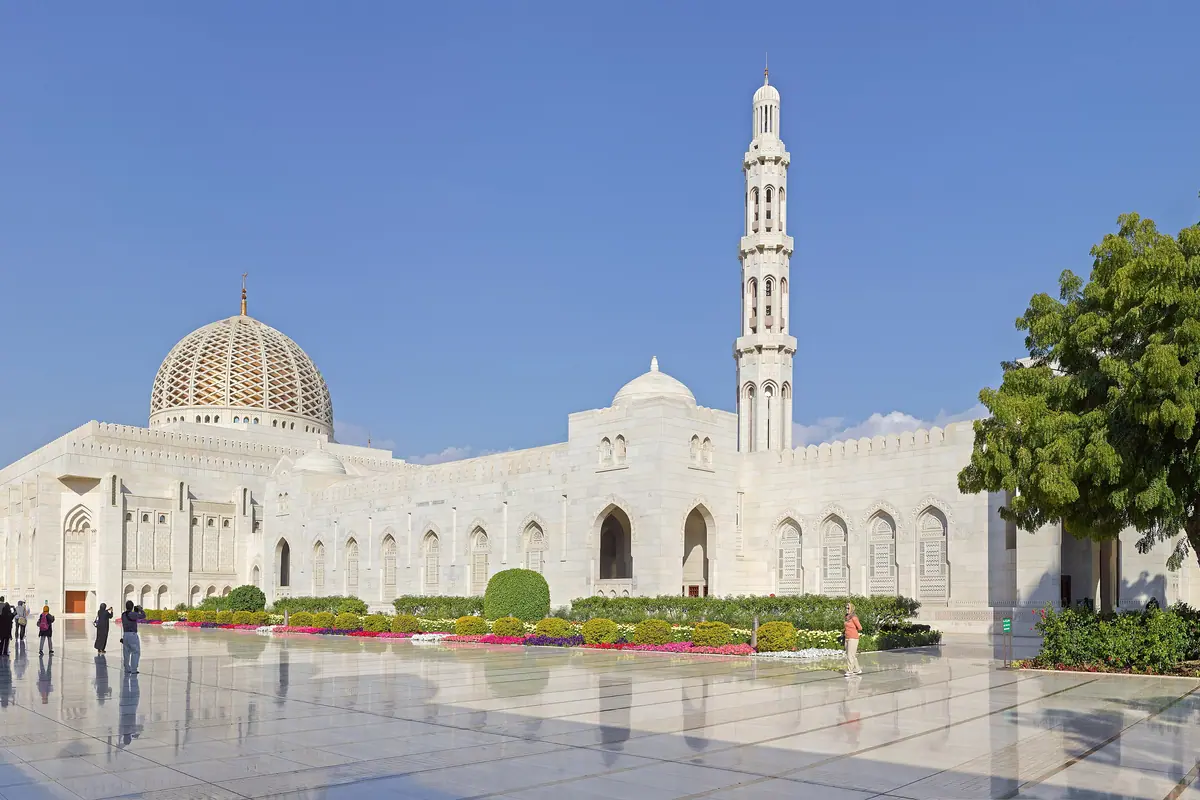
Give Muscat two full days and it stops feeling like a mere gateway. Start at the Sultan Qaboos Grand Mosque in Bausher, an enormous, serene complex whose prayer hall holds one of the world's largest single-piece hand-knotted carpets and a crystal chandelier of astonishing scale. It opens to non-Muslim visitors in the mornings, Saturday to Thursday, and asks for modest dress — long sleeves and trousers or a skirt, with a headscarf for women. Arrive when the doors open for cooler air and quieter photographs.
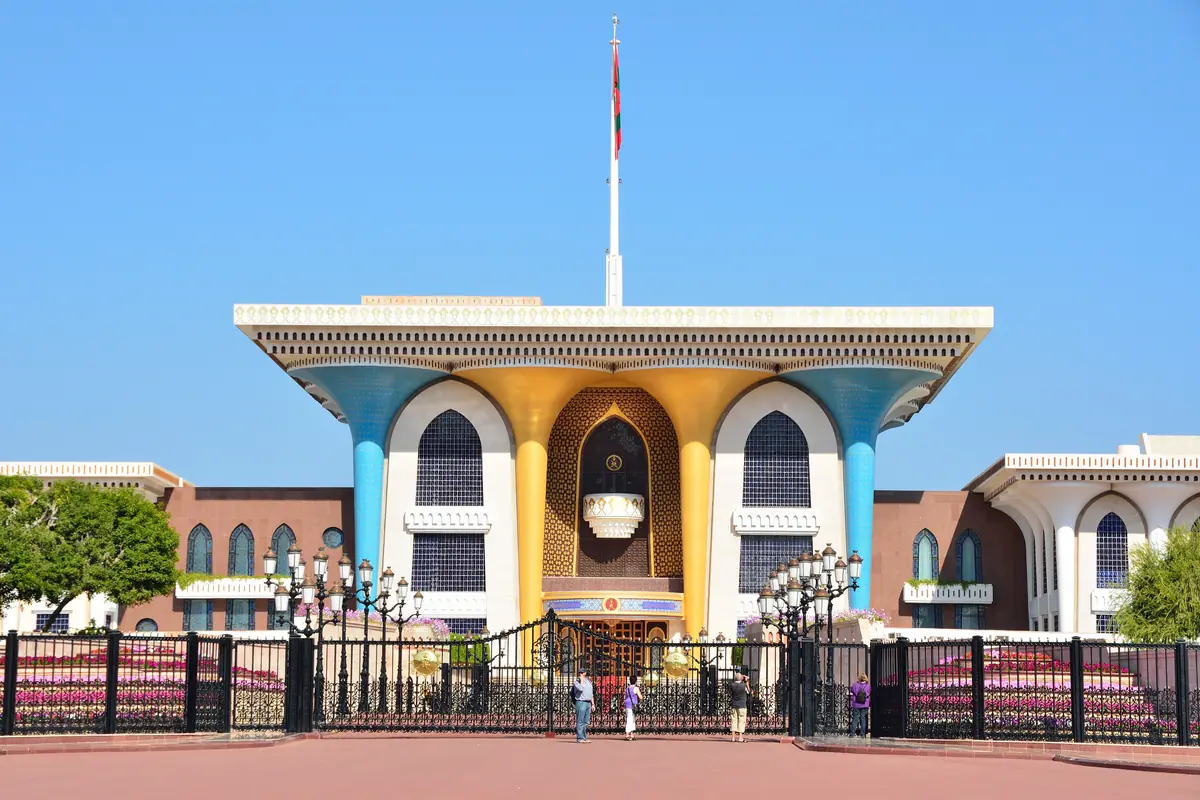
Next, drive the corniche to Old Muscat for Al Alam Palace, the ceremonial residence flanked by its two clifftop forts, then spend an hour or two in the National Museum of Oman and the Bait Al Zubair collection, which together explain the country's maritime, frankincense and tribal histories better than any guidebook. The afternoon belongs to Mutrah Souq, a maze of alleys scented with frankincense, sandalwood and cardamom where you can buy silver khanjar daggers, handwoven cloth and Omani honey; haggle politely and expect to be offered karak tea.
Book an evening at the Royal Opera House Muscat if a performance falls during your stay — the inlaid woodwork and marble interior is worth seeing even for a short recital. Otherwise, catch sunset at Qurum Beach, walk the palm-lined paths of Qurum Natural Park, and eat at a beachside restaurant. Keep the pace slow: the interior days ahead involve long drives.
Day 3: Nizwa Fort, Bahla and Jabrin Castle
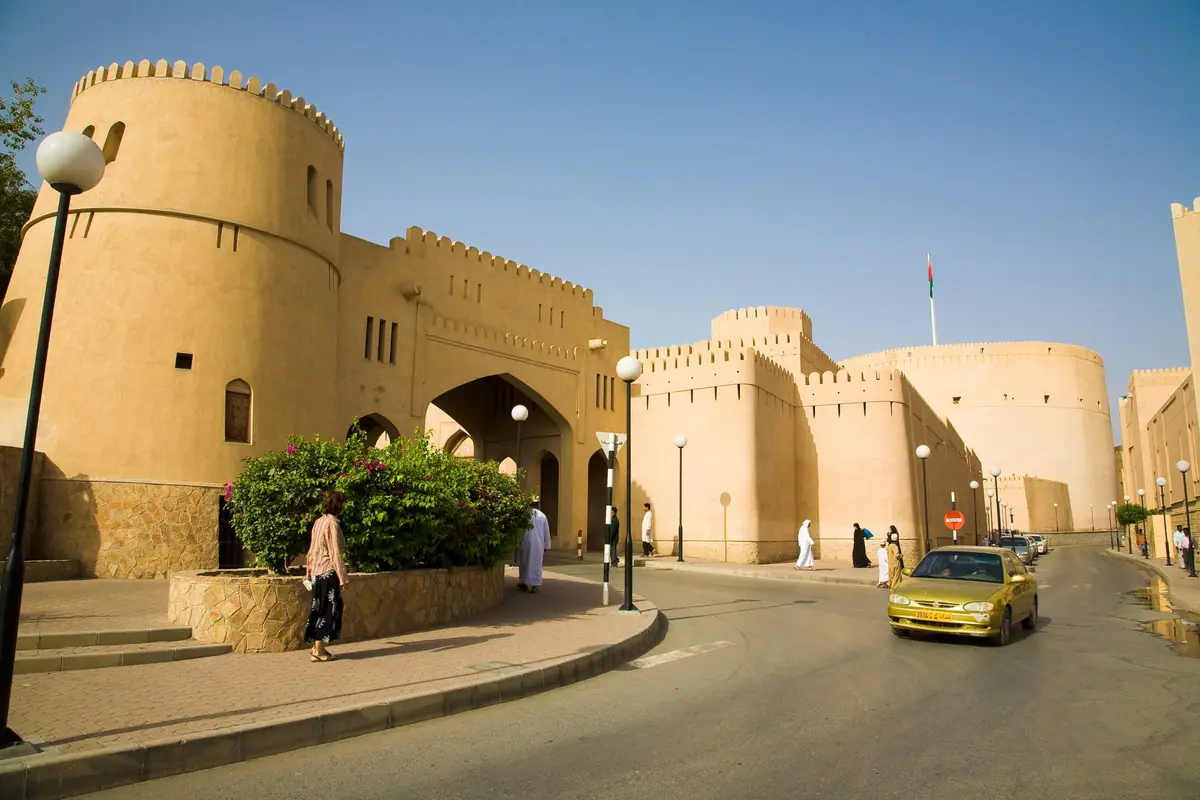
Head inland early, leaving Muscat before the commuter traffic builds; the drive to Nizwa takes about an hour and a half on a fast dual carriageway that climbs through gravel plains and past the layered ridges of the Hajar Mountains. Nizwa itself was once the intellectual and religious capital of Oman, and its centrepiece is Nizwa Fort, a massive drum tower built over a subterranean labyrinth of shafts and trapdoors. Climb to the roof for a view over the date palms and the blue-domed mosque, then descend into the adjoining souq, where potters, silversmiths and spice sellers work in the same lanes their ancestors did. If your visit falls on a Friday morning, the livestock market beside the fort is a loud, dusty, unforgettable spectacle.
Spend the afternoon in the string of oasis towns just west. Bahla Fort, a vast UNESCO-listed mud-brick citadel, has been carefully restored and gives a real sense of medieval Omani defences; nearby Jabrin Castle is smaller but more beautiful, with painted ceilings, carved wooden doors and hidden staircases that children adore. Between them, the village of Birkat Al Mouz sits beneath a cliff with an ancient falaj irrigation channel still channelling water through the palm gardens — a UNESCO site in its own right and a lovely place for a late-afternoon walk.
Sleep in Nizwa or in the quieter village of Al Hamra, where a handful of restored mud-brick guesthouses offer courtyard rooms and home-cooked Omani food. Ask for shuwa — spiced lamb wrapped in banana leaves and baked in an underground oven — if it is on the menu; it is usually only prepared for celebrations, and hosts enjoy sharing it.
Day 4: Jebel Shams and the Grand Canyon of Oman
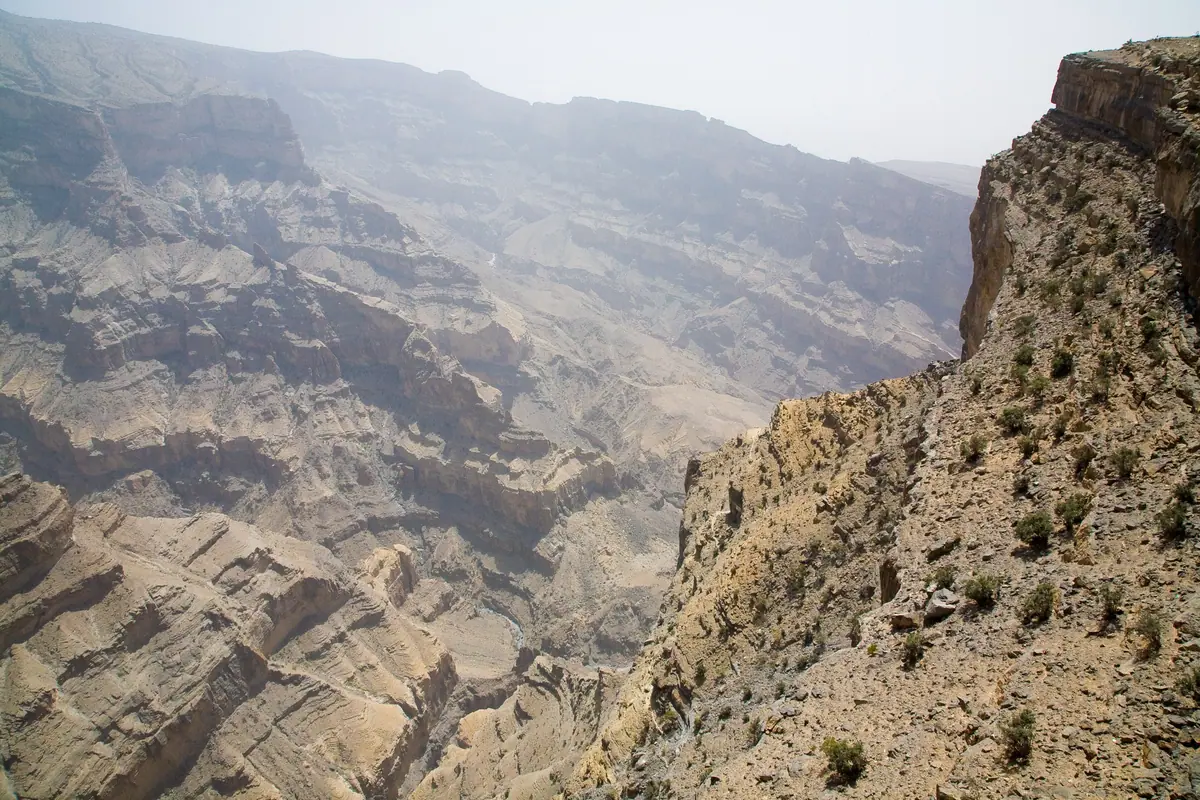
From Al Hamra, a winding road climbs to Jebel Shams, the highest point in the country and the rim of Wadi Ghul, widely nicknamed the Grand Canyon of Oman. The scale is genuinely startling: a sheer drop of close to a kilometre to the wadi floor, with abandoned villages clinging to the far wall. The classic Balcony Walk trail follows an old donkey path along the rim for roughly two hours each way, passing ruins and a hidden spring before reaching an abandoned settlement above the gorge. Start by mid-morning, carry more water than you think you need, and wear shoes with grip — the mule path is wide but unfenced.
Stay overnight on the mountain if you can. Nights at 2,000 metres are dramatically cooler than the coast, and the sky, unpolluted and utterly dark, is superb for stargazing. Sunrise over the canyon — when the sun hits the terraced fields of the opposite wall — is the single best photograph most visitors take home.
If you have energy for one more detour, the Saiq Plateau on Jebel Akhdar, the Green Mountain, is an hour or so away by a 4WD-only road. Its terraces grow pomegranates, walnuts and the Damask roses harvested each March and April for rosewater. Diana's Point, a viewing platform over the terraces, is a fine spot for a picnic before you descend for dinner.
Day 5: Wadi Bani Khalid and the Wahiba Sands
Drive east from the mountains to Wadi Bani Khalid, the most accessible of Oman's great wadis: a palm-lined gorge with deep, clear pools that stay cool even in the heat of the day. Swimming is possible in the larger pools near the car park, while a short scramble upstream brings you to quieter water and, further on, to a cave. Go early — by midday in winter the main pool fills with day-trippers from Muscat, and by summer it is crowded before ten in the morning.
From the wadi, it is less than an hour to the Wahiba Sands, also called the Sharqiya Sands: a rolling sea of red-orange dunes stretching roughly 180 kilometres inland. Desert camps range from simple tents to luxurious air-conditioned suites with private bathrooms, and the standard evening programme includes dune bashing in a 4WD, a camel ride at sunset and a long dinner of grilled meats under the stars. The temperature swing is extreme — 35°C at four in the afternoon, genuinely cold by two in the morning — so pack a fleece alongside your sandals.
If you are travelling independently, deflate your tyres before entering soft sand, never drive alone, and consider hiring a local driver for the dune section; the tracks shift constantly and a stuck vehicle in the heat is no joke. Watching the sun sink behind a razor-sharp dune crest, with silence so complete you can hear your own heartbeat, tends to be the moment people fall properly in love with Oman.
Days 6–7: Sur, Ras Al Jinz Turtles and a Wadi Shab Return
Leave the dunes in the morning for the coastal town of Sur, once the centre of Oman's dhow-building trade. The shipyard on the lagoon still builds wooden boats by hand, and you can watch caulking and plank-fitting in progress if a hull is under construction. Sur's old quarter, with its merchant houses, wind towers and the restored Ras Al Hadd fort nearby, is worth a stroll before an early dinner.
The reason to overnight here is Ras Al Jinz, a protected turtle reserve on the easternmost tip of Arabia where green turtles come ashore to lay eggs almost every night of the year, with the strongest activity between July and October. Guided night walks run in small groups with red-light torches; you may see a female digging her nest, laying, or hatchlings scrambling for the sea at dawn. Book ahead in high season, obey the guides absolutely and keep your distance — this is one of the most important nesting beaches in the Indian Ocean.
On your final day, drive back towards Muscat along the coast, breaking the journey at the Bimmah Sinkhole, a collapsed limestone crater filled with turquoise water and a popular swimming spot, and at Wadi Shab, where a boatman ferries hikers across a pool before a 40-minute walk leads to a hidden cave with an emerald pool inside. Aim to be at the airport three hours before an evening departure. If you have an extra day or two, short flights link Muscat with Salalah in the south, where Wadi Darbat, the Al Mughsail blowholes and the frankincense ruins of Sumhuram make a lush, monsoon-soaked contrast between June and September.
Frequently asked questions
What is the best time of year for a one-week Oman itinerary?
October to March is ideal, with mild days on the coast and comfortable hiking in the Hajar Mountains. April and September are hot but manageable; May to August is best avoided inland, though it is the perfect window for the southern khareef season around Salalah.
Do I need to hire a car in Oman?
Yes for this loop. Distances are short by Gulf standards — Muscat to Nizwa is about 1.5 hours, Nizwa to Jebel Shams roughly 1.5 hours, and the wadis and desert are within two hours of each other — but public transport does not reach the mountain and desert viewpoints. A compact car suits the highways; a 4WD is required for Jebel Akhdar and advisable in soft sand.
How many days do I need in Muscat itself?
Two full days covers the essentials comfortably: the Sultan Qaboos Grand Mosque, Al Alam Palace and the Old Muscat museums, Mutrah Souq and the Corniche, plus an evening at the Royal Opera House or on Qurum Beach. One day is possible but rushed.
Is Oman suitable for solo and female travellers?
Oman is widely considered one of the safest countries in the region, with very low street crime and a conservative but welcoming culture. Women travelling alone generally report few problems; dressing modestly, covering shoulders and knees, and asking before photographing people are the main courtesies to observe.
Can I add Salalah or the Musandam Peninsula by flight?
Yes. Short domestic flights connect Muscat with Salalah in the far south, typically around 1.5 hours, and with Khasab in the Musandam Peninsula, where you can take a dhow cruise past the fjord-like khors and look for dolphins. Both work best as an extension of two to three nights rather than a day trip.
Sort the rest of your trip
Everything for Oman, in one place

More guides in Oman

Best Things to Do in Oman: Forts, Wadis, Deserts and Landmarks Worth the Journey

Best Places to Visit in Oman: Sights, Deserts and Wadis Worth the Journey
Hotels in Oman: Where to Stay for Muscat, Fort Country, the Mountains and the Desert