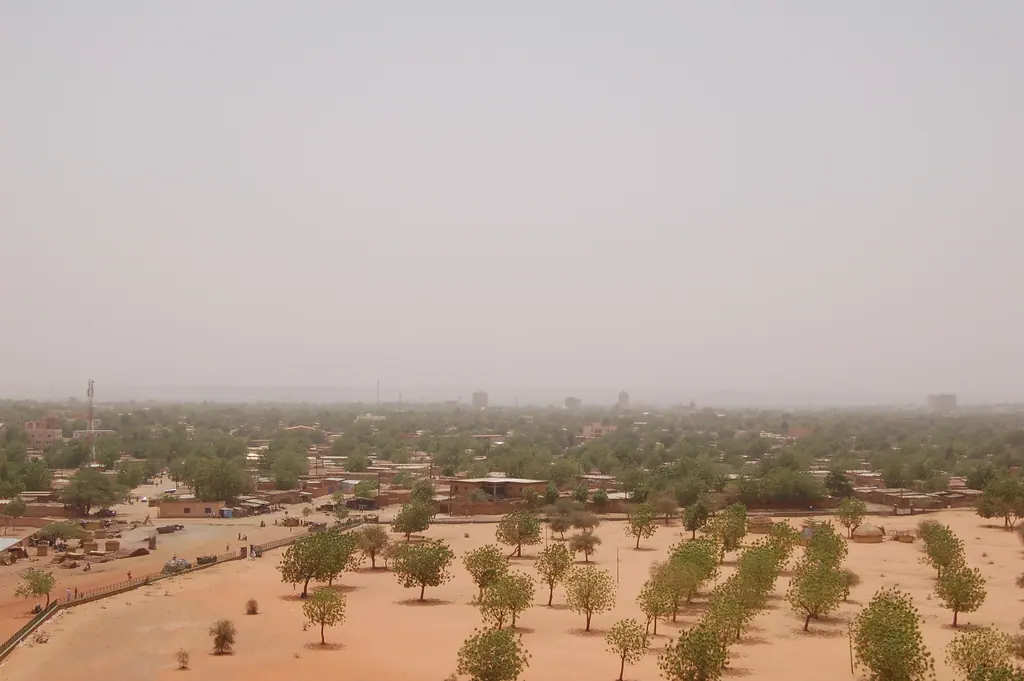
Niger is the Sahara at its most cinematic: mud-brick minarets rising above a caravan town, camel trains still hauling salt across a horizon that never quite ends, and the last wild giraffes of West Africa browsing acacia an hour from the capital. It rewards curiosity with landscapes and cultures you will not find anywhere else on the continent, as long as you plan carefully and travel with local expertise behind you.
Agadez: A Caravan City of Mud, Silver and Sand
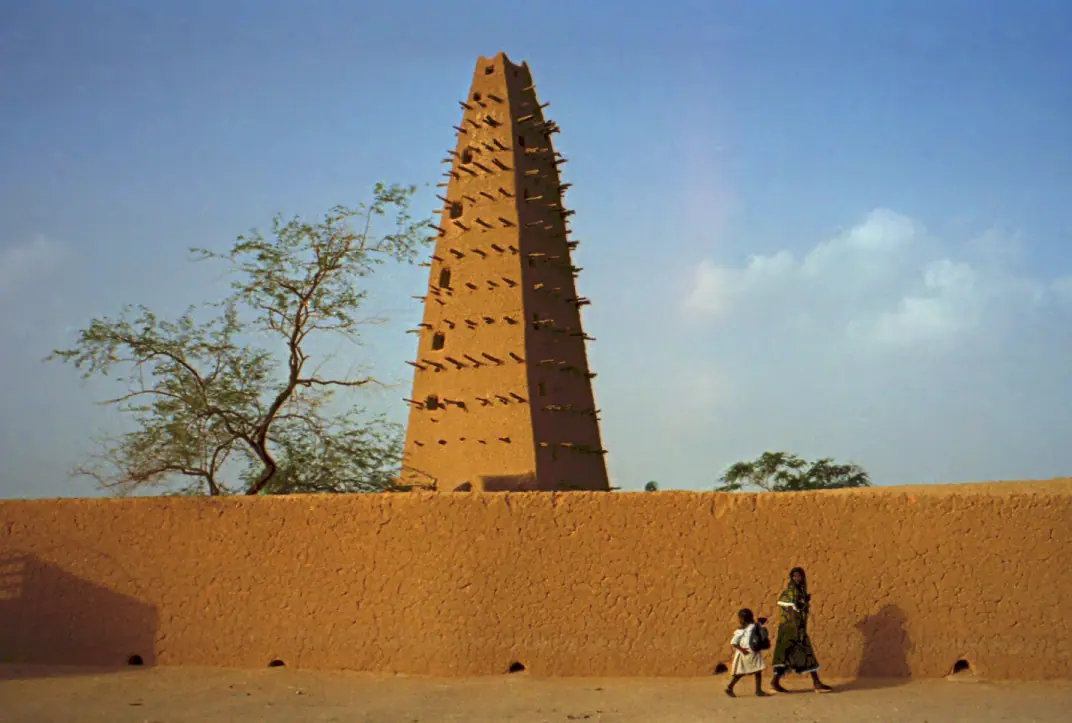
The north's great desert gateway, Agadez has been a meeting point for trans-Saharan trade for centuries, and its old quarter still looks the part. The centrepiece is the Grand Mosque of Agadez, whose tapering earthen minaret climbs roughly 27 metres and bristles with projecting wooden beams used as scaffolding when the tower is re-rendered with fresh mud after the rains. Non-Muslim visitors generally admire it from the surrounding lanes rather than entering the prayer hall, and the light is loveliest in the hour before sunset, when the whole structure glows amber against a lavender sky.
A few minutes' walk away stands the Sultan's Palace, seat of the Aïr sultanate, distinguished by its own tall spire and carved entrance. Around it, the Birni district fans out in a labyrinth of ochre alleys, decorated doorways and facades patterned with geometric relief work — a style that travels with you across the whole Sahel once you start noticing it. Mornings are best for wandering, before the heat builds and the streets empty into shaded courtyards.
Agadez is also where you shop. Silversmiths hammer out the famous croix d'Agadez pendants, along with rings, amulets and leatherwork, in workshops tucked behind the main market, while the livestock market on the town's edge draws Tuareg, Fulani and Wodaabe herders in indigo turbans and embroidered tunics. Reaching Agadez is a commitment: it sits roughly a thousand kilometres by road northeast of Niamey, with intermittent domestic flights and most desert itineraries built around organised 4x4 transport.
The Aïr Mountains and the Ténéré: Gueltas, Oases and a Sea of Sand
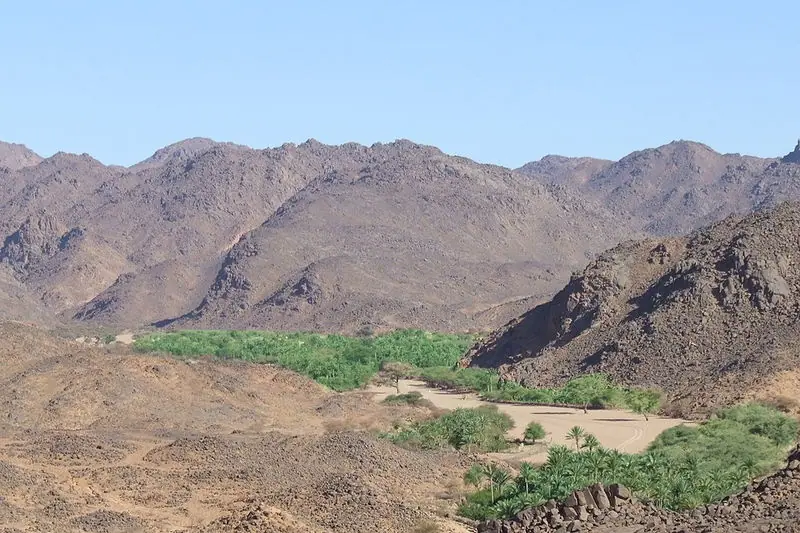
South of Agadez the Aïr massif rises out of the plain: a jumble of granite peaks, basalt cliffs and dry riverbeds that shelters some of the most surprising scenery in the Sahara. Mount Idoukal-n-Taghès, at 2,022 metres the country's highest point, anchors the range, while the Timia oasis offers palm groves, gardens and pools of green water in a bowl of dark rock. Nearby, the eroded plateau known as the Forest of Stones looks like a petrified woodland of natural pillars.
The most talked-about site is the Guelta d'Archeï, a deep canyon pool where a small population of Nile crocodiles has survived in isolation for millennia, surrounded by rock paintings and cliffs so narrow the sky becomes a ribbon. Access requires a 4x4, a guide who knows the tracks, and patience — this is not a day trip from a city hotel.
East of the mountains opens the Ténéré, the sand sea of legend. Here stood the Tree of Ténéré, a solitary acacia that became a landmark for caravans crossing empty country until a vehicle struck it in 1973; a metal sculpture now marks the spot. The classic way to experience the desert is on the azalai, the camel caravans that still carry salt and dates between Agadez and the Kaouar oasis settlements, a rhythm of travel measured in weeks rather than hours.
Niamey, the River Niger and the Last West African Giraffes
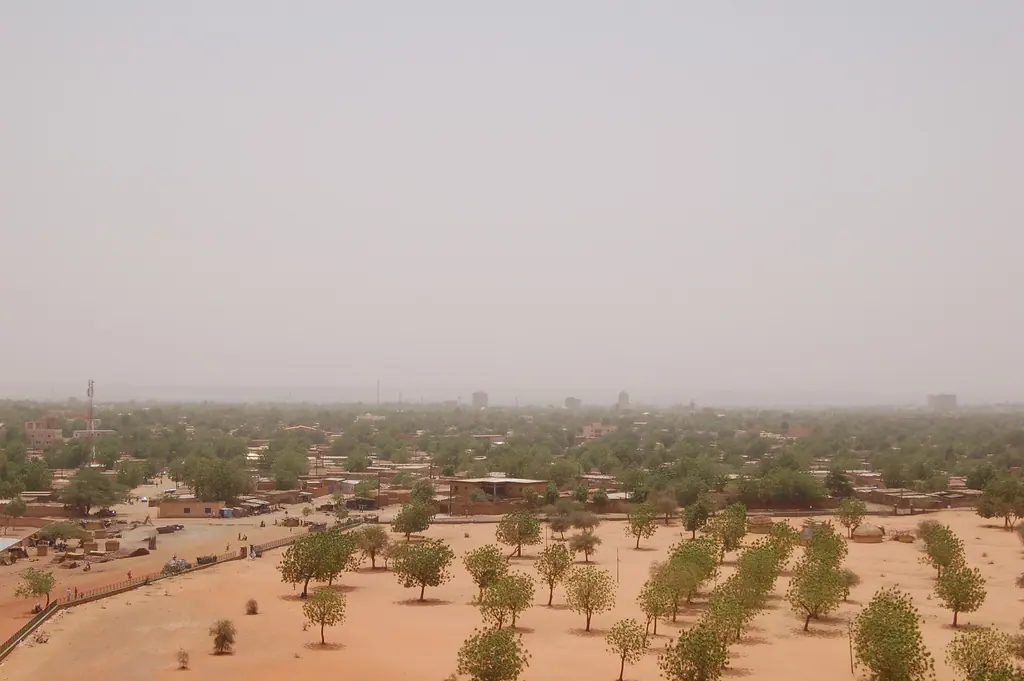
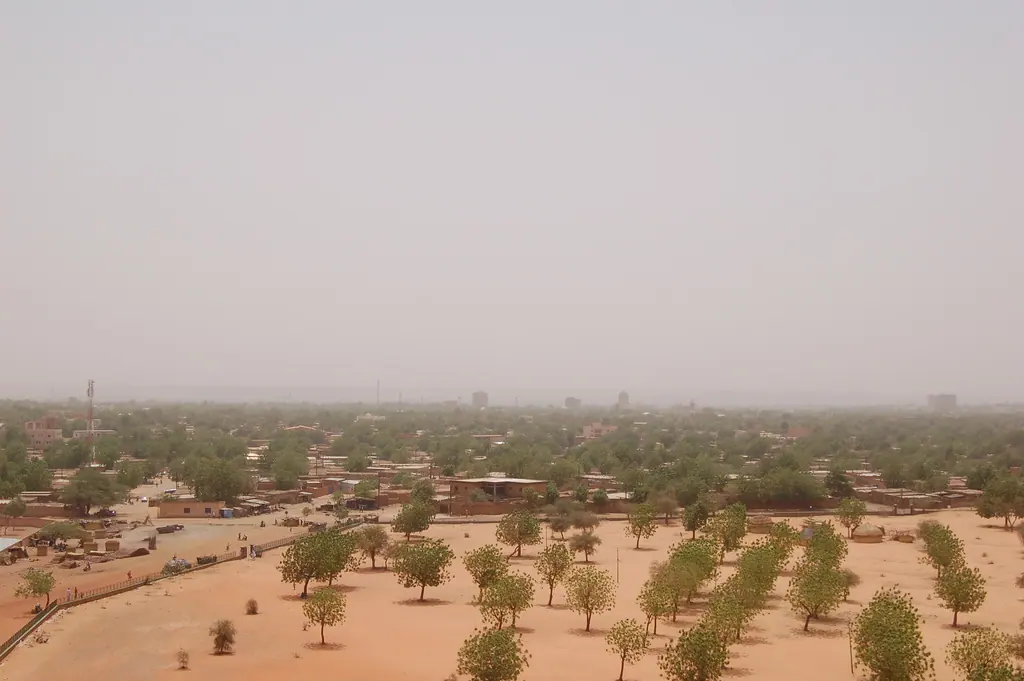
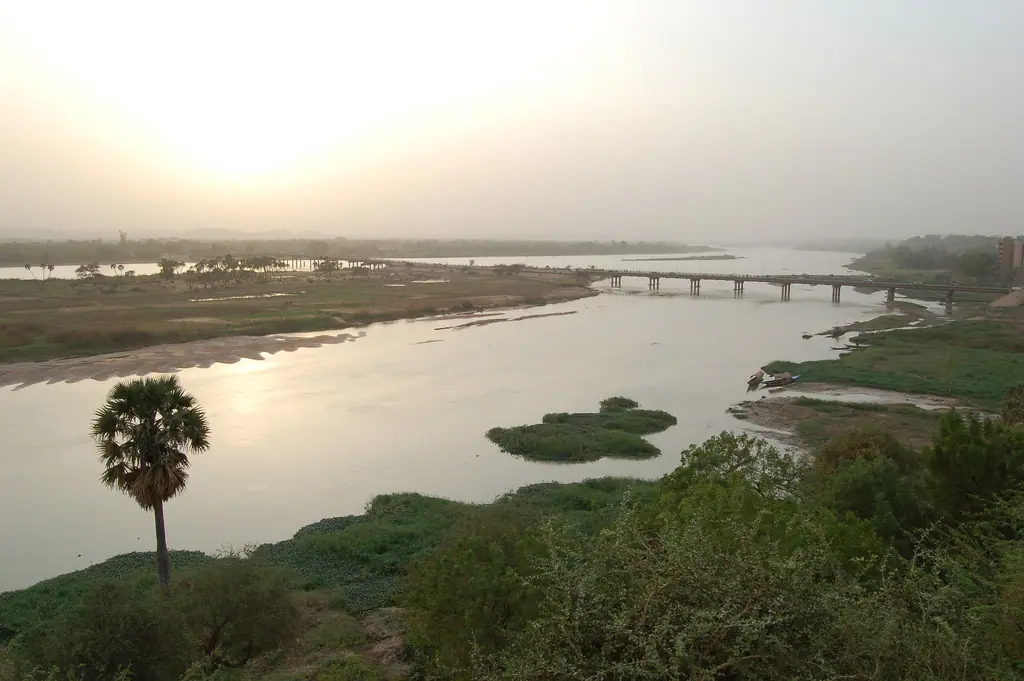
The capital spreads along the banks of the Niger, and its best introduction is a slow afternoon. The National Museum Boubou Hama is the country's cultural showcase, combining pavilions of costume, craft and archaeology with a small zoo and a village of reconstructed traditional dwellings from different regions — an efficient way to understand the country before heading out into it. Then cross to the Grand Marché for indigo cloth, Tuareg silver and leather, and the smaller Petit Marché for food, spices and noise.
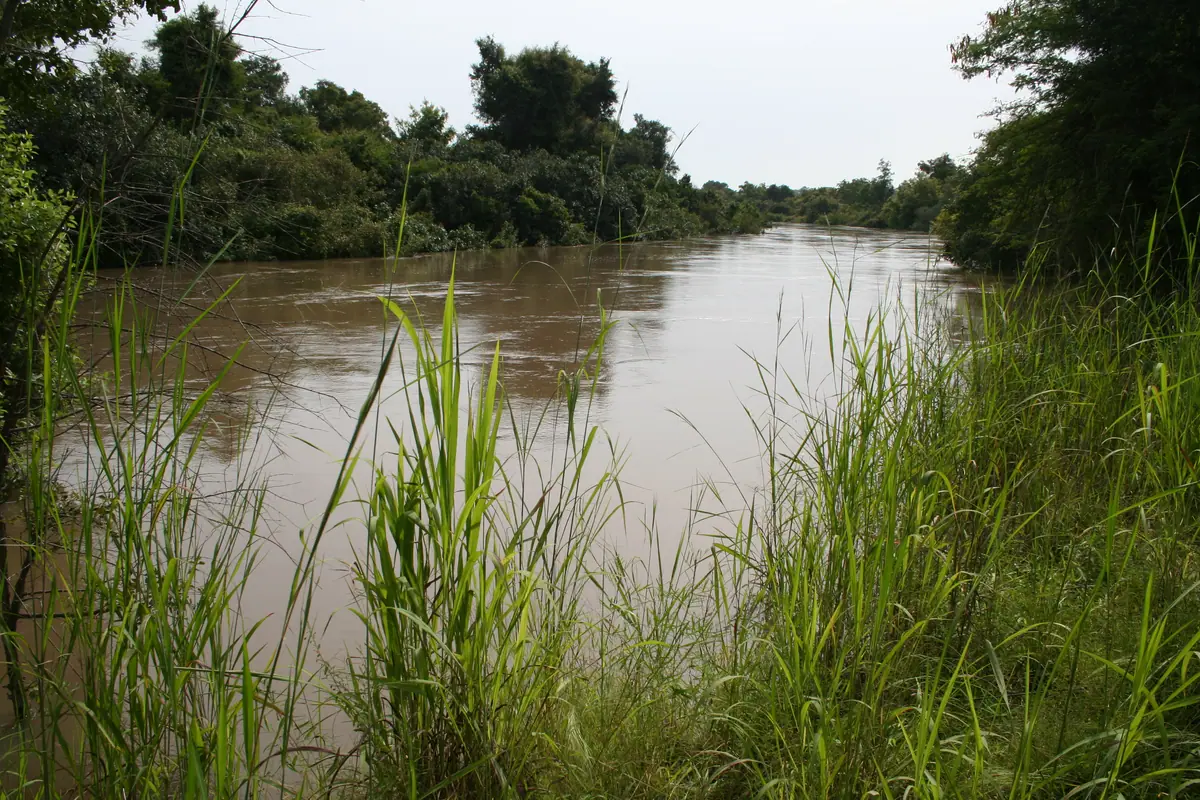
At dusk, head for the Kennedy Bridge, where pirogues, fishing boats and sand barges drift beneath the span and the river turns copper. Sunset cruises on a wooden boat are one of Niamey's genuine pleasures, and the nearby village of Boubon is famous for its potters, who shape and fire great clay jars in open pits along the water's edge.
East of the city, the bush around Kouré protects the world's last wild population of West African giraffes, a few hundred animals with paler, more patterned coats than their southern relatives. Licensed local guides track them on foot and by vehicle, usually in the cooler early morning or late afternoon; the dry months from November to May give the clearest sightings once the foliage thins. Further upriver, the river towns of Ayorou offer bustling weekly markets and hippo-spotting by boat.
Zinder and the Wild East: Sultan's Palace and W National Park
In the south-east, Zinder was once the capital of the Damagaram sultanate and remains the country's most atmospheric old city. The Birni quarter is a dense web of mud-walled houses, decorated facades and shaded passages, crowned by the Sultan's Palace, whose carved and painted walls carry motifs you will see echoed across Hausa architecture. Old dye pits, a historic gateway and a lively craft trade keep the district feeling lived-in rather than preserved, and a slow wander with a local guide is the best way to read its layers.
South-west of Niamey lies the country's flagship wildlife destination, W National Park, named for the W-shaped double meander the Niger River carves along its border. Shared with neighbouring countries, the reserve protects a vast savanna of gallery forest, floodplain and woodland where elephants, lions, buffalo, hippos, antelope and more than 350 bird species still hold on. The dry season from December to April is the time to go: waterholes concentrate the animals, undergrowth thins, and tracks become passable. Exploration is by 4x4 and by boat, usually with basic camps inside or near the park boundary, so plan on a few days rather than a flying visit.
Sahara Rock Art, Salt Pans and the Cure Salée Festival
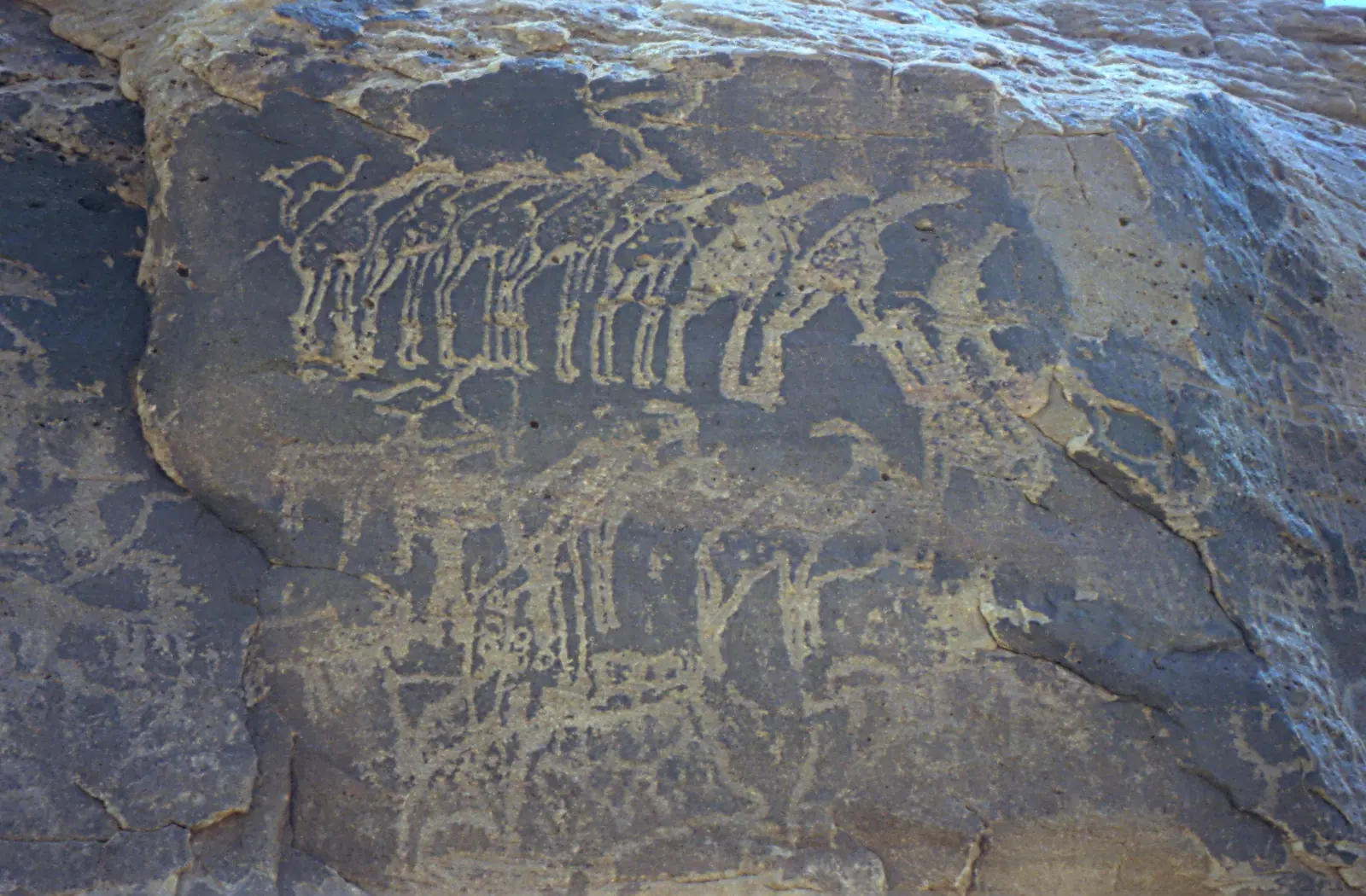
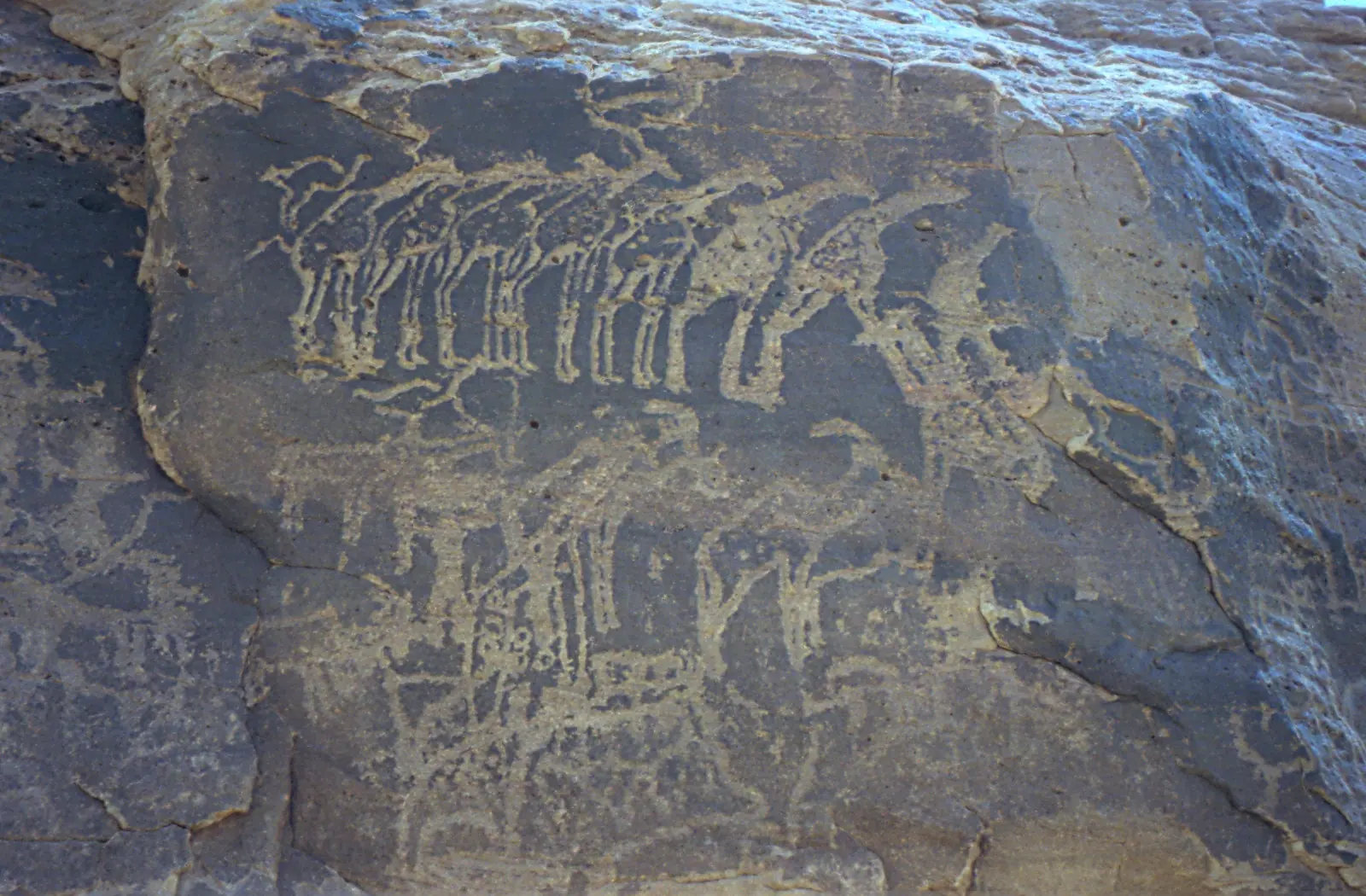
Spread across the Aïr massif are thousands of engravings left by people who lived here when the Sahara was green: cattle, ostriches, antelope and human figures pecked into sandstone. The most celebrated panel is at Dabous, where two giraffes — one large male, one smaller — were carved with extraordinary precision thousands of years ago and remain among the finest rock-art images in the desert. Seeing them means a rough 4x4 journey and a guide who knows the site, and it is worth every kilometre.
Far to the east, the Kaouar valley strings together oases such as Bilma and Fachi, where salt is still scraped from pans and pressed into slabs, and where date palms shade mud-brick villages. The salt caravans that link these outposts to Agadez are among the last great camel routes in the world; catching one on the move is a matter of timing and local knowledge rather than luck.
In September, as the rainy season ends, herders converge on the plain around Ingall for the Cure Salée, a salt-cure gathering of cattle and camels that culminates in the guérewol, the Wodaabe dance in which young men in elaborate paint and feathers compete for attention. It is one of the most striking cultural spectacles in West Africa, and visiting requires a 4x4, permits and advance arrangements with a local operator.
When to Go and What to Know Before You Travel
The most comfortable window runs from November to February, when days are warm, skies are mostly clear and desert nights turn genuinely cold — bring a fleece for the Ténéré even though you are in the Sahel. March to May is punishing, with daytime temperatures pushing past 40°C and dust haze thickening the air. From June to September the south gets its rains: humid, green and muddy, with tracks in the bush turning difficult, while the desert receives brief, dramatic storms. September also brings the Cure Salée, and December to April is prime time for wildlife in the south-west.
Niger is not a destination for improvised travel. Security conditions vary sharply by region, and large areas — including border zones toward Mali and Burkina Faso and the Lake Chad basin in the south-east — are subject to official advisories against travel; desert routes north of Agadez commonly require permits and escorts. Check your own government's current guidance and build your trip with an established local operator rather than driving yourself into remote terrain. Carry cash in CFA francs, since cards are rarely accepted outside a handful of city hotels, dress modestly outside the capital, and expect French to be the working language alongside Hausa, Zarma, Tamajaq and Fulfulde.
Frequently asked questions
What are the absolute must-see sights in Niger?
Prioritise the Grand Mosque and old town of Agadez, the Aïr Mountains with the Guelta d'Archeï and the Timia oasis, the Ténéré sand sea, the West African giraffes around Kouré, the National Museum Boubou Hama and riverside Niamey, Zinder's Birni quarter and Sultan's Palace, and W National Park for wildlife. The Dabous giraffe engravings and the Cure Salée festival are the highlights for anyone with time and a 4x4.
When is the best time to visit Niger?
November to February offers the most comfortable weather, with warm, dry days and cold desert nights. March to May is extremely hot, with temperatures above 40°C. The rainy season runs from roughly June to September in the south, greening the landscape but making rural tracks muddy. September is the month for the Cure Salée gathering near Ingall, and December to April is best for wildlife viewing in W National Park.
Is it safe to travel in Niger?
Parts of the country carry serious security risks, and several regions — including border zones with Mali and Burkina Faso and the Lake Chad area — are covered by official advisories against travel. Desert itineraries typically need permits and escorts. Check your government's latest guidance before booking, travel with a reputable local operator, avoid self-driving into remote areas, and keep your plans flexible.
How do you get to Agadez and the desert?
Agadez lies roughly a thousand kilometres by road northeast of Niamey, a long journey on tarmac and then sand tracks, with intermittent domestic flights. Most visitors reach the Aïr and Ténéré as part of an organised 4x4 expedition with a local guide, fuel, water and permits arranged in advance. Independent desert travel is not advisable.
What should I pack and know before going?
Pack light, loose, modest clothing that covers shoulders and knees, a scarf for dust and sun, a warm layer for cold desert nights from November to February, sturdy shoes and a headlamp. Bring cash in CFA francs because cards are rarely accepted outside a few city hotels, and carry any medications you need. French is the official language, with Hausa, Zarma, Tamajaq and Fulfulde widely spoken, so a few local greetings go a long way.
Plan it — experiences in Niger
Live search, booked directly with trusted providers.