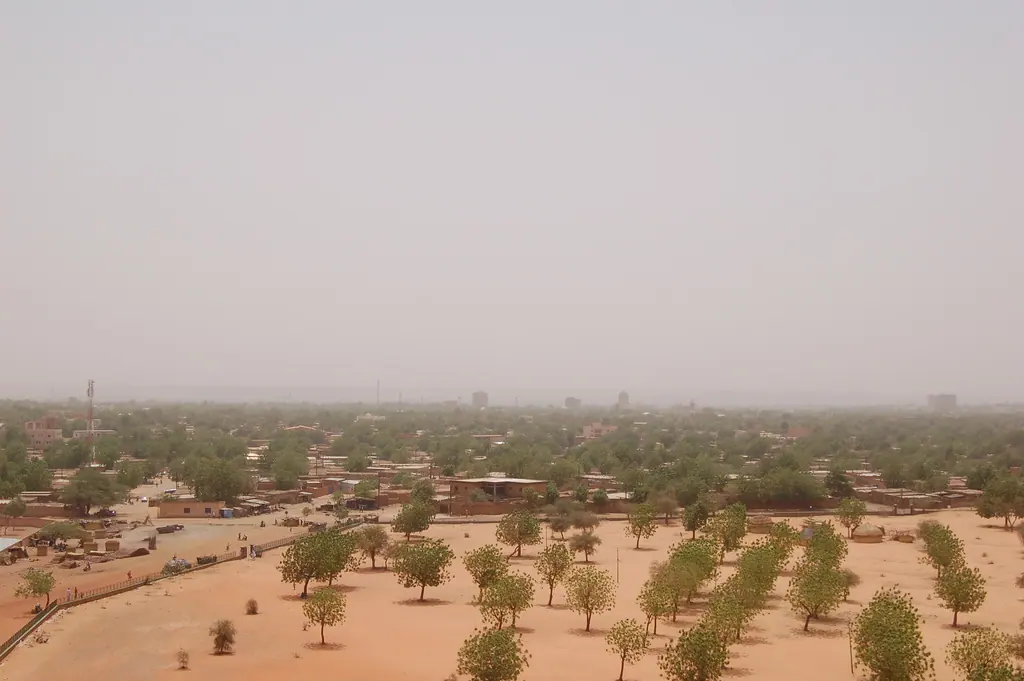
Niger is the Sahel at its most elemental: a country of mud-brick minarets, palm islands in a slow brown river, and dunes that run to the edge of the map. Come for Tuareg tea poured three times from a great height, for grilled river fish eaten under a mango tree, and for the last wild giraffes of West Africa. This is a destination that rewards patience, curiosity and a good local guide.
Why Niger Rewards the Curious Traveller
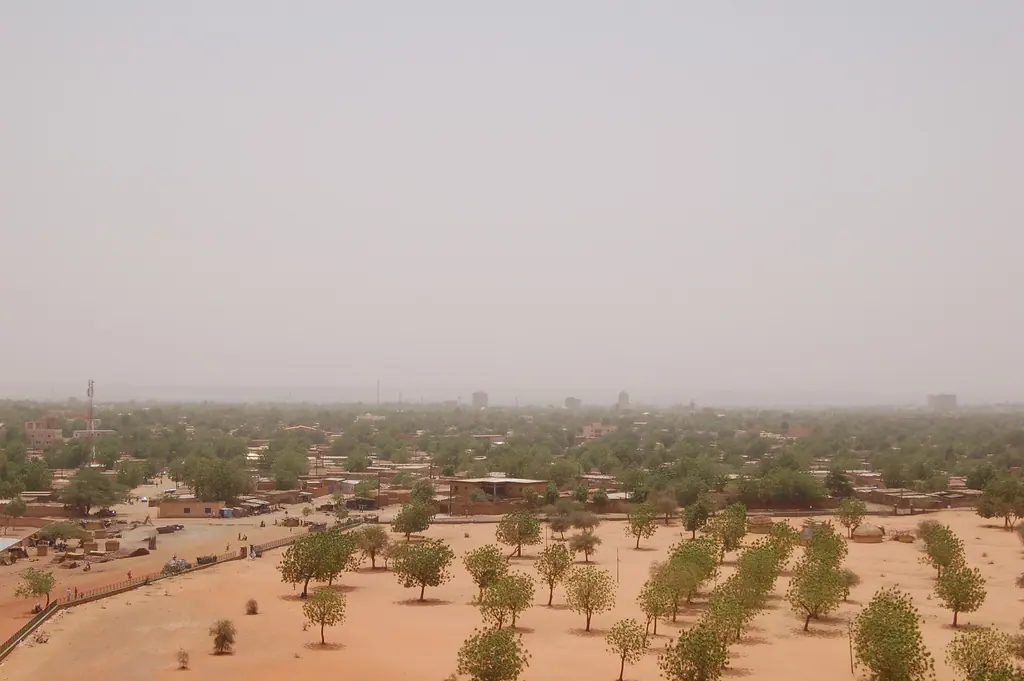
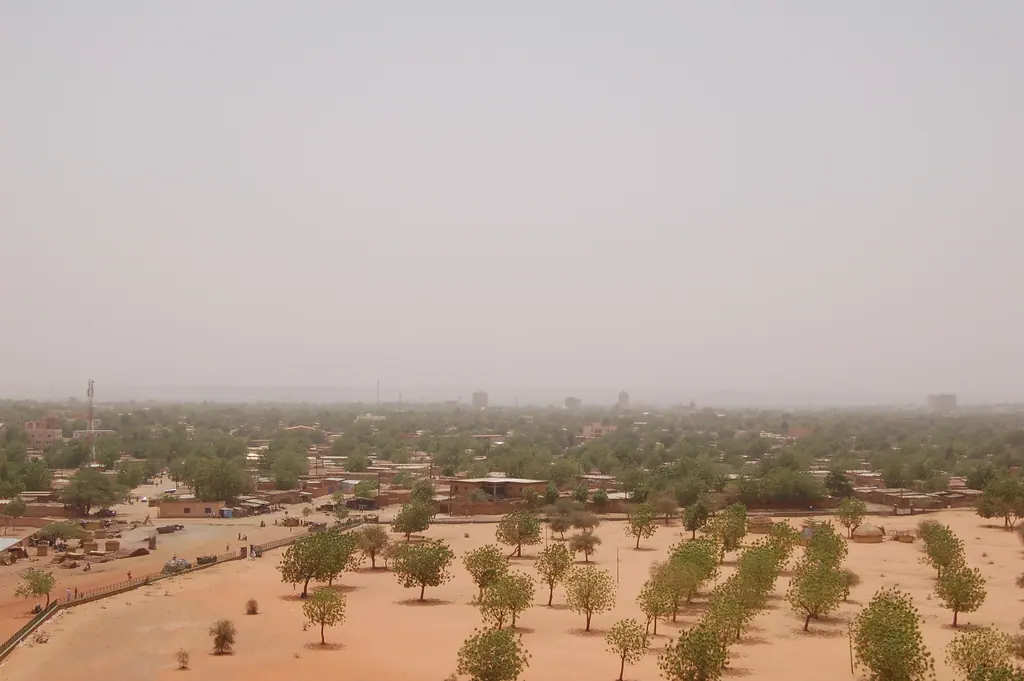
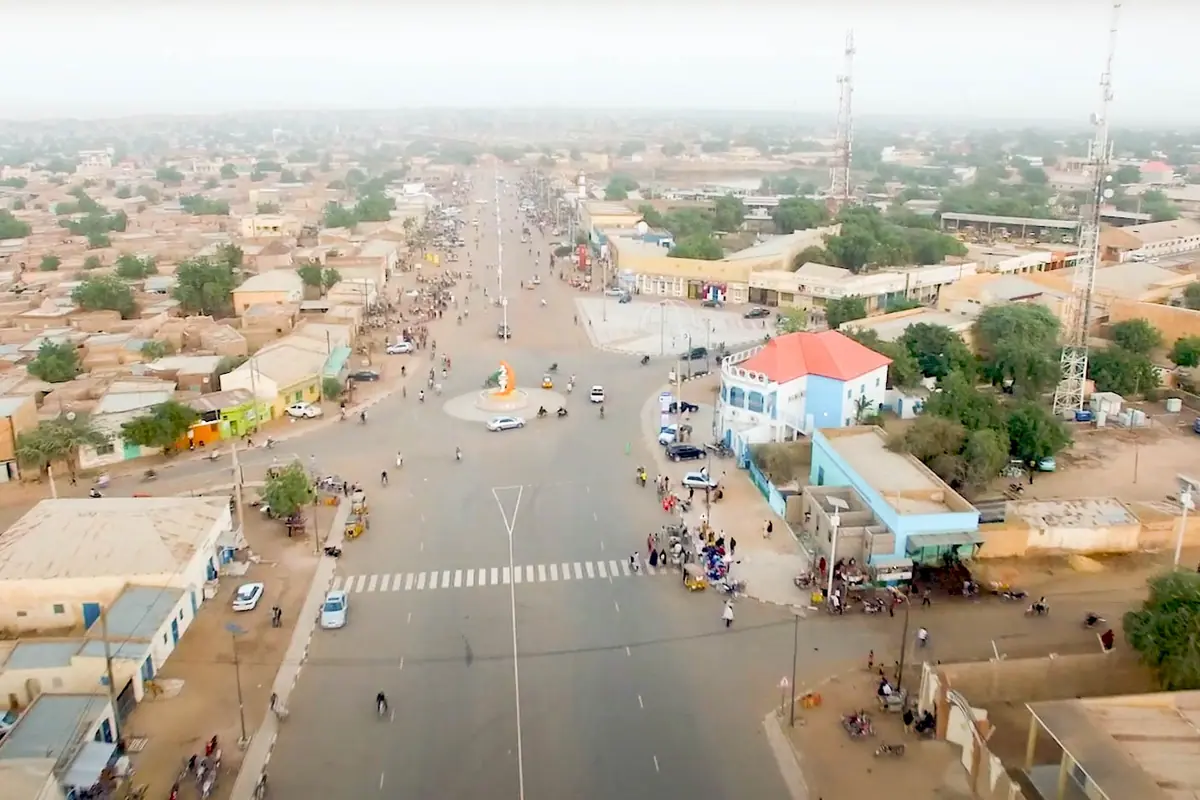
Niger is landlocked and enormous — roughly twice the size of France — and most of it is Sahara and Sahel. The country's lifeline is the Niger River, which loops up from the southwest and slips past the capital, Niamey, as a wide, green-banked ribbon of water. Almost every journey begins at Diori Hamani International Airport on the edge of the city, where the heat hits you the moment the doors open and the smell of dust and diesel tells you exactly where you are.
A classic first tour works in a horseshoe: a few days in Niamey for markets, music and river sunsets; a morning among the giraffes at Kouré; a swing southeast to the savannah of W National Park; then, if permits and conditions allow, the long haul east to Agadez and up into the Aïr Mountains. Agadez sits roughly 950 kilometres from the capital — a two-day drive or a short domestic flight — and it is the gateway to the desert circuits that give Niger its mythic reputation.
One honest caveat: parts of the country, particularly the far north, the Libyan and Malian border zones and the Lake Chad basin, carry serious security risks, and many governments advise against travel there. Desert itineraries are normally arranged through licensed local operators who handle permits, escorts and checkpoints. Always check current advice and plan with people who live and work in the region — that is not a formality here, it is the whole foundation of the trip.
Niamey: River Markets, Museums and the Taste of the Sahel
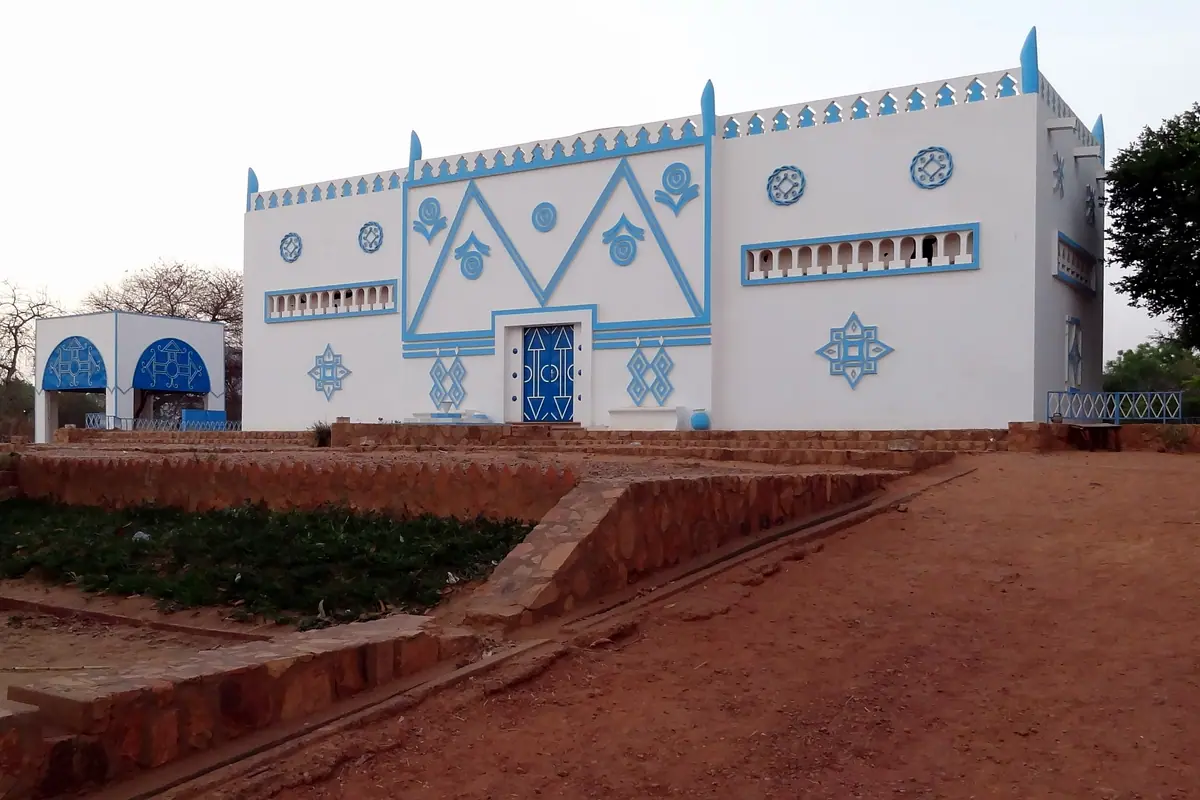
Start at the Musée National Boubou Hama, a sprawling open-air complex where you can walk through reconstructed Hausa, Zarma and Tuareg compounds, see the towering skeleton of a dinosaur unearthed in the Gadoufaoua fossil beds, and browse a craft village of silversmiths and leatherworkers without leaving the city. From there it is a short hop to the Grand Marché, a warren of stalls selling indigo cloth, embroidered tunics, Tuareg crosses and hammered silver; the nearby Petit Marché is better for everyday goods and cheap sandals.
Niamey eats well and cheaply. Kilishi — paper-thin beef rubbed with peanut, ginger and chilli, then sun-dried and grilled over charcoal — is the snack you will end up buying by the bagful. At dusk, street grills fire up with brochettes of beef and mutton, while riverside restaurants serve capitaine (Nile perch) and tilapia pulled from the Niger that morning. Look for dambou, steamed millet tossed with moringa leaves, and fura da nono, millet dough balls crumbled into fermented milk — the classic Sahelian pick-me-up sold from calabashes.
Evenings belong to the river. Walk the Kennedy Bridge as the light drops and pirogues drift past, or arrange a short boat trip to watch hippos surface in the shallows and fishermen cast hand-nets from dugout canoes. Finish with ataya: green tea brewed with mint and sugar in a small pot, then poured in a long arc into tiny glasses. It comes in three rounds — the first bitter as death, the second sweet as life, the third gentle as love. You will be told this every time, and you will enjoy it every time.
Agadez and the Aïr: Tuareg Country and the Great Desert Circuits
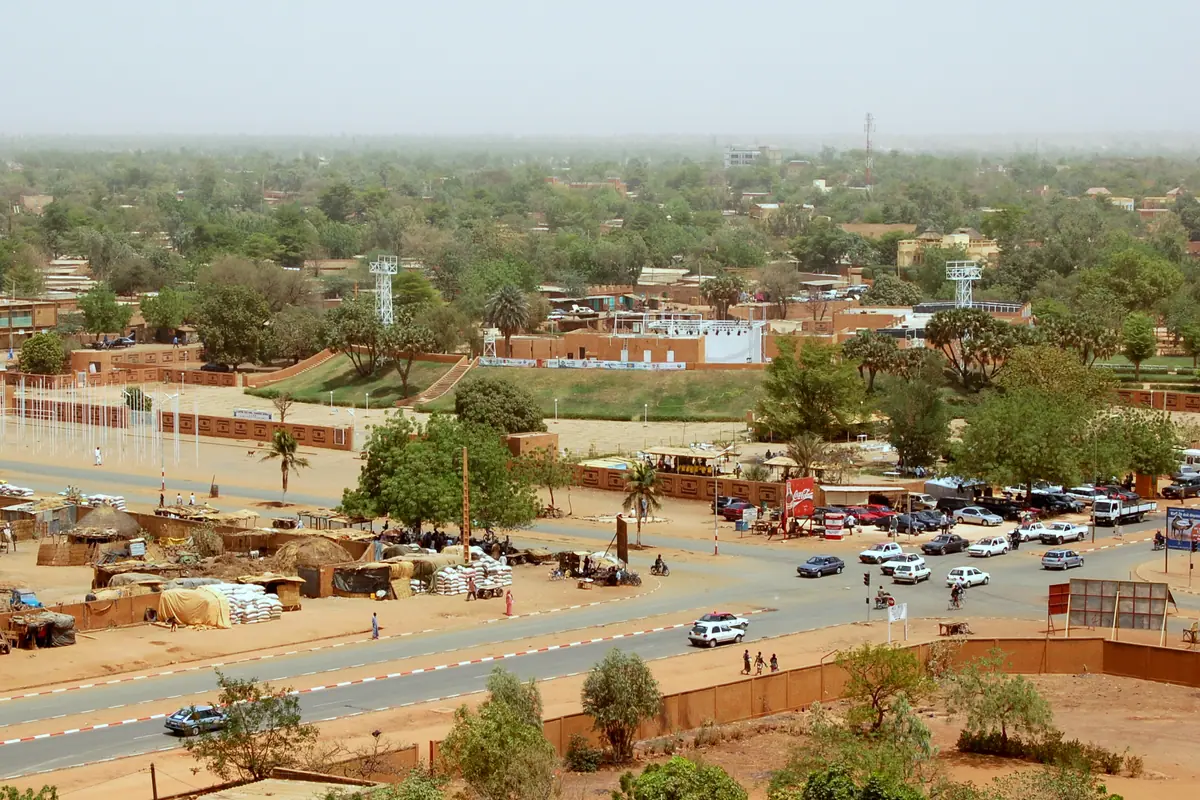
Agadez is the beating heart of northern Niger and a UNESCO World Heritage site, inscribed for its role as a trans-Saharan trading crossroads. Its skyline is dominated by the Grande Mosquée d'Agadez and its extraordinary mud-brick minaret, a tapering tower roughly 27 metres tall studded with projecting wooden beams, which you can climb with permission for a view over the old town. Nearby stands the Sultan's Palace, still the seat of a traditional authority, and around it a grid of ochre lanes where you will find silver workshops, camel saddles and the tea houses where desert journeys are planned.
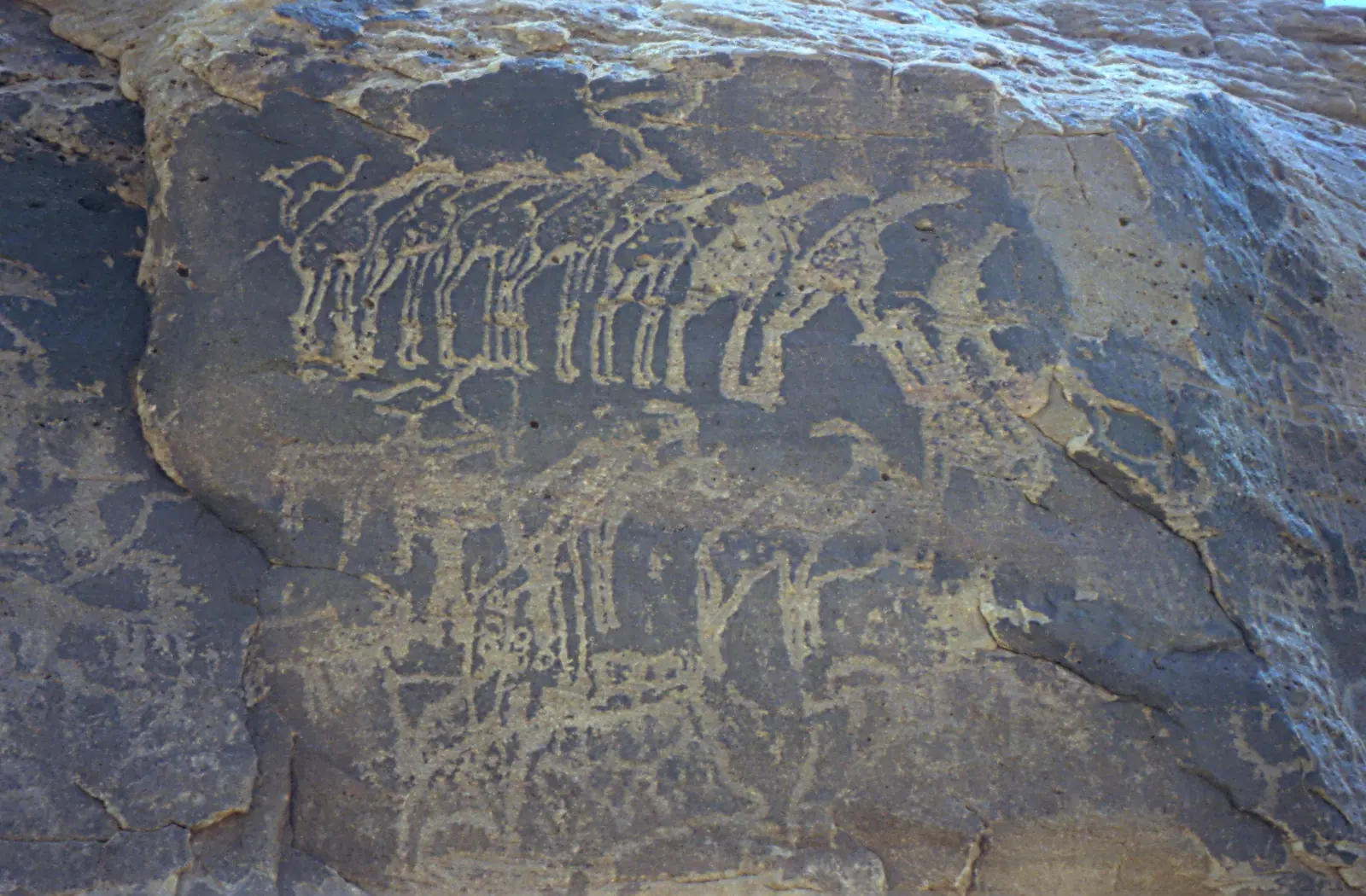
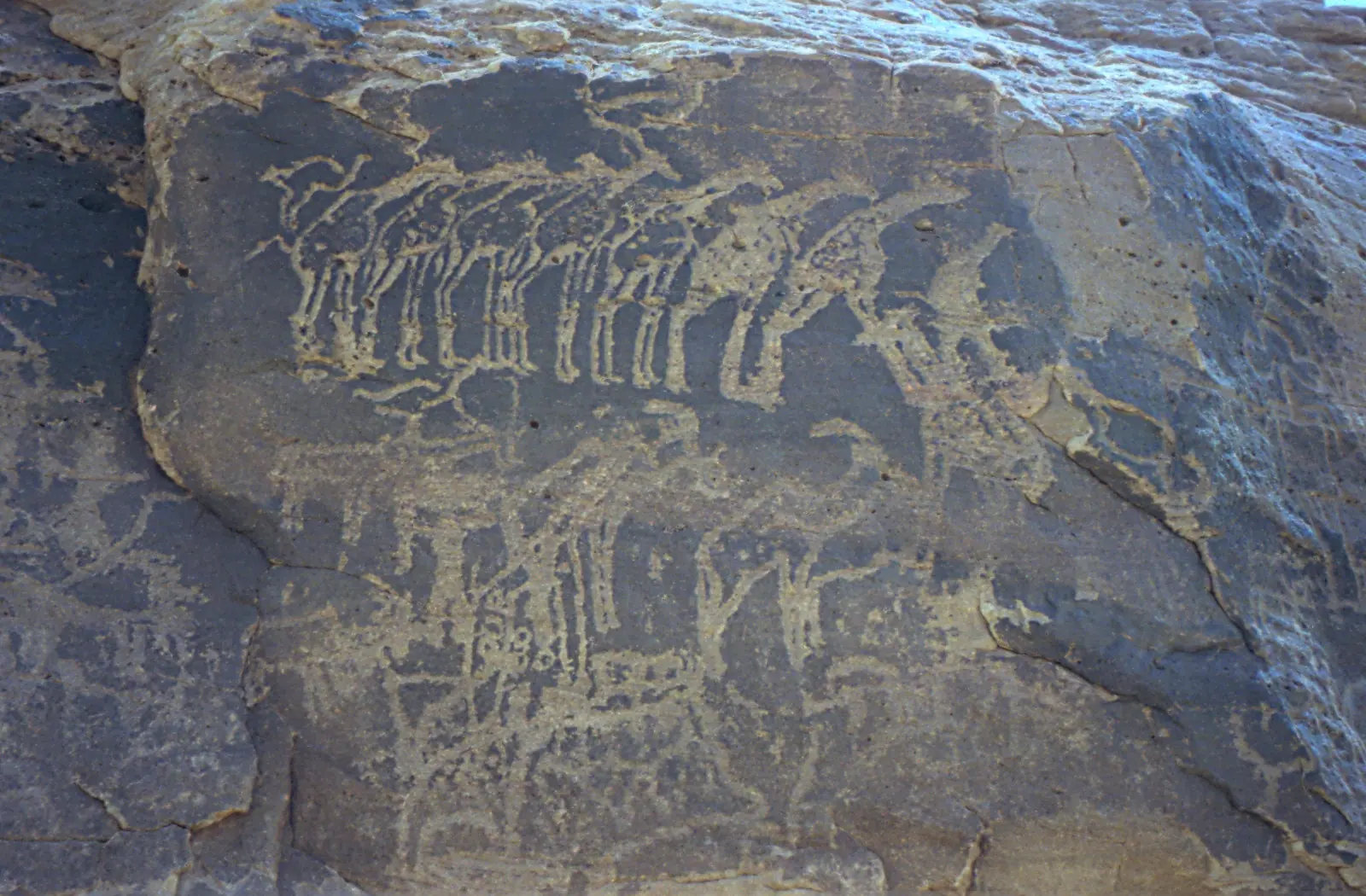
North of the city the Aïr Mountains rise out of the sand — a range of black volcanic peaks and granite outcrops that shelters hidden oases. Timia is the loveliest of them, a valley of date palms and vegetable gardens irrigated by channels cut centuries ago, where you can swim in rock pools and eat fresh dates in season. Further into the massif lie the Dabous petroglyphs, two life-sized giraffes carved into a sandstone slab thousands of years ago, when this desert was grassland. Mount Idoukal-n-Taghès, at just over 2,000 metres, is the country's highest point and a fine day's trek.
Beyond the mountains opens the Ténéré, the immense sand sea whose name means simply 'where there is nothing'. Circuits here typically run one to two weeks by 4x4, or five to ten days by camel, and pass the metal sculpture that marks the site of the Tree of Ténéré — an acacia once celebrated as the most isolated tree on earth — as well as the great dunes of the Erg. Salt caravans still plod south from the Bilma oasis, and if your timing is lucky you will meet one on the track, camels loaded with slabs of salt and dates, drivers wrapped to the eyes against the wind.
Festivals, Crafts and the Rhythm of Sahelian Culture
The single best reason to time a Niger trip carefully is the Cure Salée, the 'salt cure' gathering held near In-Gall at the end of the rainy season, usually in September. Nomadic groups converge on the salt flats to bring their herds to mineral-rich pasture, and the event is crowned by the Guérewol, the celebrated courtship dance of the Wodaabe. Young men spend hours on their appearance — ochre and white face paint, ostrich feathers, long braids — then dance in a line, teeth bared and eyes rolling, while women judge them on beauty and stamina. It is a genuinely remarkable thing to witness, and it happens only once a year.
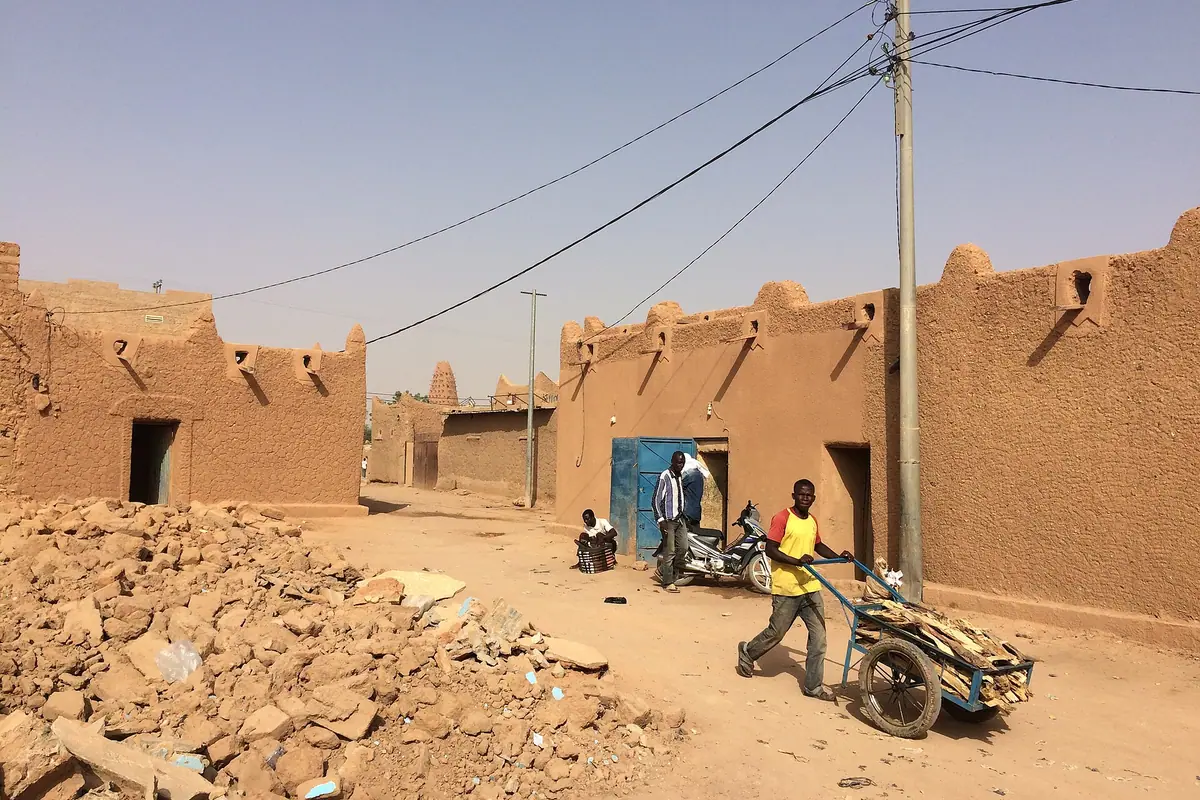
Craft traditions here are deep and specific. Silversmiths in Agadez and Niamey hammer the famous Tuareg crosses, each one a different shape with its own regional history; leatherworkers turn goatskin into satchels, cushions and sandals; indigo dyers in the Hausa east produce cloth so heavily dyed it stains your hands. In Zinder, the old Birni quarter holds the Sultan's Palace and a dense maze of decorated Hausa compounds, while the neighbouring Zengou district is known for its ornate facades. Plan half a day simply to walk and look.
Hospitality is the social glue. Greetings are long and expected — ask after someone's health, their family, their work, before you ask for directions — and to rush them is genuinely rude. Music is everywhere: praise singers at weddings, Tuareg guitar drifting from courtyards in the evening, and the biram, a large boat-shaped harp played by a handful of masters in the river towns. Accept tea when it is offered, take photos only after asking, and use your right hand to give and receive. Small courtesies open enormous doors.
Wildlife: Kouré's Giraffes and the Savannah of W National Park
About an hour and a half southeast of Niamey, near the village of Kouré, lives the last wild population of West African giraffe anywhere on the planet. The animals browse the acacia and bush along the Dallol Bosso, a fossil river valley, and local guides — many of them from families who have tracked these giraffes for generations — lead visitors on foot to within a respectful distance. Go early, between October and May, when the bush is thin and the light is soft; sightings are close to guaranteed, and the quiet of standing twenty metres from a giraffe in open scrub is the memory most travellers take home.
Further southeast, on the border with Benin and Burkina Faso, W National Park takes its name from the double bend the Niger River makes through the landscape. This is real savannah: elephants, hippos, buffalo, antelope, baboons, and the occasional lion or leopard for the very fortunate. Access is via La Tapoa, where basic lodges and campsites sit near the park gate, and drives are done in 4x4 with a ranger. The dry season, roughly November to April, is far and away the best window — vegetation thins, animals gather at waterholes and the tracks hold firm.
Closer to Niamey, the river itself is a wildlife corridor. Hippos haul out on sandbanks near Ayorou, a river town whose Sunday market draws traders from Mali and beyond in brightly painted pirogues; it is worth combining a market visit with a boat trip. Wherever you go, bring binoculars, a hat and more water than you think you need, and expect park fees and formalities to be handled by your operator rather than at the gate.
Practicalities: When to Go, Getting Around and Local Etiquette
The best months are October to February, when days sit around 25–30°C, nights in the desert drop close to 10°C and the Harmattan haze softens the light. March to May is brutal — regularly above 40°C — and best avoided unless you are heading south. June to September brings the rains to the southern belt, turning the Sahel green and filling the rivers, though desert tracks in the north remain largely passable. If the Cure Salée or Guérewol is your goal, aim for September.
Distances are vast and roads are few, so most travellers move by a combination of domestic flights to Agadez, private 4x4 with a driver-guide, and shared bush taxis on the main southern corridors. Desert travel into the Aïr and Ténéré requires permits and a licensed operator, and independent solo travel there is not realistic. Build in slack: a 300-kilometre day can easily become a ten-hour day, and checkpoints, tyre changes and tea stops are all part of the rhythm.
Niger uses the CFA franc, and outside Niamey you should carry cash — ATMs are scarce and cards are widely refused. Dress modestly, especially away from the capital and especially as a woman; light long sleeves and trousers or long skirts are both practical and respectful. Learn a few words in Hausa or Zarma, ask before photographing people or military installations, and tip guides, drivers and cooks. Travel insurance that covers remote-area evacuation is not optional here — it is the single most important thing in your bag.
Frequently asked questions
Is Niger safe for tourists?
It depends heavily on where you go. The Niamey area, Kouré and the southern park circuits are generally considered manageable with a reputable local operator, while the far north, the Libyan and Malian border zones and the Lake Chad basin carry significant risk and are off-limits under most governments' advice. Desert travel requires permits and a licensed guide. Check your own government's current advisory before booking anything, and travel with operators who live in the country.
When is the best time to visit Niger?
October to February offers cool, dry weather with daytime temperatures around 25–30°C and comfortable nights — ideal for both the desert and the southern parks. March to May is extremely hot, often above 40°C. The rains arrive June to September in the south, greening the landscape, and September is when the Cure Salée and Guérewol gatherings take place near In-Gall.
What food should I try in Niger?
Start with kilishi, the thin spiced dried beef sold in paper twists, and fura da nono, millet balls crumbled into fermented milk. Dambou (steamed millet with moringa) and tuwo with baobab-leaf sauce are staples, while riverside restaurants serve excellent grilled capitaine and tilapia. Finish every meal with ataya tea, poured in three rounds, and try bissap or ginger juice instead of alcohol, which is limited outside a few Niamey hotels.
Do I need a visa, and what language and currency are used?
Most visitors need a visa arranged in advance through a Nigerien embassy or consulate, along with proof of yellow fever vaccination. French is the official language, but Hausa, Zarma, Tamajaq and Fulfulde are spoken far more widely day to day. The currency is the CFA franc, and cash is essential outside Niamey.
How long should a Niger trip be?
Allow seven to ten days for Niamey, Kouré, Ayorou and W National Park at a relaxed pace. Add a further ten to fourteen days for Agadez, the Aïr Mountains, Timia and a Ténéré desert circuit — those northern journeys are long, and rushing them means spending most of your time in a vehicle rather than out of one.