The Netherlands packs an improbable amount into a country you can cross by train in under three hours: Golden Age canal towns, nineteen windmills standing in a row, a springtime explosion of seven million bulbs, and a coastline that the Dutch have spent centuries negotiating with the sea. This is a country best explored slowly — by bicycle, on foot, and with a train ticket in your pocket.
Amsterdam: Canal Ring, Masterpieces and the Anne Frank House
Amsterdam's 17th-century canal ring, the Grachtengordel, is a UNESCO World Heritage Site and the city's beating heart. Three concentric waterways — Herengracht, Keizersgracht and Prinsengracht — curve around the medieval core, lined with gabled merchant houses, houseboats and elm trees. A one-hour boat cruise is the classic orientation, but walking the Jordaan's narrow streets and crossing the Nine Streets' bridges gives you the city at eye level. Allow two full days minimum here; three if you want museums without rushing.
The Museum Quarter holds the heavyweights. The Rijksmuseum displays Rembrandt's monumental Night Watch alongside four centuries of Dutch art and Delftware, and deserves at least three hours. Ten minutes away, the Van Gogh Museum traces the painter's life through more than 200 canvases, while the Stedelijk next door covers modern and contemporary work. Book timed-entry slots online in advance — walk-up tickets are limited and midday queues are longest.
The Anne Frank House on Prinsengracht is the Netherlands' most emotionally powerful museum, and the one you must plan furthest ahead for. Tickets are released online only, in rolling batches, and sell out within minutes; check the booking calendar several weeks before your trip and set an alarm. Afterwards, walk it off in the Vondelpark, 47 hectares of ponds, lawns and rose gardens that locals treat as their communal back garden.
Rotterdam, The Hague and Delft: Modern Boldness and Golden Age Calm
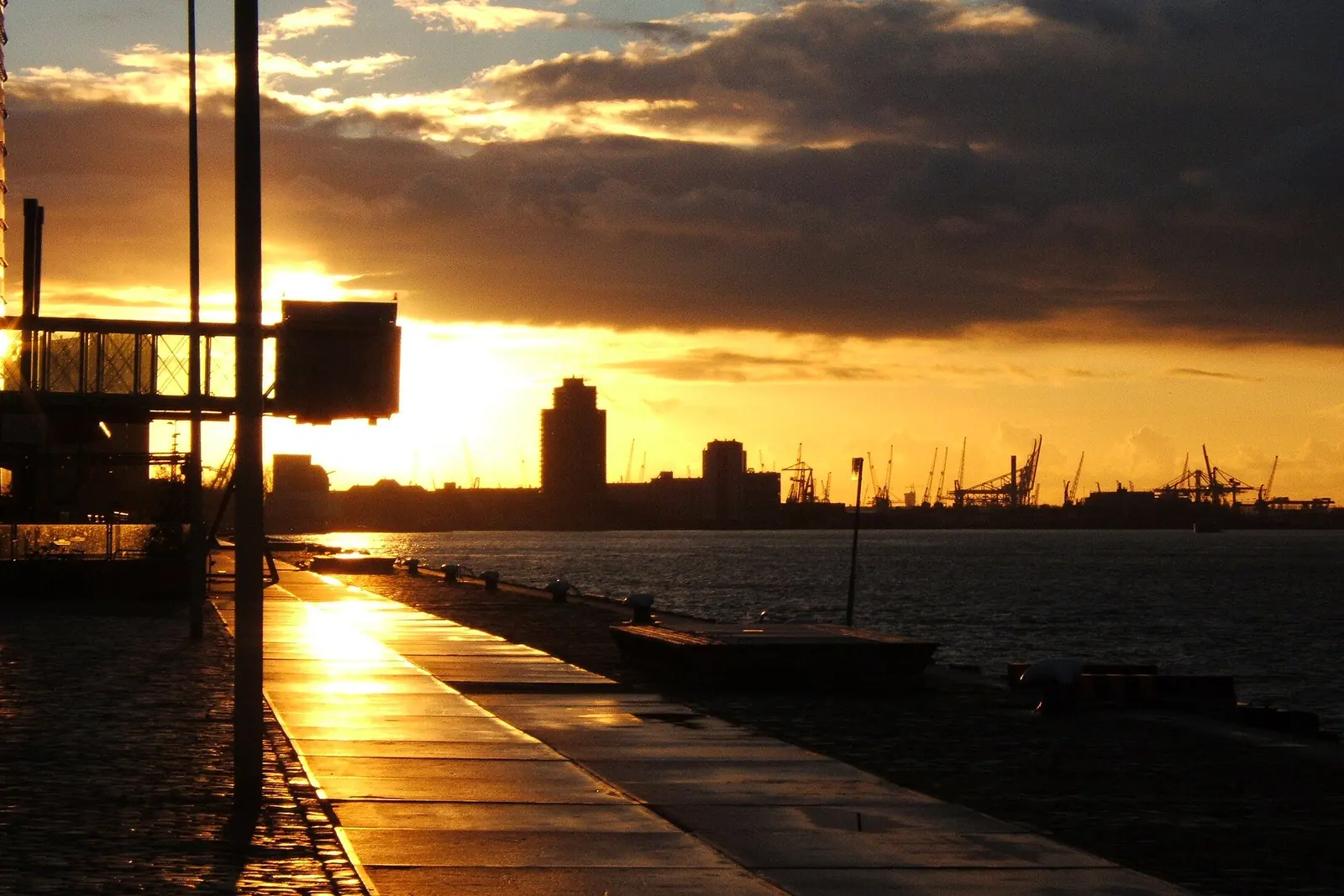
Rotterdam rebuilt itself after wartime destruction into the Netherlands' architecture showcase. The Markthal is a horseshoe-shaped hall with a vast ceiling mural, market stalls and food counters beneath it; the yellow Cube Houses lean at 45 degrees nearby; and the Erasmus Bridge, a single white pylon strung with cables nicknamed 'The Swan', frames the Maas. The mirror-clad Depot Boijmans Van Beuningen, which stores and displays an entire art collection behind reflective glass, is worth an hour on its own.
Thirty minutes by train, The Hague mixes royal dignity with seaside ease. The Mauritshuis houses one of the world's finest small collections, including Vermeer's Girl with a Pearl Earring and Carel Fabritius's The Goldfinch. The Binnenhof, the historic parliamentary complex around the Hofvijver pond, and the Peace Palace complete the civic circuit. From there, tram 1 runs to Scheveningen, where a long sandy beach, a pier with a Ferris wheel and dozens of beach clubs make it a genuine seaside day rather than a token stop.
Delft, barely 15 minutes further, is the postcard Netherlands: brick bridges, a tranquil market square and the Nieuwe Kerk, whose tower you can climb for rooftop views. It's also the home of blue-and-white pottery; a workshop tour shows how the hand-painted pieces are still made. Vermeer was born and buried here, and a small centre in the old town charts his life among the streets that appear in his paintings.
Windmills, Water Engineering and the Struggle with the Sea
Kinderdijk is the Netherlands' definitive windmill landscape: nineteen brick-and-thatch windmills built in the 18th century to pump water from the polders, standing in two rows along canals that you can explore on foot, by bike or on a small boat. It's a UNESCO World Heritage Site and a half-day trip from Rotterdam — go early, when mist sits on the water and the tour buses have not yet arrived.
Closer to Amsterdam, Zaanse Schans near Zaandam is a working heritage village of green wooden houses, windmills that still grind spices, paint and oil, plus clog-carving and cheese-making demonstrations. It's more tourist-oriented than Kinderdijk, but wonderfully compact and easy to combine with a half-day in nearby Zaandam. For sheer scale, head southwest to Zeeland and the Delta Works, the immense storm-surge barrier system built after the 1953 floods. The Oosterscheldekering, with its enormous steel sluice gates, is genuinely awe-inspiring — a reminder that much of this country exists by engineering.
Between them, these sites explain the Netherlands better than any museum: the windmills drained it, the dikes protect it, and the pumping stations and sluices keep it dry. Cycling between the Kinderdijk mills or along the Afsluitdijk gives you the sense of scale that a coach window never quite delivers.
Tulip Season: Keukenhof and the Bulb Fields of Lisse
For roughly eight weeks each spring, from mid-March to mid-May, Keukenhof in Lisse opens as one of the world's largest flower gardens: around seven million bulbs planted across 32 hectares, arranged into themed pavilions, sculpture gardens and long ribbons of colour bordering lakes and wooded paths. Peak bloom usually falls in the second half of April, though the exact window shifts with the weather each year.
To see the flowers rather than the crowds, come at opening time or in the last two hours before closing, and favour weekdays. The surrounding Bollenstreek — the bulb-growing district between Haarlem, Leiden and Hillegom — is threaded with signposted cycling routes past working fields, and in late April a flower parade of floats decorated entirely with blooms travels through the region's villages.
Further afield, the Noordoostpolder and Flevoland offer vast, flat tulip fields with far fewer visitors, best seen by car or bike. If you have an early-morning appetite for logistics, the enormous flower auction at Aalsmeer starts trading before dawn and is viewable from a raised walkway — a startling glimpse of the industry behind the pretty postcards. Note that Keukenhof tickets are date-specific and the gardens close completely outside the season; the fields, however, are free to cycle past.
Utrecht, Haarlem, Giethoorn and the Hoge Veluwe
Utrecht is a compact, canal-fronted alternative to Amsterdam, and its Dom Tower — at 112 metres the tallest church tower in the country — dominates the skyline. The city's unique wharf cellars and lower-level quays along the Oudegracht turn the canal into a two-storey street of cafés and workshops. Haarlem, 20 minutes from Amsterdam, offers the Grote Markt, the cavernous Sint-Bavokerk with its famous organ, and the Teylers Museum, the oldest museum in the Netherlands.
Giethoorn, in Overijssel, is a village with no roads through its old centre — just canals, footbridges and thatched farmhouses reached by whisper-quiet electric boats. Go on a weekday morning in spring or autumn to avoid the summer queues. Maastricht, in the far south, feels almost Belgian: the Vrijthof square, the Basilica of Saint Servatius, and the limestone caves of Sint-Pietersberg with their underground passages and charcoal drawings.
For nature, the Hoge Veluwe National Park is the country's largest continuous nature reserve, with free white bicycles at the gates, heathland, dunes and deer. Inside it sits the Kröller-Müller Museum, holding one of Europe's great Van Gogh collections and a sculpture garden set among the pines. It is a full day from Amsterdam but rarely disappoints.
Cycling, Dutch Food and How to Time Your Trip
Cycling is not a tourist gimmick here; it is how the country moves. Dedicated paths, known as fietspaden, connect towns, dunes and polders, and rental shops exist in every city — expect a few euros an hour or a reasonable day rate, plus a deposit. Learn the basics before you set off: use hand signals, keep right, never ride without lights after dark, and give way to trams in Amsterdam. A day's ride between Haarlem, the dunes and Zandvoort beach is a perfect introduction.
Trains link almost every town on a dense, frequent network, and contactless bank cards or a rechargeable transit card work across buses, trams and rail. Distances are short: Amsterdam to Utrecht is under half an hour, Amsterdam to Rotterdam about 40 minutes. Eat the way locals do — a warm stroopwafel from a market stall, poffjes dusted with butter and sugar, a cone of raw herring with onions in season, deep-fried bitterballen with mustard, and a slice of aged Gouda or Edam from a cheese stall. Indonesian rijsttafel, a legacy of the colonial era, is a genuinely Dutch dinner tradition.
April and May bring tulips and the best light, but also crowds and changeable weather. June through August is warmest and busiest, with long evenings and outdoor festivals. September and October are quieter, cheaper and often beautifully clear — ideal for cycling. Winter means short days, but also Christmas markets, museum-rich city breaks and the possibility of skating on frozen canals in a hard frost. Whatever the month, pack layers and a rain jacket: Dutch weather shifts quickly, and locals simply ignore it.
Frequently asked questions
When is the best time to see the tulips in the Netherlands?
The bulb fields typically peak in the second half of April, with Keukenhof open from roughly mid-March to mid-May. Because flowering depends on the winter and spring temperatures, the exact timing shifts each year — late April is the safest bet for a combination of garden displays and open fields.
How many days do you need to explore the Netherlands?
Four to five days covers Amsterdam properly along with one or two day trips, such as Haarlem, Delft or Kinderdijk. A week lets you add Rotterdam and The Hague, the bulb fields in spring, and either Utrecht or the Hoge Veluwe National Park without rushing between trains.
Do I need to book the Anne Frank House and other museums in advance?
Yes. The Anne Frank House sells dated tickets online only, released in batches, and they disappear quickly — check the calendar well before your trip. The Rijksmuseum and Van Gogh Museum also use timed slots, and booking a week or more ahead secures a much quieter early-morning entry.
Is it easy to get around the Netherlands without a car?
Very. The rail network is dense and frequent, with journeys between major cities taking 30 to 60 minutes, and buses and trams fill in the gaps. Contactless bank cards or a rechargeable transit card cover most journeys, and renting a bicycle is the best way to reach windmills, dunes and polder villages.
What food should I try in the Netherlands?
Start with a fresh stroopwafel made over a market griddle, then poffertjes, bitterballen with mustard, kibbeling or raw herring with onions from a fish stall, and aged Gouda or Edam from a cheese stand. For a full dinner, an Indonesian rijsttafel is a long-standing Dutch tradition, best paired with a small glass of jenever.
Plan it — experiences in Netherlands
Live search, booked directly with trusted providers.
Sort the rest of your trip
Everything for Netherlands, in one place
Stay in Netherlands
Hotels, guesthouses and apartments — compared in one search.
Search hotels
Transfer in Netherlands
Private driver waiting on arrival — no queues, no surprises.
Book a transfer
Stay online in Netherlands
Travel eSIM — data the moment you land, no roaming bills.
Get an eSIMMore guides in Netherlands
Best Time to Visit the Netherlands: Seasons, Crowds and Where to Stay
Where to Stay in the Netherlands: Best Cities, Neighbourhoods and Hotels for Every Trip
Best Places to Visit in the Netherlands: Canals, Windmills and Tulip Fields