The Netherlands packs an improbable amount into a country you can cross by train in under three hours: mirror-still canals, nineteen windmills lined up against the sky, tulip fields that look artificially saturated, and museum walls hung with Rembrandt and Vermeer. This seven-day route moves from Amsterdam outward in a loop, so you see the famous sights without spending your whole week in one city.
Days 1–2: Land at Schiphol and Settle into Amsterdam's Canal Ring
Most visitors arrive at Schiphol, which sits only about 15 minutes by train from Amsterdam Centraal — a far gentler landing than most European capitals offer. Drop your bags and walk straight into the Canal Ring, the 17th-century waterway belt that is a UNESCO World Heritage Site. The three concentric canals — Herengracht, Keizersgracht and Prinsengracht — are best understood on foot, crossing the humpbacked bridges slowly enough to notice the gabled warehouses, houseboats and the occasional heron perched on a mooring post.
Give your first full day to the Museum Quarter. The Rijksmuseum holds the country's greatest hits, including Rembrandt's Night Watch, while the Van Gogh Museum next door traces the artist's short, furious career across four floors. Both need timed tickets booked days or weeks ahead, especially from April through September. The Anne Frank House on Prinsengracht is the toughest ticket in the city and releases slots online only, so plan it before you fly. When your head is full, Vondelpark is five minutes away and made for a slow afternoon of picnics and bike bells.
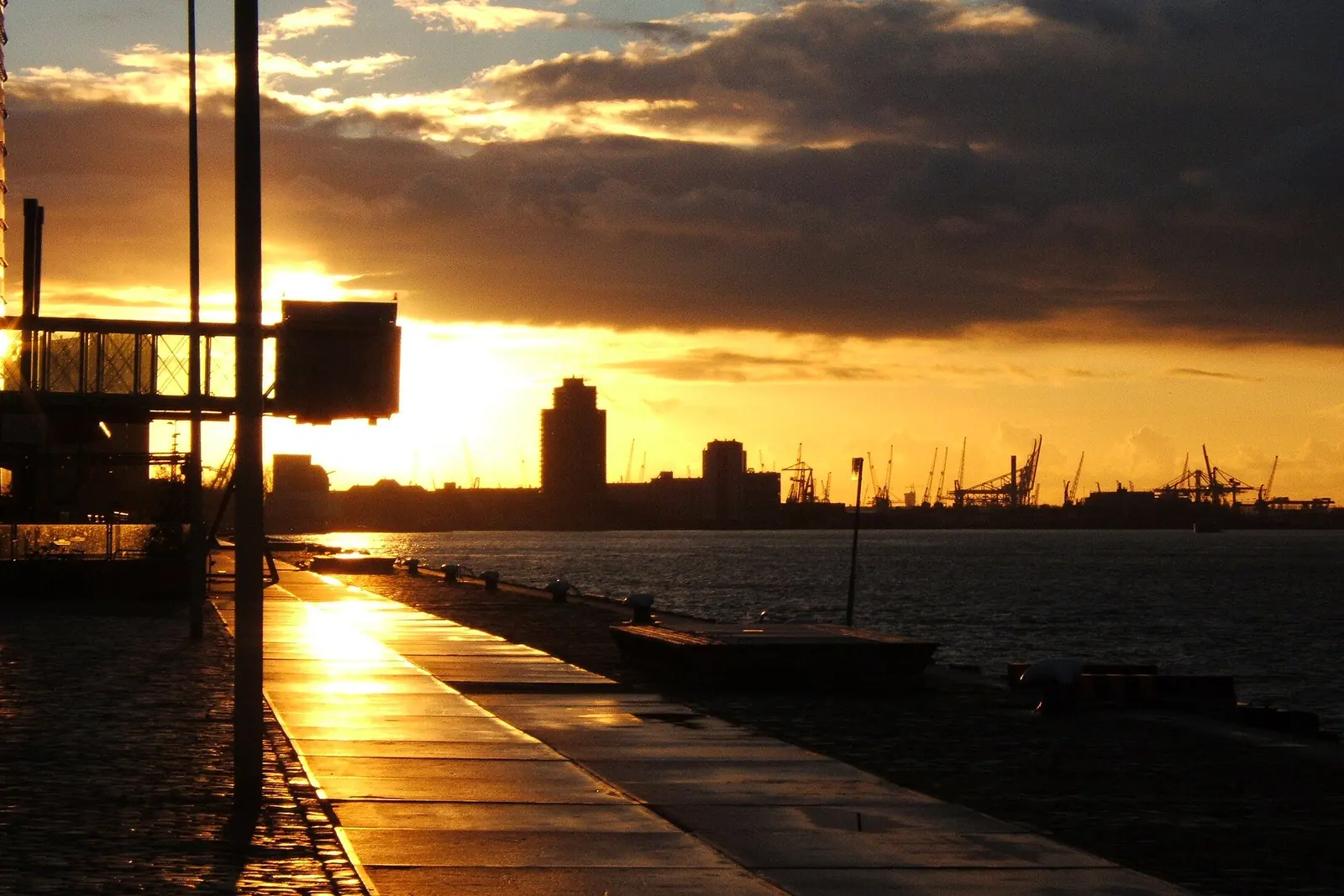
Spend the second half of day two in the Jordaan, a former working-class district of narrow streets, brown cafés and small galleries, then drift east through the Nine Streets shopping lanes. Finish with a canal cruise at dusk, when the bridges light up and the water goes glassy. If you have energy left, take the free ferry behind Centraal Station to the NDSM wharf, a shipyard turned creative district with a skyline view back across the water.
Day 3: Windmills at Zaanse Schans and Golden Age Haarlem
Head north early to Zaanse Schans, an open-air settlement on the Zaan river where working windmills still grind spices, oil and chalk. Trains from Amsterdam Centraal reach Zaandijk in about 20 minutes, and from the station it's a short walk over the bridge. Arrive before 10am to have the dykes and green timber houses mostly to yourself; by midday the coach groups arrive. Workshops on site demonstrate clog carving and cheese making, and the views across the water to the industrial skyline behind are a neat lesson in how old and new Netherlands overlap.
Come back south and stop in Haarlem, a 15-minute train ride from Amsterdam and a far calmer base if you'd rather sleep outside the capital. Its Grote Markt is one of the loveliest squares in the country, dominated by the Grote Kerk with its huge organ, and the Frans Hals Museum shows why this small city punched far above its weight in the Golden Age. The Teylers Museum, the oldest museum in the Netherlands, is a wonderfully eccentric cabinet of fossils, instruments and drawings.
Haarlem also rewards aimless wandering: the Corrie ten Boom House tells a moving wartime story, and the streets around the Amsterdamse Poort — the only surviving city gate — are full of good lunch spots. If you're visiting in late April, the flower parade route passes through this region, filling the streets with floats built entirely from bulbs.
Day 4: Keukenhof Tulips and the Windmills of Kinderdijk
Between roughly mid-March and mid-May, the gardens at Keukenhof near Lisse open for a few short weeks and display millions of bulbs in designed beds, pavilions and open woodland. Go on a weekday, right at opening, and combine it with a bicycle loop through the surrounding bulb fields, where the colour runs in stripes to the horizon. Outside that window the fields are bare, so swap this day for extra time in Rotterdam or Utrecht.
From Leiden or Schiphol it's easy to continue to Rotterdam, a city rebuilt with swagger after wartime bombing. The Markthal's arched interior is covered in a giant food-themed mural, the Cube Houses tilt at 45 degrees beside it, and the Erasmus Bridge spans the Maas in a single elegant sweep. The mirrored bowl of the Depot Boijmans Van Beuningen stores and displays the city's entire art collection in public view.
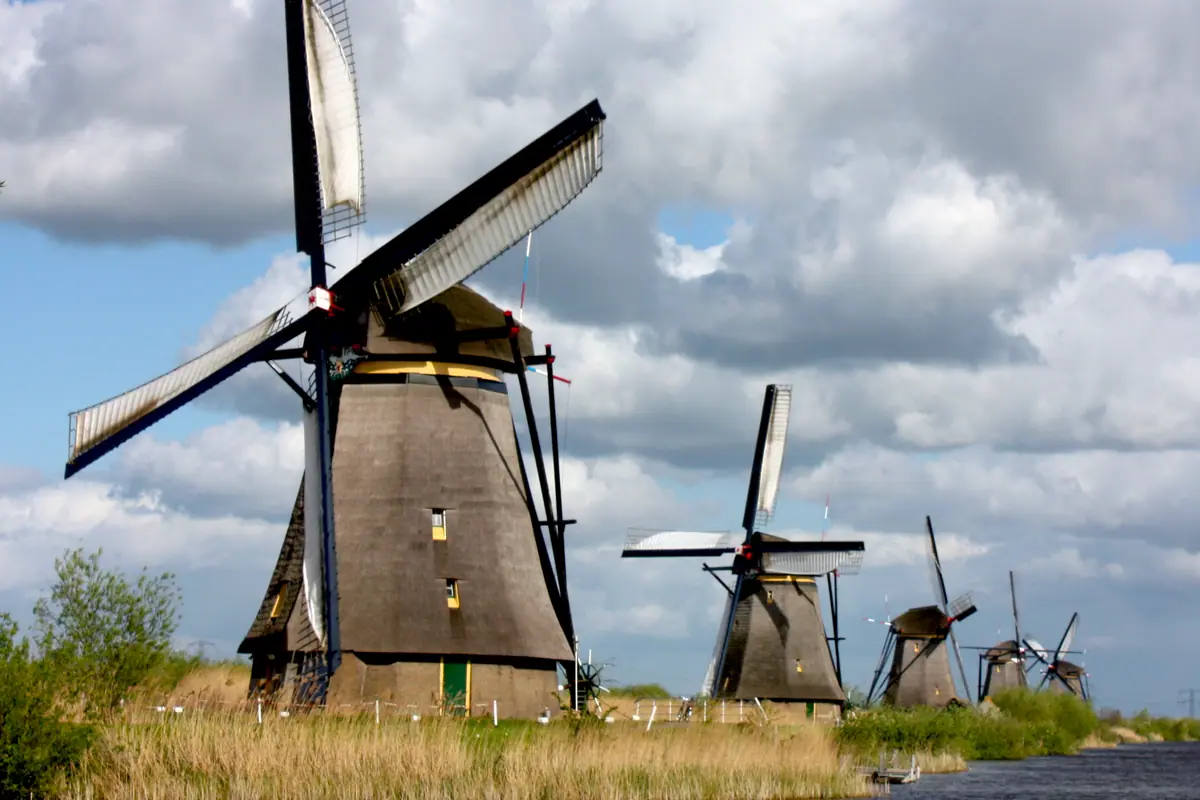
Finish at Kinderdijk, where 19 windmills stand in a row along drainage channels — the single clearest picture of how this low country was kept dry. A water bus runs from Rotterdam to the site, and late afternoon light on the brick and thatch is worth planning around. Walking the full dyke path takes about an hour at an easy pace; a canal boat adds another 30 minutes.
Day 5: The Hague, Delft and the Dom Tower of Utrecht
The Hague is the seat of government and home to the Mauritshuis, a jewel-box museum holding Vermeer's Girl with a Pearl Earring and Rembrandt's Anatomy Lesson. A few minutes away, the Binnenhof complex and Hofvijver lake form the political heart of the country, and the Peace Palace sits further out among embassies and mansions. If the weather turns kind, Scheveningen's long sandy beach is 20 minutes by tram, with a pier that juts into the North Sea.
Delft is a 15-minute train hop from The Hague and looks like a scaled-down Amsterdam without the crowds. Its Markt holds the Nieuwe Kerk, resting place of the Dutch royal family, where you can climb the tower for a wide view over canals and red roofs. The Oude Kerk leans noticeably, a souvenir of the soft peat beneath it, and several workshops still hand-paint blue-and-white pottery — the craft the city is known for worldwide.
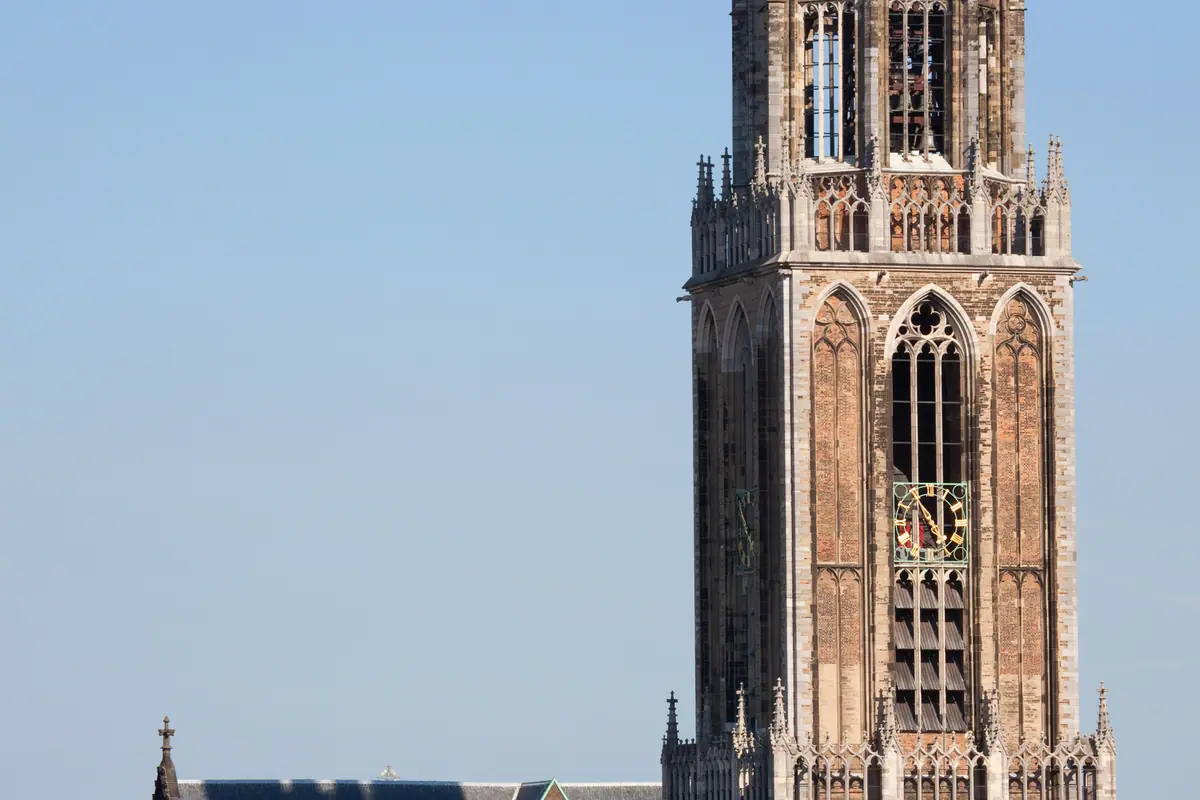
Round off the day in Utrecht, 40 minutes by train, where the Dom Tower stands 112 metres tall as the country's tallest church tower. The cathedral nave collapsed in a storm in 1674, leaving the tower detached from the church — a quirk you can see from every angle. Below street level, the Oudegracht's wharf cellars have been converted into cafés and studios, giving the city a two-storey waterfront unlike anywhere else in the Netherlands.
Day 6: Hoge Veluwe National Park, the Kröller-Müller and Giethoorn
Rent a car or take a train-and-bus combination to De Hoge Veluwe, the country's largest continuous nature reserve, a mix of heath, sand drifts and pine forest. White bicycles are free to use inside the park, and cycling the 40-kilometre path network is the best way to spot red deer and mouflon. In the middle of the trees sits the Kröller-Müller Museum, whose Van Gogh holdings are second only to the Amsterdam museum's, plus a sculpture garden scattered across the lawns.
If you'd rather stay on water, head instead to Giethoorn in Overijssel, a village of thatched farmhouses on islands linked by wooden footbridges. There are no roads through the oldest part — only canals, which you explore by whisper boat or by renting a canoe. It's roughly two hours from Amsterdam by public transport, and a weekday visit makes a big difference, since weekends bring steady streams of day-trippers.
Whichever you choose, keep the evening loose. Both routes drop you back near Utrecht or Zwolle in time for a relaxed dinner, and this is a good night to repack, since Dutch hotel rooms are compact and train travel rewards travelling light.
Day 7: Maastricht, Wadden Islands and the Journey Home
For a final day with a different flavour, take the train south to Maastricht, one of the oldest cities in the country and visibly more Burgundian than the north. The Vrijthof square, flanked by the Basilica of Saint Servatius, is made for slow coffee, and the limestone caves of Sint-Pietersberg hold a labyrinth of tunnels and charcoal drawings. The Bonnefantenmuseum's landmark tower is worth a look even from the outside.
Alternatively, use the last day for the Wadden Sea, a UNESCO-listed tidal landscape of mudflats and sandbanks. Texel, reachable by ferry from Den Helder, is the easiest island to reach, with seal-spotting boat trips, wide beaches and quiet cycle paths. Ferries fill up in July and August, so book ahead.
Most departures leave from Schiphol, which has a direct train link from almost every city on this route, but Eindhoven and Rotterdam also handle international flights. Aim to be back at the airport three hours before a long-haul departure — security lines there can be slow, and the terminal is large enough that gate walks take real time. If you're flying home on a Sunday, note that some regional buses run reduced schedules.
Frequently asked questions
What is the best time of year for this Netherlands itinerary?
Late April and May are ideal: the Keukenhof gardens and bulb fields are at their peak, days are long, and temperatures hover around 15–18°C. Mid-September to mid-October is the best alternative, with softer light, fewer crowds and lower accommodation rates. December brings festive lights and museum queues, while July and August are warm but busy and pricier.
Do I need a car to follow this route?
No. The Dutch rail network is dense and fast — Amsterdam to Utrecht takes about 25 minutes and Amsterdam to Maastricht roughly 2.5 hours. Contactless bank cards work at station gates, and day passes can be loaded onto a reusable travel card. A car only helps for De Hoge Veluwe and rural corners such as Giethoorn, and even there buses connect reliably.
How many days should I spend in Amsterdam itself?
Two full days cover the Rijksmuseum, Van Gogh Museum, Anne Frank House, the Canal Ring and the Jordaan at a comfortable pace. A third day lets you add the NDSM wharf, the Albert Cuyp Market and a long afternoon in Vondelpark. Beyond that, the country's other cities reward you more than extra time in the capital.
Should I book museums and attractions in advance?
Yes, and more so than most travellers expect. The Anne Frank House sells timed slots online only and books out weeks ahead. The Rijksmuseum, Van Gogh Museum and Mauritshuis also use timed entry in high season, and Keukenhof tickets are cheapest and quickest if bought for a specific date and arrival window before you travel.
What should I pack for a week in the Netherlands?
Layers and a genuinely waterproof jacket with a hood, because rain arrives sideways and often. Comfortable walking shoes matter more than anything else — cobbles, dykes and museum floors add up — and a small daypack beats a suitcase on intercity trains. Bring a universal adapter for the two-pin sockets and a refillable bottle; tap water is excellent everywhere.
Plan it — flights in Netherlands
Live search, booked directly with trusted providers.
Sort the rest of your trip
Everything for Netherlands, in one place
Stay in Netherlands
Hotels, guesthouses and apartments — compared in one search.
Search hotels
Transfer in Netherlands
Private driver waiting on arrival — no queues, no surprises.
Book a transfer
Travel insurance
Medical cover, delays and lost baggage — sorted before you go.
Get coveredMore guides in Netherlands
Best Time to Visit the Netherlands: Seasons, Crowds and Where to Stay
Where to Stay in the Netherlands: Best Cities, Neighbourhoods and Hotels for Every Trip
Top Things to Do in the Netherlands: Must-See Landmarks and Experiences