The Netherlands fits an improbable amount into a country you can cross by train in under three hours: seventeenth-century canal rings, nineteen working windmills lined up against the sky, and spring fields that turn entire provinces bright yellow. The trick is knowing which towns deserve a full day and which sights need booking weeks ahead — and this guide sorts both out.
Amsterdam: The Canal Ring, the Museum Quarter and the Jordaan
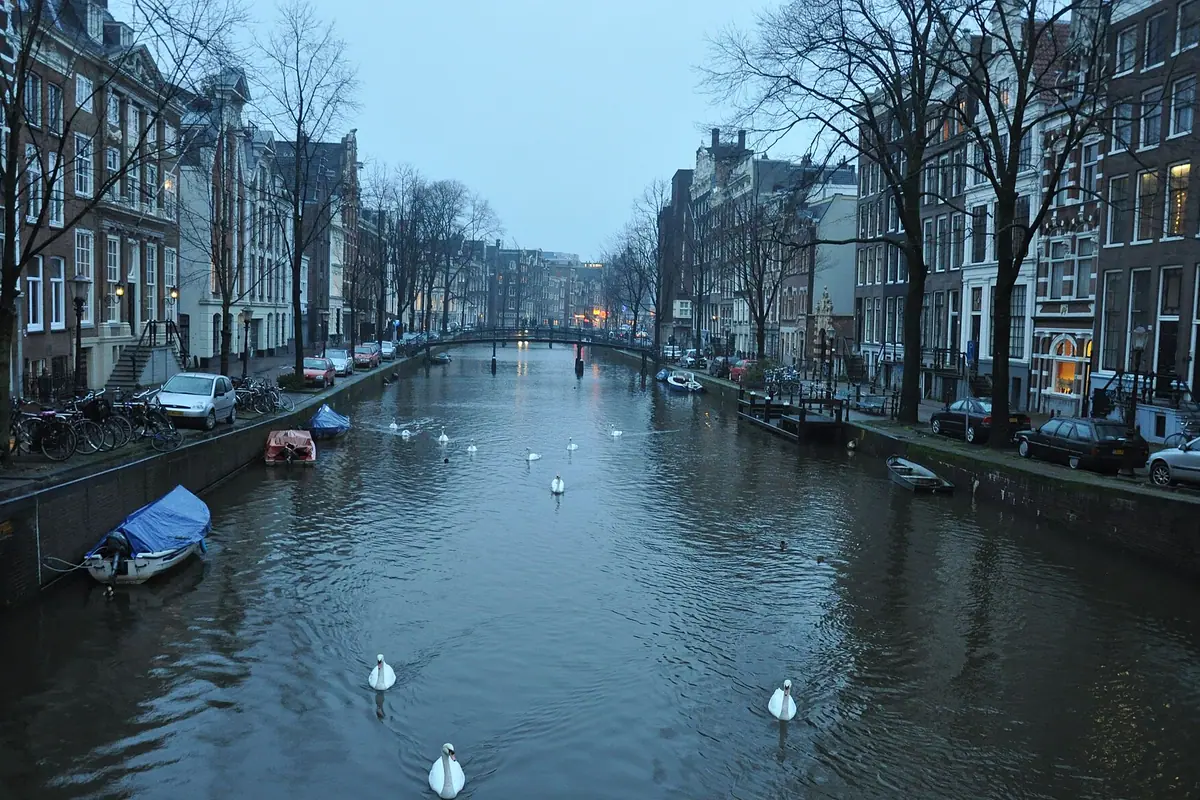
Amsterdam's historic centre is built around a ring of canals dug in the seventeenth century — Herengracht, Keizersgracht and Prinsengracht, three concentric arcs that still define the shape of the city. Walking or cycling these stretches at dusk, when the gabled merchant houses light up and reflect in the water, is the single best free experience in the country. An hour-long boat tour gives you the low-angle view, but the real texture is at street level: the narrow lanes of the Jordaan district on the west side, the boutiques around the Nine Streets, and the brown cafés where you can sink into a corner with a beer and watch the world drift past.
The Museum Quarter, a short tram ride south, holds the heavyweights in a walkable cluster. The Rijksmuseum is the national treasure house, home to Rembrandt's monumental Night Watch and four centuries of Dutch painting in a building you could happily spend half a day in. Next door, the Van Gogh Museum traces the artist's short, furious career through more than two hundred paintings, and the Stedelijk Museum covers modern and contemporary work in a bathtub-white extension that divides opinion. Book timed tickets for all three; the Van Gogh in particular sells out days in advance.
Two other Amsterdam addresses deserve advance planning. The Anne Frank House on Prinsengracht releases timed-entry slots online only, and they vanish quickly — reserve as soon as your dates are fixed, ideally several weeks out. For a slower afternoon, Vondelpark offers ponds, rose gardens and open-air theatre in summer, while the Albert Cuyp Market in De Pijp is the place to graze on stroopwafels, raw herring and aged cheese amid the stalls.
Haarlem, Utrecht, Delft and Leiden: The Historic Small Cities
The Netherlands rewards travellers who step off the Amsterdam–Rotterdam axis. Haarlem, fifteen minutes from Amsterdam by train, feels like a smaller, quieter version of the capital: a vast Grote Markt ringed by gabled buildings, the towering St. Bavo Church with its famous organ, and the Teylers Museum, the oldest museum in the country and still arranged like a nineteenth-century cabinet of curiosities. Saturday mornings bring a market to the square that is worth timing your visit around.
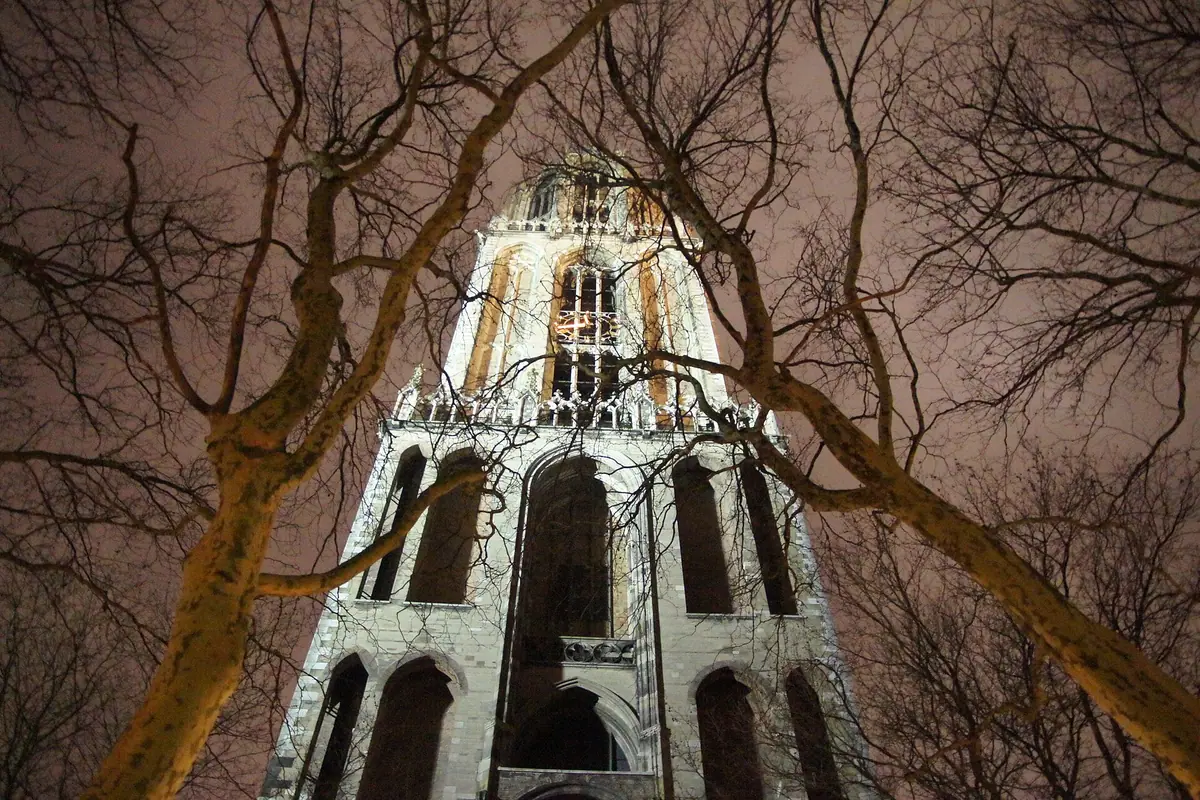
Utrecht, a twenty-minute hop further south, centres on the Dom Tower, at just over 112 metres the tallest church tower in the Netherlands. Climb it with a guided tour for a rooftop view over the whole province, then descend to the Oudegracht, where the canal runs below street level and medieval wharf cellars have been converted into cafés, studios and restaurants — you eat and drink at water height while boats slide by. Delft, half an hour from The Hague, is the postcard town of blue-and-white pottery workshops, with the Nieuwe Kerk on the Markt holding the royal burial vault and a climbable tower that offers the classic view over its canals. Leiden, meanwhile, pairs the country's oldest university with quiet waterways and the reconstructed windmill De Valk, and it's an easy, uncrowded half-day from either Amsterdam or The Hague.
Windmills, Water and the Engineered Landscape
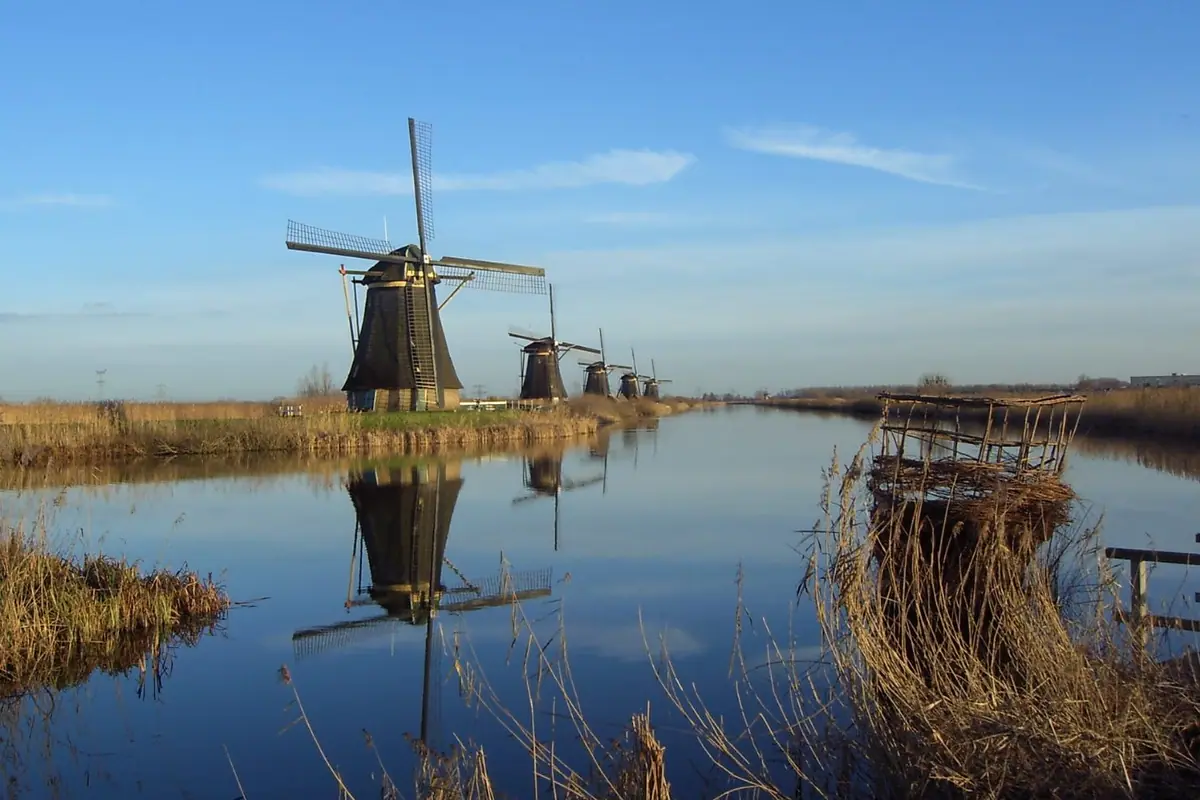
No visit is complete without confronting the fact that much of this country was drained, pumped and held back from the sea by human effort. Kinderdijk, a short bus or boat ride from Rotterdam, is the shorthand version: nineteen eighteenth-century windmills standing in a line along two canals, still functional, still photogenic, with a bicycle path running the length of the site. Go at opening time or late afternoon — midday crowds can swamp the narrow dyke.
Closer to Amsterdam, Zaanse Schans is a partly reconstructed village of working windmills, clog-making and cheese workshops, all reachable in about twenty minutes by train and bus from the city. It's touristy and unashamedly so, but the mills genuinely grind and the smell of cocoa from the nearby factory is real. If you want windmills with nobody else around, the Biesbosch wetlands and the polder roads of North Holland offer mile after mile of them for free.
Further southwest, the Delta Works in Zeeland are the modern answer to the same problem — a staggering chain of storm-surge barriers, including the Oosterscheldekering, built after the catastrophic 1953 floods. Exhibits explain how the barriers can be opened and closed; the adjoining beaches are excellent in summer. And in the east, Giethoorn is a village with no roads through its old centre, navigated by whisper-quiet punter boats and small electric launches — arrive before ten in the morning if you want the canals to yourself.
Tulip Season, National Parks and the Wadden Islands
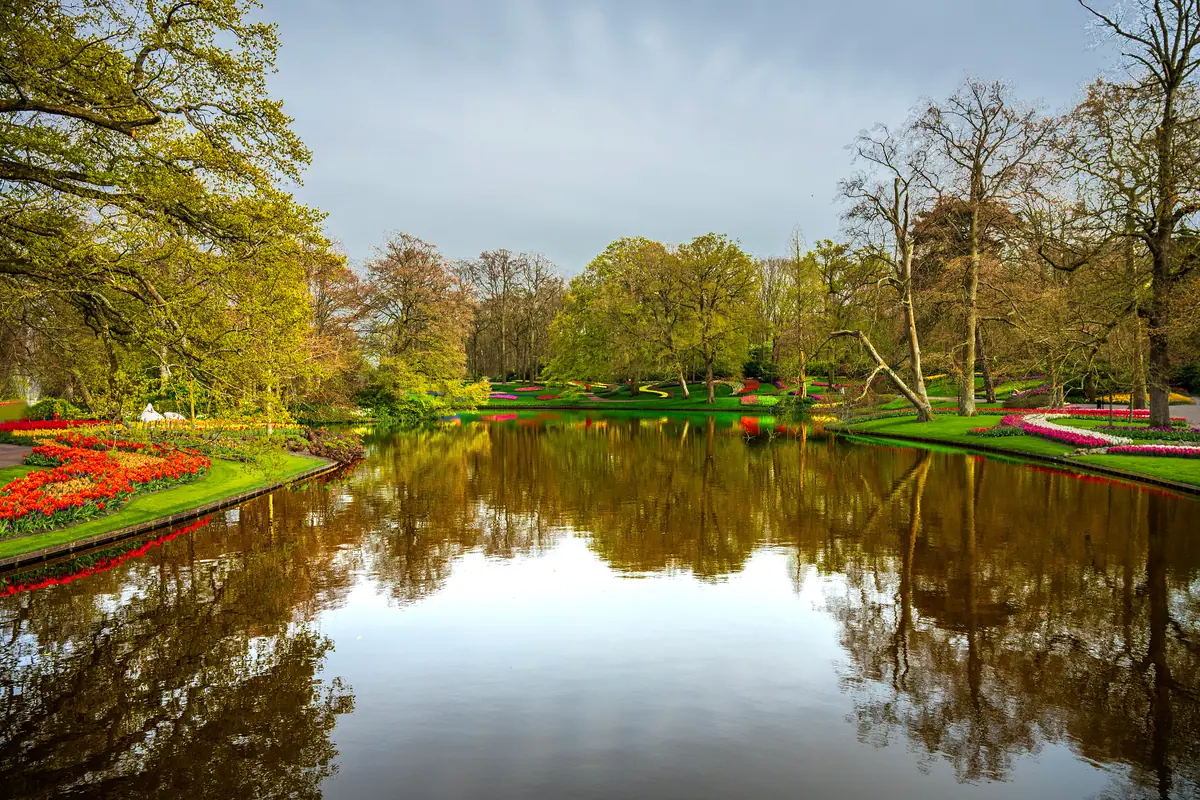
The Dutch flower season is short, fierce and worth planning a whole trip around. Keukenhof, near Lisse, opens for roughly eight weeks from mid-March to mid-May and plants something in the region of seven million bulbs each year, laid out in themed gardens, pavilions and long colour bands. It is enormously popular, so aim for the first hour after opening or the last two before closing. Between the garden and the surrounding bulb fields you can cycle the Bollenstreek routes and ride straight past working farms that supply much of the world's tulip trade.
For something wilder, the Hoge Veluwe National Park covers around 5,500 hectares of heath, drift sand and woodland in the east, and hands out free white bicycles at its gates so you can pedal between the landscapes. Inside sits the Kröller-Müller Museum, with a sculpture garden and one of the largest Van Gogh collections anywhere, plus the underground Museonder, which displays the roots and soil of the park itself. Book half a day at minimum; a full day is better.
Off the northern coast, the Wadden Islands are a different country in spirit — Texel and Schiermonnikoog are the easiest to reach, with ferries from Den Helder and Lauwersoog. Come for empty beaches, seal-spotting boat trips and guided mudflat walks across the seabed at low tide, a genuinely odd and memorable two hours in ankle-deep silt. Nights here are remarkably dark, which makes the islands a good autumn escape from city lights.
Rotterdam, The Hague and the Southern Cities
Rotterdam rebuilt itself after wartime destruction and became the country's architectural playground. The Markthal, a vast arched hall with apartments stacked over a market floor, anchors one end of the centre; the yellow Cube Houses tilt on their sides nearby; and the Erasmus Bridge, a single white pylon and cable span, has become the city's symbol. A harbour tour takes you past the container terminals that make this Europe's largest port, while the Museum Boijmans Van Beuningen's mirrored depot has drawn crowds for its rooftop sculpture garden alone.
The Hague, thirty minutes away, is where the country does politics and diplomacy. The Binnenhof, a complex of gabled buildings around a courtyard pond, is the historic seat of government; the Mauritshuis next door holds Vermeer's Girl with a Pearl Earring and Rembrandt's The Anatomy Lesson in a small, perfectly judged collection you can finish in ninety minutes. Escher in Het Paleis is a playful counterpoint, and the Peace Palace and Scheveningen's long beach promenade round out a very good day.
Head south and the country changes again. Maastricht's Vrijthof square, its Romanesque basilica and the limestone caves of Sint-Pietersberg give the city a distinctly Burgundian flavour, and the food — regional pies, strong cheeses, robust beer — is the best in the Netherlands. Between Utrecht and Eindhoven, the Efteling theme park in Kaatsheuvel is a serious family draw built on fairy tales and dark rides rather than roller-coaster height records. Otherwise, use the country's rail spine: trains run every fifteen to thirty minutes between the major cities, tap in and out with a contactless bank card, and you can pair any two cities above in a single relaxed day.
When to Go, What to Book and How to Get Around
April and May are the sweet spot: tulips in bloom, King's Day on 27 April turning every city orange, and mild if unpredictable weather. September and October are quieter, cheaper and often surprisingly sunny, with the heath turning purple on the Veluwe. Summer brings long evenings and festival season but also peak crowds in Amsterdam and along the coast. Winter is for museum marathons, Christmas markets and the occasional cold snap good enough for skating on frozen canals.
Booking discipline matters more here than in most of Europe. Anne Frank House tickets, Keukenhof entry, Van Gogh Museum slots and any Dom Tower climb should all be reserved ahead, and hotels in Amsterdam, Utrecht and Maastricht fill up fast around King's Day, Easter and the flower season. Pack for four seasons in one afternoon — a waterproof layer and comfortable shoes will earn their luggage space more than anything else.
Getting around is the easy part. The rail network is dense and reliable, bicycles can be rented in every town, and almost everything is contactless — cards are accepted for nearly everything, so cash is optional. Two local habits will serve you well: give cyclists absolute priority on the many bike lanes, and if a shop or café feels unhurried, that's not rudeness, it's gezelligheid — the Dutch art of taking time. Lean into it, order another coffee, and let the itinerary slip a little.
Frequently asked questions
How many days do you need to see the Netherlands?
Four to five days covers Amsterdam thoroughly plus two or three day trips — Haarlem, Utrecht and Kinderdijk are all under an hour away. A week lets you add Rotterdam and The Hague, or push north to the Wadden Islands; ten days gives you room for Maastricht, the Hoge Veluwe and Zeeland without rushing.
When is the best time to see the tulips?
Keukenhof typically opens in the second half of March and closes in mid-May, with the fullest bloom usually in the second and third weeks of April. The surrounding bulb fields peak around the same time, but field flowers are cut early, so mid-April is the safest bet for both the garden and the open fields.
Do you need to book attractions in advance?
Yes for the big ones. Timed tickets for the Anne Frank House, Van Gogh Museum and Keukenhof are released online in advance and often sell out days or weeks ahead in spring and summer. The Rijksmuseum and Mauritshuis are easier but still worth reserving to skip queues.
Is the Netherlands easy to travel without a car?
Very. Trains connect all major cities every fifteen to thirty minutes, buses and ferries reach Kinderdijk, Zaanse Schans and the Wadden ferries, and bicycles can be rented everywhere for a few hours or a few days. Contactless bank cards work on trains, trams and buses, so you rarely need to buy a separate ticket.
What should you pack for a Dutch trip?
Layers, a waterproof jacket and comfortable walking shoes — weather can shift from sun to drizzle within an hour, whatever the season. Add a warm mid-layer and gloves if you're visiting between November and March, and sun protection for the Wadden Islands beaches, where the wind hides how strong the sun is.
Plan it — experiences in Netherlands
Live search, booked directly with trusted providers.
Sort the rest of your trip
Everything for Netherlands, in one place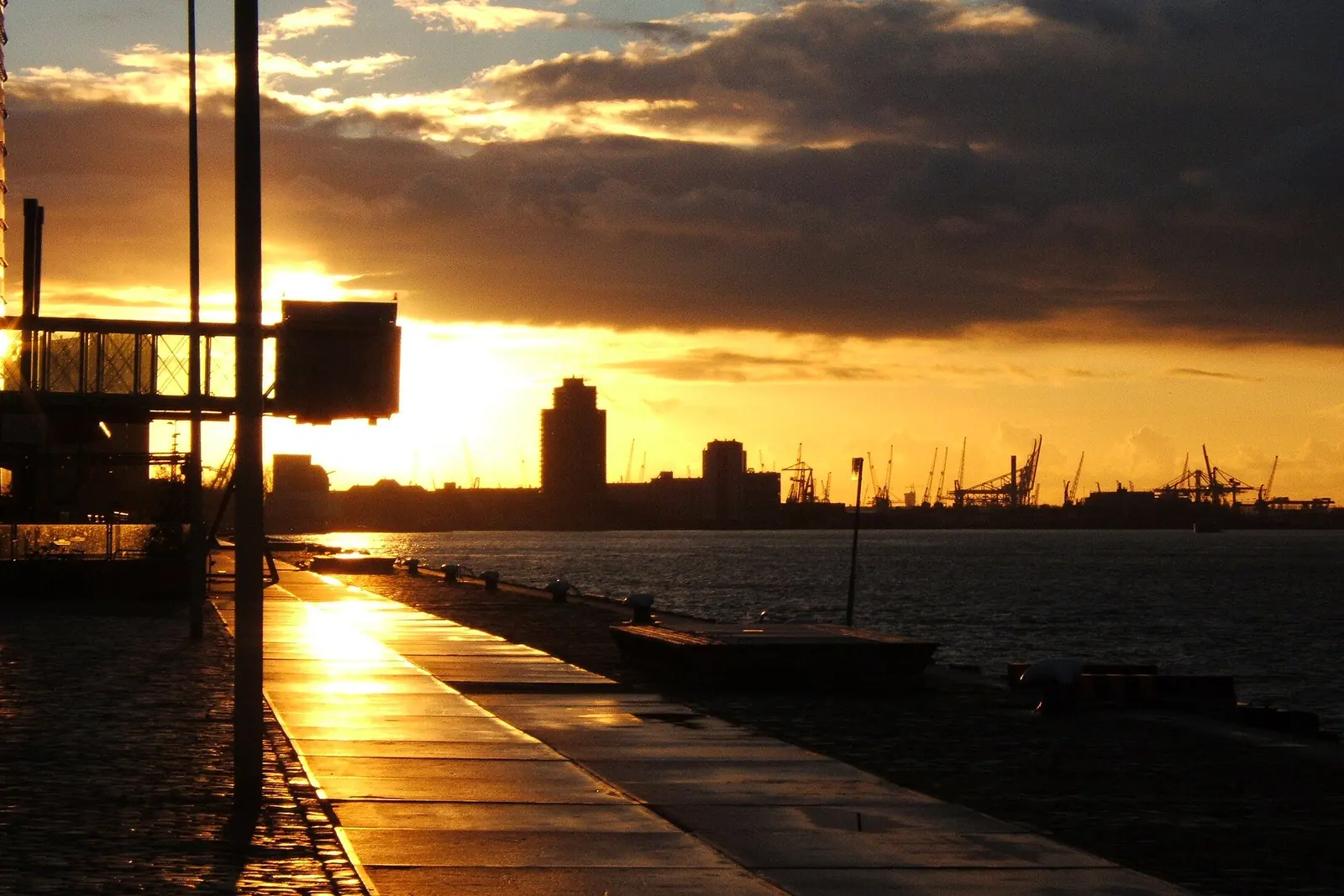
Stay in Netherlands
Hotels, guesthouses and apartments — compared in one search.
Search hotels
Transfer in Netherlands
Private driver waiting on arrival — no queues, no surprises.
Book a transfer
Stay online in Netherlands
Travel eSIM — data the moment you land, no roaming bills.
Get an eSIMMore guides in Netherlands
Best Time to Visit the Netherlands: Seasons, Crowds and Where to Stay
Where to Stay in the Netherlands: Best Cities, Neighbourhoods and Hotels for Every Trip
Top Things to Do in the Netherlands: Must-See Landmarks and Experiences