Montenegro packs a continent's worth of scenery into a country you can cross in a single, spectacular day: a fjord-like bay wrapped around medieval stone towns, a riviera of pebble coves and picture-postcard islets, and mountains that plunge into a canyon so deep it swallows the light. This is a guide to the places that genuinely deserve your time, and the rhythm that makes them work.
The Bay of Kotor: The Walled Town and Its Postcard Islands
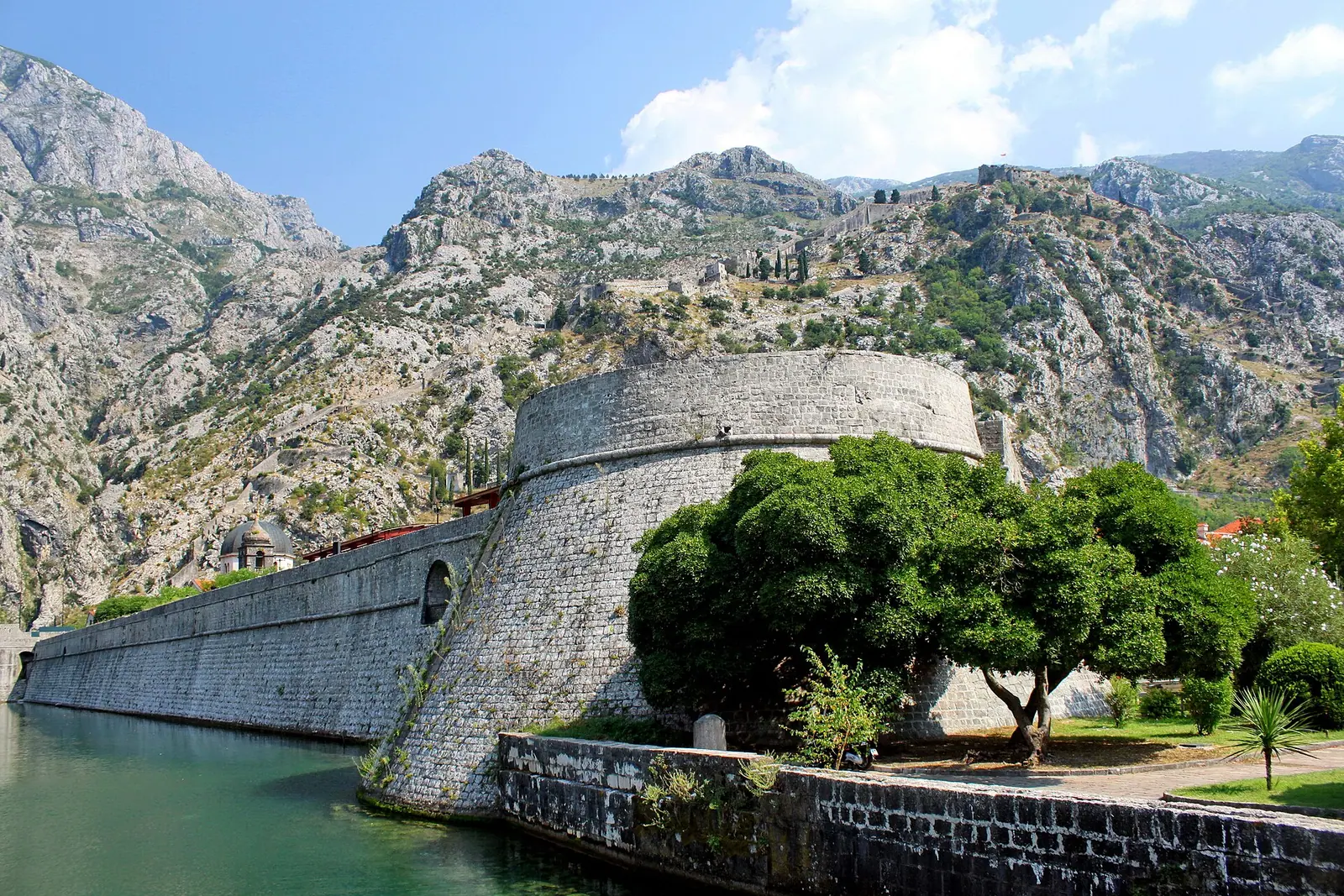
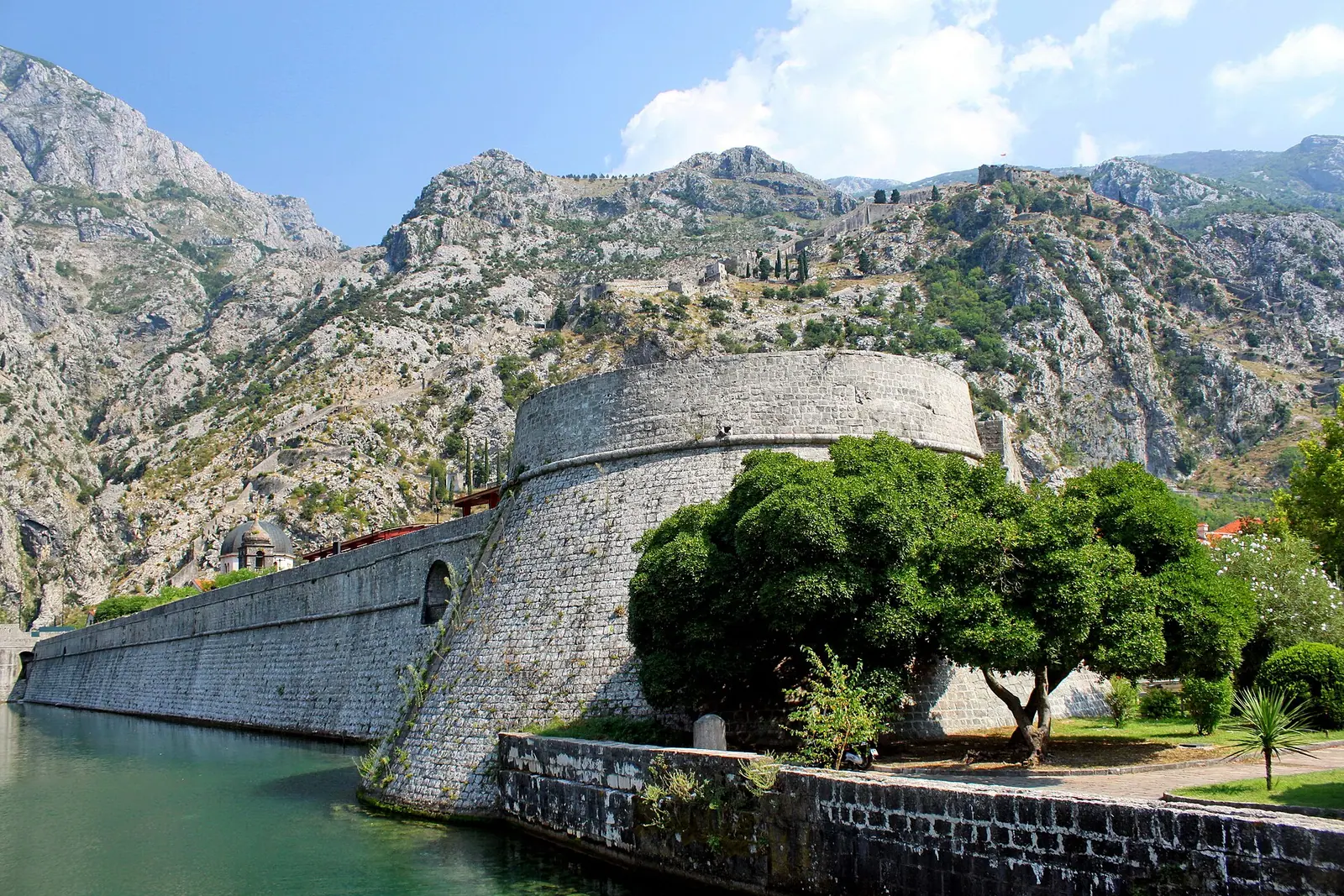
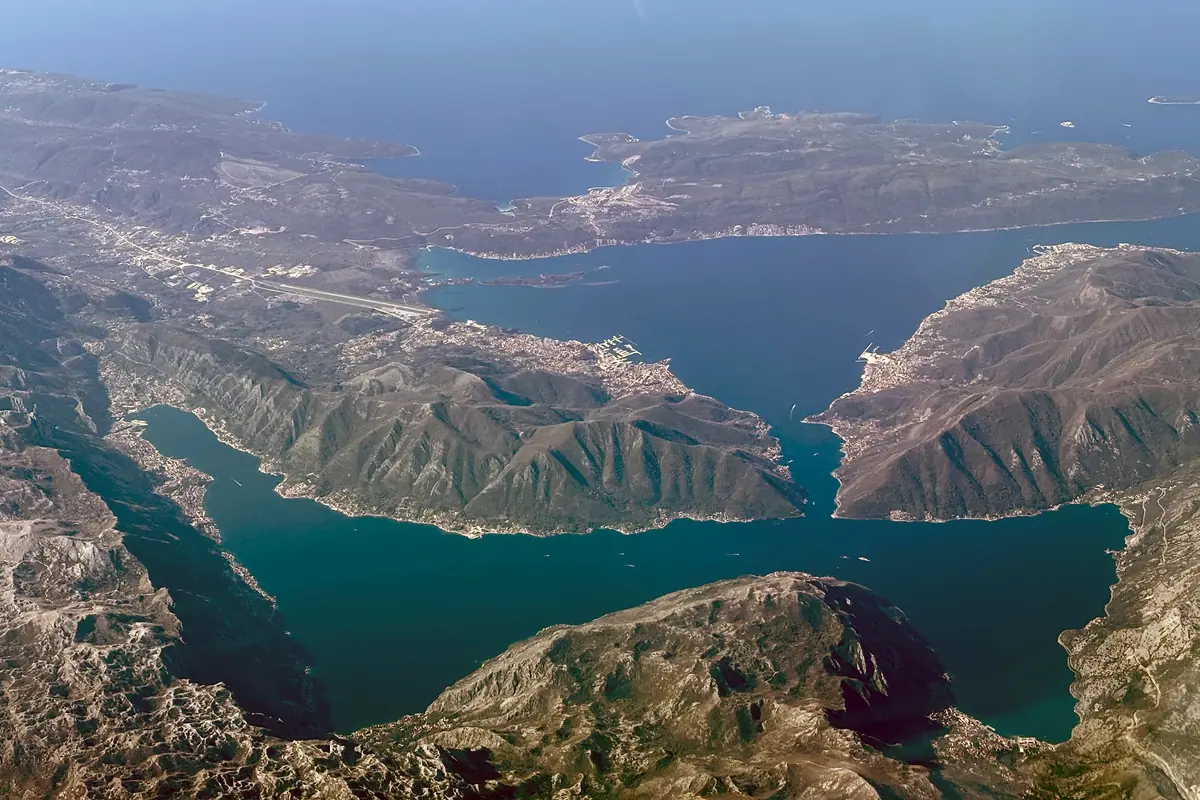
Almost every journey here begins at the Bay of Kotor, a drowned river canyon that curves inland between limestone walls so dramatic that sailors once mistook it for a fjord. The UNESCO-listed old town of Kotor sits at its deepest point, a knot of marble-paved lanes, sunk-in piazzas and church spires pressed against the cliff. Give yourself at least half a day to wander it slowly, then a further two to three hours to climb the fortress walls up to San Giovanni (St John) — a switchbacking trail of roughly 1,350 steps that rewards you with the single best view in the country, the bay and its twin inlets laid out like a map in miniature. Go early, before the heat and the tour groups, and carry water.
West along the shore road, the baroque village of Perast is a perfectly preserved stretch of captains' mansions and shuttered palaces, founded on a fortune made from Venetian shipping. From its waterfront, small boats run out to Our Lady of the Rocks, an artificial islet built over centuries by sailors dropping stones after each safe return, and topped by a blue-domed church whose interior is hung with votive silver. Two islands, one real and pine-covered, one made by hand — the boat trip out to them is short, cheap and unforgettable, and best done in the soft light of late afternoon.
Further out towards the open sea, the Luštica peninsula hides the Blue Cave, where you can swim in water that glows electric turquoise when the sun is high, and the abandoned Austro-Hungarian fortress island of Mamula. Boat tours leave from Herceg Novi, Kotor and Tivat throughout the warmer months; the round trip usually takes three to five hours depending on how many swimming stops you make.
The Budva Riviera and the South Coast
Budva is Montenegro's busiest resort, and its old town is the reason to come: a compact, Venetian-walled peninsula of churches, tiny squares and sea-facing cafés that turns honey-coloured at sunset. The town beaches on either side fill up fast in July and August, so walk fifteen minutes south along the coastal path towards Mogren to find a cove wedged between two cliffs, or head to the quieter stretches around Petrovac. Nightlife in Budva is famously loud; if that is not your thing, base yourself in Petrovac, Bečići or Rafailovići instead and visit Budva for dinner.
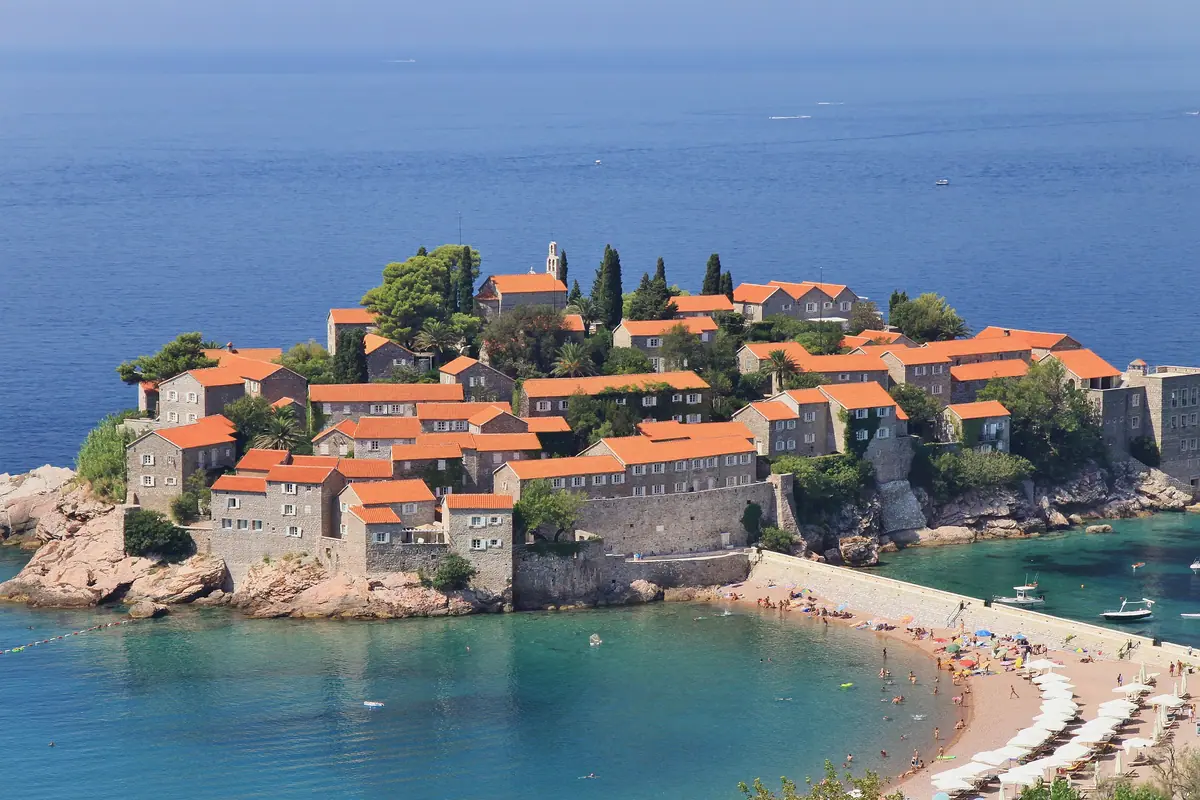
A few kilometres further south lies Sveti Stefan, the most photographed sight in Montenegro: a fortified islet village of stone roofs and red-tiled lanes linked to the mainland by a narrow sandy causeway, with the pink-sand Miločer beach and its pine-shaded park just beyond. The island itself is a private resort and you cannot walk its streets without staying there, but the causeway, the viewpoints above the highway and the beach either side are free and open, and the light is best in the hour before dusk.
Continue south and the coast loosens into the long, low sweep of Ulcinj, a town with an Ottoman-era old town on its headland and a genuine Albanian-influenced character — minarets, olive groves and bazaars rather than Venetian stone. Just outside it, Velika Plaža (Long Beach) runs for around thirteen kilometres of fine grey sand, and beyond that Ada Bojana sits on a river island at the Albanian border, a slow, sandy, kite-surfing kind of place where the eating is superb and the pace is close to zero.
Durmitor, Tara Canyon and the Wild North
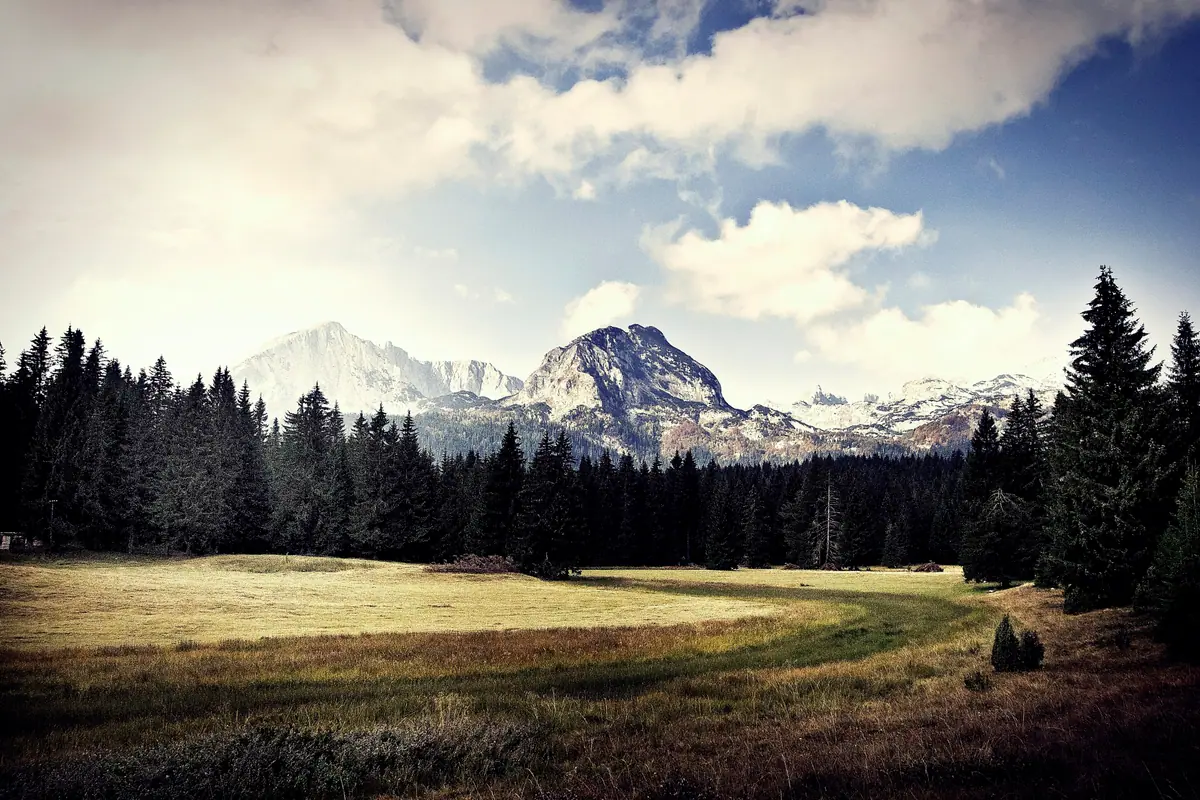
Inland, the country changes completely. Durmitor National Park, a UNESCO-listed massif of bare limestone peaks and glacial lakes, is the heart of Montenegrin mountain life. Its centrepiece, Crno Jezero (Black Lake), is an easy one-hour circuit on foot from the town of Žabljak and calm enough for a swim in summer. From there, trails fan out to the meadows and lookouts of the Sedlo pass and, for experienced hikers with a full day and an early start, up Bobotov Kuk, the park's highest summit at just under 2,523 metres.
The Tara River has carved out the deepest canyon in Europe, in places around 1,300 metres from rim to water, and the drive along it — past viewpoints and the graceful, five-arched Đurđevića Tara Bridge — is one of the great road journeys of the Balkans. Rafting trips on the Tara run roughly three to five hours, are suitable for beginners in summer, and combine gentle stretches with a handful of proper rapids; zip lines also cross the canyon beside the bridge. Downstream, the river joins the Piva, whose dammed lake and sunken canyon are a striking detour on the road to Bosnia.
This is also the part of Montenegro for winter: snow settles on Durmitor from December to March, ski lifts run outside Žabljak, and traditional katun shepherd hamlets still appear on high pastures in summer, selling homemade cheese and kajmak to anyone who walks past. Fuel up on njeguški pršut, a smoked cured ham from the Njeguši plateau, and priganice, small fried dough balls served with honey.
Lake Skadar, Lovćen and the Old Capital
Lake Skadar is the largest lake in the Balkans, a jigsaw of channels, lilies, reed beds and floating islands shared with Albania. It is a birder's paradise — pelicans, herons and pygmy cormorants are common — and easily explored by kayak, small wooden boat or on the little car ferry across from the lakeside village of Kamenari. Wine villages such as Rijeka Crnojevića, where a loop of the river curves beneath stone bridges and old mills, make a perfect lazy afternoon with a glass of Vranac red.
Above it all climbs the Lovćen serpentine, twenty-five hairpin bends of old imperial road leading to the summit and to the Njegoš Mausoleum, the tomb of the poet-prince who gave Montenegro much of its identity. From the terrace beside the mausoleum, on a clear day, you can see the whole country at once, the lake one way, the sea the other. The drive up takes under an hour from Cetinje, the tiny former royal capital whose palace museums, monastery and embassy-turned-cafés give the town a faded, dignified calm.
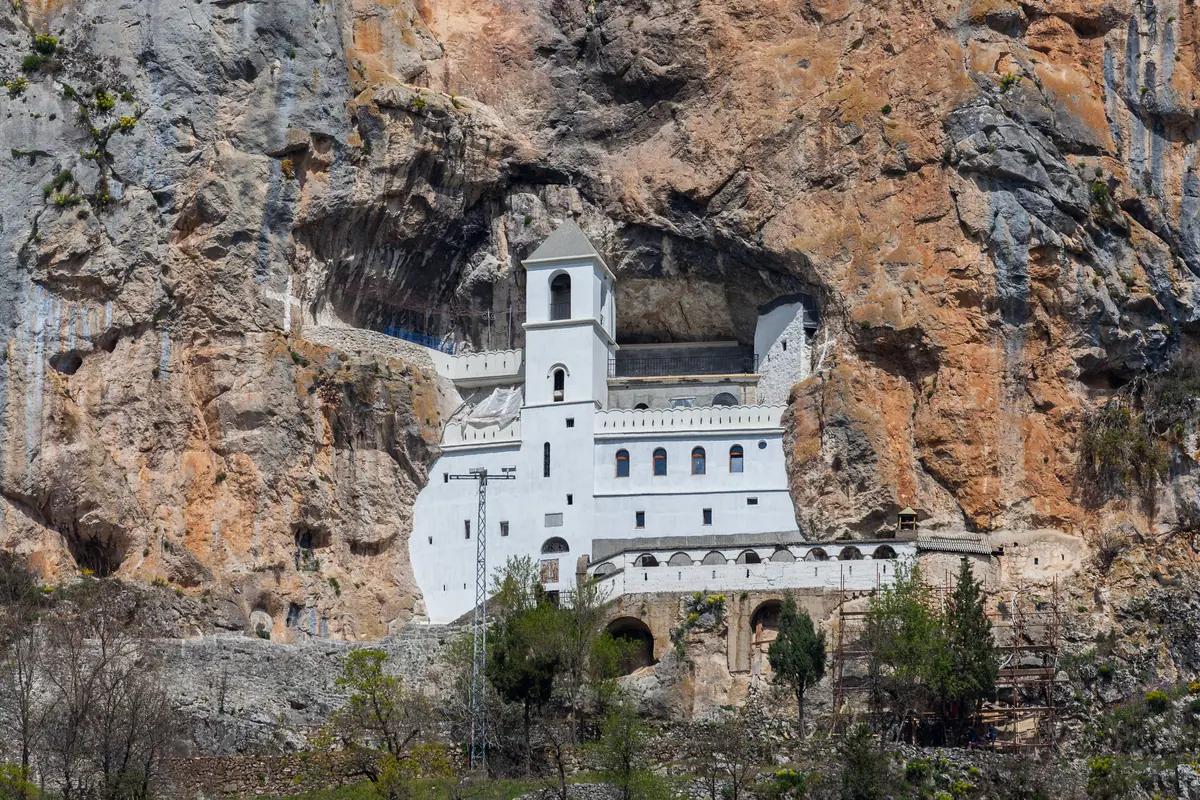
Nearby, cut into the cliff face above the Zeta valley, Ostrog Monastery is the country's most important pilgrimage site, its whitewashed walls and frescoed cave church clinging improbably to a vertical rock. Visitors of any faith are welcome, but dress respectfully — shoulders and knees covered — and note that the final approach is a steep, narrow road best driven carefully or walked in part.
Quiet Corners, Hidden Rivers and Green Valleys
Beyond the headline sights, Montenegro hides a network of green escapes worth building into any itinerary. Biogradska Gora, near Kolašin, protects one of Europe's last remaining primeval forests, with a small glacial lake you can walk around in about forty minutes and a summer music and hiking scene in the surrounding villages. The Piva and Morača canyons offer monasteries, rafting and raft-supported fishing, while the Accursed Mountains of Prokletije, on the Albanian border, are the domain of serious hikers and multi-day ridge walks.
On the coast, Herceg Novi's stepped gardens and long promenade offer a gentler alternative to Budva, with the eighteenth-century fortress of Forte Mare and a stretch of beach bars down at Igalo. Risan, a few kilometres away, holds Roman floor mosaics from the second century, quiet and almost always empty. Inland from the coast, the old town of Stari Bar, wrecked and abandoned after a nineteenth-century explosion, is a haunting, evocative ruin with an aqueduct, olive trees and views straight down to the sea.
Podgorica, the modern capital, is rarely anyone's highlight, but it makes a practical base: the Millennium Bridge, the ruins of Ribnica fortress, and the green gorge of the Cijevna river are all easy half-day outings, and the city is the transport hub for the coast, the mountains and Lake Skadar.
When to Go, How Long, and How to Move Around
Late May, June and September are the sweet spots: sea temperatures warm enough for swimming, roads clear, and mountain trails open without the July and August crush. July and August are hot on the coast — over 30°C is common — busy, and best booked well ahead, while October brings rain and cheaper rooms. For Durmitor and the northern canyons, aim for late June to early October for hiking and rafting, and January to March for snow. Winter on the coast is mild, often sunny, and wonderful for old towns without the crowds, though many island boats and beach restaurants shut between November and April.
Ten days is a comfortable minimum if you want both the bay and the mountains; seven days works if you stay coastal and take one inland day trip. Roads are winding and slow — 100 kilometres can easily take two hours — so resist over-scheduling. Buses link the main towns reliably, but hiring a car is the difference between seeing the country and glimpsing it, particularly for Durmitor, Piva, Lake Skadar's quiet shore and the Lovćen serpentine.
Practical rhythms help: start sightseeing before nine in summer, save your swim for late afternoon, and keep small change for parking and for the boatmen at Perast. Reserve accommodation in Kotor, Budva and Žabljak weeks in advance for high season, and remember that many guesthouses in the north take cash only.
Frequently asked questions
How many days do you need in Montenegro?
Seven to ten days is ideal. Three or four days covers Kotor Bay and the Budva riviera, and the rest allows for Lake Skadar, Lovćen and Cetinje, plus two or three nights in Durmitor for the Tara canyon and Black Lake. A rushed five-day trip is doable but means choosing either coast or mountains rather than both.
What is the single must-see landmark in Montenegro?
The old town of Kotor and the fortress walls above it, combined with a boat trip from Perast to Our Lady of the Rocks. Nowhere else compresses the country's Venetian history, dramatic geography and swimming-in-a-bay appeal into one half-day so effectively.
When is the best time to visit Montenegro?
June and September for the coast — warm sea, fewer people, comfortable temperatures. Late June through early October for Durmitor, Tara rafting and Lake Skadar. August is the hottest and busiest month; winter is quiet and mild on the coast but snowy and ski-focused in the north.
Do you need a car in Montenegro?
Not strictly — buses connect Kotor, Budva, Cetinje, Podgorica and Žabljak — but a car makes a huge difference for Lake Skadar's quieter shores, the Lovćen serpentine, Piva and the Tara canyon viewpoints. Mountain roads are narrow and winding, so drive defensively and allow more time than the distance suggests.
Is Montenegro expensive and is it family-friendly?
It is generally more affordable than Western Europe, though Kotor, Sveti Stefan and Budva peak in July and August. The country suits families well: shallow pebble beaches, short lake and canyon walks, boat trips, and plenty of casual konoba restaurants serving grilled fish, salads and simple pasta for children.
Plan it — experiences in Montenegro
Live search, booked directly with trusted providers.
Sort the rest of your trip
Everything for Montenegro, in one place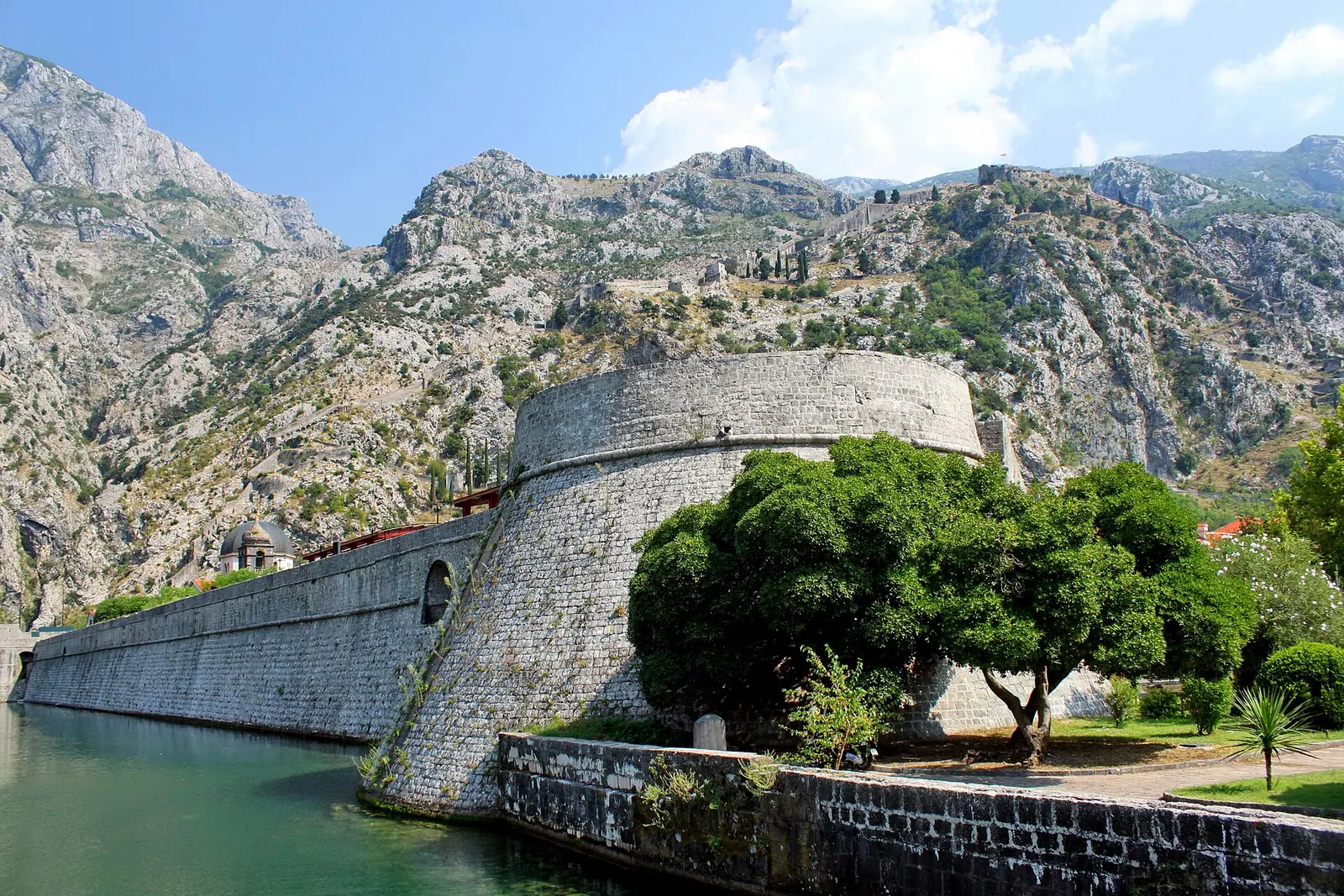
Stay in Montenegro
Hotels, guesthouses and apartments — compared in one search.
Search hotels
Transfer in Montenegro
Private driver waiting on arrival — no queues, no surprises.
Book a transfer
Stay online in Montenegro
Travel eSIM — data the moment you land, no roaming bills.
Get an eSIM