Mexico refuses to be one trip. It is a continent wearing a country's outline, where you can stand on a pyramid at dawn, eat a market breakfast of tamales and champurrado, then swim in a limestone sinkhole before the afternoon rain arrives. These are the landmarks and experiences worth building an itinerary around.
Ancient Pyramids and the Great Archaeological Sites
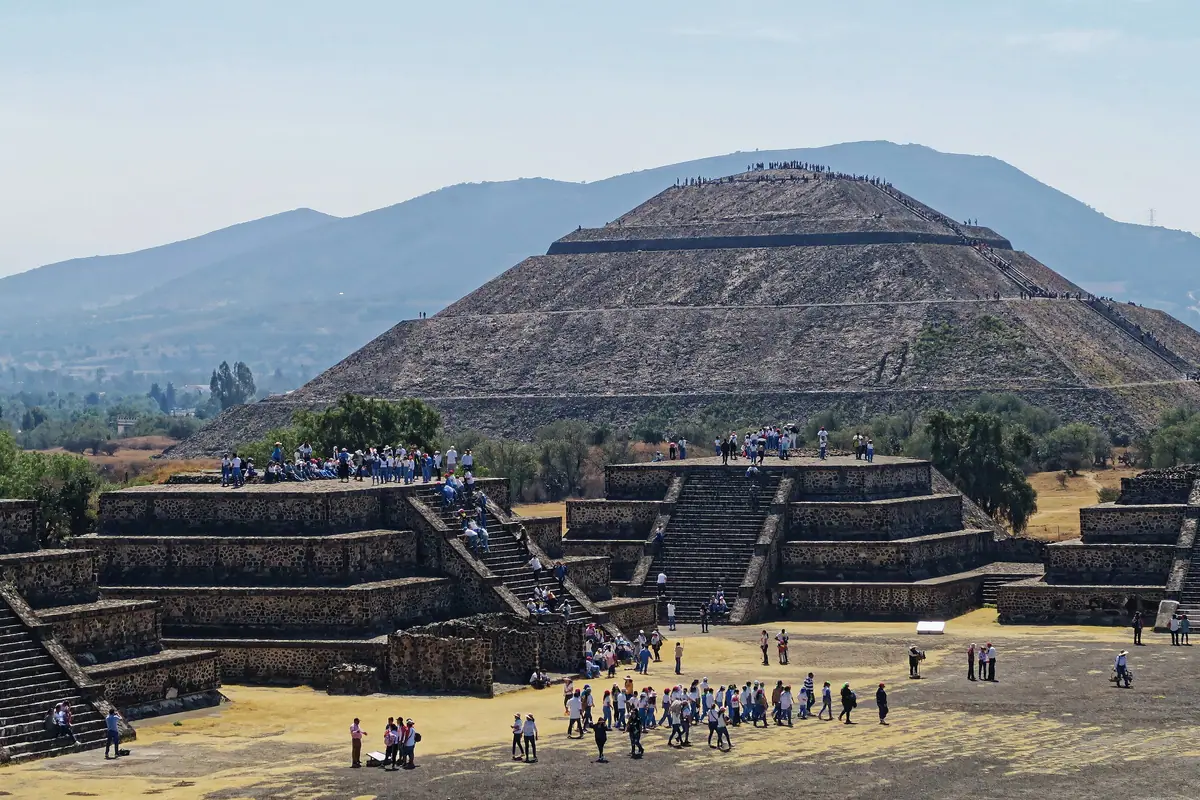
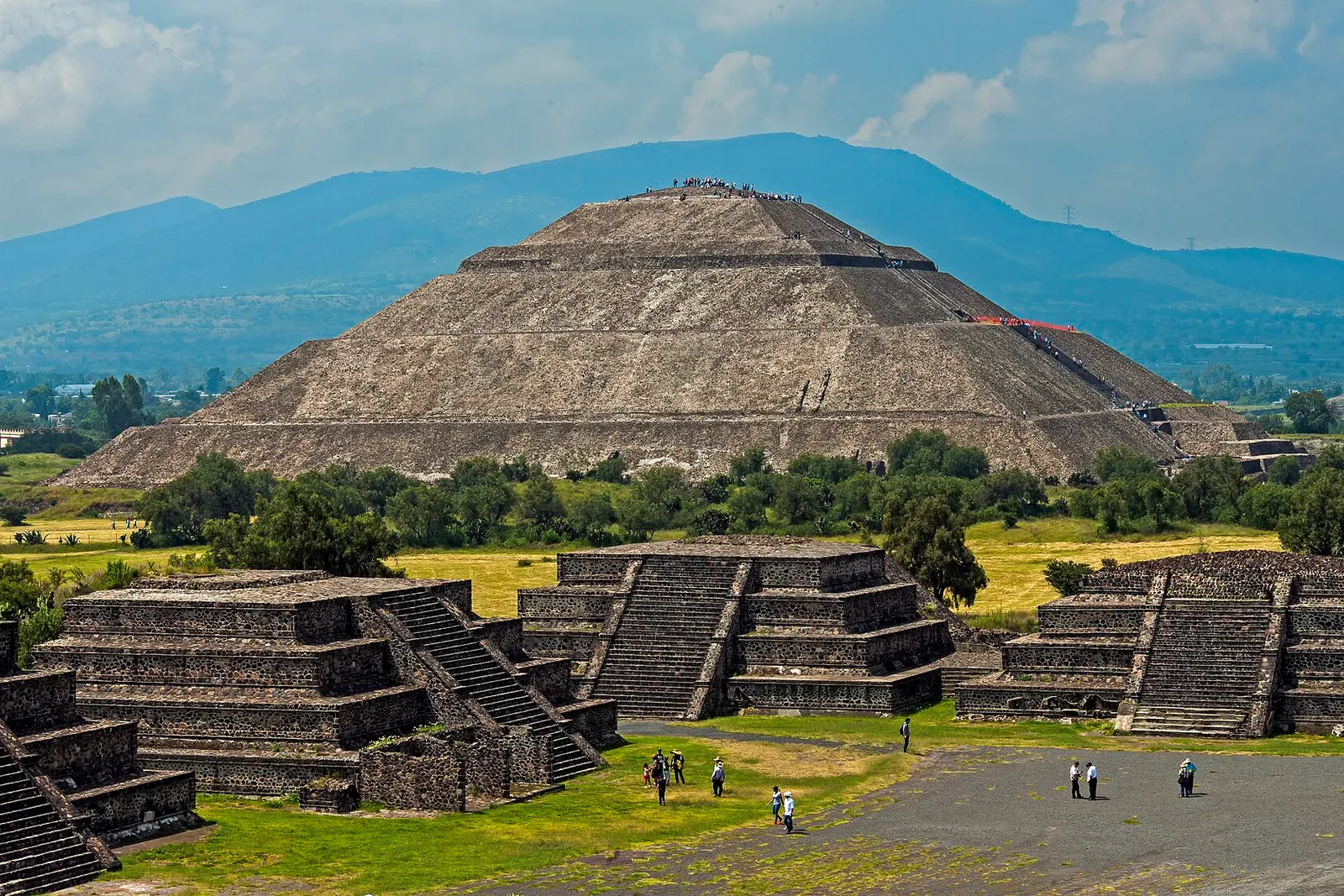
An hour northeast of Mexico City, Teotihuacán unfolds across a highland plain in a grid so deliberate it still reads like a city plan more than a thousand years after its builders disappeared. You enter along the Avenue of the Dead, flanked by temple platforms, with the Pyramid of the Moon closing the view ahead and the hulking Pyramid of the Sun on your right — one of the largest pyramid structures ever raised. The climb up its 200-plus stone steps is short but punishing at altitude, and the reward is a wind-scoured panorama over the whole complex. Arrive at opening time in the morning, when tour coaches have not yet filled the plaza and the light is still soft; plan on three to four hours, with a hat, water and sunblock, because there is almost no shade.
Chichén Itzá, in the Yucatán, is the country's most famous ruin and still worth the crowds. Its central pyramid, El Castillo, was engineered as a calendar in stone: 365 steps across four stairways, and at the spring and autumn equinoxes the setting sun casts a serpent-shaped shadow that slithers down the northern balustrade to meet a carved stone head at the base. Beyond it lie the largest ball court in Mesoamerica, the Temple of the Warriors and a deep sacred cenote once used for offerings. The site opens early — be there at eight to walk the grass before the heat and the vendors fully crank up. Midday in April is genuinely brutal, so carry water and finish by noon.
Beyond the big two, the archaeology is astonishingly varied. Palenque sits in dripping Chiapas jungle, its Temple of the Inscriptions rising over howler monkeys and mist. Monte Albán, a Zapotec city levelled on a mountaintop above Oaxaca, has danzante carvings and a plaza so vast it swallows crowds. Uxmal, south of Mérida, shows off the Puuc style's geometric stonework and the rounded Pyramid of the Magician. And Tulum is the only major Maya city built on the coast, its temple perched on a cliff above turquoise water. Most sites are guarded against climbing these days; expect rope barriers and stepped viewing platforms instead.
Mexico City: Aztec Ruins, Murals and Floating Gardens
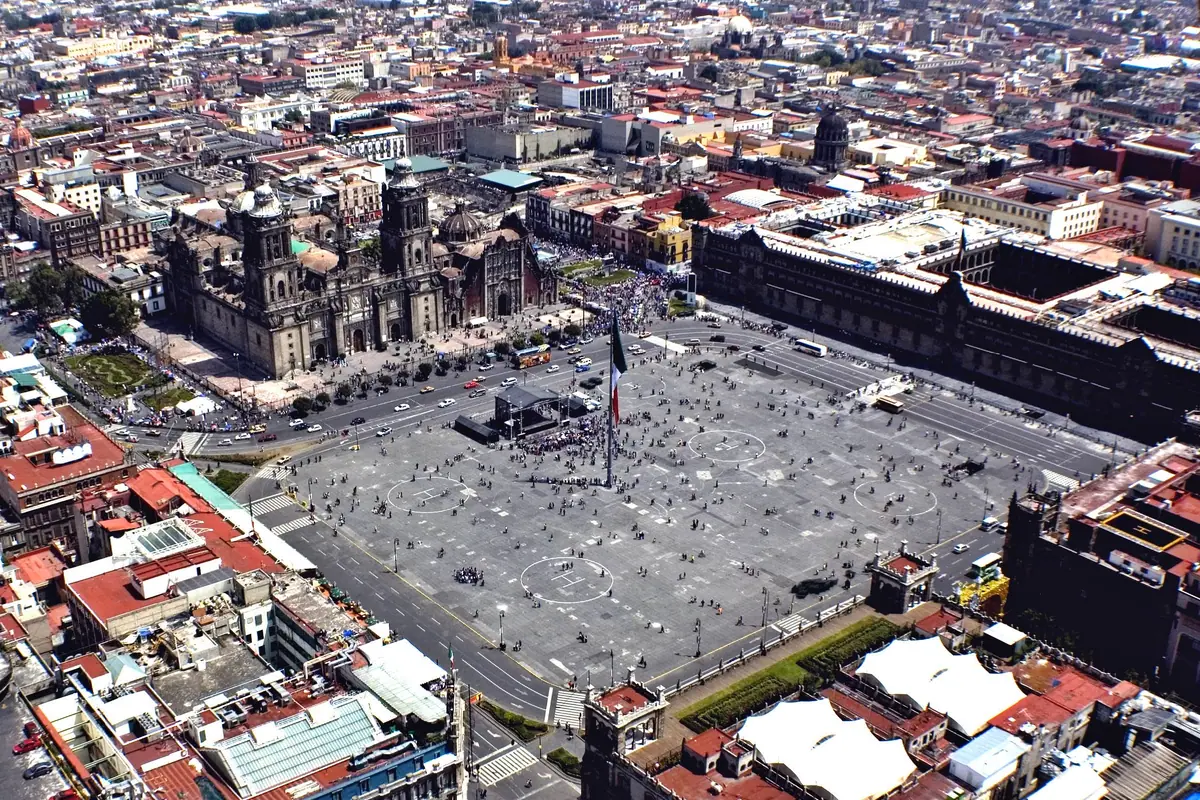
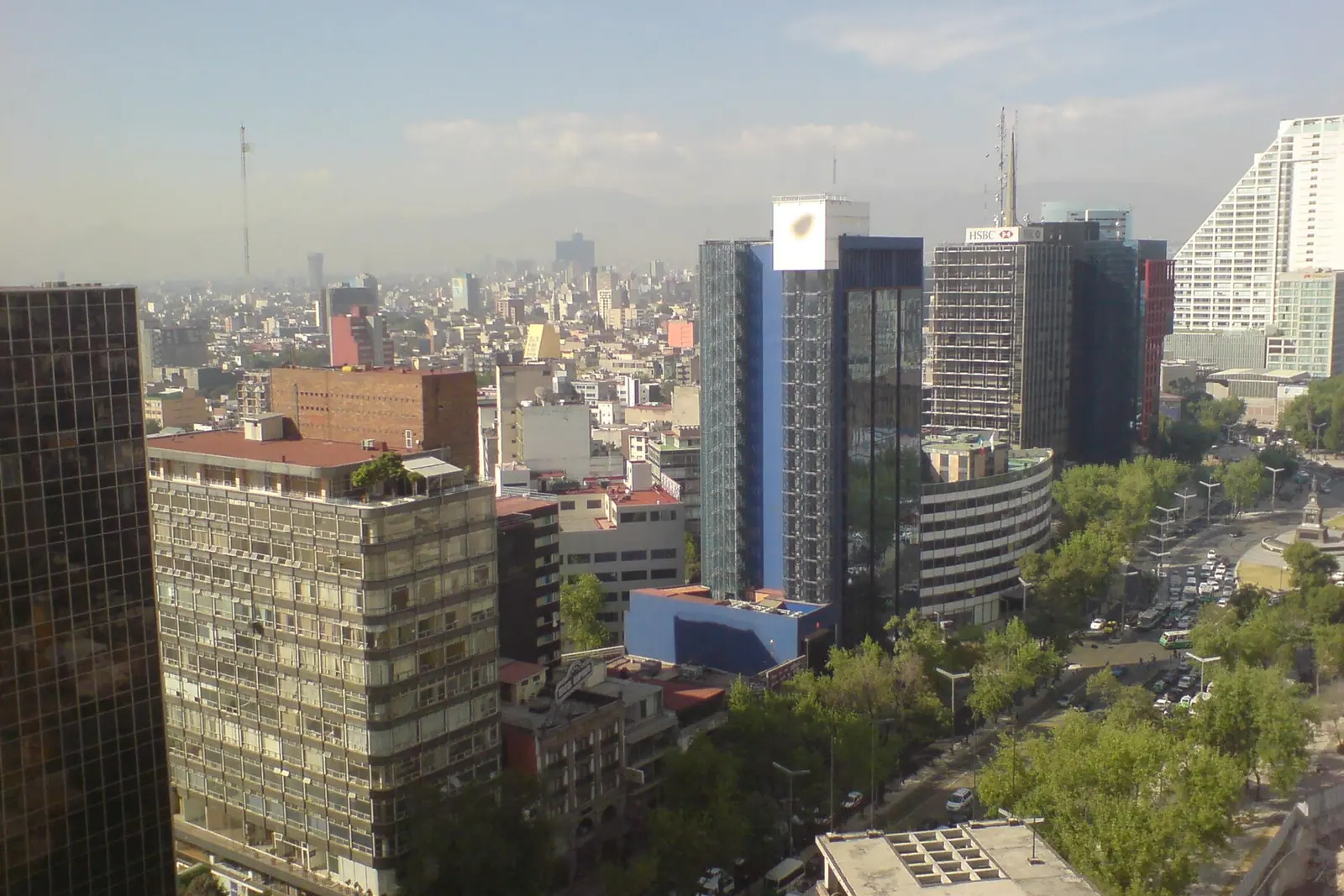
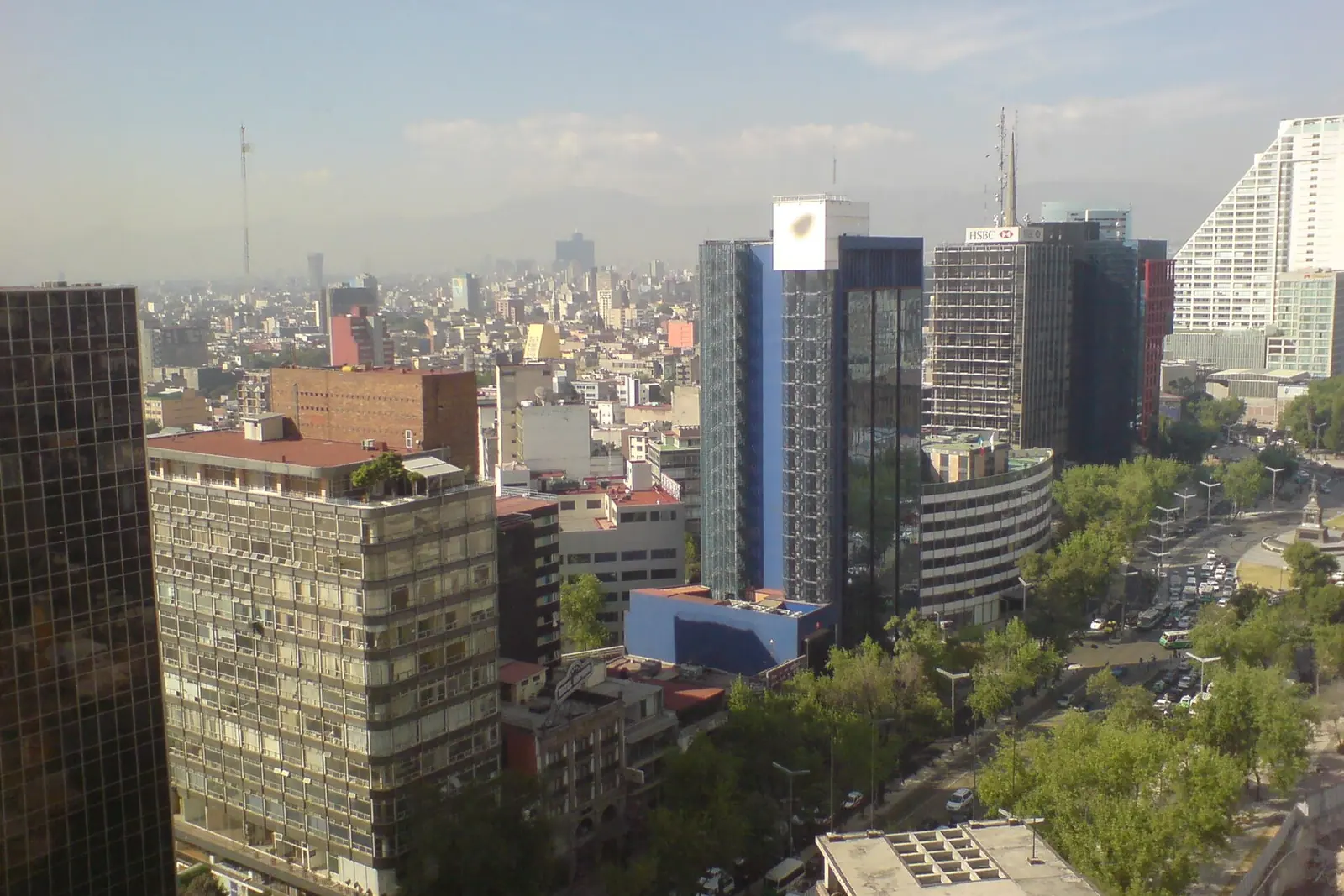
Mexico City rewards slow days. Start at the Zócalo, the enormous central square flanked by the Metropolitan Cathedral and the National Palace, whose stairwell walls carry epic murals tracing Mexican history. Beside the square, the Templo Mayor excavation reveals the sacred precinct the Spanish built directly on top of — a layered site where you can see Aztec serpent heads, offering chambers and the remains of a skull rack. From there walk to the Palacio de Bellas Artes, with its white marble facade and gilded interior, and time your visit for an evening performance if you can.
In Chapultepec Park, the Museo Nacional de Antropología is one of the finest museums in the Americas, room after room of colossal Olmec heads, jade masks and the monumental Aztec Sun Stone. Give it at least three hours, then climb the hill to Chapultepec Castle, the only royal palace in the country, for terraces and city views. South of the centre, Coyoacán is all cobbled lanes and painted houses; the Frida Kahlo Museum, in the blue-walled Casa Azul where she lived, sells out far in advance and requires a timed ticket booked online. On Saturdays, the San Ángel bazaar takes over the plazas with crafts and food stalls.
No visit is complete without Xochimilco, where flat-bottomed trajineras drift through canals that are the last remnant of the lake that once surrounded the city — mariachi bands hop aboard, vendors sell elote and micheladas from passing boats, and the whole thing is gloriously chaotic. Practical notes: most museums close on Mondays, the city sits at 2,240 metres, so take your first day gently, and the dry months from November to April bring clear skies and cool evenings.
Colonial Silver Towns and Indigenous Markets
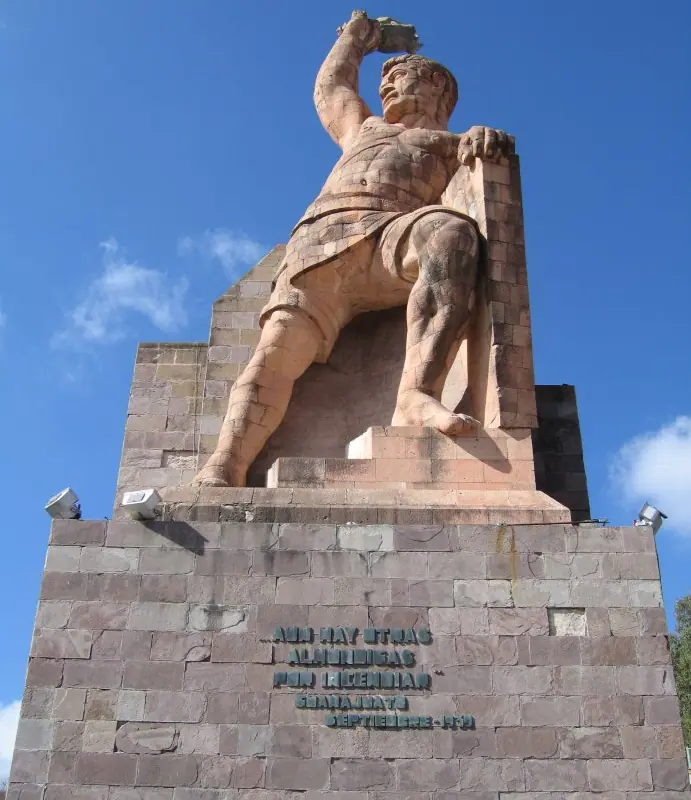
The colonial heartland is where Mexico's baroque imagination runs wild. Guanajuato tumbles down a ravine in a knot of alleyways, tunnels and staircases, with the pink-stone Basilica and the colossal statue of El Pípila gazing over the rooftops from a hill reached by funicular. Locals still stage callejoneadas — roving musical processions through the lanes — and the Callejón del Beso is so narrow that couples queue to kiss across the balconies. The town's mummy museum is macabre and unmissable if you have the stomach for it.
San Miguel de Allende, an hour away, is a photographer's dream of domes and bougainvillea, dominated by the neo-Gothic Parroquia de San Miguel Arcángel with its pink spires. Nearby Puebla layers on Talavera tile facades and the gilded Capilla del Rosario, and is the home of mole poblano — a sauce of chillies, chocolate, nuts and spices that takes days to make properly. Just outside the city, the Great Pyramid of Cholula is the largest by volume in the world, with a yellow church planted on its summit and excavated tunnels running through its core.
Oaxaca is the cultural anchor of the south: the zócalo buzzes nightly, the Templo de Santo Domingo drips with gold leaf, and the Benito Juárez Market serves tlayudas, quesillo and chapulines from dawn. Use it as a base for the weaving village of Teotitlán del Valle, the petrified waterfalls of Hierve el Agua, and small family palenques where mezcal is still roasted in earthen pits. The city's biggest party, the Guelaguetza, fills July with folk dance and music from every region of the state.
Natural Wonders: Copper Canyon, Cenotes and Monarch Butterflies
In northern Chihuahua, the Copper Canyon system is deeper and larger than the Grand Canyon, a network of ravines cut through copper-green rock and inhabited by Rarámuri communities. The Chihuahua–Pacific railway threads through it, crossing dozens of bridges and tunnels and stopping at Divisadero, where you step off to look straight down into the Urique Canyon. The full route takes most of a day and is best done between October and March, when the air is crisp; many travellers break the journey in Creel or take a guided descent to the hot springs at the canyon floor.
Cenotes are the Yucatán's freshwater cathedrals — collapsed limestone sinkholes where you swim in water so clear the fish cast shadows on the rock below. Cenote Ik Kil, near Chichén Itzá, has vines trailing from its rim; Dos Ojos and the Gran Cenote near Tulum are favourites for snorkelling and cavern diving. Go early, bring a rash guard rather than sunscreen, and if you are diving, note that some cenotes require a guide.
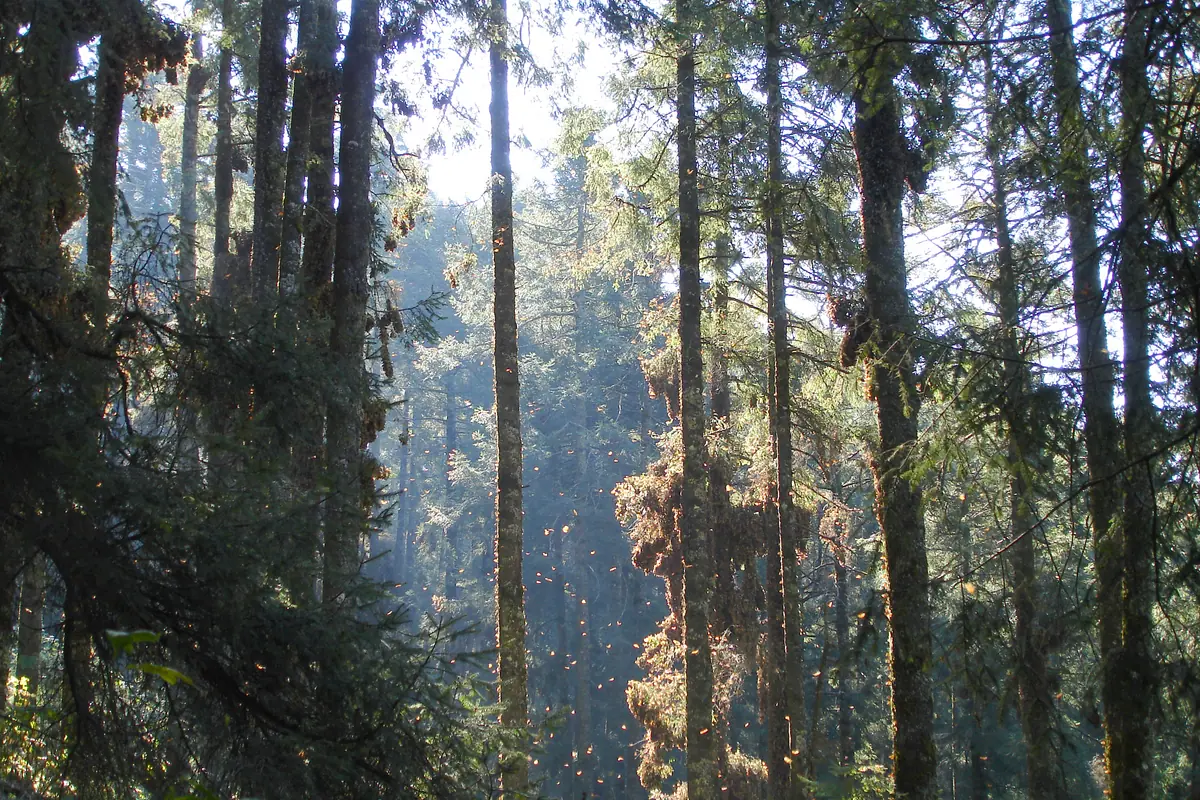
Every winter, the Monarch Butterfly Biosphere Reserve in Michoacán hosts one of the great wildlife spectacles on earth: hundreds of millions of monarchs clustering in oyamel fir trees, so dense that branches bend and the forest hums. The sanctuaries at El Rosario and Sierra Chincua are open from November to March, peaking in January and February, and reaching them means a steep hike or a horse ride at 3,000 metres — bring layers, the mornings are freezing. Elsewhere, whale watching peaks in Baja lagoons between January and March, boat trips through Sumidero Canyon in Chiapas run year-round, and the seven-colour lagoon at Bacalar is best in the dry season.
Food, Festivals and Everyday Life
Mexican food changes completely from state to state, which is the best reason to eat your way across the country. In Mexico City, tacos al pastor are carved from a spinning spit and topped with pineapple; in Yucatán, cochinita pibil is slow-roasted in banana leaves with achiote and sour orange; in Oaxaca, smoky chillies and chocolate underpin seven different moles. Market breakfasts are the cheapest and best meals of the day — look for tamales steamed in corn husks, memelas, and atole or champurrado to drink. Street stalls with a queue of locals are almost always the right call.
Día de Muertos, on 1 and 2 November, is not a Mexican Halloween but a family observance of remembrance. In Oaxaca, Pátzcuaro and Mexico City, altars appear in homes and plazas piled with marigolds, candles, pan de muerto and photographs of the dead, while comparsas parade through the streets with painted faces. Cemeteries glow with candlelight overnight. Visitors are welcome, but it is a solemn occasion as much as a celebration: ask before photographing anyone, and never treat an altar as a prop.
Beyond the big dates, there is Carnival in Veracruz and Mazatlán in February, the mariachi bands that gather at Guadalajara's Plaza de los Mariachis year-round, and the town of Tequila in Jalisco, where you can tour distilleries surrounded by blue agave fields. A little Spanish transforms these encounters — a few phrases will get you further than any guidebook.
Beaches, Reefs and Coastal Escapes
The Caribbean coast is where most first trips end. Tulum pairs Maya ruins on a cliff with a long stretch of sand below, though the town itself is now busy and hotel prices spike between December and April. North of Cancún, Isla Mujeres is small enough to circle by golf cart, and sleepy Holbox, reached by ferry, has sandy streets, bioluminescence on dark nights and whale sharks passing offshore from June to September. Be aware that sargassum seaweed can pile up on Riviera Maya beaches between May and August.
On the Pacific side, Puerto Vallarta offers a walkable old town and a malecón dotted with sculptures, while nearby Sayulita is a surf town with a bohemian edge. Further south, Mazunte and Zipolite are laid-back beach villages where sea turtle releases happen at dusk, and Huatulco hides a string of quiet bays. In Baja California, Cabo San Lucas is defined by the rock arch of El Arco, and from La Paz you can kayak to Isla Espíritu Santo to snorkel with sea lions.
Timing matters. The dry season from November to April brings the most reliable weather and the highest prices; May to October is hot, humid and green, with afternoon downpours and hurricane risk from June to November. Build in a spare day, keep an eye on forecasts, and consider travel insurance that covers weather disruption. Book popular coastal accommodation and cenote tours well ahead for the Christmas and Easter weeks, when domestic tourism peaks and the whole country seems to be on holiday at once.
Frequently asked questions
What is the best time of year to visit Mexico?
The dry season from November to April is the most comfortable, with clear skies, cooler evenings and reliable beach weather. It is also the busiest and most expensive period, especially over Christmas, New Year and Easter. May to October is hotter, wetter and cheaper, with short afternoon downpours and hurricane risk on both coasts from June to November. Wildlife has its own calendar: monarch butterflies cluster in Michoacán from November to March, grey whales arrive in Baja lagoons between January and March, and whale sharks swim off Holbox and Isla Mujeres from June to September.
How many days do I need for a first trip to Mexico?
Ten days to two weeks lets you combine two regions properly — for example Mexico City with Oaxaca, or the Yucatán's ruins, cenotes and beaches. Trying to cover Mexico City, Oaxaca, Chiapas and the Caribbean coast in one go means spending most of your time in transit; domestic flights are frequent but internal distances are vast. If you only have a week, pick one base and take day trips rather than racing between highlights.
Can I visit Teotihuacán or Chichén Itzá without a guided tour?
Yes, both are easily reached independently. Teotihuacán is about an hour from Mexico City by road, and Chichén Itzá is roughly two and a half hours from Cancún or Tulum. Arrive at opening time to beat the heat and the coach groups, and plan on three hours at each. A guide genuinely adds context at both sites, but if you go alone, read up beforehand — signage is limited and the stories behind the carvings are what make the stones come alive.
Is Mexico safe for tourists?
Millions of visitors travel through Mexico safely each year, and the main tourist routes — Mexico City's central neighbourhoods, Oaxaca and the colonial towns, the Riviera Maya, Baja's resort areas — are well trodden. Sensible precautions go a long way: use official taxis or ride-hailing apps after dark, travel between cities by day on modern intercity coaches or domestic flights rather than overnight driving, keep valuables out of sight, and carry small-denomination pesos for markets and tips. Check current local advice for the specific states you plan to visit before you book.
What should I pack for Mexico?
Layers matter more than you would expect. Highland cities such as Mexico City, San Cristóbal de las Casas and Guanajuato are cool in the mornings and at night, while the coasts are humid and hot. Bring strong sun protection, insect repellent, a light rain jacket if you are travelling between May and October, comfortable walking shoes for cobblestones and ruins, and reef-safe sunscreen if you plan to swim in cenotes. Pack a universal adapter for 127-volt outlets, and carry some cash — small bills are essential in markets, on local buses and in villages where cards are not accepted.
Plan it — experiences in Mexico
Live search, booked directly with trusted providers.
Sort the rest of your trip
Everything for Mexico, in one place
Stay in Mexico
Hotels, guesthouses and apartments — compared in one search.
Search hotels
Transfer in Mexico
Private driver waiting on arrival — no queues, no surprises.
Book a transfer
Stay online in Mexico
Travel eSIM — data the moment you land, no roaming bills.
Get an eSIMMore guides in Mexico
Mexico City Food and Culture Guide: Markets, Landmarks and Local Rituals
Hotels in Mexico: Where to Stay for the Country's Best Cities and Sights
The Best Time to Visit Mexico: A Season-by-Season Guide to Weather, Crowds and Hotel Rates
A One-Week Mexico Itinerary by Air: Mexico City, Oaxaca and the Yucatán