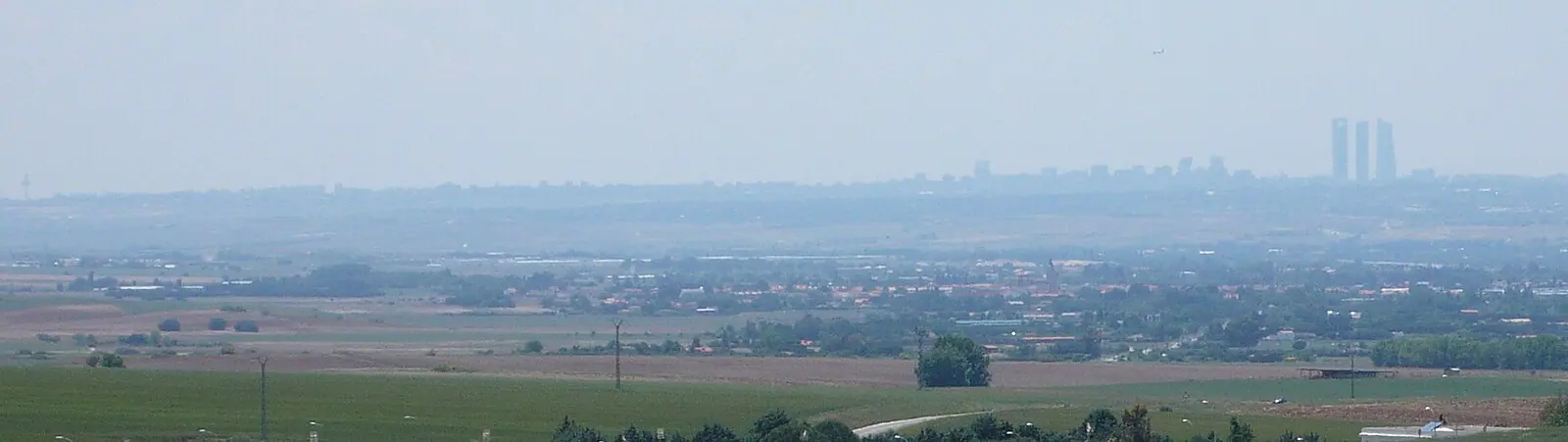
Mexico is a country you could spend a lifetime in, which is exactly why a single week feels impossible — until you let short domestic flights do the heavy lifting. This route links the colonial capital, the southern highlands and the Caribbean shore in seven days, with no overnight buses and no wasted daylight.
Why the Air Route Beats the Overland One
Stretching from the Sonoran Desert to the Yucatán jungle, Mexico covers roughly the same latitude span as Madrid to Moscow. Driving from Mexico City to Oaxaca alone eats eight to ten hours on winding mountain roads; getting from Oaxaca to the Yucatán by land is a full day and a half. Domestic aviation rewrites that equation. A flight from the capital to Oaxaca takes a little over an hour, and the hop from Oaxaca east to the Yucatán — often with a quick connection in Mexico City — turns a gruelling overnight haul into an afternoon. That frees you to spend your energy on the Zócalo, on archaeological sites and on the sea rather than on a bus seat.
The classic shape of the trip is a one-way loop: arrive in Mexico City, fly south to Oaxaca, then east to the Yucatán and out through Cancún. Booking the internal legs well ahead of travel is worth the effort — the cheapest seats on the low-cost domestic carriers vanish weeks out, especially around national holidays and the winter high season. Packing carry-on only saves both money and time, since domestic baggage allowances are noticeably stingier than on long-haul international services.
Timing matters more than most first-timers expect. November through April is the dry, sunny window and the most comfortable period in the highlands. May to October brings afternoon downpours and, from June onward, the Atlantic hurricane season, which peaks in September and October along the Caribbean coast. If you can flex, aim for late November, February or early March: clear skies in the highlands, warm water in the Yucatán, and thinner crowds than the Christmas crush.
Days 1–2: Mexico City, from the Zócalo to Teotihuacan
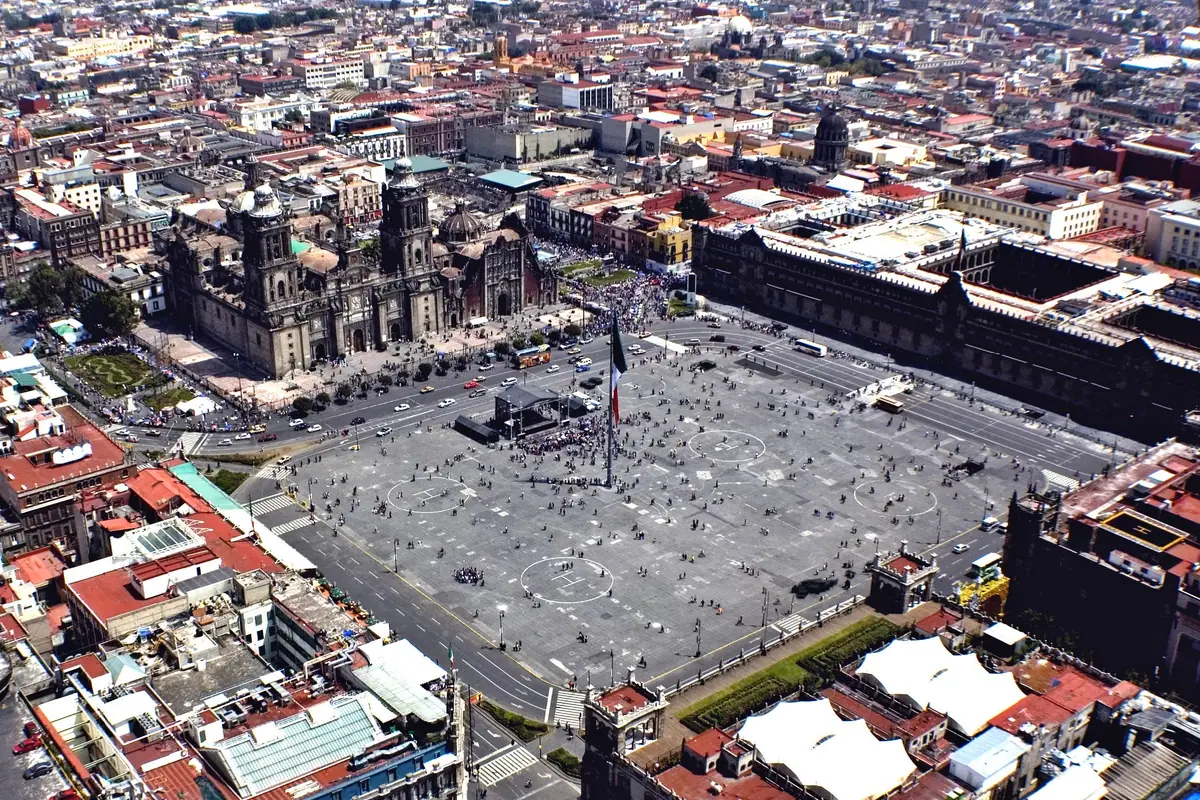
Start in the historic centre, where the Zócalo — one of the largest city squares on earth — anchors a dense cluster of landmarks. The Metropolitan Cathedral leans visibly on its foundations beside the excavated ruins of Templo Mayor, the Aztec pyramid complex that Spanish builders buried and that archaeologists only fully exposed in the twentieth century. Walk west to the marble Palacio de Bellas Artes, then detour to the Museo Nacional de Antropología in Chapultepec Park, arguably the single best introduction to Mexico's pre-Hispanic civilisations — its Aztec Sun Stone alone justifies the ticket. If you have energy left, climb to Chapultepec Castle for the view down over the Paseo de la Reforma, or ride south to Coyoacán and the blue-walled house where Frida Kahlo lived.
Be gentle with yourself on day one. The capital sits at roughly 2,240 metres, and the thin air ambushes people who land and immediately march across the city. Drink more water than feels necessary, skip the second cocktail, and let the altitude settle overnight. Note also that many of the big museums close on Mondays, so plan your route around that.
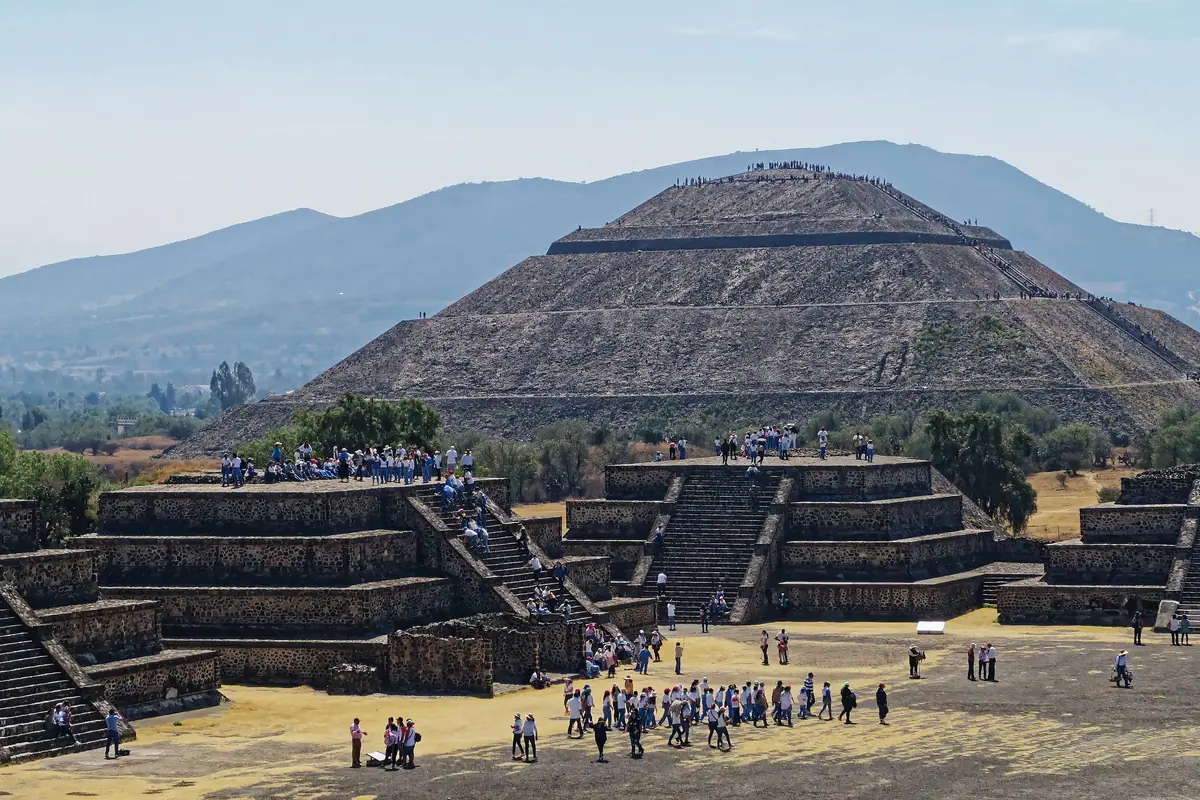
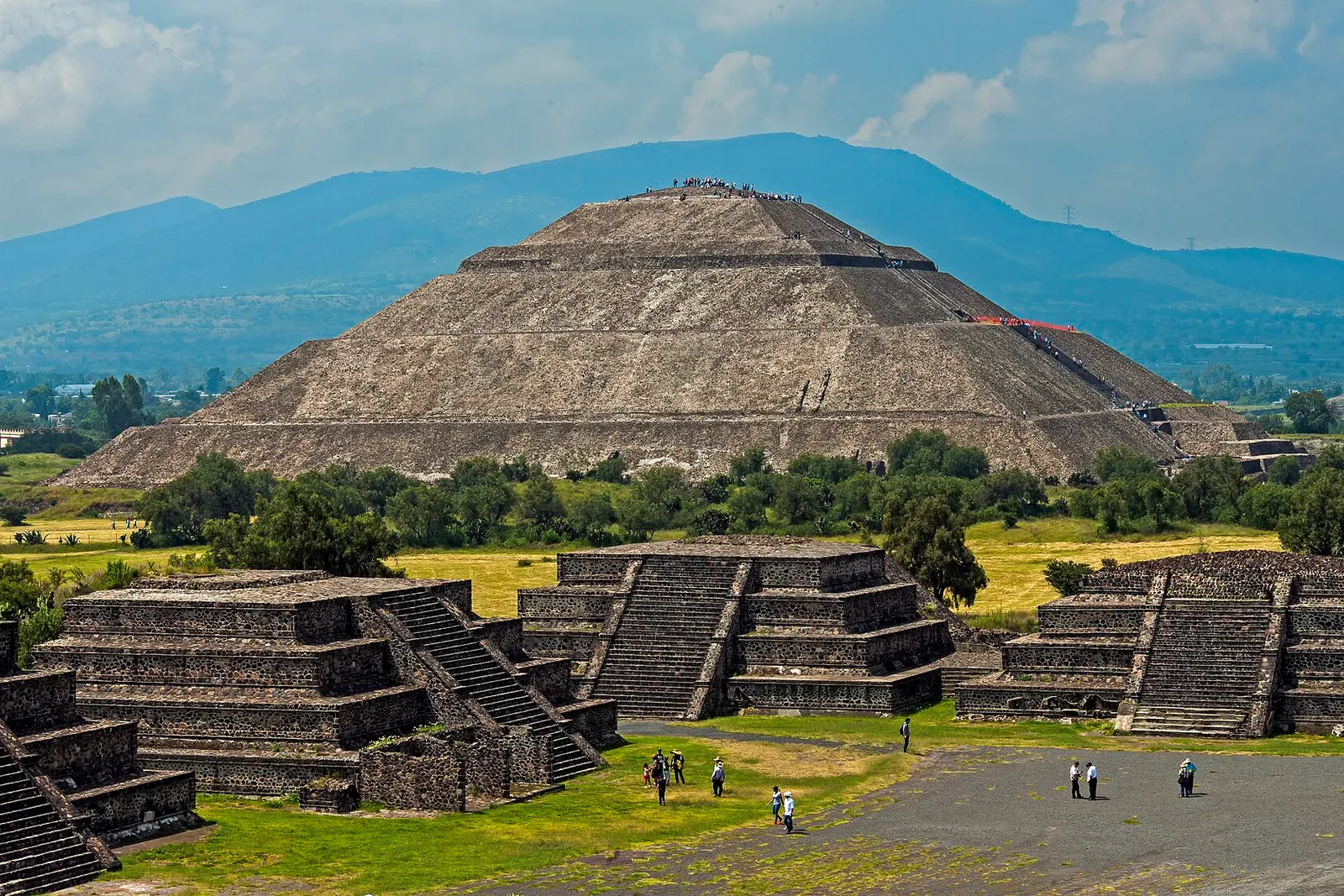
Day two belongs to Teotihuacan, an hour or so northeast of the city. Arrive as the gates open in the morning to climb the Pyramid of the Sun and the Pyramid of the Moon before the tour groups and the midday heat arrive, and walk the full length of the Avenue of the Dead. Back in the city by late afternoon, squeeze in a trajinera boat ride through the canals and floating gardens of Xochimilco — a UNESCO-listed remnant of the pre-Hispanic lake system and a very different Mexico City from the one you saw at breakfast.
Days 3–4: Oaxaca, Monte Albán and the Mezcal Countryside
A short morning flight delivers you to Oaxaca, a city of green stone, colonial arcades and arguably the best food in the country. Base yourself near the Templo de Santo Domingo de Guzmán and the adjoining botanical garden, then browse the Benito Juárez Market for tlayudas, memelas and chapulines. In the evening, the plaza fills with brass bands and the smell of chocolate and coffee — Oaxaca runs on both.
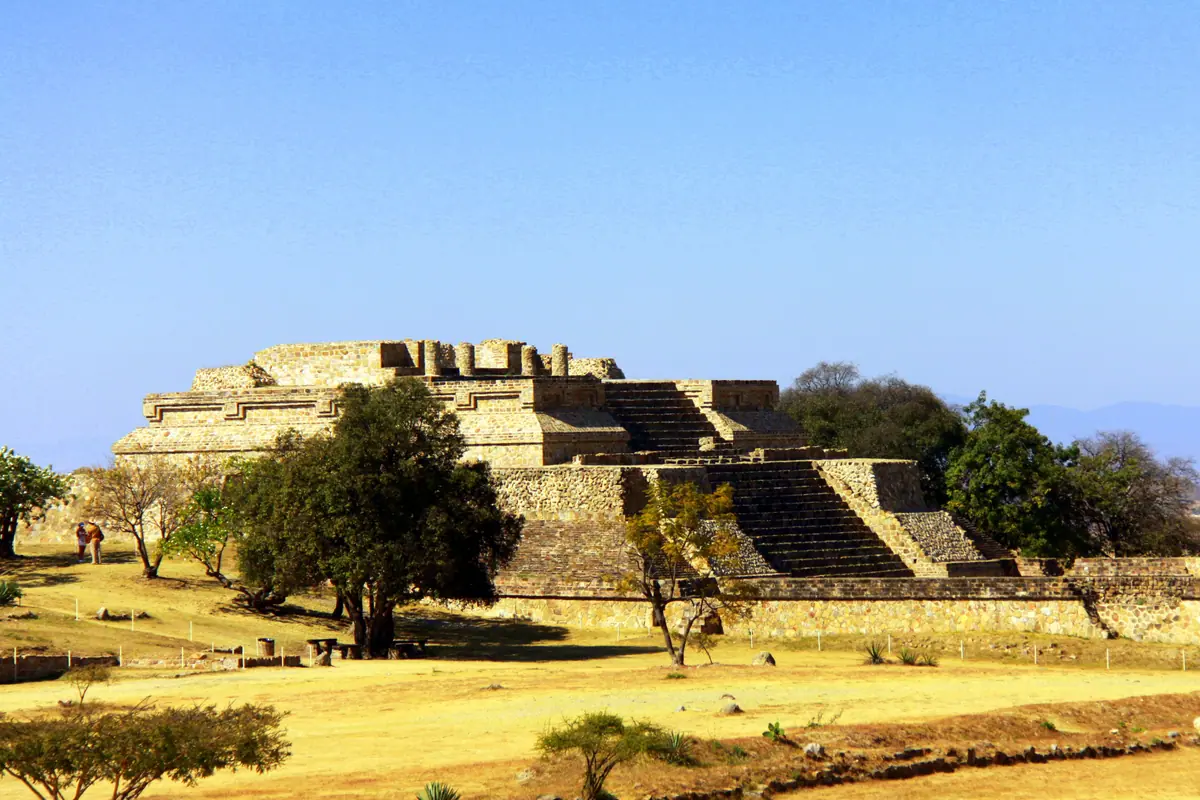
Day four is for archaeology and landscape. Monte Albán, the Zapotec capital on its flattened mountaintop, sits about twenty minutes from the centre and offers the finest view of any ruin in Mexico: pyramid platforms, a ball court and carved danzantes figures spread across the ridge above the valley. Go at opening time to beat both the heat and the coaches. If you have a car or a hired driver, continue to Hierve el Agua, where mineral springs have petrified into white rock cascades that look like a frozen waterfall pouring off the cliff edge, and stop at Mitla for its geometric mosaic stonework.
The villages along the valley floor are a destination in themselves. Teotitlán del Valle weaves rugs on Zapotec looms, and the dusty lanes around Santiago Matatlán produce much of Mexico's mezcal — visit a small palenque, watch the agave hearts roast in a stone pit, and taste the difference between wild and cultivated maguey. Two nights here is enough for the highlights, though the region could easily absorb a week.
Days 5–6: The Yucatán — Mérida, Uxmal and Chichén Itzá
Fly east and the country changes character entirely: flat, hot, and covered in low jungle. Land in Mérida, the Yucatán's elegant white city, and spend the first afternoon on the Plaza Grande and along the Paseo de Montejo, where nineteenth-century henequen fortunes built mansions. The city makes a comfortable base for two nights of Yucatecan cooking — cochinita pibil, sopa de lima — without the resort crowds of the coast.
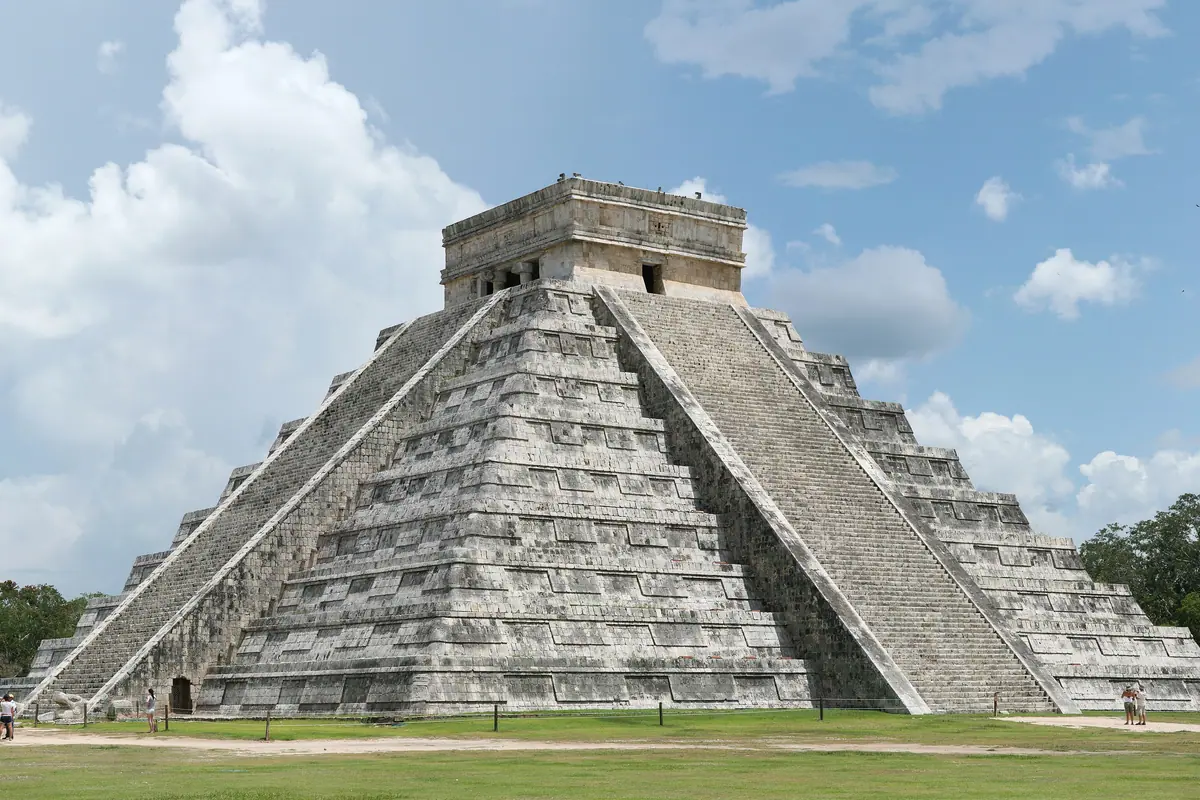
Devote a morning to Uxmal, south of Mérida, where the Pyramid of the Magician and the extraordinary Nunnery Quadrangle show the rounded Puuc style at its most refined; it's quieter and more atmospheric than the famous site to the east. The following day, drive or join a transfer to Chichén Itzá, the most celebrated Maya city in Mexico. Get there at opening to stand in front of El Castillo, the Temple of Kukulcán, whose staircases cast a serpent-shaped shadow at the equinoxes, and to clap at the Great Ball Court and hear the echo answer back seven times. Afterwards, cool off in a nearby cenote — Ik Kil is the best known, a sunken, vine-hung pool that makes the whole day feel like a reward. Overnight in Valladolid if you want colonial calm, or push on toward the coast.
Day 7: Tulum, Cenotes and the Caribbean Finish
End the week on the coast. The clifftop ruins of Tulum are the only major Maya city built directly over the sea, and the sight of the Castillo against that turquoise water explains why it draws such crowds — arrive at opening, when the light is soft and the site is still nearly empty. From there, the Riviera Maya unfolds southward: the Gran Cenote's caverns and turtles near Tulum, and the Sian Ka'an Biosphere Reserve, a UNESCO-listed maze of mangrove channels and lagoons where you can float downstream on a boat tour past egrets and manatees.
If you'd rather trade ruins for water, the lagoon at Bacalar — nicknamed the Lagoon of Seven Colours for its bands of blue — or the car-free sandy lanes of Isla Holbox, with whale sharks passing offshore in summer, are both reachable for a final night. Otherwise, stay put on the beach north of Tulum and let the last day be slow.
Allow generous time on the final morning: Cancún's airport handles heavy international traffic, and the drive down from Tulum or Holbox takes longer than the map suggests, particularly with weekend beach traffic. A late-afternoon departure is the safest choice if you're flying home the same day.
Practical Notes for Flying Around Mexico
Domestic terminals are generally efficient, but security queues can be slow at peak hours — plan to arrive ninety minutes to two hours before departure. Carry-on liquids follow the usual international rules, and removing shoes is often required. Low-cost carriers charge separately for checked bags, seat selection and even some cabin luggage, so read the fare rules carefully or you'll pay at the gate.
Weather and geography shape the packing list. The highlands are cool at night year-round, so bring a light jacket for Mexico City and Oaxaca even in spring. The Yucatán is humid and hot; light, breathable clothing, reef-safe sunscreen and insect repellent matter more there. The strongest sun and heaviest rain both fall in the May-to-October wet season, usually as late-afternoon storms rather than all-day drizzle.
On the ground, pesos are used everywhere and small notes are essential for markets, cenotes and tips. Ride-hailing apps work well in the big cities; in smaller towns you'll rely on taxis or prearranged transfers, and it's wise to agree the fare before getting in. Finally, learn a few phrases in Spanish — it's not required, but it changes the texture of almost every interaction, from ordering breakfast to asking directions at a ruin.
Frequently asked questions
Do I really need internal flights for a one-week Mexico trip?
If you want to combine the highlands with the Caribbean, yes. Mexico City to Oaxaca by road is eight to ten hours, and Oaxaca to the Yucatán is well over a day of travel. Short domestic flights turn those legs into one- or two-hour hops, which effectively hands you two extra days of sightseeing.
When is the best time of year for this route?
November through April offers dry, clear weather in the highlands and pleasant heat on the coast, with February and early March especially good. May to October is wetter, and the Caribbean coast sits in hurricane season from June to November, with September and October the riskiest months.
Will the altitude in Mexico City affect me?
The city sits around 2,240 metres above sea level, and most visitors notice breathlessness, headaches or poor sleep in the first day or two. Take your first day slowly, drink plenty of water, go easy on alcohol, and save the climbing at Teotihuacan for day two.
How far in advance should I book the domestic flights?
As early as your plans allow. Fares on the budget domestic carriers rise steeply in the final weeks, and seats sell out around Christmas, Easter and national holidays. Booking the whole loop in one go also protects you if you need to rework a connection.
Is seven days enough to see Mexico City, Oaxaca and the Yucatán properly?
It's enough for the headline sights — the Zócalo, Teotihuacan, Monte Albán, Chichén Itzá and Tulum — but it's a fast pace with a flight on most travel days. If you can stretch to ten days, add a night in Oaxaca's villages and a second day on the Riviera Maya and the trip stops feeling like a sprint.
Sort the rest of your trip
Everything for Mexico, in one place
Stay in Mexico
Hotels, guesthouses and apartments — compared in one search.
Search hotels
Transfer in Mexico
Private driver waiting on arrival — no queues, no surprises.
Book a transfer
Travel insurance
Medical cover, delays and lost baggage — sorted before you go.
Get coveredMore guides in Mexico
Mexico City Food and Culture Guide: Markets, Landmarks and Local Rituals
Hotels in Mexico: Where to Stay for the Country's Best Cities and Sights
The Best Time to Visit Mexico: A Season-by-Season Guide to Weather, Crowds and Hotel Rates
Things to Do in Mexico: Must-See Landmarks, Ruins and Natural Wonders