Laos moves at the pace of its rivers: slow boats drifting downstream, monks padding past dark teak houses at dawn, mist peeling off limestone karsts. Between the temples and the waterfalls, the cave cities and the stone jars, it rewards travellers who arrive with time rather than a checklist.
Luang Prabang: Temple Rooftops on a River Peninsula
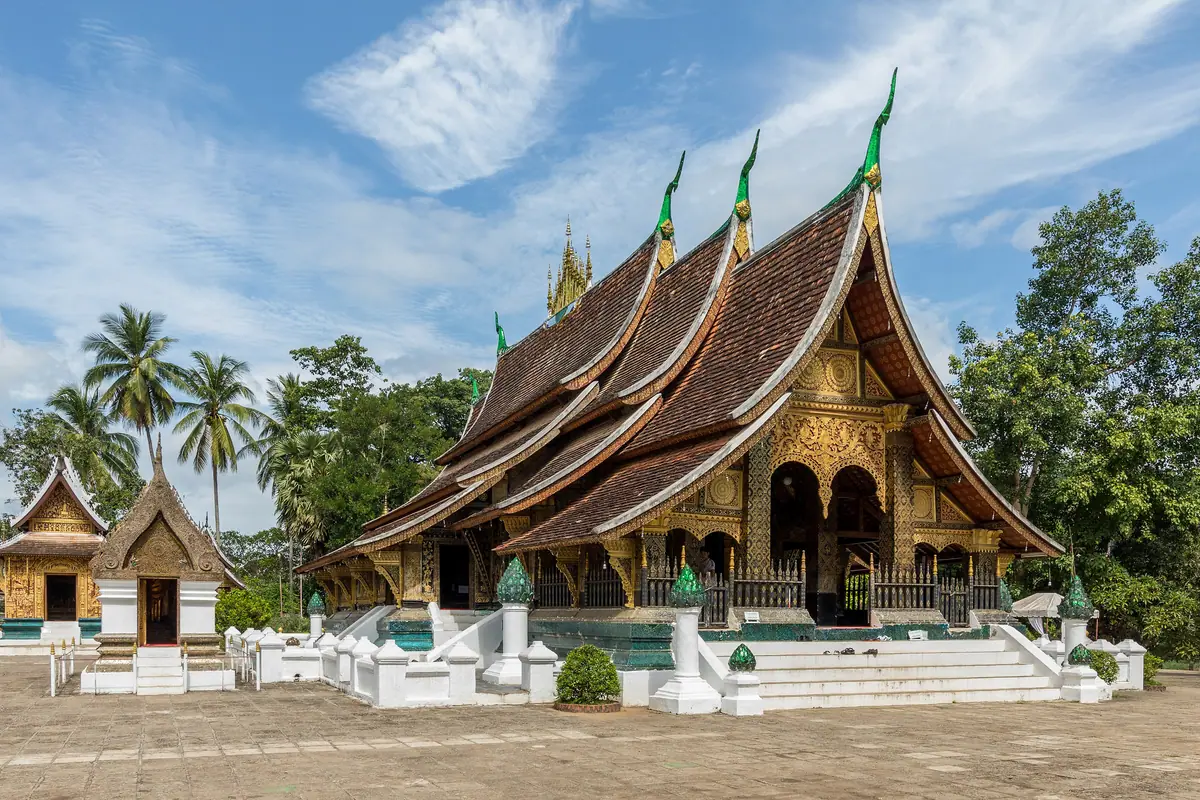
Wedged between the Mekong and the Nam Khan rivers, Luang Prabang is the country's showpiece — a World Heritage-listed town of roughly three dozen wats, weathered French-Indochinese shophouses, and streets so compact you can walk the whole peninsula in half an hour. Start at Wat Xieng Thong, built in the 16th century and considered the finest temple in Laos, with its low-sweeping two-tier roofs, mosaic wall depicting the tree of life, and gilded funeral carriage house. From there, wander to Wat Mai with its black-and-gold relief panels, and the former Royal Palace, now a museum displaying royal regalia, thrones and the revered Pha Bang Buddha image.
The ritual most visitors come for happens before breakfast. Around 5:30–6:30am, hundreds of monks file along the main streets collecting sticky rice from kneeling residents. Watch quietly from a respectful distance, keep your head lower than the monks', switch off your camera flash, and if you want to take part, buy rice from a vendor rather than handing out food by hand. Later in the day, climb the 300-plus steps of Mount Phousi for the classic view: the Mekong curling west, the Nam Khan east, and temple roofs catching the late light. Arrive by 4:30pm in high season to claim a spot on the summit.
Spend at least two or three nights here. The night market on Sisavangvong Road sets up around 5pm with textiles, paper lanterns and silk scarves, while the smaller morning market is where locals buy river fish, herbs and bamboo shoots. The cool, clear months of November to February are the most comfortable — mornings can be foggy and surprisingly chilly, so pack a light jacket.
Kuang Si Falls, Pak Ou Caves and the Nam Ou Valley
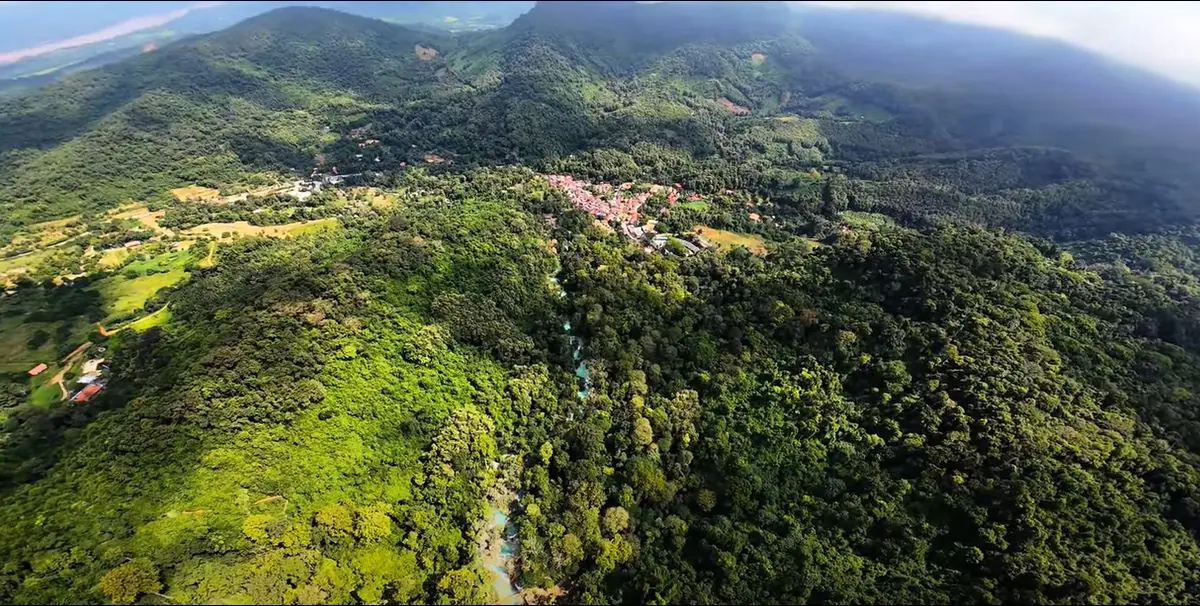
About 30 kilometres south of Luang Prabang, Kuang Si Falls tumbles through a series of milky-turquoise travertine pools before dropping roughly 60 metres into the jungle. Swimming is allowed in the lower tiers — the water is bracing, and the mineral-rich terraces are slick underfoot. Come early, before 10am, to have the pools nearly to yourself; by midday in December and January the wooden bridges are crowded. The clearest water arrives in the dry season from November through April, while August and September turn the falls brown and thundering, and swimming may be closed. A sanctuary for rescued Asiatic black bears sits near the entrance, and a butterfly garden lies just beyond.
Upstream of Luang Prabang, the Mekong meets the Ou River at the Pak Ou Caves, a two-chamber shrine reached in about two hours by slow boat. The lower cave, Tham Ting, glows with thousands of Buddha images of every size and material, left by pilgrims over centuries; the upper cave, Tham Theung, is darker and quieter, so bring a torch. Most boat trips break at a riverside village known for its rice whisky and woven goods. Wear shoes with grip for the cave stairs, and expect the ride itself to be the highlight — herons, sandbanks and fishing traps sliding past.
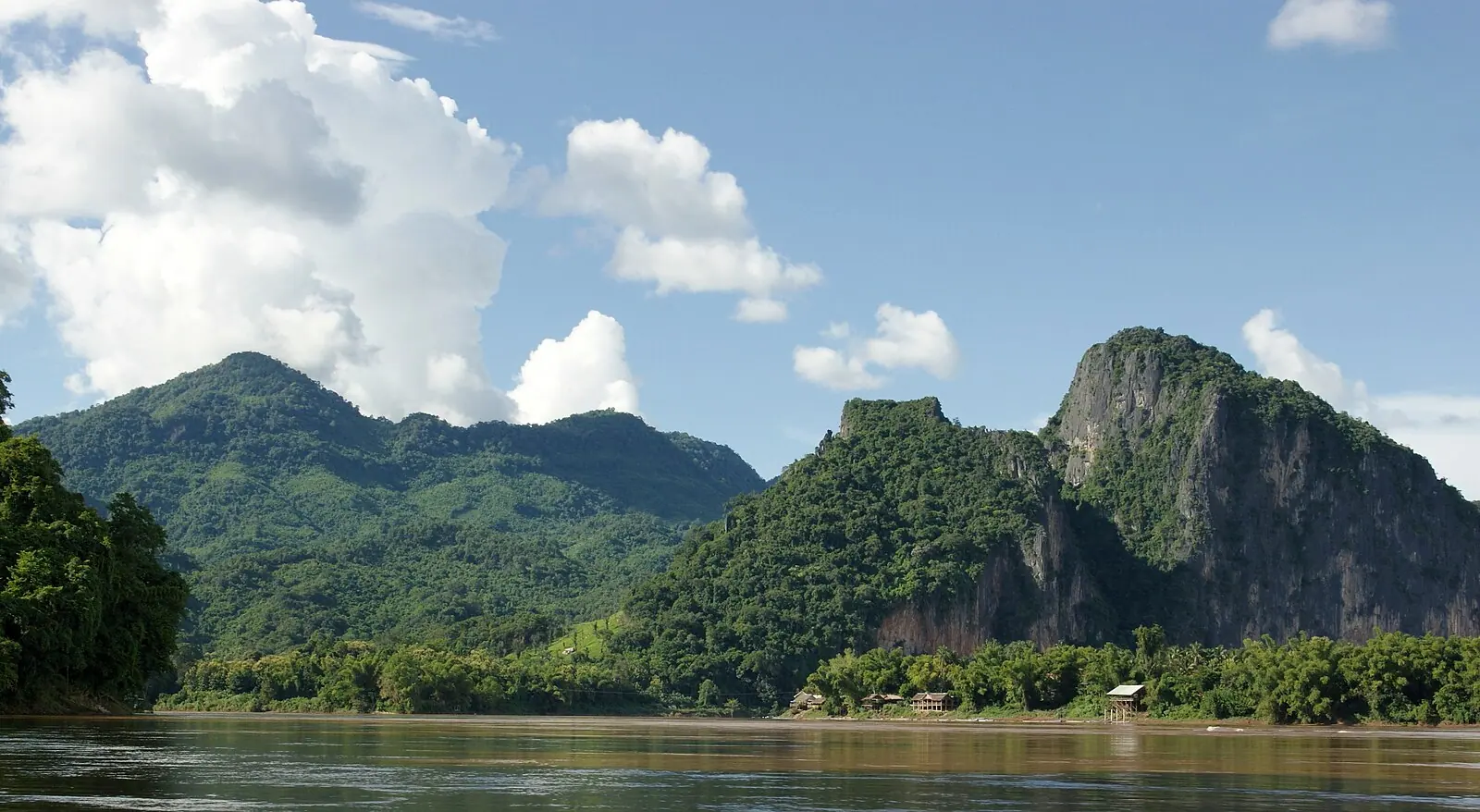
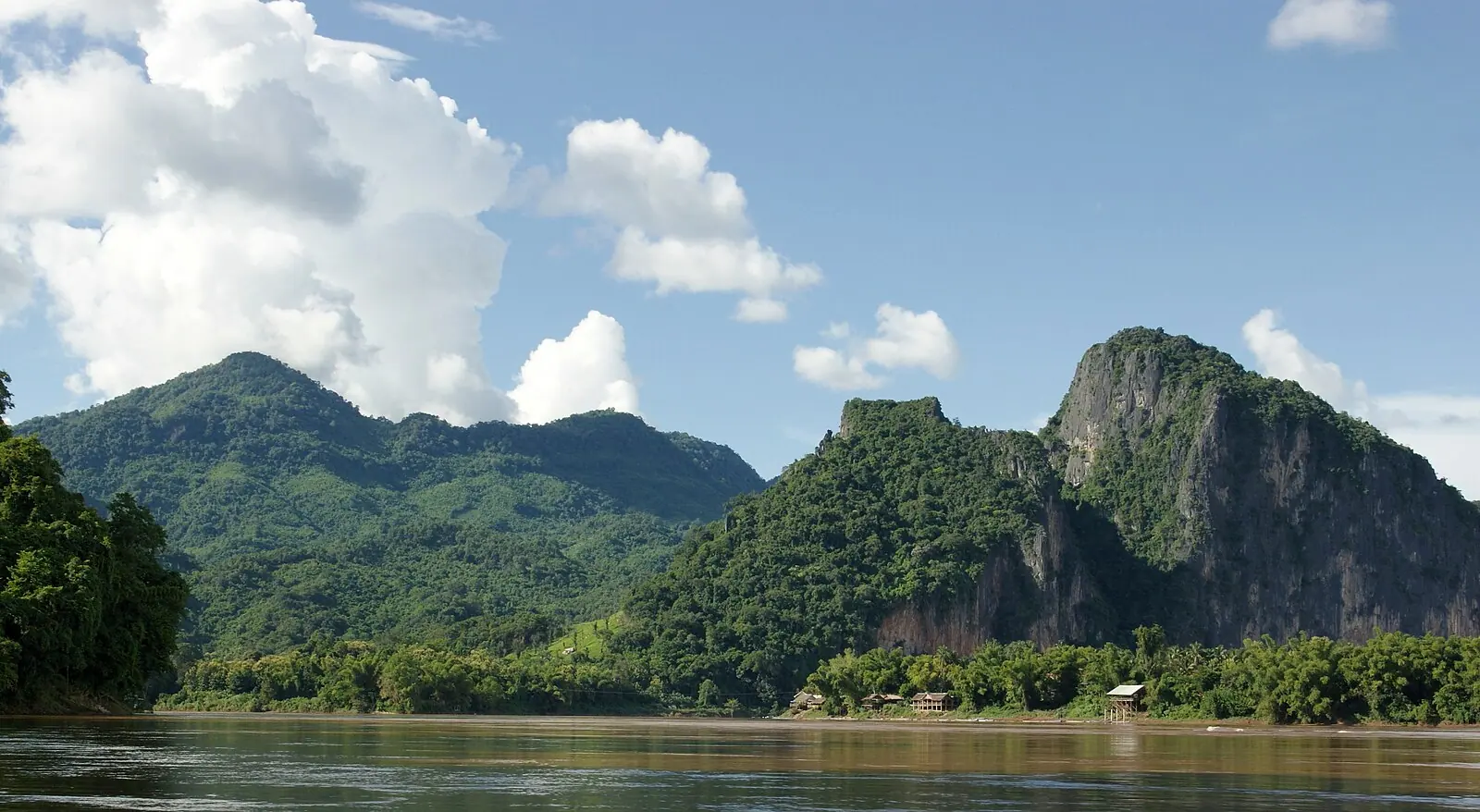
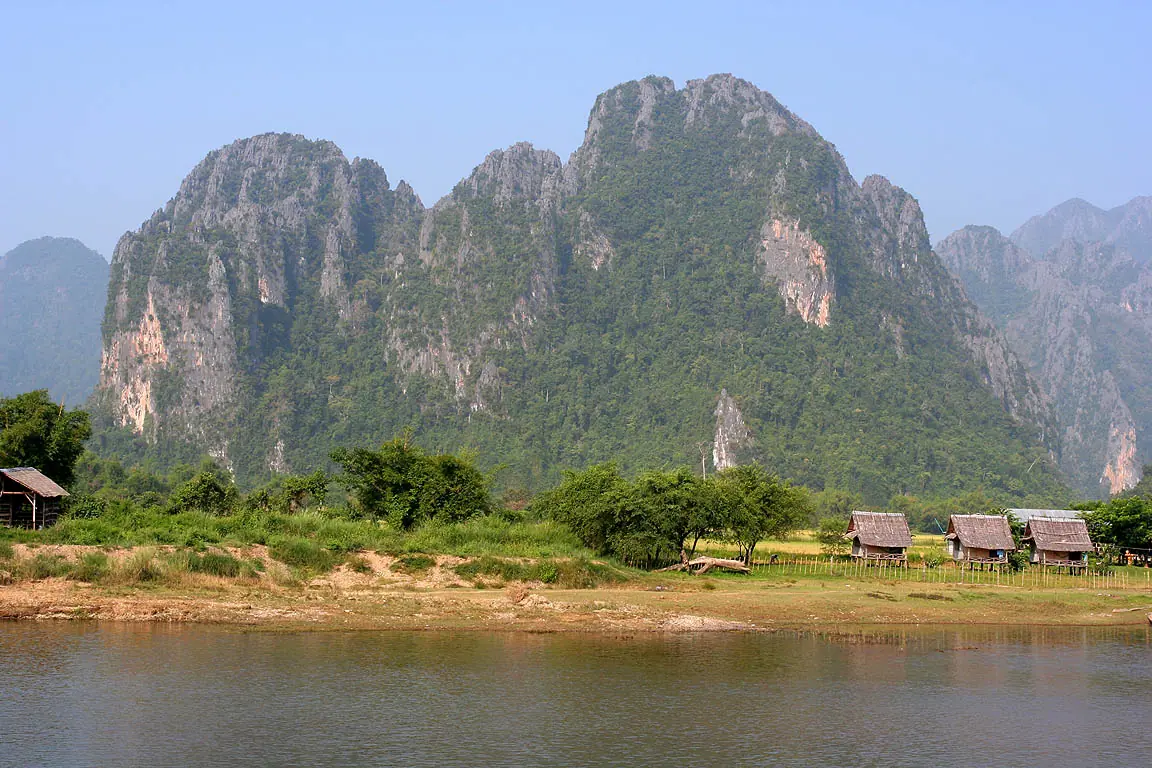
If you have extra days, push north to Nong Khiaw and Muang Ngoi, roughly three hours away, where jagged karst peaks rise straight from the Nam Ou and guesthouses cost little more than a good dinner. Boat trips upriver, the cave shelter at Pha Tok, and simple trekking to Hmong and Khmu villages fill a lazy two or three days.
Vientiane: Stupas, Arches and a Surreal Sculpture Garden
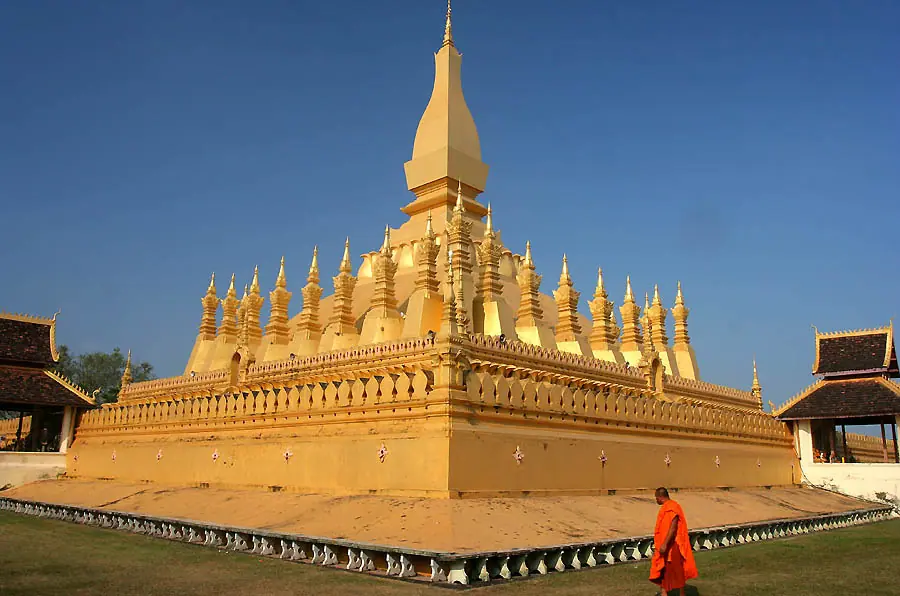
Laos' capital is unhurried and low-slung, and a single day covers its heavyweights. Pha That Luang is the one to see first: a 45-metre gilded stupa wrapped in a square cloister, the national symbol of Laos and, by tradition, marking a site of Buddhist significance since the 3rd century, though the present form dates to the 16th century. Visit in the morning for softer light, and note that the annual That Luang festival fills the plain with pilgrims each November. Nearby, Patuxai — the concrete victory arch on Lane Xang Avenue — rewards the climb up its seven internal levels with a wide view of the city's tree-lined boulevards.
Wat Si Saket, the oldest surviving temple in the capital, is worth an hour for its cloister walls, which hold thousands of small Buddha images arranged in niches; Haw Phra Kaew, once a royal chapel, now houses religious art. Then take a tuk-tuk 25 kilometres east along the Mekong to Xieng Khuan, the Buddha Park, a meadow of more than 200 Hindu and Buddhist statues, including a giant reclining Buddha and a pumpkin-shaped tower you can climb into for a view over the river. Finish with sunset on the Mekong promenade and a plate of grilled river fish at the evening market.
Vientiane needs a day, or two if you like museums and coffee. It also makes the practical base for onward travel, since buses and the fast rail line run north to Vang Vieng and Luang Prabang and south toward Pakse.
Vang Vieng and the Karst Country
Squeezed between sheer limestone cliffs and the shallow Nam Song River, Vang Vieng has reinvented itself from a party town into an outdoor playground — though the river bars still hum at sunset. The classic activities are kayaking or tubing downstream, cycling out to the Blue Lagoons (number one is the busiest; two and three are quieter and just as pretty), and climbing into Tham Phu Kham cave, where a bronze reclining Buddha rests in the cool dark. Tham Chang cave is close enough to walk to from town, and the two-tiered Pha Ngern viewpoint takes 45–60 minutes of steep climbing for sunrise panoramas over mist-filled valleys.
Hot-air balloons lift off at dawn when the air is still, and tandem flights over the karst are a genuine spectacle even from the ground. Be sensible on the water: check river levels in the wet season, never dive into opaque water, and keep hold of your tube in strong current.
Two or three nights is plenty. October to February brings dry, comfortable weather and bright green rice fields; March and April are hot and often hazy from field burning; the wet months from May to September are lush and quiet, though some trails and river activities slow down.
The Plain of Jars and the Cave City of Vieng Xai
Around Phonsavan in Xieng Khouang province, hundreds — probably thousands — of carved stone jars lie scattered across the rolling highlands. Some stand three metres tall and weigh several tonnes, hewn from sandstone, granite and limestone, and their purpose remains debated, with the strongest evidence pointing to Iron Age funerary use. Three sites are open to visitors. Site 1 is the closest, about eight kilometres from town, and takes an hour or two to walk; Sites 2 and 3 involve a longer drive and a short hike through farmland. Go with a local guide and stay strictly on the cleared, marked paths — this province was heavily bombed in the 1960s and 1970s, and unexploded ordnance still affects the surrounding land. Never pick up metal objects.
Further east, near the Vietnamese border, Vieng Xai is a different kind of monument: a network of limestone caves that served as a hidden headquarters and living quarters during the bombing campaigns, complete with a hospital, theatre, school, printing press and radio studio carved into the rock. Guided tours run about three hours and include several caves linked by a road through the valley.
The highlands here are cool — December and January nights can dip close to freezing, so bring layers. November to February is the best window; the roads can be slow in the rainy season.
Southern Laos: Waterfalls, Khmer Ruins and the 4,000 Islands
Pakse is the gateway to the south, and most travellers head first for the Bolaven Plateau, a cool, coffee-growing tableland sitting between roughly 600 and 1,100 metres. A two- or three-day motorbike loop strings together Tad Fane, a pair of twin falls plunging about 120 metres into a jungle gorge, plus Tad Yuang and Tad Lo, with guesthouses and small coffee farms in between. The waterfalls are at their most dramatic from July to October, when rain swells the rivers; the trade-off is slick red dirt roads.
South of Pakse, Wat Phou sits on the lower slopes of Phu Kao near Champasak — a pre-Angkorian Khmer temple complex with processional walkways, a baray reservoir and weathered guardian figures, best seen in early morning or late afternoon light from November to February. Further downriver, the Mekong splinters into the 4,000 Islands. Base yourself on Don Khone or Don Det, cycle across the old French-era bridge, and take a boat to Khone Phapheng Falls, the widest cascade in Southeast Asia by volume. A small population of Irrawaddy dolphins lives in a deep pool near the Cambodian border; sightings are never guaranteed, but the dry season from December to May gives the best odds.
On the way south from Vientiane, consider a detour to Kong Lor Cave in Khammouane province, where a longtail boat carries you roughly 7.5 kilometres through a pitch-black underground river in about an hour each way. Bring a headlamp, and go between November and April when water levels are manageable.
Frequently asked questions
What is the best time of year to visit Laos?
November to February is the sweet spot: dry, clear and cool, with comfortable days and chilly mornings in the northern hills. March to April turns hot and often hazy as farmers burn fields. The wet season from May to October brings lush landscapes, high rivers, lower prices and short, heavy afternoon downpours — good for waterfalls, trickier for remote roads.
How many days do I need in Laos?
Ten to fourteen days covers the classic route comfortably: two to three nights in Luang Prabang, two in Nong Khiaw or Vang Vieng, one or two in Vientiane, then three or four in the south around Pakse, Wat Phou and the 4,000 Islands. With only a week, choose either the north or the south rather than racing between them.
Is Laos easy to travel independently?
Yes. Guesthouses and small hotels are plentiful, tuk-tuks and shared minivans handle short hops, and buses plus the newer rail line connect the main towns. English is common in tourist areas but thin elsewhere, so learning a few Lao phrases helps. Carry cash in kip for markets, small guesthouses and transport, since card payment is limited outside the cities.
What should I know about the morning alms-giving in Luang Prabang?
It is a religious ritual, not a photo opportunity. Dress with shoulders and knees covered, stand well back from the procession, avoid blocking the monks' path or using flash, and stay silent. If you want to offer food, buy sticky rice from a local vendor and let them guide you on how it is done.
Is the Plain of Jars safe to visit?
The three open sites are cleared and safe if you stay on the marked paths and follow your guide's instructions. Never touch or pick up metal objects or stray into unmarked ground, and do not wander off trails. Hiring a local guide is both required at some sites and the best way to understand the archaeology and the region's wartime history.