Laos is a country you travel through slowly, and where you sleep shapes the whole rhythm of the trip — a teak-floored colonial shophouse in Luang Prabang, a hammock bungalow facing karst cliffs in Vang Vieng, or a stilted hut on a Mekong island where the only sound at night is water. This guide walks through the towns worth basing yourself in, what the accommodation is actually like in each, and the landmarks you should build your days around.
Choosing Your Base: How Laos Hotels Change From Town to Town
Laos stretches roughly a thousand kilometres from the Chinese border down to Cambodia, and the bed you sleep in changes dramatically along that line. In the old quarter of Luang Prabang you can wake in a restored merchant's house with dark teak floors and a courtyard garden; in Vientiane, mid-range hotels with rooftop pools and reliable air-conditioning cater to business travellers; in Vang Vieng, wooden bungalows sit right on the riverbank with nothing between you and the limestone peaks; and far south on Don Khone, family-run huts on stilts offer mosquito nets, a hammock and a cold shower for a few dollars.
The main practical lesson is to resist cramming. Three bases across ten days is comfortable; five is exhausting, because mountain roads coil endlessly and minivans rarely average more than 40 kilometres an hour. A sensible first trip links Luang Prabang with a riverside night in Nong Khiaw, or pairs the capital Vientiane with a southern loop through Pakse, Champasak and the islands of Si Phan Don. Outside the two big cities, rooms are limited in number — in the high season from December to February, the best small guesthouses in Laos fill up weeks in advance.
Book your first two nights before you fly, then stay flexible. Laos rewards improvisation: a guesthouse owner who likes you will often arrange a boat, a motorbike or a lift to the next town.
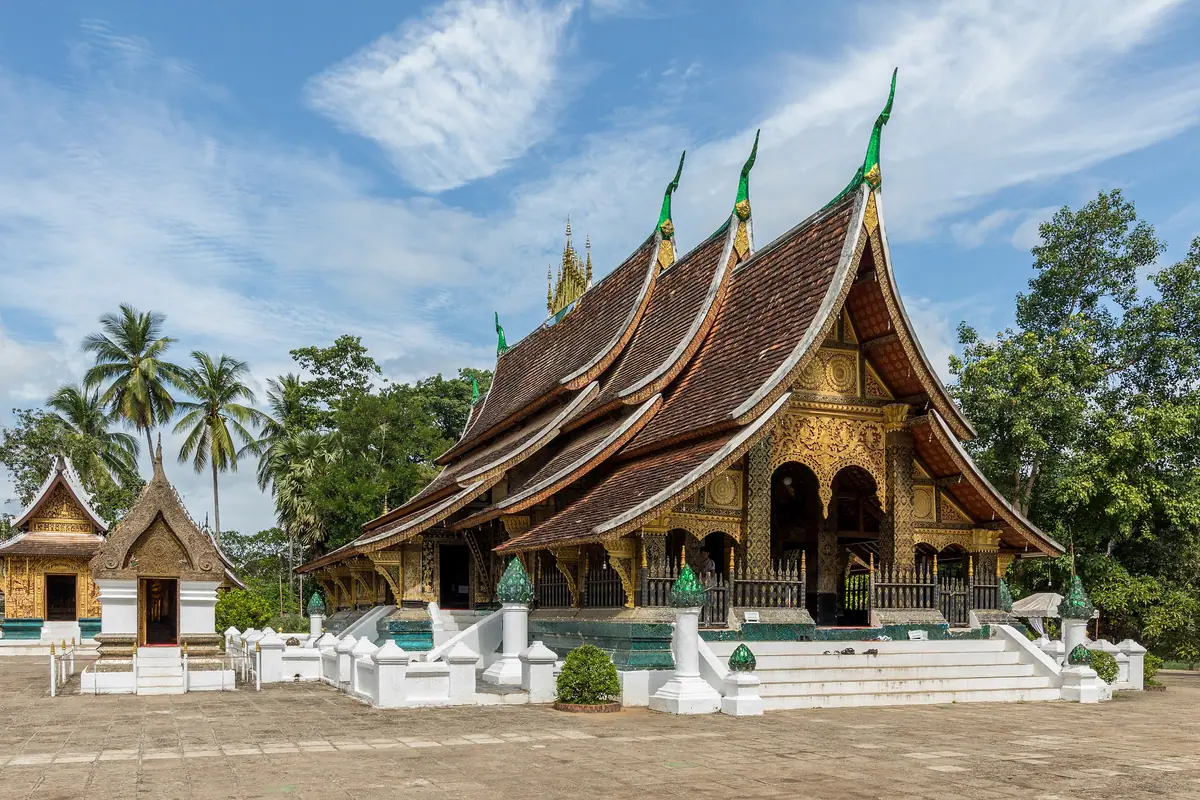
Luang Prabang: Heritage Rooms Between Two Rivers
The old town sits on a narrow peninsula where the Mekong meets the Nam Khan, and its world-heritage streets are the most atmospheric place in the country to stay. Everything worth seeing is walkable: the low, sweeping roofs and mosaic wall of Wat Xieng Thong at the tip of the peninsula, the gilded halls of Wat Mai, the former royal residence that now serves as the palace museum, and the saffron-robed alms procession that moves along the main street at first light. Climb the 328 steps of Mount Phousi for sunset over the confluence, then descend straight into the night market.
Where you sleep matters here. The lanes around Wat Visoun and the Nam Khan side are quieter and noticeably cheaper than the Mekong-facing front street, while rooms with river views cost more and come with early-morning boat noise. The town protects its skyline, so there are no high-rises — expect two-storey buildings, garden guesthouses and a handful of polished boutique properties in converted colonial villas.
Beyond town, the classic half-day trip is Kuang Si Falls, about 30 kilometres southwest, where milky-turquoise water spills over a series of limestone terraces. Boat trips upriver reach the Pak Ou Caves, packed with thousands of small Buddha figures, and villages along the way sell woven silk and mulberry-paper goods.
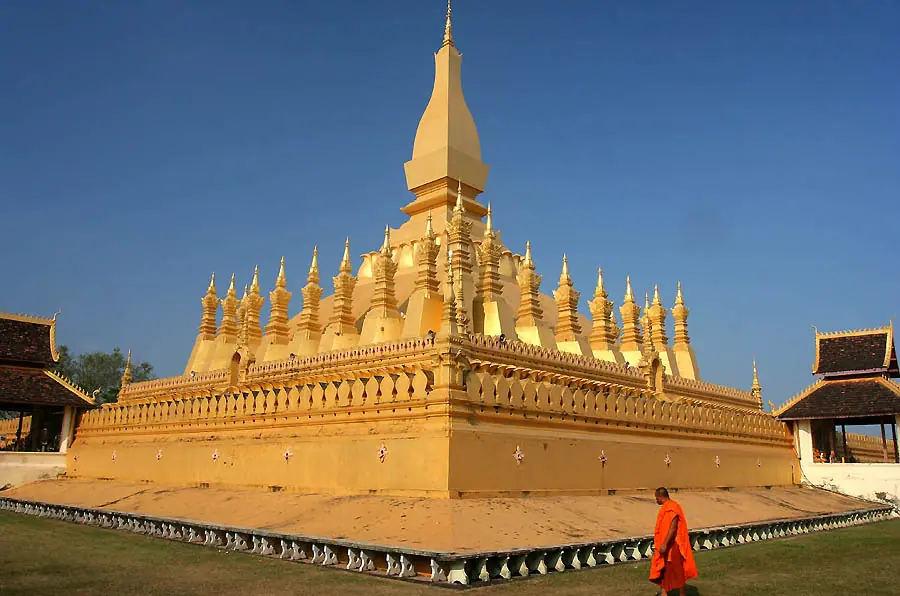
Vientiane: The Capital's Riverside Calm
Vientiane is one of the sleepiest capitals in Asia, which makes it an easy, comfortable base rather than a highlight reel. The national symbol is Pha That Luang, a gold-covered stupa that glows in late-afternoon light; nearby stands Patuxai, a monumental arch on Lane Xang Avenue with a viewing terrace on top. Wat Si Saket is the oldest temple still standing in the city, its cloister walls lined with thousands of small Buddha images, and the crumbling, moss-covered stupa of That Dam sits quietly in a residential roundabout. Twenty-five kilometres out of town, Buddha Park is a surreal garden of concrete Hindu and Buddhist sculpture beside the Mekong.
Most visitors stay in the compact centre around Nam Phou, where cafés, restaurants and travel offices cluster within a few blocks. The riverside near Chao Anouvong Park is pleasant for evening walks and the night market along the Mekong, while the embassy district to the north is quieter and greener. The airport is only fifteen to twenty minutes from almost anywhere central, which makes Vientiane a convenient first or last stop of a Laos itinerary.
Two nights is usually enough: one to see the stupa, temples and arch, one to eat well and recover from the journey before heading north or south.
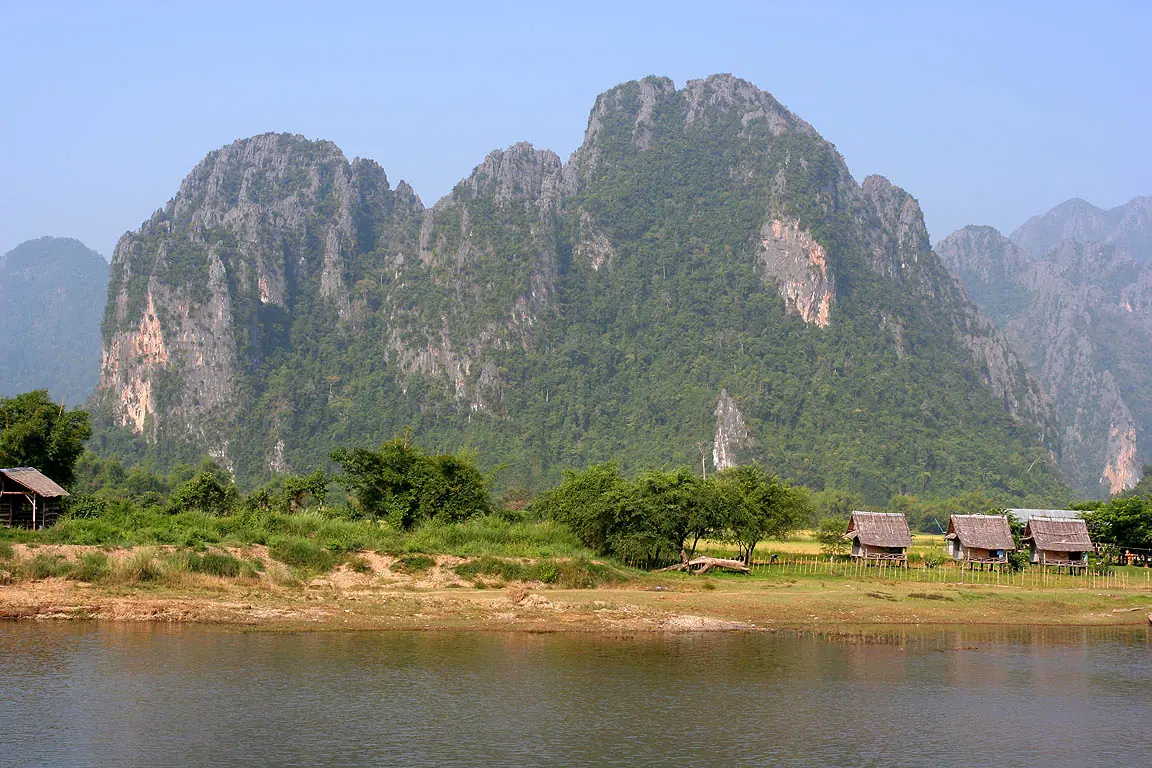
Vang Vieng and the North: Karst Country and River Bungalows
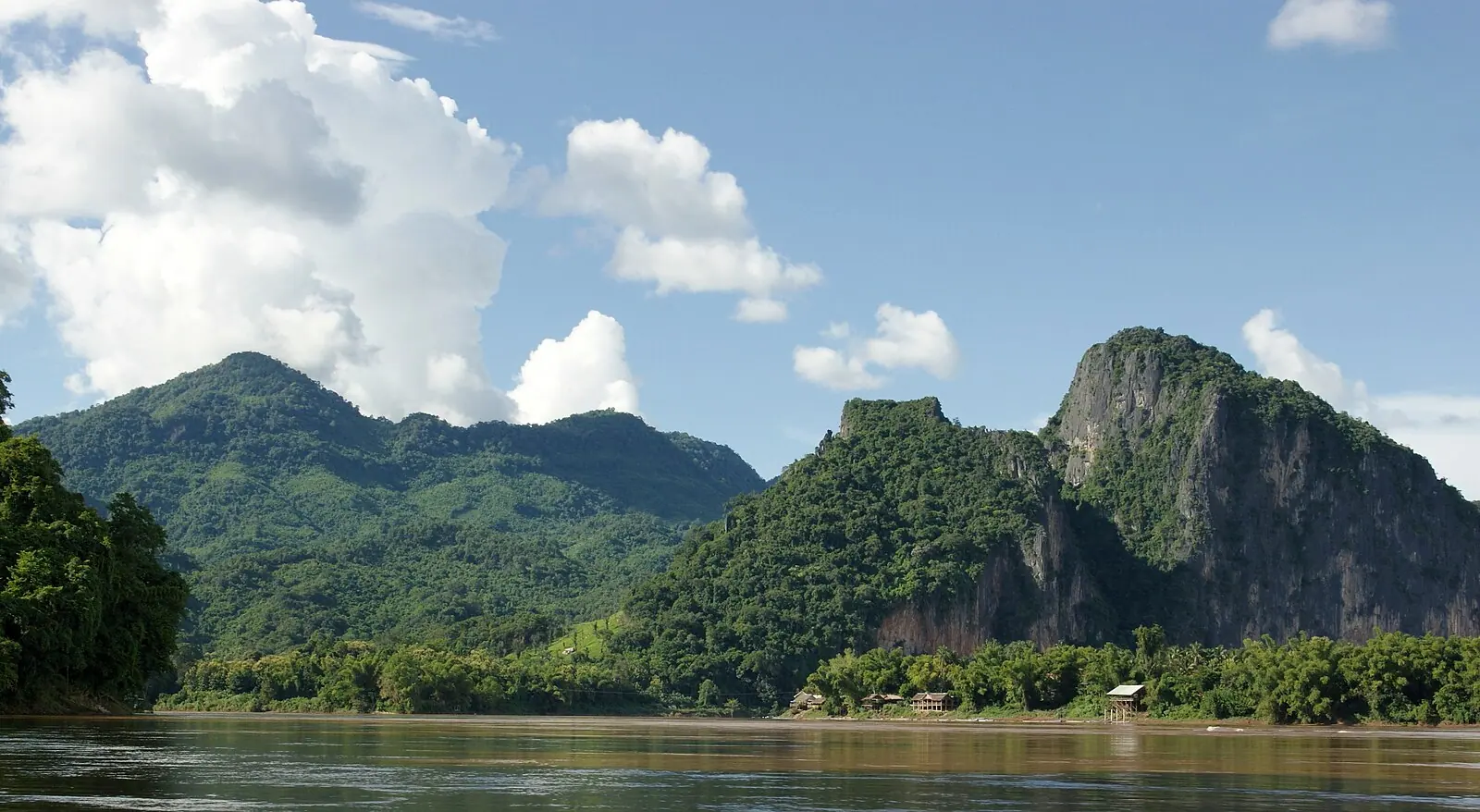
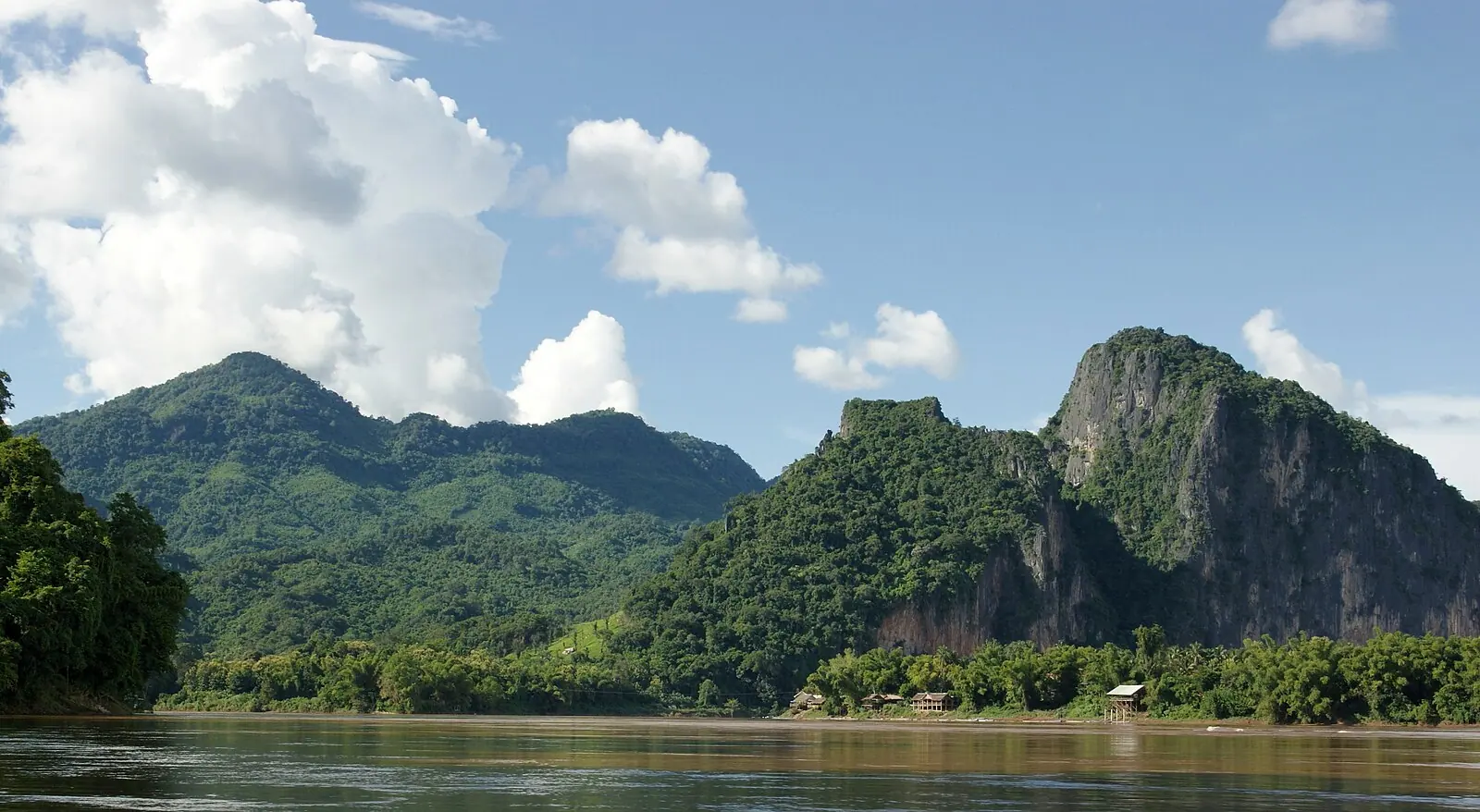
Four hours north of the capital, Vang Vieng has reinvented itself from a backpacker rite of passage into an outdoor town, and its accommodation reflects that shift. Riverside bungalows on the western bank of the Nam Song catch the sunrise behind limestone towers, while newer hotels on the eastern side put you within walking distance of the restaurants. Days here are about motion: kayaking or floating down the river, climbing the steep steps into Tham Chang cave, hiking to the Pha Ngern viewpoint, swimming in the pools of the Blue Lagoon, or drifting over the valley in a hot-air balloon at dawn.
Keep going north and the country gets wilder. Nong Khiaw is a small town wedged between the Nam Ou river and sheer cliffs, with guesthouses on stilts and a viewpoint above the bridge that rewards an early climb; nearby Muang Ngoi Neua is reachable only by boat and has no cars at all. Around Luang Namtha, trekking into the Nam Ha protected area is the main draw, with village homestays rather than hotels. And on the remote Xieng Khouang plateau, the Plain of Jars — vast fields of carved stone vessels up to two metres tall — justifies a night or two in Phonsavan, where guesthouses are simple and the evenings are genuinely cold.
The South: Wat Phu, the Bolaven Plateau and Si Phan Don
The southern half of Laos is greener, wetter and far less visited. Pakse is the transport hub and the logical first stop, with a good spread of mid-range hotels. From there, the Bolaven Plateau rises into coffee country, where cool air, waterfalls such as the twin cascade of Tad Fane and the wide curtain of Tad Yuang, and small farm homestays make an excellent two- or three-day motorbike loop.
South of Pakse, the town of Champasak is the base for Wat Phu, a ruined Khmer sanctuary spread across a mountainside with a spring-fed shrine at its heart. It is the equal of far more famous temple complexes in the region and best visited in the cool early morning, before the light turns flat. Continue south and the Mekong splinters into Si Phan Don, the Four Thousand Islands, where Don Khone and its neighbour Don Det offer the country's simplest accommodation: wooden bungalows, generator electricity, and bicycles for exploring the old French portage railway. The thundering Khone Phapheng Falls, the widest in Southeast Asia, and the rare Irrawaddy dolphins that surface near the Cambodian border are the two unmissable stops.
When to Go, What to Book, and How to Travel Well
The cool, dry season from November to February is the sweet spot: clear skies, comfortable days and chilly mornings in the mountains. It is also peak season, so book Luang Prabang and Vang Vieng well ahead for December and January. From March to May the heat builds towards 40°C and agricultural burning brings haze to the north — prices drop, but so do views. The green season from June to October brings afternoon downpours, high rivers, the fullest waterfalls and the cheapest, quietest rooms; roads to remote villages can become slow or impassable.
A few practicalities make a real difference. Outside the cities, many small guesthouses still prefer cash, so carry kip for the first night in any new town. Cheap rooms often mean a fan rather than air-conditioning, which is fine in the mountains and less so in Vientiane in April. Lao New Year in mid-April empties and fills towns at once: transport and rooms sell out months ahead, and many family businesses close.
Finally, travel gently. Remove your shoes before entering temple buildings, cover shoulders and knees at sacred sites, and keep a respectful distance when watching the dawn alms-giving rather than crowding it with cameras. Laos is a country where patience and quiet manners open far more doors than a big budget.
Frequently asked questions
Which is the best town to base yourself in for a first trip to Laos?
Luang Prabang is the standout for a first visit — the old town is compact, beautiful and packed with temples, cafés and river trips, and the accommodation ranges from simple guesthouses to elegant heritage villas. Pair it with two nights in Vientiane to see Pha That Luang and Patuxai, then add Vang Vieng or the far south if you have more time.
What is the best time of year to book a hotel in Laos?
Aim for November to February for cool, dry weather and clear views, and book Luang Prabang and Vang Vieng several weeks ahead for that window. March to May is hot and hazy but cheaper, while June to October brings rain, lush landscapes, full waterfalls and the easiest availability.
What types of accommodation are available in Laos?
Expect four broad categories: family-run guesthouses with fan rooms and shared bathrooms, riverside bungalows in places like Nong Khiaw and Si Phan Don, converted colonial-era shophouses and villas in Luang Prabang, and modern mid-range hotels with pools and air-conditioning in Vientiane and Pakse. Large international resort chains are rare outside the main cities.
Do I need to book accommodation in advance?
Book your first two nights and any stay during the December to February high season or the mid-April Lao New Year celebrations. Outside those periods, smaller towns such as Nong Khiaw, Muang Ngoi Neua and Don Khone usually have rooms available on arrival, though choice is limited and the best spots go early in the day.
How do you travel between towns in Laos?
Most journeys are by minivan or public bus on winding mountain roads, which take far longer than the distance suggests — allow a full day for long hops like Luang Prabang to Vientiane. Slow boats run along the Mekong and the Nam Ou, short domestic flights link the main cities, and the southern islands are reached by boat from the Pakse area.
Sort the rest of your trip
Everything for Laos, in one place
Transfer in Laos
Private driver waiting on arrival — no queues, no surprises.
Book a transfer
Things to do in Laos
Skip-the-line tickets, guided tours and standout experiences.
See experiences
Stay online in Laos
Travel eSIM — data the moment you land, no roaming bills.
Get an eSIM