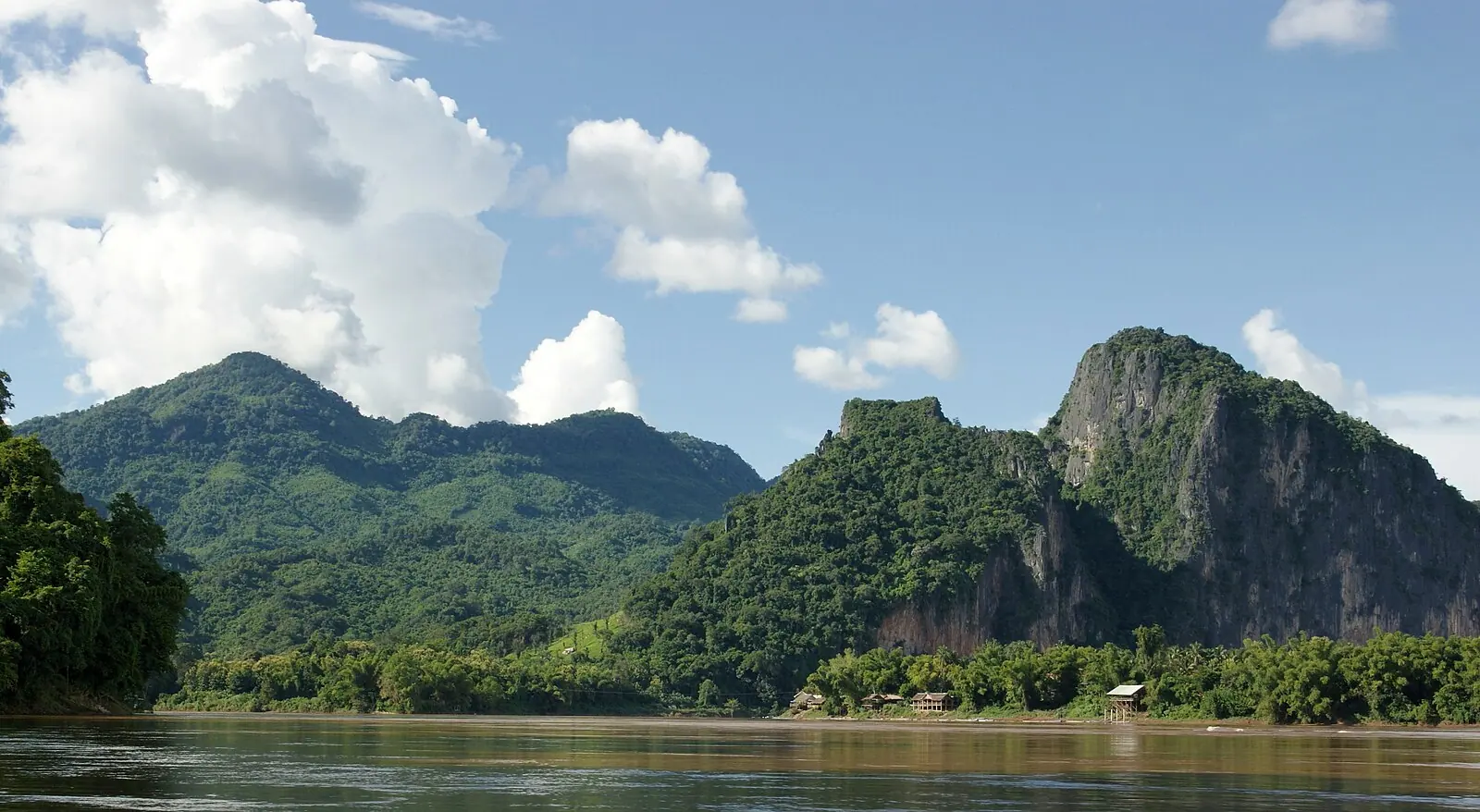
Laos is the quietest country in Southeast Asia, where the Mekong sets the tempo and a shared basket of sticky rice says more than any menu. Travel here slowly — through saffron-robed dawns, bitter-herb stews and limestone caves — and the rewards are disproportionate to the distance covered.
Laos at a Glance: A Landlocked Country That Keeps Its Own Time
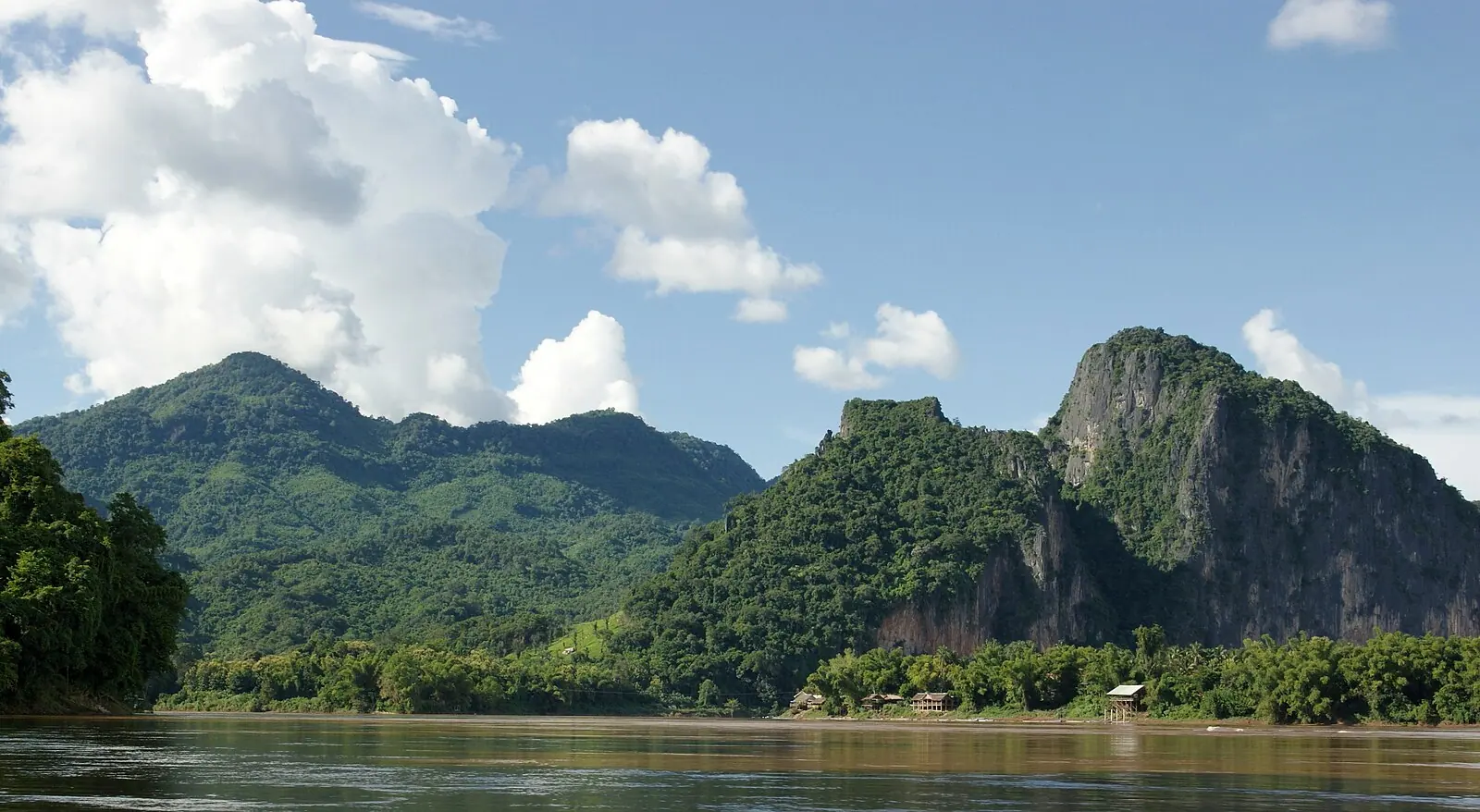
Laos is the only nation in Southeast Asia without a coastline, and that single fact shapes everything about a visit. The Mekong slides along its western and southern flanks for close to 1,900 kilometres, and the towns that grew up beside it — Luang Prabang, Vientiane, Thakhek, Pakse — still organise their days around the water. Inland, the country rises into forested mountains in the north, jagged karst around Vang Vieng, and the cool coffee-growing plateaus of the south. Distances on a map are deceptive: a 300-kilometre drive can easily take seven hours on roads that coil through hill country, so plan fewer stops than you think you need.
The classic window for travel is November to February, when the air is dry and cool enough that Luang Prabang mornings call for a light jumper and the Mekong runs clear and green. March and April turn hot and hazy as fields are burned off, with temperatures pushing past 35°C and the mountain views softened by smoke. May to October is the green season: dramatic skies, waterfalls such as Kuang Si at their most thunderous, quieter temples and softer room rates, balanced against slick roads and the odd washed-out bridge on remote routes.
Most travellers land in either Vientiane or Luang Prabang and shape a loop between them. Ten days to two weeks lets you cover the essentials — the temple town of Luang Prabang, the gilded stupa of Pha That Luang, the mysterious Plain of Jars, the Khmer ruins of Wat Phou and the river islands of Si Phan Don — while a week is enough for a northern-only run through Luang Prabang, Nong Khiaw and Vang Vieng. The national mood is summed up by the phrase "bo pen nyang" — never mind — and it is worth adopting early.
Luang Prabang: Alms at Dawn, Temples in the Afternoon Light
Luang Prabang's most famous ritual happens before sunrise. From around 5.30am, hundreds of monks file along Sisavangvong Road and the lanes around the old town collecting sticky rice from kneeling residents — the tak bat, or sai bat. It is a genuine act of merit-making rather than a performance, so watch from a respectful distance, keep phones low and flashes off, and dress with shoulders and knees covered. If you want to take part, buy your rice from a local vendor rather than a tout, kneel lower than the monks, and give a small spoonful to each. The morning market that follows is its own reward: smoked river fish, banana flowers, dried buffalo skin and bundles of bitter greens laid out on mats.
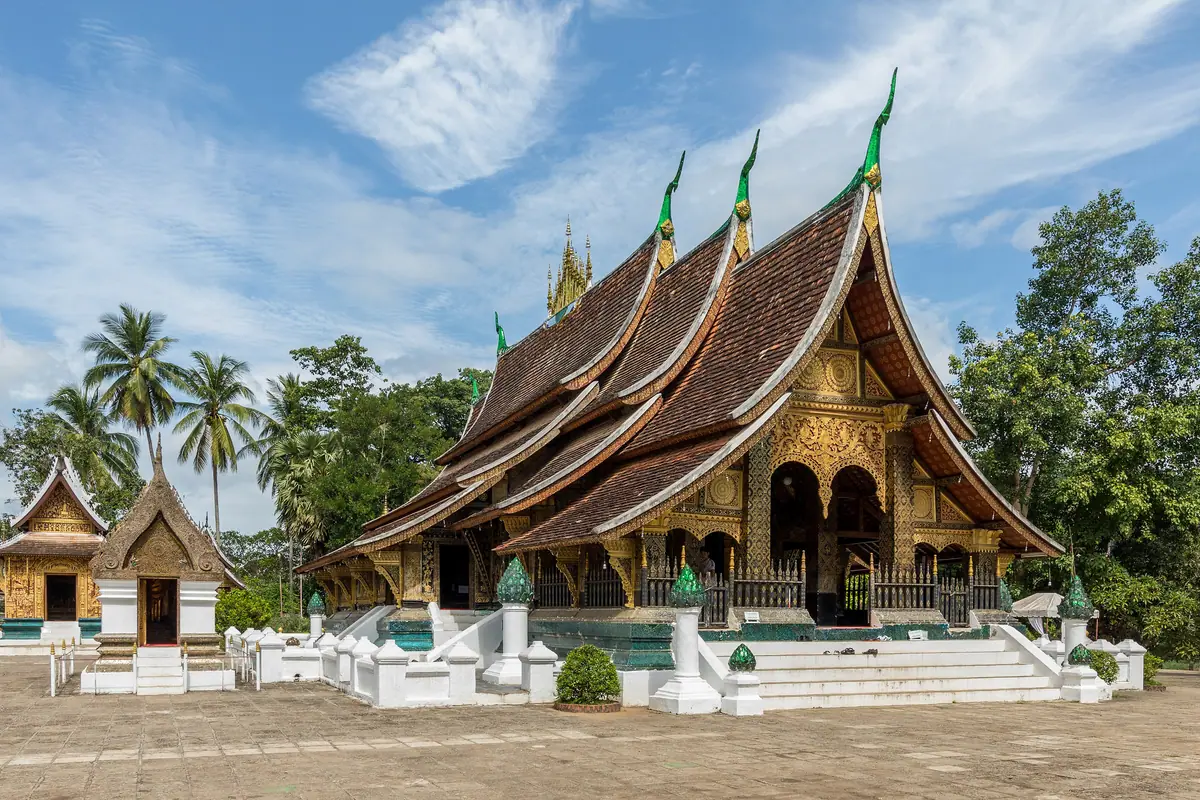
The town itself is a UNESCO-listed maze of teak houses and temple roofs. Wat Xieng Thong, built in the 16th century, is the masterpiece — low-sweeping eaves, a mosaic "tree of life" on the rear wall and chapels holding an ornate royal funeral carriage. Nearby, Wat Mai Suwannaphumaham is known for its gilded reliefs, while the former Royal Palace Museum, Haw Kham, shelters the golden Prabang Buddha that gave the town its name. Save the late afternoon for Mount Phousi: a few hundred steps up a wooded hill to a small stupa with the best sunset view in Laos, the Mekong and the Nam Khan rivers folding around the peninsula below.
Allow a full day for the surrounding countryside. Kuang Si Falls, roughly 30 kilometres southwest, tumbles through a series of milky-turquoise pools that are lovely for swimming; a rescue centre for Asiatic black bears sits near the entrance, and arriving before 10am lets you beat the crowds. Upstream of town, the Pak Ou Caves sit at the confluence of the Mekong and the Ou, two limestone chambers packed with thousands of Buddha images of every size and era, reached by a leisurely boat ride that stops at riverside villages where silk and cotton are still dyed with indigo and tree bark.
Eating Laos: Sticky Rice, Bitter Herbs and Mekong Riverweed
The cornerstone of every Lao meal is khao niaw — sticky rice, steamed and served in a woven bamboo basket called a huad. You take a pinch, roll it into a ball with your fingers and use it to scoop up everything else. The national dish is laap, chopped meat or fish tossed with toasted rice powder, lime juice, fish sauce, mint and spring onion, eaten warm with raw herbs. Alongside it comes tam mak hoong, green papaya pounded in a clay mortar with chilli, tomato and padaek — the deeply savoury fermented fish paste that is the backbone of Lao cooking and the reason the cuisine tastes unlike anything in neighbouring Thailand.
Dishes worth hunting down include or lam, a slow-simmered Luang Prabang stew of buffalo or beef with eggplant, wood ear mushroom and the slightly numbing herb sakhan; sai ua, herbed pork sausage grilled over charcoal until the skin blisters; mok pa, fish mixed with herbs and steamed inside a banana leaf; and kaipen, sheets of pressed Mekong riverweed fried crisp and dipped in jaew bong, a smoky chilli paste. Lao khao soi is not the coconut-curry noodle soup of northern Thailand — here it is wide rice noodles in a pork and tomato broth, piled with raw leaves and beansprouts. For breakfast, khao piak sen, a comforting rice-noodle soup, is the local standard.
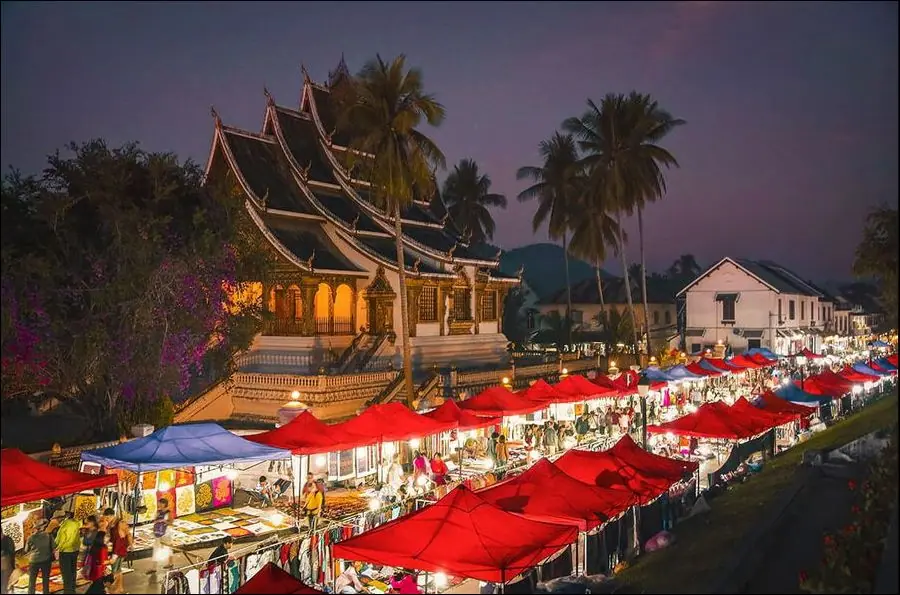
Markets are the cheapest and most enjoyable way in. In Luang Prabang, the evening market on Sisavangvong Road sets out rows of grilled chicken, river fish, sausages and bowls you fill yourself for a set price, while Vientiane's riverfront barbecue stalls fire up at sunset with the Mekong as a backdrop. French colonial history lingers in the khao jee — a crusty baguette stuffed with pâté, chilli and pickled vegetables — sold from carts each morning. Lao coffee, grown on the southern plateau and served strong with condensed milk, is excellent, and a cold glass of the national lager with ice is practically a civic ritual. Vegetarians eat well here, but learn the phrase "bor sai padaek" and you will avoid fish paste in almost everything.
Vientiane, the Plain of Jars and the Caves of the Centre
The capital is unhurried and easily walked or cycled. Its emblem is Pha That Luang, a soaring gilded stupa said to enshrine a relic of the Buddha and rebuilt in its current form in the 16th century; visit in the late afternoon when the gold catches the light. Nearby, Patuxai — the Victory Monument — is a concrete arch with a rooftop viewing gallery, and locals enjoy telling visitors that the cement was originally gifted for an airstrip. Wat Sisaket, dating to the early 19th century and one of the few temples to survive the destruction of Vientiane in 1827, has a cloister wall studded with thousands of small Buddha images, while the nearby Haw Phra Kaew and the weathered That Dam stupa round out a half-day of monuments.
Twenty-five kilometres east of the city, on a bend of the Mekong, sits Buddha Park, a surreal sculpture garden of hundreds of concrete Hindu and Buddhist figures created in the late 1950s. A giant reclining Buddha watches over the lawn, and you can climb inside a pumpkin-shaped structure whose three levels represent heaven, earth and hell. It is strange, slightly psychedelic and completely worth the tuk-tuk ride.
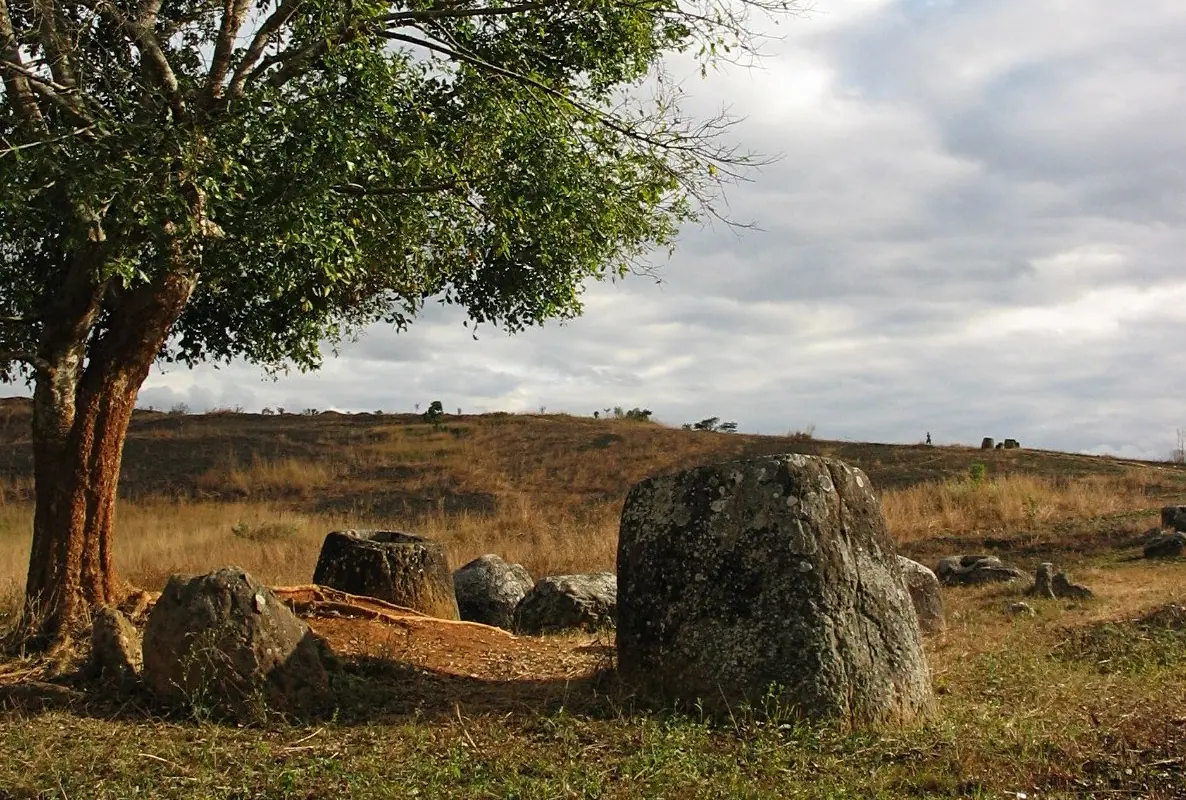
Further north, on the Xieng Khouang plateau around Phonsavan, hundreds of huge carved stone jars — some more than two metres tall — lie scattered across the hills, the legacy of an Iron Age burial culture whose purpose still puzzles archaeologists. Sites 1, 2 and 3 are open to visitors; stick strictly to marked paths, as this province carries a heavy legacy of unexploded ordnance from the 1960s and 1970s. In neighbouring Khammouane, the extraordinary Tham Kong Lo cave runs for roughly seven kilometres, and you explore it by longtail boat along an underground river, headtorch beams picking out stalactites the size of cathedral columns.
The Bolaven Plateau, Wat Phou and the Four Thousand Islands
South of Vientiane, Vang Vieng has reinvented itself from party town to outdoor base. The Nam Song river is the focus — kayaking and tubing between karst cliffs — while Tham Jang cave, reached by a steep staircase, was once used as a shelter during invasions. Sunrise hot-air balloons drift over the valley and are one of the most photogenic experiences in the country. The town is a comfortable three- to four-hour drive north of the capital on a fast road, making it an easy stop on a north–south route.
The Bolaven Plateau, reached from Pakse, is Laos's coffee country: rich volcanic soil, misty mornings and plantations sitting above 1,000 metres. A three-day motorbike loop links farm stays, ethnic Laven, Katu and Alak villages where weaving and forest tea are part of daily life, and a string of waterfalls — Tad Fane plunges in twin ribbons of roughly 120 metres into a jungle gorge, while Tad Yuang is easier to reach and good for a swim. Buy coffee straight from the growers; it is some of the best in Southeast Asia.
Near Champasak, the UNESCO-listed Wat Phou is a Khmer temple complex spanning the 6th to 12th centuries, its sandstone and laterite sanctuaries climbing a processional causeway toward a sacred mountain. Continue south to Si Phan Don — the Four Thousand Islands — where the Mekong widens into a maze of sandbars and islets. Base yourself on Don Khon or Don Det for cycling, hammock afternoons and sunsets over the water; the thundering Khone Phapheng Falls nearby is among the widest in the region, and a small population of Irrawaddy dolphins still surfaces in a deep pool near the Cambodian border.
Festivals, Etiquette and Shaping Your Route
Timing a trip around a festival transforms a visit. Pi Mai, the Lao New Year in mid-April, turns the whole country into a water fight — a blessing, traditionally, thrown over strangers and monks alike — with sand stupas on riverbanks and Buddha images ceremonially bathed. Boun Bang Fai in May sees villages launch bamboo rockets to ask the sky for rain. In October, Boun Ok Phansa marks the end of Buddhist Lent with candlelit boats and longboat races on the Mekong, and the November full moon brings Boun That Luang, the country's largest temple fair, drawing pilgrims to Vientiane from every province.
Temple etiquette matters here. Cover shoulders and knees, remove shoes before entering any ordination hall, and sit with your feet tucked behind you rather than pointed at a Buddha image. Heads are considered sacred and feet profane, so never touch someone's head or step over a person. Women should not touch monks or hand objects directly to them — place items on a cloth or table instead. Greet people with a nop, palms together at chest height with a slight bow, and the word "sabaidee". Raising your voice or showing anger causes loss of face and will end a conversation faster than any language barrier.
For the journey itself, the two-day slow boat from Huay Xai to Luang Prabang, with a night in the riverside village of Pakbeng, remains the most atmospheric way to enter the country, though the wooden benches are hard and the boat is crowded. Domestic flights link the main towns and save days; buses are cheap but slow, and night buses on winding mountain roads are not for the faint-hearted. Carry kip in small notes, as ATMs thin out beyond the cities, and expect rural travel times to be roughly double what any map suggests. Bring a refillable bottle, a light rain shell from May onward, and enough patience to enjoy the pace — in Laos, the journey and the destination are the same thing.
Frequently asked questions
How many days do you need to travel through Laos?
Ten days to two weeks is the sweet spot for a first visit, covering Luang Prabang, Vientiane, the Plain of Jars or Vang Vieng, and a taste of the south around Pakse and Si Phan Don. If you only have a week, concentrate on the north: Luang Prabang, the Pak Ou Caves, Kuang Si Falls and Vang Vieng, travelling between them by road or river rather than trying to reach the far south.
What is the best time of year to visit Laos?
November to February offers cool, dry weather and clear views, making it the most comfortable window for temple-hopping and river trips. March and April are hot and hazy because of field burning, with temperatures above 35°C. May to October is the green season — lush landscapes, powerful waterfalls and fewer crowds, but expect afternoon downpours and occasionally rough rural roads.
What food should I not miss in Laos?
Start with laap, the herbed minced-meat salad, eaten with sticky rice scooped by hand from a bamboo basket. Try tam mak hoong made with padaek for the true fermented-fish flavour, or lam stew from Luang Prabang, charcoal-grilled sai ua sausage, fried kaipen riverweed with chilli paste, and khao piak sen noodle soup for breakfast. Finish with strong local coffee and a cold lager over ice.
How do you join the morning alms-giving in Luang Prabang respectfully?
Arrive before sunrise and keep a clear distance from the monks' line so they can walk unobstructed. Dress modestly with shoulders and knees covered, silence your phone and never use a flash. If you wish to give, buy sticky rice from a local vendor, kneel or stand lower than the monks, and place a small portion into each bowl. Women should not touch the monks or their bowls directly.
Is Laos easy to travel independently?
Yes, though it moves slowly. Tourist visas are straightforward at most land crossings and airports, guesthouses and family-run hotels are plentiful, and English is common in tourist areas though rare in the countryside. Roads are winding and journeys take far longer than the distance suggests. Carry cash in small kip notes, arrange transport a day ahead in remote areas, and always stay on marked paths in Xieng Khouang province due to unexploded ordnance.