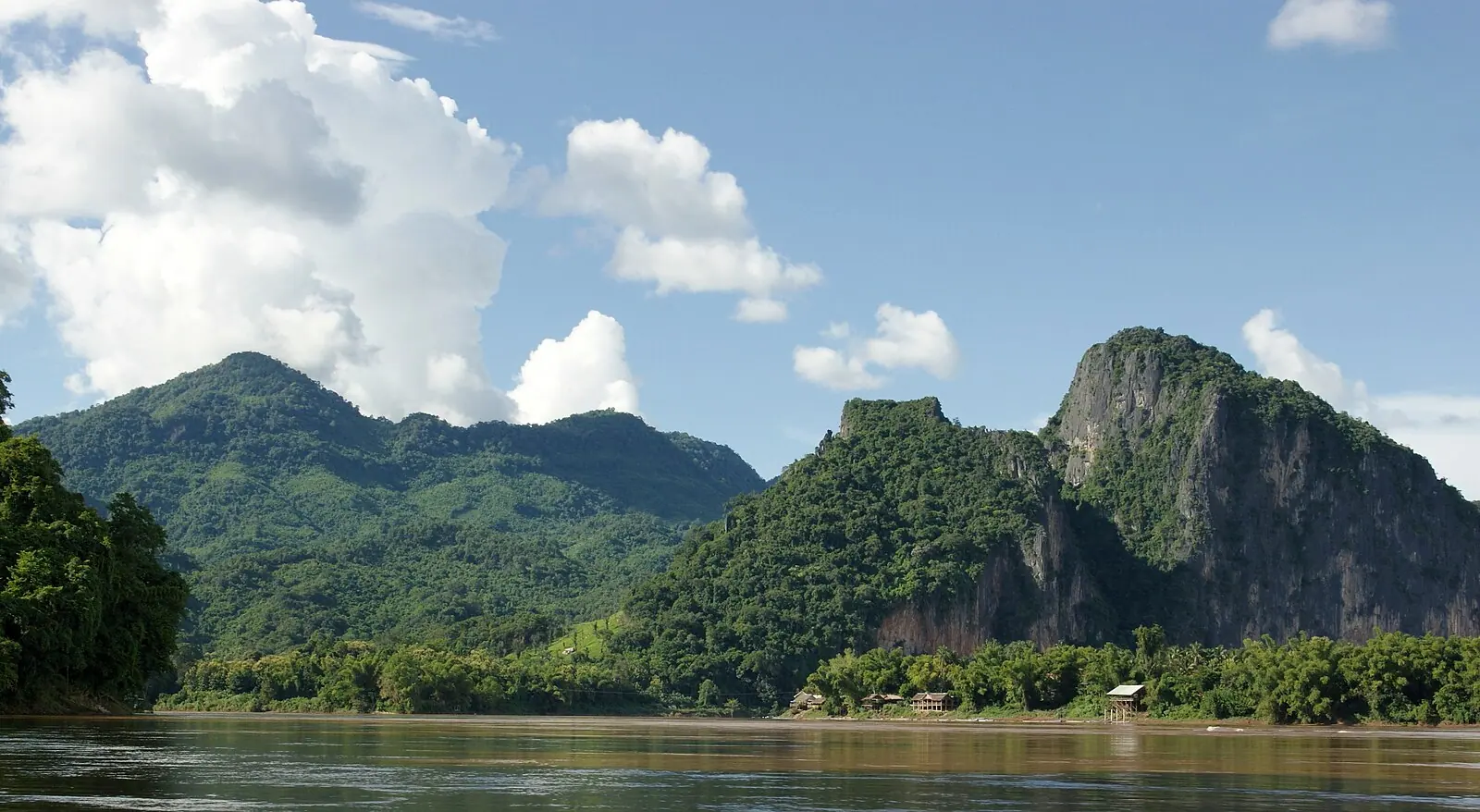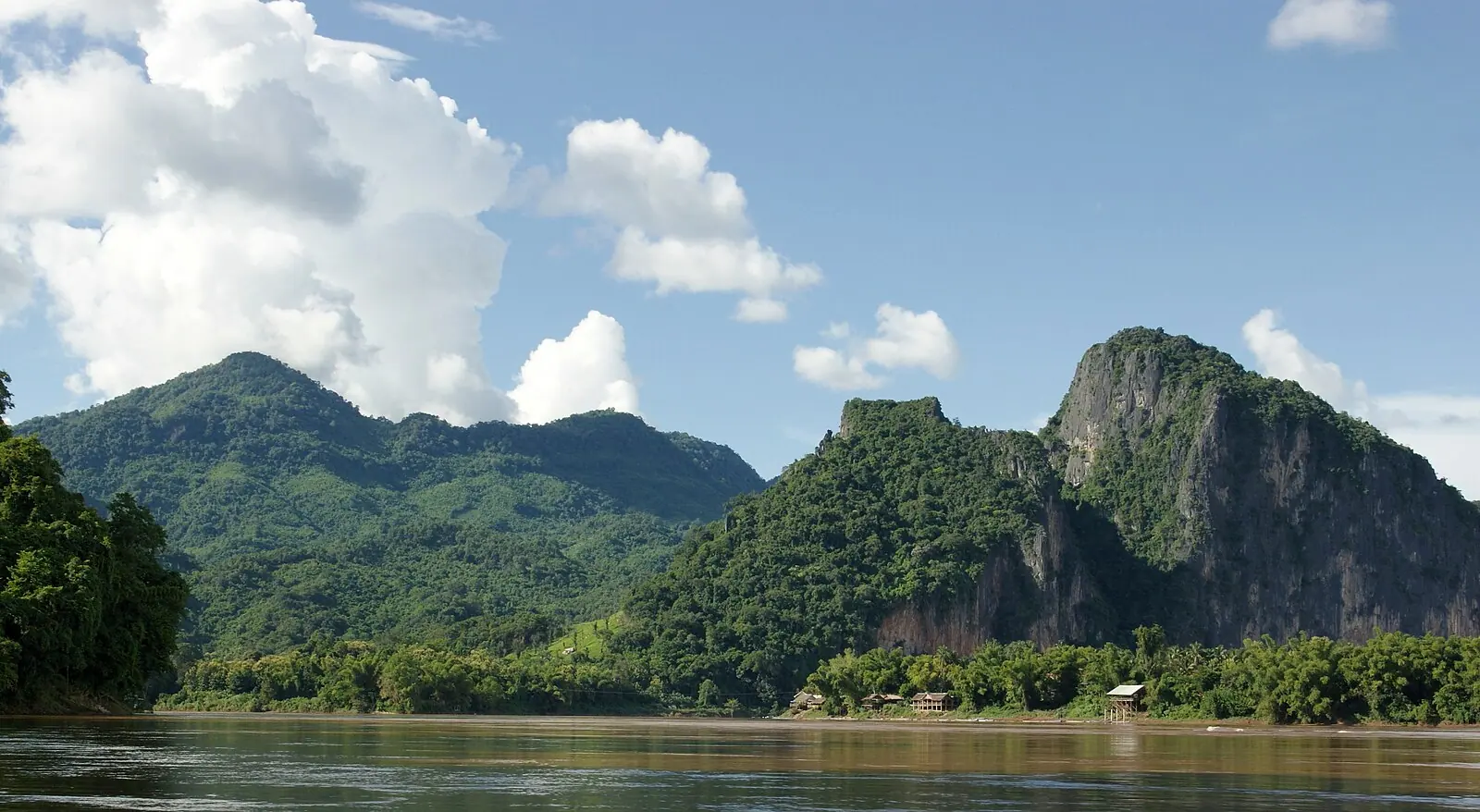
Laos moves at the speed of the Mekong — slow, brown and entirely unhurried. Between the gilded temple roofs of Luang Prabang, the limestone towers behind Vang Vieng and the drowned forests of Si Phan Don, the country rewards travellers who trade a checklist for a rhythm. Here is where to go, what to actually do there, and when the weather will cooperate.
Luang Prabang: Gilded Temples and a Dawn Ritual
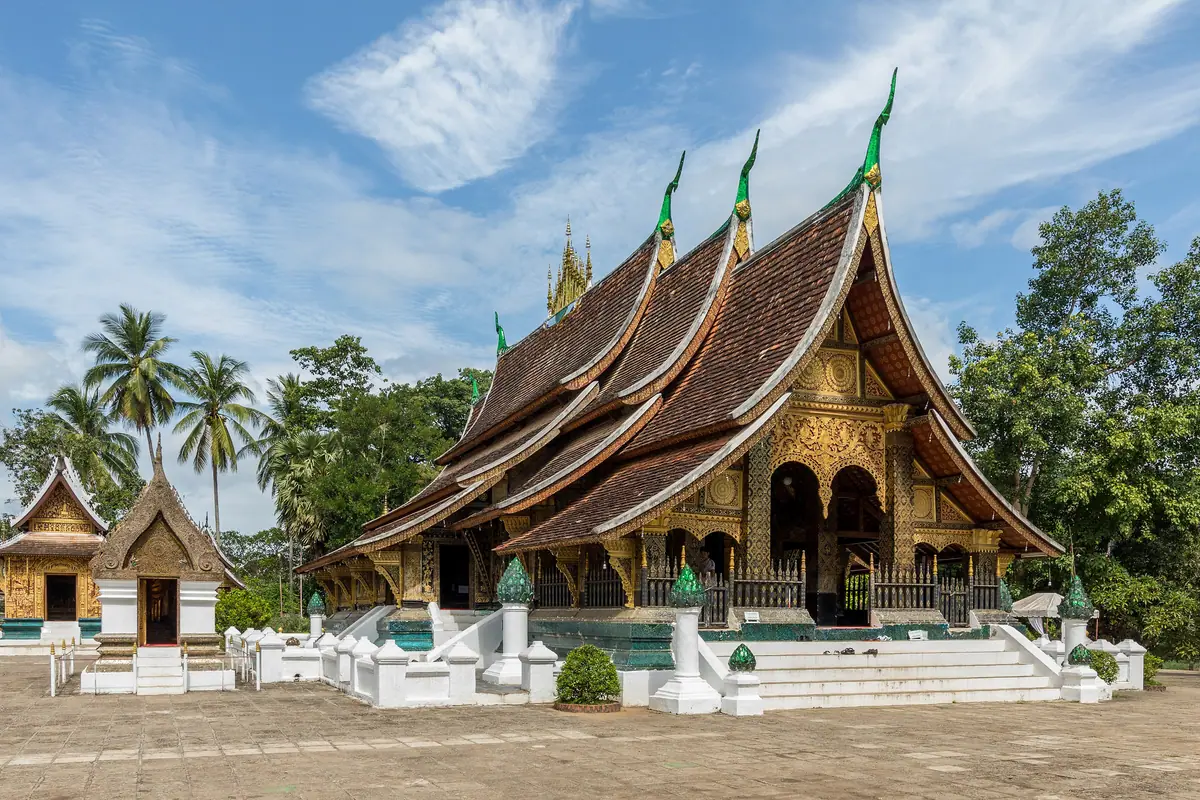
The old royal capital remains the single best place to begin any Laos trip. It occupies a narrow peninsula where the Mekong and Nam Khan rivers meet, and the historic core is small enough to walk end to end in half an hour — though you will keep stopping. Wat Xieng Thong is the masterpiece: low, sweeping two-tier roofs, intricate gold stencilling and a mosaic 'tree of life' on the rear wall. Nearby, Wat Mai Suwannaphumaham shelters gilded relief panels, and the former Royal Palace Museum holds the country's crown jewels and royal regalia. Finish the day by climbing the few hundred steps of Mount Phousi for a sunset view straight down onto the temple roofs and the brown river beyond.
Before sunrise, the streets fill with kneeling residents and lines of saffron-robed monks collecting sticky rice — the tak bat alms round. It is a genuine religious practice, not a photo opportunity, so keep a respectful distance, stay silent, avoid flash and close-range lenses, and if you want to participate, buy rice from the vendors rather than handing over food you have brought yourself.
Give the town three nights, because the two essential day trips both start here. Kuang Si Falls, about 30 kilometres southwest, spills turquoise water over a series of limestone tiers with swimming pools at the lower levels and a forest walk to the top. Upstream in the opposite direction, Pak Ou Caves are two riverbank grottoes crammed with thousands of worn Buddha images, reached by slow boat with a stop at a riverside village where rice whisky is still distilled over wood fires.
Vang Vieng and the Karst Valleys
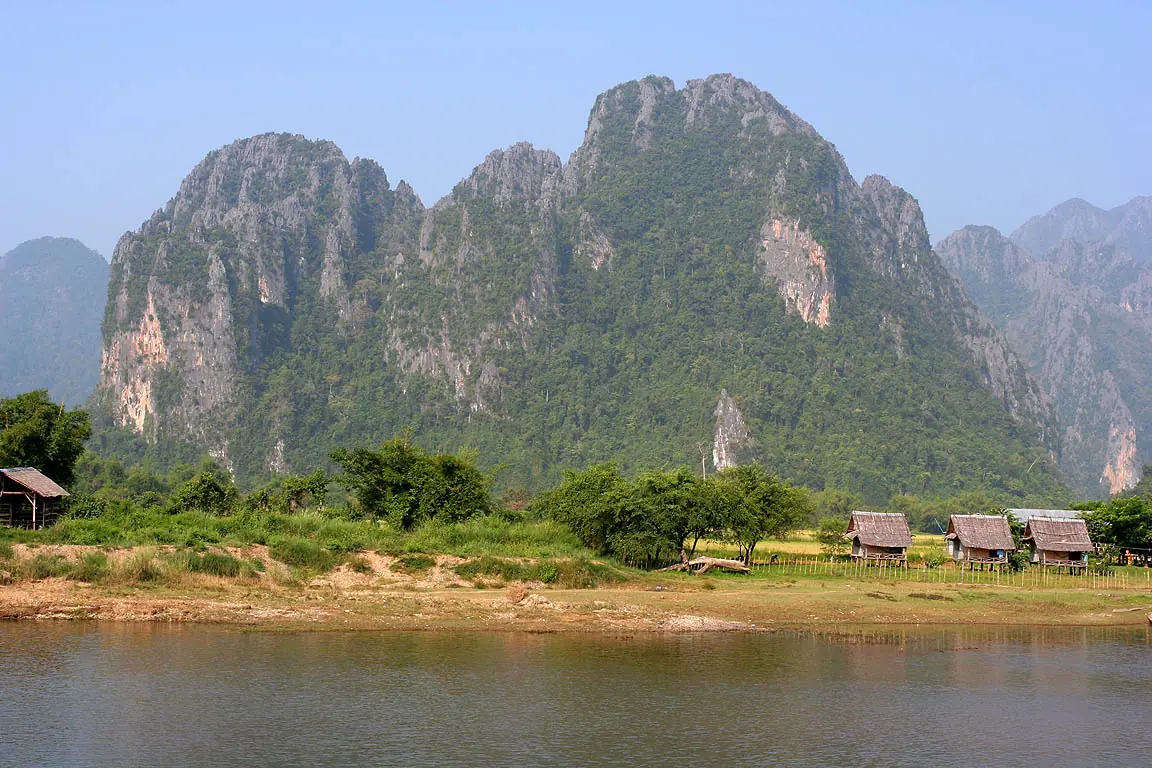
Vang Vieng sits in a valley of abrupt limestone karst, with the shallow Nam Song river threading between the peaks. The town's party reputation is decades out of date; what has replaced it is a genuinely good outdoor base. Hot-air balloons lift off at first light and drift over rice paddies and jagged ridges, kayaks and wooden boats float downstream past riverside bars, and the network of caves in the surrounding cliffs rewards a rented bicycle and a headlamp.
Tham Chang, just across the river, is the most accessible cave, with a cool interior and a viewpoint above its mouth. Further out, Tham Phu Kham leads to the so-called Blue Lagoon, a spring-fed pool of startling colour that is busiest in the middle of the day — go early. Climbers have bolted well over a hundred routes on the local limestone, from beginner-friendly slabs to steep overhangs, and a handful of outfits rent gear and guide beginners.
Elsewhere, hiking trails climb to the Pha Ngern viewpoint for a panorama of the whole valley, and longer walks pass through Hmong and Khmu hamlets where sticky rice and laap are served on low bamboo tables. Two or three nights is enough to see it properly; the cool, clear months from November to February are by far the most comfortable for anything active, while March and April turn hot and hazy.
Vientiane: Stupas, Surreal Statues and River Sunsets
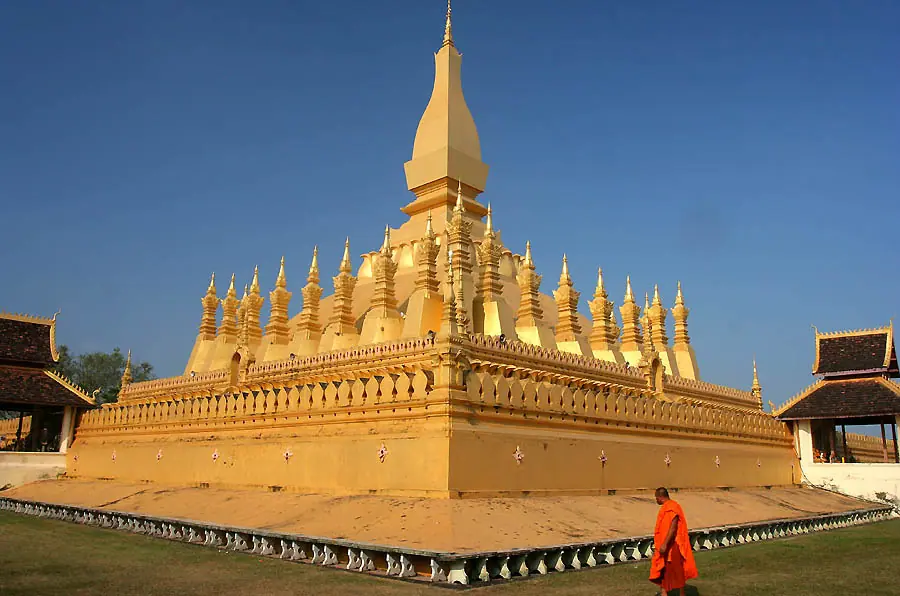
The capital is often skipped, which is a mistake. Pha That Luang is the national symbol: a 45-metre gilded stupa on a tiered base, originally founded in the sixteenth century and rebuilt several times since, its gold catching the light spectacularly in the late afternoon. Wat Si Saket, one of the few temples to survive the nineteenth-century sack of the city, is remarkable for the thousands of small Buddha images packed into niches along its cloister walls. Down the wide boulevard of Lane Xang, Patuxai — the concrete 'victory monument' modelled loosely on a European triumphal arch — has a staircase to the roof and the best free view in town.
Twenty-five kilometres east, Buddha Park is unlike anything else in the country: a riverside field of enormous concrete Hindu and Buddhist figures, including a reclining Buddha and a pumpkin-shaped dome you can climb through. Back in the city, the Mekong promenade fills at dusk with aerobics classes, food stalls and families watching the sun drop behind Thailand on the far bank.
Vientiane needs a day or two, plus a morning for the small but sobering UXO education centre, which explains why unexploded wartime ordnance still shapes life in parts of the countryside. Drink strong, bitter Lao coffee in a riverside café, browse the night market near the fountain, and treat the city as a soft landing before heading north or south.
The North: Plain of Jars, Nong Khiaw and Nam Ha
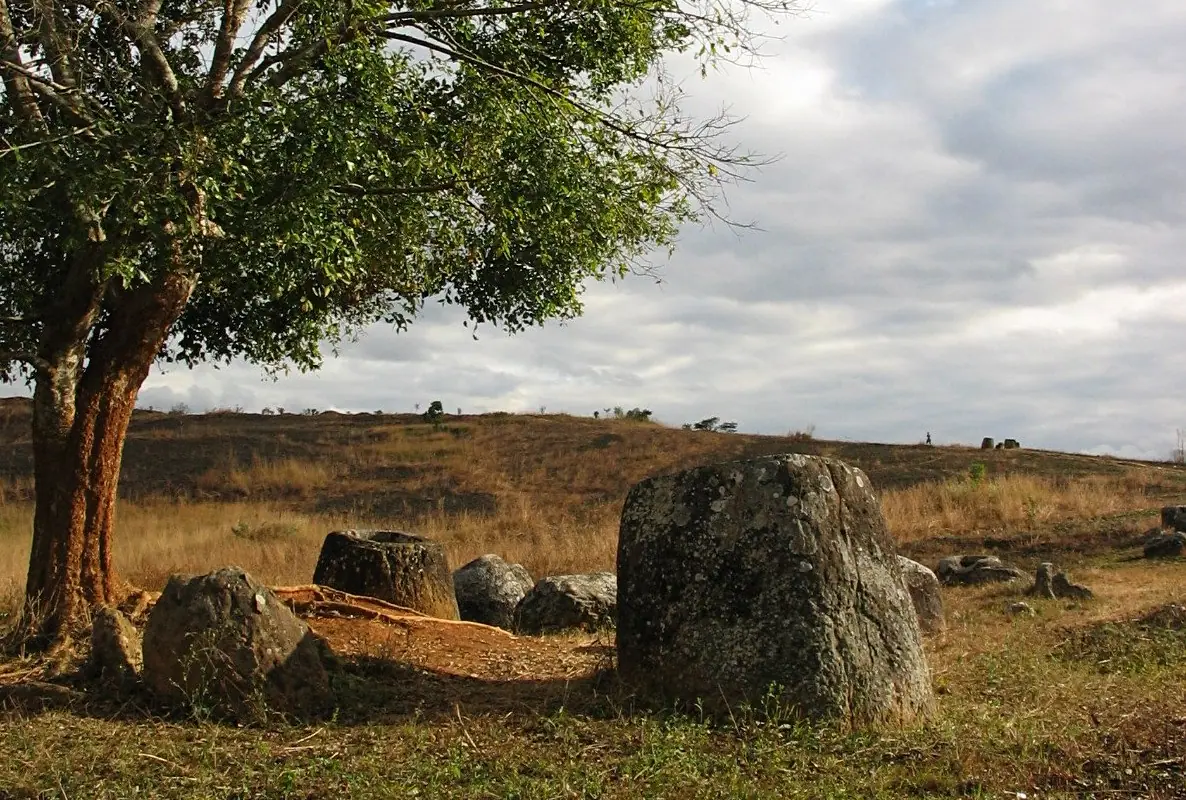
The strangest and most haunting sight in Laos is the Plain of Jars, scattered across the rolling hills around Phonsavan in Xieng Khouang province. Hundreds of carved sandstone jars, some tall enough to hold a person, lie in clusters on the ground — roughly two thousand years old, apparently used for burial, and still of uncertain origin. Site 1 is the largest and easiest to reach; Sites 2 and 3 need a vehicle and a guide. Because the surrounding land was heavily bombed and is still being cleared, never wander off the marked paths.
Further north and west, Nong Khiaw is a small river town on the Nam Ou, hemmed in by towering karst walls. A steep one-and-a-half-hour trail leads to the Pha Daeng viewpoint above town, and longtail boats continue upriver to Muang Ngoi Neua, a village with no road access where the lights go out early and the river does all the work. Riverside bungalows here are among the cheapest and most memorable beds in the country.
For trekking, head to Luang Namtha and the Nam Ha protected area, where two- and three-day walks pass through Khmu, Lanten and Akha villages with overnight homestays, forest cooking and river crossings. Further west near Bokeo, canopy zip-line circuits run through the treetops of an old-growth forest — an adrenaline counterpoint to the temples further south.
The South: Wat Phou, the Bolaven Plateau and Si Phan Don
In Champasak province, Wat Phou is the reason many travellers make the long journey south. This UNESCO-listed Khmer complex predates the great temples of Cambodia, its laterite causeway and rectangular reservoirs leading to a sanctuary cut into the flank of the sacred Phu Kao mountain. Arrive at opening time, when the light is soft and the tour groups have not yet arrived, and climb to the upper terrace for the view over the Mekong floodplain. Sleep in the sleepy riverside town of Champasak rather than commuting from Pakse.
East of Pakse, the Bolaven Plateau rises into cool coffee country, where Arabica is grown under shade and waterfalls drop off the escarpment edge. Tad Fane plunges in twin ribbons into a misty gorge, Tad Yuang is a broad, swimmable curtain, and Tad Lo has guesthouses, swimming holes and elephant-riding alternatives that focus on observation rather than riding. A three-day motorbike loop from Pakse links the falls with coffee farms and ethnic villages.
Further south, the Mekong widens and breaks into Si Phan Don — the 4,000 Islands — where life slows to bicycle speed. Don Khone and Don Det are the bases: pedal across the old French-era bridge to spot the critically endangered Irrawaddy dolphins that still patrol a deep pool near the Cambodian border, and stand at Khone Phapheng, the largest waterfall in Southeast Asia by volume. Sunsets here, over water the colour of weak tea, are the ones people remember.
Timing, Transport and the Tempo of a Laos Trip
The sweet spot is November to February, when the rains have cleared, the air is cool and dry, and daytime temperatures sit comfortably in the twenties and low thirties. March to May turns fiercely hot and often hazy, as farmers burn fields across the region. From May to October the green season returns: the Mekong rises, the waterfalls are at full roar and the rice fields glow, with rain usually arriving in short, heavy afternoon bursts rather than all-day drizzle. Plan around it rather than avoiding it.
Festival timing is worth building a trip around. Pi Mai, the Lao New Year in mid-April, turns every town into a water fight and is enormous fun — expect to be soaked and to have your tuk-tuk drenched. That Luang festival in Vientiane in November brings candlelit processions to the golden stupa, and a baci ceremony, in which white cotton threads are tied around your wrists to call back the spirits, is something you may be invited to at any time of year.
Getting around has changed dramatically. A modern railway now links Vientiane, Vang Vieng and Luang Prabang in a few hours, replacing a punishing mountain road, while the classic two-day slow boat from the northern border down the Mekong remains the most atmospheric way to arrive. Overnight sleeper buses connect the capital with Pakse and the far south. A sensible two-week route runs Vientiane to Luang Prabang and the north, then flies south for Wat Phou and the islands — or, if you have only a week, stay north and go slowly.
Frequently asked questions
How many days do you need in Laos?
Two weeks lets you cover both halves properly: Luang Prabang, Nong Khiaw or Vang Vieng and Vientiane in the north, then a flight south to Pakse for Wat Phou, the Bolaven Plateau and Si Phan Don. If you only have a week, stay north — cramming in the south means losing whole days to long road transfers.
When is the best time to visit Laos?
November to February offers cool, dry, clear weather and is the most comfortable window for trekking, cycling and temple-hopping. March to May is hot and often smoky from field burning, while the green season from May to October brings high rivers, full waterfalls and short afternoon downpours.
What are the absolute must-see sights in Laos?
Wat Xieng Thong and Kuang Si Falls around Luang Prabang, the karst valleys and caves behind Vang Vieng, Pha That Luang and Patuxai in Vientiane, the Plain of Jars near Phonsavan, the Khmer ruins of Wat Phou in Champasak, and the waterfalls and river dolphins of Si Phan Don.
How do you travel between Vientiane, Vang Vieng and Luang Prabang?
A modern railway now connects all three in a few hours, which has transformed the old mountain-road slog. Alternatively, buses run the same route, and the leisurely two-day slow boat down the Mekong from the northern border to Luang Prabang is the most scenic — and slowest — option of all.
Is Laos a good destination for first-time visitors to Southeast Asia?
Yes, particularly if you value quiet over nightlife. Distances are long and infrastructure is thinner than in neighbouring countries, so book accommodation ahead in high season, carry some local currency for rural areas where cards are not accepted, and allow more time than the map suggests between stops.