Japan compresses a thousand years of shrine bells, cedar forests and neon into a country you can cross by train in a single day. It is the rare place where a gold-leaf pavilion, a bowing deer and a 15-metre bronze Buddha can all appear on the same itinerary. This guide covers the landmarks worth building a trip around, and the small details that make the difference between seeing Japan and feeling it.
Tokyo: Neon, Shrines and the Art of Moving Fast Quietly
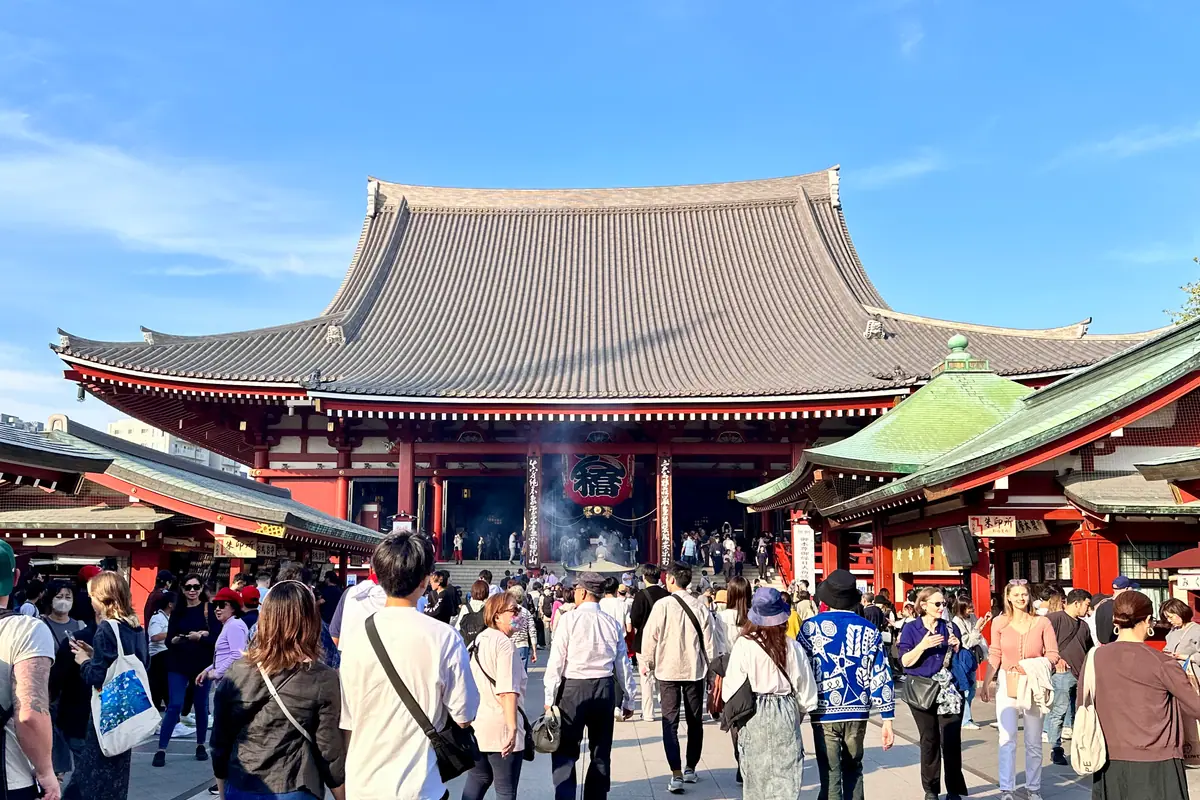
Start where the city does, at Senso-ji in Asakusa. The Kaminarimon gate, hung with a giant red lantern, opens onto Nakamise-dori, a lane of stalls selling rice crackers and folding fans that leads to the temple's main hall. Come before 7am and you can hear the incense burners crackle with only a handful of other people around — by mid-morning it is shoulder to shoulder.
Then trade old Tokyo for new. Meiji Jingu sits inside a forest of roughly 100,000 donated trees beside Harajuku, a ten-minute walk from one of the loudest shopping streets on earth. Shibuya Crossing, the world's busiest pedestrian scramble, is best viewed from an observation deck above it at dusk, when the screens flicker on and the crowds pulse in waves. For a free panorama instead, the Tokyo Metropolitan Government Building in Shinjuku opens its twin observatories to the public at no charge.
Budget three to four days here and cluster your sightseeing by neighbourhood — Asakusa and Ueno in the east, Shibuya and Shinjuku in the west — because the city is enormous and the trains, though impeccably punctual, eat time. Early spring belongs to Shinjuku Gyoen, one of the few parks where you can spread a picnic mat under the cherry trees.
Kyoto: Ten Thousand Gates and a Gold Pavilion
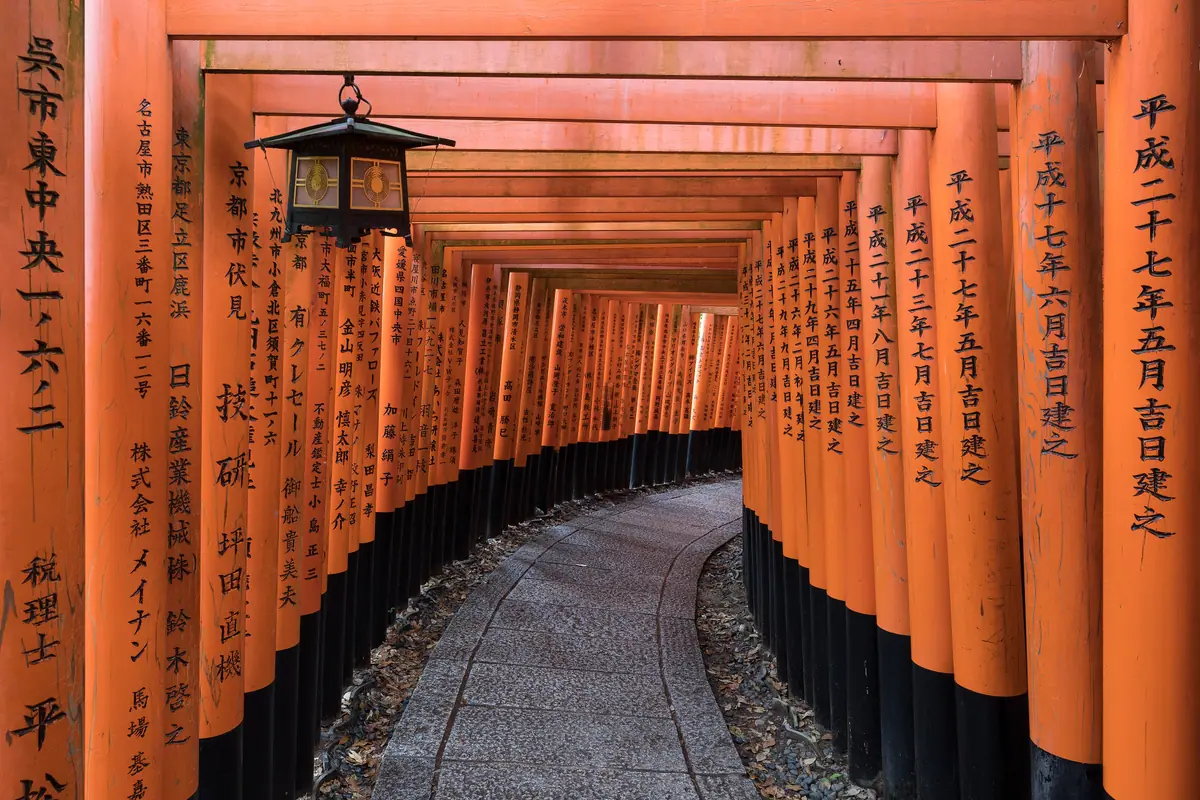
Fushimi Inari Taisha is the image most travellers carry home: thousands of vermilion torii gates climbing a wooded mountainside in tunnels so dense the light turns orange. The lower circuit takes 30 to 45 minutes; the full loop over the summit runs two to three hours. Arrive before 8am and the paths are yours, which is the only way to photograph them without a stranger's elbow in frame.
The classic eastern route then unfolds along Higashiyama: Kiyomizu-dera, whose vast wooden stage juts over a hillside of maples, followed by the stone lanes of Sannenzaka and Ninenzaka down to Gion, where you might glimpse an apprentice geisha hurrying to an appointment. To the north, Kinkaku-ji — the Golden Pavilion — reflects in a mirror pond so precisely that the building seems doubled, and nearby Ryoan-ji offers a rock garden of fifteen stones arranged so that no single vantage point reveals them all.
Give Kyoto at least three days and let the seasons dictate your timing. Late March to early April brings cherry blossom along the Philosopher's Path; mid-November to early December sets the temples ablaze with maple colour, when evening illuminations extend opening hours at several sites. Arashiyama, with its bamboo grove and Togetsukyo Bridge, deserves a half-day of its own, ideally at opening time when the stalks creak overhead in near silence.
The Golden Route: Nara, Osaka, Himeji and Hiroshima
From Kyoto or Osaka, Nara is under an hour away and feels like another century. Todai-ji houses a 15-metre bronze Buddha inside one of the largest wooden buildings on earth, and the surrounding park is patrolled by hundreds of sika deer that have learned to bow for a cracker. Kasuga Taisha, approached through thousands of stone and bronze lanterns, completes the circuit.
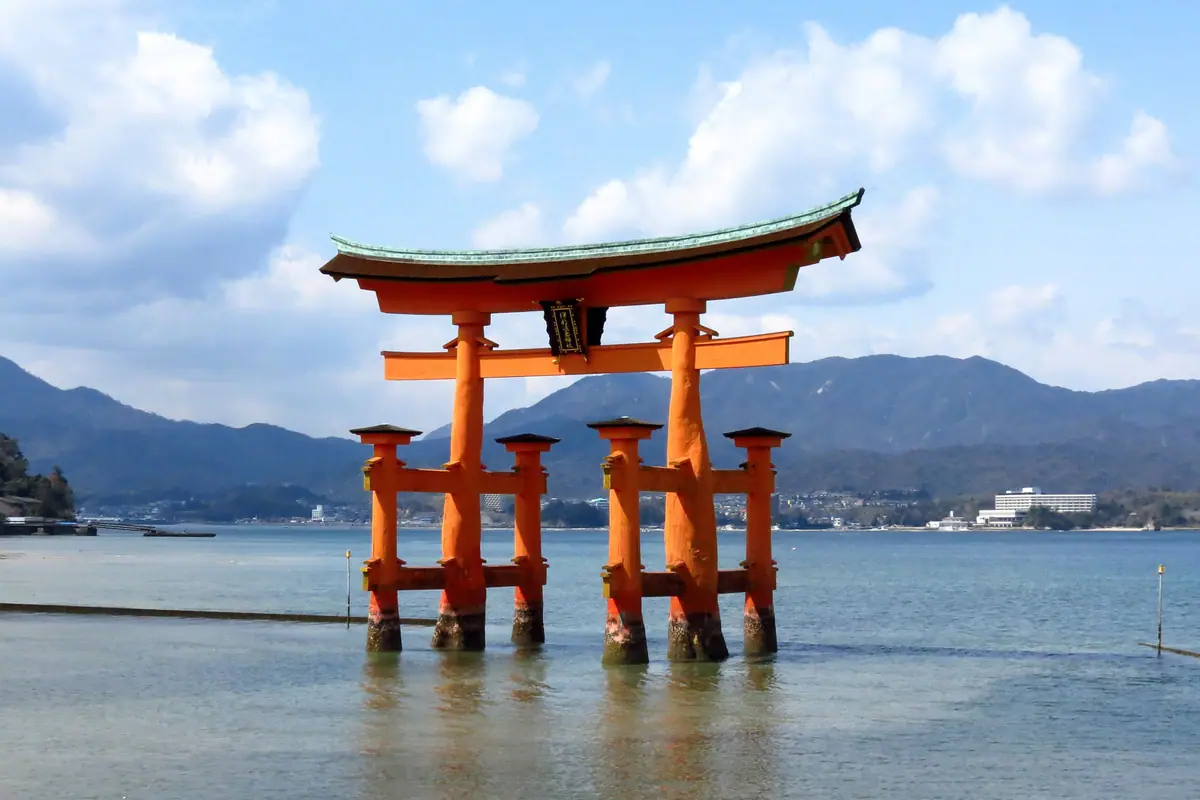
Osaka is the counterweight: Osaka Castle ringed by moats and cherry trees, and Dotonbori, where the canal glows with signage and a mechanical runner marks the crowds' favourite meeting point. Further west, Himeji Castle is the finest surviving feudal fortress in the country, an unbroken white complex of keeps and corridors that earns its nickname, the White Heron. Continue to Hiroshima for the Peace Memorial Park and the skeletal A-Bomb Dome, then take the ferry to Miyajima, where Itsukushima Shrine's enormous torii appears to float on the tide at high water.
These stops string together neatly on the main rail line, which is why most first trips follow it. Use one city as a base and take day trips rather than changing hotels every night; luggage forwarding between hotels is cheap and reliable, and it will save you hauling a suitcase up station stairs.
Beyond the Cities: Fuji, Alpine Villages and Onsen Towns
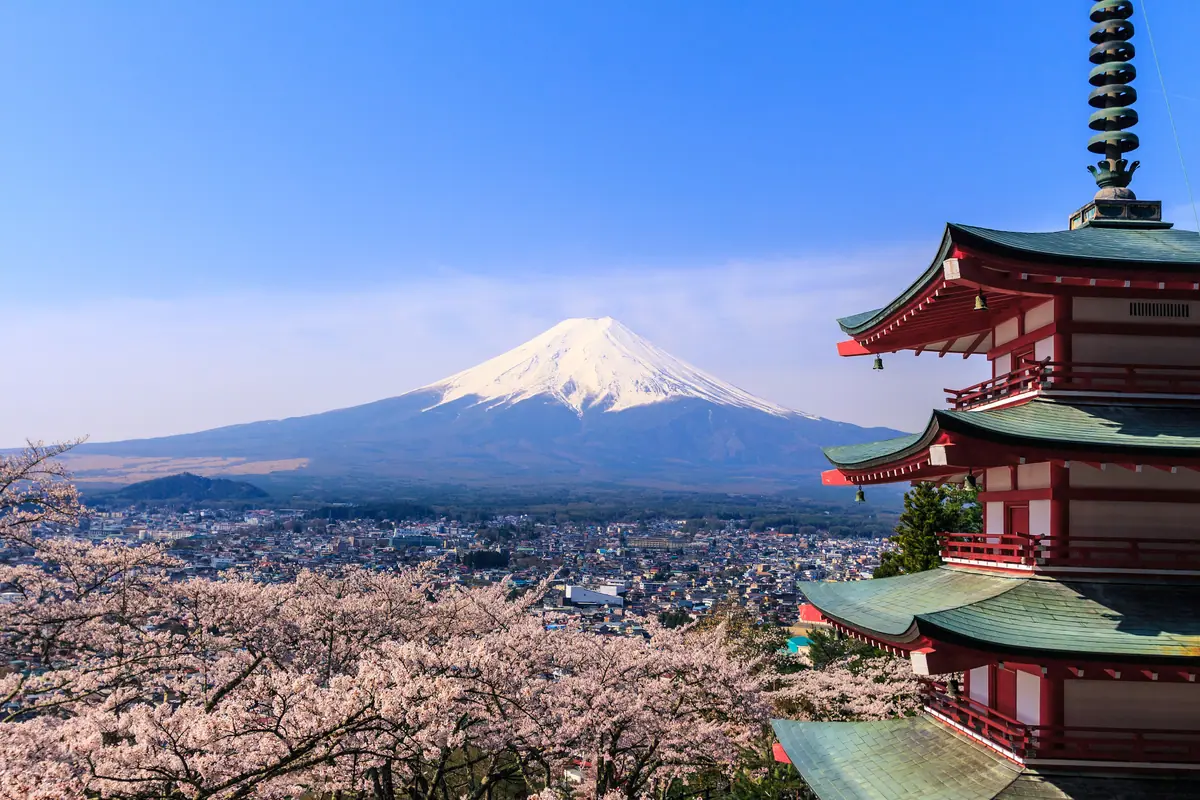
Mount Fuji is visible from Tokyo on clear winter mornings, but to stand on it you need the official climbing season, early July to early September, when mountain huts open along the Yoshida and other trails. If a summit isn't the goal, head for the Five Lakes region: Lake Kawaguchi offers the postcard reflection, and the Chureito Pagoda frames the peak behind a staircase of cherry trees in spring.
Hakone, a short rail hop from Tokyo, bundles volcanic steam vents, a lake crossed by pirate ships and the open-air sculpture museum into one loop — the black-shelled eggs boiled in sulphur springs are a required snack. Further afield, Nikko's Toshogu shrine is an explosion of gold leaf and lacquer set among cryptomeria; Shirakawa-go preserves thatched farmhouses in a valley that glows under winter light-ups; and Kanazawa's Kenrokuen ranks among the three great gardens of Japan.
For something quieter, the hot-spring towns are the real luxury. Kinosaki Onsen lets you wander between seven public baths in a yukata and wooden sandals; Beppu hisses with more springs than anywhere else in the country. Learn the etiquette before you go — wash thoroughly before entering, keep hair out of the water, and don't be shy about small tattoos, though some baths still ask that they be covered.
Markets, Ramen and Everyday Rituals
Food is the most reliable way into Japanese daily life. Tokyo's Tsukiji Outer Market still buzzes with stalls selling tamagoyaki skewers and sea-urchin rice bowls from early morning; Kyoto's Nishiki Market runs narrow and covered for blocks; Osaka's Kuromon Ichiba is the place to graze on grilled scallops and wagyu skewers. Eat what's in season — fugu and crab in winter, bamboo shoots and strawberries in spring.
Ramen is regional and worth chasing: rich pork-bone tonkotsu in Fukuoka, miso-based bowls in Sapporo, delicate shoyu versions in Tokyo. Beyond that, an izakaya — the after-work pub with small plates and a loud welcome — is where a solo traveller can eat well without ceremony. Convenience stores are genuinely good, department-store basements are cathedrals of prepared food, and a kissaten coffee shop will serve you a hand-poured cup in silence.
Etiquette is simple: don't tip, don't talk loudly on trains, queue properly, and remove your shoes when a threshold or a slatted floor tells you to. Carry cash for small shrines and family-run counters, and keep a transit card topped up for trains, buses and vending machines alike.
When to Go and How to Move Around
Timing shapes everything. Cherry blossom sweeps from Tokyo and Kyoto in late March to early April, followed by northern regions into May. Autumn colour peaks from mid-November to early December. May and October are the sweet spots for mild weather and clear views of Mount Fuji. June brings the rainy season, July and August are hot and humid with the Obon travel crush, and September can bring typhoons; winter is cold, dry and brilliant for onsen, with Sapporo's Snow Festival in early February and Shirakawa-go's thatched village lit up on select evenings.
Long-distance travel is by bullet train, and a national rail pass pays off when you're covering the Tokyo–Kyoto–Osaka–Hiroshima corridor; if you're staying in one city, a stored-value transit card is cheaper and far more flexible. Reserve seats on holiday weekends, forward your luggage ahead, and learn to read the platform markings — they tell you exactly where your carriage will stop.
Seven to ten days is enough for Tokyo, Kyoto, Osaka and Nara at a comfortable pace. Two weeks lets you add Hiroshima and Miyajima, the Japanese Alps, Kanazawa or a Hokkaido detour without feeling rushed.
Frequently asked questions
How many days do you need for a first trip to Japan?
Seven to ten days covers Tokyo, Kyoto, Osaka and a Nara day trip at a reasonable pace. Allow two weeks if you want to add Hiroshima and Miyajima, Kanazawa, the Japanese Alps or Hokkaido without spending your trip on platforms.
What is the best time of year to visit Japan?
Late March to early April for cherry blossom in Tokyo and Kyoto, and mid-November to early December for autumn colour. Late spring (May) and autumn (October) offer mild weather, clearer views of Mount Fuji and thinner crowds; June is rainy, July and August are hot and humid, and September carries typhoon risk.
Which landmarks should a first-time visitor not miss?
Senso-ji in Tokyo, Fushimi Inari Taisha and Kiyomizu-dera in Kyoto, Todai-ji in Nara, Himeji Castle, the floating torii of Itsukushima Shrine on Miyajima, and Mount Fuji — from the Five Lakes if you're not climbing. These form the backbone of the classic cross-country route.
Is a rail pass worth buying?
It depends on distance. If you're riding bullet trains between Tokyo, Kyoto, Osaka and Hiroshima, a national rail pass usually saves money. If you're staying in one city or region, a stored-value transit card works out cheaper and covers subways, buses and local lines.
Do I need cash in Japan?
Yes, and more than you'd expect. Many small restaurants, shrines and market stalls are cash-only, though cards are widely accepted in hotels and chain stores. Withdraw at convenience-store or post-office ATMs, and keep coins handy for temple offerings and transit fares.
Plan it — experiences in Japan
Live search, booked directly with trusted providers.