Haifa does something no other Israeli city quite manages: it pours down the flank of Mount Carmel straight into the Mediterranean, stacking neighbourhoods one above the other like terraces. That vertical geography shapes everything you do here, from a golden-domed garden at sea level to a monastery, a market and a wind-bent pine forest hundreds of metres above it. Two days is enough to feel the rhythm; three lets you slow down to it.
The Bahá'í Gardens and the German Colony: A Golden Dome Above a Boulevard of Cafés
The city's defining sight is a garden that behaves like a staircase. Nineteen terraces climb roughly a kilometre up the northern slope of the Carmel, from the boulevards of the German Colony to the Shrine of the Báb, whose golden dome catches the last light of the day. Everything is clipped, symmetrical and almost unnervingly quiet: cypress and olive, manicured lawns, and stone channels that carry water down the slope in thin silver lines. The inner terraces can only be visited on a free guided walk that sets off from the upper entrance and descends the full flight in about an hour, with commentary in English and Hebrew. Spaces are limited, you'll usually need to reserve ahead and carry photo ID, and the gates stay shut on Bahá'í holy days and Yom Kippur.
Below it all, Ben-Gurion Boulevard runs arrow-straight towards the port, lined with restored stone houses built by German Templers in the 1860s — thick walls, red-tiled roofs, deep shutters. These days the ground floors hold restaurants, wine bars and coffee places that spill onto the pavement under a canopy of ficus trees. Come at dusk, when the terraces above switch on their lights and the boulevard fills with families, students and dock workers alike. It's the most sociable stretch of pavement in the city.
A few practical notes: wear shoes you can descend stairs in, bring water and a hat, and dress a little more conservatively than you would at the beach — this is a pilgrimage site as much as a park. Picnics, pets and loud music are off the menu, and drone flying is prohibited. From the bottom of the gardens you can walk ten minutes to Paris Square and the Carmelit underground funicular for the climb back up.
Mount Carmel: Lookout Points, a Lighthouse Monastery and a Six-Minute Cable Car
For the postcard view of Haifa — the curve of the bay, the container cranes, the industrial haze silvering into the sea — head for the Louis Promenade in the Carmel Centre. It runs along the ridge at roughly 250 metres above sea level, and on a clear winter or spring day you can follow the coastline north to Acre and, on the sharpest days, glimpse the white cliffs at the Lebanese border. Sunset draws a crowd; night is arguably better, when the port becomes a grid of orange light and the gardens below glow.
At the western tip of the ridge sits Stella Maris, a Carmelite monastery and lighthouse perched above the sea, its dome visible from ships approaching the port. The cave beneath the church is traditionally linked to the prophet Elijah, a figure claimed by Jews, Christians and Muslims — which is a fair summary of Haifa as a whole. Down at sea level, near the Bat Galim promenade, another cave carries the same association: Elijah's Cave, free to enter, cool and dripping, and a place where you'll see people praying quietly in several traditions at once.
The most enjoyable way to connect the two levels is the cable car that lifts you from the Bat Galim seafront up to Stella Maris in around six minutes, gliding over the port and the naval base with the bay opening out behind you. Nearby, the Carmelit funicular burrows through the mountain between Downtown and Gan HaEm, a short and slightly surreal ride on one of the world's smallest underground railways. Note that it shuts for Shabbat and Jewish holidays.
Wadi Nisnas, Hadar and Masada Street: Where Haifa Eats, Bargains and Paints
Wadi Nisnas is the city's Arab heart, a warren of lanes just uphill from the port where produce stalls, spice shops and bakeries crowd together and the smell of roasted coffee and frying dough follows you around corners. It is the place to eat hummus made that morning, knafeh pulled hot from the tray, and stuffed vine leaves sold by the kilo. In December the neighbourhood hosts a long-running multicultural festival of lights and street performances that draws crowds from across the country — a rare thing, and worth planning a trip around.
Next door, Hadar HaCarmel is the old commercial centre, now half-gentrified and half chaotic in the most interesting way. Talpiot Market, a covered hall from the 1930s, has been reborn as part food market, part studio space, with artists working above stalls selling olives, fish and halva. From there, Masada Street slopes downhill with murals on every shutter, second-hand clothes, small galleries, cheap coffee and a handful of tiny music venues that fill up late on Thursdays.
Go early on a Friday if you want the market at full volume — after midday the city starts winding down for Shabbat, and by Saturday most Jewish-owned shops are shut, though Wadi Nisnas stays noticeably livelier than the rest of Haifa. Bring cash for small vendors, expect friendly shouting, and don't rush. The pleasure here is in the wandering rather than the shopping list.
Sea Level: Beaches, Promenades and a Working Port
Haifa's coastline is unusually varied for a city of its size. In the south, the long sandy sweep of the Carmel beach runs beside a wide promenade, with lifeguards on duty through the swimming season — generally April or May to October — plus beach cafés, shaded lawns and a decent breeze. Bat Galim, closer to the port, is calmer and more local: fishermen on the rocks, teenagers jumping off the breakwater, and a front-row seat for watching container ships and cruise liners slide past.
North of Bat Galim, Students' Beach earns its name from the university crowd and doubles as the city's windsurfing and kite-surfing hub once the afternoon thermal wind kicks in. Further north towards Kiryat Haim the beaches get quieter and sandier, with a gender-separated stretch for religious swimmers. The sea is at its warmest from September into October, long after the summer crowds have gone; in July and August, jellyfish sometimes drift in for a week or two, which is worth asking about locally before you swim.
Back from the sand, the port area is in the middle of a long transformation. The old Downtown triangle behind the harbour has gained a promenade, bars and a growing cluster of small museums — including one dedicated to the clandestine refugee ships that ran the British blockade in the 1940s, and a railway museum in the old station buildings at Bat Galim. It's an unpolished, working-city waterfront rather than a resort, and all the more likeable for it.
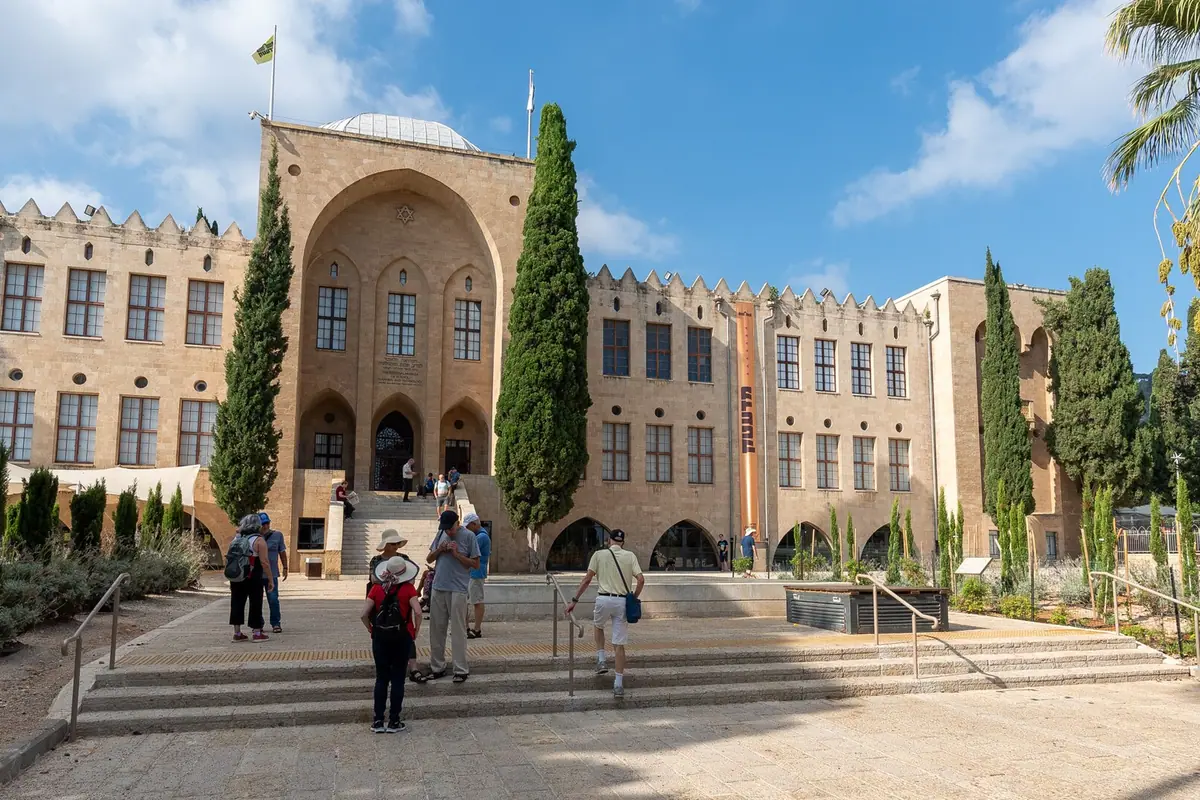
Rainy-Day Haifa: Science, Japanese Prints and Ancient Shipwrecks
Winter here is short and mild — roughly December to February, with temperatures in the low teens and the Carmel turning improbably green — but rain does fall, and that's when the city's museums earn their keep. The national science and technology museum occupies the historic Technion building in Hadar, a grand early-20th-century pile full of hands-on exhibits, optical illusions and engines, and it's the obvious choice if you're travelling with children.
On the Carmel, the Japanese art museum holds a quietly excellent collection of prints, ceramics, lacquerware and textiles, shown in rotating exhibitions with a small garden attached. Up at the university, the archaeology museum is free to enter and displays finds from across the region, including a wooden boat raised from the seabed off the nearby coast and dated to around 2,400 years ago — the kind of object that makes a rainy afternoon feel worthwhile.
Opening days shift around the Jewish holidays and the weekly rhythm here is unusual: some sites close early on Fridays, others stay shut on Saturdays, so check the day's hours before you set out. Most museums are small enough to see in 90 minutes, which means you can comfortably pair two or three in a single damp day and still make it to a long lunch in between.
Into the Green: Carmel Trails, Wildlife and Druze Villages
One of Haifa's least-appreciated tricks is that you can hike out of the city without ever leaving it. The Galim stream gorge cuts down through the neighbourhoods behind Bat Galim, and following it takes an hour or two, depending on detours, ending with your feet in the sea. Spring is the season for it: from February to April the slopes are covered in anemones, cyclamen and orchids, and the trails below the university — nicknamed Little Switzerland for their wooded ravines — are at their best. The long-distance national trail crosses the Carmel ridge, so longer walks are easy to stitch together.
Higher up, the Carmel nature reserve protects the largest green space in the region, with picnic areas, mountain-bike routes and pine forest that smells of resin after rain. The Hai-Bar wildlife reserve near Beit Oren is a breeding and reintroduction centre for animals native to the region, where you may spot fallow deer, wild goats and, if you're patient, griffon vultures circling on the thermals. Bring proper shoes and start early; the heat and humidity build quickly from May onwards.
On the same ridge, twenty to thirty minutes by car from the centre, sit the Druze villages of Daliyat al-Karmel and Isfiya. Daliyat is the larger of the two and its market sells olive oil, labneh, spice mixes, honey and sweets, with simple restaurants serving generous grilled meals and knafeh. It's also an easy base for day trips beyond the city: Acre's Crusader halls and market are about twenty-five minutes away by train, and the grottoes at Rosh Hanikra and the basilica at Nazareth are both comfortable half-day outings.
Frequently asked questions
How do I visit the Bahá'í Gardens?
The inner terraces are only accessible on a free guided walk, which descends from the upper entrance and takes about an hour in English or Hebrew. Reserve ahead, bring photo ID, dress modestly and wear shoes suitable for stairs. The gardens close on Bahá'í holy days and Yom Kippur, and the upper terrace and shrine surroundings are usually open for independent strolling during posted hours.
How many days do you need in Haifa?
Two full days is comfortable. Use day one for the Bahá'í Gardens, the German Colony, and the market and street-art lanes of Wadi Nisnas and Hadar. Day two fits the Louis Promenade, Stella Maris, the cable car and a beach afternoon. With a third day, add a Carmel hike or the Druze villages on the ridge.
Do you need a car in Haifa?
No — and parking is genuinely painful. Buses and the rapid-transit lines cover most of the city, the Carmelit funicular connects Downtown with the Carmel Centre, and coastal trains link the beach stations. Taxis and ride-hailing are useful for the steep climb if your legs are tired.
What is Haifa like on Shabbat?
From Friday afternoon the Carmelit and many shops close, and Saturday is quiet in Jewish neighbourhoods — though some bus lines still run, which is not the case in most Israeli cities. The German Colony restaurants are busy on Friday night, and Wadi Nisnas and other Arab neighbourhoods stay lively throughout the weekend.
When is the best time to visit Haifa?
March to May and October to November offer the most comfortable weather, with green hills in spring and warm sea in autumn. July and August are hot and humid but excellent for beaches, while December to February is cool and occasionally wet — good museum weather — and brings the December multicultural festival in Wadi Nisnas.
Plan it — experiences in Haifa
Live search, booked directly with trusted providers.
Sort the rest of your trip
Everything for Haifa, in one place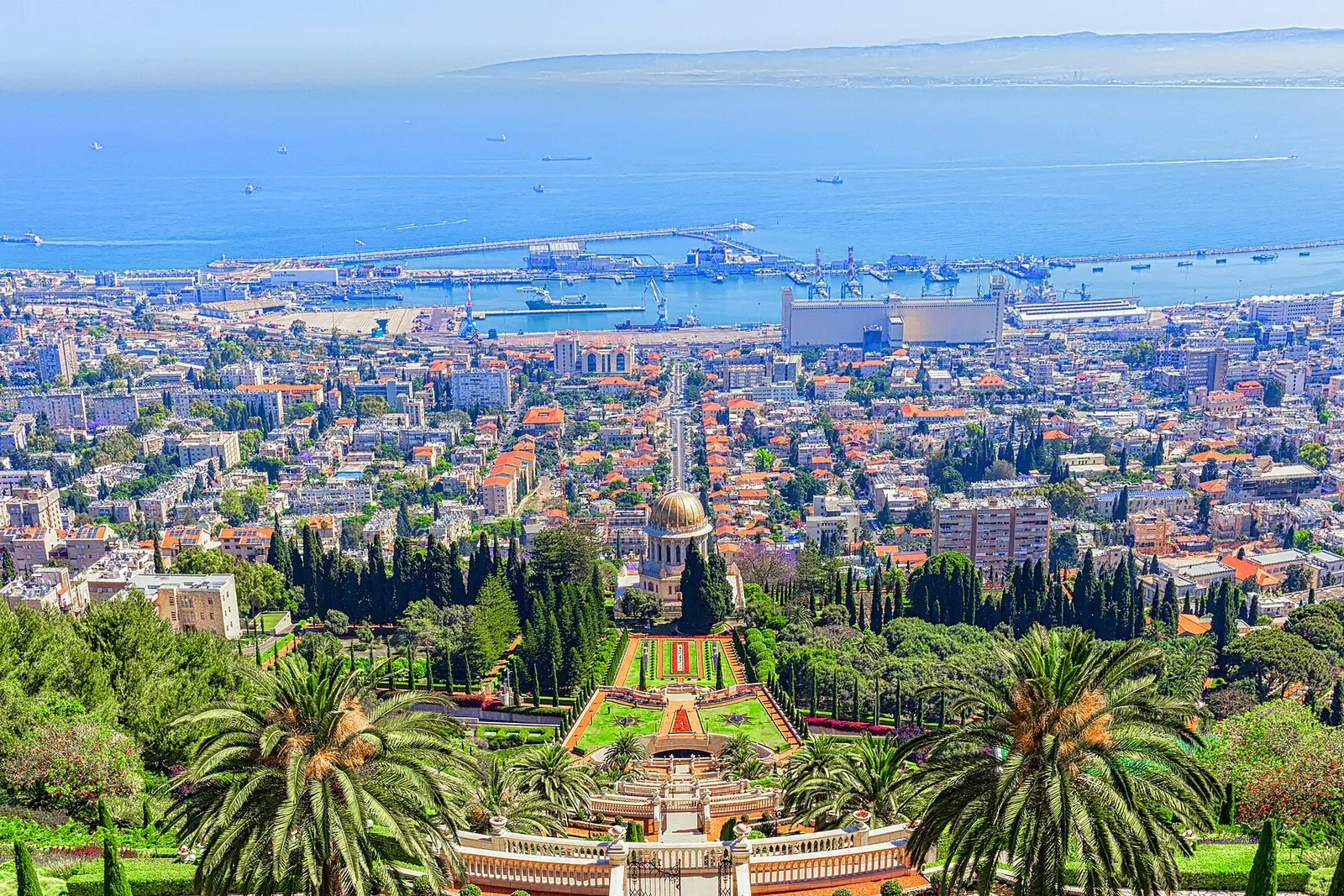
Stay in Haifa
Hotels, guesthouses and apartments — compared in one search.
Search hotels
Transfer in Haifa
Private driver waiting on arrival — no queues, no surprises.
Book a transfer
Stay online in Israel
Travel eSIM — data the moment you land, no roaming bills.
Get an eSIM