Ethiopia is not one destination but several stacked on top of each other — a country of 3,000-year-old obelisks, medieval castles, cliff churches you reach by climbing with your hands, and a volcanic plain so hot and strange it feels like another planet. Add gelada monkeys grazing the escarpments of the highlands, the coffee ceremony that started here, and a walled Islamic city in the east, and you have a journey unlike anywhere else in Africa.
Lalibela: Eleven Churches Carved Down Into Living Rock
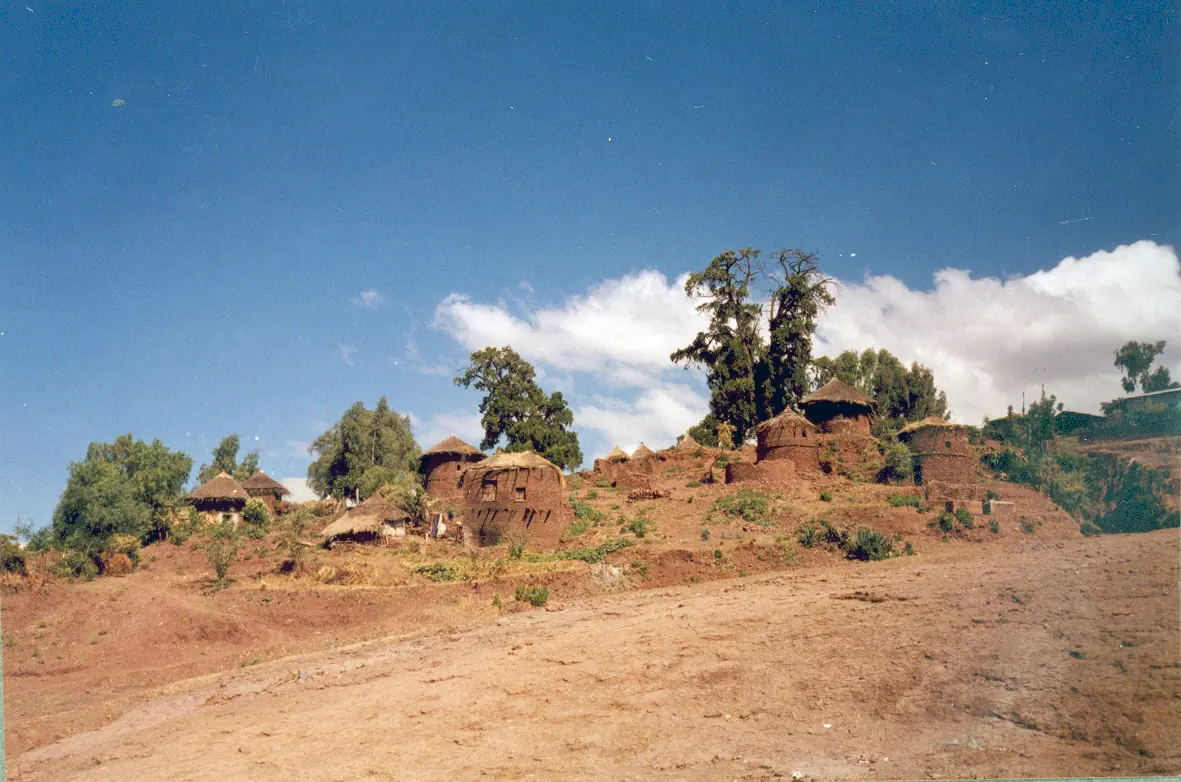
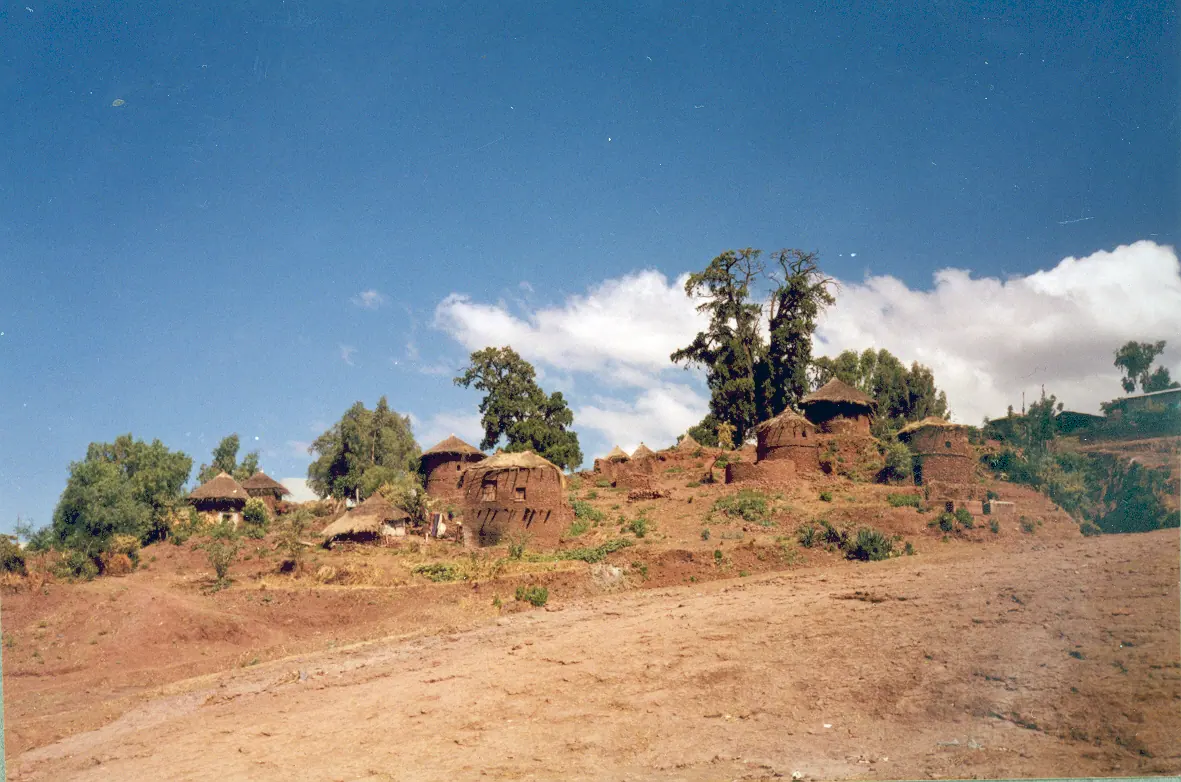
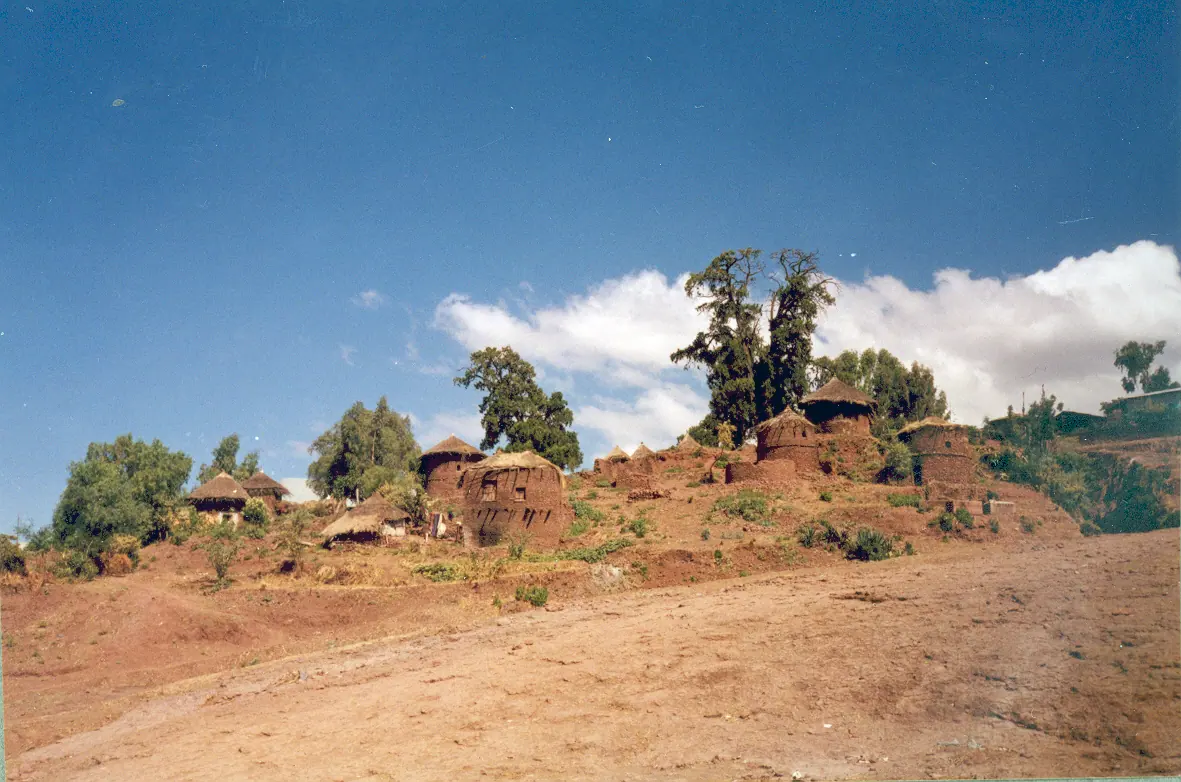
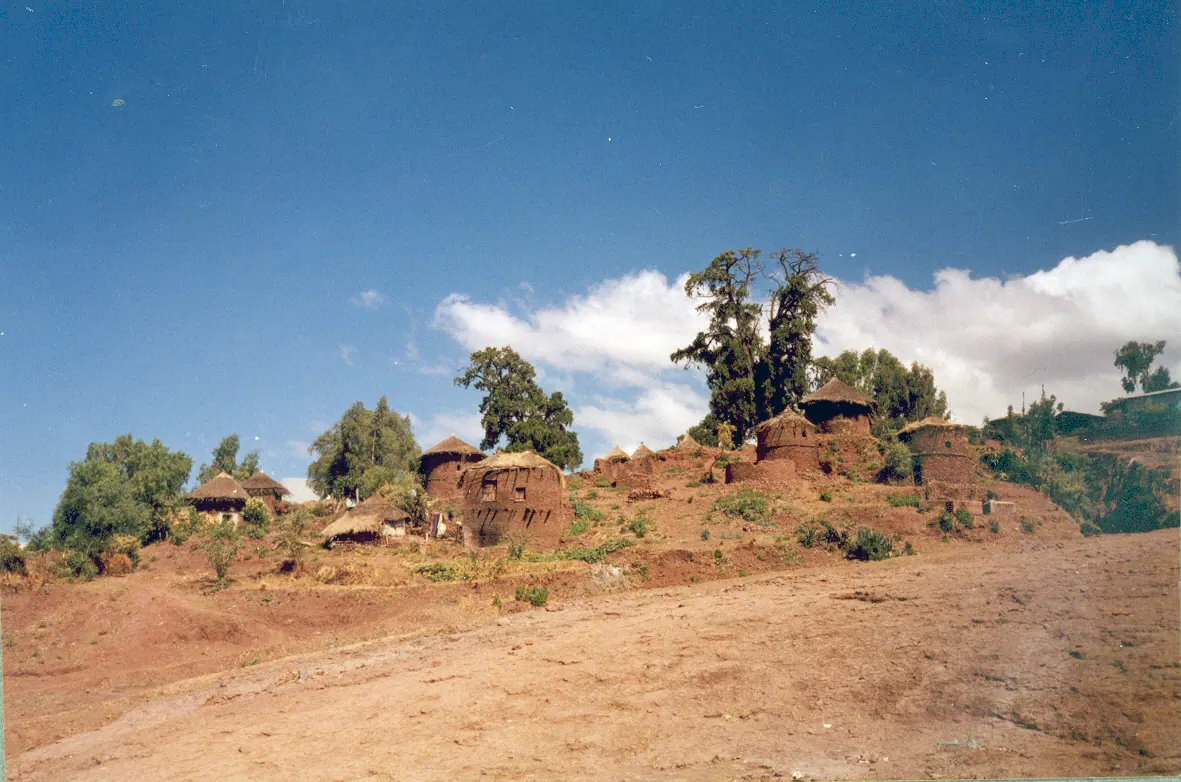
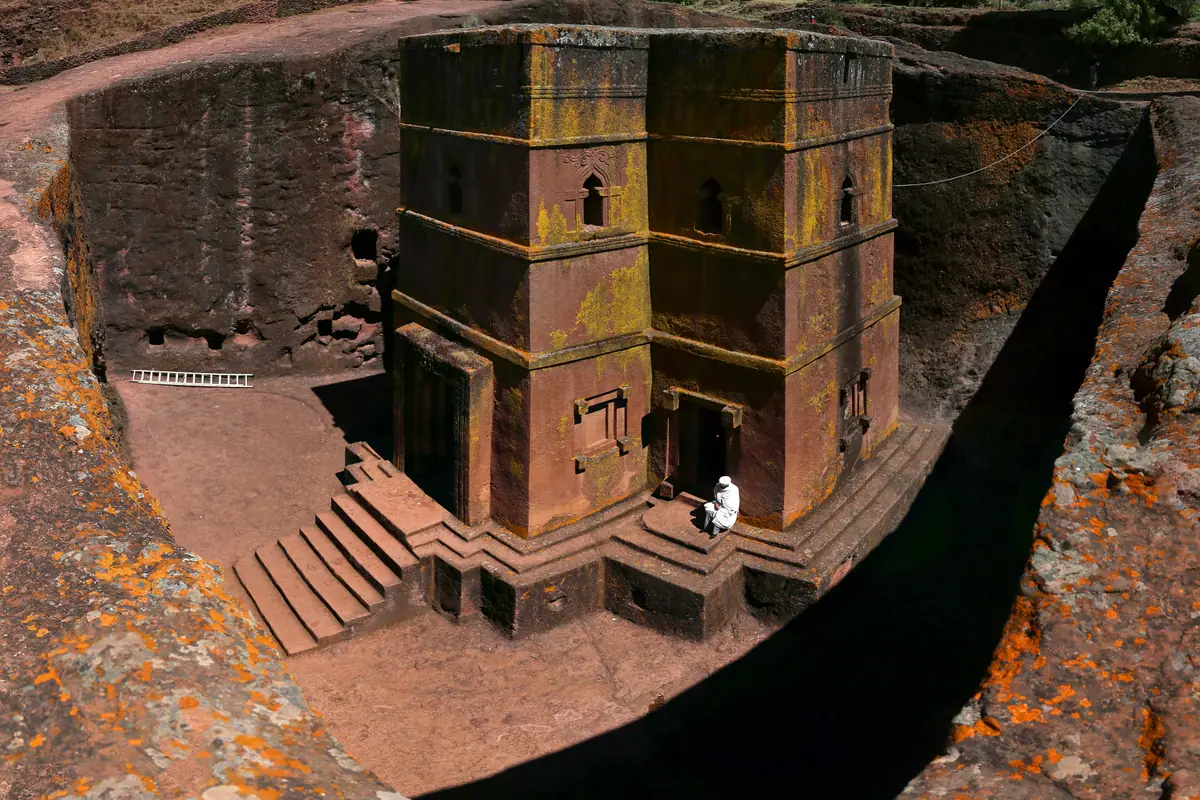
In the 12th and 13th centuries, Ethiopian craftsmen did something almost unbelievable: they carved eleven complete churches downward into a bed of volcanic tuff, so each building stands inside its own pit, joined by trenches, tunnels and rock-cut passages. Legend ties the work to King Lalibela, who set out to build a "New Jerusalem" after pilgrimage to the Holy Land became impossible. The most photographed is Bete Giyorgis, a perfectly proportioned cross-shaped church sunk about a dozen metres into the rock, reached by a steep trench and best seen in the first light, when the stone glows and white-robed worshippers begin their prayers.
Give Lalibela at least two full days. Bete Medhane Alem is the largest of the group, Bete Maryam is the one most lovingly painted, and Bete Golgotha holds carved replicas of the manger and the tomb. The pleasure is in the walking itself — ducking through tunnels, crossing rock bridges and emerging suddenly at the rim of another pit. Hiring a local guide is money well spent: without one you miss the symbolism stitched into every shape, from the cruciform plan to the drainage channels that still carry rainwater away after 800 years.
Lalibela town sits at around 2,500 metres, so climb stairs slowly and drink more water than you think you need. Most travellers arrive on a short domestic flight from the capital and stay two nights. If you have a third day, walk up to the Asheton Maryam monastery on the ridge above town, or drive out to the cave church of Yemrehana Krestos, built inside a natural cavern with its own stone walls and dark, haunting frescoes. During Timkat in January the town turns into a blaze of umbrellas, drums and processions that make the churches feel entirely alive.
Gondar and Bahir Dar: Castles, Painted Angels and the Source of the Blue Nile
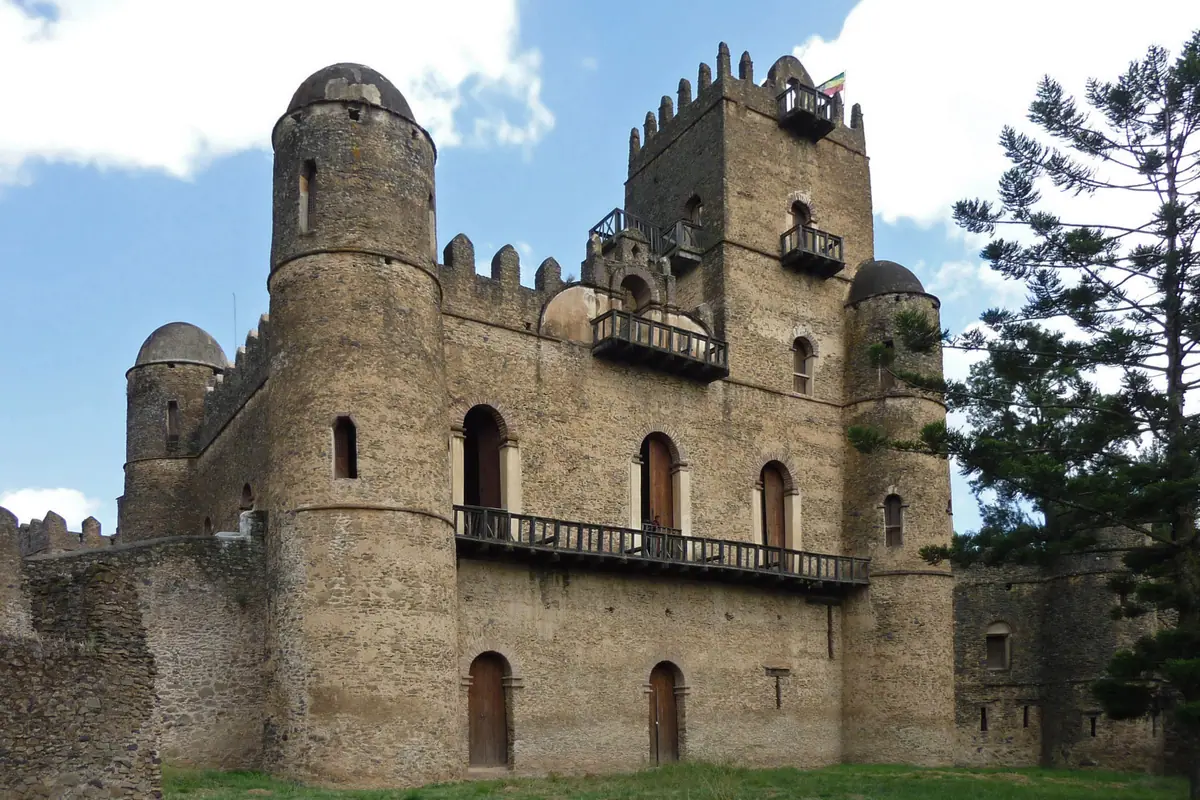
Gondar, founded as an imperial capital in the 17th century, keeps a walled royal enclosure packed with castles, banqueting halls and lion cages — a skyline that feels oddly European until you step inside the churches. Debre Berhan Selassie is the star: its ceiling is a grid of hundreds of winged faces, staring calmly down while saints and devils do battle along the walls. Nearby, the great pool known as Fasilides' Bath is drained for most of the year and then filled for Timkat, when priests bless the water and thousands of pilgrims plunge in wearing white shrouds tied with green and gold ribbons.
From Gondar a good road runs roughly three hours to Bahir Dar on Lake Tana, Ethiopia's largest lake and the source of the Blue Nile. Boat trips take you out to the monasteries on the lake's islands and peninsulas, where round, thatched churches hide behind screens of trees. Ura Kidane Mehret on the Zege Peninsula has the richest paintings and a treasury of illuminated manuscripts and ceremonial crosses; Azwa Maryam and the monasteries on the islands of Daga Estifanos and Kebran Gabriel are quieter but stricter about who may enter, and women are usually turned away at the door.
Roughly 30 kilometres downstream from Bahir Dar, the Blue Nile Falls — locally Tis Issat, "smoking water" — thunder over a wide basalt ledge. If you want to see them at full power, come in September or October, shortly after the rains; by the end of the dry season they shrink to a decent trickle. The walk down to the falls takes about half an hour each way and passes a Portuguese bridge and a village where children shout and wave from walled compounds. Two nights in Bahir Dar and one or two in Gondar makes a comfortable northern loop.
Axum and the Tigray Highlands: Stelae, Tombs and Cliff Churches
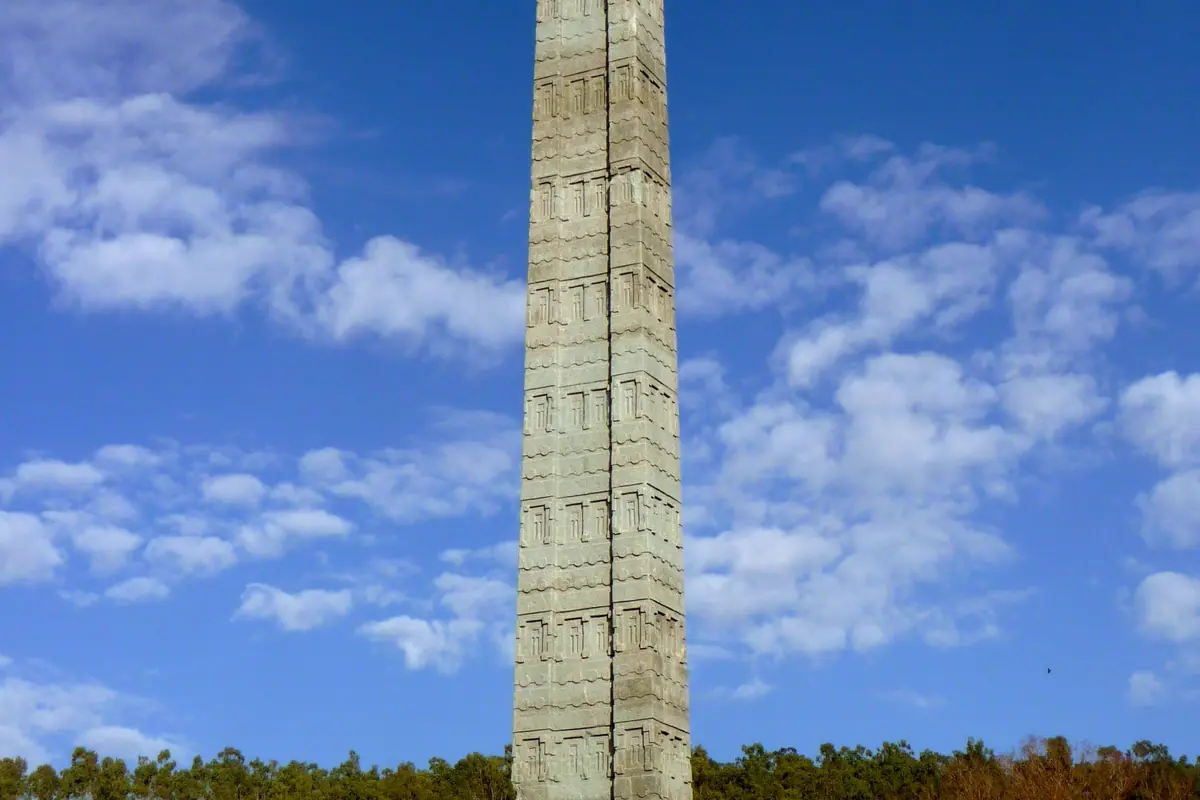
Axum was the capital of a trading empire that ruled the Red Sea coast and traded with the Roman world almost two millennia ago, and its relics are startling. In the main stelae field, granite obelisks up to about 24 metres tall stand over the tombs of kings, each carved to look like a tower of windows — the largest of all, the 33-metre Great Stele, lies where it fell when it cracked during construction. Below ground, you can climb down into burial chambers with stone doors and sarcophagi, and out at the edge of town the Ezana Stone records a king's conversion in three scripts.
Elsewhere in Axum, the Church of St. Mary of Zion is the most sacred site in the Ethiopian Orthodox world; a separate chapel beside it is said to hold the Ark of the Covenant, watched over by a single guardian and shown to no one. Steps away, the Pools of the Queen of Sheba are a long, deep reservoir locals still associate with the legendary queen, and the tombs of kings Kaleb and Gebre Meskel sit on a hill with wide views over the countryside.
A day's drive away in the Gheralta mountains of Tigray, the landscape turns to red sandstone towers with churches hidden in the cliff faces. Abuna Yemata Guh is the most famous and the most nerve-racking: you climb barefoot with a local guide, scrambling up a rock slab with a long drop behind you, then edge along a ledge to reach a cave hung with vivid 15th-century frescoes of the apostles. It is not for anyone afraid of heights, but it is unforgettable. Maryam and Daniel Korkor nearby are gentler climbs, and the mesa top between them may be the best picnic spot in the country.
Simien and Bale Mountains: Trekking on the Roof of Africa
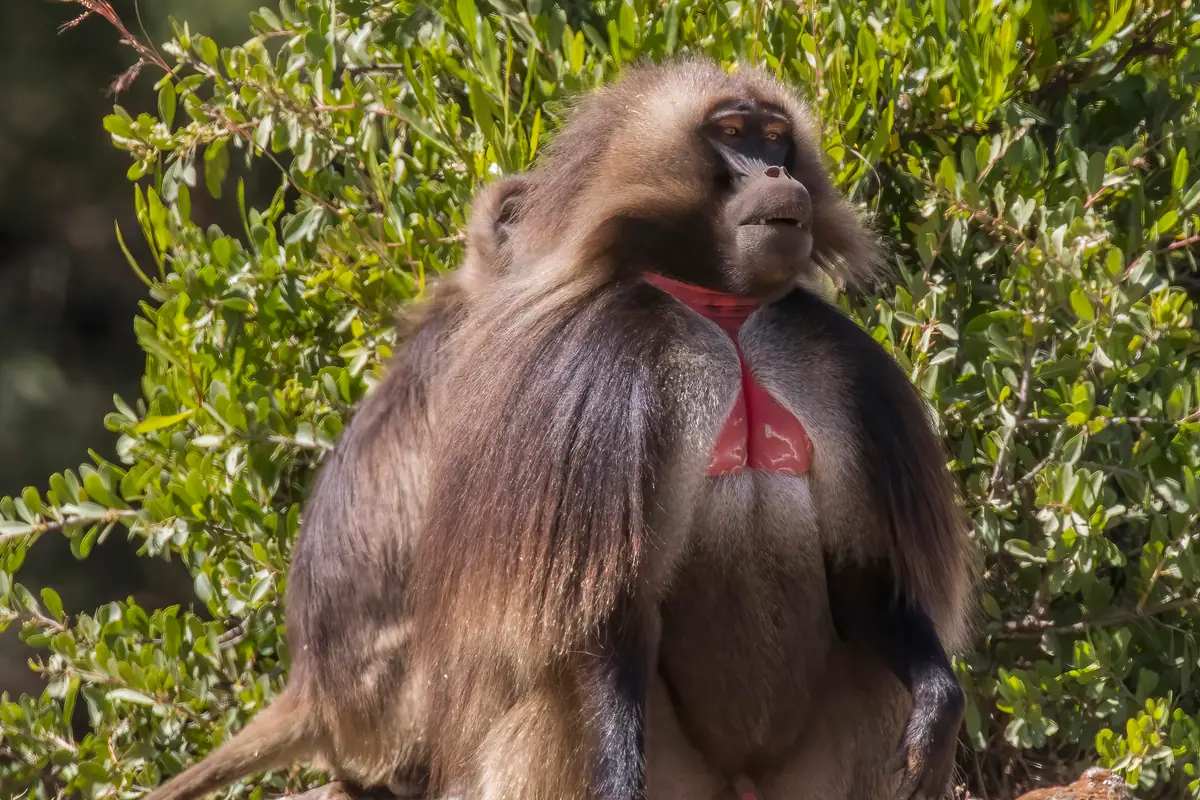
The Simien Mountains are a wall of escarpments and pinnacles rising to Ras Dashen, at about 4,550 metres the highest point in Ethiopia. The walking is incomparable: you cross moorland hung with giant lobelias, look down on valleys a kilometre below, and share the trail with gelada monkeys that graze in herds of a hundred and more, males displaying their scarlet chest patches while lammergeiers soar overhead. Walia ibex, found only here, clatter along ledges that seem impossible to stand on. Treks usually start from Debark, a few hours' drive from Gondar, and community scouts and guides accompany every group.
A typical route of three to five days moves between high camps at Sankaber, Geech and Chenek, with a longer extension to Ras Dashen for the very fit. Mules carry the heavy gear, which makes the walking far more pleasant than the altitude might suggest. Nights are cold enough for a thick sleeping bag even in the dry season, and everybody feels the thin air on the first climb.
Far to the south, the Bale Mountains offer a different kind of highland: the Sanetti Plateau, an afro-alpine moorland crossed by one of the highest roads in Africa, where Ethiopian wolves trot across the tussock grass at dawn. Beyond the plateau the road drops into the misty Harenna Forest, home to troops of Bale monkeys and clouds of moss. Nearby, the Sof Omar cave system is one of the largest in Africa, a labyrinth where the Web River disappears underground between towering limestone pillars. October to March is the reliable trekking window; June to September brings heavy rain to both ranges.
The Danakil Depression: The Hottest, Lowest, Strangest Place on Earth
The Danakil Depression is a geological spectacle that has no real equivalent: a sunken plain well below sea level where the earth's crust is being pulled apart. At Dallol, hot brine rises through salt and sulphur to build mounds of neon yellow, acid green and rust orange, ringed by pools of liquid the colour of engine oil and crystalline chimneys that hiss and spit. Some of the ground is below the level of the Red Sea and summer temperatures regularly push past 45°C, which makes the cool months the only sensible time to go.
Further east, Erta Ale is one of the very few volcanoes on the planet with a persistent lava lake. Groups walk up after dark, when the heat eases, then stand at the rim watching a cauldron of molten rock pulse and slosh a few hundred metres away — a sight that silences even the most jaded travellers. On the way back you may pass salt caravans: lines of camels and donkeys carrying slabs cut from the salt flats of Lake Assale, a trade that has continued in much the same way for centuries.
The Danakil is not somewhere to improvise. It is visited on organised three- or four-day expeditions from Mekele, using 4x4s, Afar guides, permits and a support vehicle, with basic camps at Hamedela and at the volcano's base. Take a wide-brimmed hat, more water than you think you need, and a buff for the dust. Security in the border zone shifts from season to season, so confirm current conditions before committing and travel only when local operators are running trips.
Addis Ababa and Harar: Museums, Merkato and the Walled City
The capital sits at about 2,355 metres, and the first day should be an easy one: look at the old city, drink coffee and let your body adjust. The National Museum of Ethiopia holds the fossilised skeleton known as Dinkinesh — Lucy — a 3.2-million-year-old human ancestor found in the Afar region, along with older remains that keep pushing the story of our origins further back. The Ethnological Museum, in a former imperial palace, is the best single introduction to the country's many peoples, while Holy Trinity Cathedral is a soaring mix of European stained glass and Ethiopian painting, with imperial tombs in the grounds.
For a jolt of urban life, dive into the Merkato, one of Africa's biggest open-air markets, where alleys specialise in coffee, spices, and second-hand shoes. Just as worthwhile is the Entoto ridge above the city, where eucalyptus forest, Emperor Menelik's old capital and a wide panorama over Addis reward an hour of climbing. Wherever you end up, order buna: coffee was first cultivated in Ethiopia, and the ceremony of roasting, grinding and pouring it in three rounds is a social ritual as much as a drink.
Harar, reachable by road or a short flight, is the perfect counterweight — a walled Muslim city of 82 mosques and five gates, its alleyways washed in blues, pinks and greens, its markets piled with spices and chat. At dusk, just outside the walls, a tradition of feeding wild hyenas has men calling the animals by name and holding strips of meat in their teeth. Give Harar a full day and two nights, and add a few days in the south-west Omo Valley if you want to meet communities such as the Hamar and Karo through guides who are paid directly for their time.
Frequently asked questions
When is the best time to visit Ethiopia?
The dry season from October to March is the most comfortable for the historic northern circuit, the Simien and Bale mountains and the Danakil Depression. June to September brings the main rains, when roads in the highlands turn to mud and the Danakil becomes dangerously hot. Two festivals are worth planning around: Timkat, the Epiphany celebration held on 19–20 January and famous in Gondar and Lalibela, and Meskel, the finding of the true cross, marked on 27 September with bonfires and processions.
How long do I need to see the main sights?
Ten days to two weeks covers the classic northern loop: Addis Ababa, Gondar, Bahir Dar and the Blue Nile Falls, Axum, the Gheralta churches and Lalibela, with a short trek in the Simien Mountains if you have time. Allow two to three weeks if you want to add the Danakil Depression, Harar or the Omo Valley, since each of those sits in a different corner of the country and long drives cannot be rushed.
Is Ethiopia suitable for first-time visitors to Africa?
Yes, with a little planning. Ethiopia has a well-developed domestic flight network that skips the longest drives, a long tradition of hospitality, and an easy online visa for most nationalities. That said, some border regions are off limits and conditions in the far north and the Danakil change over time, so check current advice and travel with established local operators and licensed guides. Altitude and heat are the two things that surprise people most.
How do I handle altitude and heat?
Addis Ababa, Gondar, Lalibela and Axum all sit between roughly 2,000 and 2,500 metres, and the Simien trek climbs past 4,000 metres, so take your first day or two gently, sleep well and drink plenty of water. In the Danakil, at the opposite extreme, plan walks for early morning and late afternoon, carry several litres of water each day, and expect simple camps rather than comfort.
What should I know about money and etiquette?
Ethiopia runs largely on the birr and cash is king: ATMs are reliable in Addis Ababa and patchy almost everywhere else, so withdraw before you head out to Lalibela, Axum or the mountains. Carry small notes for church guardians, shoe minders and monument tickets. Remove shoes before entering churches and monasteries, dress modestly, never point the soles of your feet at anyone, and always ask before photographing people — a small payment or a cup of coffee is a generous and welcome way to say thank you.
Plan it — experiences in Ethiopia
Live search, booked directly with trusted providers.
Sort the rest of your trip
Everything for Ethiopia, in one place
Stay in Ethiopia
Hotels, guesthouses and apartments — compared in one search.
Search hotels
Transfer in Ethiopia
Private driver waiting on arrival — no queues, no surprises.
Book a transfer
Stay online in Ethiopia
Travel eSIM — data the moment you land, no roaming bills.
Get an eSIM