Costa Rica packs an unreasonable amount of drama into a country you can cross in a day: smoking volcanoes, misty cloud forests and two coastlines that could not feel more different from each other. This is a guide to the landmarks and experiences worth building a trip around, from the lava-lit slopes of Arenal to the turtle beaches of Tortuguero.
Arenal and the Volcano Heartland
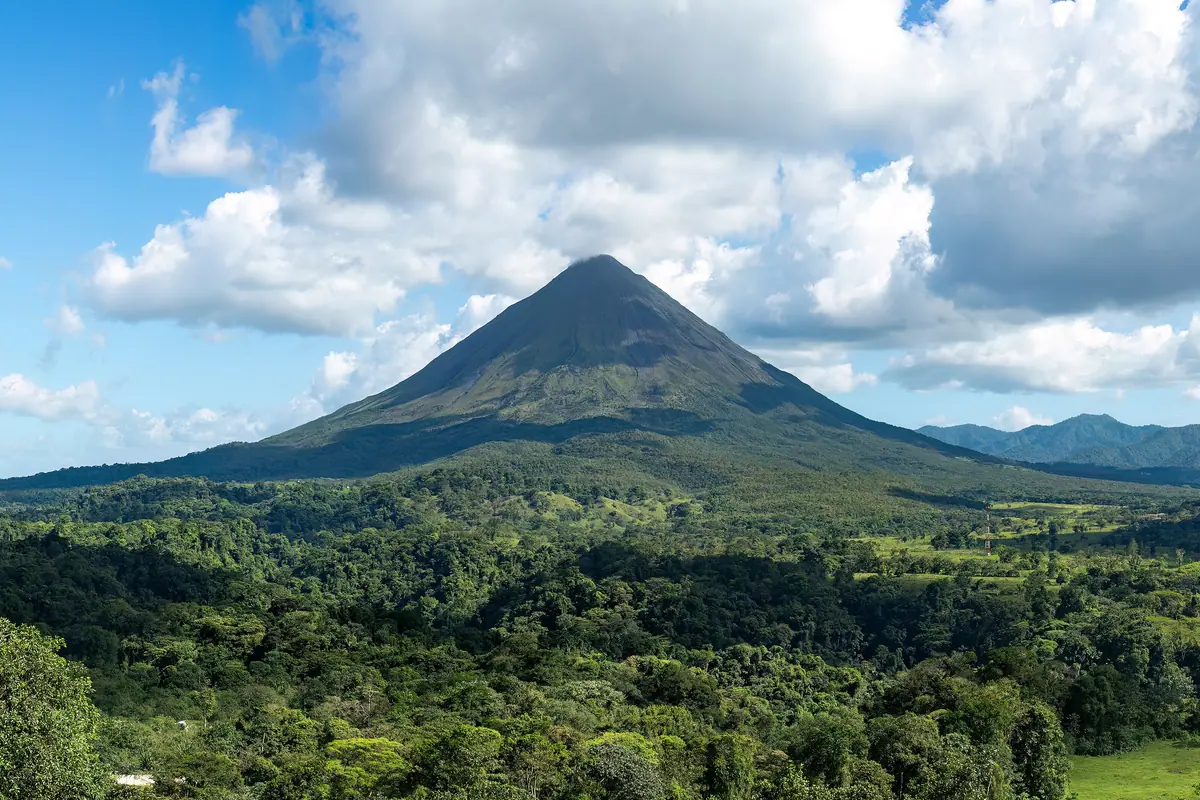
The classic first stop is the Northern Plains, where Arenal Volcano rises in a near-perfect cone above the town of La Fortuna. It is one of the most photographed landmarks in the country, and even though the lava fountains that made it famous have quieted since 2010, the silhouette at sunset remains the postcard image of Costa Rica. Hiking the 1968 Trail takes you across old lava fields with the volcano filling the sky, and the Arenal Volcano National Park trails are gentle enough for a half-day outing with children.
Below the volcano, the area's hot springs are fed by geothermal water heated deep underground, and soaking in them after a day of hiking has become something of a national ritual. Mornings are your best bet for clear views — clouds tend to swallow the summit by early afternoon in the green season. Combine the volcano with a boat trip on Lake Arenal, a wind-whipped lake that is a favourite for kayaking and, on windy days, windsurfing.
Farther east and closer to San José, Poás Volcano offers something different: one of the widest, most acidic crater lakes on the planet, viewed from a rim that you can reach by car. Nearby Irazú Volcano, the country's tallest at just over 3,400 metres, rewards the drive with views that, on a clear morning, stretch all the way to the Pacific and the Caribbean at once.
Cloud Forest and Canopy Country
Monteverde is the name most travellers know, but the forest itself is best explored in the Monteverde Cloud Forest Reserve and its neighbour, the Santa Elena Reserve. These are true cloud forests — dripping, moss-draped, permanently half-lit — and they are home to the resplendent quetzal, which birders chase between roughly March and May when the birds descend to lower elevations to nest. Hanging bridges and sky walks let you move through the canopy rather than under it, and the bridges at Monteverde are among the most famous structures of their kind in the Americas.
For a quieter and arguably more rewarding alternative, head to San Gerardo de Dota in the Savegre Valley, south of the capital. The valley is one of the most reliable places on earth to see a quetzal, and the oak forest here is cooler, emptier and less commercialised than Monteverde. Even if the birds elude you, the riverside trails and the hummingbird feeders at nearly every lodge make the detour worthwhile.
The canopy is also where Costa Rica invented much of the modern adventure repertoire. Zipline courses, Tarzan swings, and waterfall rappels thread through the treetops in Monteverde, La Fortuna and Turrialba. If you only do one adrenaline activity, make it a zipline on a clear morning — the views over the continental divide are the real attraction.
Manuel Antonio and the Central Pacific
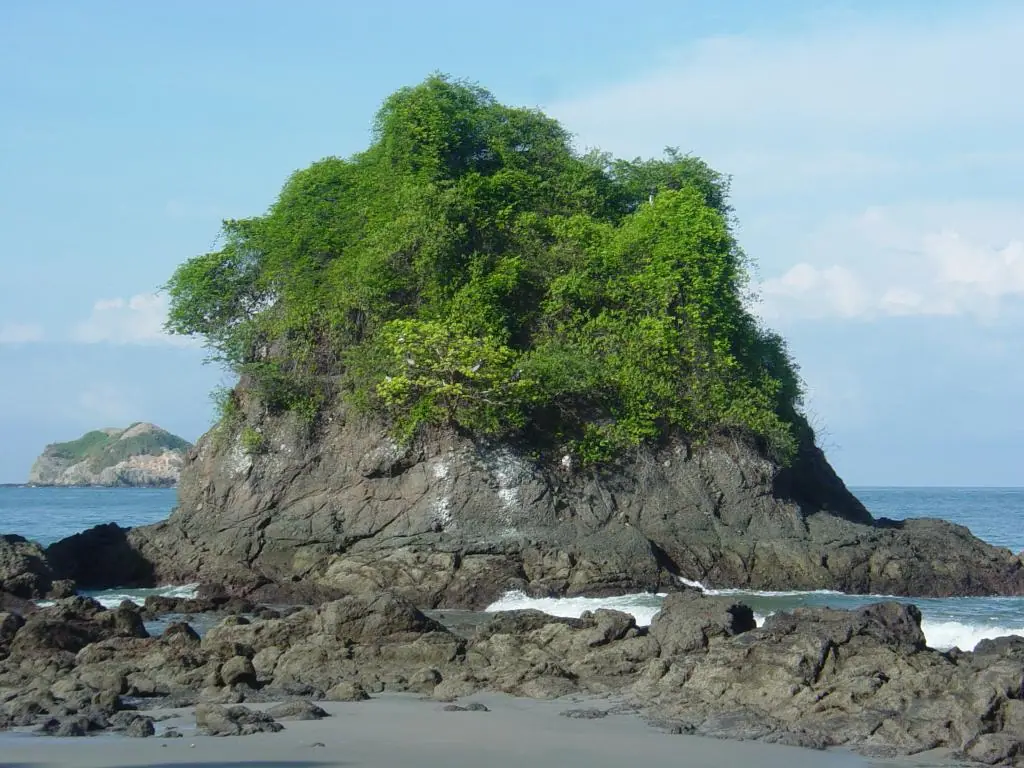
Manuel Antonio National Park is small, wildly popular and worth every bit of its reputation: white-sand coves backed by jungle that runs right down to the water, with capuchin monkeys, sloths and iguanas almost guaranteed. Visitor numbers are capped daily and the park closes one day a week, so book ahead and arrive at opening time to walk the trails before the heat builds. The Cathedral Point viewpoint at the end of the main trail is the photograph everyone comes for.
South along the coast, Marino Ballena National Park near Uvita is defined by the tombolo — a natural sandbar that appears at low tide and looks from above like a whale's tail, which is exactly what it is named for. This is also one of the best places in the world to watch humpback whales, with two migration seasons: one roughly December to April and another from July to November.
Continue further south and the landscape empties out into Corcovado National Park on the Osa Peninsula, a place often described as one of the most biologically intense areas in the Americas. Access is by boat or small plane via Drake Bay or Puerto Jiménez, and the Sirena Ranger Station is the classic base for guided day hikes. Combine it with a snorkelling trip to Caño Island, where the water clarity is a startling change from the green Pacific coastline.
Tortuguero and the Caribbean Coast
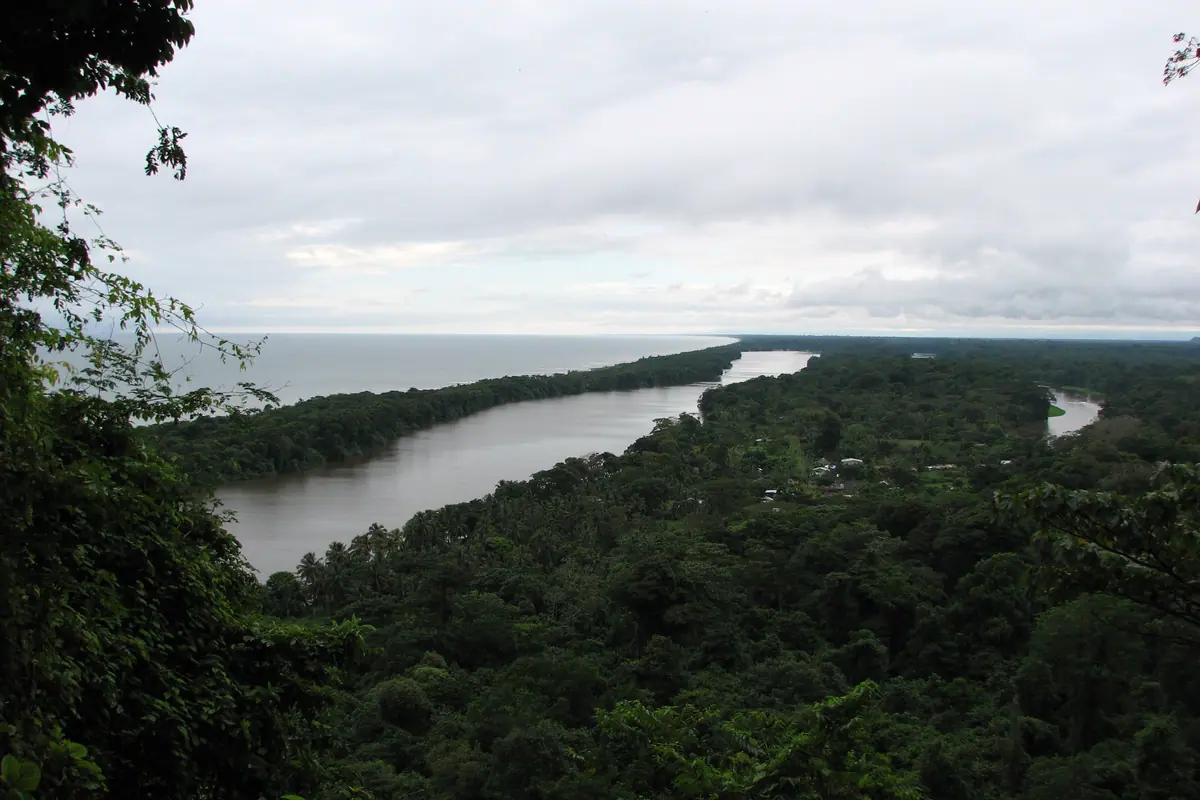
Tortuguero is reached only by boat or light aircraft, which is precisely why it feels so removed. The village sits on a narrow strip of land between the Caribbean Sea and a maze of jungle canals, and exploring those canals by lancha is the main event: caimans on the banks, herons and kingfishers overhead, howler monkeys roaring from the treeline. Green sea turtles nest here between roughly July and October, and night walks with licensed local guides to watch females haul themselves up the beach are one of the country's great wildlife experiences.
South of Tortuguero, the southern Caribbean has a rhythm all of its own — Creole English, reggae, bicycles and far fewer resorts. Cahuita National Park protects a coral reef and an easy coastal trail where sloths hang at eye level, while the Gandoca-Manzanillo Wildlife Refuge near Puerto Viejo protects mangroves, dolphins and turtle beaches. Note that September and October are the wettest months here, the opposite of the Pacific dry season.
The food alone justifies the journey: Caribbean rice and beans cooked in coconut milk, pan-fried plantain, and fresh fruit stands along the road between Puerto Viejo and Manzanillo.
San José and the Central Valley
Most visitors pass through San José on the way to somewhere else, which is a shame. The city's Teatro Nacional, a gilded 19th-century opera house, anchors the downtown plaza and offers guided tours. A few blocks away, the Pre-Columbian Gold Museum displays intricately worked gold figures in an underground vault, and the Mercado Central is the place to try a cheap, hearty casado or a bag of locally grown coffee.
The surrounding Central Valley holds several worthwhile day trips. Cartago's Basílica de Nuestra Señora de los Ángeles draws pilgrims from across the country, particularly around 2 August. Sarchí is the country's craft town, known for hand-painted oxcarts, and the coffee farms of the Tarrazú and Turrialba areas offer tastings and plantation tours on volcanic soil.
Adventure travellers should not overlook Turrialba itself: the Pacuare River, a short drive away, delivers Class III–IV whitewater through jungle gorges and is widely considered one of the finest rafting runs in Latin America. Trips usually run one or two days, with overnight jungle camps.
Pacific Beaches, Surf and Practical Timing
The Nicoya Peninsula is where Costa Rica's beach culture is at its most relaxed. Tamarindo is the busiest and easiest to reach, with surf schools for beginners; Nosara, particularly Playa Guiones, is the country's most consistent longboard wave; and Santa Teresa, reached by ferry or a long dirt road, has become the country's sunset-and-yoga capital. The peninsula also sits in one of the world's Blue Zones, where people live unusually long lives — a detail that quietly shapes the pace of everything here.
Between the beaches you can slot in the country's most photogenic waterfalls. Río Celeste in Tenorio Volcano National Park gets its improbable milky blue colour from a mineral reaction where two rivers meet, and the hike to it passes a hot spring and a bubbling volcanic vent. Nauyaca Waterfalls, near Dominical, drops in two tiers into a swimming hole that is perfect on a hot afternoon.
Timing matters more than almost anything else here. The dry season runs roughly December to April on the Pacific side, bringing reliable sunshine and higher prices; the green season from May to November means afternoon showers, lush landscapes and much better value, with a brief dry spell in July and August. Rain in the mountains and on the Caribbean coast follows its own rules, so a trip that combines both coasts should build in flexibility. A car makes the most of the country, but shuttles and domestic flights connect the main hubs if you would rather not drive mountain roads in the rain.
Frequently asked questions
What is the best time of year to visit Costa Rica?
The Pacific side is driest from December to April, which is peak season for beaches and national parks. May to November is the green season: fewer crowds, lower rates and afternoon rain, with a drier window around July and August. The Caribbean coast is wettest in September and October, so plan that region for other months if you can.
How many days do you need in Costa Rica?
Ten days to two weeks lets you combine two or three regions comfortably — for example Arenal, Monteverde and one coast. With only a week, pick a single region plus one volcano area rather than trying to see everything, since mountain roads are slow and drives between highlights often take three to five hours.
Do I need to rent a car in Costa Rica?
A car gives you the most freedom, especially in Guanacaste and around Arenal, but you will be driving winding mountain roads and river crossings in the green season, and a 4x4 is strongly recommended for places like Santa Teresa and Monteverde. If you would rather not drive, tourist shuttles, domestic flights and small boat transfers link most major destinations.
Which airport should I fly into?
Juan Santamaría International Airport near San José is the main gateway and best for Arenal, Monteverde, the Caribbean and the southern Pacific. Daniel Oduber Quirós International Airport in Liberia, in the northwest, is much handier for Guanacaste beaches such as Tamarindo, Playa Conchal and the Nicoya Peninsula.
Is Costa Rica good for families and first-time visitors?
Yes — it is one of the easiest countries in Latin America to travel in. Wildlife is abundant and close to the roads, national parks have well-marked short trails, and activities like hanging bridges, gentle ziplines and hot springs suit a wide range of ages. Book national park entries and popular wildlife tours in advance during the December-to-April high season.
Plan it — experiences in Costa Rica
Live search, booked directly with trusted providers.
Sort the rest of your trip
Everything for Costa Rica, in one place
Stay in Costa Rica
Hotels, guesthouses and apartments — compared in one search.
Search hotels
Transfer in Costa Rica
Private driver waiting on arrival — no queues, no surprises.
Book a transfer
Stay online in Costa Rica
Travel eSIM — data the moment you land, no roaming bills.
Get an eSIM


