Costa Rica packs a volcano, two coastlines, a cloud forest and a jungle canal network into a country smaller than West Virginia — which is exactly why choosing where to sleep matters more here than almost anywhere. Pick the right base and you'll wake up to howler monkeys, steam rising off a crater lake or surf breaking below your balcony; pick the wrong one and you'll spend your holiday on winding mountain roads.
San José and the Central Valley: Where Almost Every Trip Begins
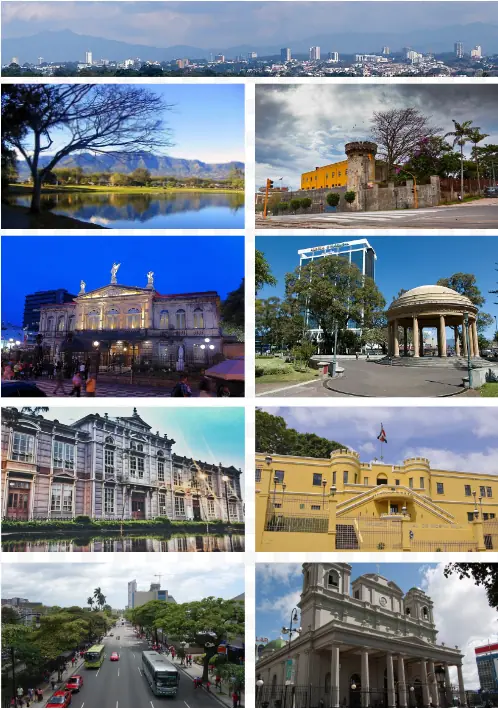
Most international flights land at Juan Santamaría airport outside Alajuela, and the smartest move is to spend one night in the Central Valley before pushing on. San José itself rewards a half-day: the Teatro Nacional, with its gilded lobby and marble staircases, still serves coffee in its café, while the Pre-Columbian Gold Museum sits in a subterranean chamber beneath the Plaza de la Cultura. Wander the Mercado Central for tortillas and fresh fruit, then walk the crumbling mansions of Barrio Amón, and finish at the Museo Nacional, a former army barracks with a glass-walled courtyard on the hill.
Hotel-wise, the city splits into distinct pockets. Barrio Escazú and Santa Ana draw business travellers and food lovers to boutique properties and design hotels; the neighbourhoods around Barrio Escalante suit anyone who wants to walk to dinner. Near the airport, plain but convenient lodges exist purely for early departures — worth it if your flight leaves before dawn.
The valley sits at roughly 1,100 metres, so nights are cool and breezy, and it's an easy launch pad for the volcanoes. Poás, with one of the world's largest craters, and Irazú, whose summit looks over both oceans on clear days, both require timed-entry reservations made in advance. Arrive early; clouds roll in by mid-morning. Coffee-estate stays around Sarchí or the Dota valley make a peaceful first stop if you'd rather skip the capital entirely.
Arenal and La Fortuna: Volcano-View Lodges and Hot Springs
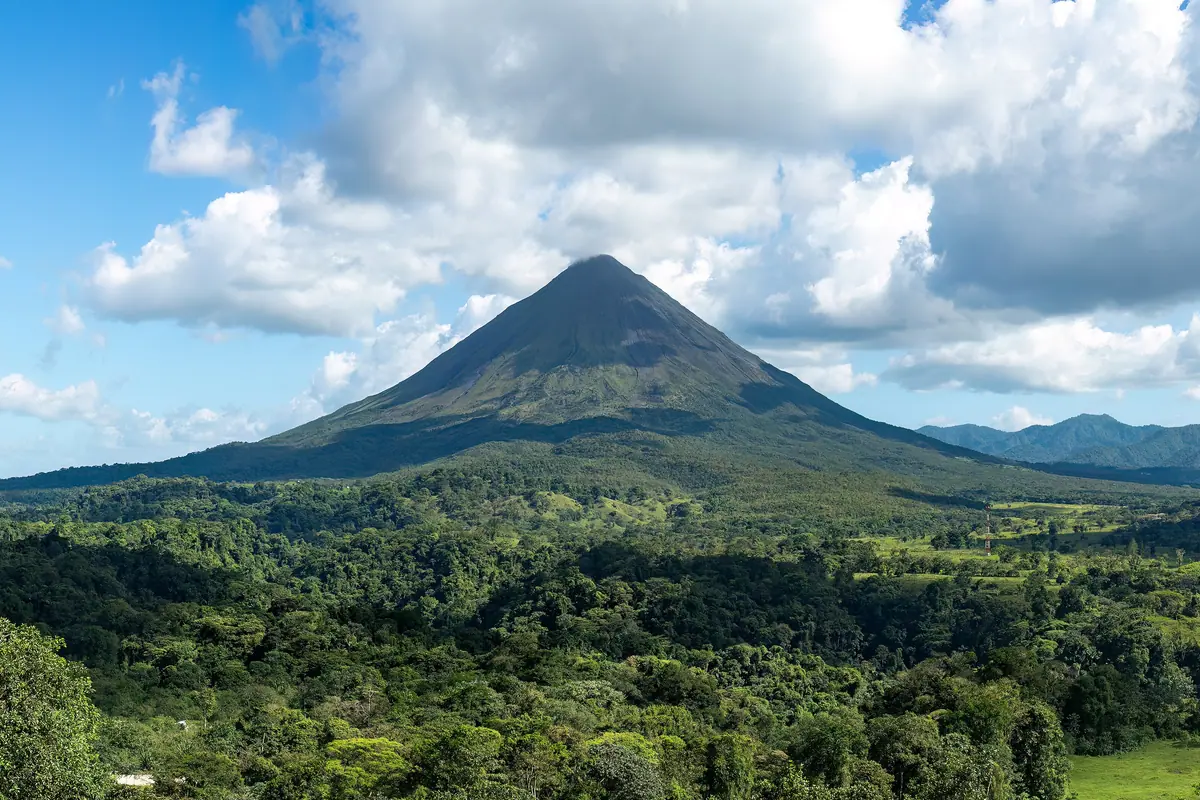
The cone of Arenal Volcano is the country's most photographed silhouette, and the towns around its base have grown into Costa Rica's adventure capital. La Fortuna is the busy, walkable hub with the widest choice of hotels, from hostels to mid-range places with pools. Head west towards El Castillo or the shores of Lake Arenal and you trade convenience for silence — small eco-lodges and cabins where the volcano fills the window and toucans work the fruit trees at breakfast.
The classic sights cluster tightly: the 70-metre La Fortuna Waterfall, where you descend several hundred steps to swim in the pool below; the hanging-bridge trails that thread through the canopy of the Arenal Volcano National Park; and the lava-fed hot springs strung along the road to the lake, ranging from polished resort pools to simple riverside soaks. Caño Negro Wildlife Refuge, north near the Nicaraguan border, is a boat trip for caimans, herons and howler monkeys, while the sky-blue water of Río Celeste lies about an hour and a half away near Tenorio.
Timing matters here. The volcano is most visible in the early morning during the dry months from December to April, and cloud cover is the norm by afternoon in the green season. Two or three nights is the sweet spot — enough for a waterfall, a canopy walk, a hot spring evening and a sloth-spotting walk — and almost everything is booked through your lodge, so ask on arrival.
Monteverde and Santa Elena: Sleeping in the Cloud Forest
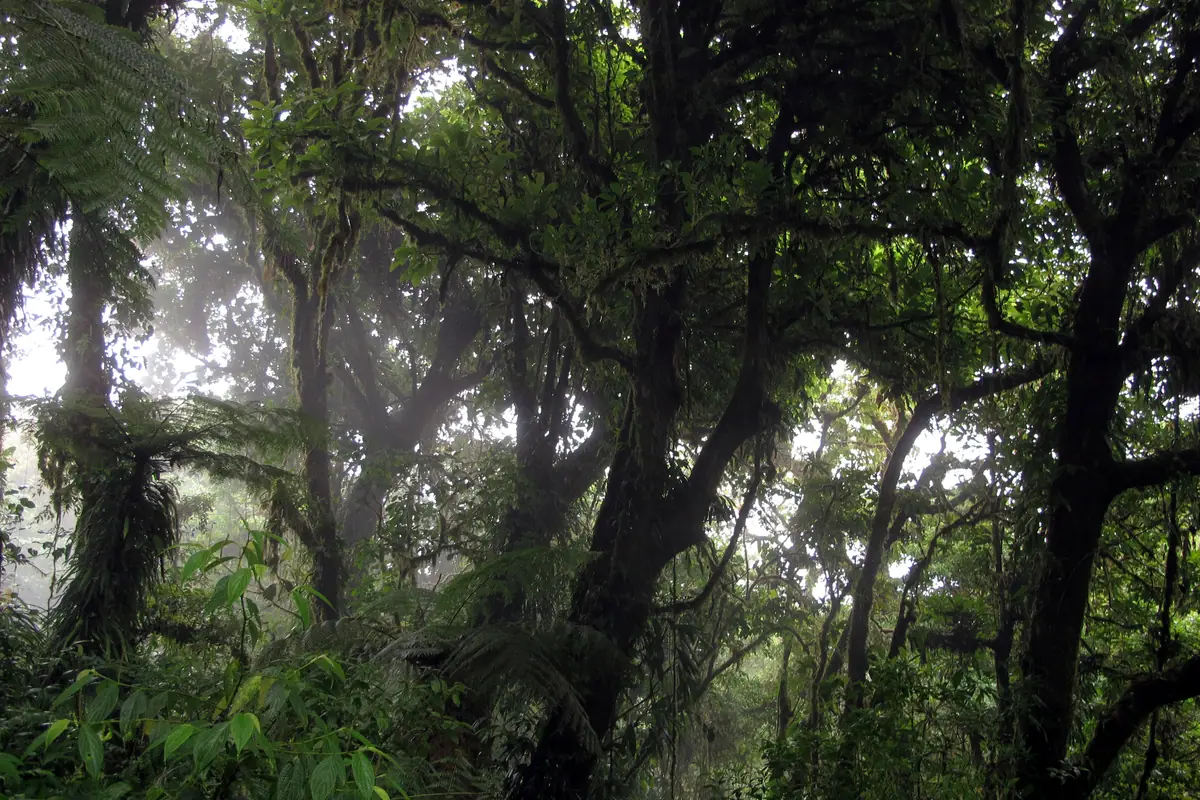
Higher, cooler and wetter than Arenal, Monteverde is a Quaker-founded farming community that became a conservation pioneer. The Monteverde Cloud Forest Reserve protects a ridge of primary forest where mist pours through the trees and the odds of seeing a resplendent quetzal are best between December and April. Neighbouring Santa Elena Cloud Forest Reserve is quieter and higher, while Curi-Cancha Reserve offers a gentler network of trails that's excellent for birds and, on lucky mornings, the odd puma sighting.
This is not beach-resort territory. Expect forest lodges with wood-burning stoves, cabins built into the hillside, family-run guesthouses in Santa Elena town and a handful of glass-fronted boutique rooms with valley views. Nights are genuinely cold by tropical standards, so pack a fleece and expect to sleep under blankets rather than air conditioning. Roads up here are steep, unpaved in places and often foggy; a four-wheel-drive vehicle is a real advantage if you're driving yourself.
Getting between Arenal and Monteverde is part of the experience — most travellers cross Lake Arenal by boat and pick up a vehicle on the far shore, cutting a long, rough drive down to around three hours. Once you're here, the days fill easily: coffee and sugar-cane tours on working farms, ziplines over the canopy, night walks for insects and frogs, and the bat and hummingbird exhibits that make rainy afternoons worthwhile.
Guanacaste and the Nicoya Peninsula: Beaches, Dry Forest and Resorts
Guanacaste is Costa Rica's sunniest, driest corner, and its northern Pacific coast is where the big beach resorts congregate. The Gulf of Papagayo holds the country's densest cluster of large all-inclusive properties, while Playa Conchal's shell-strewn sand and the surf town of Tamarindo offer a livelier, more independent alternative. Playa Grande, just north of Tamarindo, forms part of Las Baulas Marine National Park, where leatherback turtles nest between roughly October and March.
Further south, the Nicoya Peninsula slows everything down. Nosara and Playa Guiones draw surfers and yoga crowds to low-slung boutique hotels tucked behind the sand dunes; Santa Teresa is a dirt-road village of beach bungalows and sunset bars; Montezuma keeps its bohemian edge with waterfalls and hostels. The peninsula is one of the world's so-called Blue Zones, and the unhurried rhythm is part of what you're paying for.
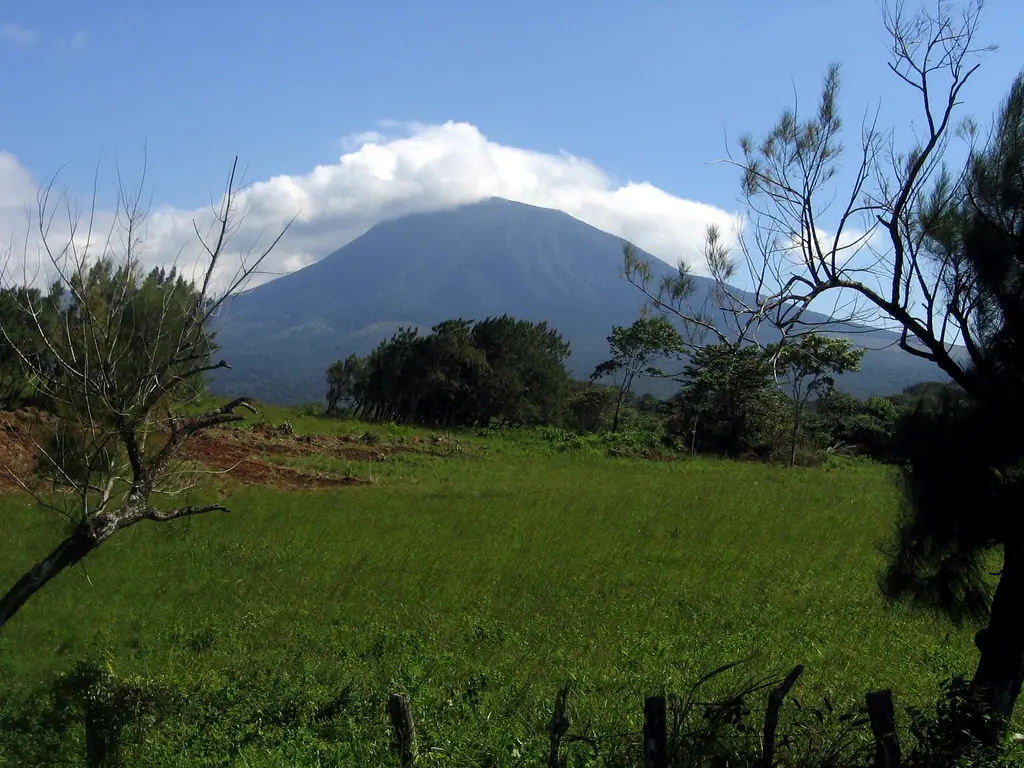
Inland, Rincón de la Vieja and Santa Rosa national parks protect volcanic mud pools, waterfalls and dry tropical forest that turns startlingly green in the wet season. Liberia's international airport makes the whole region easy to reach without passing through San José, which is why many travellers fly into one airport and out of the other. Rates peak from late December through April and again over Easter week; September and October bring the lowest prices and the heaviest rain.
The Central and South Pacific: Manuel Antonio, Uvita and Corcovado
Manuel Antonio National Park is the country's most visited, and for good reason: a compact peninsula of rainforest tumbling onto white-sand coves, packed with sloths, capuchin monkeys and iguanas. The park closes on Mondays and caps daily visitor numbers, so reserve timed entry well ahead and arrive at opening. Hotels spill down the hillside between Quepos and the park gate, from backpacker hostels to cliff-top boutiques with infinity pools facing the ocean.
South of here the coastline grows wilder. Dominical is a surf-and-waterfall town; Uvita sits beside Marino Ballena National Park, where a natural sandbar shaped like a whale's tail appears at low tide and humpback whales pass offshore in two distinct seasons — roughly December to April and July to October. Inland, the Nauyaca Waterfalls make a fine day trip by horseback or truck.
At the far southern end lies the Osa Peninsula and Corcovado National Park, which biologists rank among the most biodiverse places on earth. Access is deliberately limited: you enter with a certified guide, usually from Drake Bay or Puerto Jiménez, and stay in off-grid eco-lodges powered by solar or generator. Boat trips to Caño Island add snorkelling and diving over coral reefs. Travel light, bring cash — ATMs are scarce — and expect to disconnect completely.
The Caribbean Coast: Puerto Viejo, Cahuita and Tortuguero
Costa Rica's Caribbean side runs on a different clock, with Afro-Caribbean cooking, reggae bars and a mix of English and Spanish that feels nothing like the Pacific. Puerto Viejo de Talamanca is the main base, a scruffy, charming town of guesthouses, hostels and small hotels, with Punta Uva and Manzanillo's beaches a short cycle away. Cahuita National Park protects a coral reef and an easy coastal trail where you enter by donation and walk from beach to beach; the Gandoca-Manzanillo Wildlife Refuge covers mangroves and turtle beaches further south.
Tortuguero is the region's showpiece and unlike anywhere else in the country — a maze of jungle canals reachable only by boat or light aircraft. Lodges here are almost always sold as full-board packages including meals, boat transfers and guided canal tours, so the rate you see covers most of your stay. Green sea turtles nest on the beach between roughly July and October, and night walks with certified local guides are the only permitted way to watch them.
Weather flips here: the Caribbean is driest from February to April and again in September and October, exactly when the Pacific coast is at its wettest. That makes the eastern side a smart choice for a green-season trip. Bring insect repellent, expect humid nights, and plan on slow afternoons of rice-and-beans lunches and hammocks rather than a packed itinerary.
Frequently asked questions
When is the best time to stay in Costa Rica?
The dry season runs from December to April, when Pacific beaches and volcanoes are at their most reliable and rates are highest — book well ahead for that window and for Easter week. May to November is the green season, with afternoon downpours, lush landscapes and noticeably lower hotel rates. A drier lull usually appears on the Pacific side in July and August, while the Caribbean coast is driest from February to April and again in September and October, making it a good bet when the Pacific is soaked.
Do I need a rental car to get between hotels?
A car gives you freedom, especially in Guanacaste, the Nicoya Peninsula and around Monteverde, where roads can be steep, unpaved and foggy — a four-wheel-drive vehicle is worth the extra cost outside the dry season. That said, most travellers mix modes: shared or private shuttles link the main tourist towns door to door, short domestic flights connect San José with Liberia, Tambor, Quepos and Drake Bay, and boats serve Tortuguero, which has no road access at all.
Which region is best for a first visit?
If you want beaches, base yourself in Guanacaste around Tamarindo, Conchal or the Papagayo Gulf, which are easy to reach via Liberia's airport. For a classic mix of volcano, hot springs and wildlife, split four to five nights between La Fortuna and Monteverde, then add Manuel Antonio for sloths and ocean views. Travellers who want culture, reefs and a slower pace should head to the Caribbean side instead.
What's the difference between an eco-lodge and an all-inclusive resort?
All-inclusive resorts concentrate in Guanacaste and typically bundle meals, drinks and activities on a large beachfront property. Eco-lodges are smaller, often family-run, and located near forests, volcanoes or canals; some are off-grid with solar power, limited Wi-Fi and set meal times, and a few — particularly in Tortuguero and around Corcovado — require full-board packages because there's nowhere else to eat. Neither is better; it depends on whether you want convenience or immersion.
What should I know about paying for hotels in Costa Rica?
Rates usually already include the national sales tax, but confirm before booking, and remember that restaurants often add a ten per cent service charge on top of the tax. Cards are accepted at larger properties and in tourist towns, yet small lodges, rural sodas and tour guides often prefer cash, and ATMs are scarce once you leave the cities — so carry a supply of local currency for tipping and small purchases, and keep some in reserve for remote areas.
Plan it — hotels in Costa Rica
Live search, booked directly with trusted providers.
Sort the rest of your trip
Everything for Costa Rica, in one place
Transfer in Costa Rica
Private driver waiting on arrival — no queues, no surprises.
Book a transfer
Things to do in Costa Rica
Skip-the-line tickets, guided tours and standout experiences.
See experiences
Stay online in Costa Rica
Travel eSIM — data the moment you land, no roaming bills.
Get an eSIM


