Costa Rica's real flavor is not in a buffet line but in the steam rising off a plate of gallo pinto at a roadside soda, in the smell of coffee drying on a highland patio, and in the coconut-thick sauces of the Caribbean coast. Move between volcanoes, cloud forests and turtle beaches and you'll find food, nature and tradition tangled together in ways no itinerary can untangle.
Gallo Pinto, Casados and the Art of the Soda
Breakfast in Costa Rica is a democratic institution: rice and beans fried with onion, sweet pepper and cilantro until the grains go speckled — gallo pinto, literally "spotted rooster." It arrives with eggs, fried plantain, sour cream, a slice of firm local cheese and coffee brewed through a cloth bag on a wooden stand. You'll eat it in family kitchens and in sodas, the small neighbourhood diners where most Ticos take their midday meal, and it costs little enough that nobody thinks twice about ordering it twice.
Lunch is the casado, the "married man's" plate: rice, beans, plantain, cabbage or lettuce, and a choice of grilled fish, chicken, pork chop or steak, often with a picadillo of potato or chayote folded in. Beyond it lie olla de carne, a slow-simmered beef and vegetable stew, and sopa negra, black bean soup topped with a hard-boiled egg. Chifrijo — rice, beans, crisp pork, pico de gallo and lime — was invented in a San José bar and is now the national bar snack. Wash it all down with a fresco natural: cas, maracuyá, watermelon, horchata, or agua de sapo, a bracing mix of ginger, lime and cane syrup.
To eat like a local, follow the shopping. Every town holds a feria del agricultor, usually on a Saturday or Friday, and arriving before eight means the best fruit: mamón chino, guanábana, granadilla, starfruit and boiled pejibaye. Farmers sell cheese by the wedge, tortillas still warm, and bags of roasted coffee. In the afternoon heat, look for copo — shaved ice layered with powdered milk and syrup — alongside arroz con leche and tres leches. December brings tamales, wrapped in banana leaves and steamed in family batches, an all-hands ritual that matters more than any restaurant reservation.
San José: Markets, Museums and a Coffee-Funded Old Town
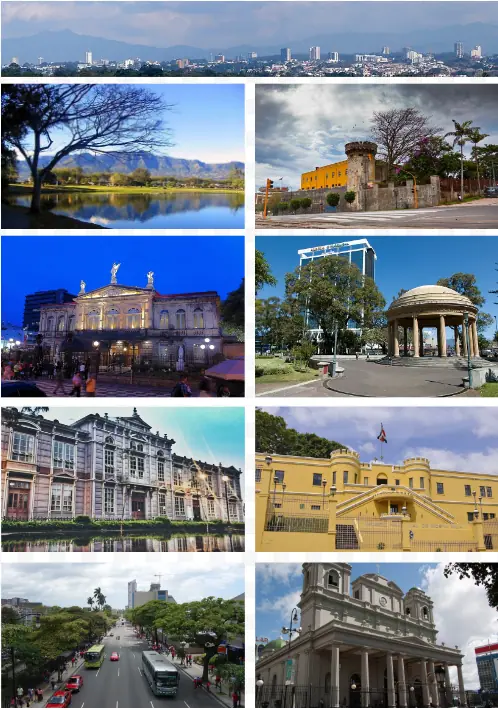
The capital is usually treated as a transit hub, which is a mistake. Start at the Mercado Central, a warren of stalls from the 1880s where vendors sell medicinal herbs, leather sandals, ceviche in plastic cups and enormous bowls of soup at lunch counters. A few blocks away, the pedestrianised Avenida Central links the city's plazas, and the neighbourhood of Barrio Escalante has grown into the country's most interesting dining strip, with tasting menus, craft beer and pastry counters occupying converted houses.
The Teatro Nacional is San José's grandest survivor, opened in 1897 and paid for largely by a levy on coffee exports — a reminder of how thoroughly the bean built this country. Inside, marble staircases and a painted ceiling depicting coffee pickers and banana workers tell the story better than any placard. Beneath the Plaza de la Cultura, the Museo del Oro Precolombino displays hundreds of hammered gold figures, while the Museo Nacional occupies the old Bellavista fort, complete with bullet-scarred walls and a butterfly garden on the ramparts.
San José also makes a practical base for the Central Valley. Poás Volcano, with one of the widest craters on earth, and Irazú, whose summit allows views to both oceans on clear mornings, are both day trips, and the road east passes the topiary gardens of Zarcero and the Basílica de Nuestra Señora de los Ángeles in Cartago, where pilgrims walk from San José every 2 August. Give the city a full day rather than an afternoon — you'll leave with a chorreador coffee maker and a better sense of the place.
Highland Coffee, Painted Oxcarts and Volcano Cheese
Costa Rica's coffee heartland lies south of the capital in Tarrazú and the Valle de los Santos, where hillsides above 1,200 metres hold the country's most prized beans. The harvest runs roughly November to February, and farm visits of two to four hours walk you through depulping, fermentation, patio drying and cupping — the tasting ritual where growers decide what deserves a name. Landscapes here are steep, cool and often misted, and small cooperatives still process cherries for dozens of families at a time.
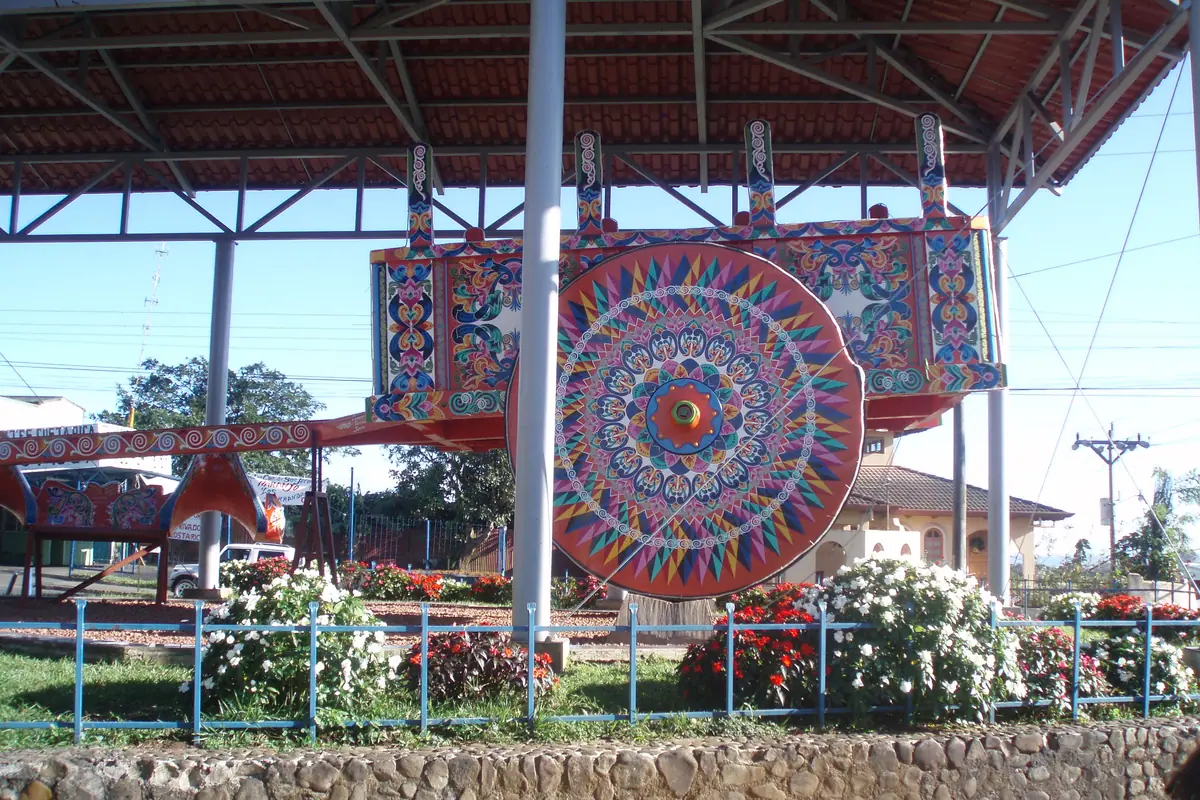
North of San José, the Orosi Valley offers a different kind of pause: the colonial church of Orosi, the oldest in the country, the ruins of Ujarrás, and the turquoise Cachí reservoir ringed by coffee and cardamom. Continue west to Sarchí, where workshops paint the traditional wooden oxcarts that once hauled coffee down impossible roads. Each cart carries its own geometric patterns, and every year in March the Día de los Boyeros brings a procession of drivers and decorated carts through town — a rare celebration of agricultural work rather than folklore.
Further east, Turrialba is cheese country, its dairy farms fed by the volcano above them and its markets heavy with palmito cheese and fresh curds. This is also whitewater rafting territory, with the Pacuare and Reventazón cutting through deep gorges, and Guayabo National Monument nearby preserves pre-Columbian stone causeways, aqueducts and petroglyphs in the middle of the forest. It's a loop best done with a car over two or three unhurried days.
Pacific Coast: Ceviche, Surf Towns and Whale Season
The Pacific side runs from the dry, surf-hungry north to the wet, jungle-clad south, and its food follows the water. In Tamarindo, Sámara, Nosara and Santa Teresa, lunch is often ceviche of sea bass or corvina cured in lime, plate-sized whole fish off the grill, patacones flattened and fried, and a cold beer at a table with sand under it. Sámara stays calm and family-friendly; Santa Teresa draws surfers and long-stay travellers; Tamarindo is the busiest, which also makes it the easiest place to book a fishing trip or a sunset sail.
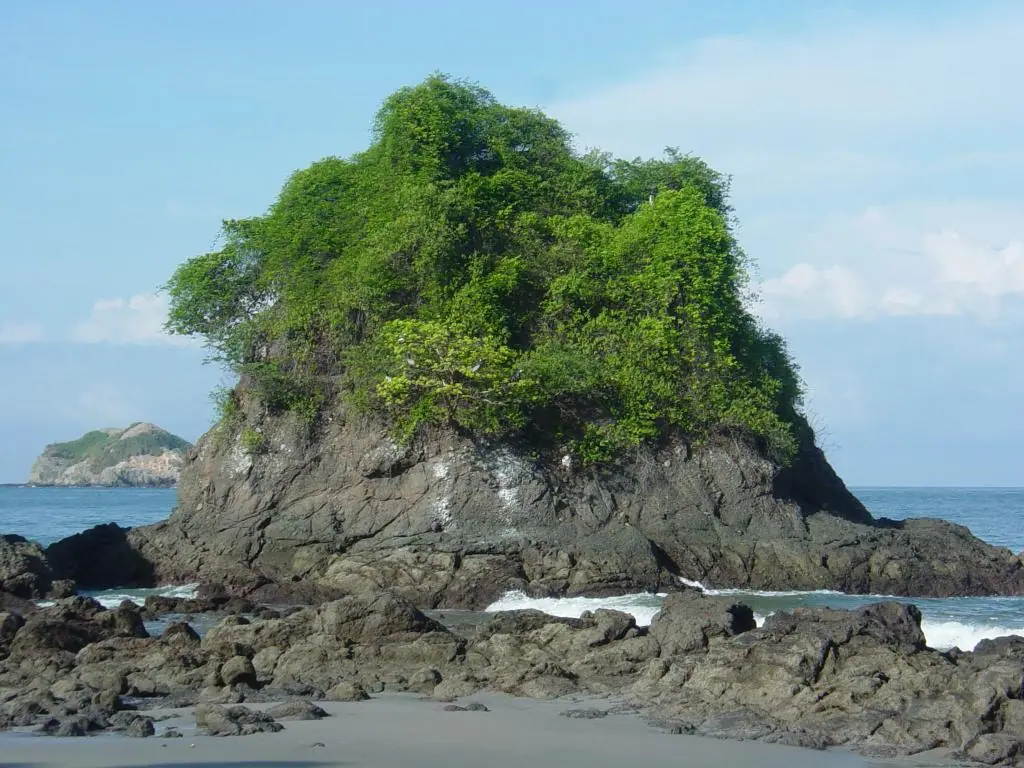
The region's must-see is Manuel Antonio National Park, where a short trail network threads through forest to beaches backed by cathedral-shaped rocks. Sloths, white-faced capuchins and iguanas are reliably seen, and the sand at Playa Manuel Antonio is among the country's best. Entry is capped daily, so reserve ahead, arrive at opening time, and expect the park to close one day each week. Bring water, leave the snacks in the car, and ignore anyone who offers to show you animals that aren't there.
Continue south and the coastline becomes a whale corridor. Marino Ballena National Park at Uvita is named for the sandbar that forms a whale-tail shape at low tide, with humpbacks passing in two seasons — roughly December to April and again July to November. On the northern Pacific, Playa Grande and the surrounding Las Baulas sector protect leatherback turtles that nest from October to March, and night tours with licensed guides are the only responsible way to see them. The Nicoya Peninsula, meanwhile, is known for its long-lived residents, and a diet built on beans, squash and tropical fruit explains a good part of it.
Caribbean Costa Rica: Rondón, Calypso and Afro-Tico Cooking
The Caribbean coast feels like a different country. In Limón province — Puerto Viejo de Talamanca, Cahuita, Punta Uva, Manzanillo — rice and beans are cooked in coconut milk, closer to Jamaican tradition than to the gallo pinto of the interior, and the table smells of thyme, allspice and Scotch bonnet pepper. Rondón is the dish to seek out: a fisherman's stew of whatever the boat brought in, simmered with coconut, plantain, cassava and breadfruit. Patí, a spiced meat pastry, and pan bon, a dark sweet bread, are the snacks you'll remember.
English-based patois, calypso and reggae arrived with Afro-Caribbean families who came to build the railway and work the banana plantations, and their culture still sets the rhythm here. Limón's Carnival in October fills the streets with drumming and parades; the rest of the year, beach towns run on Saturday night food stalls, live music and long, slow mornings. It's worth learning a few words of patois — the response is usually delight, and often a bigger portion.
Cahuita National Park protects a coral reef just offshore, with snorkelling and easy trails where capuchins patrol the sand; you enter through the town and pay at the gate. Punta Uva and the Gandoca-Manzanillo Wildlife Refuge anchor the southern end of the coast, while Tortuguero, reachable only by boat or small plane, is the country's great turtle beach — green turtles nest from July to October, and nesting walks are conducted by trained local guides at night. Book transport and lodging well ahead for that window.
Volcanoes, Cloud Forests and Indigenous Traditions
Some of Costa Rica's most memorable experiences have nothing to do with a plate. Arenal Volcano looms over La Fortuna, its perfect cone visible on clear mornings, and the area pairs hot springs and hanging bridges with the La Fortuna waterfall and the bird-rich Caño Negro wetlands. Monteverde and the neighbouring Santa Elena reserve protect cloud forest where the resplendent quetzal is most often spotted between December and April, and guided night walks reveal frogs, kinkajous and sleeping birds in a way daylight never does.
For sheer biodiversity, head to Corcovado National Park on the Osa Peninsula, reached by boat from Drake Bay or by road from Puerto Jiménez. Guided day hikes along the coast pass tapirs, scarlet macaws and all four of the country's monkey species; multi-day routes to the Sirena ranger station need permits booked far in advance. Rio Celeste, in Tenorio Volcano National Park, runs an improbable milky turquoise where two streams meet, and the walk to its waterfall and thermal-coloured pools takes a couple of hours.
Indigenous Costa Rica adds another layer. In Boruca, in the southern mountains, the Juego de los Diablitos is staged from 31 December to 2 January — masked dancers reenacting resistance, with carved balsa masks sold directly by the families who make them. In Talamanca, Bribri families run cacao walks and prepare chocolate by hand, and the Maleku near Guatuso welcome visitors for food and language demonstrations. Come with curiosity rather than a camera-first instinct; these are living traditions, not performances on a schedule.
Frequently asked questions
What dishes should I try first in Costa Rica?
Start with gallo pinto at breakfast, a casado at lunch in a neighbourhood soda, and chifrijo as an evening snack. Add olla de carne, sopa negra, ceviche, patacones and, on the Caribbean coast, rondón and patí. For drinks, order a fresco natural such as cas, maracuyá or agua de sapo, and finish with copo or arroz con leche.
When is the best time to visit for food, festivals and wildlife?
The dry season from December to April suits the Pacific coast and the highlands, with coffee harvest running November to February. The greener months from May to November bring lower rates and livelier rivers, and turtle nesting peaks from July to October at Tortuguero and from October to March at Playa Grande. Día de los Boyeros falls in March, and Limón's Carnival in October.
How can I eat well without spending much?
Eat where locals eat. Sodas serve set plates at modest prices, the feria del agricultor is the cheapest place for fruit, cheese and coffee, and market food counters are excellent value. Lunch is generally the best-value meal of the day, and many sodas post their daily menu outside rather than printing a full list.
Do I need to reserve national parks in advance?
Yes, for the busiest ones. Manuel Antonio, Poás, Corcovado and Tenorio all cap daily entries, and Corcovado's multi-day routes sell out weeks or months ahead. Book online before you travel, carry the passport or ID you registered with, arrive early, and check the weekly closing day each park observes.
What is the easiest way to travel between regions?
A rental car gives the most freedom, but mountain roads are winding and travel takes longer than the map suggests. Shared shuttle vans connect the main tourist towns, small domestic flights save long drives to the Osa Peninsula and Tortuguero, and Tortuguero itself is reached only by boat or light aircraft. For coffee country and the Caribbean, combining a shuttle with a local bus works well.
Sort the rest of your trip
Everything for Costa Rica, in one place
Stay in Costa Rica
Hotels, guesthouses and apartments — compared in one search.
Search hotels
Transfer in Costa Rica
Private driver waiting on arrival — no queues, no surprises.
Book a transfer
Stay online in Costa Rica
Travel eSIM — data the moment you land, no roaming bills.
Get an eSIM


