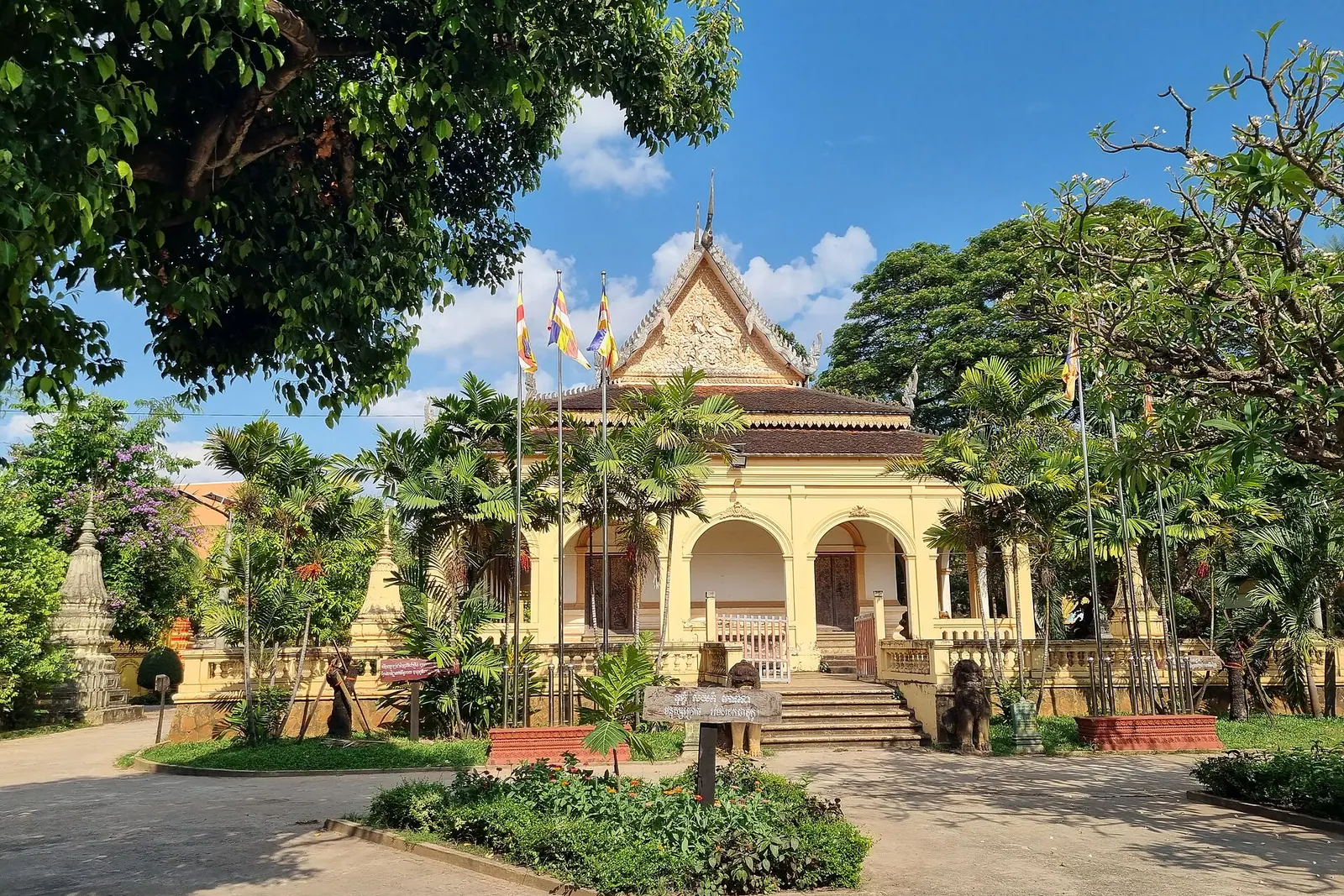
Cambodia packs a thousand years of Khmer stonework, a river that runs backwards and a coastline of palm-shadowed islands into a country you can cross by bus in a day. It rewards slow travel: sunrise at Angkor, a stilted village on the great lake, then sand between your toes.
Angkor Wat and the Temples of Angkor
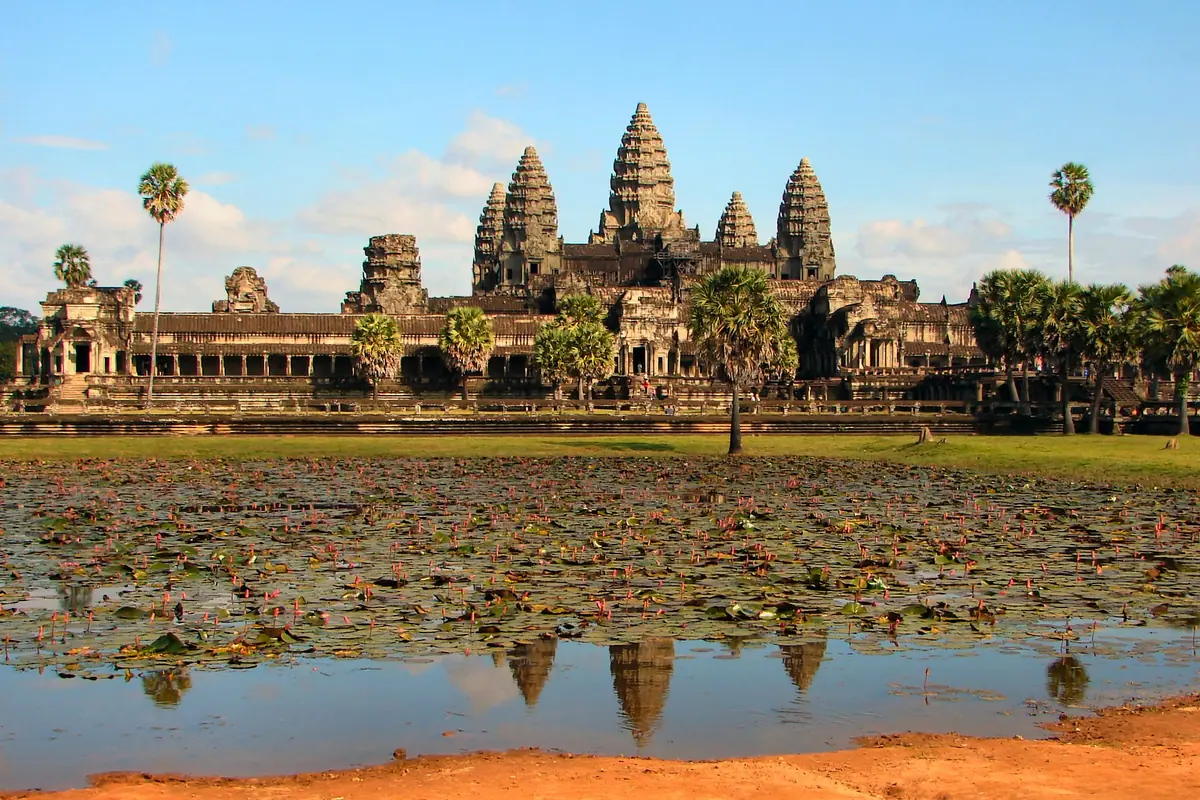
The Angkor Archaeological Park is the reason most travellers come, and it is far bigger than a single temple. Angkor Wat itself — the largest religious monument on earth, built in the 12th century and ringed by a moat 190 metres wide — takes two to three hours to walk properly, longer if you linger over the bas-relief galleries narrating Khmer myth along the outer wall. Most visitors arrive before dawn to watch the five towers rise out of the dark, which is unforgettable but crowded; an equally beautiful alternative is late afternoon light on the western causeway.
The wider circuit is where Angkor gets interesting. Angkor Thom, the last great Khmer capital, encloses the Bayon, whose 200-odd carved faces stare serenely in every direction, plus the Terrace of the Elephants and the Terrace of the Leper King. Ta Prohm, swallowed by silk-cotton roots, is the jungle-ruin cliché made real, while Preah Khan and Ta Keo reward anyone willing to walk a little further. Further out, Banteay Srei's pink sandstone carvings are the finest in Cambodia — roughly 40 minutes by tuk-tuk from Siem Reap, and best combined with the river-carved site of Kbal Spean.
Give Angkor at least three days. The dry, cooler months from November to February are ideal, though December and January bring the biggest crowds; March to May is punishingly hot, and the green season from June to October offers empty galleries, dramatic skies and afternoon downpours that clear quickly. A pass covers the whole park, tuk-tuk drivers will happily plan a loop, and hiring a guide for one day genuinely transforms what you see.
Phnom Penh: Palaces, Markets and a Painful Past
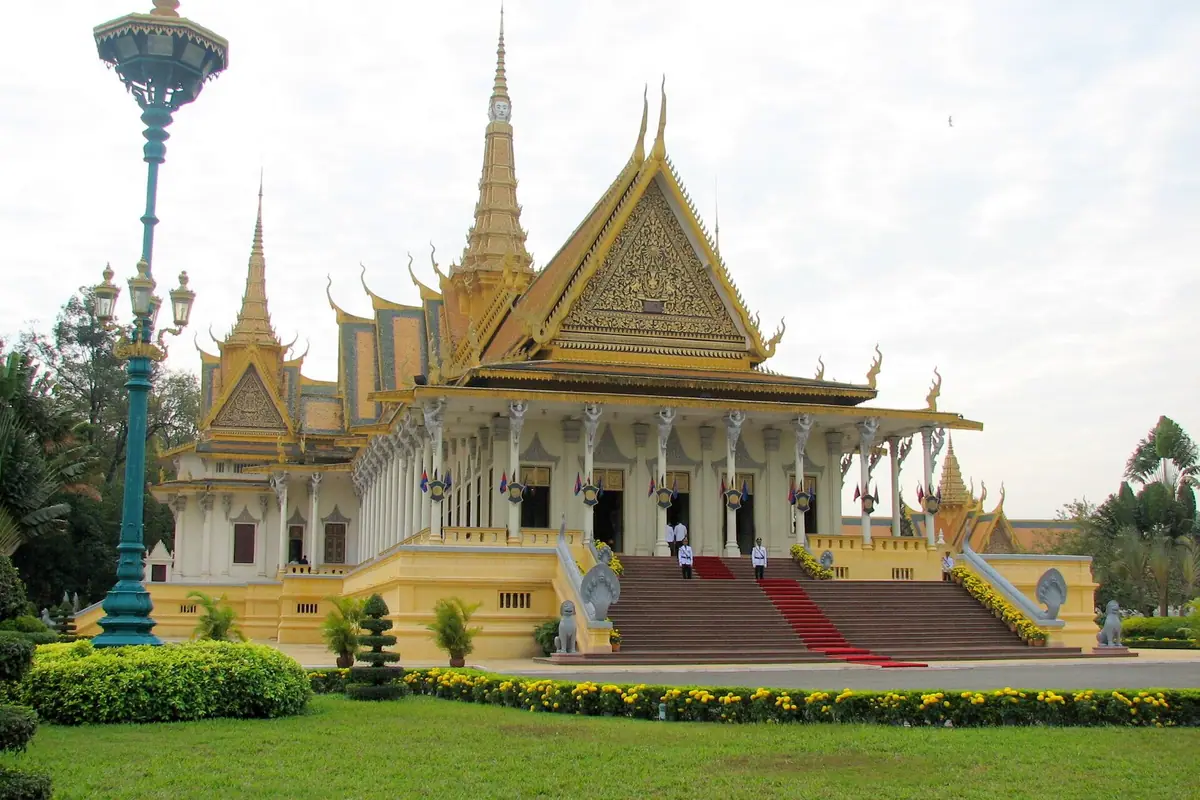
Cambodia's capital is a city of sharp contrasts. The Royal Palace, with its golden-roofed throne hall and the adjoining Silver Pagoda — floored with thousands of silver tiles and home to a solid-gold Buddha — is the polished, ceremonial face of the nation. Nearby, the National Museum of Cambodia holds the world's finest collection of Khmer sculpture, and Wat Phnom, the small hilltop shrine that gave the city its name, is a good place to start a morning before the heat sets in.
The city also asks you to look at what it survived. Tuol Sleng Genocide Museum, a former school turned detention centre, and the Choeung Ek memorial site outside town are harrowing but essential, and most visitors need the rest of the day to process them. Two hours at each is typical.
For lighter hours, Phnom Penh excels at markets and eating. The art deco Central Market is a domed maze of jewellery, textiles and food stalls, while the Russian Market is the place for silk, curios and cheap tailoring. In the evening, the riverside promenade along Sisowath Quay fills with families, aerobics classes and street-food carts — grab grilled squid and a cold drink and watch the Mekong go by. Two full days here is a comfortable amount.
Tonlé Sap and the Floating Villages
Tonlé Sap is the largest freshwater lake in Southeast Asia and one of the strangest waterways on the planet: each monsoon, the Mekong backs up and pushes water into the lake, swelling it to several times its dry-season size and reversing the flow of the Tonlé Sap River. Whole communities live with that rhythm, raising houses on wooden stilts eight metres tall or simply floating on rafts that are towed to a new spot when the water moves.
Several villages sit within easy reach of Siem Reap. Kompong Khleang is the biggest and most photogenic, with a canyon of stilted houses and a market on the water; Kompong Phluk lets you paddle a small boat through a flooded forest of submerged mangroves; and Prek Toal, further out, is a bird sanctuary where pelicans, storks and ibises gather when water levels drop. Chong Kneas is closest to town but the most touristy.
Timing shapes the experience completely. From August to November the lake is high and you glide straight into the treetops; from February to April the water retreats and the same houses stand exposed on bare stilts above cracked mud. Mornings are cooler and calmer, boats are usually shared, and any trip will take half a day including the drive — bring sun protection, because there is no shade once you are out on the water.
Beyond Angkor: Beng Mealea, Koh Ker and Preah Vihear
Once you have done the main circuit, northern Cambodia opens up spectacularly. Beng Mealea, about an hour and a half from Siem Reap, is a sprawling, half-collapsed temple left largely to the jungle — you scramble over tumbled sandstone blocks along wooden walkways, and it feels like genuine discovery rather than sightseeing. Nearby Koh Ker, briefly the Khmer capital in the 10th century, is dominated by Prasat Thom, a seven-tiered pyramid you can climb for views over the surrounding forest.
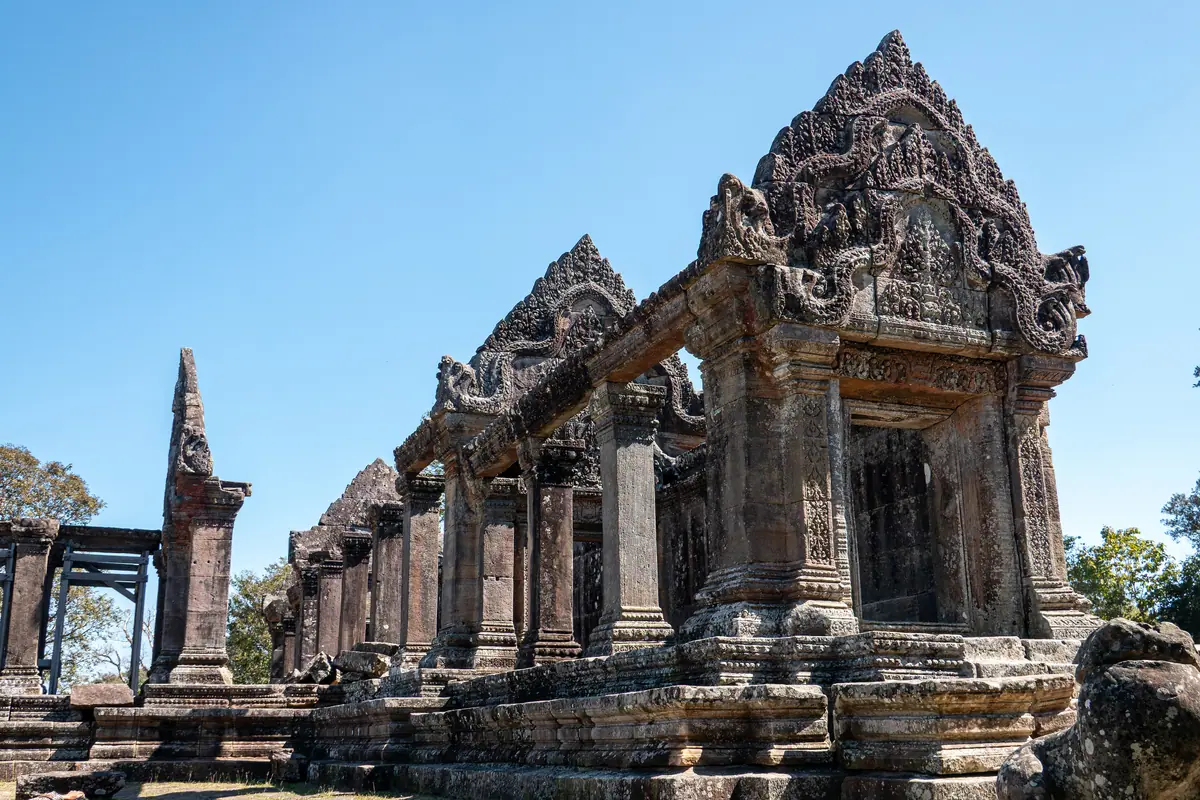
The most dramatic of all is Preah Vihear, a long, narrow temple strung along the edge of the Dangrek escarpment right on the Thai border, some 500 metres above the plains. The approach is a climb of several hundred metres along a monumental causeway, and the reward is a sweep of forested lowlands that goes on forever. It is a long drive from Siem Reap or Phnom Penh, so most people break the journey.
Head west instead and you reach Battambang, Cambodia's most charming second city. Ride the bamboo train, a simple platform on rails that clatters through rice fields, then climb to Phnom Sampeau to watch millions of bats stream out of a cave at dusk. The hilltop temple of Wat Banan, with its five towers and long stairway, makes a fine half-day trip. Two nights in Battambang is plenty.
The Southern Coast: Kep, Kampot and the Islands
Cambodia's coastline is often skipped, which is a mistake. Kep is a sleepy seaside town famous for its crab market, where women haul baskets of fresh crab straight from the water to be fried with green peppercorns — the local speciality. Inland from here, the misty Bokor plateau holds the eerie shell of a former French hill station, reachable by a winding road that climbs through cloud forest and past a towering waterfall.
Kampot, a faded riverside town of shophouses and pepper farms, is the base for exploring the region. The surrounding countryside produces some of the world's most prized pepper, and farm tours show you the vines and the drying process before you taste the difference between red, black and white. From Kampot you can also rent a bicycle to reach the quiet lanes, salt pans and karst caves of the area.
Offshore, Koh Rong and its smaller neighbour Koh Rong Sanloem offer white sand, warm water and bioluminescent plankton that glitters when you swim after dark. Long Set and Sok San beaches on Koh Rong are the classic stretches; Sanloem is quieter, with hammock-and-bungalow places at Saracen Bay. The dry season from November to April brings calm seas and good visibility for diving, while the monsoon months mean cheaper rooms and moodier weather. Ream National Park, near Sihanoukville, is a good half-day of mangrove boat trips and empty beaches.
Northeast Cambodia and the Mekong
The provinces of Mondulkiri and Ratanakiri are Cambodia's highlands: pine forests, red-earth roads, coffee farms and villages of the Bunong and other Indigenous communities. In Ratanakiri, Yeak Laom is a nearly perfectly round volcanic crater lake with a clear green rim you can walk in under an hour, and the nearby waterfalls and gem-mining streams are worth a day of exploring from the town of Banlung. Mondulkiri's capital, Sen Monorom, is the base for walks to Bou Sra waterfall and for ethical elephant projects where you observe the animals rather than ride them.
Along the Mekong, the town of Kratie is the place to see Irrawaddy dolphins, a small resident population that surfaces in deep pools near Kampi, about 15 kilometres north of town. Late afternoon light on the river is lovely, and the boat trips are short and gentle — sightings are common but never guaranteed. Kratie's riverfront, with its old French-era buildings and coconut stalls, is a pleasant place to spend a night or two.
Further north, the Mekong Discovery Trail links riverside towns and islands where you can cycle between villages, and the remote Virachey National Park on the Lao border offers genuine jungle trekking for the well-prepared. This region is far less visited than Angkor, roads can be rough in the wet season, and it is best explored between November and February.
Frequently asked questions
How many days do you need in Cambodia?
A week is the minimum for Angkor, Phnom Penh and one other region. Ten days to two weeks lets you add the southern coast or the northeast without spending every day on a bus — journeys between regions typically take five to eight hours by road.
What is the best time of year to visit Cambodia?
November to February is the sweet spot: dry, relatively cool and clear, with temperatures around 25–32°C. March to May is very hot, often topping 38°C. The green season from June to October brings lush landscapes, lower prices and heavy but usually short afternoon downpours.
Is sunrise at Angkor Wat worth it?
Yes, for the reflection of the towers in the lily pond and the atmosphere as the site wakes up — but expect hundreds of other people. If crowds bother you, go at opening time on a weekday, or visit in late afternoon and save your sunrise for a quieter temple such as Srah Srang or Phnom Bakheng.
How do you get around Cambodia?
Long-distance buses and shared minivans connect all the main towns, tuk-tuks handle short hops in cities, and renting a scooter is common in Kampot, Kep and the islands. Around Angkor, a tuk-tuk driver hired by the day is the simplest option and most will plan a route with you.
What should you know about money and health in Cambodia?
US dollars are used alongside the riel for everyday purchases, with riel notes handling small change, and ATMs dispense dollars. Drink bottled or filtered water, use mosquito repellent at dawn and dusk, and check current vaccination advice before you travel — dengue and malaria exist in rural areas.
Plan it — experiences in Cambodia
Live search, booked directly with trusted providers.
Sort the rest of your trip
Everything for Cambodia, in one place
Stay in Cambodia
Hotels, guesthouses and apartments — compared in one search.
Search hotels
Transfer in Cambodia
Private driver waiting on arrival — no queues, no surprises.
Book a transfer
Stay online in Cambodia
Travel eSIM — data the moment you land, no roaming bills.
Get an eSIMMore guides in Cambodia
Best Places to Visit in Cambodia: Temples, Coast and Wild Northeast
Best Time to Visit Cambodia: Seasons, Festivals and When to Book Your Hotel
Cambodia Food, Culture and Local Experiences: An In-Depth Tour Guide
Cambodia in 7 Days: A Flight Itinerary from Phnom Penh to Angkor and the Coast