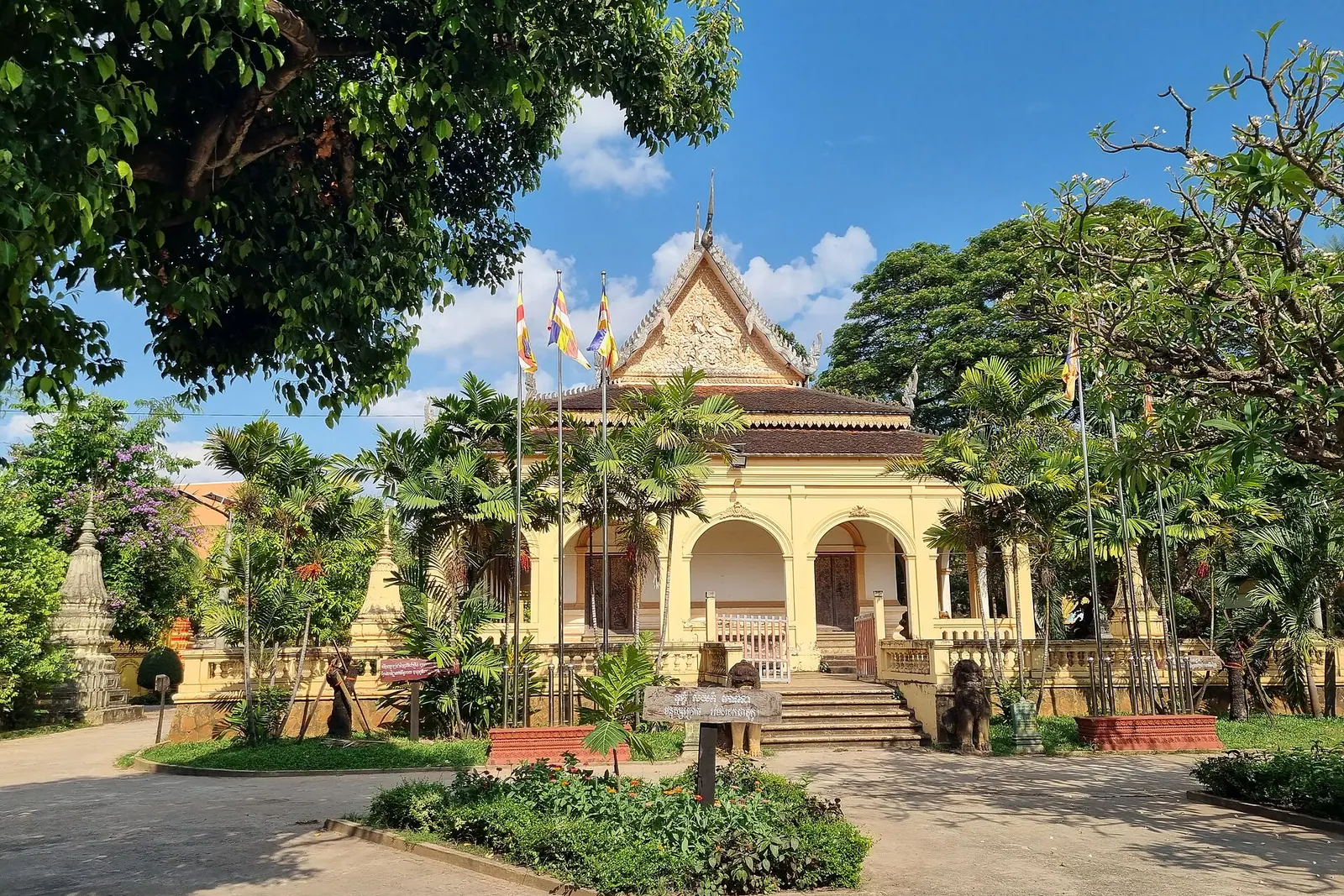
Cambodia greets you first with stone — the towers of Angkor rising out of jungle mist — and then with everything else: a bowl of kuy teav at dawn, the smoky caramel scent of palm sugar, a river that swells and shrinks with the monsoon. The country rewards travellers who slow down, eat where the families eat, and let the rhythm of the Mekong set the pace.
Sunrise at Angkor: The Temples That Anchor Every Cambodian Journey
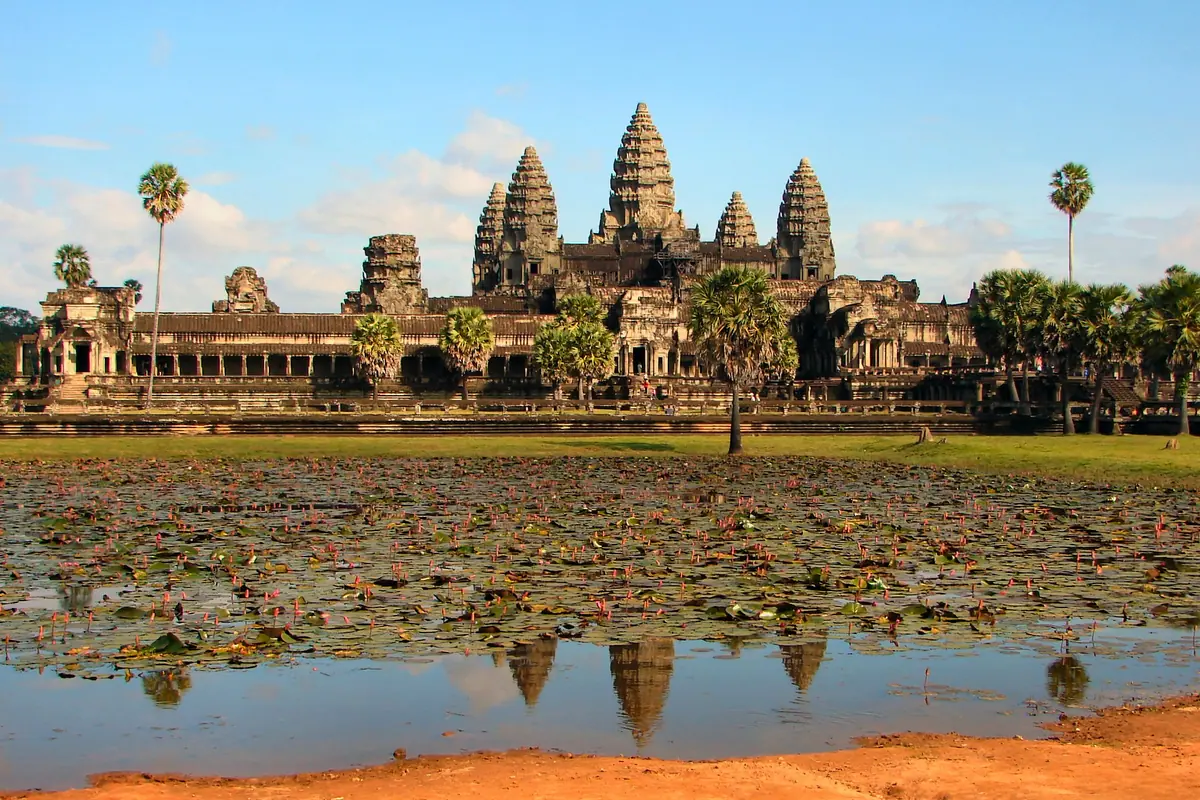
Almost every tour in Cambodia begins in Siem Reap, the gateway to the Angkor archaeological park, and the ritual is the same for everyone: a tuk-tuk pickup at 4:45am, a torch-lit walk across the sandstone causeway, and the five lotus towers of Angkor Wat emerging as silhouettes against a pink sky. The reflection pools on the left side of the main temple are the classic viewpoint, but if you continue past the crowd toward the north library, you can watch the same sunrise with far fewer shoulders in your photographs. Budget at least three days for the park — one for the small circuit, one for the grand circuit, and one for the outlying temples that most day-trippers skip.
Inside Angkor Thom, the walled city that once held a million people, the Bayon stops people mid-sentence with its 216 serene stone faces, stacked in towers that catch the low afternoon light. Nearby, the Terrace of the Elephants and the Terrace of the Leper King give a sense of the ceremonial scale of the old capital, while Ta Prohm — the temple left half-swallowed by silk-cotton roots — is best visited right at opening or after 4pm, when the coach groups thin out and you can hear the cicadas again. Preah Khan and Ta Som reward those who linger.
Make the effort to travel further: Banteay Srei, 35 kilometres northeast of Siem Reap, is carved from rose-pink sandstone with a filigree so fine it looks like lace, and Beng Mealea, an unrestored jungle ruin, lets you scramble over collapsed galleries on wooden walkways. Dress respectfully everywhere in the park — shoulders and knees covered, scarf or krama handy — and carry more water than you think you need, because the heat between 11am and 2pm is genuinely punishing.
Eating Cambodia: Amok, Kuy Teav and Pepper From Kampot
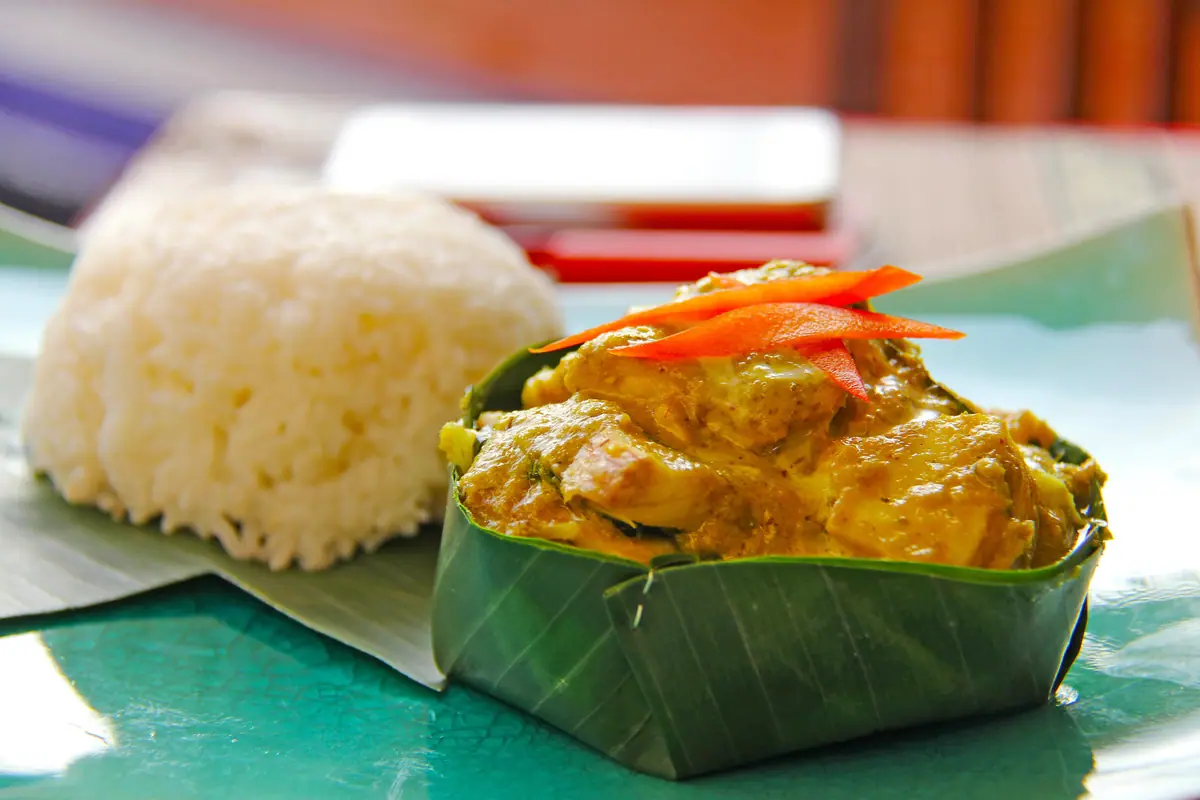
Cambodian cooking is quieter than its neighbours' — less chilli, more fragrance. The national dish, amok trey, is a steamed coconut curry of freshwater fish, lemongrass, kaffir lime and turmeric, served in a banana-leaf cup so the custard sets soft and trembling. Order it with steamed jasmine rice, and follow it with lok lak, a stir-fry of tender beef in a lime-and-black-pepper sauce with a fried egg on top. Breakfast is the real joy: kuy teav, a clear pork or beef noodle soup scattered with crispy garlic, spring onion and a squeeze of lime, eaten on a plastic stool at 6:30am while the city wakes up around you. Num banh chok, cold rice noodles dressed in a fish-and-turmeric gravy poured over raw vegetables and herbs, is the classic mid-morning snack.
To eat well, head for the markets. In Phnom Penh, Phsar Thmei (Central Market) and Phsar Tuol Tom Poung (Russian Market) are dense with food stalls, and the night market along Sisowath Quay fills with grilled skewers, fresh spring rolls and coconut ice cream after dark. In Siem Reap, the lanes around Phsar Chas (Old Market) and the stretch known for its evening food stalls offer grilled river fish, banana-blossom salad and kralan — sticky rice mixed with black beans and coconut, roasted inside a bamboo tube. If you are travelling between Phnom Penh and Siem Reap, the roadside town of Skun is famous for its fried spiders, an acquired taste that adventurous eaters treat as a rite of passage.
The south is where Cambodia's ingredients get serious. Kampot pepper — grown on vines climbing wooden poles near the coast, harvested green, black, red and white — is prized by chefs far beyond the country, and a farm visit in the Kampot countryside usually ends with a tasting plate of peppercorns straight off the plant. Combine that with a seafood lunch of stir-fried crab in Kep, seasoned with nothing more than garlic, spring onion and that same green pepper, and you understand why Cambodians treat food as a slow, seasonal pleasure rather than a performance.
Phnom Penh: Palaces, Museums and a Difficult History
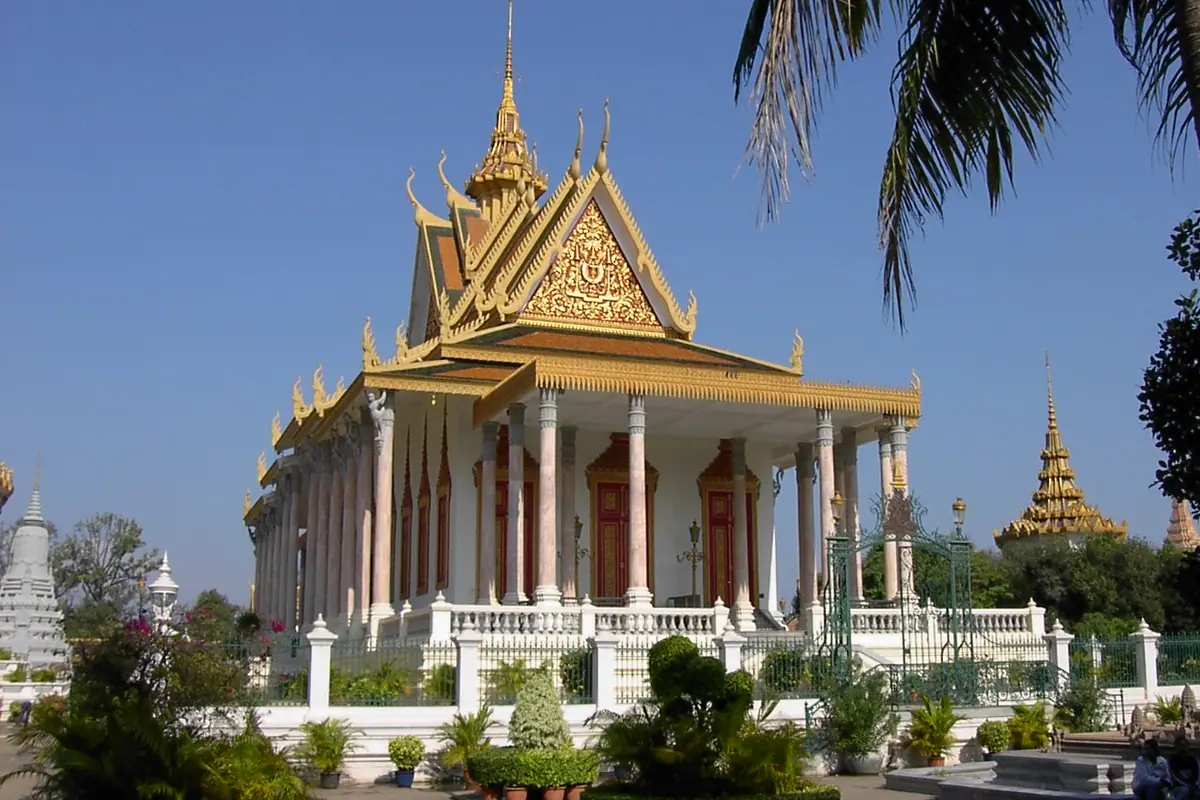
The capital is a city of two moods. Along the riverfront, the Royal Palace and its Silver Pagoda glitter with gold leaf, Italian marble and a floor of more than 5,000 silver tiles, while the adjacent National Museum holds the finest collection of Khmer sculpture in the world — including the sandstone Vishnu and the great bronze heads relocated from the temples. Wat Phnom, the hilltop shrine that gave the city its name, is a short walk away and still busy with incense, fortune-tellers and pigeons.
A few kilometres south, the mood changes entirely. Tuol Sleng Genocide Museum, housed in a former school, and the memorial stupa at Choeung Ek, the killing fields on the city's edge, document the Khmer Rouge years with a restraint that is somehow more devastating than any dramatisation. Allow half a day for both, take the audio guide if one is offered, and give yourself a quiet evening afterwards — many travellers find this the most affecting part of their entire trip.
Elsewhere, Phnom Penh is a lively, low-rise city of cafes, art spaces and colonial-era shophouses. Wander the streets around the Central Market's yellow Art Deco dome, drink an iced coffee with condensed milk, and end the day on Sisowath Quay watching ferries and fishing boats slide past on the Tonlé Sap river, which here famously reverses direction twice a year as the Mekong swells.
Beyond the Temples: Floating Villages, Bamboo Trains and River Dolphins
Cambodia's inland sea, the Tonlé Sap, expands to several times its dry-season size when the monsoon arrives, and the communities living on it simply move with it. Kampong Khleang, about an hour from Siem Reap, is a village of tall stilted houses that you visit by boat in the wet season and walk beneath on dry land in the dry season; Kompong Luong near Pursat floats entirely, with schools, shops and even a petrol station bobbing on pontoons. Go early in the morning for the best light and the least engine noise.
In the northwest, Battambang is Cambodia's most charming small city, a base for the bamboo train — a simple flat platform on wheels that once carried rice and now carries travellers across open farmland at a surprisingly brisk pace. Pair it with a late-afternoon climb to Phnom Sampeau, where millions of bats stream out of a cave mouth at dusk, and with a visit to the surrounding villages that still produce rice paper, dried bananas and traditional Khmer cakes.
Further afield, the Mekong town of Kratie is the best place to spot endangered Irrawaddy dolphins from a longtail boat near Kampi, especially in the clear water between January and April. In the northeast, Mondulkiri offers rolling hills, coffee farms, Bunong villages and forest-based elephant projects where the animals are observed rather than ridden, while Ratanakiri's Yeak Laom lake — a near-perfect volcanic crater ringed by jungle — is one of the country's most beautiful swimming spots. Down south, Koh Rong and Koh Rong Sanloem supply the white-sand, bioluminescent-plankton beaches that balance out the temple dust.
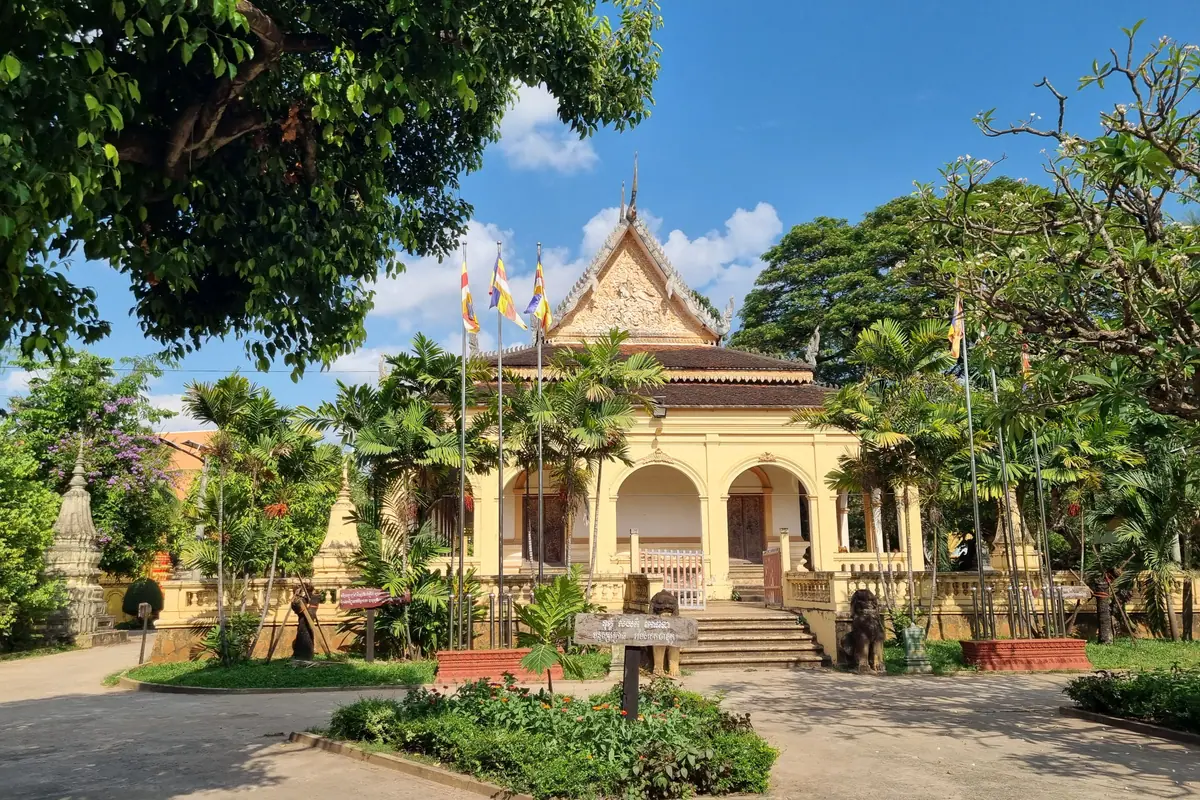
Festivals, Apsara Dance and the Art of Khmer Hospitality
Cambodian culture is felt most strongly at festival time. Choul Chnam Thmey, the Khmer New Year in mid-April, empties the cities as families return to their home provinces for three days of water blessings, temple offerings and games in the streets. Pchum Ben, in September or October, is a solemn fortnight when food is brought to monks and ancestors are remembered; Bon Om Touk, the Water Festival in November, brings dragon-boat races of dozens of paddlers to the Tonlé Sap in front of the Royal Palace, plus illuminated floats and fireworks.
Classical dance is the other gateway. Apsara dance, with its slow, precise hand gestures and gold headdresses, was once performed only for royalty and is now staged most nights in Siem Reap and Phnom Penh, usually as part of a set dinner. Look also for sbaek thom, the large shadow-puppet theatre that retells episodes from the Reamker, and for performances at smaller community venues where the artists are training rather than touring. Buy a krama — the chequered cotton scarf worn by everyone from farmers to politicians — and you support a weaving tradition that has been part of daily life here for centuries.
Etiquette matters and is easy to get right. Greet people with the sampeah, palms together at chest height, rather than a handshake. Never touch a monk if you are a woman, remove your shoes before entering a temple or a home, avoid pointing your feet at people or at Buddha images, and pass items with your right hand. A few words of Khmer — suostei for hello, akun for thank you — will earn you far warmer treatment than any tip.
Practical Rhythms: When to Go, How to Move and What to Expect
Cambodia has three seasons. The cool dry season from November to February is the most comfortable, with temperatures in the high twenties and low thirties and clear skies — which also makes it the busiest time at Angkor, so book accommodation early and start your temple days before dawn. March to May is hot, often reaching 38°C by early afternoon, but the crowds thin and the light is dramatic. The monsoon, roughly June to October, brings heavy but usually short afternoon downpours, emerald-green rice fields, full rivers and the lowest prices of the year; travel is still perfectly feasible with a waterproof bag and a flexible plan.
Getting around is straightforward. Tuk-tuks are the default for short hops and day tours; for longer journeys, air-conditioned coaches link Phnom Penh, Siem Reap, Battambang, Kampot and Sihanoukville in between four and eight hours, and overnight sleepers save a hotel night. Ride-hailing apps work well in the cities and remove the haggling. Domestic flights connect the capital with Siem Reap and Sihanoukville if you are short on time, and boats still run on some river and island routes in the wet season.
Money is dual-currency: Cambodian riel is used for small change while US dollars circulate widely, so bring clean, untorn notes in small denominations and expect change under a dollar in riel. Cash machines are common in towns but scarce in the northeast, so carry a buffer. Drink bottled or filtered water, be careful with ice in remote areas, and use mosquito repellent at dusk. Above all, build slack into your itinerary — the best moments in Cambodia tend to arrive unplanned, over a second cup of coffee or an invitation to sit down at someone's family table.
Frequently asked questions
What is the best time of year to tour Cambodia?
November to February offers the coolest, driest weather and the clearest temple photography, though it is also the peak season. March to May is hot but quieter, while the June to October monsoon brings short, heavy afternoon rain, lush countryside and lower prices. If festivals interest you, aim for Khmer New Year in mid-April or the Water Festival in November.
How many days do I need for Angkor Wat and the surrounding temples?
Three days is the sweet spot: one for the small circuit including Angkor Wat and Ta Prohm, one for the grand circuit with Bayon and Preah Khan, and one for the outlying temples such as Banteay Srei and Beng Mealea. A single day only scratches the surface, and a seven-day pass suits anyone who wants to return at different hours for better light.
Is Cambodian street food safe for travellers?
Generally yes, particularly at busy stalls where food turns over quickly. Choose places with a queue of locals, eat freshly cooked hot dishes, peel your own fruit, and be cautious with raw vegetables and ice in remote areas. Vegetarian and vegan options exist but are not always understood, so learn the phrase for 'no meat' or stick to noodle soups and rice dishes.
What should I wear when visiting temples?
Cover your shoulders and knees, and remove your shoes and hat before entering shrines. A light scarf or krama is useful for covering up quickly, and it doubles as sun protection. Women should also avoid touching monks or handing items directly to them. Comfortable, breathable clothing and shoes you can slip off easily will make every temple day smoother.
Do I need cash in Cambodia, and can I use US dollars?
Yes to both. US dollars are accepted almost everywhere for larger amounts, while riel is used for small change and anything under a dollar. Bring clean, untorn notes, keep a supply of small denominations, and carry enough cash for rural areas in Mondulkiri or Ratanakiri, where ATMs are rare and card payments are uncommon outside hotels.
Sort the rest of your trip
Everything for Cambodia, in one place
Stay in Cambodia
Hotels, guesthouses and apartments — compared in one search.
Search hotels
Transfer in Cambodia
Private driver waiting on arrival — no queues, no surprises.
Book a transfer
Stay online in Cambodia
Travel eSIM — data the moment you land, no roaming bills.
Get an eSIMMore guides in Cambodia
Best Places to Visit in Cambodia: Temples, Coast and Wild Northeast
Best Time to Visit Cambodia: Seasons, Festivals and When to Book Your Hotel
Things to Do in Cambodia: Must-Visit Temples, Cities and Islands
Cambodia in 7 Days: A Flight Itinerary from Phnom Penh to Angkor and the Coast