Cambodia rewards the traveller who slows down: a moat full of morning mist at Angkor Wat, stilted houses riding above the Tonlé Sap, a pepper farm on a sleepy river, and a Mekong bend where rare dolphins surface in the early light. This is a country of monumental stone and gentle daily rhythms, and the two fit together better than you might expect.
Angkor Wat and the Temples of the Angkor Archaeological Park
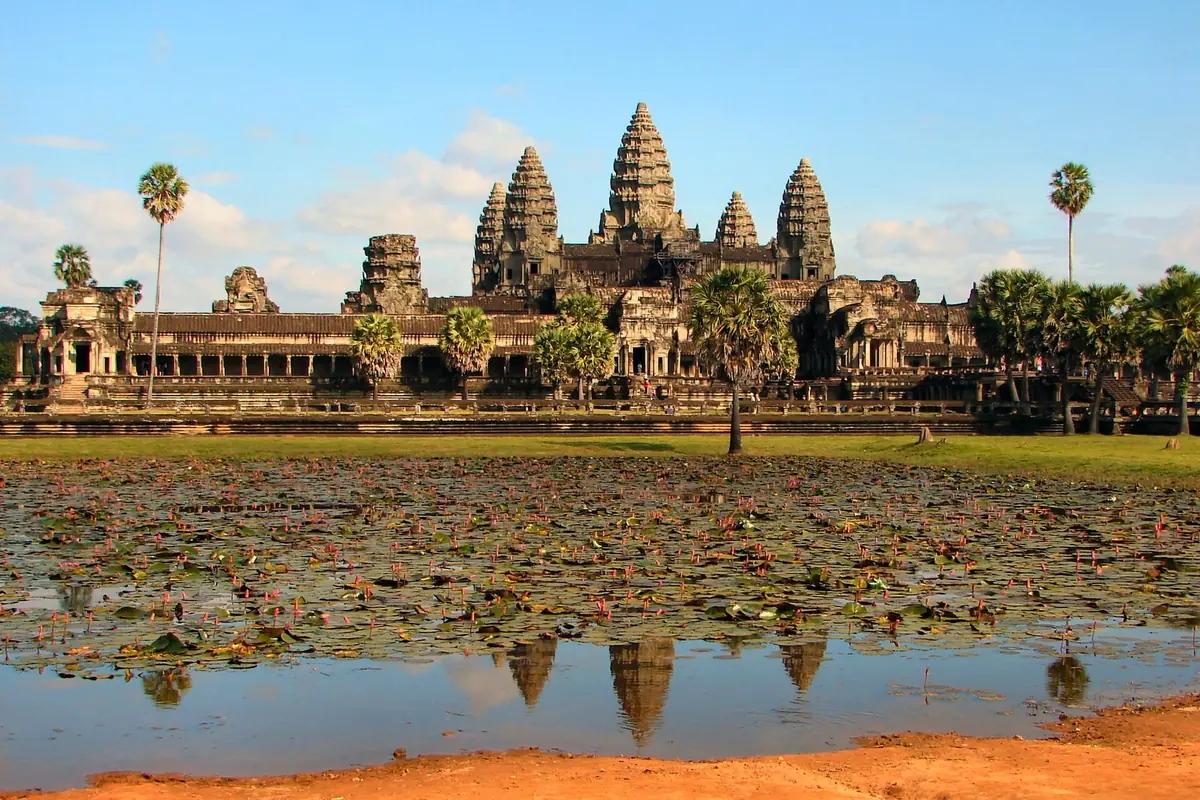
Everything begins at Angkor Wat, the largest religious monument ever built and the image most people carry of Cambodia before they arrive. Constructed in the twelfth century as a Hindu temple to Vishnu and later tended by Buddhist monks, it sits inside a vast moat and is approached along a stone causeway that seems deliberately designed to make visitors feel small. Arrive before dawn, take a spot beside the reflecting pool on the west side, and watch five lotus-bud towers resolve out of the dark; then walk the outer gallery, where hundreds of metres of bas-reliefs tell the story of the Churning of the Ocean of Milk with astonishing detail.
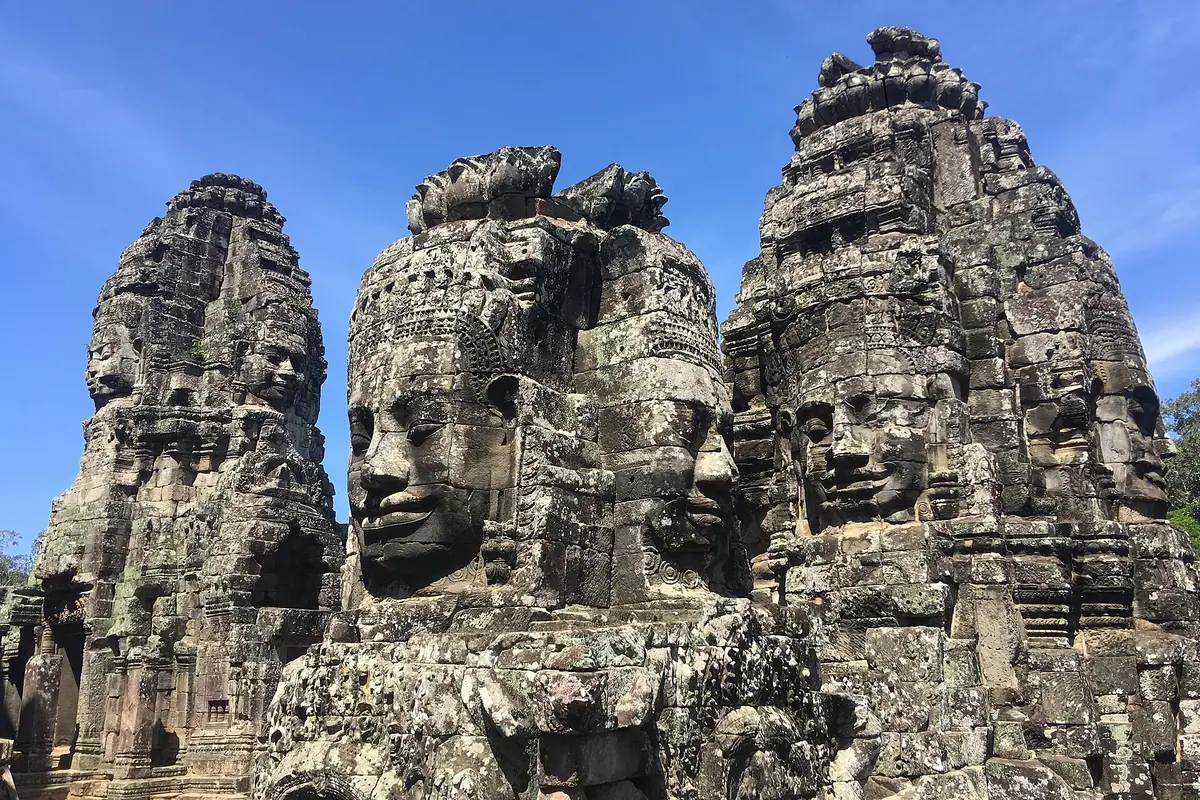
The park around it covers a landscape large enough to swallow a city, and the surrounding temples deserve more than a hurried afternoon. Angkor Thom, the last great capital, hides the Bayon, whose towers are carved with serene faces gazing in every direction, along with the Baphuon, the Terraces of the Elephants and the Leper King. Ta Prohm is the one everyone photographs, its galleries slowly strangled by silk-cotton roots, while Banteay Srei, twenty minutes further out, is a small tenth-century jewel of pink sandstone covered in carvings so fine they look engraved rather than sculpted. Preah Khan, Neak Pean and Pre Rup fill the quieter hours.
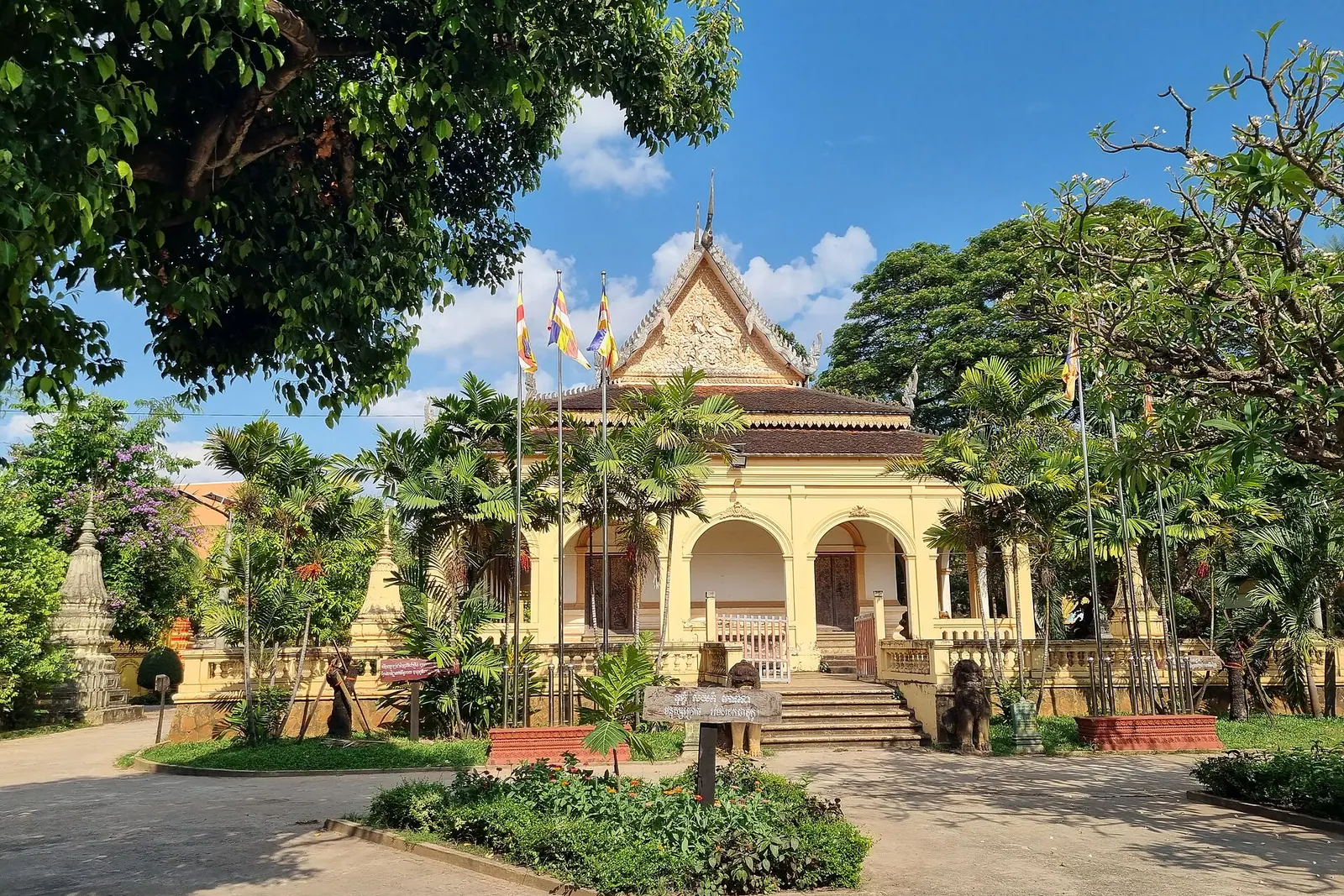
Practically speaking, one day covers the headline sights and feels rushed; three days lets you spread temples across mornings and late afternoons and still have an evening free. Bring a sarong or longer trousers and keep shoulders covered, because the dress code is enforced at the upper levels of Angkor Wat. Tuk-tuk drivers who work the temple circuit know the light and the crowds better than any map, and hiring one for the day is the simplest way to see the loop. The dry months from November to April offer the most reliable weather, though the green season brings fuller moats, emptier galleries and dramatic skies.
Siem Reap Town and the Floating World of the Tonlé Sap
Siem Reap began as a gateway and became a destination in its own right. The old market and the lanes around it are packed with silk stalls, woodcarving workshops and small galleries, and the riverside is lined with low-key cafes serving fish amok steamed in banana leaf, lok lak beef with lime and pepper, kuy teav noodle soup at breakfast and num pang baguettes at any hour. Add the Angkor National Museum and the temple carvings at Wat Damnak, and you have a comfortable base that can absorb several days without boredom. In the evening there is the night market and a homegrown circus whose young performers train locally.
The other half of Siem Reap's world is water. The Tonlé Sap is Southeast Asia's largest freshwater lake, and during the monsoon it swells so dramatically that the river feeding it reverses direction. Villages like Kampong Khleang and Kampong Phluk are built on stilts eight metres and taller, so the same house sits high above dry ground in April and floats level with the treetops by September. Boat trips thread through flooded forest, past schoolhouses, petrol pumps and pig pens raised on poles, and pause at Prek Toal, a bird sanctuary where cormorants, pelicans and painted storks gather in numbers worth the early start.
Beyond the water, day trips fill the gaps between temple mornings. Phnom Kulen has waterfalls and a riverbed carved with ancient figures, Kbal Spean hides similar carvings under a jungle stream, and Beng Mealea is a sprawling ruin half-consumed by vegetation that you explore by scrambling over fallen stone. Banteay Srei combines well with a stop at a sobering landmine museum on the way back. Keep an eye on water levels and time your lake trip for the season you are actually visiting, since low water changes both the boats and the scenery.
Phnom Penh: Palaces, Markets and Memory
Cambodia's capital moves at the speed of motorbikes and street grills, but its grandest sight is a quiet one. The Royal Palace, with its golden spires and manicured courtyards, sits beside the Silver Pagoda, whose floor is paved with silver tiles and whose glass case holds an emerald Buddha. Murals along the surrounding galleries retell the Reamker, the Khmer epic, in panel after panel of paint and gold leaf. Nearby, the National Museum gathers the country's finest Angkorian sculpture in a courtyard building where the air smells of stone dust and frangipani, and Wat Phnom, on its small hill, marks the spot from which the city takes its name.
Phnom Penh is also where Cambodia asks visitors to understand its recent past. Tuol Sleng, a former high school converted into a prison, and the memorial site at Choeung Ek outside the city are both difficult and essential; allow half a day, keep your voice low, and give yourself space afterwards. They are frequently paired with a slow afternoon by the river to balance the day.
For lighter hours, the Art Deco domes of the Central Market shelter everything from gold to dried fish, while the Russian Market is the place for silk, carved sandalwood and secondhand curiosities. Sunset cruises drift past the confluence where the Mekong meets the Tonlé Sap, and Koh Dach island, upriver, is a short ferry hop to silk weavers working handlooms. The stupas on the hill at Oudong make an easy half-day escape. Two full days is usually enough here before moving on.
The Southern Coast: Kampot, Kep and the Islands
Head south and the mood loosens. Kampot is a river town of faded shophouses and evening cricket chirps, famous for the peppercorns grown on vines around it, which you can taste straight off the plant at a working farm. Above the town, Bokor National Park climbs into cloud, past an abandoned hill station whose concrete skeleton looms out of the fog, with waterfalls and long views toward the Vietnamese border. Down the coast, Kep is a small, salty place of crab shacks and a market where your lunch is pulled live from a tank, with Rabbit Island a lazy boat ride offshore.
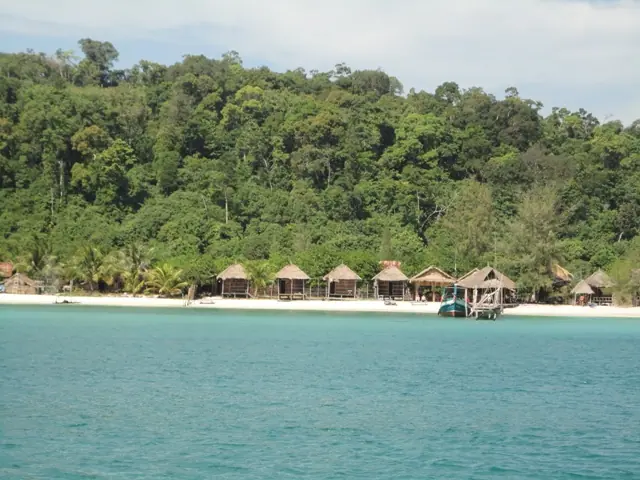
The islands are the reason many travellers extend their trip. From the mainland port at Sihanoukville, boats run to Koh Rong and its quieter neighbour Koh Rong Sanloem, where the beaches at Long Set and Sok San stretch white and empty for long distances. This is simple living — wooden bungalows, generators that switch off at night, and a sky so unlit that the bioluminescent plankton sparkle when you swim after dark. Snorkelling, kayaking and doing very little are the main activities, and that is entirely the point.
Timing matters here more than inland. Seas are calmest and the water clearest between November and April, which is also peak season, so book bungalows ahead for December and January. The monsoon months bring heavy rain, cheaper rates and reduced boat schedules, and some smaller islands effectively close down. Take cash with you, since card machines are rare and unreliable once you leave the mainland.
Kratie, Mondulkiri and the Wild Northeast
Cambodia's east is where the country becomes forest, red dirt and open sky. Kratie, a slow Mekong town of colonial shophouses, is the base for one of the region's genuine privileges: watching Irrawaddy dolphins surface in a deep pool near Kampi. Numbers are small, which makes every sighting matter — go at dawn or late afternoon in the dry season, when the river is low and the animals are easier to spot. Back in town, cycling across to Koh Trong island and pedalling between rice fields and pomelo orchards is a fine way to spend an afternoon, and the sunsets over the river are spectacular.
Further inland, Mondulkiri rises into rolling hills and pine forest around Sen Monorom, home to Bunong communities and a handful of elephant sanctuaries where visitors walk with the animals rather than ride them. The waterfall at Bou Sra is the region's showpiece. Beyond that lies Ratanakiri, wilder still, with the crater lake of Yeak Laom near Banlung — a near-perfect circle of clear green water ringed by forest — and the remote trails of Virachey National Park. Roads are rough, travel is slow, and this is exactly why so few people come.
The north holds temples that reward the detour: Preah Vihear, perched dramatically on a cliff edge along the Thai border, the stepped pyramid of Koh Ker, and the pre-Angkorian brick towers of Sambor Prei Kuk. On the way west, Battambang offers a bamboo train that clatters across the rice fields, colonial architecture, and a bat cave at Phnom Sampeau where millions of bats stream out at dusk. Distances between these places are long, so pick one region and give it real time rather than attempting all of them.
When to Go and How to Travel Cambodia Well
The classic window is November to February, when the rains have gone, temperatures sit comfortably in the twenties and thirties, and the countryside is still green. March to May is genuinely hot, often pushing past 38 degrees, so temples are best tackled at dawn and abandoned by lunchtime. The green season from May to October brings heavy but usually short afternoon downpours, full moats at Angkor, luminous rice fields and far fewer visitors. Two dates to plan around: Khmer New Year in mid-April, when the whole country travels home and buses and hotels fill fast, and the November water festival in Phnom Penh, when boat races draw crowds to the river.
Getting around is straightforward once you accept the distances. Tuk-tuks handle towns, a remork with a driver is ideal for a full day of temples, and private cars with drivers make sense for long provincial hops. Night buses connect the main cities cheaply, and short domestic flights are worth the money if you are short on time. Riel and US dollars circulate side by side, with small notes useful for markets and motorbike taxis; withdraw cash in the cities, because ATMs thin out sharply on the islands and in the northeast.
A few habits will smooth the whole trip. Cover shoulders and knees at temples and remove shoes and hats before entering shrines; avoid touching monks or pointing your feet at Buddha images; ask before photographing people, and use your right hand when handing something over. Drink bottled water, use repellent at dusk, and carry a light rain shell in the wet months. Five to seven days suits Angkor and Siem Reap alone, while two weeks allows a loop taking in Phnom Penh, the temples, the southern coast and one province in the east.
Frequently asked questions
How many days do I need for Angkor Wat?
One very early start covers Angkor Wat, the Bayon and Ta Prohm, but it feels rushed. Three days is the sweet spot, letting you spread the main temples across mornings and add the outer sites such as Banteay Srei, Preah Khan and Beng Mealea. Serious enthusiasts can spend a week exploring the quieter ruins and revisiting favourites in different light.
What is the best time of year to visit Cambodia?
November to February offers the most comfortable weather, with cool mornings, dry roads and green landscapes. March to May is hot and hazy but still workable if you start at dawn. The green season from May to October brings short, intense afternoon rain, fewer crowds, lower rates and dramatic skies over the temples.
Is it easy to get around Cambodia?
Within towns, tuk-tuks and motorbike taxis are cheap and everywhere. Between cities, night buses and private cars with drivers are the norm, and a few short domestic flights link Phnom Penh and Siem Reap. Expect long journeys on rural roads in the northeast, and plan fewer stops than the map suggests.
What should I eat in Cambodia?
Start with fish amok, a coconut and turmeric curry steamed in banana leaf, and lok lak, peppery stir-fried beef served with lime. Breakfast is often kuy teav noodle soup, and num pang baguettes make a good lunch on the move. In Kampot and Kep, order the pepper crab and taste the locally grown peppercorns, which are among the best in the world.
Do I need cash, and what about temple dress codes?
US dollars and Cambodian riel circulate together, and cash remains essential on the islands and in rural areas, so withdraw in the cities. For temples, cover shoulders and knees, remove shoes and hats before entering shrines, and avoid touching monks or pointing your feet toward Buddha images.
Plan it — experiences in Cambodia
Live search, booked directly with trusted providers.
Sort the rest of your trip
Everything for Cambodia, in one place
Stay in Cambodia
Hotels, guesthouses and apartments — compared in one search.
Search hotels
Transfer in Cambodia
Private driver waiting on arrival — no queues, no surprises.
Book a transfer
Stay online in Cambodia
Travel eSIM — data the moment you land, no roaming bills.
Get an eSIMMore guides in Cambodia
Best Time to Visit Cambodia: Seasons, Festivals and When to Book Your Hotel
Cambodia Food, Culture and Local Experiences: An In-Depth Tour Guide
Things to Do in Cambodia: Must-Visit Temples, Cities and Islands
Cambodia in 7 Days: A Flight Itinerary from Phnom Penh to Angkor and the Coast