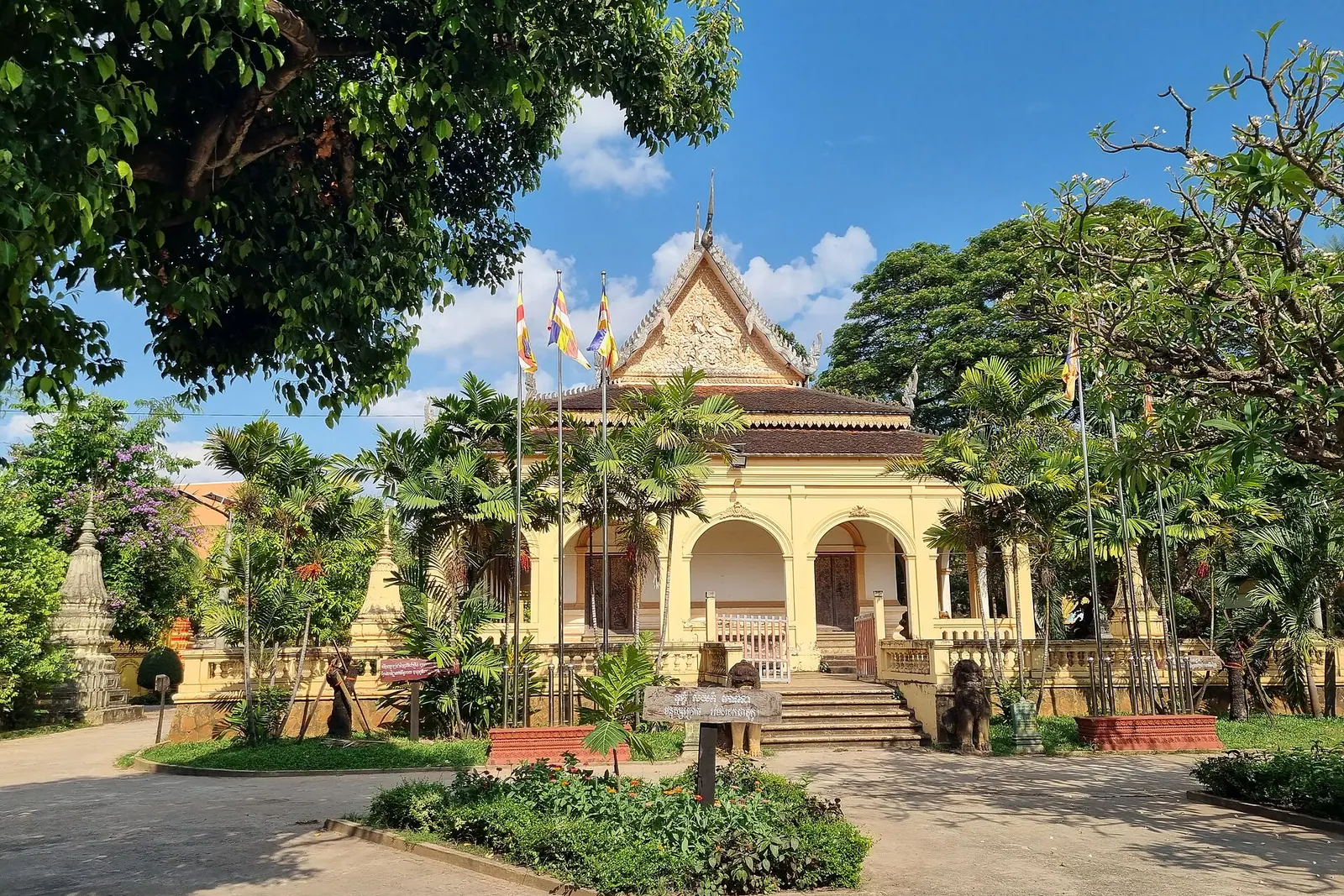
Cambodia is small enough to cross by air in under an hour at a time, which means a single week can hold both the world's most famous temple complex and a sleepy river town or an island with no roads. This itinerary links Phnom Penh, Angkor, the Tonle Sap lake and the southern coast using short domestic hops, with enough breathing room to actually look up.
Days 1–2: Landing in Phnom Penh, Where the Kingdom Begins
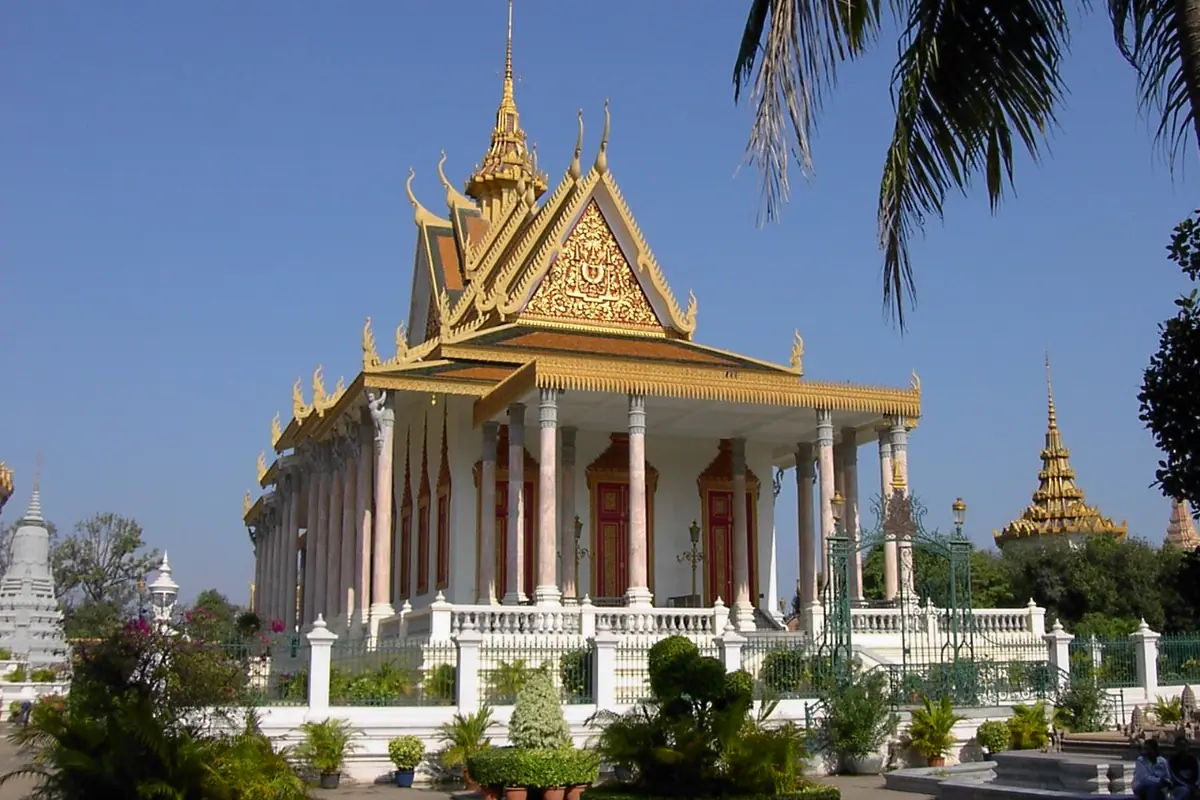
Most long-haul arrivals now touch down at Phnom Penh's Techo International Airport, roughly 30 to 40 minutes by taxi or tuk-tuk from the riverside district where most first-night hotels cluster. Immigration is straightforward for e-visa holders, and the paperwork can be sorted online before you fly. Drop your bags, drink something cold, and spend the late afternoon at the Royal Palace, a confection of gilded roofs and yellow colonnades still used for royal ceremonies, and the adjoining Silver Pagoda, where the floor is paved with thousands of silver tiles and a small emerald Buddha sits on a towering pedestal.
Walk five minutes north to Wat Phnom, the hilltop temple that gave the city its name, then loop through the National Museum's shaded courtyard of Angkorian sculpture. As the light softens, join locals on Sisawath Quay, the riverside promenade at the meeting point of the Mekong, Tonle Sap and Bassac rivers. Sunset here is a full civic event: aerobics classes, skewer carts, children on scooters, and a sky that turns the colour of ripe mango.
Day two belongs to darker history. The Tuol Sleng Genocide Museum occupies a former high school turned prison, and the Choeung Ek memorial sits about 40 minutes out of town among peaceful orchards — both are essential, sobering stops that give everything you see afterwards its proper weight. Recover with a wander through the Art Deco dome of the Central Market, then catch a late-afternoon flight north to Siem Reap, a hop of about 50 minutes that saves you a five-to-six-hour road journey. If you prefer the overland route, leave early and break the trip at the pottery and silk-weaving villages around Kampong Chhnang.
Days 3–5: Angkor Wat and the Temples of the Khmer Empire
Siem Reap–Angkor International Airport sits roughly 50 kilometres east of town, so allow 45 to 60 minutes for the transfer. Buy your Angkor pass in town or at the gate — the options are a one-day ticket, a three-day pass usable within a ten-day window, and a seven-day pass for the seriously obsessed — and decide now that you will not see everything. Start with sunrise at Angkor Wat itself: arrive by 5am, take a spot beside the reflecting pool on the north side, and watch five lotus towers assemble themselves out of the dark. Stay after the crowds leave to read the immense bas-reliefs of the Churning of the Ocean of Milk along the first gallery.
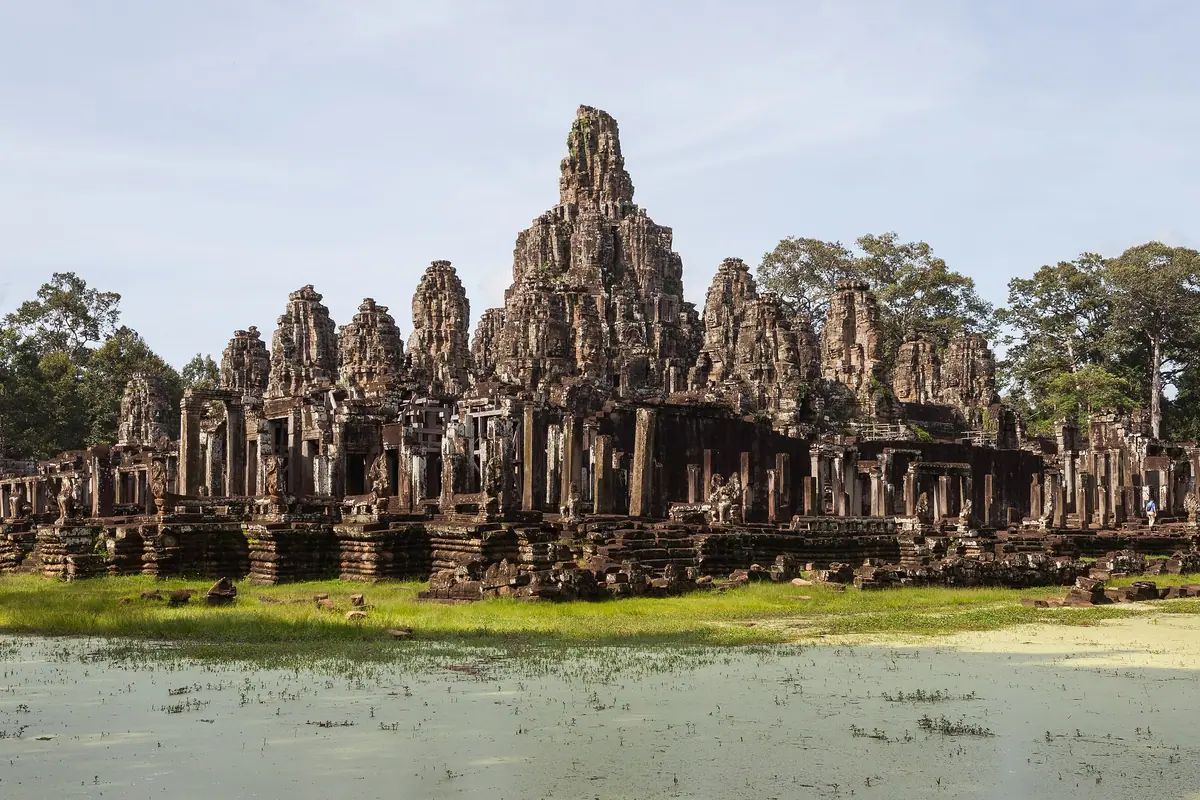
The following morning, enter the walled city of Angkor Thom through the south gate, lined with gods and demons hauling a giant serpent, and walk up to Bayon, where more than two hundred serene stone faces gaze in slightly different directions. Nearby, the Terrace of the Elephants and the Terrace of the Leper King hint at the ceremonial scale of the vanished capital. Then let Ta Prohm do its work on you: silk-cotton roots pour over the doorways here like slow lava, and the effect at mid-morning, when light falls in columns through the jungle, is worth the wait for the crowds to pass.
Use your third temple day for the outliers. Banteay Srei, 30 kilometres northeast, is carved from rose-pink sandstone into patterns so fine they look like lace. Further out, Beng Mealea is a collapsed, unexcavated ruin you scramble over rather than through, and the riverbed carvings at Kbal Spean reward a short forest walk. Back in the main park, Preah Khan and the island temple of Neak Pean are usually quiet, and Pre Rup or Ta Keo give you a sunset without the scrum at Phnom Bakheng. Practical rhythm: gates open around 5am, temperatures hit the mid-30s by noon, so most people temple-hop from dawn to 11am and again from 3pm to dusk.
Day 4: The Tonle Sap and Its Floating Villages
The Tonle Sap is the largest freshwater lake in Southeast Asia, and it behaves strangely: in the wet season the Mekong backs up into it and swells it to several times its dry-season size. That rhythm shapes everything on the water. From Siem Reap, a one-to-one-and-a-half-hour drive brings you to Kompong Khleang, where houses stand on stilts up to ten metres tall and the whole village seems to hover above the plain in the dry months. Boat trips run two to three hours and pass fish-processing sheds, floating schools and families navigating channels between front doors.
Kompong Phluk offers a different spectacle, a flooded forest you glide through by canoe when the water is high, between August and November. Birdwatchers should aim instead for the Prek Toal sanctuary, reached by a longer boat ride; the dry, cooler months from December to April concentrate waterbirds — painted storks, pelicans and ibises — into shrinking pools where they are easy to see. Whatever you choose, negotiate the trip through your guesthouse or a local operator rather than a commission-driven middleman, and go for the late-afternoon departure so you finish on open water with the sun going down behind the mangroves.
A quiet word on comfort: the lake is working water, not a theme park. Expect low seats, engine noise and a life jacket that has seen better days. Bring water, sun cover and small notes for the boat crew.
Day 6: Flying South to Sihanoukville, Koh Rong and Kampot
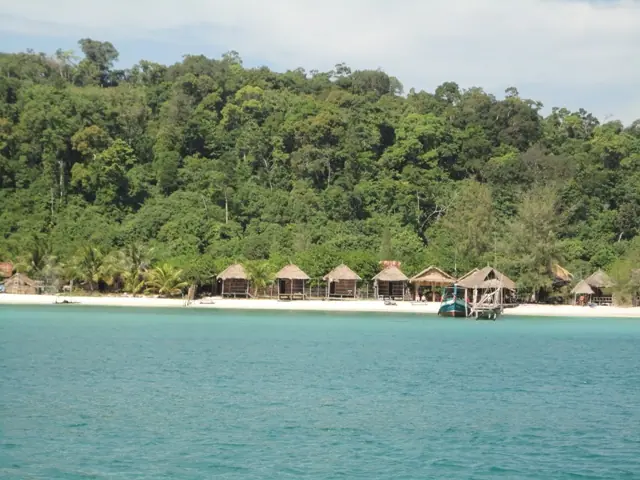
A one-hour flight from Siem Reap lands you at Sihanoukville on the Gulf of Thailand, transforming the trip from temple dust to sea air in a single morning. A word of warning: the port city itself has been remade by casino towers and construction, and most travellers treat it purely as a transfer point. From the main pier, fast ferries reach Koh Rong in about 45 minutes and quieter Koh Rong Sanloem in roughly an hour. Both islands have long pale beaches, bioluminescent plankton on dark nights, and a refreshing absence of traffic — pick a bay, unpack, and do very little.
If islands feel too idle, head instead to Kampot, a two-hour drive east, where shophouses lean over a slow green river and pepper farms climb the hills behind. Rent a scooter for the day and ride up to Bokor National Park, a fog-wrapped French hill station with an abandoned hotel and wide views over the coast, then eat crab at the market in nearby Kep. Between November and March the weather is dry and the sea calm; from June to October you get bigger swells, greener hills and occasional ferry cancellations, so keep a buffer day before any onward flight.
Note that Sihanoukville's airport is also the fastest route to Ream National Park, a mangrove-and-island reserve with boat trips and empty beaches that almost nobody visits.
Day 7: The Flight Home — Routing, Timing and Practical Wisdom
Most international departures leave from Phnom Penh, so day seven usually means a short coastal flight or road transfer back to the capital, leaving a generous gap before your long-haul connection. Domestic schedules in Cambodia are thin — a handful of flights a day on the national carrier and a few budget operators — and they change with the seasons, so build your week around fixed flight times rather than improvising. Turboprop services often carry tighter baggage allowances than you are used to; weigh your bag before you reach the check-in desk.
Timing is everything. The cool, dry months from November to March are the most comfortable for temple-hopping, with clear skies and evening temperatures that make outdoor dinners pleasant. April is punishingly hot, sometimes past 40°C, though Khmer New Year in mid-April fills the country with water fights and family celebrations. The green season, May to October, brings lush rice fields, reflective moats at Angkor, lower room rates and short, dramatic afternoon downpours rather than all-day rain.
If your itinerary has room to flex, two detours are worth trading a coast day for: Battambang, where a bamboo train rattles through the rice paddies and a circus school stages acrobatics in a garden courtyard, and Kratie on the Mekong, where you can take a small boat to watch critically endangered Irrawaddy dolphins surface at Kampi. Both are reachable by road from Siem Reap or Phnom Penh, which keeps your flights simple. Pack light, breathable clothing that covers shoulders and knees for temple visits, insect repellent for dusk, and a willingness to start before sunrise — in Cambodia, the early hours are consistently the best ones.
Frequently asked questions
Do I need a visa to visit Cambodia?
Most visitors can apply for an e-visa online before travelling or get a visa on arrival at the major airports. Your passport should be valid for at least six months and have blank pages for the stamp. Keep a printed copy of your approval and a passport photo with you, and carry small US dollar notes for the fee, since dollars are widely accepted alongside the local riel.
Are there domestic flights within Cambodia, and how long are they?
Yes, but the network is small and schedules shift seasonally. Phnom Penh to Siem Reap takes about 50 minutes, Siem Reap to Sihanoukville around an hour, and Phnom Penh to Sihanoukville roughly 45 minutes. Flights are usually morning and late-afternoon, so plan your days around them rather than assuming hourly departures. Roads are an alternative, but journeys of five to seven hours make flying worthwhile on a one-week trip.
What is the best time of year to fly to Cambodia?
November to March offers the driest, coolest conditions and the clearest temple sunrises. April is the hottest month, with temperatures that can exceed 40°C, while May to October is the green season: heavy but usually brief afternoon rain, vivid landscapes, quieter sites and lower accommodation rates. If you visit in the wet months, book morning flights where possible and allow a spare day before any international departure.
How many days do I need at Angkor Wat?
Three days gives you a comfortable mix of the headline temples and the quieter outliers. A one-day pass works only if you accept a whirlwind, while a seven-day pass suits repeat visitors and photographers chasing specific light. Whichever you choose, start at dawn, break during the midday heat, and return in the late afternoon — that rhythm beats trying to see everything in one long, exhausting push.
What should I pack and know before I go?
Bring light, breathable clothing with sleeves and hems that cover shoulders and knees for religious sites, a light layer for air-conditioned flights, sun protection, mosquito repellent and rehydration salts. Drink bottled or filtered water, use reef-safe sunscreen on the islands, and keep a small bag of low-denomination dollar notes for boats, tuk-tuks and temple cafés. Tipping is not obligatory but is appreciated for guides and drivers.
Sort the rest of your trip
Everything for Cambodia, in one place
Stay in Cambodia
Hotels, guesthouses and apartments — compared in one search.
Search hotels
Transfer in Cambodia
Private driver waiting on arrival — no queues, no surprises.
Book a transfer
Travel insurance
Medical cover, delays and lost baggage — sorted before you go.
Get coveredMore guides in Cambodia
Best Places to Visit in Cambodia: Temples, Coast and Wild Northeast
Best Time to Visit Cambodia: Seasons, Festivals and When to Book Your Hotel
Cambodia Food, Culture and Local Experiences: An In-Depth Tour Guide
Things to Do in Cambodia: Must-Visit Temples, Cities and Islands