Bahrain is a small island with an unusually long memory — a place where a 4,000-year-old Dilmun capital, a Portuguese-era sea fort and a modern skyline of glass and steel all sit within a half-hour drive of each other. Few destinations pack this much archaeology, coast and desert into so little ground. Here is how to see the best of it.
Begin in Manama: Bab Al Bahrain, the Souq and the National Museum
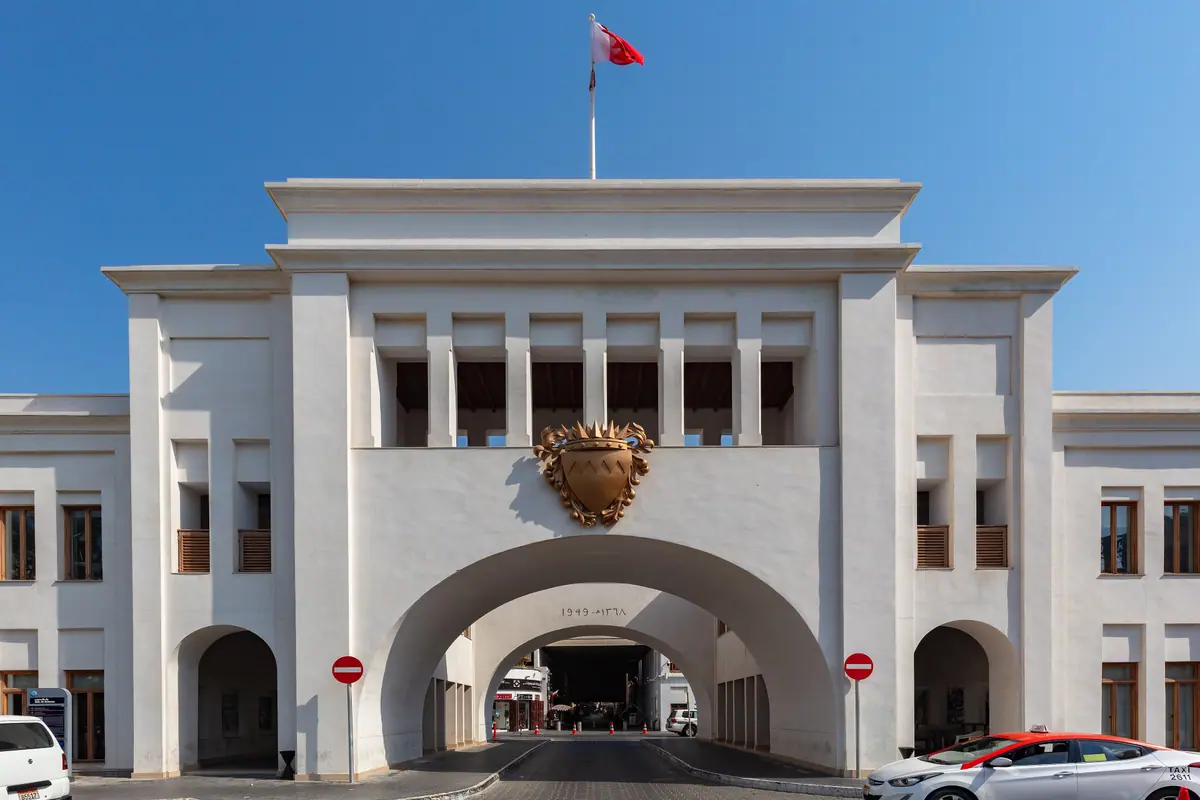
Start where the island starts for most visitors: at Bab Al Bahrain, the pale arched gateway built in 1945 to mark the point where the sea once met the market. It still frames the entrance to Manama Souq, and stepping through it feels like stepping into another decade. Behind the arch, narrow lanes fan out into the gold souq, fabric stalls, spice shops and trays of saffron-and-rosewater Bahraini halwa. Come in the late afternoon or after 7pm, when the heat lifts and the lanes fill; haggling is expected, though prices on gold are set by weight.
A short walk along the waterfront brings you to the Bahrain National Museum, the best single introduction to the country's story. Its Hall of Dilmun covers the Bronze Age civilisation that traded copper and pearls across the Gulf, the Hall of Graves reconstructs a burial mound you can walk into, and the Hall of Customs and Traditions captures pearling, fishing, weddings and the old courtyard house. Allow two to three hours, and check the day's opening hours before you go, as one weekday is usually closed. Next door, the Bahrain National Theatre sits right on the water, a 1,001-seat landmark that hosts Arabic music and drama — worth a look even if you only admire the building from the corniche.
Finish in Juffair at the Al Fateh Grand Mosque, one of the largest mosques in the world, with room for roughly 7,000 worshippers under the biggest fibreglass dome ever built. Non-Muslim visitors are welcomed on guided tours outside prayer times, and women are lent a black abaya at the door. Shoes come off, shoulders and knees stay covered, and the cool Italian marble underfoot is a relief after a morning in the sun.
Qal'at al-Bahrain and the Dilmun Legacy
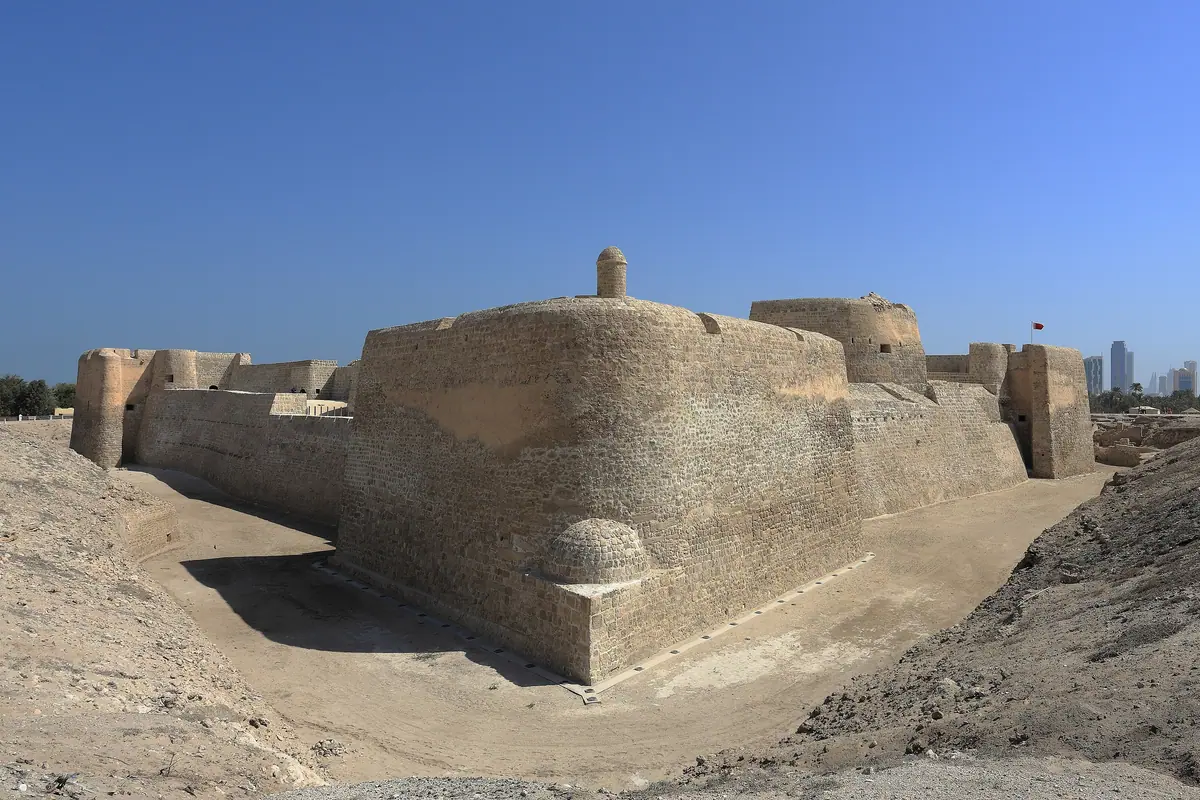
The island's headline sight is Qal'at al-Bahrain, the Bahrain Fort, about four kilometres west of central Manama on the coast at Karbabad. What you see is a low, honey-coloured mound rising from the palm gardens — but that mound is artificial, built up over centuries from seven layers of settlement, and it was the capital of the Dilmun civilisation from around 2300 BC. A Portuguese fort was later dropped on top in the sixteenth century, and its walls and corner towers still ring the summit. Wander the excavated streets below, then climb for the view back across the sea to Manama.
Go late in the afternoon, when the light turns gold and the sea breeze arrives; the site is quiet, exposed and best explored in an hour and a half. On-site there is a small museum explaining the layers, plus a café in a restored building. Nearby, the A'ali burial mounds spread across the middle of the island — a vast ancient cemetery of royal and ordinary Dilmun graves, some 4,000 years old, that once numbered well over a hundred thousand. There is no gate or ticket; you simply pull over and walk among them in the early morning.
If you have a taste for the deep past, add the Barbar Temple on the north coast, three superimposed temples built around a freshwater spring from around 3000 BC, and the Al Khamis Mosque on the edge of Bilad Al Qadeem, founded as far back as the seventh century and one of the oldest in the Gulf, recognisable by its twin minarets.
Muharraq and the Pearling Path
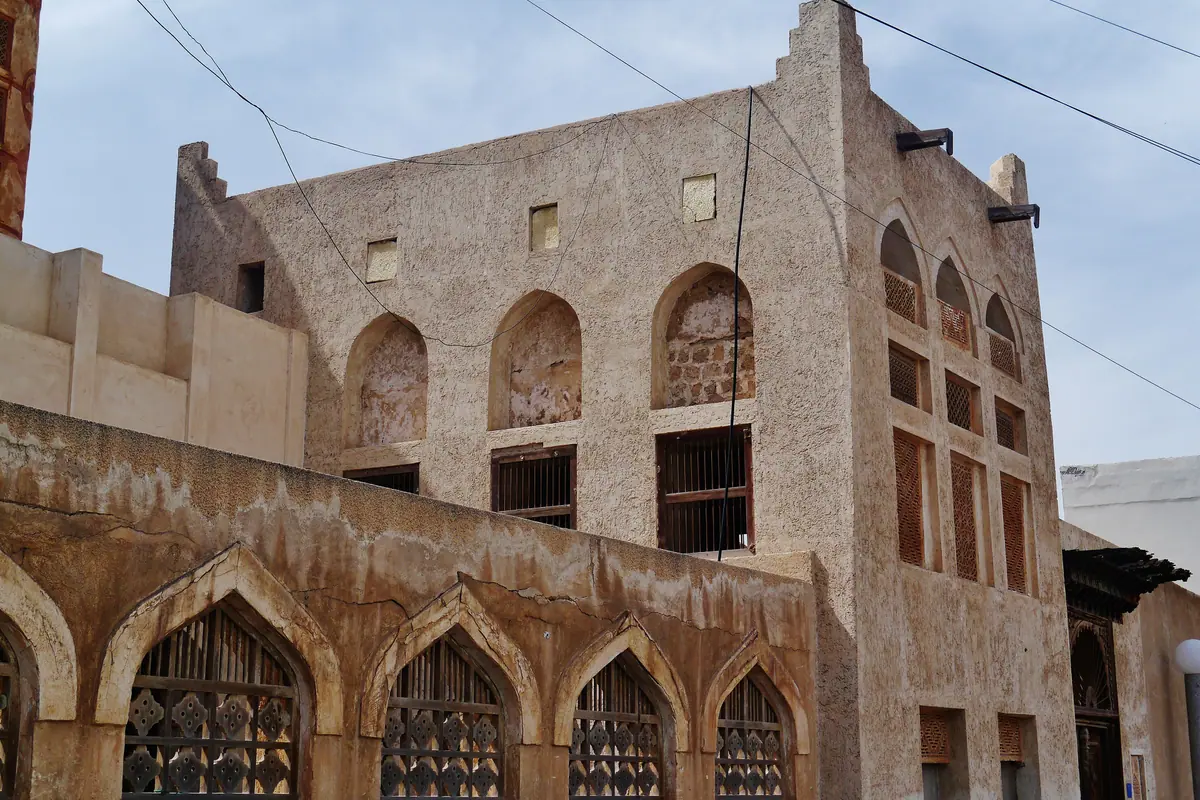
Before oil, Bahrain's wealth came from oysters, and Muharraq, the old capital until 1932, was its engine. The Pearling Path is a 3.5-kilometre walking route threading through the town, linking around seventeen historic buildings, the old seafront and three offshore oyster beds — a story important enough to earn world heritage recognition. Pick up the trail at any point and drift between coral-stone houses with gypsum trim, wind towers designed to catch the Gulf breeze, and the shaded alleyways known locally as sikkas.
Don't miss Siyadi House, the grandest of the merchant residences, with its carved arches and separate majlis where the pearl trader received clients. A handful of restored houses along the route hold small museums devoted to traditional music, printing heritage and daily life, and most are free or ask only a token entry. Arad Fort, a compact fifteenth-century stronghold on the Muharraq shore, is floodlit at night and makes an easy end to the walk.
Muharraq's own souq is smaller and more workaday than Manama's, and the better for it: fruit stalls, tailors, cafés serving Bahraini breakfast of eggs, tomato and bread. This is also a good place to eat grilled hammour or safi fish, machboos and muhammar, the sweet rice that shows up alongside almost every local meal.
Into the Desert: The Tree of Life, Jebel Dukhan and the First Oil Well
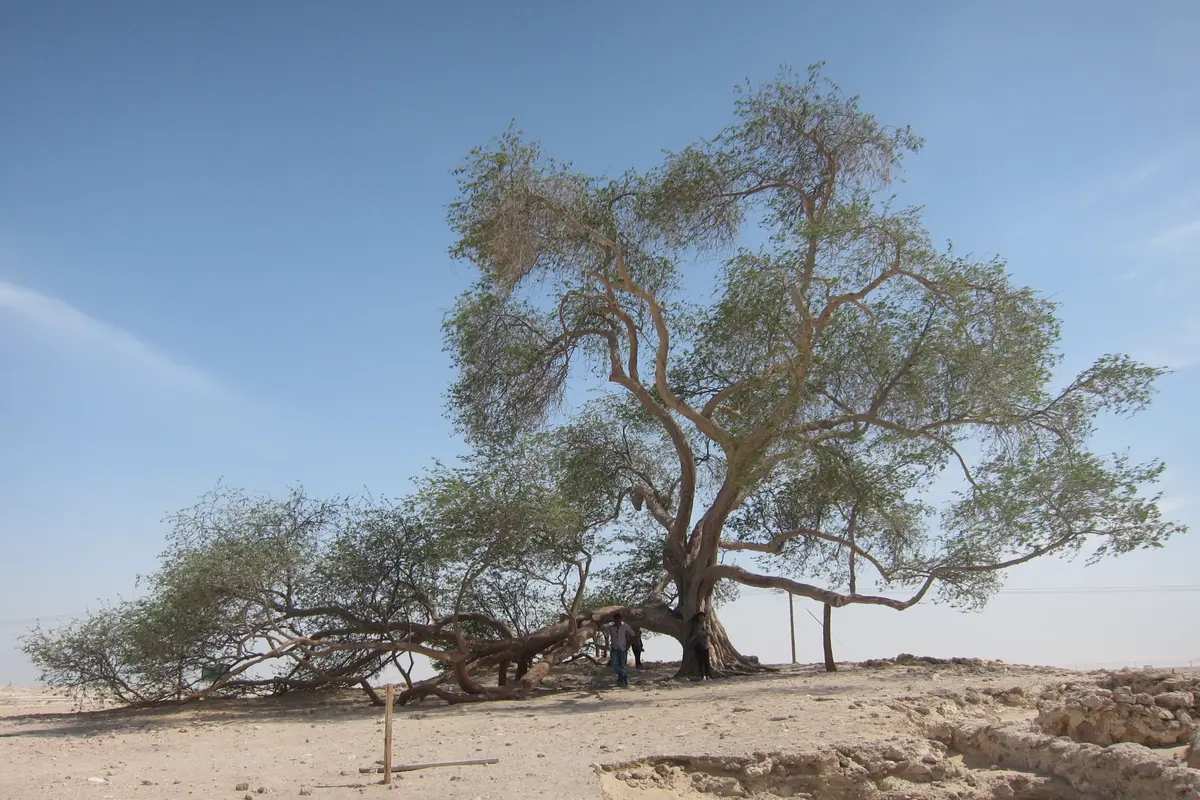
Southern Bahrain is a flat, pale expanse of sand and scrub, and in the middle of it stands the Tree of Life — a lone mesquite roughly 400 years old, ten metres tall, thriving with no obvious water source anywhere near it. No one has convincingly explained how it survives, which is exactly why locals and visitors make the pilgrimage. It sits about two kilometres from Jebel Dukhan, the island's highest point at around 134 metres, nicknamed the Mountain of Smoke for the haze that often veils it.
Go at sunrise or in the last hour of daylight. Midday here is punishing, there is no shade, and the heat radiates off the sand. The drive from Manama takes about 45 minutes, so pair it with a wider southern loop: the First Oil Well, where Bahrain struck oil in 1932 as the first Gulf state to do so, and the small Oil Museum beside it with vintage drilling gear and photographs of the field's early days.
Nearby at Sakhir, the Bahrain International Circuit has hosted top-tier motorsport since 2004 and became the first venue to run a floodlit night race. Tours of the track run on non-event days and track experiences are available for those who want to drive it themselves. Further along the same road, Al Areen Wildlife Park keeps Arabian oryx, gazelles and desert birds in a reserve that also shelters flamingos in season.
Coast, Islands and the Modern Skyline
Bahrain is an archipelago of more than thirty islands, and the water is the reason many people come. Jarada Island is the classic day out: a pure white sandbar that appears only at low tide and vanishes again, reached by boat from the Manama area or the southern coast. Trips usually run in the cooler months, and you should book a day or two ahead in winter. The Al Dar Islands, around twenty minutes by boat from the mainland, offer calm swimming, sunbeds and basic watersports; the Hawar Islands, far to the south-east near the Qatari coast, are a quiet reserve known for dugongs, flamingos and unspoiled beaches, reached on longer organised trips.
Bahrain also keeps its pearling heritage alive on the water. Traditional pearl-diving excursions take small groups out to the natural banks with a diver, showing how the oyster was raised, opened and the pearl extracted — a hands-on taste of the trade that built the island. Divers still work the beds, and Bahraini natural pearls remain prized. Kitesurfing and kayaking are popular around Budaiya and the northern beaches, while scuba divers head for the reefs and wrecks scattered offshore.
Back in the city, the skyline tells the newer story: the twin towers of the Bahrain World Trade Center, with their three giant wind turbines suspended between them, and the arched Bahrain Financial Harbour framing the bay. A stroll along the Manama corniche at dusk, with the causeway lights on the horizon, is the easiest way to see both in one sweep.
When to Go, How Long and What to Expect
The comfortable season runs from November to March, when daytime temperatures sit around 18–25°C and evenings need a light jacket. December and January are the coolest and busiest, and National Day in mid-December fills the calendar with celebrations. Spring brings the motorsport season and occasional dust-laden winds that can haze the sky for a day or two. From June to September, expect 40°C-plus heat with heavy humidity — plan mornings and evenings outdoors and save the middle of the day for museums, mosques and the city's air-conditioned shopping districts.
Three to four days is enough to cover Manama, the fort, Muharraq's Pearling Path and the desert south at a relaxed pace; add a fifth or sixth day if you want a boat trip to the islands or a serious dive. Roads are good and driving is on the right, but public transport is limited, so a rental car or a hired driver makes the most of your time — nothing on the main island is more than about 45 minutes away. The weekend falls on Friday and Saturday, and many shops stay shut on Friday morning before reopening after prayers.
Dress modestly in public: loose, covering clothing is the norm, and women should carry a scarf for mosques, though an abaya is provided at Al Fateh Grand Mosque. The currency is the Bahraini dinar, divided into a thousand fils, and licensed hotels and restaurants serve alcohol — a notable difference from neighbouring Saudi Arabia. If you are crossing the King Fahd Causeway from the eastern province, budget extra time at the border on Thursday evenings and Friday mornings, when the causeway is at its busiest.
Frequently asked questions
How many days do you need in Bahrain?
Three to four days covers the essentials comfortably: Manama's souq and national museum, Qal'at al-Bahrain, the Pearling Path in Muharraq and the desert south. Add a day or two if you want island boat trips, diving or a day at the Bahrain International Circuit.
When is the best time to visit Bahrain?
November to March, when days are mild at roughly 18–25°C. December and January are coolest and most popular. Summer from June to September is brutally hot and humid, so sightseeing shifts to early mornings, evenings and indoor attractions.
Do you need a car to get around Bahrain?
It helps a great deal. Public buses are limited and infrequent, while the island is small enough that a rental car or hired driver puts everything within about 45 minutes. Ride-hailing is easy to find in Manama and its suburbs but thinner out in the desert south.
Is Bahrain good for beaches and water activities?
Yes. Jarada Island's tide-dependent sandbar and the Al Dar Islands are the most accessible beach escapes, the Hawar Islands suit wildlife and quiet shores, and pearl-diving excursions, kitesurfing, kayaking and scuba diving are all on offer along the coast.
Can non-Muslims visit the mosques in Bahrain?
They can. The Al Fateh Grand Mosque in Juffair runs free guided tours for visitors outside prayer times, and women are lent an abaya at the entrance. Cover shoulders and knees, remove your shoes, and avoid visiting during Friday prayers, when most mosques are closed to tourists.
Plan it — experiences in Bahrain
Live search, booked directly with trusted providers.
Sort the rest of your trip
Everything for Bahrain, in one place
Stay in Bahrain
Hotels, guesthouses and apartments — compared in one search.
Search hotels
Transfer in Bahrain
Private driver waiting on arrival — no queues, no surprises.
Book a transfer
Stay online in Bahrain
Travel eSIM — data the moment you land, no roaming bills.
Get an eSIM