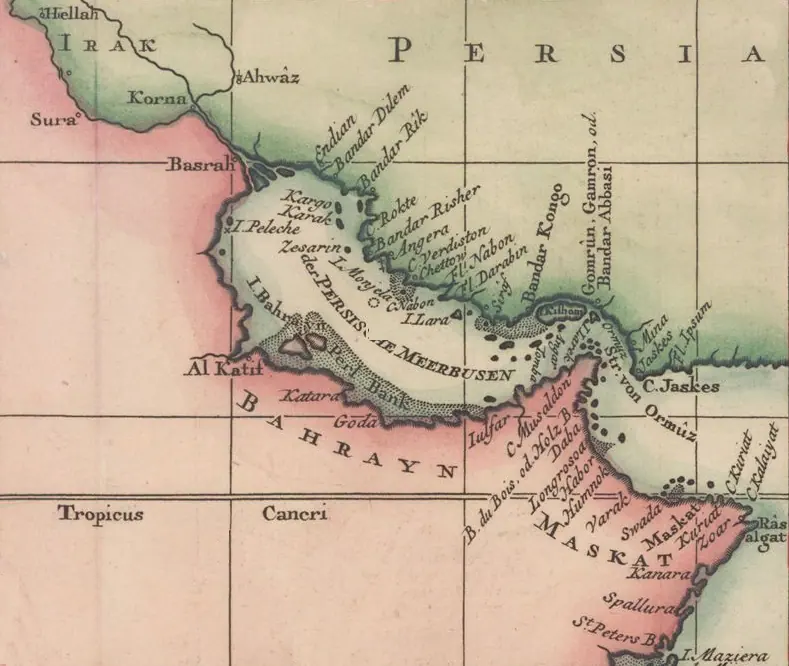
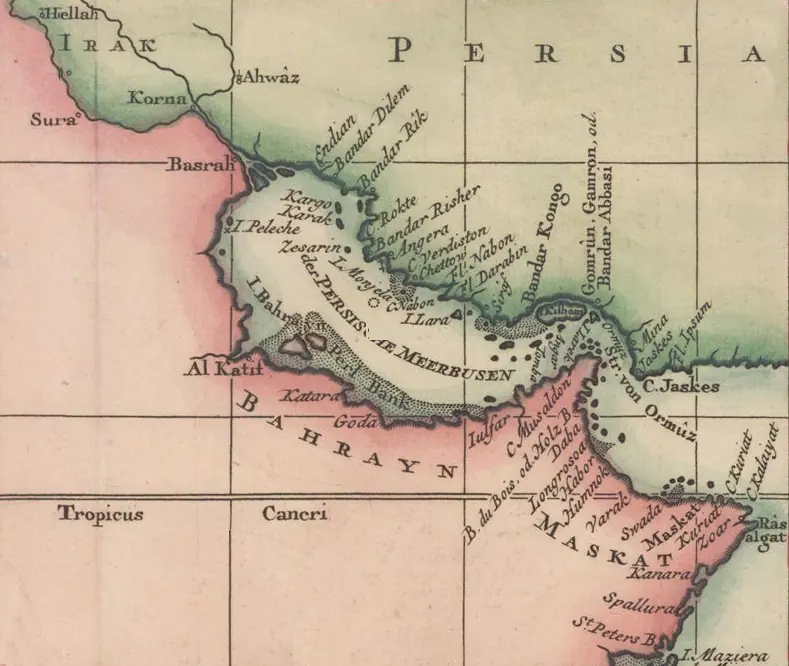
Bahrain is small enough to cross in an hour and layered enough to keep you busy for a week — Dilmun burial mounds, a Portuguese-era sea fort, a lone desert tree with no visible water source, and a pearling trail of merchant houses that still smell of old wood and salt. Fly into Muharraq, hire a car, and let the island unfold slowly rather than treating it as a Gulf stopover.
Arrival in Muharraq: Flights, Transfers and First Impressions
Almost every visit to Bahrain begins on Muharraq, the northern island that holds the international airport. From the arrivals hall it's a short causeway drive into central Manama, typically fifteen to twenty minutes outside rush hour, which means you can land in the afternoon and be drinking tea in a souq before dark. Direct services connect Bahrain with Gulf hubs, several European cities and a dense network of South Asian routes, so a week here slots easily into a longer regional trip. Many nationalities receive a visa on arrival or can apply for an electronic visa in advance; check the rules for your passport and make sure it has at least six months' validity.
Timing matters more than most visitors expect. The sweet spot runs from November through March, when daytime temperatures sit in the low twenties and evenings need a light layer. April, May and October are warm but workable if you front-load sightseeing into early mornings. June to September is genuinely punishing — high humidity and temperatures that push past forty degrees — and outdoor stops like the desert tree or the burial mounds become quick photo stops rather than lingering visits.
The Bahraini weekend falls on Friday and Saturday, which shapes everything: Friday brunch is a local institution, many shops open late, and Sunday to Thursday feels like the working week. The currency is the Bahraini dinar, divided into a thousand fils, and while cards are accepted almost everywhere, small notes are handy in the souqs. Hiring a car at the airport is the single biggest upgrade to your week — fuel is cheap, traffic outside Manama is gentle, and drives run on the right. Ride-hailing covers Manama well but thins out fast once you head towards Sakhir or the west coast.
Base yourself in Manama — Juffair, Seef or the restaurant-dense Adliya district — for the first half of the trip, then consider one night in Muharraq or near Zallaq if you'd rather not retrace the same road twice a day.
Days 1 and 2: Manama's Souqs, Museums and Grand Mosque
Begin where the city begins. Bab Al Bahrain, the arched gateway built in the 1940s, opens directly onto Manama Souq, a knot of lanes selling spices, textiles, electronics and gold. Wander without a plan: the spice sellers near the entrance, the Gold Souq behind them, and the lanes of Little India where you'll find cheap eats and tailors. Bargaining is expected in the smaller shops, though fixed prices are the norm in the gold market, where purchases are weighed and priced against the daily rate.
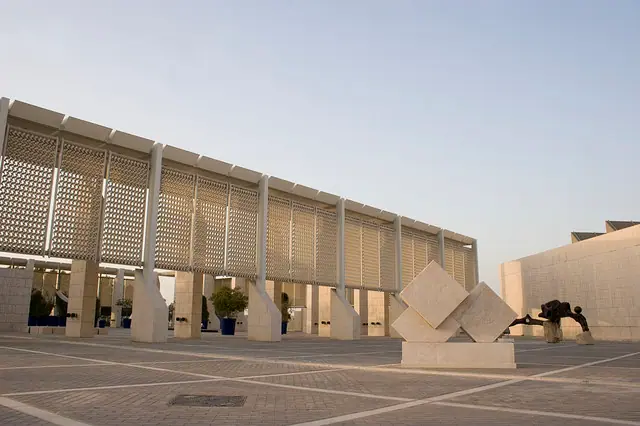
Give the Bahrain National Museum a full morning. Set on the Manama Corniche overlooking the water, it holds Dilmun seals, Barbar pottery and grave goods that make sense of the archaeological sites you'll see later in the week — two to three hours is about right, and the air conditioning is welcome in shoulder season. Afterwards, walk the Corniche, visit Beit Al Qur'an with its collection of manuscript pages and calligraphy, and stop at the Bahrain National Theatre, whose exterior of woven aluminium is worth a look even when nothing is on stage. End the day around Bahrain Bay, where the sail-like Bahrain World Trade Center and the towers of the financial harbour give Manama its skyline.
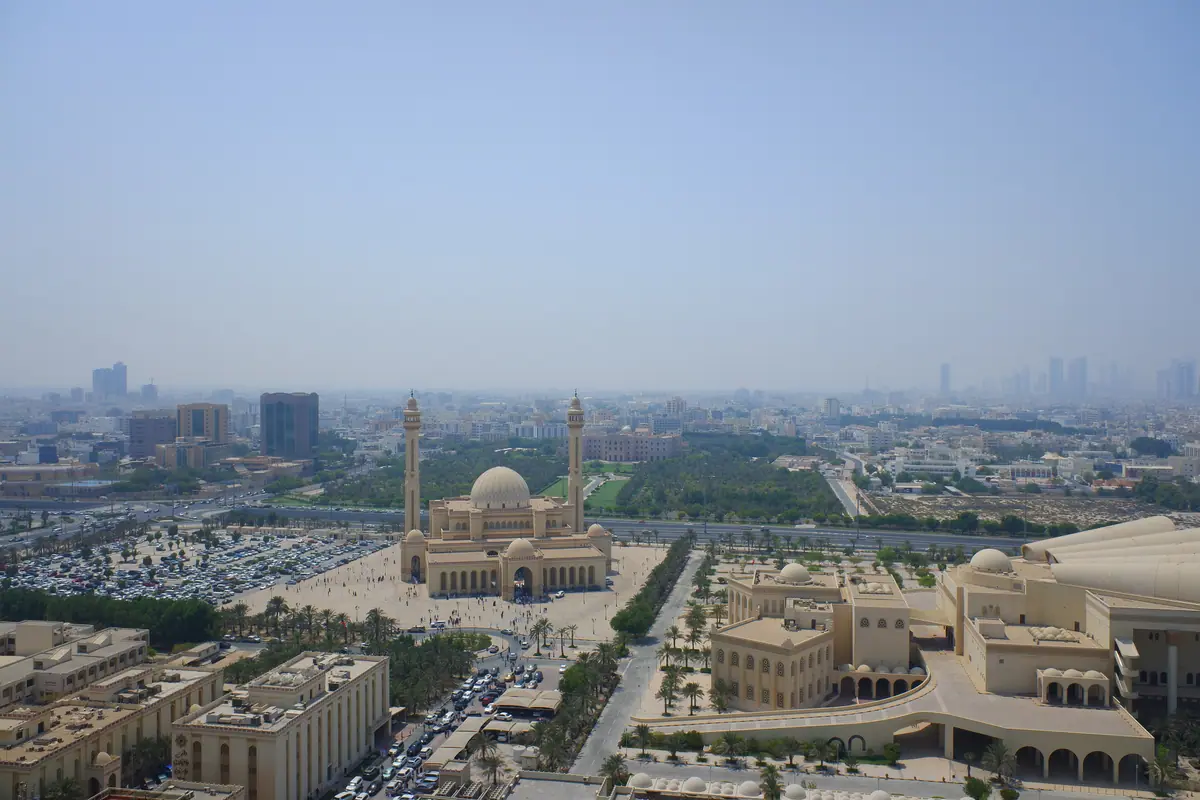
Reserve day two for Al Fateh Grand Mosque, one of the largest mosques in the world and the one Bahraini landmark open to non-Muslim visitors on guided tours. You'll be asked to dress modestly and women are offered an abaya at the door; tours pause around prayer times, so check the schedule when you arrive and avoid Friday midday. From there, drive the Corniche to Bahrain Bay for lunch, then spend the late afternoon in Adliya, where converted houses hold galleries, coffee roasters and some of the island's best restaurants. If your visit lands on a Friday, book a long brunch — it's the closest thing to a national ritual.
Day 3: The Dilmun Trail — Bahrain Fort and the Burial Mounds
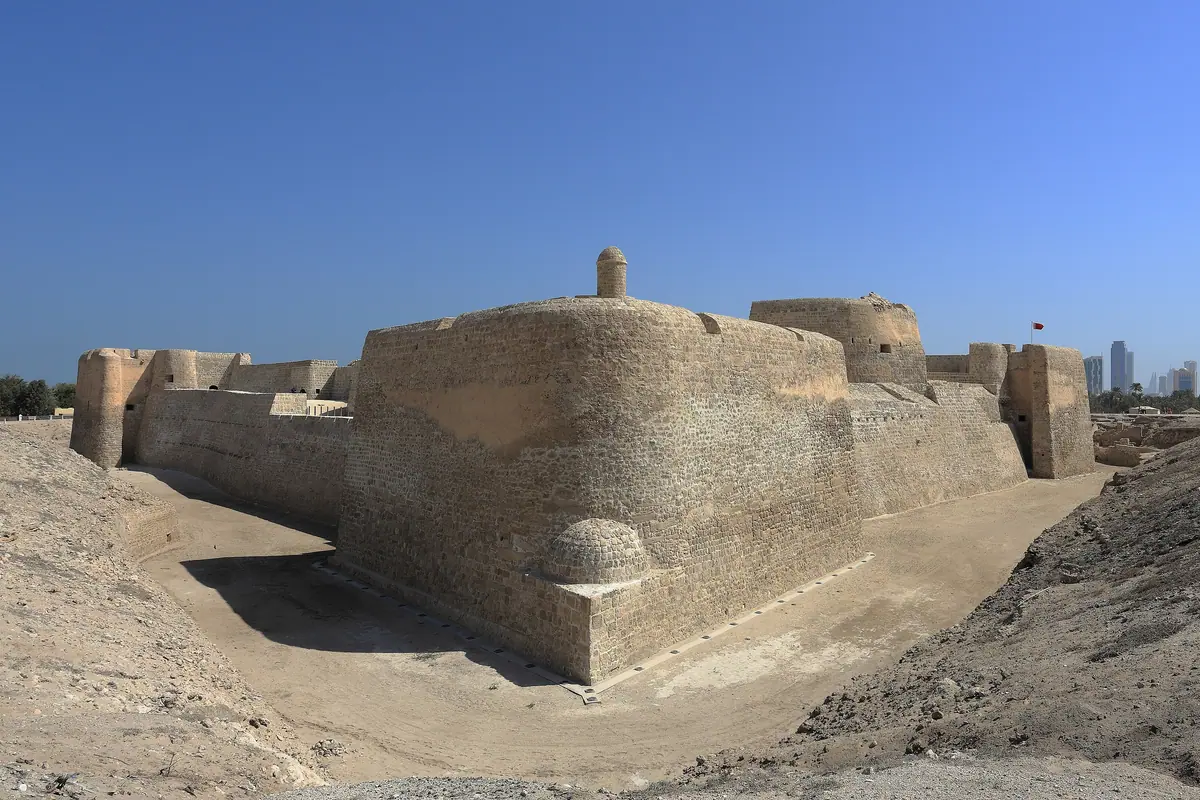
Qal'at al-Bahrain, better known as Bahrain Fort, is the country's must-see: a Portuguese-era fortress built on top of an artificial mound that layers thousands of years of Dilmun, Hellenistic and Islamic settlement. It's a UNESCO World Heritage Site, and the on-site museum explains the excavation before you walk the ramparts. Go in the late afternoon when the light turns golden over the northern coast and the sea breeze arrives; expect ninety minutes to two hours including the museum.
Pair it with the A'ali Burial Mounds, another UNESCO listing and one of the largest prehistoric cemeteries on earth. Thousands of low, honey-coloured grave mounds ripple across the landscape, with a handful of larger royal mounds distinguished by their size. Visit early, before the heat builds, and take the short detour to nearby Barbar Temple, a Dilmun temple rebuilt across three distinct phases beside the northern coast. The Saar settlement, with its circular houses and associated cemetery, is a quieter stop that helps complete the picture of daily life in ancient Dilmun.
This is a compact day — under an hour of total driving — which leaves room for sunset on the Budaiya or Zallaq coast and an evening meal of grilled hamour, the local fish you'll see on almost every menu.
Day 4: Sakhir Desert, the Tree of Life and Oil Well No. 1
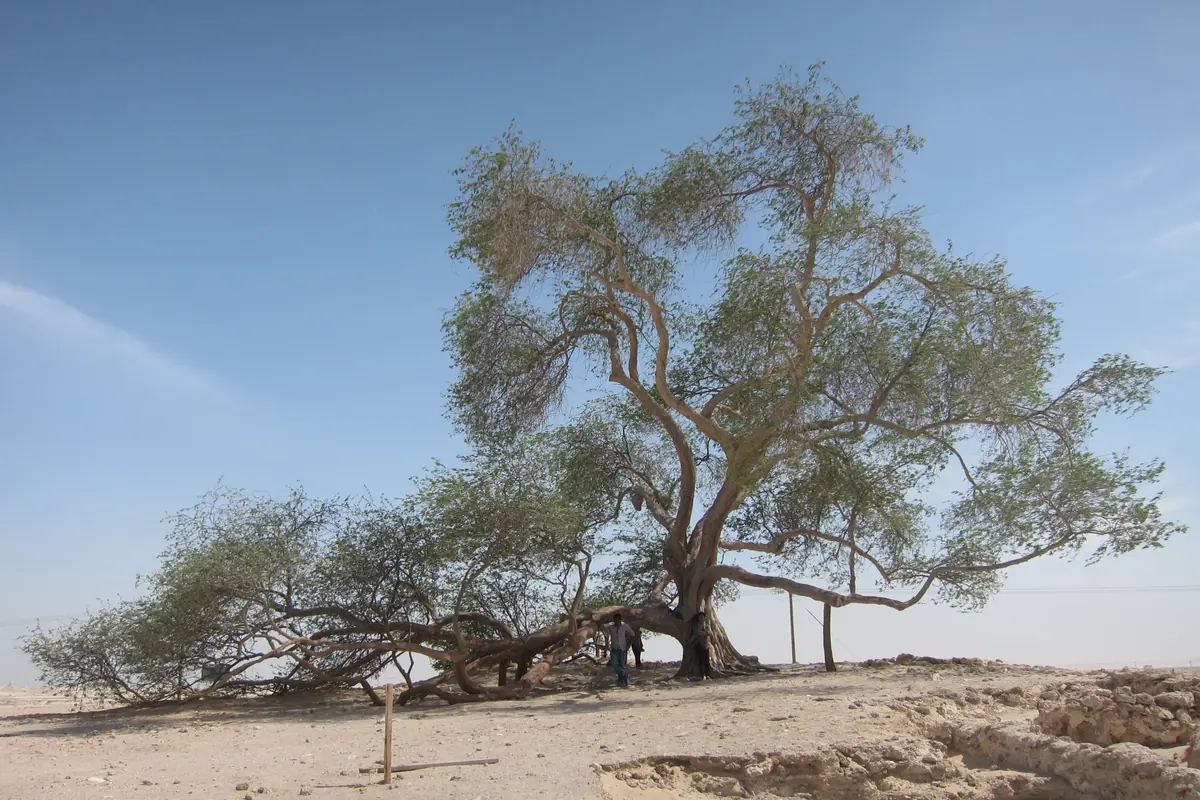
Head south into the Sakhir desert for the strangest sight in Bahrain: the Tree of Life, a lone, gnarled mesquite standing on a bare ridge, reputedly centuries old, with no obvious water source anywhere near it. It is genuinely isolated — no facilities, no shade, a scruffy track that's fine for an ordinary car in dry weather and less forgiving after rain. Come at sunrise or just before sunset, carry more water than you think you need, and treat the visit as a landscape experience rather than a ticketed attraction.
A short drive away sits Oil Well No. 1, drilled in the early 1930s and the first commercial oil well in the Gulf region. A small museum and the preserved derrick tell the story of how a pearling economy was transformed almost overnight, and it makes an unexpectedly thoughtful counterpoint to the archaeology of the previous day. Continue to the Bahrain International Circuit at Sakhir — the country's Grand Prix venue, with driving experiences, karting and, if your timing is lucky, a race weekend. Book activity slots in advance.
Finish at Al Areen Wildlife Park and Reserve, where Arabian oryx, gazelle and flamingos roam in fenced desert habitat and a walking route keeps you out of the worst of the sun. Zallaq's beach is nearby for a late swim or a beachside dinner on the way back to Manama.
Day 5: Muharraq and the Pearling Path
Bahrain's pearling wealth lived in Muharraq, and the UNESCO-listed Pearling Path stitches that history back together across a walking trail of roughly three and a half kilometres. Start at the visitor centre near Bu Maher Fort, where pearling boats once departed, then follow the route between restored merchant houses, narrow lanes and the waterfront. Sheikh Isa bin Ali House shows how a wealthy family used wind towers, courtyards and split-level rooms to survive the summer; Siyadi House, with its carved plaster and majlis, is the other standout.
Walking between stops is the point, but the heat is real from April onwards, so break the trail into morning and late-afternoon halves with a long lunch in between. Muharraq Souq is smaller and calmer than Manama's, and better for sweets — particularly the cardamom-scented halwa sold in slabs — plus spices and household goods. It's a good place to buy something locally made rather than another airport souvenir.
Round off the day at Arad Fort, a compact fifteenth-century stronghold on the water's edge, beautifully lit after dark and free to wander around. The whole day is walkable and drivable in under twenty minutes at either end — one of the great pleasures of a country this size.
Days 6 and 7: Riffa Fort, the Islands and the Causeway
Start your penultimate day at Riffa Fort, a nineteenth-century fort perched over the Hunanaiya valley, with cool internal courtyards, a small museum and long views across the greenest part of the island. It's the most photogenic of the forts and rarely crowded on weekday mornings. Nearby Riffa Souq is unpolished and very local — good for coffee, cheap textiles and people-watching rather than souvenirs.
Spend the afternoon on the water. Al Dar Islands are reached by a short boat ride from Sitra and offer shallow swimming, kayaking and simple seafood; the Amwaj Islands, a cluster of reclaimed islands north-east of Muharraq, have a marina, cafés and calm waterfront walks. In winter the sea is bracing, in summer bath-warm. Birdwatchers should look into guided trips towards the Hawar Islands off the south-west coast, though access is limited and requires advance arrangements.
On your final day, drive out along the King Fahd Causeway — the long bridge to Saudi Arabia — for the novelty of standing at a border without crossing it, then loop back through Zallaq and the west coast. If you're continuing into Saudi Arabia, check visa and insurance requirements before you commit. For departure, allow two and a half to three hours from central Manama to the airport in Muharraq during peak traffic, and squeeze in a last stop at the museum shop or the Manama Gold Souq for gifts.
Best of all, a week is enough to do this without rushing. Bahrain rewards the unhurried traveller — a fort at sunset, a bowl of halwa, a pearling lane at dusk — far more than a checklist.
Frequently asked questions
How many days do you actually need in Bahrain?
Four or five days covers the essentials: Manama, Bahrain Fort, the burial mounds, Muharraq's Pearling Path and the desert sites around Sakhir. A full week lets you add the islands, Riffa Fort and the King Fahd Causeway without long drives every day, and gives you a buffer for the hottest hours.
When is the best time to visit Bahrain?
November to March is ideal, with mild days and cool evenings. April, May and October are hot but manageable if you sightsee early and late. June to September brings extreme heat and humidity, so plan indoor museums, malls and souqs and keep desert visits to a minimum.
Do I need to hire a car?
It's strongly recommended. Manama is walkable in parts and ride-hailing works well in the city, but Bahrain Fort, A'ali, Barbar, the Tree of Life and Sakhir are spread out and poorly served by public transport. Driving is on the right, fuel is inexpensive and roads outside the capital are quiet.
What should I wear, and is alcohol available?
Dress modestly in public — shoulders and knees covered, particularly at religious sites, where women are given an abaya at the Grand Mosque. Alcohol is served in licensed hotel bars and restaurants, though not in public spaces. The rules are relaxed compared with some neighbours, but respect still matters.
Can I combine Bahrain with a trip to Saudi Arabia?
Yes. The King Fahd Causeway links the island to the eastern Saudi mainland in around half an hour at the border itself, making day trips or onward travel to the Khobar and Dammam area straightforward. Make sure you hold a valid Saudi visa and appropriate vehicle insurance before setting off.
Sort the rest of your trip
Everything for Bahrain, in one place
Stay in Bahrain
Hotels, guesthouses and apartments — compared in one search.
Search hotels
Transfer in Bahrain
Private driver waiting on arrival — no queues, no surprises.
Book a transfer
Travel insurance
Medical cover, delays and lost baggage — sorted before you go.
Get covered