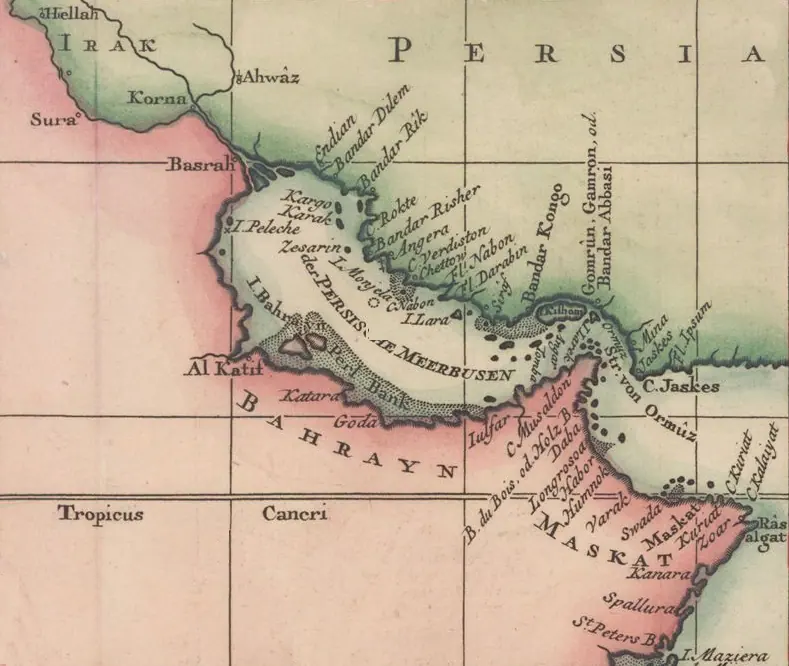
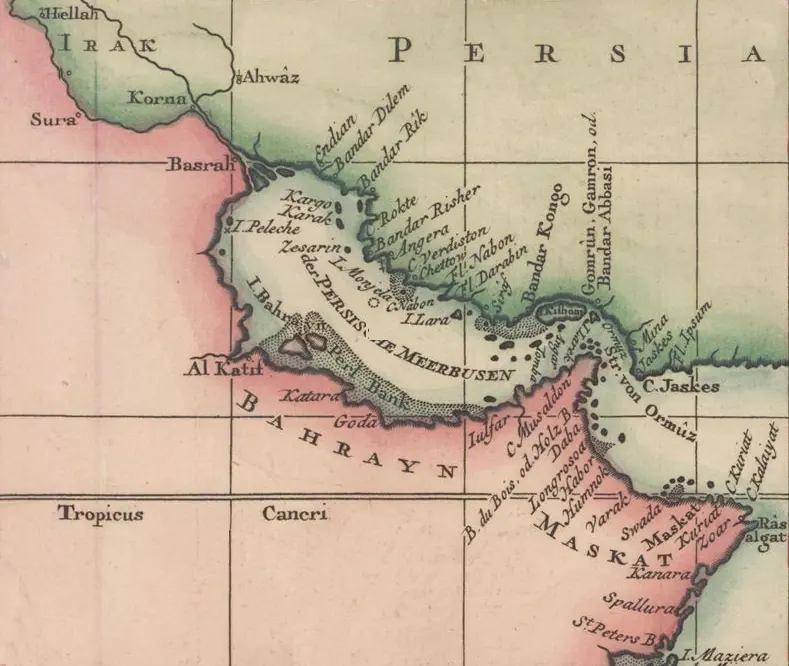
Bahrain is a small archipelago with an unusually dense concentration of things to see, which means the hotel you choose shapes your whole trip more than the map suggests. Within a 40-minute drive you can move from a pearling-era house in Muharraq to a lagoon resort on Amwaj, a five-star tower in Bahrain Bay, or a beach hotel looking across the water toward the desert. Pick the right base and the Kingdom's oldest sights, from Dilmun burial mounds to a lone tree that has outlived empires, are all day-trip distance.
Bahrain's hotel map: capital, old towns and coast
The first thing to understand about accommodation in Bahrain is how compact it is. The entire main island can be crossed in well under an hour outside rush hour, so no hotel is truly far from the headline sights. That freedom means your choice should be driven by the kind of trip you want rather than by proximity: a buzzing city base in Manama, a slow heritage stay in Muharraq, or a resort where the pool and the sea are the main event.
In practice, the island divides into a handful of distinct hotel zones. Manama splits into the older central districts of Hoora and the souq area, the high-rise restaurant-and-nightlife cluster of Juffair, and the polished waterfront of Seef and Bahrain Bay. Adliya draws travellers who want small boutique properties near galleries and independent restaurants. Outside the capital you have Muharraq's restored pearling houses, the man-made lagoons of Amwaj Islands, the beach belt around Zallaq and Sakhir on the west coast, and quieter suburban options in Riffa and A'ali.
Expect international-standard rooms almost everywhere, usually with a pool, gym and prayer facilities; the budget guesthouses of Hoora are simpler but superbly placed for the old market. Serviced apartments are common and popular with families and longer stays. One quirk worth planning around: Thursday and Friday nights are the local weekend peak, when visitors pour across the causeway from Saudi Arabia, and rates and availability tighten noticeably.
Stay in Manama if you want everything within walking or short-taxi distance.
Manama: hotels in the middle of the action
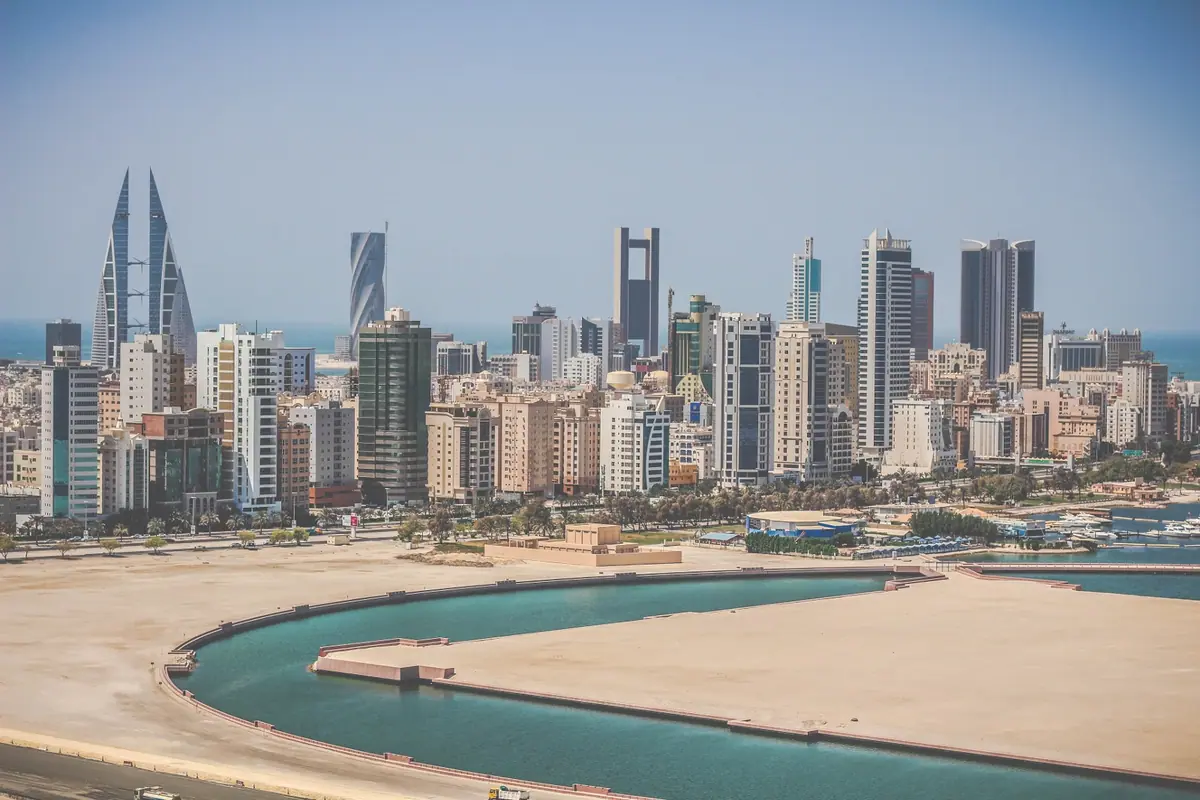
Central Manama around Hoora and the old commercial quarter is the most atmospheric place to base yourself for a first visit. Step out of a mid-range hotel here and you can walk to Bab Al Bahrain, the arched gateway that marks the entrance to Manama Souq, where alleys of spices, gold and traditional Bahraini halwa sweets still operate much as they always have. The Bahrain National Museum sits a short drive along the waterfront, with its galleries on the Dilmun, Tylos and Islamic eras, and the waterfront corniche is an easy evening stroll when the heat drops.
Juffair, a few minutes south, is the city's densest hotel district: tall towers, rooftop pools, gyms, dozens of restaurants and most of the island's evening entertainment. It is also the closest practical base to Al Fateh Grand Mosque, one of the largest mosques in the world, which welcomes non-Muslim visitors on guided tours outside prayer times and lends abayas to women at the door. Mid-range and business hotels in Juffair tend to offer the best value in the capital.
For a more polished stay, head north to Seef and Bahrain Bay, where luxury towers face the water, the sail-shaped Bahrain World Trade Center rises above the shoreline, and the malls of the Seef district handle the shopping. This is the pick for a short, comfortable break with spa time built in, and it puts you only 15 to 20 minutes from the ruins of Qal'at al-Bahrain. Boutique options cluster in neighbouring Adliya, a compact grid of galleries and restaurants that feels more like a neighbourhood than a hotel zone.
Muharraq: sleep inside a UNESCO pearling town
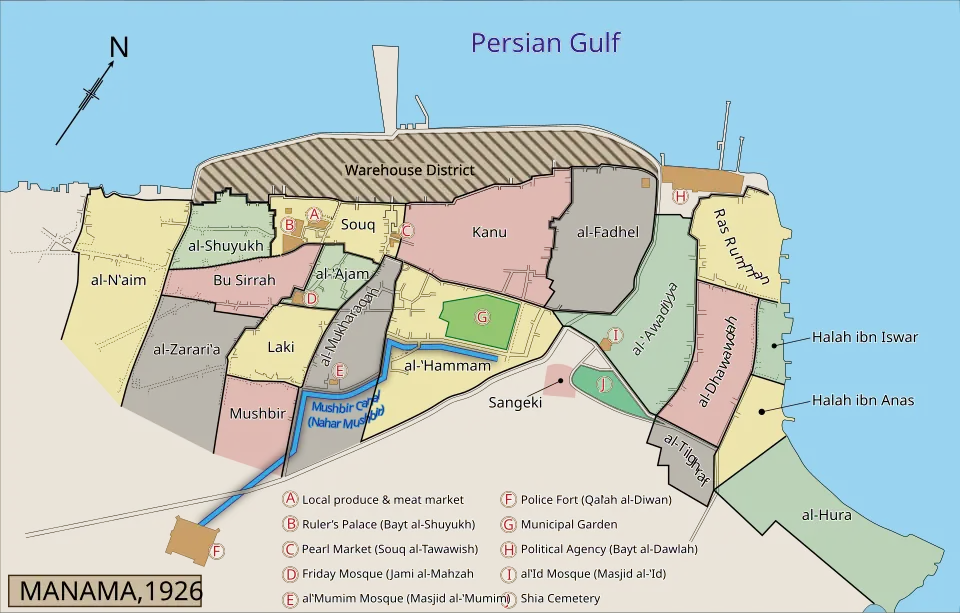
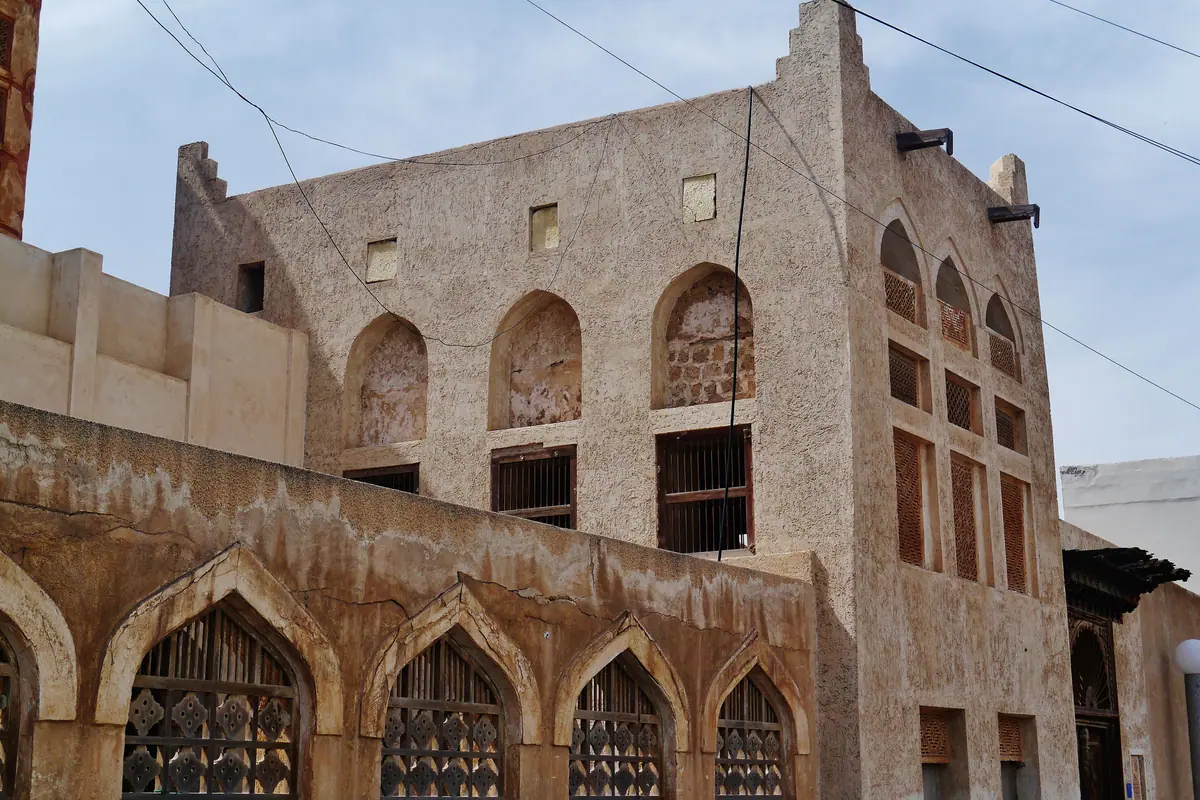
Muharraq, Bahrain's former capital, is where the Kingdom's pearling history is most tangible. The Pearling Path, a UNESCO World Heritage listing, threads roughly three and a half kilometres through the old town, linking merchant houses, the seafront and the oyster beds that made the island wealthy. Small guesthouses and restored properties set in traditional coral-stone houses have turned parts of this quarter into one of the region's most quietly rewarding places to stay: thick walls, courtyards, wind towers and a pace that feels decades away from Juffair.
Walking the trail is the point of staying here. The Shaikh Isa bin Ali House, with its carved doorways and cooling architecture, and the Siyadi House, once home to a wealthy pearl merchant, are the standouts, and Bu Maher Fort marks the point where the path meets the sea. The old souq, a working fish market in the early morning, and small cafés tucked into restored buildings keep the district alive rather than museum-like. Arad Fort, a compact coastal fortification with views over the water toward Manama, is a short drive away.
Muharraq also happens to be the closest hotel zone to the airport, which makes it handy for short breaks and late arrivals. There are far fewer large resorts here than in Manama, so book early if you want a heritage-style room, especially across cooler weekends when domestic and Gulf visitors rediscover the old town.
Beach resorts and island escapes: Zallaq, Sakhir and Amwaj
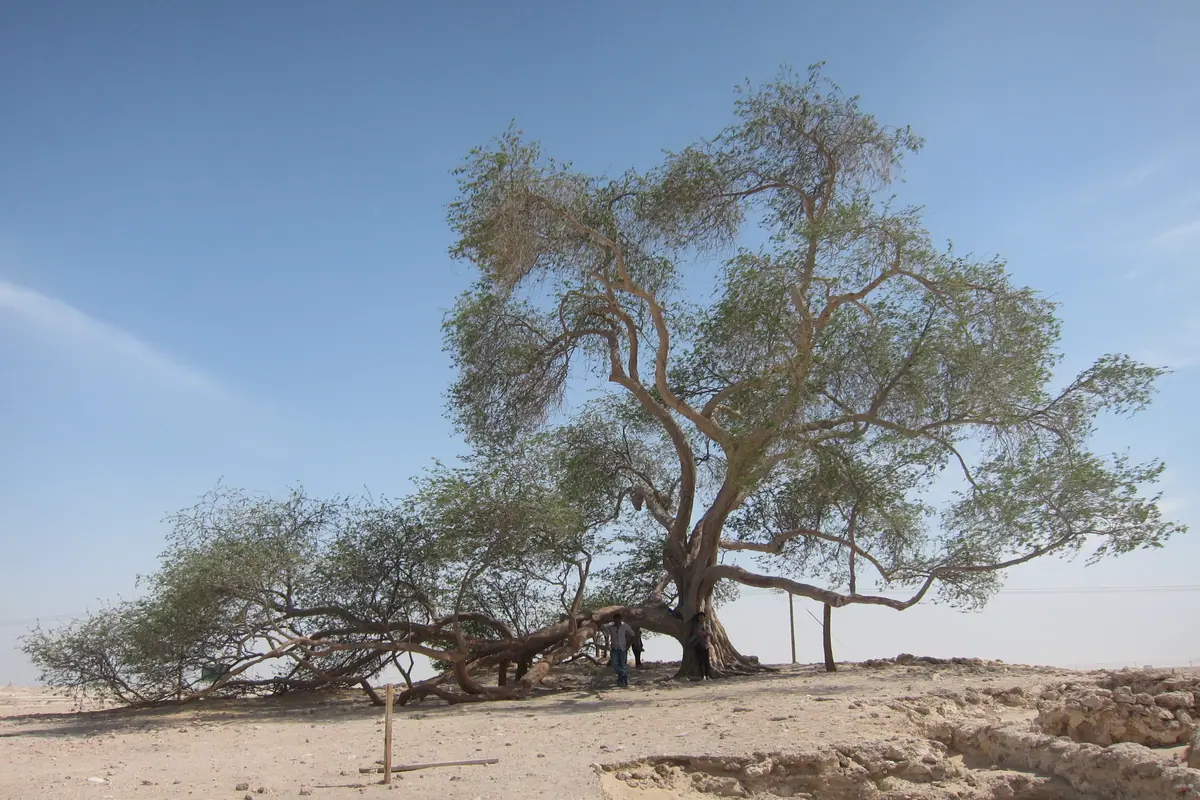
If your idea of Bahrain involves sunbeds and saltwater, look at the west coast belt around Zallaq and Sakhir. This is where the island's beach resorts sit, with private sand, pools and spas, and where the desert begins within minutes of the hotel gate. The Bahrain International Circuit at Sakhir hosts the annual Bahrain Grand Prix night race in spring, along with track days and drag events across the cooler months, making this stretch the obvious base if motorsport is on your itinerary. The Tree of Life, a solitary mesquite that has somehow survived for centuries in bare desert, is 20 minutes or so inland from here, as is the Al Areen Wildlife Park with its Arabian oryx and desert species.
Amwaj Islands, off the northeast coast near Muharraq, offers a different flavour of coastal stay: man-made lagoons, calm kayak-friendly water, family-oriented resorts and floating-style villas, all within a short hop of the airport. It suits travellers who want a beach break with easy access to both Muharraq's heritage streets and central Manama.
For something wilder, the Hawar Islands, a UNESCO-listed biosphere reserve off the southwest coast, protect breeding seabirds and dugongs and offer a degree of isolation that no mainland hotel can match, with access and stays arranged through local operators. Closer in, Jarada Island is a white-sand spit that appears at low tide and is reached by boat on day trips from the Manama area, a strong option for a hotel-based traveller who wants one memorable day on the water.
Riffa, A'ali and the north: quiet bases near ancient sights
Riffa, in the centre of the island, is a calmer, more residential base than Manama, and it comes with one of Bahrain's most photogenic landmarks. Riffa Fort, an early 19th-century stronghold perched above the Hunanaiya valley, offers sweeping views over the palm gardens below and is at its best in the late afternoon light. Hotels here are fewer and more business-oriented, but the location is convenient for anyone splitting time between the capital and the west coast.
Nearby A'ali is the country's pottery village, where workshops still throw and fire clay in traditional kilns, and where the surrounding desert holds the Dilmun Burial Mounds, a UNESCO-listed necropolis of thousands of ancient graves. Staying in this central zone means you can reach the mounds, the pottery yards and Riffa Fort in a single unhurried morning before the heat builds.
Up on the north coast, the area around Qal'at al-Bahrain, the excavated Bahrain Fort, gives you sea views, a small site museum and one of the region's most significant archaeological landscapes, layered with Dilmun, Portuguese and later occupation. The fort is an easy add-on to a Seef or Bahrain Bay stay, and it sits close to the causeway road that links the island to Saudi Arabia, worth knowing if you plan to drive across on a day trip.
When to go and what to know before you book
Bahrain's comfortable season runs from November through March, when daytime temperatures hover in the low-to-mid twenties and evenings need a light layer. October and April are warm but perfectly workable, and the sea stays swimmable into late spring. From June to September the island turns genuinely fierce, with temperatures well above 40°C and heavy humidity, so plan on resort pools, indoor museums and air-conditioned malls rather than long walks; spring can also bring shamal winds and dust that haze the views.
Several annual events reshape hotel demand. The Bahrain Grand Prix fills Sakhir and much of Manama for its spring weekend, Ramadan brings daytime closures of restaurants and a quieter rhythm with hotel iftar and suhoor packages, and Eid holidays, National Day in mid-December and New Year all push rates up sharply. Book several weeks ahead for those dates, and remember that Thursday and Friday nights are the weekly peak because of visitors arriving over the causeway from Saudi Arabia; Sunday to Wednesday stays are usually easier and cheaper.
For practical planning, three to four days is enough to cover Manama, Muharraq's Pearling Path, Bahrain Fort, Riffa Fort and a beach afternoon, with a week letting you add the Tree of Life, A'ali's mounds, Hawar Islands or a day trip across the King Fahd Causeway. Renting a car makes the scattered sights far simpler, though taxis and ride-hailing apps are plentiful and cheap for city hops. English is widely spoken, modest dress is appreciated in public and essential in mosques, and licensed hotel venues are where alcohol is served.
Frequently asked questions
Which area of Bahrain is best for a first-time stay?
Manama is the easiest first base: Juffair for mid-range hotels, restaurants and nightlife, or Seef and Bahrain Bay for waterfront luxury. Choose Muharraq if you want a heritage stay on the Pearling Path, and Zallaq, Sakhir or Amwaj if a beach resort is the priority.
What is the best time of year to visit Bahrain?
November to March offers the most pleasant weather for sightseeing, with mild days and cool evenings. October and April are warm but fine. Avoid July and August if you plan to be outdoors, and check dates for Ramadan, Eid and the Bahrain Grand Prix before booking.
How many days do you need in Bahrain?
Three to four days covers Manama Souq and Bab Al Bahrain, the Bahrain National Museum, Al Fateh Grand Mosque, Muharraq's Pearling Path, Qal'at al-Bahrain and Riffa Fort, plus time at a beach. A week allows slower days, the Tree of Life, the Dilmun Burial Mounds at A'ali and a boat trip to Jarada or the Hawar Islands.
Do I need to rent a car in Bahrain?
Not strictly, but it helps. Taxis and ride-hailing apps handle Manama, Muharraq and Juffair well, while the Tree of Life, A'ali's burial mounds, Riffa Fort and the west-coast beaches are much easier with your own wheels. Driving is on the right and roads are generally good.
Are hotel prices higher at weekends in Bahrain?
Yes. Thursday and Friday nights are the local weekend and draw many visitors from Saudi Arabia over the King Fahd Causeway, so rates rise and popular properties fill early. Sunday to Wednesday stays are usually better value, and the Bahrain Grand Prix, Eid and New Year are the biggest spikes of the year.
Sort the rest of your trip
Everything for Bahrain, in one place
Transfer in Bahrain
Private driver waiting on arrival — no queues, no surprises.
Book a transfer
Things to do in Bahrain
Skip-the-line tickets, guided tours and standout experiences.
See experiences
Stay online in Bahrain
Travel eSIM — data the moment you land, no roaming bills.
Get an eSIM