Azerbaijan packs a walled medieval city, a burning hillside, mud volcanoes and a skyline of flame-shaped towers into a country smaller than Scotland. It is the rare place where you can walk Silk Road caravanserais in the morning, stand on a gas-fed fire in the afternoon and sleep in a Caucusus mountain village that same night. Here is how to see the best of it without rushing.
Icherisheher: The Walled Heart of Baku
Begin in Icherisheher, Baku's fortified old town and the country's most compelling single sight. Ringed by a thick limestone wall that once faced the Caspian directly, the quarter is a maze of narrow lanes, hidden courtyards, a hammam, a caravanserai now used as a courtyard café, and the Juma Mosque. Give yourself two to three unhurried hours to wander without a map; the pleasure here is getting mildly lost between the souvenir stalls and the low stone doorways, then finding a tea house where you can sit with a glass of black tea and jam.
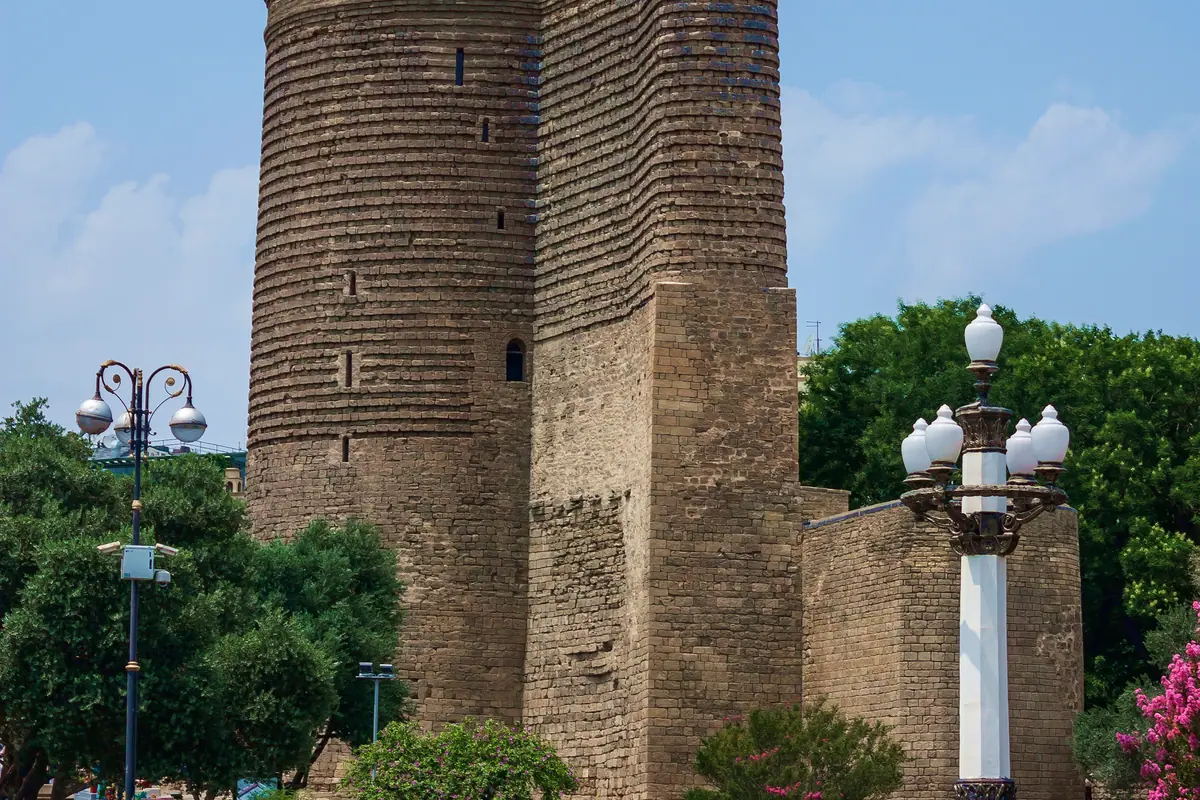
The two unmissable monuments stand within a few minutes of each other. The Maiden Tower, or Qız Qalası, is a tapering 12th-century cylinder roughly 29 metres high whose true purpose is still debated — watchtower, temple, or something older still. Climb the tight spiral stair for the best framed view of the bay and the Flame Towers beyond the rooftops. Nearby, the Palace of the Shirvanshahs is a 15th-century royal complex containing a domed divankhana, a family mausoleum, a mosque and a bathhouse, all in pale honey-coloured stone.
Go early in the morning or an hour before sunset to dodge both the heat and the crowds, and wear shoes with grip — the polished paving inside the old walls gets slick. Just outside the gates, the pedestrian stretch of Nizami Street and the seafront boulevard make an easy continuation of the day.
Modern Baku: Flame Towers, Highland Park and the Heydar Aliyev Center
Baku's newer half is a deliberate spectacle, and it is worth setting aside an afternoon to admire it. The Baku Boulevard runs for several kilometres along the Caspian shore, passing fountains, a small canal area modelled on a Venetian waterway, a Ferris wheel and gardens that stay busy until late evening. It is entirely flat, free and best walked in the two hours before dusk, when the sea breeze arrives and families come out.
Above the boulevard, the funicular climbs to Highland Park, the city's best free viewpoint. From the terrace you look down over the bay, the sweep of the promenade and the three Flame Towers — a trio of glass buildings shaped like tongues of fire that light up in shifting orange and blue after dark. Ride up before sunset, watch the city switch its lights on, then walk down through the park steps toward the Nagiyev pedestrian area.
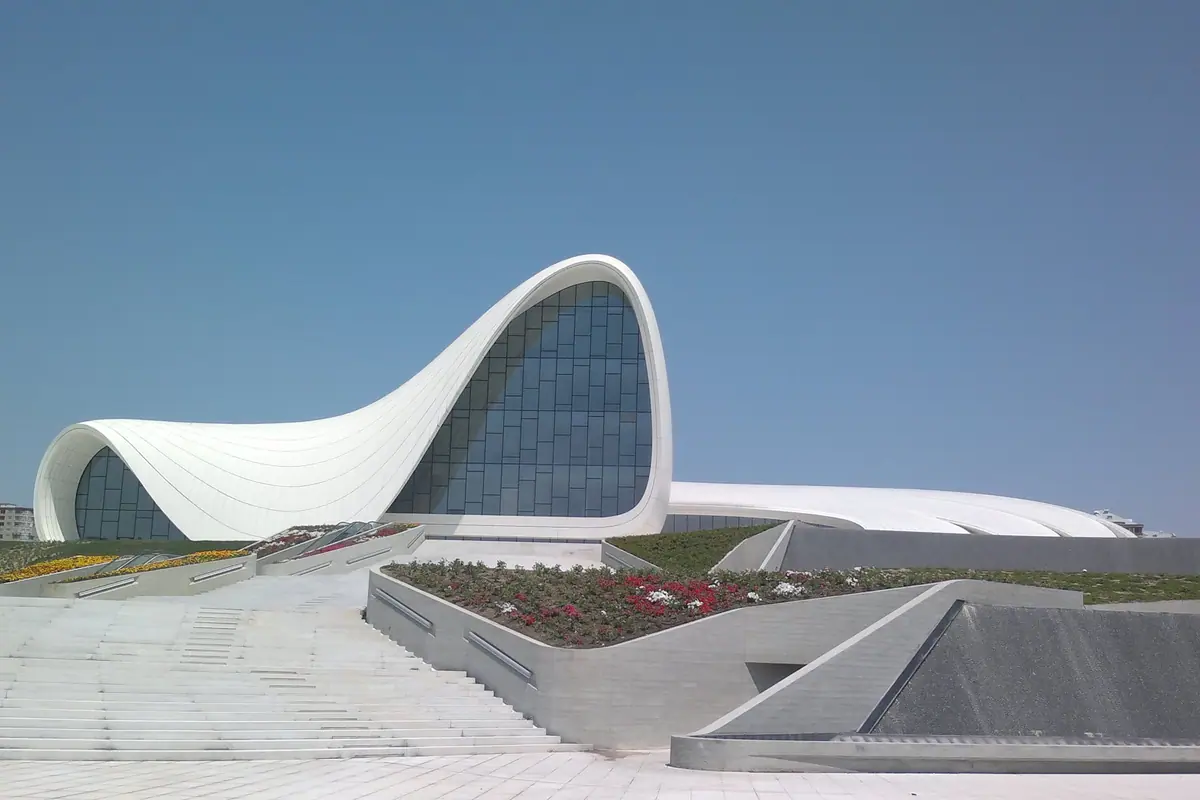
For contemporary architecture, head to the Heydar Aliyev Center, a flowing white building with barely a straight line in it, wrapped around exhibition halls and a concert auditorium. Even outside it photographs beautifully in low light. Round the day off with a mugham performance — Azerbaijan's haunting classical music — in a small hall or courtyard venue, where a singer and trio of traditional instruments do far more than a museum could to explain the country's ear for melody.
Fire and Stone: Ateshgah, Yanar Dag and Gobustan
Azerbaijan is nicknamed the Land of Fire for good reason, and the Absheron Peninsula delivers the evidence. At Surakhany, roughly half an hour from central Baku, Ateshgah is a 17th-century fire temple built as a pentagonal courtyard ringed with cells and a central altar where natural gas once burned permanently. Caravans of traders and pilgrims, including Zoroastrians and merchants from South Asia, once stopped here; the inscriptions above the cells tell their story in several scripts.
Farther north, Yanar Dag is the more theatrical sight: a low hillside where escaping gas keeps a wall of flame alight, rain or shine. It is small, it is unsentimental, and it is oddly mesmerising at dusk when the flames are the brightest thing for miles. Combine it with a stop at Mardakan or the medieval quadrangular castle at Ramana if you have time to spare on the drive back.
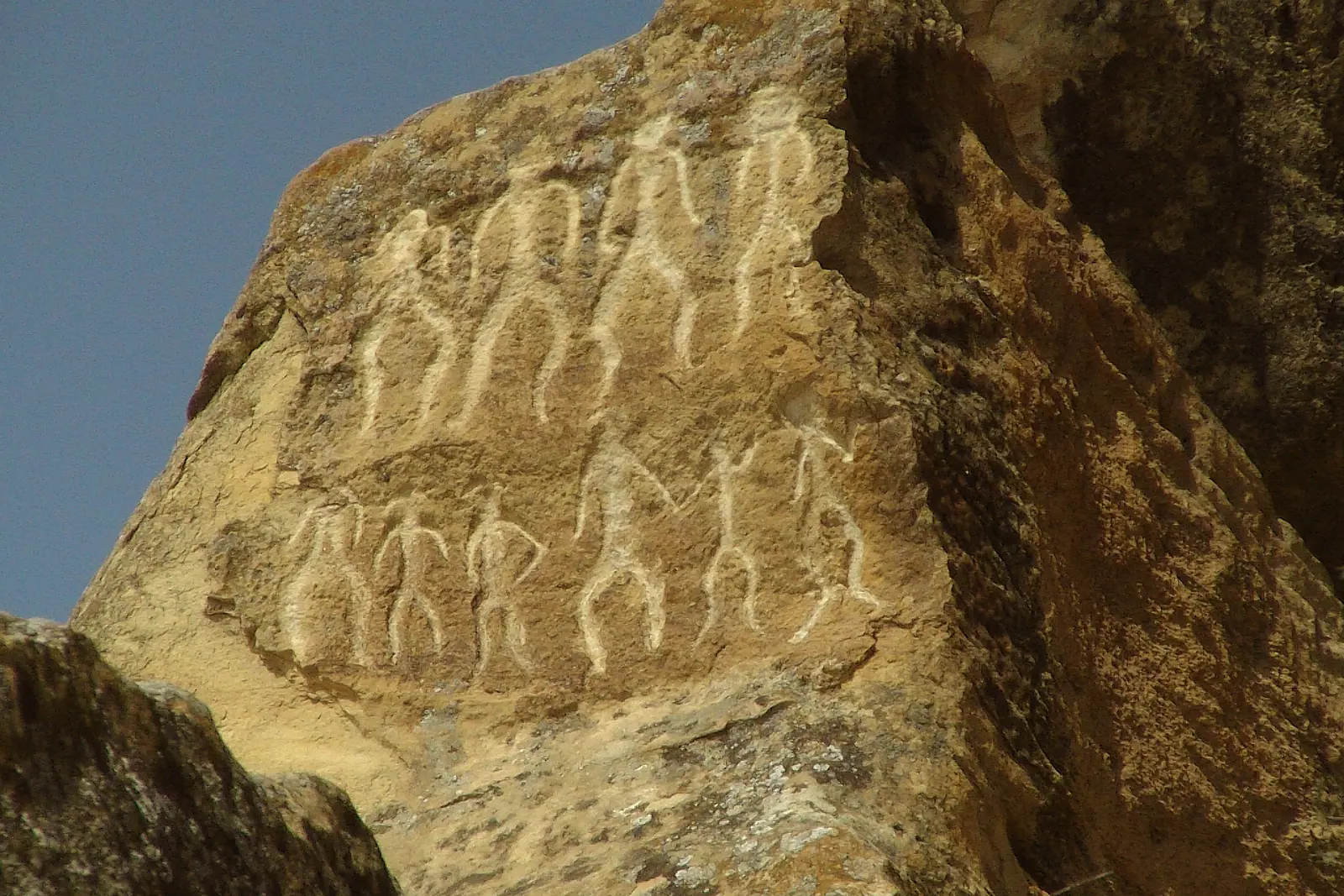
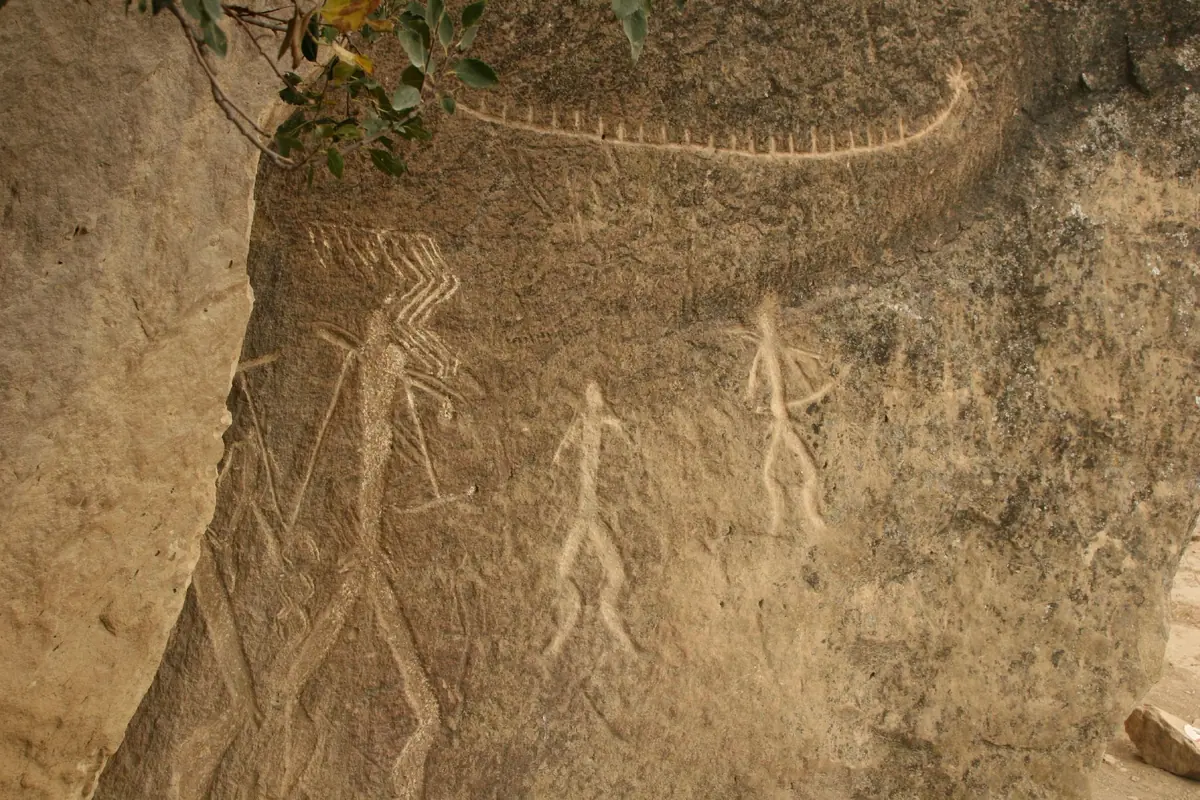
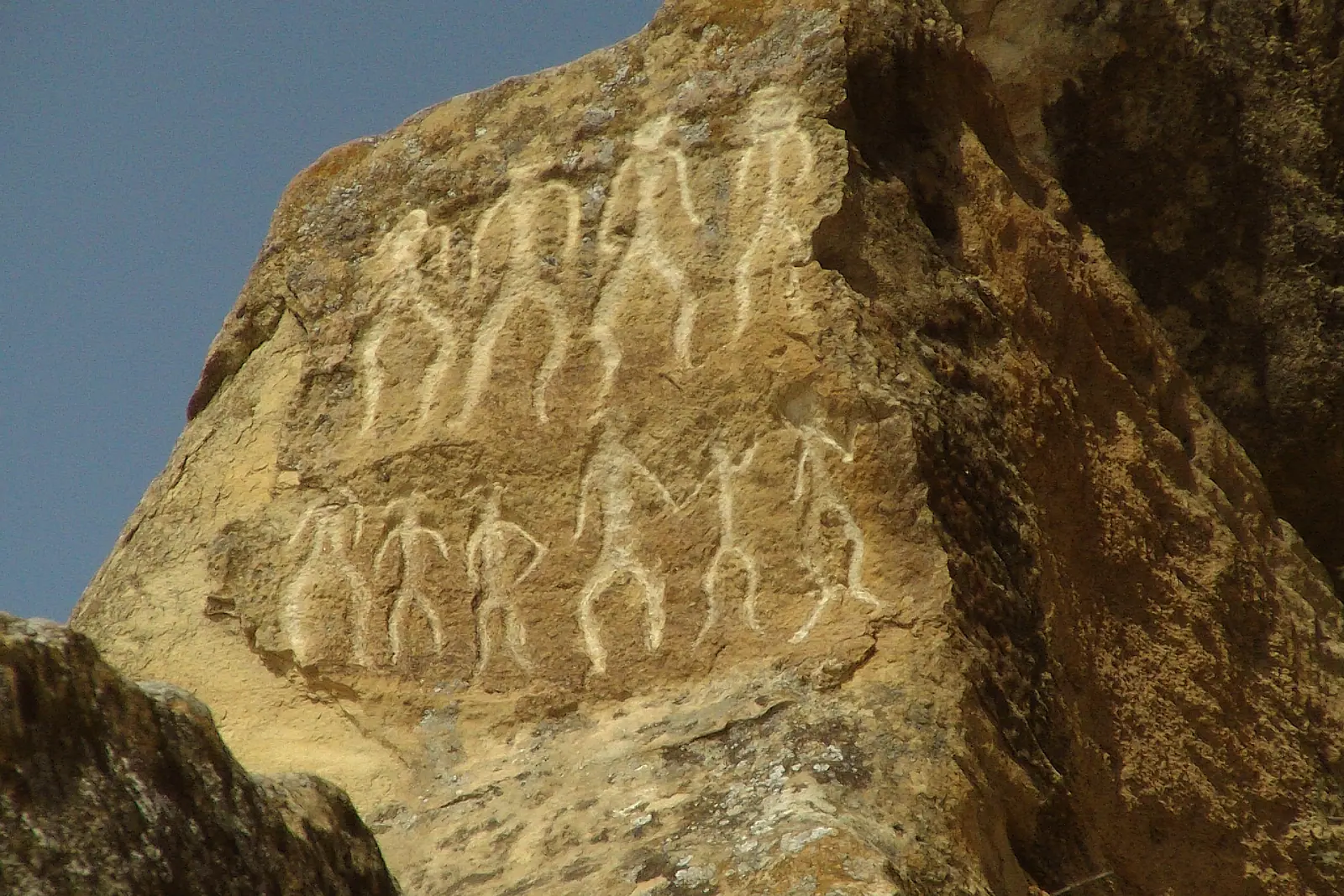
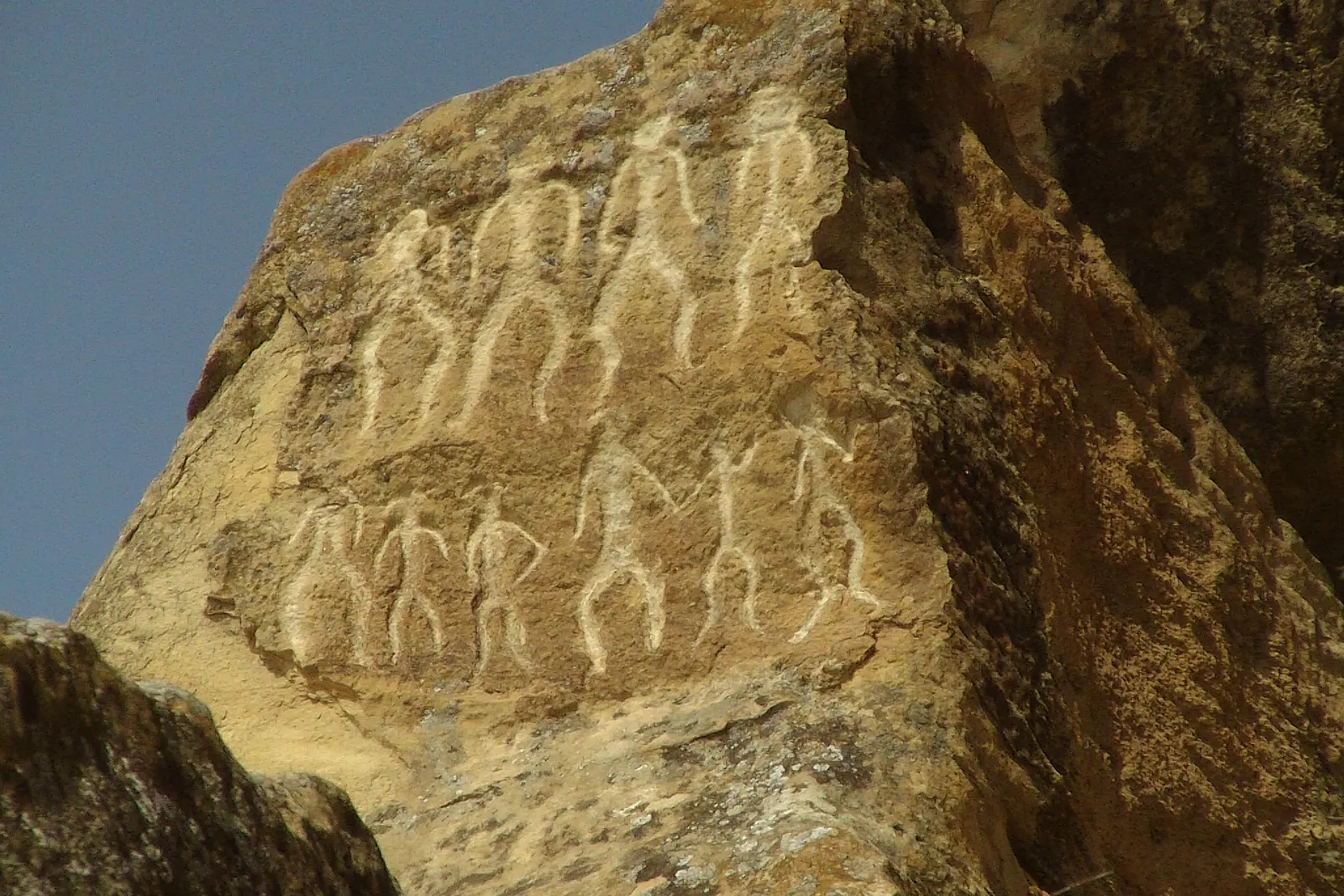
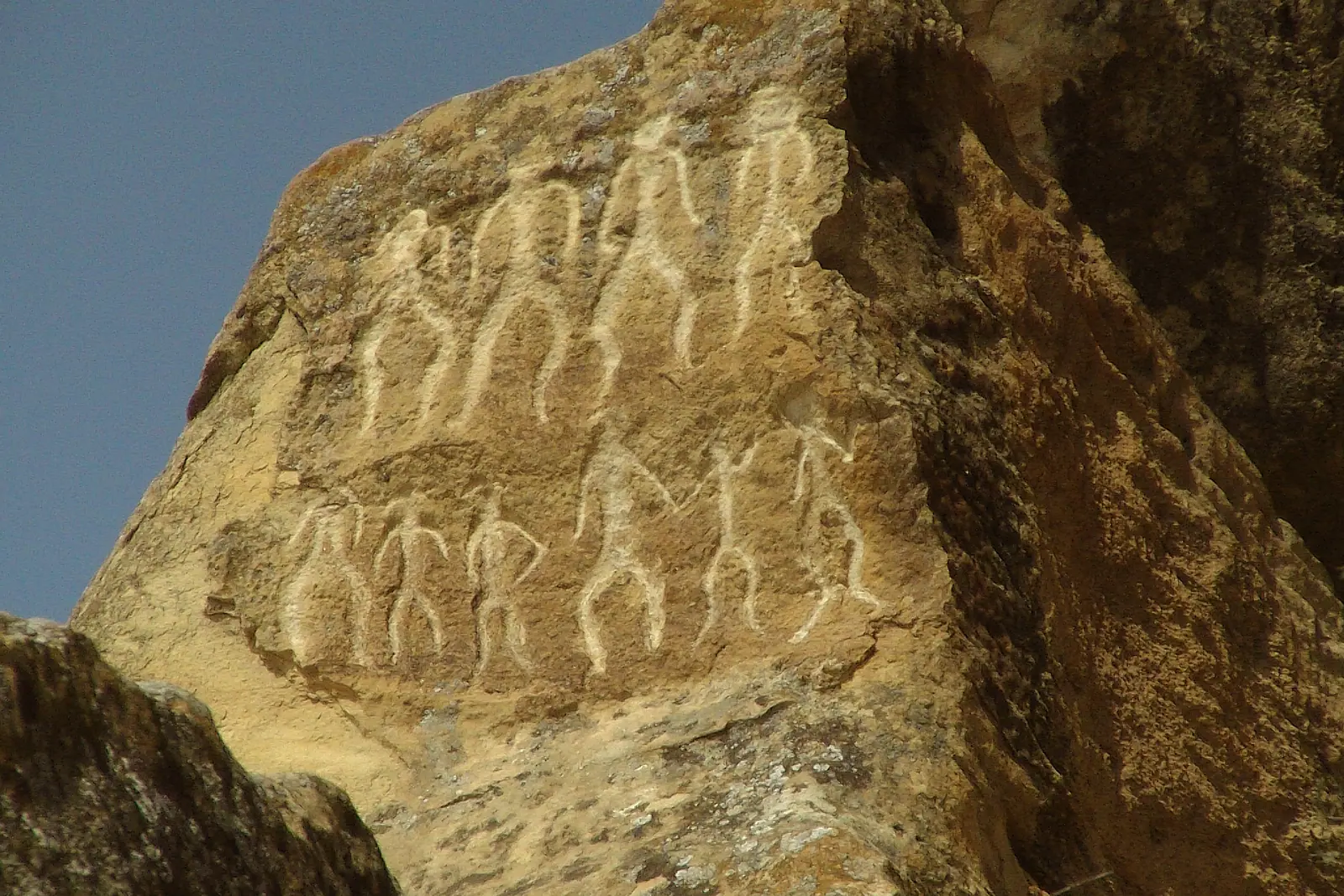
South of the city, Gobustan National Park rewards a half-day trip. Its pale sandstone shelves are covered in thousands of petroglyphs — hunting scenes, reed boats, dancers, bulls and sun symbols carved over millennia, with later Roman-era graffiti scratched beside them. The site also includes a museum and, nearby, the weird bubbling field of mud volcanoes: dozens of grey cones that belch cold slurry and pop like porridge. The final stretch of road is rough, so a driver with a suitable vehicle is far easier than self-driving; bring closed shoes you do not mind ruining.
North to the Caucasus: Quba, Khinalig and Shahdag
Head north from Baku and the landscape changes within two hours: orchards, deep green valleys and the first ridges of the Greater Caucasus. Quba is the natural base, a tidy town of low houses and apple trees, and a few kilometres across the river sits Krasnaya Sloboda, a settlement with a centuries-old Mountain Jewish community, synagogues and a distinct, quieter atmosphere. The surrounding Qechresh forest is a lovely spot for a picnic lunch of bread, cheese and tomatoes bought at the roadside.
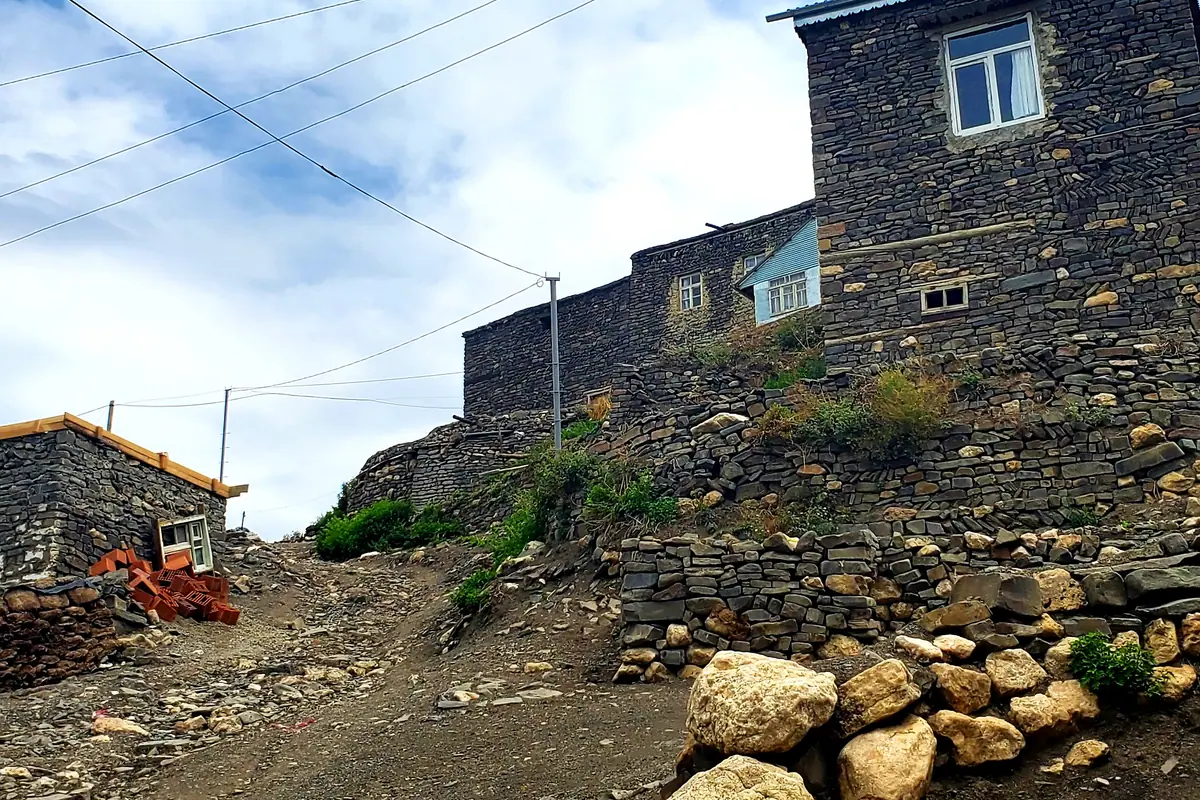
The real prize is Khinalig, one of the highest inhabited villages in the Caucasus at around 2,300 metres. The road climbs on switchbacks for hours past shepherd camps and waterfalls, and the village itself is a tight cluster of flat-roofed stone houses stacked into the mountainside, with its own language and a strong tradition of weaving. Guesthouses here are simple and generous; expect home cooking, thick yoghurt and endless tea, plus hiking routes toward the alpine meadows in summer.
From June to September the high valleys are green and walkable. In winter the action shifts to the Shahdag area, where a cable car serves groomed ski runs from roughly December to March. Even non-skiers should ride up for the panorama — the ridge lines here are genuinely alpine, and the air is a bracing contrast to Baku's humidity.
West Along the Silk Road: Sheki, Ganja and Lake Goygol
Sheki, tucked beneath forested mountains about five hours west of the capital, is the country's most rewarding historic town after Baku. Its showpiece is the Sheki Khan Palace, a 18th-century summer residence covered inside and out with coloured glass latticework, painted panels and murals of flowers, birds and battle scenes. The shebeke windows are assembled without nails or glue, and the effect in afternoon light is like standing inside a lantern. The same town has a restored caravanserai, a silk workshop tradition, and a church at nearby Kish that is one of the oldest in the region.
Continue west to Ganja, Azerbaijan's second city, for the Nizami Mausoleum, a tall stone monument to the great poet, the curious Bottle House built into a facade of embedded glass, and a relaxed central square culture of tea and chequered tablecloths. Ganja makes a good overnight stop before heading into the hills.
The hills in question are home to Lake Goygol, a deep blue crater lake inside Goygol National Park, reached by a shaded trail through beech forest. It is the most beautiful inland water in the country, best visited on a weekday in spring or early autumn when the path is quiet. Allow a full day from Ganja, and pack layers — the mountain weather here turns quickly even in midsummer.
The Lush South and the Nakhchivan Exclave
The south around Lankaran feels like a different country: humid, green, and thick with tea plantations, citrus groves and rice paddies. Hirkan National Park protects pockets of ancient Caspian forest with trees found almost nowhere else, and the roads toward Astara run along the Caspian with the Talysh mountains rising inland. This is where you go to eat well and move slowly — freshwater fish, lemonade made with local fruit, and tea served with rose petal jam.
Separated from the rest of the country by Armenia, Nakhchivan is reached by short flights from Baku and feels like a treasury of its own. The Momine Khatun Mausoleum in the regional capital is a masterpiece of medieval brickwork and geometric carving, while Alinja Fortress clings to a rock ridge with a story of sieges attached to it. The Duzdag salt mine, where visitors descend into vast white galleries used as a therapeutic clinic, is one of the strangest and most memorable half-days in the country.
Do not treat the south and Nakhchivan as afterthoughts. Together they add five to seven days to a trip, and they reward travellers who have already done the headline sights and want the quieter, more layered version of Azerbaijan — the one with orchards, salt caves and afternoon tea that lasts longer than it should.
Frequently asked questions
When is the best time to visit Azerbaijan?
April to June and September to October are the sweet spots, with mild temperatures in Baku and comfortable conditions across the mountains. July and August are hot and humid on the Absheron Peninsula and along the Caspian, though ideal for high-altitude hiking. Winter suits two very different trips: ski season in the Shahdag and Gabala areas from December to March, or a quieter, cooler city break in Baku, which can be foggy and windy in November but rarely cold enough to stop you walking.
How many days do you need in Azerbaijan?
Plan four to five days for Baku plus day trips to Gobustan, Ateshgah and Yanar Dag. Add three days for the north around Quba and Khinalig, or three to four days for Sheki, Ganja and Lake Goygol. A comfortable two-week itinerary covers the capital, the mountains, the Silk Road towns and the lush south, with Nakhchivan as an optional extra few days reached by short domestic flights.
Is it easy to travel outside Baku without a car?
Yes, with a little patience. Fast trains and comfortable coaches link Baku with Ganja and Sheki, and shared minibuses run to most regional towns from the capital's bus stations. For Gobustan's mud volcanoes, the road to Khinalig or Lake Goygol, hiring a car with a local driver for the day is far simpler and often barely more expensive than trying to stitch together public transport.
Do I need a visa for Azerbaijan?
Most visitors can apply for an electronic visa online before travelling, and it is usually issued within a few working days. Some nationalities can obtain a visa on arrival at Baku's airport. Rules change, so check your own passport's requirements well before booking, and note that if you plan to visit the Nakhchivan exclave you travel there by air from Baku rather than overland.
What should I eat and drink in Azerbaijan?
Start with plov — saffron rice with chestnuts, dried fruit and meat, often crowned with a pastry lid — and work through dushbara dumplings, herb-filled qutab flatbreads, dolma, and grilled lamb or sturgeon kebabs. In Sheki, try the local halva and the sweet, nutty baklava. Meals finish with black tea in armudu glasses, frequently accompanied by white cherry, walnut or rose petal jam, and ayran or sherbet to drink. Vegetarians will eat well on salads, herbs, pickles and dairy, though it pays to ask about meat stock in soups.
Plan it — experiences in Azerbaijan
Live search, booked directly with trusted providers.
Sort the rest of your trip
Everything for Azerbaijan, in one place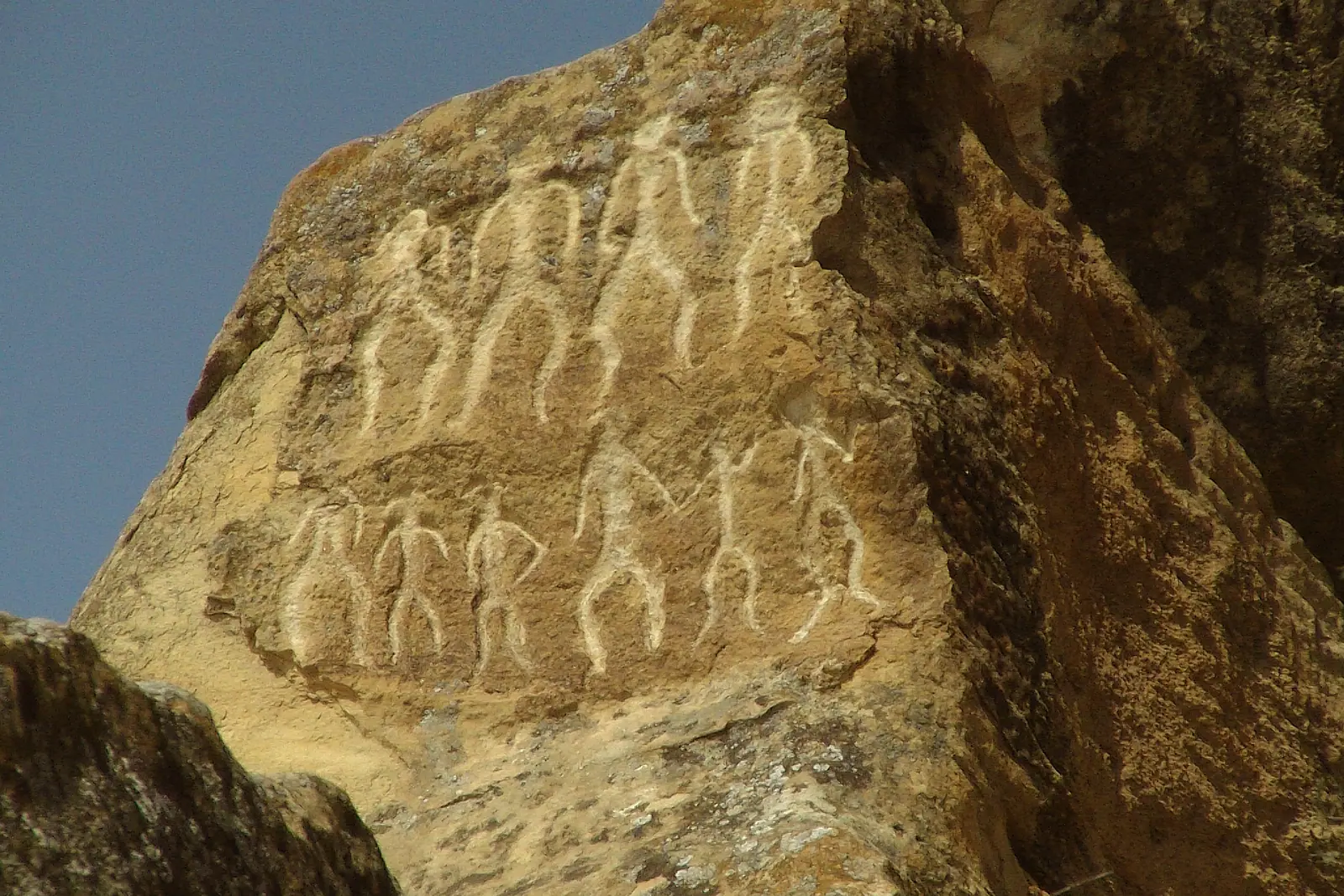
Stay in Azerbaijan
Hotels, guesthouses and apartments — compared in one search.
Search hotels
Transfer in Azerbaijan
Private driver waiting on arrival — no queues, no surprises.
Book a transfer
Stay online in Azerbaijan
Travel eSIM — data the moment you land, no roaming bills.
Get an eSIMMore guides in Azerbaijan
Best Time to Visit Azerbaijan: A Season-by-Season Guide to Hotels and Sights
Best Places to Visit in Azerbaijan: Baku, Sheki, Gobustan and the High Caucasus
Hotels in Azerbaijan: Where to Stay in Baku, Sheki and the Caucasus