Azerbaijan rewards travellers who arrive hungry and curious, because the country's best moments happen around a table or on a mountain road rather than at a ticket window. This guide threads together the landmarks you should not miss with the food, craft and village life that give them meaning.
Inside Icherisheher: Baku's Walled Old City Sets the Tone
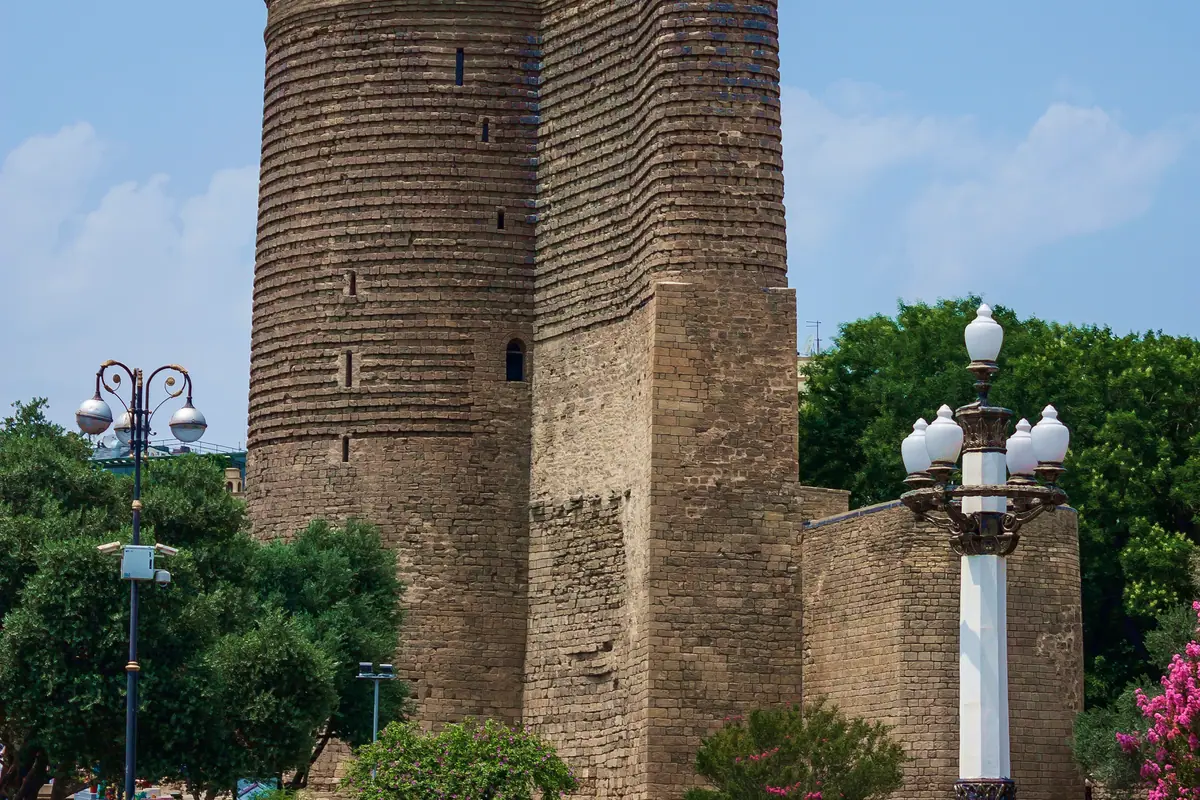
Almost every Azerbaijani journey begins behind the stone walls of Icherisheher, Baku's UNESCO-listed old quarter, where the Caspian wind funnels down lanes too narrow for cars. The landmarks come thick and fast: the Maiden Tower, a tapering eighth-century-to-twelfth-century cylinder you can climb for views across the bay; the Palace of the Shirvanshahs, with its divankhana courtyard, burial vaults and hammam; the small Muhammad Mosque; and the arched portals of the surviving caravanserais, where camel traders once slept and where you can still eat beneath the same stone vaults. Give the lanes two to three unhurried hours, or half a day once you add the palace and tower interiors.
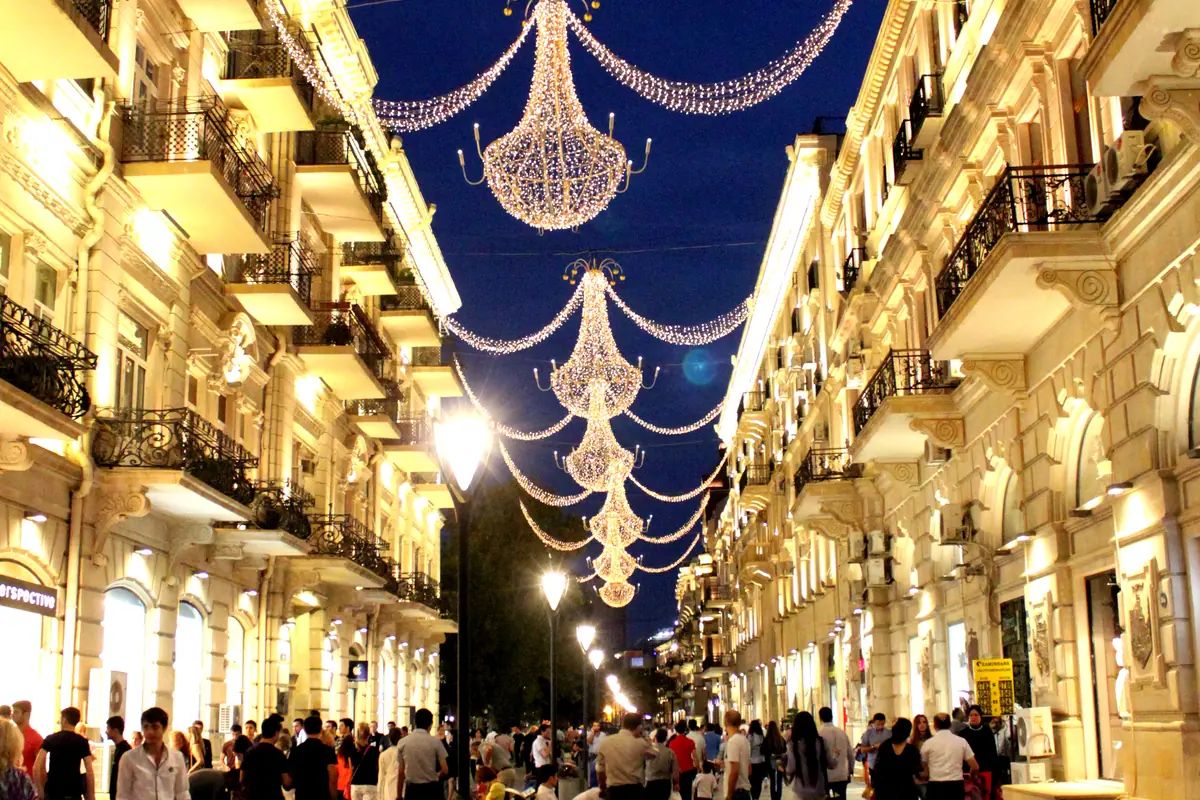
Eating in the old quarter is the quickest lesson in local table manners. Bread comes straight from a tendir, a clay oven sunk into the floor, and qutab — thin folded flatbreads stuffed with herbs, pumpkin or minced lamb — arrive brushed with butter. Order piti, a slow-cooked chickpea and lamb stew served in a clay pot you mash together at the table, and finish with a glass of black tea. Afterwards, walk downhill to the Caspian promenade along Baku Boulevard, or head inland to Fountain Square and the cafés around Nizami Street for a second wind.
Timing matters. Museums here generally open mid-morning and close in the early evening, and many shut on Mondays — check before you build a day around one. Early mornings belong to bakers and street sweepers, with the walls washed in soft light; evenings bring out the illuminations and the tea gardens. If you only have one full day in the capital, spend the morning in Icherisheher, the afternoon at the Heydar Aliyev Center for its swooping white architecture and exhibitions, and the evening eating.
Gobustan, Mud Volcanoes and the Fire Temples of the Absheron
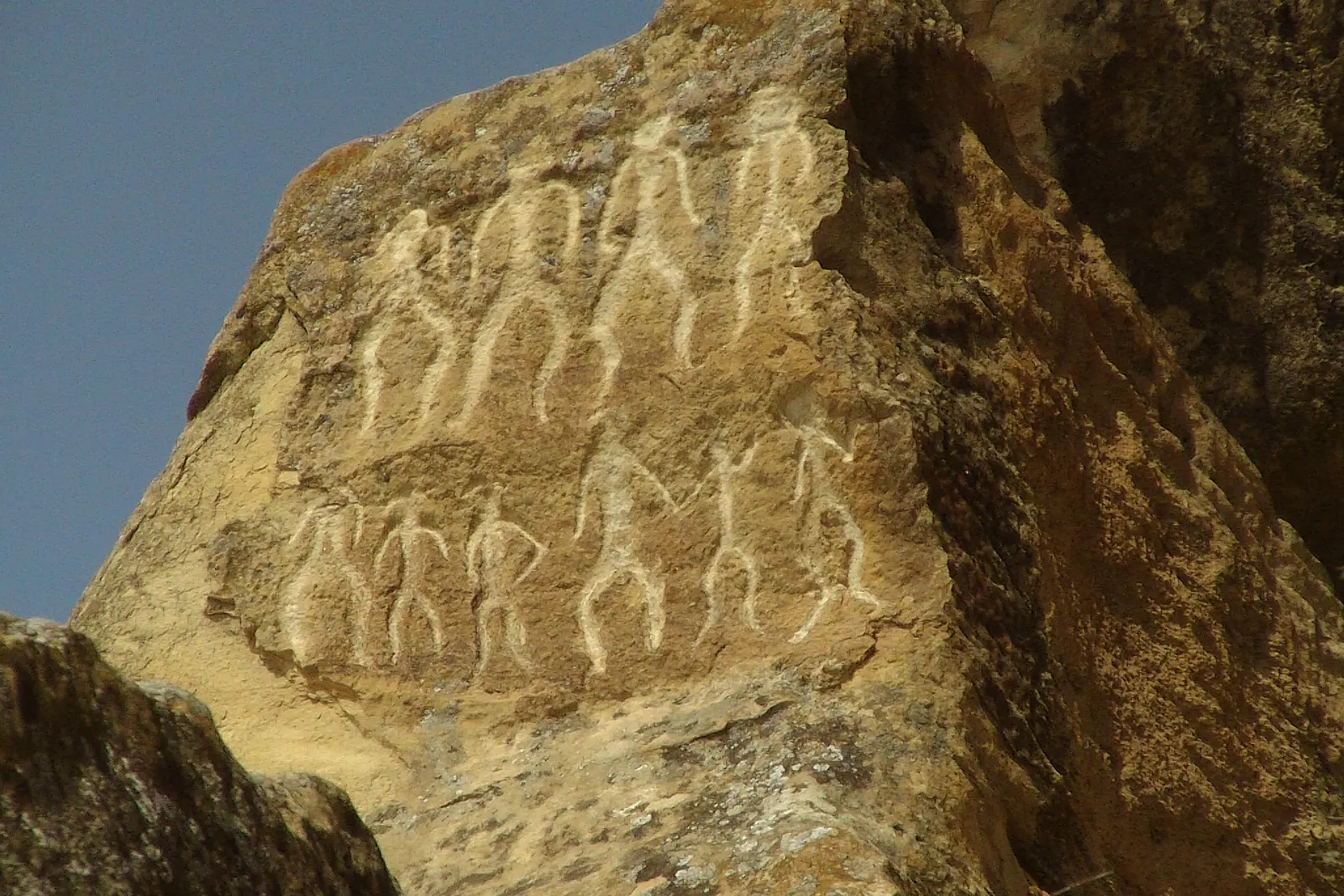
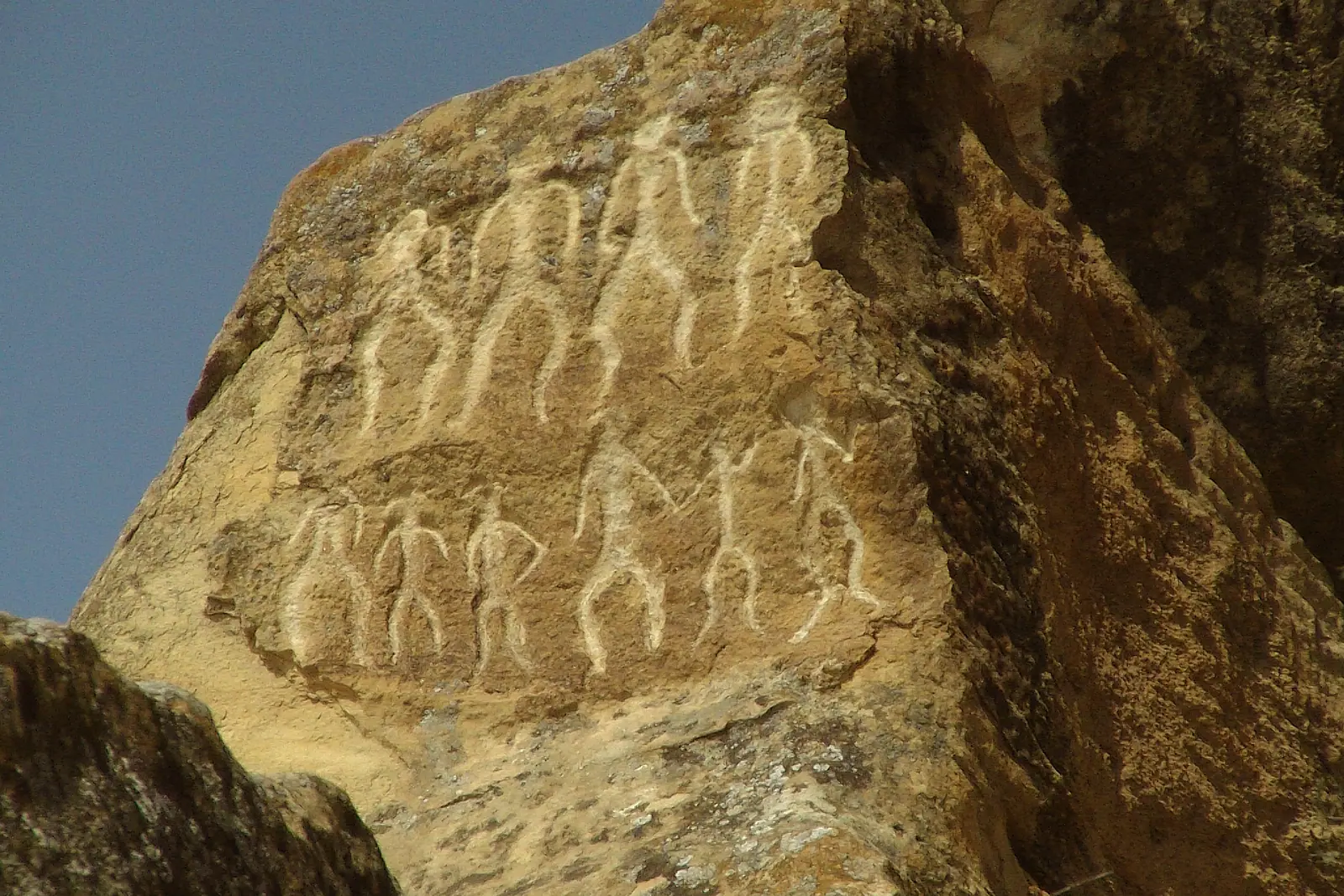
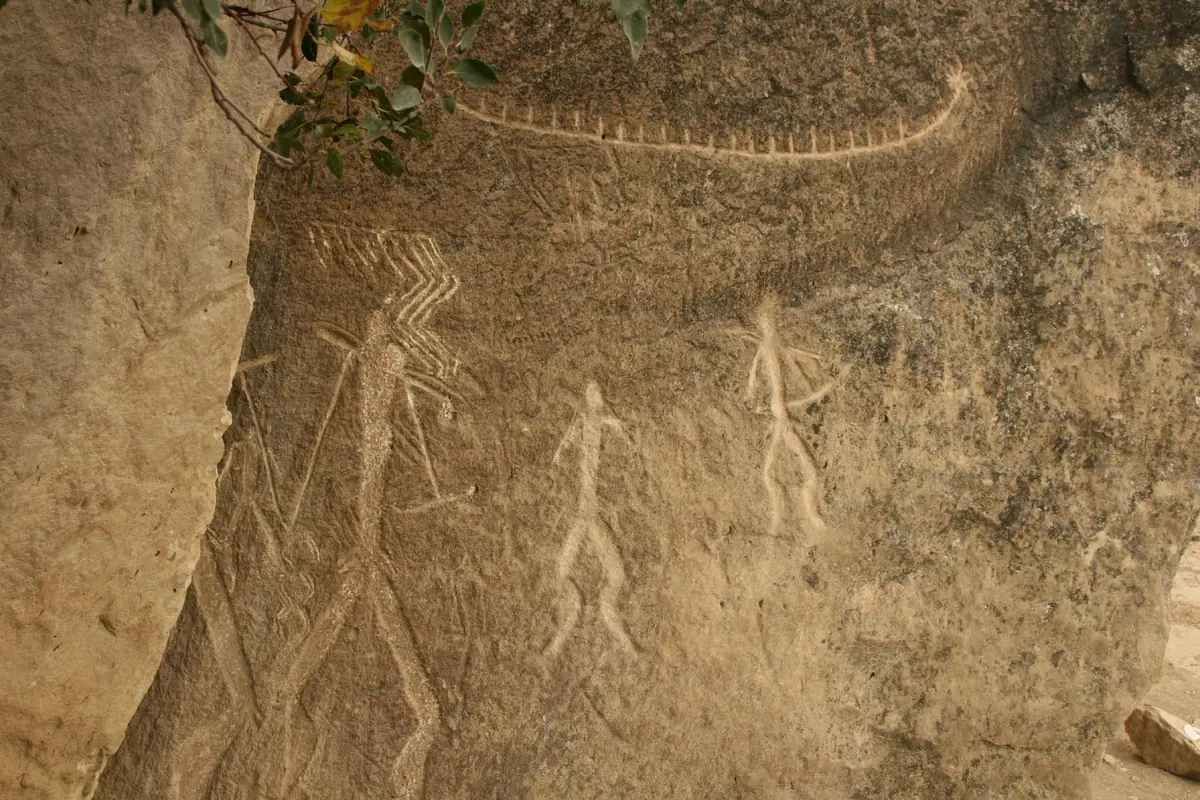
About an hour southwest of Baku lies the Gobustan Rock Art Cultural Landscape, a plateau of boulders and shallow caves covered in thousands of engravings — hunters, dancers, boats, aurochs and gazelle — some of them many thousands of years old, plus a carved Latin inscription left by a Roman legion passing near the Caspian. The site is best explored in the cool of the morning, with a guide who can point out figures you would otherwise walk straight past.
From there, a rough track leads to the mud volcanoes: dozens of grey cones that burp and bubble cold mud in a landscape that looks borrowed from another planet. You need a sturdy vehicle and a local driver who knows which patches are safe to stand on. Round off the day on the Absheron Peninsula itself, where Yanar Dag is a low hillside of natural gas that has burned continuously for decades, and Ateshgah, a pentagonal fire temple in Surakhany, preserves a central altar flame once tended by Zoroastrian and Hindu traders on the caravan route.
April to June and September to October are the kindest months for this circuit — the Absheron summer heat is punishing at midday with almost no shade, and winter wind off the Caspian cuts through everything. Wear closed shoes for the mud and salt crust, carry more water than you think you need, and expect the full loop, Gobustan plus fire sites, to take a comfortable full day.
The Silk Road Trail: Sheki, Lahij and Ganja
Heading west, the country opens into orchards and the foothills of the Greater Caucasus, and the town of Sheki is the reward. Its Khan's Palace is the showpiece: room after room of shebeke, intricate stained-glass set into wooden latticework assembled without nails or glue, alongside murals of flowers and hunting scenes. The town's old caravanserai, now partly a hotel and restaurant, gives a sense of how much traffic once passed through, and the surrounding workshops still produce silk scarves and the famous Sheki halva, a many-layered confection of rice flour, sugar and walnuts that is sliced rather than crumbled.
South of the main road, the mountain village of Lahij is a cobbled maze of copper workshops where smiths hammer trays, jugs and helmets in the open. Ganja, Azerbaijan's second city, holds the Nizami Mausoleum, a tall cylindrical monument to the poet, and the Juma Mosque in the old core; the vine-covered slopes around Ganja and Qabala make it worth lingering for a cellar visit and a long, unhurried dinner. Allow five to six hours each way by road between Baku and Sheki, or take the daytime or overnight train and wake up to different scenery entirely.
What to Eat: Plov, Dolma, Dushbara and the Ritual of Tea
Azerbaijani cooking changes character every few hundred kilometres. In the centrepiece dish, shah plov, saffron rice is crowned with a golden pastry crust and layered with chestnuts, dried fruit and lamb. Dolma comes in dozens of forms — vine leaves, cabbage, quince, even stuffed fish — while dushbara, thumbnail-sized dumplings swimming in minted broth, is comfort food at its finest. In the south around Lankaran, expect levengi, fish or chicken packed with a paste of walnut, onion and sour plum; in Sheki, piti arrives in its own clay pot. Vegetarians eat well on herb-heavy qutab, aubergine salads, spinach and walnut dishes, and the platters of fresh herbs and pickles that open every meal.
Tea is the social engine. It is poured into armudu, pear-shaped glasses that keep the liquid hot and the hand cool, and served with white cherry, walnut or rose jam, or with sugar lumps you hold between your teeth while sipping. Invitations come constantly — in a shop, a workshop, a village home — and refusing the first glass is close to an insult. Accept one, sit down, and conversation follows.
Finish with sweets: pakhlava cut into diamonds, shekerbura with its crimped decorative edge, badambura, and coils of doshab, a thickened fruit syrup. Autumn is the season for pomegranates, especially around Goychay, where growers press the juice and cooks fold the seeds into salads and stews. Portions are generous, meals are long, and nobody will let you leave hungry.
High Caucasus Villages: Quba, Xinaliq and the Green South
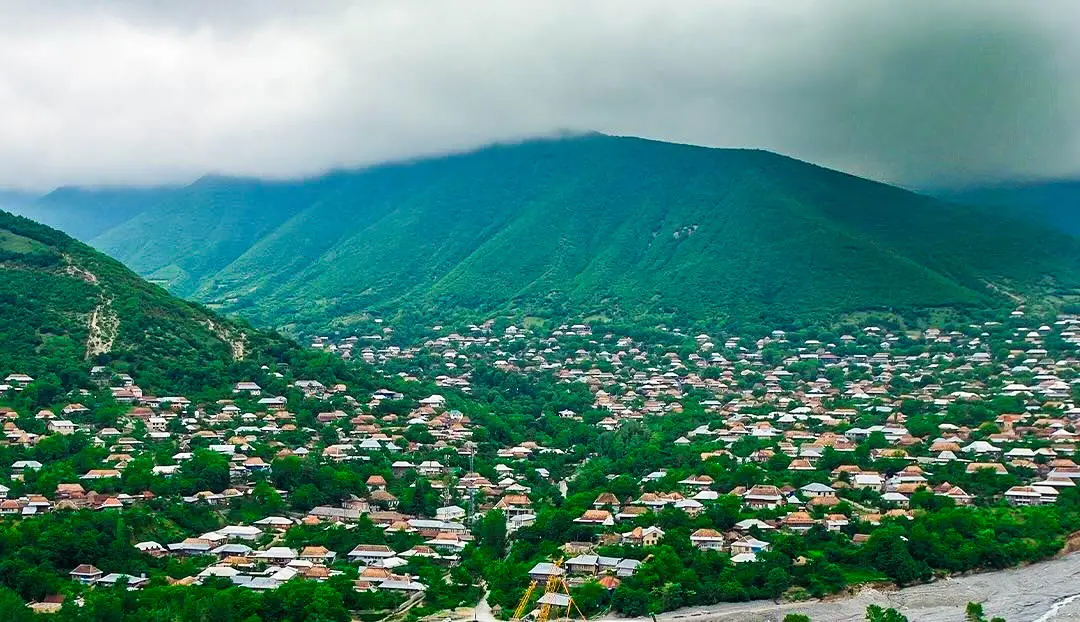
North of Baku, Quba is known for its apples, its carpet weavers and as the gateway to the mountains. From there a switchback road climbs for roughly two hours to Xinaliq, a village of stone houses huddled at around 2,300 metres and one of the highest permanently inhabited settlements in the Caucasus. Its people speak their own language, keep sheep, and offer homestays where dinner is fresh cheese, tendir bread and tea by a wood stove. Go between June and September, when the passes are clear and the meadows are green; snow can close the road for months.
In the far south, the country turns subtropical. Around Lankaran and Astara you find tea plantations, citrus groves and the humid Hirkan forests, where the pace slows and the food gets sharper with lemon and herbs. The Talysh mountains behind them hide walking routes and villages rarely visited by outsiders. Qabala and the slopes around Shahdag, meanwhile, have become the country's hiking and winter-sports base, with marked trails in summer and a very different crowd once the snow arrives.
Wherever you go, the rhythm is the same: an invitation to sit, a plate of something, and questions about where you come from. Travel with patience, a few words of Azerbaijani, and a willingness to accept hospitality, and village days become the highlight of the trip rather than a detour.
Practical Rhythm: Seasons, Transport and Local Etiquette
The best months for a nationwide tour are April to June and September to October, when Baku is mild and the mountain roads are open. July and August push past 35°C in the capital and on the Absheron, though they are ideal for Xinaliq, Qabala and Shahdag. March brings Novruz, the spring festival, with bonfires jumped for luck, wheat sprouts on every table and painted eggs — a genuinely local time to visit. Winter is mild and grey on the coast, cold and snowy inland.
Baku itself is easiest on foot and by metro, whose grand tiled and chandeliered stations are an attraction in their own right. Between cities, daytime and overnight trains link Baku with Ganja and Sheki, while minibuses and shared taxis reach almost every town and village, often departing when full rather than on a schedule. Ride-hailing apps work in the capital and larger cities; elsewhere, agree the fare first. Many nationalities arrange an electronic visa before arrival, and carrying some cash in manat is wise once you leave Baku, where card readers are less reliable.
On etiquette: remove your shoes when entering a home, keep your bread off the ground and never throw it away carelessly, dress a little more modestly outside the capital, and accept at least one glass of tea. Small tips are appreciated but not expected. English is common in Baku's hotels and restaurants; in villages, a handful of Azerbaijani greetings or a few words of Russian will open more doors than any guidebook. Plan five days for Baku, Gobustan and the Absheron, and eight to ten if you want Sheki, Ganja, Quba and the south without rushing.
Frequently asked questions
What is the best time of year to tour Azerbaijan?
April to June and September to October are the most comfortable nationwide, with mild weather in Baku and clear mountain roads. July and August are hot on the coast but perfect for high villages such as Xinaliq and the Qabala area. March's Novruz festival is a wonderful cultural window, though expect rain and changeable conditions.
How many days do I need in Azerbaijan?
Five days covers Baku's old city, the fire temples, Gobustan and the mud volcanoes comfortably. Allow eight to ten days if you want to add Sheki and its Khan's Palace, Ganja, Quba and Xinaliq, or the tea country around Lankaran in the south.
Is Azerbaijani food suitable for vegetarians?
Yes, with a little planning. Herb-filled qutab, aubergine and walnut salads, spinach dishes, stuffed vegetables, pickles and the ubiquitous platters of fresh herbs are all meat-free, and Baku has clearly labelled vegetarian options. Outside the capital, explain what you avoid and kitchens will usually improvise.
Do I need to speak Azerbaijani to travel here?
No. English is widely spoken in Baku's hotels, restaurants and museums, and guides are easy to arrange. In villages and smaller towns, a few phrases of Azerbaijani or Russian help enormously, especially for ordering food, asking directions or negotiating a shared taxi.
How do I get between cities and villages?
Trains connect Baku with Ganja and Sheki, including overnight services, and are the most relaxed option for longer hops. Minibuses and shared taxis fill the gaps to smaller towns and mountain villages, often leaving when full. In Baku, the metro and walking cover most of what you want to see.
Sort the rest of your trip
Everything for Azerbaijan, in one place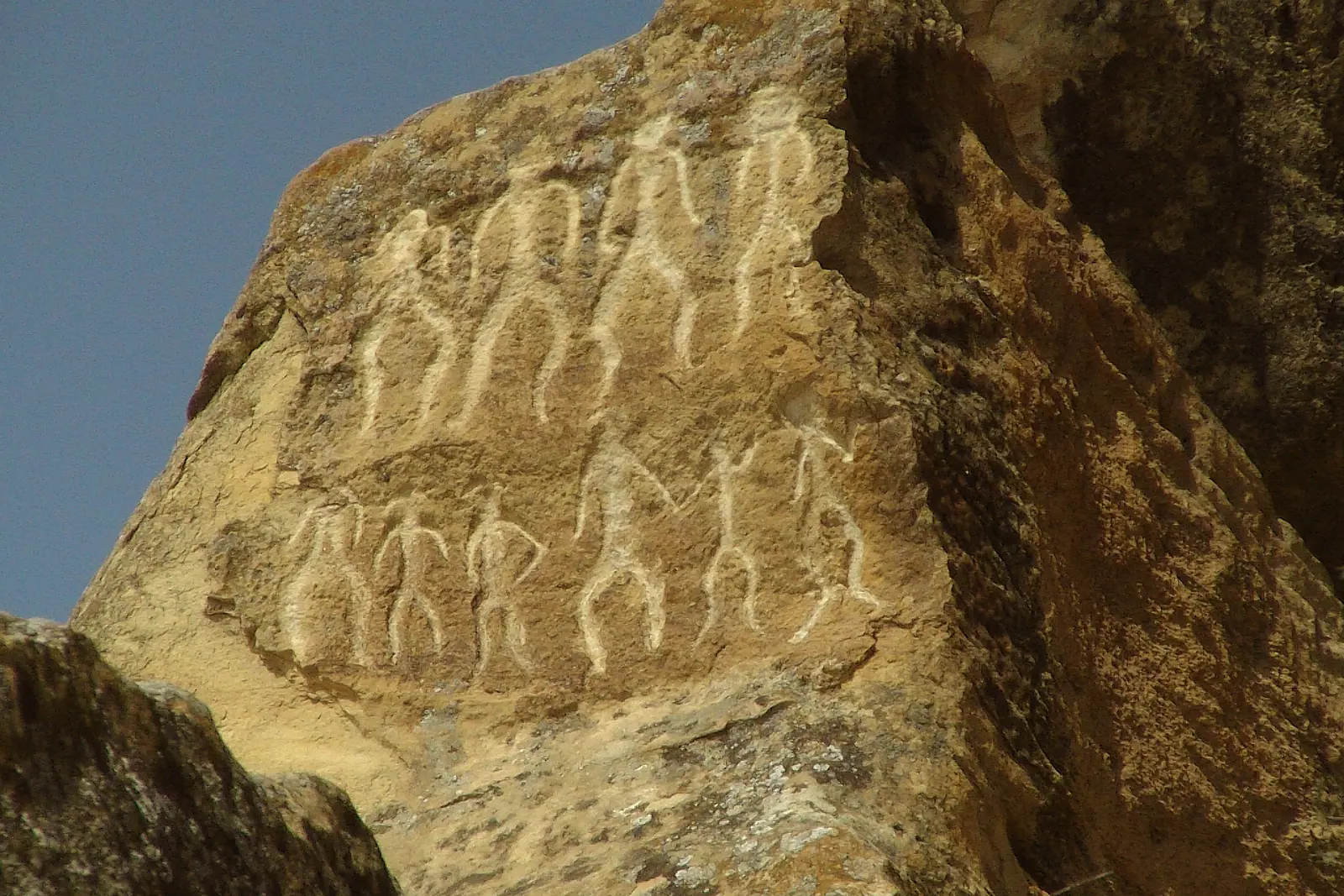
Stay in Azerbaijan
Hotels, guesthouses and apartments — compared in one search.
Search hotels
Transfer in Azerbaijan
Private driver waiting on arrival — no queues, no surprises.
Book a transfer
Stay online in Azerbaijan
Travel eSIM — data the moment you land, no roaming bills.
Get an eSIM